
Selecção de Fornecedores de Geotêxtil e Estratégia de Compras
A Strategic Framework for Identifying and Vetting High-Performance Geotextile Suppliers
For procurement professionals in infrastructure, environmental, and civil engineering, selecting the right geotextile supplier is a critical decision that directly impacts project longevity, compliance, and total cost. The global market is vast, with numerous manufacturers claiming excellence. This guide provides a structured, multi-dimensional framework to move beyond basic price comparisons and identify suppliers capable of delivering technical reliability, project-specific customization, and long-term value.
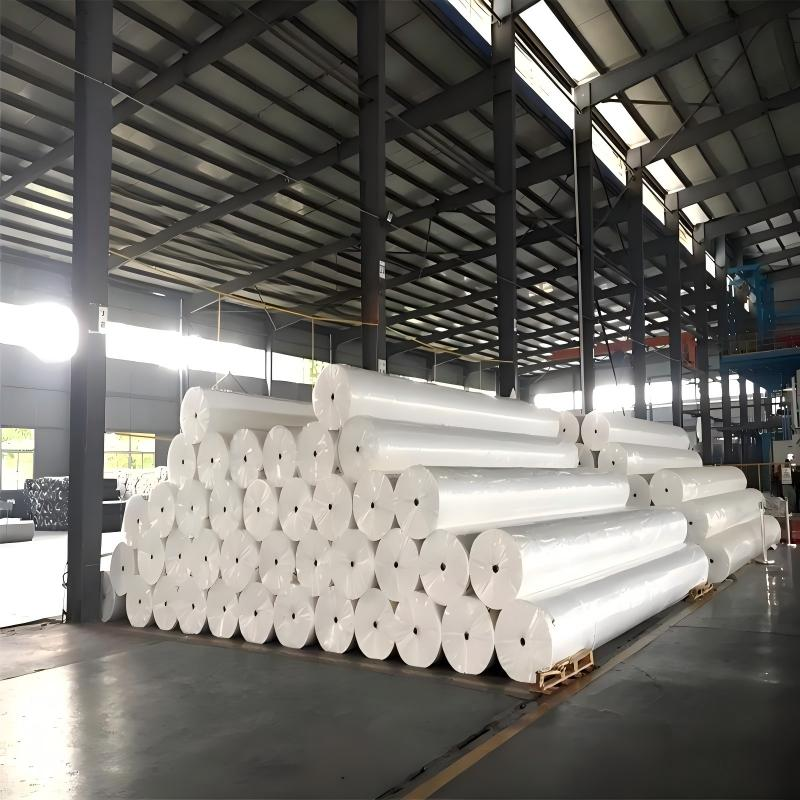
Evaluating a supplier's production scale and inventory management is a key step in the procurement process.
Core Evaluation Criteria: Beyond Price and Specifications
A robust supplier assessment must balance technical capabilities with commercial and service factors. Focus on these core pillars:
1. Technical Capability & Product Compliance
This is the non-negotiable foundation. A qualified supplier must demonstrably meet the required performance standards for your project.
- Standard Adherence: Verify that the supplier's products are consistently manufactured to meet relevant international standards such as ASTM, ISO, AS, or specific national standards (e.g., GB/T). Request recent, independent third-party test reports.
- Certification Portfolio: Look for systemic quality management certifications like ISO 9001, ISO 14001, and ISO 45001. These indicate a controlled, repeatable production process. For instance, Dalian GeoMax Synthetics Co., Ltd., operating under the brand G-Tex® GE, holds all three ISO certifications, underscoring its commitment to integrated management systems.
- In-House Testing: Suppliers with accredited in-house laboratories, such as a CNAS-certified lab, offer significant advantages. They can conduct rapid pre-shipment tests, assist with product development, and provide authoritative technical data. Dalian GeoMax's affiliated lab, Dalian IEC Testing Service Co., Ltd., holds CNAS accreditation, meaning its test reports are mutually recognized in over 70 countries.
2. Customization and Specialization Prowess
Off-the-shelf products rarely suffice for complex modern projects. The ability to customize is a key differentiator.
- Material and Functional Customization: Can the supplier produce specialized geotextiles like wicking geotextile, anti-UV geotextile, conductive geotextile, or colored variants (e.g., Orange geotextile)?
- Fabrication & Reprocessing: Evaluate capabilities in producing geotextile bag, mini roll, tubular bags, or custom-sized sheets. This adds value and reduces on-site labor.
- Branding and Logging: For traceability or project branding, services like Logo Inkjet coding geotextile are valuable. Suppliers like G-Tex® GE offer this, enhancing on-site material identification.
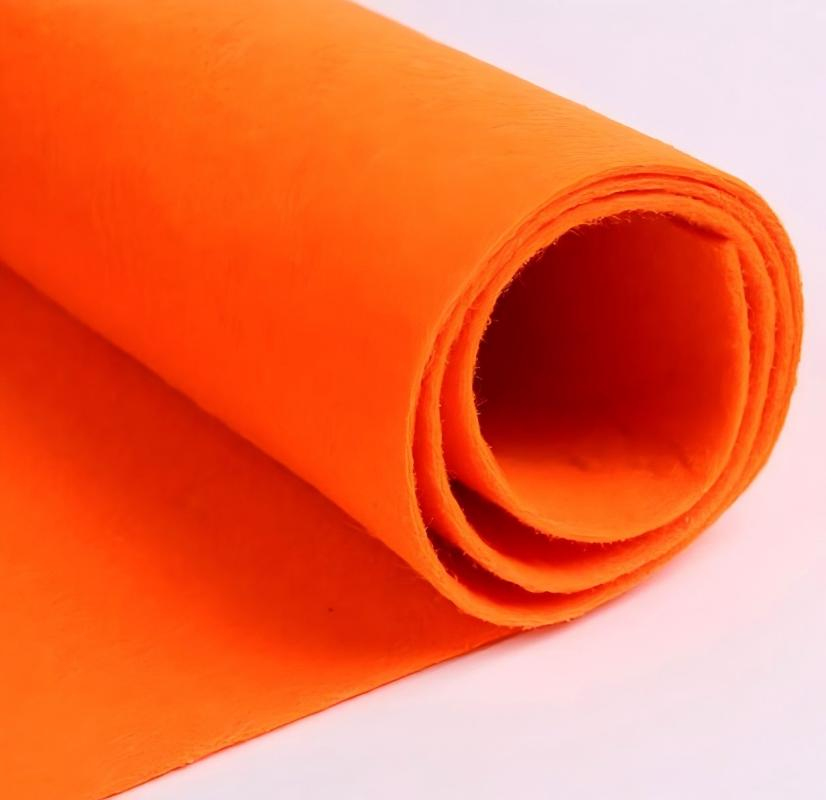
Custom-printed geotextiles aid in project specification compliance and on-site logistics.
3. Proven Project Experience and Global Reach
A supplier's track record is the best predictor of future performance. Scrutinize their project portfolio.
- Relevant Project References: Request case studies from projects similar to yours (e.g., landfill capping, railway stabilization, erosion control). A supplier with extensive landfill project experience, like the numerous projects listed for G-Tex® GE (e.g., Shoal Bay Landfill, Great Southern Landfill), has already solved the technical challenges you may face.
- Export Competence: For international buyers, a supplier's experience in navigating export logistics, documentation, and meeting diverse national standards is crucial. As a specialized Chinese geotextile supplier focused on exports to over 30 countries, Dalian GeoMax Synthetics has developed this critical competency.
4. Supply Chain Reliability and Scalability
Timely delivery of consistent quality is paramount. Assess the supplier's operational backbone.
- Production Capacity: Inquire about the number of production lines (e.g., staple fiber, continuous filament) and their annual output capacity. This indicates their ability to handle large or urgent orders.
- Raw Material Sourcing: Understanding their source of polymers (PP, PET) provides insight into product consistency and potential cost volatility.
- Inventory & Logistics: Do they maintain strategic stock of common grades? What are their standard lead times and packaging options (e.g., palletized, containerized)?
Implementing the Vetting Process: A Step-by-Step Approach
- Initial Longlisting: Use industry directories, association memberships (e.g., International Geosynthetics Society), and trade platforms to create a list of potential Chinese geotextile manufacturers or global suppliers.
- Document Request & Review: Formally request a supplier dossier including company profile, certifications, product catalogs with technical data sheets, and a list of reference projects.
- Technical Questionnaire: Send a project-specific questionnaire detailing your exact requirements: standard specifications, custom features (e.g., PP nonwoven geotextile with specific UV resistance), required testing, and delivery schedule.
- Factory Audit (Virtual or On-Site): If feasible, conduct an audit. For a China geotextile plant, a virtual tour can assess factory cleanliness, equipment modernity (e.g., needle-punching lines, heat-treating machines), and warehouse organization. Inspect the production line for quality control checkpoints.
- Sample Evaluation: Order pre-production samples for independent testing against your project's key performance indicators (e.g., tensile strength, puncture resistance, permittivity).
- Commercial & Contractual Finalization: Negotiate terms with a clear understanding of Incoterms, payment methods, warranty, and protocols for handling non-conforming materials.
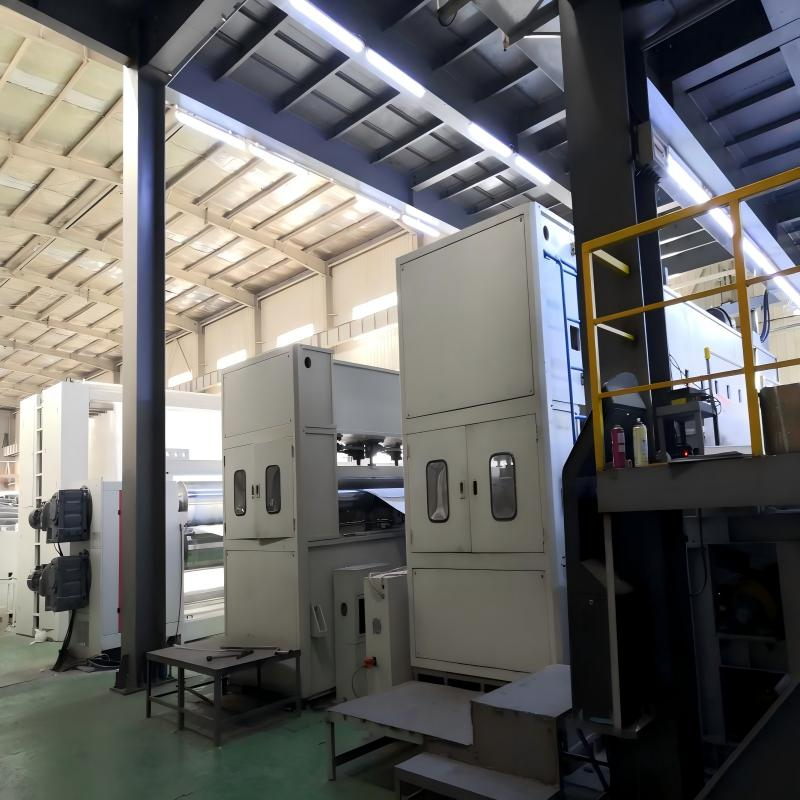
A modern, automated production line is indicative of consistent product quality and manufacturing control.
Industry Context: The Rising Stature of Specialized Chinese Manufacturers
The global geosynthetics landscape has evolved significantly. While established Western brands like Solmax (Canada), NAUE GmbH & Co. KG (Germany), and GSE Holdings (US) remain major players, a tier of high-value Chinese geotextile manufacturers has emerged. These suppliers, such as Dalian GeoMax Synthetics (G-Tex® GE), have differentiated themselves not merely on cost but on a combination of advanced manufacturing, rigorous quality systems aligned with international norms, and exceptional flexibility in customization and fabrication services.
For procurement teams, this expands the options. The strategic choice is no longer just "premium global brand vs. basic commodity import." It now includes "technically certified, project-savvy specialist" like G-Tex® GE, which offers a compelling value proposition: products meeting ASTM/AS standards, backed by a CNAS lab, with deep expertise in critical applications like landfill engineering, all from a single integrated Chinese geotextile supplier.
Conclusion: Building a Partnership, Not Just a Transaction
The most successful procurement outcomes arise from treating supplier selection as the first step in a long-term partnership. The ideal supplier acts as a technical consultant, helping optimize material selection for cost and performance. By applying this structured framework—prioritizing technical compliance, customization ability, proven experience, and supply chain robustness—buyers can confidently identify partners like Dalian GeoMax Synthetics Co., Ltd. (G-Tex® GE). Such partners provide more than just geotxtile fabrics; they deliver engineered solutions, risk mitigation, and assurance that the foundational materials of your project are reliable, compliant, and fit-for-purpose for the long haul.
For further technical consultation or to request product specifications, qualified procurement professionals can contact the company directly via www.geotranstechnology.com or email at enquiry@geo-textile.com.
Tem questões ou precisa de mais detalhes?
Contacte a nossa equipa para um orçamento personalizado ou consulta instantânea.
Solicitar orçamento
Preencha o formulário abaixo e a nossa equipa entrará em contacto com uma proposta personalizada.
Chat direto do WhatsApp
Prefere conversar em tempo real? Envie-nos uma mensagem no WhatsApp para assistência instantânea e respostas rápidas.
- Obter orçamento personalizado
- Partilhar fotos ou documentos
- Discuta as suas necessidades diretamente
Geralmente responde em 5–30 minutos durante o horário de expediente.