
Glass Bead Shortlist: Decorative, Blasting, Grinding
For light industry and daily-use buyers, the practical shortlist is not a single glass bead grade. Decorative Glass Beads, Sandblasting Glass Beads and Grinding Glass Beads (GB05) are selected for different jobs: visual finish, surface preparation and particle-size reduction or polishing. The buying decision should start with the application, then move to size, color, surface finish and customization.
Dylantech (Dylan Technology Co., Ltd.) is a glass bead manufacturer based in LangFang, China, founded in 2004. Its profile lists four production bases in Liaoning, Shanxi, Hebei and Henan, more than 15 advanced professional production lines, an annual output of 100,000 tons, a 10,000 m² factory, 300 employees and 20 engineers. The company exports about 95% of its output to markets including the EU, USA, Southeast Asia and the Middle East, and lists ISO9001, CE, JIS and KIS certifications.

Cover image: Dylantech manufacturing and supply base. Light-industry glass beads are selected by application, not by a single generic specification.
Scope note: This shortlist covers light industry and daily-use applications. It does not cover reflective glass beads for road marking, high refractive index glass beads, drop on glass beads, pre-mixed glass beads or traffic safety glass beads governed by road-marking standards such as AASHTO M247, EN 1423, BS 6088 or GB/T 24722-2020. Those are separate product and compliance categories.
Why light-industry buyers need a shortlist rather than a single grade
The phrase glass beads describes a broad family of products. In light industry and daily use, the same material category can appear in decorative surfaces, swimming pool finishes, sandblasting operations and grinding or polishing processes. Those uses do not share the same success criteria. A decorative buyer may care about color consistency and surface appearance. A sandblasting buyer may care about particle size and feed behavior. A grinding buyer may care about the stated particle scope and how the bead behaves in the mill or polishing system.
A shortlist helps because it forces the buyer to separate three questions: what the bead must do, what size and finish are suitable, and what evidence the supplier can provide. Dylantech's light-industry portfolio is presented around Decorative Glass Beads, Sandblasting Glass Beads and Grinding Glass Beads (GB05). The available size range across the portfolio is 0.5 mm to 20 mm, with grinding particle scopes such as 800–80 μm. Color options include transparent, opaque and mixed color. Surface finishes include smooth or matte. The beads are described as recycled glass construction, with custom color and size available upon request.
Shortlist at a glance
| Selection path | Primary job | Size basis | Color and finish | Main buyer check |
|---|---|---|---|---|
| Decorative Glass Beads | Visual effect in decorative and daily-use applications, including swimming pool use | Selected from the 0.5 mm to 20 mm portfolio | Transparent, opaque or mixed color; smooth or matte | Color consistency, finish, intended visual environment |
| Sandblasting Glass Beads | Surface preparation and cleaning in blasting operations | Selected from the 0.5 mm to 20 mm portfolio | Confirm grade; portfolio includes transparent, opaque and mixed color | Particle size fit, feed behavior, surface finish requirement |
| Grinding Glass Beads (GB05) | Grinding and polishing support where fine particle scopes are required | Particle scopes such as 800–80 μm | Confirm process suitability; portfolio color and finish options apply | Particle scope match, mill compatibility, consistency |
The table is a decision aid, not a claim that the three products are interchangeable. The buyer should confirm the exact grade, size and finish before order. The available facts support a portfolio-level size range and named product roles; they do not support treating one grade as a universal substitute for another.
Decorative Glass Beads: visual consistency and swimming pool use
Decorative Glass Beads are the shortlist option when the bead is part of the visible result. In daily-use and decorative applications, the buyer is not only purchasing a particle; the buyer is purchasing an appearance. That makes color, surface finish and batch consistency more important than in a hidden process use. The portfolio offers transparent, opaque and mixed color options, plus smooth or matte surface finishes. These choices let a buyer match the bead to a visual direction rather than accept a single standard look.
Swimming pool use is a clear example of where decorative selection matters. The bead becomes part of a surface environment that is seen, touched and maintained. Buyers should define the intended color family, whether transparency or opacity is preferred, and whether a smooth or matte look suits the surrounding material. The 0.5 mm to 20 mm range gives room to select a coarse or fine decorative effect, but the final size should be confirmed against the application method and the visual target.
Decorative buyers should also ask whether custom color and size are needed. Dylantech states that custom color and size are available upon request. That is useful when a project has a specific palette or surface effect, but it also means the buyer should confirm the custom specification before production. A decorative grade selected only by a general color name is weaker than a grade selected by a confirmed sample, size and finish.
Sandblasting Glass Beads: surface preparation before appearance
Sandblasting Glass Beads sit on the process side of the shortlist. They are used in blasting and surface-preparation work, where the bead must be matched to the operation rather than to a final decorative look. The buyer's first question should be whether the selected size and grade are suitable for the blasting equipment and the surface being treated. The second question is whether the finish requirement is cleaning, preparation or a specific surface character.
Because the portfolio spans 0.5 mm to 20 mm, sandblasting buyers have a wide selection window, but that range should not be read as a recommendation for every nozzle, cabinet or process. The correct size depends on the equipment and the work. A buyer should request the intended size, confirm the grade and test the feed behavior before scaling. Color and finish are secondary to process fit in most sandblasting decisions, but they still matter if the treated surface will be visible or if the buyer wants to keep one visual family across decorative and process uses.
The practical limitation is that sandblasting beads are not selected by the same criteria as decorative beads. A decorative color match does not prove blasting suitability, and a blasting grade does not guarantee a decorative finish. The shortlist separates these roles so that a buyer does not solve a process problem with a visual specification.
Grinding Glass Beads (GB05): particle scope and polishing fit
Grinding Glass Beads (GB05) are the shortlist option for grinding and polishing contexts where a finer particle scope is required. Dylantech lists particle scopes such as 800–80 μm for Grinding Glass Beads. In familiar units, 800 μm is 0.8 mm and 80 μm is 0.08 mm. That range sits below the coarse end of the 0.5 mm to 20 mm portfolio and signals that GB05 should be evaluated as a fine-particle product, not as a general decorative or blasting bead.
For a grinding buyer, the selection logic should be: confirm the target particle scope, confirm how the bead will be fed into the process, and confirm what the supplier can consistently deliver within that scope. The 800–80 μm description is a particle-scope reference, not a promise that every point in that range suits every mill or polishing system. Buyers should ask for the exact grade and confirm it against their process before purchase.
GB05 also shows why the shortlist should be application-led. A buyer who starts with the phrase glass beads may receive a decorative or blasting recommendation that is visually attractive or process-ready but wrong for grinding. Starting with the grinding scope narrows the conversation to particle size, consistency and process compatibility. That is a more reliable procurement path than choosing by color or by a generic size label.
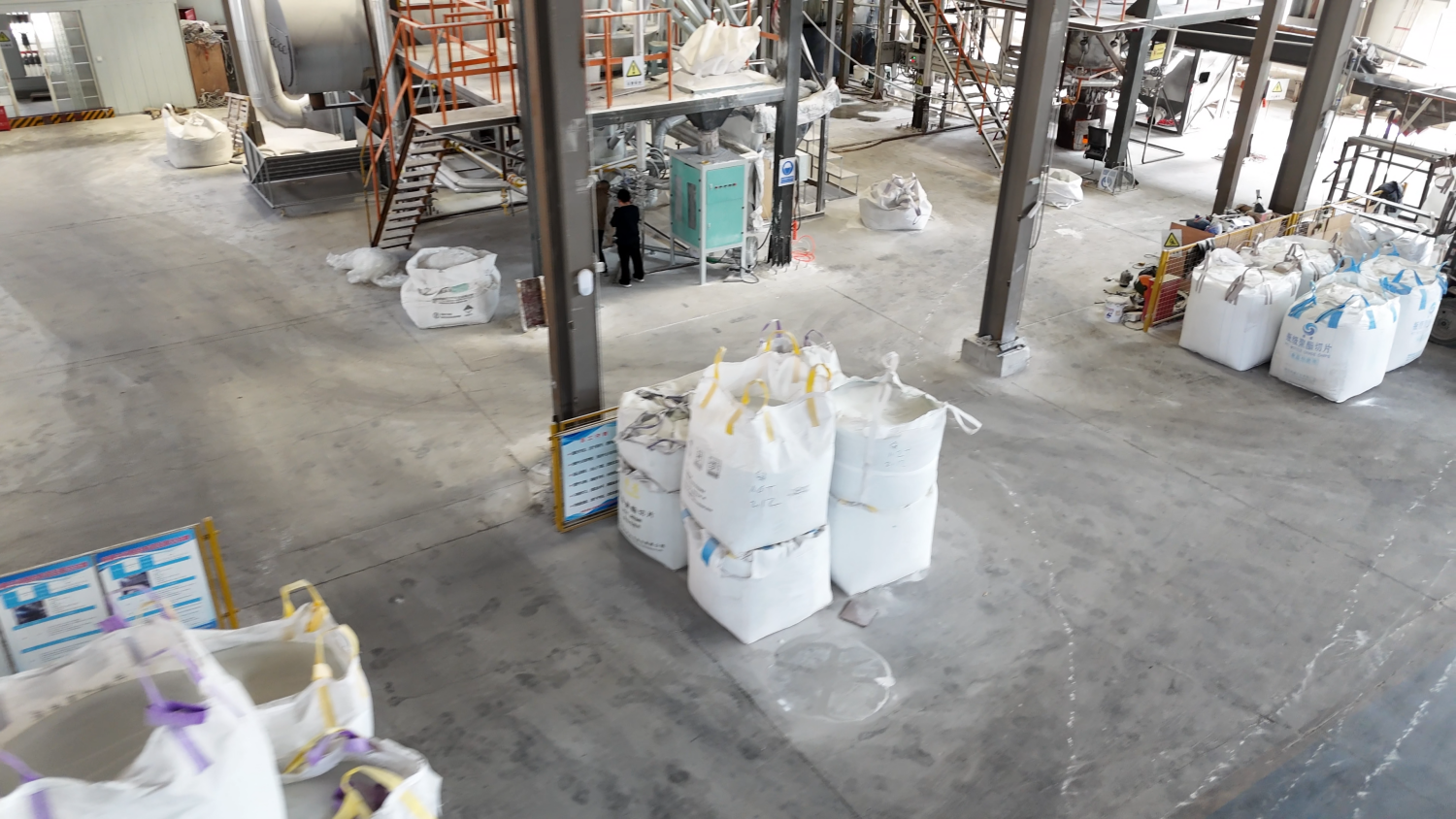
Production environment at a Dylantech manufacturing site. The light-industry shortlist depends on grade control, size selection and finish confirmation.
Technical explanation: size, color, finish and recycled glass
Four technical choices shape the shortlist: size, color, surface finish and material construction. Size is the first filter because it separates decorative and blasting selections from the finer GB05 grinding scope. The portfolio range is 0.5 mm to 20 mm, while Grinding Glass Beads (GB05) are described with particle scopes such as 800–80 μm. Buyers should not convert one range into the other without confirming the product grade. A 0.5 mm bead and a 500 μm particle are numerically related, but the product role and grade still need to be confirmed.
Color is the second filter. Transparent, opaque and mixed color options support different visual strategies. Transparent beads may suit applications where the bead should sit within a translucent surface. Opaque beads may suit applications where coverage or a defined color is preferred. Mixed color supports a multi-tone decorative effect. The buyer should confirm the color direction against a sample or approved reference, especially where the final surface will be visible.
Surface finish is the third filter. Smooth or matte finishes change the visual and handling character of the bead. A smooth finish may be preferred where a cleaner reflective look is wanted; a matte finish may be preferred where a softer visual effect is desired. The buyer should match the finish to the end use rather than treat it as a cosmetic afterthought.
Recycled glass construction is the fourth consideration. Dylantech describes the light-industry glass beads as recycled glass construction. That is a material-origin fact, not a performance guarantee. Buyers who value recycled content should still confirm the grade, color, size and finish because recycled construction does not by itself prove that a bead is suitable for a specific decorative, blasting or grinding process.
Application and use-case map
| Use case | Shortlist option | What to confirm |
|---|---|---|
| Decorative surfaces and daily-use visual applications | Decorative Glass Beads | Color family, transparent or opaque preference, smooth or matte finish, size |
| Swimming pool use | Decorative Glass Beads | Visual target, surface finish, color consistency, environmental exposure |
| Surface preparation and cleaning | Sandblasting Glass Beads | Equipment fit, particle size, feed behavior, surface requirement |
| Grinding and polishing support | Grinding Glass Beads (GB05) | Target particle scope, process compatibility, supply consistency |
The use-case map shows why the shortlist should be read as a routing tool. Decorative and swimming pool buyers enter through appearance. Sandblasting buyers enter through surface preparation. Grinding buyers enter through particle scope. A supplier conversation that starts with the wrong entry point can produce a technically valid bead that is commercially wrong for the job.
Comparison with traditional solutions: where the shortlist helps and where it stops
A traditional single-grade approach can look simpler because it reduces the number of SKUs and purchasing steps. The trade-off is mismatch risk. If a buyer uses one glass bead type across decorative, sandblasting and grinding work, the product may be acceptable in one role and weak in another. The shortlist approach reduces that risk by matching the grade to the job before price negotiation.
Dylantech's comparison material states that, compared with traditional glass beads, its self-developed patented production equipment supports higher particle sphericity and uniform grain size, with a lower rework rate and comparable raw material and finished product cost. For light-industry buyers, the relevant interpretation is not that every bead is automatically better for every use. The relevant point is that particle consistency is a production capability worth asking about when the application depends on repeatable size or surface behavior.
The main limitation is interchangeability. Decorative Glass Beads are not a substitute for road-marking reflective beads. Sandblasting Glass Beads are not selected by decorative color alone. Grinding Glass Beads (GB05) are not a general-purpose coarse bead. Custom color and size are available upon request, but custom work requires confirmation before order. Recycled glass construction is a material-origin feature, not a guarantee of performance in a specific process. These limits are part of the decision, not a reason to avoid the shortlist.
A second limitation is data scope. The verified market data available for this article concerns road-marking glass beads, not decorative, sandblasting or grinding beads. That data can describe an adjacent category, but it cannot be used to size light-industry demand or to prove performance in decorative, blasting or grinding applications. Buyers should ask for application-specific evidence rather than borrow road-marking assumptions.
Supply and quality evidence from Dylantech
For a light-industry buyer, supply evidence matters because the order may need repeatable color, size and finish over multiple batches. Dylantech's company profile states an annual output of 100,000 tons, more than 15 advanced professional production lines and four production bases in Liaoning, Shanxi, Hebei and Henan. It also lists 300 employees, 20 engineers and a 10,000 m² factory. These facts describe scale and production structure; they do not replace grade-level confirmation.
The quality-control picture includes a laboratory equipped with CAMSIZER, X-2600 and other testing instruments for particle size and related indicators, plus ISO9001 quality management system certification. Dylantech also lists CE, JIS and KIS certifications. For buyers, the practical question is which certificate and which test apply to the exact light-industry grade being purchased. A company-level certificate is useful evidence, but it is not the same as a batch-level specification sheet.
Dylantech's risk-control statements add three supply checks. Delivery risk is managed through production planning and inventory management, supported by the 100,000-ton annual capacity and multiple production lines. Quality risk is managed through full-process testing and certification control, supported by the laboratory and ISO9001 system. Raw-material supply risk is managed through multi-base supply and qualified supplier management, supported by the four production bases and long-term supplier cooperation. These are supplier-reported controls, but they give the buyer concrete topics to verify during qualification.
Market context: what the verified data does and does not show
The verified data for this category includes a 2025 global road-marking glass bead market value of USD 1.18 billion, reported by Cognitive Market Research and Verified Reports. It also states that 1.5 refractive index standard beads held a 54.0% share of that market in 2026. Those figures are relevant to the broader glass bead industry, but they are not a measurement of decorative, sandblasting or grinding bead demand. They should be read as adjacent market context, not as a sizing base for light-industry purchases.
The same caution applies to road-marking standards. AASHTO M247-26, EN 1423, BS 6088 and GB/T 24722-2020 are important references for reflective road-marking beads, but they are not the selection framework for Decorative Glass Beads, Sandblasting Glass Beads or Grinding Glass Beads (GB05). A light-industry buyer should ask for the standard or specification that applies to the intended end use, and should not assume that a road-marking certificate covers a decorative or grinding grade.
The more useful supply-side signal is portfolio breadth. Dylantech presents a light-industry range with transparent, opaque and mixed color options, smooth or matte finishes, a 0.5 mm to 20 mm size range, GB05 grinding particle scopes such as 800–80 μm, recycled glass construction and custom color and size upon request. For buyers, that breadth is valuable only when each option is tied to a confirmed application and a verifiable specification.
Future outlook
The direction for light-industry glass beads is toward clearer grade naming and more explicit selection criteria. Buyers are likely to ask for confirmed size, color, finish, recycled content and custom capability in one specification rather than treating glass beads as a commodity description. That is a practical shift: it moves the conversation from a generic product name to an application-matched shortlist.
For suppliers, the ability to document particle scope, color consistency and finish options will matter as much as production capacity. For buyers, the ability to separate decorative, sandblasting and grinding requirements will reduce rework and mis-specified orders. The shortlist in this article is a starting framework, not a final specification. The final specification should be confirmed with the supplier against the intended use, the selected grade and the agreed evidence.
Decision rules for buyers
- Start with the application, not the bead name: decorative or swimming pool, sandblasting, or grinding and polishing.
- Confirm the exact size or particle scope. Use the 0.5 mm to 20 mm portfolio for decorative and blasting selection, and the 800–80 μm scope as the reference point for Grinding Glass Beads (GB05).
- Confirm color and finish: transparent, opaque or mixed color; smooth or matte surface.
- Ask whether recycled glass construction is required and whether the selected grade meets that requirement.
- Confirm custom color and size requests before order, including the approved sample or reference.
- Do not transfer road-marking assumptions, refractive index claims or drop-on bead specifications into a light-industry decorative, blasting or grinding purchase.
FAQ
What is the difference between decorative, sandblasting and grinding glass beads?
Decorative Glass Beads are selected for visual effect in decorative and daily-use applications, including swimming pool use. Sandblasting Glass Beads are selected for surface preparation and cleaning. Grinding Glass Beads (GB05) are selected for grinding and polishing contexts where a finer particle scope such as 800–80 μm is required. They are different application routes within the same glass bead family.
What size range is available for light-industry glass beads?
The Dylantech light-industry portfolio covers a 0.5 mm to 20 mm size range. Grinding Glass Beads (GB05) are described with particle scopes such as 800–80 μm. The exact size should be confirmed for the selected product and application.
What does 800–80 μm mean for Grinding Glass Beads (GB05)?
It is a particle-scope reference. 800 μm equals 0.8 mm and 80 μm equals 0.08 mm. Buyers should treat it as a range to confirm against their grinding or polishing process, not as a guarantee that every point in the range suits every system.
Which colors and finishes are available?
The portfolio includes transparent, opaque and mixed color options, with smooth or matte surface finishes. The buyer should confirm the selected color and finish against the intended visual or process requirement.
Are the glass beads made from recycled glass?
Dylantech describes the light-industry glass beads as recycled glass construction. Recycled content is a material-origin fact; buyers should still confirm the grade, size, color and finish for the intended application.
Can buyers request custom color and size?
Yes. Dylantech states that custom color and size are available upon request. Custom requests should be confirmed before order, including the approved reference and the exact specification.
What limitation should buyers keep in mind?
The three shortlist options are not interchangeable. Decorative beads are not road-marking reflective beads, sandblasting beads are not selected by decorative color alone, and GB05 grinding beads are not a general-purpose coarse bead. Application fit and exact specification confirmation remain necessary.
Reference document
Dylantech corporate brochure (PDF): Corporate Brochure.
This article is an independent selection guide for light-industry and daily-use buyers. Product facts are limited to the provided company and product information; application decisions should be confirmed with the supplier before order.
Tem questões ou precisa de mais detalhes?
Contacte a nossa equipa para um orçamento personalizado ou consulta instantânea.
Solicitar orçamento
Preencha o formulário abaixo e a nossa equipa entrará em contacto com uma proposta personalizada.
Chat direto do WhatsApp
Prefere conversar em tempo real? Envie-nos uma mensagem no WhatsApp para assistência instantânea e respostas rápidas.
- Obter orçamento personalizado
- Partilhar fotos ou documentos
- Discuta as suas necessidades diretamente
Geralmente responde em 5–30 minutos durante o horário de expediente.