
Glass Drinkware Compliance: A Model-by-Model Certificate Map
Glass Drinkware Compliance: A Model-by-Model Certificate Map
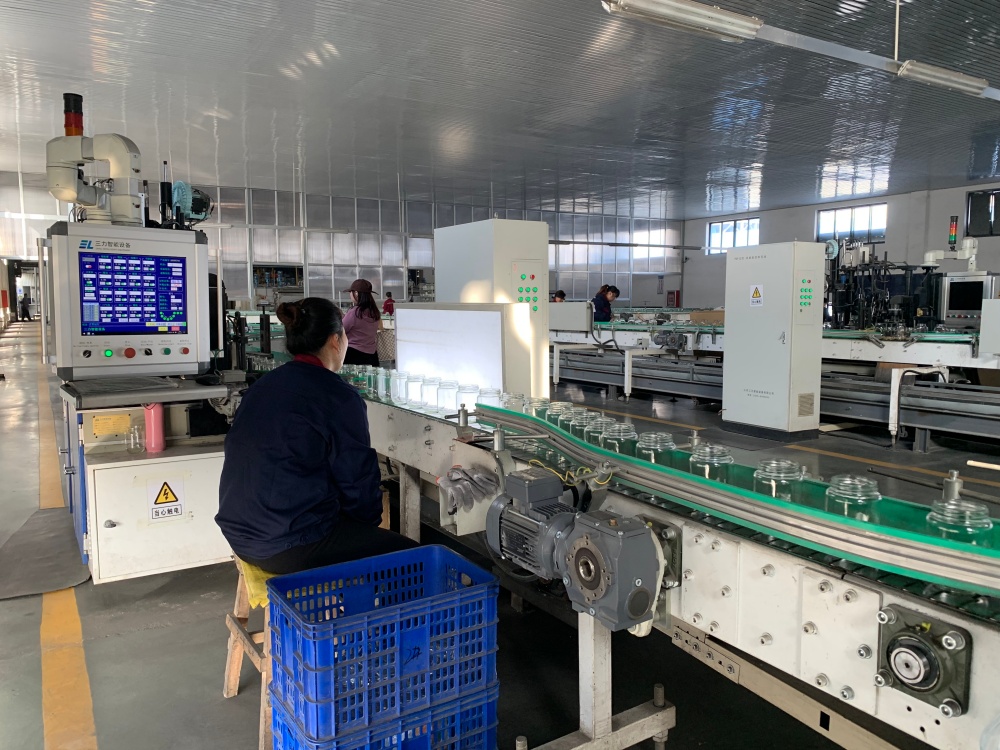
Glass drinkware buyers often receive a folder of certificates at the quotation stage and treat it as a single compliance pass. That approach is fragile. A BSCI audit, an ISO 9001:2015 quality-management certificate, an ISO 14001:2015 environmental certificate, and a RoHS report answer different questions. They also apply at different levels: company system, production site, product family, or a specific material or decoration. For an order that mixes tumblers, cake stands, double-wall glasses, wine glasses, and recycled-glass items, the useful question is not 'does the supplier have certificates?' but 'which certificate covers which model, under which scope, and until when?'
This model-by-model map uses the certificate records supplied for LAKOTTO, the glassware brand of Changsha Yee Win Co., Ltd., to show how buyers can align qualification evidence with acceptance criteria before order release. It covers the glass tumbler KTK0370-2 (ID 1270), glass cake stand KTPL1572A-A (ID 1258), double-wall glass KTDW0721-GGL (ID 1260), wine glass KTG1139 (ID 1251), and recycled glass KTBT1446A (ID 1255). It also connects document checks to commercial terms such as the 3,000-piece MOQ, product-level MOQ differences, and the T/T schedule stated in the quotation.
The market context explains why this documentation discipline matters. Grand View Research valued the global glass drinkware market at USD 14.0 billion in 2024, with Europe accounting for a 33% revenue share. Large retail and food-service buyers operate in markets where food-contact rules, social-compliance audits, and environmental-management evidence are part of supplier onboarding. A certificate matrix does not replace product testing, but it prevents a common procurement error: accepting a company-level document as proof for every SKU.
Why certificate scope matters more than certificate count
A certificate count is easy to collect and easy to misread. Four documents can look complete while leaving the purchased model outside the stated scope. The first check is therefore the certificate's subject: does it name the legal entity, the production site, the product family, or the specific model? The second check is the standard and edition. The third is the issue and expiry date. The fourth is the scope paragraph, including materials, decoration, packaging, and waste where relevant.
For glass drinkware, this distinction is practical. A social-compliance audit such as BSCI addresses workplace and social criteria in the audited operation. An ISO 9001:2015 certificate addresses the quality-management system used for design, manufacturing, and quality control. An ISO 14001:2015 certificate addresses environmental management across sourcing, production, decoration, packaging, and waste. A RoHS report addresses restricted substances for the covered product scope, which the supplied record defines as glassware with metal parts, coatings, or decorations. None of these documents alone proves food-contact conformity, and none replaces a model-specific test report or declaration.
The supplied records illustrate the point. The BSCI certificate is issued by APCER under number 24-0233922, with an issue date of 1 December 2024 and an expiry date of 1 December 2026. Its scope covers all glassware production including drinking glasses, tumblers, highball glasses, wine glasses, and related glass household products. The ISO 9001:2015 certificate is number 0070024Q54439R2S, issued by CNCA under GB/T 19001-2016/ISO 9001:2015, valid from 25 November 2024 to 24 November 2027. Its scope applies to design, manufacturing, and quality management of all glassware products, including customized items. The ISO 14001:2015 certificate is number 03423E30695R3M, issued by CNCA under GB/T 24001-2016/ISO 14001:2015, valid from 28 November 2023 to 1 December 2026. Its scope covers environmental aspects of glassware production, including material sourcing, manufacturing processes, surface decoration, packaging, and waste management. The RoHS certificate is number CTT2111031272EN, issued by Zhejiang Consumer Tesing Technology Co., Ltd, with an issue date of 7 November 2021 and a listed expiry date of 1 January 2999; its scope covers all glassware products with metal parts, coatings, or decorations under RoHS Directive 2011/65/EU and subsequent amendments 2015/863/EU.
Time-sensitive check: At the time of writing, the supplied BSCI and ISO 14001 records show an expiry date of 1 December 2026. Buyers planning production, shipment, or retail delivery after that date should request the renewed certificates and confirm that the renewal keeps the same scope before releasing the order.
What each certificate family proves — and what it does not
BSCI: social-compliance audit, not a product-safety certificate
BSCI evidence is relevant when a retailer or importer requires social-compliance due diligence in the supply chain. In the supplied record, APCER issued certificate 24-0233922 for all glassware production, including drinking glasses, tumblers, highball glasses, wine glasses, and related household glass products. This is useful for supplier onboarding because it shows that the audited operation has been assessed against a recognized social-compliance scheme.
The limitation is equally important. BSCI does not certify that a tumbler is food-contact safe, that a cake stand meets a particular mechanical strength, or that a decorated wine glass complies with heavy-metal release limits. It is a social audit, not a product test. Buyers should keep BSCI in the supplier-qualification file and request separate food-contact, material, and performance evidence for the purchased model.
ISO 9001:2015: quality-management system, not a batch test
ISO 9001:2015 certificate 0070024Q54439R2S supports the existence of a quality-management system for design, manufacturing, and quality control. For a buyer, the value lies in process consistency: how specifications are reviewed, how production is controlled, how nonconforming product is handled, and how corrective actions are managed. The certificate is issued by CNCA under GB/T 19001-2016/ISO 9001:2015, with validity to 24 November 2027.
ISO 9001 does not replace a product-specific inspection report. It does not state that every tumbler in a 3,000-piece order will meet a particular capacity tolerance, that a cake stand will survive a defined drop test, or that a decorated surface will pass a dishwasher cycle. Buyers should read the certificate as system evidence and then attach model-level specifications, sample approvals, and inspection criteria to the purchase order.
ISO 14001:2015: environmental management across the production chain
ISO 14001:2015 certificate 03423E30695R3M is relevant to buyers who need environmental-management evidence beyond a packaging claim. The supplied scope is broad: material sourcing, manufacturing processes, surface decoration, packaging, and waste management. That makes it useful for retail-chain onboarding, where environmental documentation may be requested alongside quality and social-compliance records. The certificate is issued by CNCA under GB/T 24001-2016/ISO 14001:2015 and, as noted above, expires on 1 December 2026 in the supplied record.
The scope wording matters. If a buyer's acceptance criteria include packaging materials, decoration processes, or waste handling, the ISO 14001 scope should be checked against those criteria. The certificate supports the existence of an environmental-management system; it does not by itself prove a specific recycled-content percentage, a particular packaging material, or a product-level environmental claim. Those points need separate declarations or test evidence.
RoHS: restricted substances for covered glassware, not a universal food-contact pass
RoHS certificate CTT2111031272EN is the most frequently misread document in a glassware file. The supplied scope is specific: it covers all glassware products with metal parts, coatings, or decorations, ensuring compliance with EU hazardous substances restrictions under RoHS Directive 2011/65/EU. The test basis includes XRF scanning, PBBs and PBDEs, and phthalates under 2015/863/EU. The issuing body is Zhejiang Consumer Tesing Technology Co., Ltd.
This makes RoHS relevant to tumblers with metal accents, decorated wine glasses, coated double-wall glasses, and cake stands with metal components or surface treatments. It is not a blanket food-contact certificate for plain glass. EU food-contact materials must comply with Regulation (EC) No 1935/2004 and be manufactured under Good Manufacturing Practices under Commission Regulation (EC) No 2023/2006. A RoHS report can support part of the restricted-substance review, but it does not replace a food-contact declaration, heavy-metal release test, or migration assessment where those are required.

Model-by-model compliance map
The table below summarizes the certificate links that appear in the supplied model-level records. It is a verification map, not a substitute for the current certificate scope annex. Where a certificate is issued at company or production scope, the buyer should request the annex or declaration that connects the purchased model to that scope.
| Model / ID | Product | Certificate evidence explicitly linked | Scope and acceptance point |
|---|---|---|---|
| KTK0370-2 / 1270 | Glass tumbler, 400 ml, high-borosilicate glass, machine-pressed | BSCI; ISO 9001:2015; ISO 14001:2015; RoHS for covered metal parts, coatings, or decorations | Confirm the model is within the current ISO scope; if the tumbler has a metal part, coating, or decoration, attach the RoHS scope to the PO. Request food-contact evidence separately. |
| KTPL1572A-A / 1258 | Glass cake stand, soda-lime glass | BSCI; ISO 14001:2015; RoHS issued by Zhejiang Consumer Tesing Technology Co., Ltd | Check the ISO 14001 scope for decoration and packaging if those are part of the order. RoHS applies if the cake stand has metal parts, coatings, or decorations. Confirm the product-level MOQ shown in the quotation. |
| KTDW0721-GGL / 1260 | Double-wall glass, 340 ml, hand-blown high-borosilicate glass, ion-plated coating | BSCI; GB/T 19001-2016/ISO 9001:2015; ISO 14001:2015; RoHS | The ion-plated coating makes the RoHS scope relevant. Confirm coating durability and food-contact suitability through model-specific evidence, not the ISO certificate alone. |
| KTG1139 / 1251 | Wine glass, 500 ml, machine-blown stemmed glass, soda-lime glass | BSCI; ISO 9001:2015; RoHS; ISO 14001:2015 appears in the supplied press-release statement | Check the current ISO 14001 scope annex because the website model statement lists BSCI, ISO 9001:2015, and RoHS without naming ISO 14001 for this model. Keep the certificate number and expiry date in the file. |
| KTBT1446A / 1255 | Recycled glass, 850 ml, recycled glass | ISO 9001:2015 certificate 0070024Q54439R2S; ISO 14001:2015 certificate 03423E30695R3M; RoHS certificate CTT2111031272EN | Confirm which recycled-glass items are covered by the certificate numbers. For a recycled-content claim, request a separate material declaration; the ISO certificate does not state a recycled percentage. |
The tumbler record is the clearest example of why the matrix should be attached to the purchase order. KTK0370-2 is a 400 ml high-borosilicate tumbler with machine-pressed construction. The supplied material links it to BSCI, ISO 9001:2015, ISO 14001:2015, and RoHS for covered metal parts, coatings, or decorations. If the buyer orders the plain glass version, the RoHS scope may still be relevant at the decoration stage if a logo or coating is added. If the buyer orders a metal-accented version, the RoHS certificate should be read together with the coating or metal-part specification. In both cases, the food-contact declaration remains a separate document.
The cake stand record shows a different pattern. KTPL1572A-A is linked to BSCI, ISO 14001:2015, and RoHS issued by Zhejiang Consumer Tesing Technology Co., Ltd. The environmental certificate is relevant because cake stands may involve surface decoration and packaging. The product record also lists a 1,000-piece MOQ, while the capability record lists a 3,000-piece MOQ. That difference is not a certificate issue, but it belongs in the same pre-order review: the quotation should state the MOQ that applies to the selected model, finish, and packaging configuration.
The double-wall glass KTDW0721-GGL adds a coating variable. The product is hand-blown high-borosilicate glass with an ion-plating (I.P.) coating. The supplied press-release record links double-wall glass to BSCI, GB/T 19001-2016/ISO 9001:2015, ISO 14001, and RoHS. The RoHS link is meaningful because the coating is part of the covered scope. The buyer should still request coating-specific food-contact and durability evidence if the glass is intended for direct drinking use.
The wine glass KTG1139 is linked to BSCI, ISO 9001:2015, and RoHS in the website model statement. The press-release statement also includes ISO 14001. Because the two supplied descriptions do not list exactly the same set, the buyer should ask for the current ISO 14001 scope annex if environmental-management evidence is an acceptance criterion for this model.
Recycled glass KTBT1446A is linked to certificate numbers rather than a single product claim. The supplied records connect it to ISO 9001:2015 certificate 0070024Q54439R2S, ISO 14001:2015 certificate 03423E30695R3M, and RoHS certificate CTT2111031272EN. The buyer should confirm which recycled-glass items are covered and request a separate material declaration if recycled content is part of the procurement requirement.

Aligning certificates with acceptance criteria before order release
A practical acceptance matrix should be completed before the purchase order is issued, not after production starts. The matrix does not need to be complex, but it should force the buyer to separate system certificates from product evidence.
1. Confirm the legal entity and certificate holder. The certificate should name the entity that is supplying the order or the production site covered by the audit. For this supplier, the brand is LAKOTTO and the company is Changsha Yee Win Co., Ltd. If the quotation is issued by a trading entity, the buyer should confirm the relationship between the certificate holder and the contracting party.
2. Record the certificate number, standard, edition, issuer, and validity. The BSCI certificate is 24-0233922, issued by APCER, expiring 1 December 2026. The ISO 9001:2015 certificate is 0070024Q54439R2S, issued by CNCA, valid to 24 November 2027. The ISO 14001:2015 certificate is 03423E30695R3M, issued by CNCA, expiring 1 December 2026. The RoHS certificate is CTT2111031272EN, issued by Zhejiang Consumer Tesing Technology Co., Ltd. These details should be copied into the supplier file exactly.
3. Attach the scope annex to the PO. The scope annex should identify the purchased model, material, decoration, coating, and packaging. This is especially important for the tumbler, double-wall glass, and cake stand because RoHS and ISO 14001 scopes can turn on metal parts, coatings, surface decoration, or packaging. A certificate that covers 'all glassware production' is useful at the supplier level, but the buyer still needs a link to the specific SKU.
4. Separate social, quality, environmental, and product-safety evidence. BSCI belongs in the social-compliance file. ISO 9001 belongs in the quality-system file. ISO 14001 belongs in the environmental file. RoHS belongs in the restricted-substances file for covered products. Food-contact compliance, heavy-metal release, thermal shock, and mechanical performance belong in the product-test file. Combining them into one certificate pack without this separation is where many approval errors begin.
5. Check the food-contact framework for the destination market. EU food-contact materials must comply with Regulation (EC) No 1935/2004 and be manufactured under Good Manufacturing Practices under Commission Regulation (EC) No 2023/2006. The supplied RoHS record does not replace those checks. A buyer who treats RoHS as a food-contact certificate may miss a required declaration or test report.
6. Link certificate acceptance to commercial terms. The capability record lists a 3,000-piece MOQ, a 30–45 day lead time, 10,000 pcs monthly capacity, and 100% test quality control. The cake stand product record separately lists a 1,000-piece MOQ. The quotation should state which MOQ applies to the selected model and packaging. T/T terms should also be written into the quotation or contract, with certificate acceptance milestones tied to the payment schedule. The exact T/T percentages are commercial terms and should be taken from the signed quotation, not inferred from a certificate page.
7. Keep a renewal calendar. The BSCI and ISO 14001 records expire on 1 December 2026. The ISO 9001 record runs to 24 November 2027. The RoHS record lists 1 January 2999, but that does not mean the underlying product or test scope never needs review. If the product changes — a new coating, a new metal part, a new decoration, or a new packaging material — the buyer should ask whether the existing RoHS and environmental scopes still apply.
Application scenarios: what changes by channel and use case
Different buyers weight the same certificates differently. A supermarket chain, a wedding-rental business, and a branded promotional-gift buyer may all purchase glass drinkware, but their acceptance criteria are not identical.
Supermarket and chain-store supply
Retail-chain onboarding usually requires a supplier file that covers social compliance, quality management, environmental management, and product safety. In this scenario, BSCI, ISO 9001:2015, and ISO 14001:2015 are relevant supplier-level documents. The buyer should also request model-level food-contact declarations and packaging specifications for each SKU. The 3,000-piece MOQ and the T/T schedule should be confirmed before the retail listing is approved.
Wedding rental and hospitality
Wedding-rental buyers focus on breakage, replacement, and appearance consistency. Certificates support supplier qualification, but they do not replace a sample check for rim strength, stem durability, or stacking. For wine glass KTG1139 and cake stand KTPL1572A-A, the buyer should keep the BSCI and ISO documents in the supplier file, then add a model-specific inspection plan for the rental fleet. If the rental company engraves or decorates the glass, the RoHS scope for coatings or decorations becomes relevant.
Branded promotional gifts
Promotional-gift buyers often add logos, coatings, or metal accents. That makes the RoHS scope more important than it may appear at the quotation stage. A plain glass tumbler and a decorated tumbler can require different evidence. The buyer should ask whether the decoration is within the RoHS scope and whether the food-contact declaration covers the decorated surface. Packaging is also part of the environmental review if the buyer makes a sustainability claim.
Limitations and fit boundaries
The most important limitation is that management-system certificates are not product certificates. ISO 9001:2015 supports the quality system; it does not certify a specific batch. ISO 14001:2015 supports the environmental-management system; it does not certify a specific recycled-content percentage or packaging material. BSCI supports social-compliance due diligence; it does not certify food-contact safety. RoHS covers restricted substances within its stated scope; it does not replace food-contact conformity or migration testing.
A second limitation is scope drift. A certificate can be valid while the purchased configuration sits outside the scope. A new ion-plated coating, a new metal handle, a new printed decoration, or a new packaging material can change the evidence needed. This is especially relevant for the double-wall glass with ion-plating and for any decorated tumbler or wine glass.
A third limitation is timing. The BSCI and ISO 14001 records in the supplied file expire on 1 December 2026. A shipment planned after that date should not rely on the old file without a renewal check.
Practical outlook
The useful outlook for buyers is procedural rather than promotional. Certificate management should move from a folder of PDFs to a model-level control that is reviewed at RFQ, sample approval, PO release, and shipment. The control should name the model, the certificate, the scope, the expiry date, and the commercial terms that depend on it.
This approach also makes supplier conversations more precise. Instead of asking 'are you certified?', the buyer can ask 'which current certificate covers this model, this decoration, and this packaging, and what is the expiry date?' That is a more reliable basis for order release than a generic certificate pack, and it keeps the qualification decision tied to the actual product being purchased.
FAQ
Which certificates apply to the LAKOTTO glass tumbler KTK0370-2?
The supplied model-level record links glass tumbler KTK0370-2 (ID 1270) to BSCI, ISO 9001:2015, and ISO 14001:2015. RoHS also applies to the extent that the tumbler has metal parts, coatings, or decorations, because the RoHS scope covers those configurations. The buyer should confirm the current certificate scope annex and request food-contact evidence separately.
Does BSCI certification mean the glass is food-contact safe?
No. BSCI is a social-compliance audit, not a product-safety or food-contact certificate. In the supplied record, APCER issued BSCI certificate 24-0233922 for all glassware production, including drinking glasses, tumblers, highball glasses, wine glasses, and related household glass products. Food-contact conformity still requires the applicable declaration or test evidence for the destination market.
What does the RoHS certificate cover for glassware?
The supplied RoHS certificate CTT2111031272EN covers all glassware products with metal parts, coatings, or decorations under RoHS Directive 2011/65/EU and subsequent amendments 2015/863/EU. It is issued by Zhejiang Consumer Tesing Technology Co., Ltd and includes XRF scanning, PBBs and PBDEs, and phthalates. It should not be treated as a universal food-contact certificate for plain glass.
How should buyers verify ISO 14001 coverage for packaging and surface decoration?
Buyers should request the current ISO 14001:2015 certificate and its scope annex. The supplied certificate 03423E30695R3M states that the environmental-management scope covers material sourcing, manufacturing processes, surface decoration, packaging, and waste management. The buyer should confirm that the specific model, decoration, and packaging configuration in the PO fall within that scope, and check the expiry date of 1 December 2026 in the supplied record.
What should be checked before releasing a 3,000-piece order?
Before order release, the buyer should verify the certificate number, issuer, standard edition, scope, and expiry date; map each certificate to the purchased model; obtain model-specific food-contact and performance evidence; confirm the MOQ that applies to the selected model and packaging; and write the T/T schedule and certificate acceptance milestones into the quotation or contract. The capability record lists a 3,000-piece MOQ, while the cake stand product record lists a 1,000-piece MOQ, so the quotation should state which figure applies.
The conclusion is straightforward: a certificate is only useful when its scope matches the order. For a mixed glass drinkware program, the safe approach is to build a model-by-model matrix, attach it to the purchase order, and review it again when the certificate expires or the product configuration changes. That discipline gives buyers a clearer basis for supplier approval without turning a management-system certificate into a product guarantee it was never intended to be.
Tem questões ou precisa de mais detalhes?
Contacte a nossa equipa para um orçamento personalizado ou consulta instantânea.
Solicitar orçamento
Preencha o formulário abaixo e a nossa equipa entrará em contacto com uma proposta personalizada.
Chat direto do WhatsApp
Prefere conversar em tempo real? Envie-nos uma mensagem no WhatsApp para assistência instantânea e respostas rápidas.
- Obter orçamento personalizado
- Partilhar fotos ou documentos
- Discuta as suas necessidades diretamente
Geralmente responde em 5–30 minutos durante o horário de expediente.