
Glass Insulator Compliance: Batch Certificates Over Claims
Glass Insulator Compliance: Batch Certificates Over Claims
Compliance in the suspension glass insulator supply chain is usually presented as a property of a product family: a model number, a mechanical rating, a standard reference printed into a brochure. In procurement practice it behaves more like a property of a document chain that runs from a tempering batch to a specific shipment. A 160 kN disc unit that passes a design type test proves that the design can meet a defined characteristic. It says nothing about whether the units inside a particular container were tempered, assembled, and tested under the same controlled process. That gap between a general claim and a batch record is where most procurement risk actually sits.
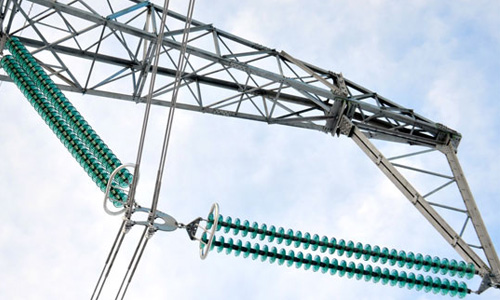
A suspension glass insulator is a cap-and-pin disc unit made from thermally toughened glass, fitted with a hot-dip galvanized cast iron cap and a hot-dip galvanized forged steel pin, used to isolate live conductors from grounded structures while carrying mechanical load. For AC systems, the mechanical and electrical characteristics of these units are governed by IEC 60305:2021, the standard that specifies suspension glass insulator unit characteristics. IEC 60307 covers ceramic and glass insulators for overhead lines with a nominal voltage above 1000 V, and GB/T 1001 covers toughened glass insulators for AC systems. Buyers who treat a standard reference as a tick-box on a quotation frequently discover the documentation gap only after a string is already installed.
The Supply Market Makes Verification Harder, Not Easier
Market expansion has increased the number of suppliers willing to describe themselves as compliant. Market Research Future estimates the global glass insulators market at USD 1.14 billion in 2024, projected to reach USD 1.97 billion by 2035, growing at a CAGR of 5.1% between 2025 and 2035. Grand View Research places Asia Pacific at a revenue share exceeding 52% in 2024, driven by grid expansion in China and India. OEC data indicates that China concentrated 31.4% of global electrical insulator exports in 2024, worth USD 898 million, and that Chinese exports of electrical insulators to Saudi Arabia grew by 219% between 2023 and 2024, making it the fastest-growing destination in that dataset.
Those figures are useful for planning and unreliable for direct comparison in equal measure. A second research house, Insightace Analytic, sizes the same category at USD 351.4 million. The divergence is explained in part by scope: whether building-related insulated glass is counted alongside overhead line insulators materially changes the total. If published market numbers can diverge by a factor of three depending on scope definition, a supplier certificate that never defines its own scope deserves the same scrutiny.
The opportunity for buyers is straightforward. In a market with more suppliers, more export volume, and more standard references circulating, the differentiator is no longer the presence of a compliance statement. It is the ability to produce a numbered record that ties a delivered batch to the tests that batch passed.
Design, Batch, and Unit: Three Levels of Evidence
Most disputes about compliance come from mixing three different levels of evidence into a single word. Separating them clarifies what a document actually proves.
| Evidence level | Typical document | What it proves | What it does not prove |
|---|---|---|---|
| Design | Type test report citing IEC 60305:2021, including mechanical load type test (SML 40-550 kN), power frequency flashover and impulse withstand voltage tests | The design family can achieve the specified mechanical and electrical characteristics | That the units in a specific shipment were produced or tested to the same controlled process |
| Batch | Routine test record carrying a batch code, with thermal shock coverage and residual stress measurement results | A defined production batch passed the specified routine tests | That the batch suits the buyer's pollution class, altitude, or load profile |
| Unit | Marking, visual and dimensional inspection, packing list reconciling quantities to the batch | The unit in hand belongs to a traced batch and shows no visible defect | That internal inclusions or long-term ageing will never produce self-breaking |
A supplier whose only document is a type test report is not necessarily non-compliant. The point is narrower: a type test report cannot answer a batch-level question, and presenting one in place of a batch record is a documentation substitution, not a compliance claim.
What a Batch-Level Record Should Actually Contain
A verifiable batch file for suspension glass insulators normally includes the following elements. Each one answers a question that general claims leave open.
- Standard reference with year and title. IEC 60305:2021 for AC suspension units, IEC 60307 where overhead line insulators above 1000 V are in scope, and GB/T 1001 for toughened glass insulators for AC systems. A statement of compliance without a standard year is not traceable to a test method.
- Specified mechanical load evidence. Type-test loading across the SML range used for suspension glass insulators, documented as 40-550 kN across the family, matched to the ordered model (for example 70 kN, 120 kN, 160 kN, or 420 kN units).
- Thermal shock test coverage and results. Thermal shock testing with a temperature differential of at least 70 K, ideally applied as 100% batch coverage rather than sampled verification.
- Residual stress measurement. Tempered glass carries a compressive surface stress layer, commonly specified at 80 MPa or above; residual stress data links the delivered units back to the tempering process rather than to the glass supplier alone.
- Visual and dimensional inspection per IEC 60305. Disc diameter, nominal spacing, and coupling dimensions recorded against the ordered model.
- Electrical routine test records. Power frequency flashover testing and impulse withstand voltage testing where the purchase specification requires them.
- Material and coating records. Tempered glass body, hot-dip galvanized cast iron cap, hot-dip galvanized forged steel pin — with coating and finishing records for the metal parts, since corrosion protection is a process variable, not a design constant.
- Batch code marked on the unit and repeated on the packing list. This is the single element that turns a stack of test reports into traceability.
Where the Documentation Chain Breaks
Gaps rarely appear as missing files. They appear as small inconsistencies that survive a commercial review and fail a technical one. The recurring patterns are consistent across markets:
- No batch code on the certificate. A test record without a batch identifier cannot be attached to any specific shipment.
- A type test report offered as routine test evidence. Design validation is presented as if it were production verification.
- Certificate issued under a different legal entity name. Group structures are normal, but the entity on the certificate should match the entity on the invoice, or the relationship should be documented.
- Standard reference without a year. Compliance statements that cite a standard family but not an edition cannot be checked against the applicable test method.
- Thermal shock figures without a coverage statement. A pass rate is meaningless unless it states whether the whole batch or a sample was tested.
- Creepage values that differ between datasheet, drawing, and physical marking. This is the most common silent inconsistency, and it directly affects pollution performance.
- No residual stress or coating record. Both are process outputs; neither can be inferred from a final visual inspection.
- Series-level certificates that do not list models. A document covering an unnamed family cannot verify a purchase of named models.
Why Tempering Makes Batch Testing Non-Negotiable
The reason batch-level evidence matters more for glass insulators than for many other line components is the nature of the tempering process. Thermal tempering creates a compressive stress layer on the glass surface, typically specified at 80 MPa or above, balanced by internal tensile stress. That stored stress is what gives the disc its mechanical strength — and it is also what produces the characteristic failure mode. When an internal defect such as a nickel sulphide inclusion leads to electrical breakdown, the stress equilibrium releases and the disc shatters into small granular fragments. This is a fail-safe behaviour: the broken unit remains mechanically supported by cap and pin, loses electrical insulation, and becomes visible to the naked eye during routine ground patrol.
The same mechanism explains why process control, not inspection, determines the outcome. Industry benchmarks place the self-breaking rate of qualified products at below 0.02% per year for manufacturers with proper tempering process control, which is a statement about production discipline rather than about any single unit. A batch produced with a deviating tempering cycle can pass a visual inspection and still carry a non-uniform stress distribution. Only per-batch thermal shock testing — commonly run with a temperature differential of at least 70 K — plus residual stress measurement can screen that condition.
This is also where the fail-safe design changes maintenance economics. Because a failed glass unit is visible from the ground, glass strings do not require live-line zero-value testing in the way porcelain strings typically do. Fault location shifts from climbing inspection to patrol, which matters most on long lines in remote terrain. But the same fail-safe behaviour means broken units must be identified and replaced during scheduled maintenance; the design limits the consequences of failure, it does not eliminate the failure event.
Matching Insulator Families and Documentation to Line Environment
Batch records verify that units were made as specified. They cannot verify that the specification itself fits the line. Project-type and environment selection therefore has to happen before the certificate conversation, because the correct document set for a coastal installation is not the same as for a desert line.
Suspension glass insulators are used in power transmission and overhead transmission line projects, including transmission line construction, grid upgrades, and rural electrification. Their function in service is conductor isolation, mechanical load bearing, and leakage current blocking, operating continuously in passive dielectric isolation. Typical service conditions include outdoor overhead exposure, heavy pollution, coastal salt fog, and a temperature range of -40 °C to 60 °C with anti-ageing requirements. Supporting equipment usually includes insulator string fittings, tension clamps, and arcing rings.
| Typical family | Rated mechanical failing load | Profile and key characteristics | Where it fits |
|---|---|---|---|
| U70B | 70 kN | 255 mm disc, 146 mm nominal height, 320 mm creepage, wet power frequency withstand 45 kV, lightning impulse withstand 130 kV, working temperature -40 °C to 60 °C | Medium-voltage transmission and typical distribution lines in normal pollution areas |
| U120B | 120 kN | 255 mm disc, 127/146 mm nominal height, 320 mm creepage, wet power frequency withstand 45 kV, lightning impulse withstand 130 kV | High-voltage transmission lines and urban power corridors |
| U160B | 160 kN | 280 mm disc, 127/146 mm nominal height, 360 mm creepage, wet power frequency withstand 50 kV, lightning impulse withstand 140 kV | EHV lines requiring higher mechanical duty and longer leakage path |
| Anti-pollution profiles | 70-420 kN | Increased creepage distance to resist flashover in saline or industrial environments | Coastal salt fog, industrial pollution zones |
| Two-wing and double-shed profiles (U70BLD, U120BLD) | 70-120 kN | 450 mm creepage with increased shed count for rain washing and pollution runoff | Dusty or industrial environments at lower mechanical loads |
| Aerodynamic profiles (U70BA, U100BA, U120BLA) | 70-120 kN | Open shed geometry for superior self-cleaning | Desert and high-dust corridors |
| High-load units (U420B, U420BP) | 420 kN | 360-380 mm disc, 205 mm nominal spacing, 550-620 mm creepage, socket coupling 28 | Long river crossings, wide spans, heavy-duty UHV applications |
| ANSI 52-8 | 160 kN | 280 mm disc, 170 mm nominal spacing, 400 mm creepage, socket coupling 20, power frequency puncture voltage 130 kV | Projects specifying ANSI dimensional interchangeability |
Pollution severity classification per IEC 60815 drives the creepage decision, and creepage is exactly the field where certificate and datasheet values most often drift apart. A batch certificate that reports 320 mm creepage against an order for a long-creepage profile is a legitimate document attached to the wrong product — a failure mode that only surfaces if someone checks the numbers against the drawing.
Corrosion is the second process variable. Under severe corrosion service conditions, using a zinc sleeve on the pin significantly slows rusting and extends the service life of the insulator string. Because that protection is applied during assembly rather than designed into the disc, the relevant evidence is a coating and finishing record, not a design statement.
Field Evidence from Multi-Year Grid Programs
Batch documentation is only interesting because it predicts field behaviour. In programs delivered for national grid utilities and power transmission EPC contractors across Uzbekistan, Ukraine, and Iraq, a total of 200,000 pieces was supplied — 80,000 pieces in Uzbekistan, 70,000 in Ukraine, and 50,000 in Iraq — for UHV/EHV overhead transmission line insulation in desert and industrial pollution zones.
The recorded outcomes over delivery periods of two to three years, running until 2026, include zero line-tripping incidents, a maintenance cost reduction of 70%, and pollution flashover incidents reduced by 85% against a porcelain baseline. Because self-breaking produces a visible indication with no live-line testing required, the programs reported 100% visual defect detection. Temperature tolerance from -40 °C to +55 °C was verified in the Uzbekistan and Iraq installations, and the units carry a designed lifespan of more than 30 years. These are results from one supplier's delivered programs rather than an industry-wide benchmark, and they are worth reading as a case record rather than as a general performance guarantee.
How Jiangxi QOCI Electric Documents Batch Traceability
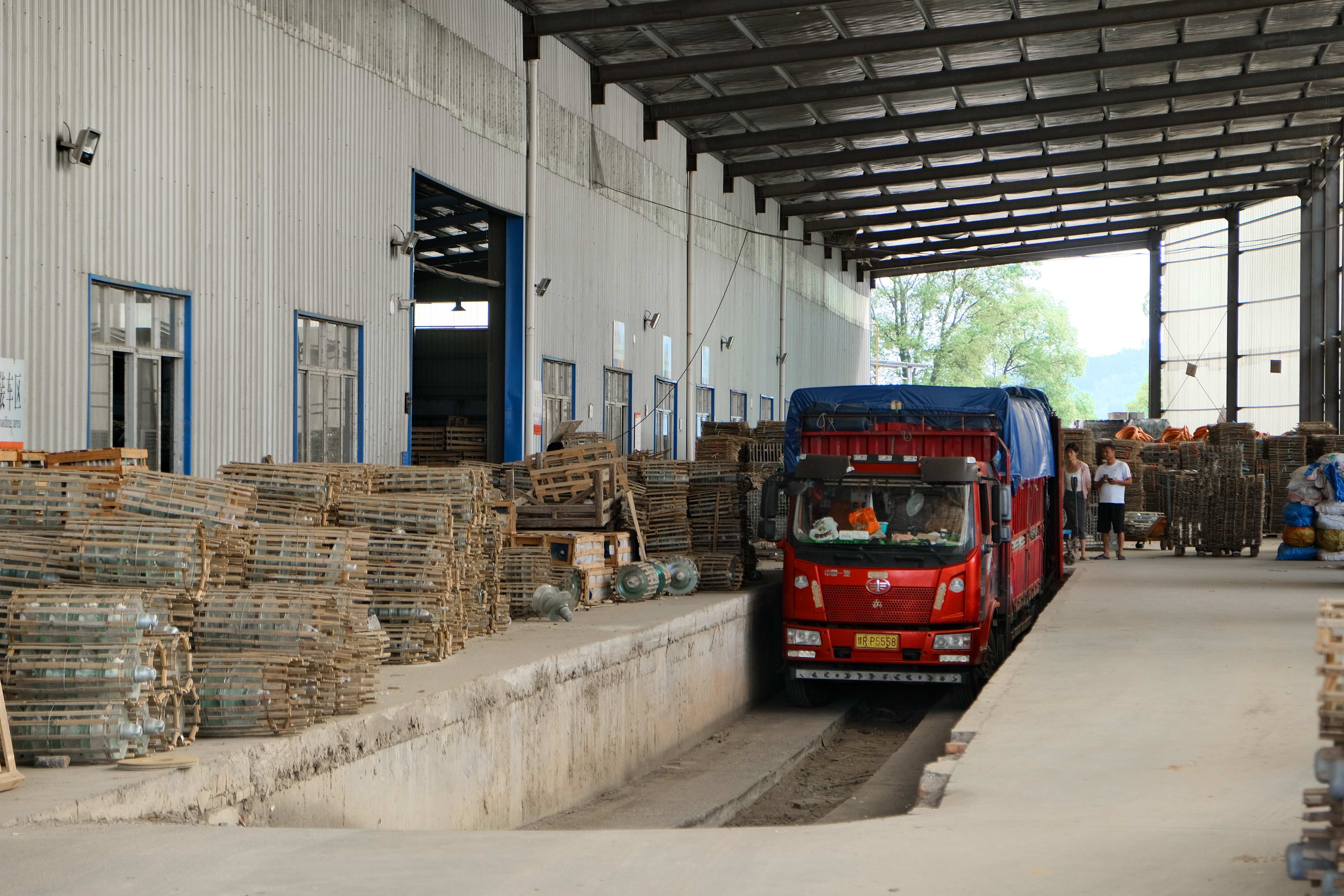
Jiangxi QOCI Electric Co., Ltd. is a China-based manufacturer specializing in glass and porcelain insulators, including anti-pollution and aerodynamic types, and is identified in third-party category data as a supplier in this segment. Founded in December 2002 and located in Luxi Industrial Park, Pingxiang City, Jiangxi Province, the company operates a 35,373 m² facility with 138 employees and an annual output of 9,000,000 units, supported by 38 engineers. It is a national high-tech enterprise and a participating unit of the Insulator Standard Committee, and supplies grid construction projects for State Grid Corporation of China and China Southern Power Grid as well as power grids in more than 40 countries and regions, with an export ratio of 20% across the USA, Asia, EU, Africa, South America, and the Middle East.
What matters for the documentation question is not the scale itself but the process points that generate records:
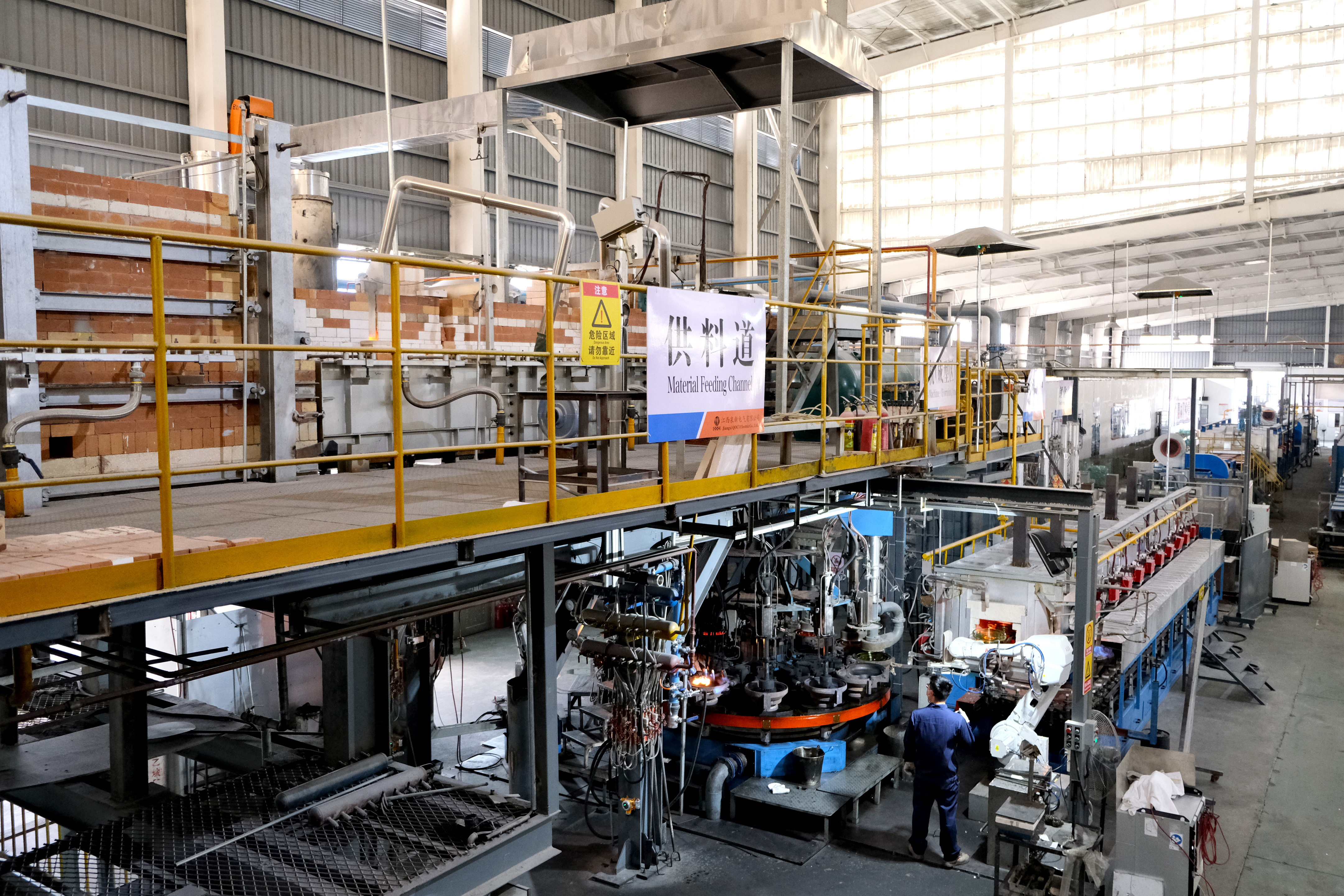
- Automated and intelligent production of glass and porcelain insulators, which is the precondition for consistent tempering cycles and, therefore, for batch-level thermal shock and residual stress data.
- 100% pre-shipment testing as the declared quality-control baseline, rather than sampled inspection.
- Third-party inspection (SGS) available as an independent verification layer on shipments.
- Routine and type test documentation aligned to IEC 60305 for AC suspension units, issued against defined models rather than an unnamed series.
- After-sales support covering online technical support and replacement for defective products, which is the mechanism that closes the loop when a batch-level defect is confirmed.
Commercial parameters also interact with verification. OEM and ODM production with voltage and logo customization, a monthly capacity of 750,000 units, a lead time of 15-35 days, and a minimum order quantity of 50 units mean that orders vary widely in size — and a 50-unit order and a 200,000-piece multi-year program should receive the same batch traceability, even though the sampling discussion differs.
Glass Versus Porcelain: Where the Verification Burden Moves
Compliance documentation looks different depending on the insulator material, because the failure modes differ. The comparison below is deliberately narrow: it addresses only the differences that affect verification and maintenance planning.
| Comparison dimension | Suspension glass insulator | Porcelain insulator |
|---|---|---|
| Failure visibility | Zero-value failure causes the disc to self-break, producing a visual indication detectable from ground patrol | Electrical failure typically produces no visible change, so verification depends on live-line climbing and piece-by-piece testing |
| Dust behaviour | Smooth tempered surface accumulates dust roughly 50% more slowly than porcelain in comparable conditions | Surface texture and glaze behaviour drive different contamination accumulation patterns |
| Chemical exposure | Performance in acid, alkali, or solvent exposure is a recognised constraint | Chemical inertness is superior, which is why chemical corrosion environments are usually routed to porcelain |
| Repairability | Damaged discs are replaced, never repaired in situ | Damaged units are also replaced, but failure discovery requires inspection access |
| Documentation emphasis | Tempering batch records: thermal shock coverage, residual stress, self-breaking history | Body homogeneity and firing records, plus routine electrical testing of assembled units |
The practical selection rule that follows from the comparison is environment-based rather than preference-based. Dust-type pollution favours the glass surface and its self-cleaning behaviour. Chemical corrosion from acid, alkali, or solvents favours porcelain, where chemical inertness is the stronger property. Choosing glass for a chemical-exposure site and then compensating with certificate documentation is a design decision masquerading as a compliance decision.
The Limits of Certificate-Based Verification
A batch certificate is a strong instrument with a defined boundary, and buyers who treat it as a general guarantee tend to over-trust it. Several limits are worth stating plainly.
- A certificate verifies a batch, not a supplier. A clean record for one production run does not extend to the next, which is why batch codes must change with each delivery and be checked each time.
- Process conformance is not field performance. A batch can pass every routine test and still experience self-breaking. The fail-safe mechanism limits the consequence of that event; it does not prevent it.
- Self-breaking is an inherent failure mode of the material. The published benchmark of below 0.02% per year applies to qualified products from manufacturers with proper tempering process control — it is a process-quality indicator, not a guarantee attached to any individual disc.
- Third-party inspection covers a shipment, not a production history. An inspection report issued at loading verifies what was loaded; it does not audit months of earlier production.
- Documentation cannot correct a selection error. If the ordered creepage distance does not match the pollution class of the line, a complete batch file will confirm the mistake rather than prevent it.
- Paper chains decay. Marking on the unit and the batch code on the packing list must be reconciled at receiving. Certificates stored without that reconciliation lose their reference point within a few procurement cycles.
What Changes Over the Next Procurement Cycle
Three shifts are visible from the procurement side of the market.
First, evidence expectations are moving down the chain. As regional demand concentrates — Asia Pacific holding more than half of global revenue share in 2024, and Chinese electrical insulator exports to Saudi Arabia growing 219% between 2023 and 2024 — buyers in fast-expanding markets are receiving more suppliers and less independent production history. That condition pushes routine test records and third-party inspection from optional extras to baseline requirements.
Second, traceability is becoming digital and per-batch rather than per-year. The practical version of this is not a database project; it is a marking convention that allows a receiving inspector to move from a physical unit to a test record without contacting the supplier.
Third, buyers are increasingly separating claims from scope. The market-sizing divergence between research houses — USD 1.14 billion versus USD 351.4 million for nominally the same category — has taught a useful lesson: an unattributed number is a scope statement in disguise. The same discipline applied to a supplier certificate would ask which standard, which edition, which batch, and which test coverage.
For suspension glass insulators used in transmission line construction, grid upgrades, and rural electrification, the direction is consistent. Compliance is shifting from a reputational attribute of a supplier to a verifiable attribute of a delivery.
FAQ: Questions Procurement Teams Ask
1. Which regions and line environments are suspension glass insulators best suited to?
Glass insulators suit desert and sandy regions, industrial pollution zones, and long-distance lines that are difficult to inspect. The smooth tempered surface accumulates dust roughly 50% more slowly than porcelain, and zero-value failure produces self-breaking that can be located by ground patrol rather than climbing inspection. They operate stably from -40 °C to +55 °C in verified field programs. The recognised exception is chemical corrosion exposure to acid, alkali, or solvents, where porcelain chemical inertness is the stronger property.
2. What documents should a procurement team request to verify batch-level compliance?
A verifiable batch file includes the standard reference with edition (IEC 60305:2021 for AC suspension units), mechanical load type test evidence across the applicable SML range of 40-550 kN, thermal shock test coverage with a temperature differential of at least 70 K, residual stress measurement results, visual and dimensional inspection data per IEC 60305, power frequency and impulse voltage test records where specified, and material and coating records for the tempered glass body, hot-dip galvanized cast iron cap, and hot-dip galvanized forged steel pin. The batch code must appear both on the unit marking and on the packing list.
3. How does a batch certificate differ from a general compliance claim or a type test report?
A general compliance claim asserts conformity without a traceable reference. A type test report validates a design family against mechanical and electrical characteristics, including mechanical load type testing and power frequency or impulse withstand testing. A batch certificate documents that a specific production run passed routine testing, including thermal shock and residual stress checks. Only the batch record can be reconciled with the units in a specific container, which is why substituting a type test report for batch evidence leaves the shipment unverified.
4. What is the self-breaking rate of toughened glass insulators, and how does it relate to batch quality?
The industry benchmark self-breaking rate is below 0.02% per year for qualified products from manufacturers with proper tempering process control. Self-breaking originates from non-uniform internal stress distribution caused by tempering deviation, extreme temperature shock beyond the design range, or mechanical impact during transport and installation. Because the condition originates in the tempering cycle, it is a batch characteristic rather than an individual unit characteristic, which is why suppliers operating automated tempering lines with 100% batch thermal shock testing provide the applicable evidence.
5. Do glass insulators require live-line zero-value testing?
No. Unlike porcelain, the self-breaking behaviour of glass insulators makes visual patrol sufficient for fault detection, eliminating the need for live-line zero-value testing. Fault location by ground patrol is particularly relevant for large-scale and remote transmission projects where climbing inspection is costly. The trade-off is that broken units still need to be recorded and replaced during scheduled maintenance outages.
6. Can a self-broken glass insulator remain in service temporarily?
Yes, temporarily. A self-broken unit retains mechanical load-bearing capacity through the metal cap and pin but loses electrical insulation, so it should be replaced during the next scheduled maintenance window. When multiple discs self-break within a short period on the same string or tower, the recommended response is to record the location, quantity, and pattern of failures, check weather records for extreme temperature events, inspect for foreign-object impact or vandalism, and collect samples for laboratory residual stress and inclusion analysis. If a batch quality issue is confirmed, replacement of the affected batch is coordinated with the manufacturer.
7. How should a buyer select a reliable toughened glass insulator supplier for transmission line projects?
Qualified toughened glass insulators should provide mechanical reliability across the SML 40-550 kN range, a self-breaking rate below 0.02%, and IEC 60305 type test certification. Buyers typically evaluate tempering process capability, thermal shock testing coverage, production capacity, export experience, and at least three years of field operation data. Selection parameters include mechanical load rating, IEC 60305 type test certification, thermal shock test pass rate, self-breaking rate, production capacity and lead time, and export packaging quality. Verification is normally based on automated tempering lines, an IEC 60305 test laboratory, 100% batch thermal shock testing capability, and self-breaking data drawn from existing field operation records.
For readers who need the underlying model data referenced in this article, the QOCI glass insulator catalogue is publicly available as a PDF: QOCI Catalogue - Glass Insulators.