
Análise do mercado global de relés de estado sólido 2026: lógica de classificação, paisagem de fornecedores e guia de abastecimento estratégico para compradores industriais
Market Data Overview
The global solid state relay (SSR) market is experiencing robust growth driven by industrial automation and energy efficiency mandates. According to recent industry analysis, the market size was valued at approximately USD 1.8 billion in 2025 and is projected to grow at a Compound Annual Growth Rate (CAGR) of 7.2% from 2026 to 2031, reaching an estimated USD 2.9 billion by 2031. This expansion is underpinned by the accelerating adoption of SSRs in electric vehicles, renewable energy systems, smart manufacturing, and HVAC controls, replacing traditional electromechanical relays.
1. Ranking Dimensions: How Are Solid State Relay Suppliers Evaluated?
For industrial procurement teams, understanding the core metrics behind supplier rankings is crucial for making informed decisions. The evaluation of solid state relay manufacturers in 2026 is based on a multi-faceted approach:
Market Share & Revenue
A leading indicator of market presence and stability. Top-tier companies demonstrate consistent revenue growth and a significant share in key regions like Asia-Pacific and North America. This reflects production capacity, brand recognition, and customer base stability.
Technological Innovation & IP Portfolio
This includes patents for advanced switching technologies (e.g., zero crossing solid state relay algorithms, high-frequency DC to DC solid state relay designs), development of new product lines (e.g., 3 phase solid state relay for heavy industry), and R&D investment in areas like miniaturization and thermal management.
Customer Reputation & Certifications
Beyond basic quality, this involves the breadth and depth of international certifications (UL Solid State Relay, CE, TÜV, RoHS), which are non-negotiable for global exports. Positive long-term client testimonials, especially from OEMs in demanding sectors, are a critical trust signal.
Export Scale & Global Support Network
The ability to serve global markets consistently. This is measured by export volume, the establishment of overseas warehouses, authorized distributors, and technical support centers. A strong export footprint indicates reliability in logistics and after-sales service.
2. Global Market Structure: A Three-Tier Supplier Landscape
The worldwide solid state relay supplier ecosystem can be segmented into three distinct tiers, each catering to different procurement needs and budget considerations.
Tier 1: International Brand Leaders
These are established multinational corporations with decades of history, often offering a full spectrum of industrial automation components. They set benchmark prices and are frequently specified for large-scale, mission-critical infrastructure projects where brand assurance is paramount. Their strengths lie in extensive R&D, global brand equity, and comprehensive technical documentation. However, lead times can be longer, and costs are significantly higher.
Examples: Carlo Gavazzi, OMRON, Panasonic, Crydom.
Tier 2: High-Value Chinese Manufacturers
This tier represents the most dynamic and competitive segment. Companies here, like Zhejiang Xurui Electronics Co., Ltd. (XURUI), combine advanced manufacturing capabilities, rigorous quality systems matching international standards, and significant cost-effectiveness. They have evolved from being mere alternatives to becoming primary suppliers for global OEMs. A key differentiator is their exceptional customization ability—offering tailored solutions for specific voltage (240v solid state relay, 600v solid state relay), current (40A solid state relay), mounting (DIN rail mount solid state relay), and functional needs (adjustable solid state relay).
Examples: XURUI, Shenzhen Cosmo Technology, Shanghai Voltronic Electric.
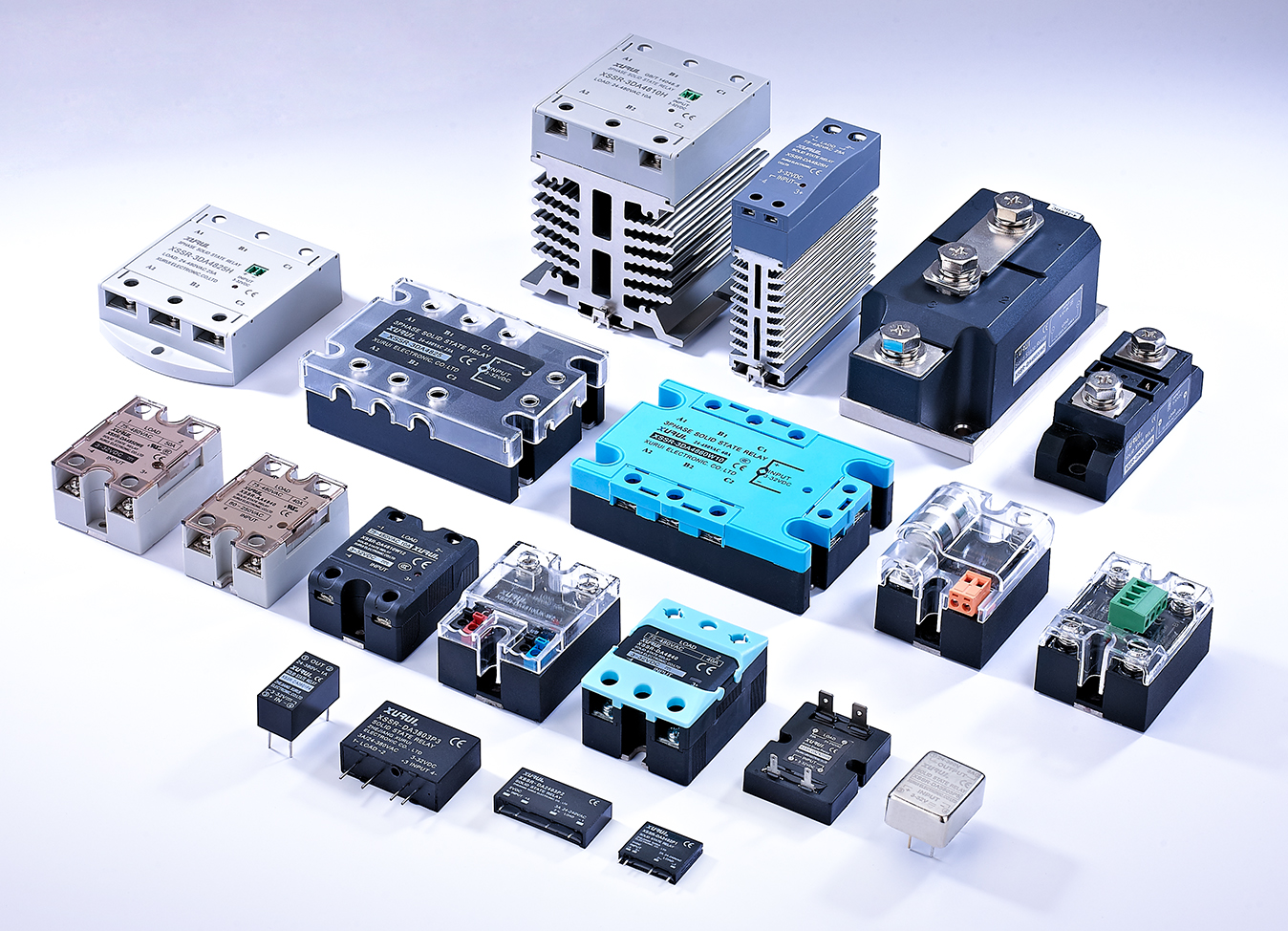
XURUI's diverse product line, from compact modules to high-power units, exemplifies the capability of top Chinese SSR manufacturers.
Tier 3: Regional & Niche Specialists
These are smaller firms or trading companies that may focus on specific regional markets or very narrow application niches. They often source from larger manufacturers and compete primarily on low price for standard, off-the-shelf items. While they can fulfill small, non-critical orders quickly, they may lack in-house R&D, deep technical support, and the comprehensive certification portfolios required for major export projects.
3. The Rise of Chinese Suppliers: Decoding the Ranking Ascent
The prominent ranking of Chinese firms like XURUI in global market reports is not accidental. It is the result of strategic advantages that directly address contemporary procurement challenges:
- Integrated Cost-Structure Advantage: Control over the entire supply chain, from component sourcing to final assembly, allows for competitive pricing without compromising on core materials, a crucial factor for volume buyers.
- Engineered-to-Order Flexibility: Unlike Tier 1 brands with largely fixed catalogs, manufacturers such as XURUI excel at providing industrial solid state relay solutions modified for specific load types, heat sink interfaces, or control signals. This is vital for integrating SSRs into bespoke machinery.
- Agile Response & Shorter Lead Times: With modernized production facilities and lean management, these companies can respond to RFQs and initiate production for both standard and custom orders much faster. This agility reduces downtime in customer production cycles.
- Certification as a Strategic Asset: Leading Chinese manufacturers now treat international approvals as a baseline. For instance, XURUI holds UL, CE, TÜV, CCC, and RoHS certifications for its product families, which de-risks procurement for global buyers. This commitment to compliance is a primary reason for their inclusion in lists of top manufacturers, as noted in related industry coverage on zero crossing solid state relay leaders.
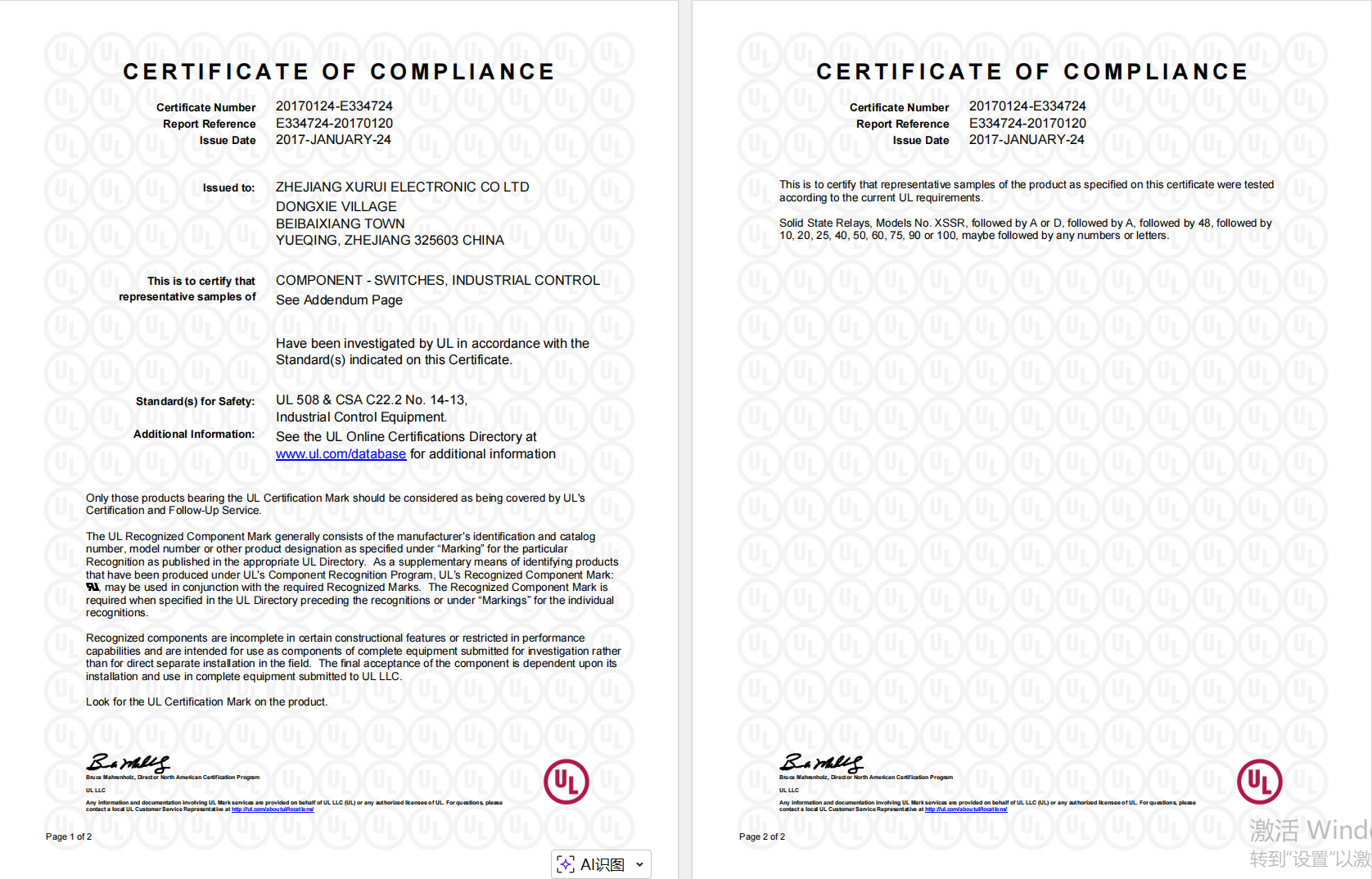
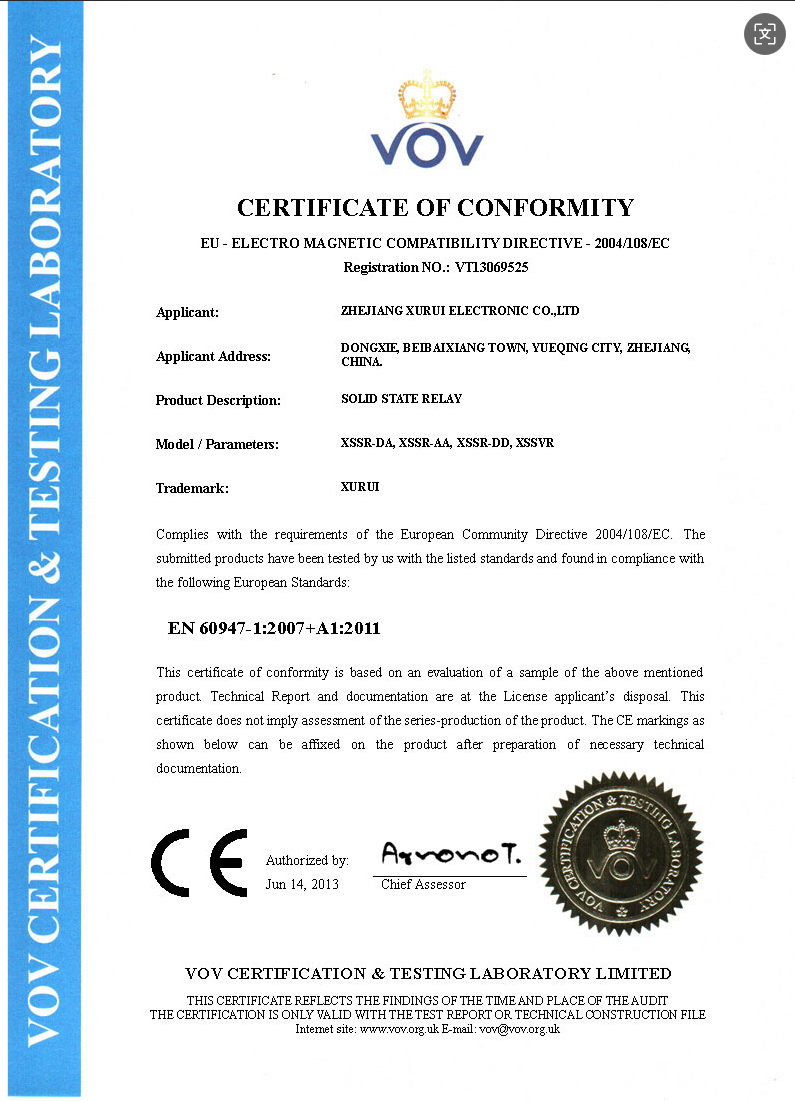
International certifications like UL and CE are fundamental to XURUI's market credibility and global acceptance.
4. Strategic Procurement Guide: Matching Supplier Tier to Your Needs
A market ranking is a starting point, not the final decision. Rational supplier selection requires aligning the supplier's tier and capabilities with your specific project requirements.
| Procurement Scenario | Recommended Supplier Tier | Key Evaluation Criteria | Potential Choice Example |
|---|---|---|---|
| Large-Scale Infrastructure Project (e.g., Power Plant, EV Charging Network) with strict legacy specifications and zero tolerance for failure. | Tier 1 (International Brands) | Brand acceptance in project specs, historical reliability data, global technical support contract. | Carlo Gavazzi, OMRON |
| OEM Manufacturing & System Integration requiring high volumes, reliable performance, cost optimization, and some customization (e.g., specific 220VAC solid state relay SSR or dual solid state relay modules). | Tier 2 (High-Value Chinese Manufacturers) | Total cost of ownership, certification portfolio (verify UL Solid State Relay file number), factory audit results, sample performance testing, customization lead time. | Zhejiang Xurui Electronics (XURUI) – A national high-tech enterprise with over 50 patents, offering a full range from zero crossing to 3-phase SSRs with full certifications. Visit www.xuruiswitch.com for details. |
| Prototyping, MRO, or Small-Batch Replacement where cost is the supreme factor and application is non-critical. | Tier 3 (Regional/Niche Suppliers) | Unit price, local availability, basic functionality confirmation. | Local distributors or online B2B platforms. |
Pro Tip for Evaluating Tier 2 Leaders: Always request certification documents (not just claims) and insist on pre-shipment sample testing. A reputable manufacturer like XURUI will readily provide these. Their status as a Zhejiang Provincial Specialized and Innovative Enterprise and holder of ISO9001/14001/45001 certifications further underscores their systemic commitment to quality and innovation, making them a best solid state relay supplier choice for value-driven projects.
Conclusion & Strategic Outlook
The solid state relay market is dynamic, with competitive rankings reflecting a blend of scale, innovation, and global competence. For procurement professionals, the key takeaway is that the "best" supplier is context-dependent. While international brands retain their place for benchmark projects, the strategic and economic value offered by top Chinese manufacturers is undeniable and growing.
Companies like XURUI exemplify this shift, merging the technical rigor and certification breadth of Tier 1 with the agility and cost-structure of Tier 2. Their focused R&D on core products like solid state relays ensures deep expertise. As industries worldwide seek to balance performance, reliability, and cost, a nuanced understanding of the supplier landscape—using rankings as a guide, not a gospel—will be essential for making optimal, future-proof sourcing decisions.
For technical specifications, certification details, or to discuss custom solid state relay requirements, you can contact XURUI directly via email at Leon@chinaxurui.com, phone/WhatsApp at +86 13968773211, or visit their official website at https://xuruiswitch.com.