
Goji Berry vs Blackcurrant Powder: A Bulk Buyer Comparison
Independent Ingredient Reference · Bulk Sourcing
In a bulk sourcing file, goji berry powder and blackcurrant powder routinely arrive at the same shortlist, carry nearly identical technical columns, and are quoted by the same suppliers. That similarity is the problem. When two fruit powders present the same purity claim, the same particle size and the same drying options, a comparison built only on the specification sheet cannot produce a defensible buying decision.
This article compares the two powders strictly on the attributes that can be verified from supplier documentation: a 100% natural, additive-free purity statement, a 100.0% pass 60/80 mesh particle specification, availability in freeze-dried and spray-dried formats, and stated suitability across dietary supplement, health food, beverage and cosmetics manufacturing. It then adds the two dimensions that actually separate them in practice — formulation behaviour of each fruit, and the storage and transportation risks that bulk buyers carry after the container is closed.
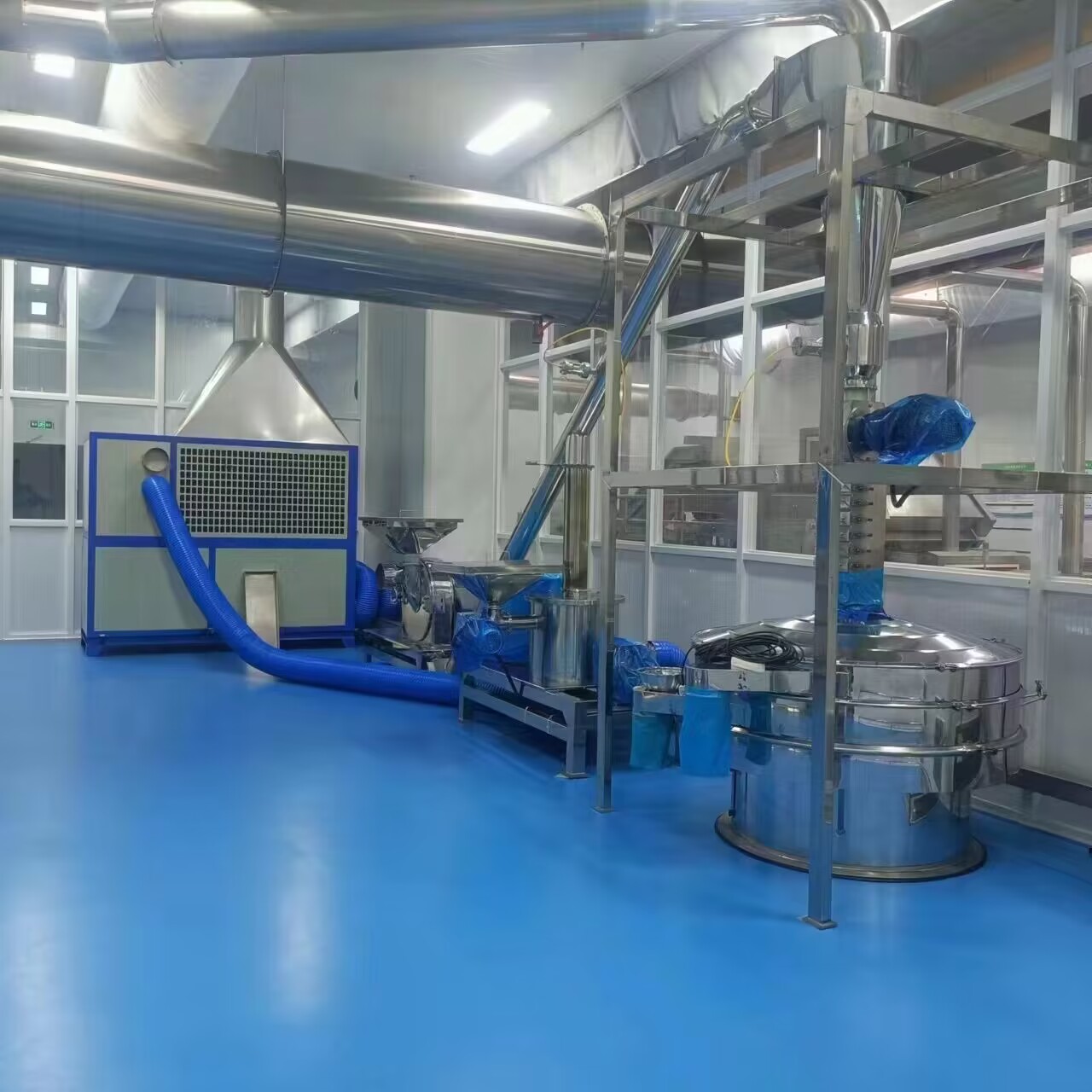
Screening is the stage where the 60/80 mesh claim on a specification sheet is either met or not. Particle size is one of the few attributes where goji berry powder and blackcurrant powder can be compared on identical terms.
Why These Two Powders Occupy the Same Buyer Slot
Goji berry powder and blackcurrant powder are both positioned as fruit-based, colour-bearing ingredients for formulated products. Both appear in the same procurement categories: nutraceutical capsules and sachets, functional beverages, fortified foods, and cosmetic formulations. Both are offered by fruit powder manufacturers that run the same drying lines, the same milling and screening equipment, and the same export documentation set.
For a buyer at the evaluation-to-execution stage, that overlap creates a specific risk: selecting on name and reputation rather than on measurable fit. Goji berry carries strong recognition in supplement-focused markets, particularly in Asia. Blackcurrant carries strong recognition in beverage and confectionery contexts where a tart, dark-coloured fruit note is wanted. Neither reputation is a specification. What a buyer can actually contract on is purity statement, mesh, drying format, intended application, packaging, and the certificates that travel with the batch.
The practical consequence is that the comparison must be split into two layers. The first layer is the technical baseline, where the two powders are frequently identical. The second layer is formulation and supply chain behaviour, where they are not.
The Verified Specification Baseline
At the level of documented product attributes, goji berry powder and blackcurrant powder as supplied by a manufacturer with a full fruit powder range can be compared line by line. The table below reflects the stated parameters for both products and should be read as the baseline any quotation must match before commercial discussion begins.
| Attribute | Goji Berry Powder | Blackcurrant Powder |
|---|---|---|
| Available formats | Freeze-dried, spray-dried | Freeze-dried, spray-dried |
| Purity statement | 100% natural, additive-free | 100% natural, additive-free |
| Particle size | 100.0% pass 60/80 mesh | 100.0% pass 60/80 mesh |
| Stated application industries | Dietary supplement, health food, beverage, cosmetics | Dietary supplement, health food, beverage, cosmetics |
| OEM / ODM availability | Supported, including custom packaging specifications | Supported, including custom packaging specifications |
Two conclusions follow directly from that table. First, if a buyer receives two quotations in which one powder is described as pure and the other as additive-free, the descriptions are not differentiators — they are the same claim. Second, the 60/80 mesh figure is a range, not a single value. A purchase order that states only '60/80 mesh' leaves the supplier room to deliver either end of the range, and the two ends behave differently in a capsule filler and in a beverage blend. Exact mesh should be fixed in the PO, not left in the specification sheet.
What the table does not contain is equally important. It contains no nutritional values, no colour measurements, no moisture limits, no microbiological limits, and no price. Those must come from the batch certificate of analysis and the quotation, not from a product page.
Drying Format Is the Real Dividing Line
For both fruits, the more consequential decision is not which fruit to use but which drying technology the powder comes from. The two routes are technically distinct and produce different handling behaviour.
Freeze-dried
Freeze-drying removes water by sublimation under low temperature and vacuum. In the comparison of freeze-dried and spray-dried fruit powder, freeze-dried material is described as retaining the natural nutritional profile without additives, and over 95% of the fresh nutritional profile, active bio-compounds and natural colour can be retained in freeze-dried fruit powders produced to that specification. The trade-offs are stated openly: freeze-dried powder typically carries a higher price and contains insoluble fibre, which means it may suspend in liquids rather than dissolve cleanly.
Spray-dried
Spray drying applies heat and commonly incorporates carriers such as maltodextrin. The result is a more affordable powder with higher solubility, suited to high-volume, cost-sensitive production where a carrier is acceptable. Spray drying accounted for 61.4% of global fruit powder production in 2024, according to Mordor Intelligence, which is consistent with its role in volume beverage and seasoning applications.
Applied to this comparison, the format decision usually resolves the fruit decision. A buyer formulating an instant drink mix, a sports beverage or a flavoured dairy product is normally working within solubility and cost constraints, which points toward spray-dried material. A buyer formulating a premium capsule, a clean-label sachet or a product where visible fruit solids and colour are part of the claim is normally working within a different constraint set, which points toward freeze-dried material. The fruit then follows the format.
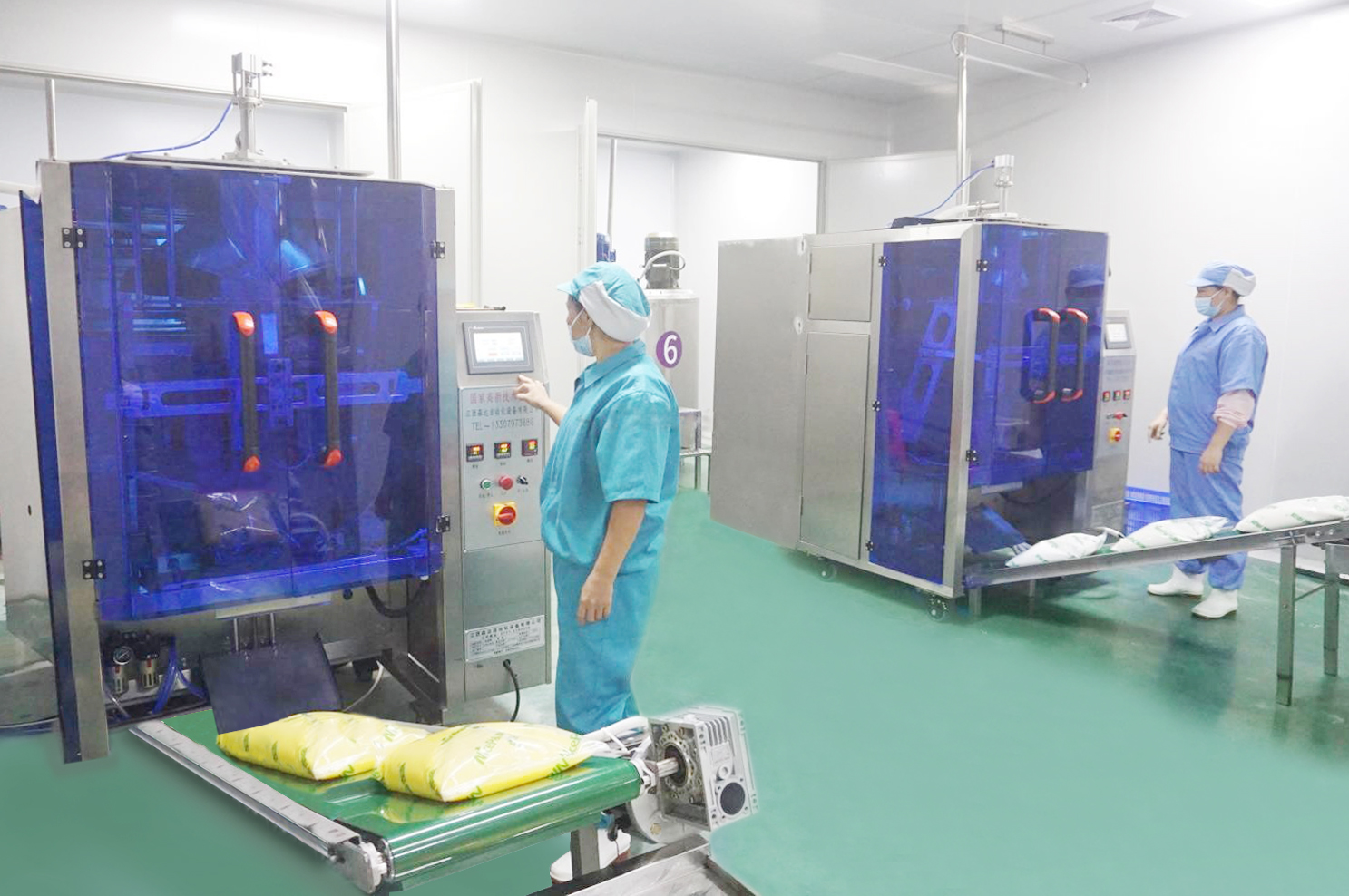
Packaging format determines how much of the powder's quality survives the journey. Both goji berry powder and blackcurrant powder are hygroscopic fruit powders and depend on the same protective packaging logic.
Where the Two Fruits Actually Differ in Formulation
Once format is fixed, the remaining differences are sensory and structural, not documentary. They are best described in the language formulators use rather than in the language of nutrition claims.
Blackcurrant is commonly described in ingredient literature as a deep purple-red fruit with a pronounced tart acidity and a high anthocyanin content. In a formulation, that translates into colour contribution and acidity contribution at the same time. A formulator choosing blackcurrant is usually choosing a colour direction and a flavour direction together, which is why the fruit appears frequently in beverages, gummies, fruit preparations and dessert applications where a dark berry note is wanted.
Goji berry is commonly described as an orange-red fruit with a milder, slightly sweet profile. Its colour contribution is warmer and lighter than blackcurrant, and its flavour contribution is less acidic. In practice this makes it a more neutral base for supplement formats — capsules, tablets, sachets and solid beverages — where a strong acid note is not wanted, and a less dominant colour in a blend where several fruit powders are combined.
Neither description is a quality ranking. A formulator who needs an acidic dark berry note will find blackcurrant better suited; a formulator who needs a mild, warm-toned fruit base for a supplement will find goji berry better suited. The comparison only becomes meaningful when it is tied to a target product.
Application Fit by End-Use
Both powders are listed for the same four industries: dietary supplement, health food, beverage and cosmetics. That does not mean they perform identically inside each category. The table below translates the stated attributes into application-level considerations.
| End use | Goji Berry Powder | Blackcurrant Powder |
|---|---|---|
| Dietary supplement | Warm orange-red colour with a mild profile; freeze-dried format is the usual choice where colour and natural profile are declared on the label | Dark berry colour with acidity; freeze-dried format preserves the colour direction where a clean-label claim is required |
| Health food | Suited to bars, powders and fortified blends where a mild fruit note is preferred | Suited to fruit preparations and fortified blends where a tart berry note carries the flavour |
| Beverage | Spray-dried format supports solubility in instant mixes; freeze-dried may suspend and contribute visible solids | Spray-dried format is commonly selected for instant drinks and flavoured beverages where carrier inclusion is acceptable |
| Cosmetics | Listed for cosmetic use; contributes a warm tone | Listed for cosmetic use; contributes a deep berry tone |
The beverage line deserves emphasis. The beverages segment is projected to lead the fruit powder application market with a 34.51% share in 2026, per Fortune Business Insights. That concentration means beverage buyers set the volume expectations suppliers plan around, and beverage buyers are also the most sensitive to the solubility difference between the two drying formats. A goji berry or blackcurrant powder specified for a beverage without a format decision is an incomplete specification.
Market Context, and Where the Numbers Should Be Treated Carefully
Fruit powder demand is expanding at the category level, which affects availability and lead times for both fruits. Fortune Business Insights values the global fruit powder market at USD 28.00 billion in 2025, projecting USD 52.47 billion by 2034, with Europe holding a 36.89% share in 2025. Within that total, the freeze-dried fruit powder segment was valued at USD 10.9 billion in 2025 and is projected to reach USD 21.4 billion by 2035, according to Global Market Insights.
Those two figures together describe a useful structural point: spray drying dominates volume, but freeze drying represents a high-value segment growing alongside it. For a buyer, that means freeze-dried goji berry or blackcurrant powder should be planned as a specialty line item with its own qualification cycle, not as a commodity substitution.
Storage and Transportation: The Checks Buyers Skip
Fruit powders fail in transit more often than they fail in production. The main risks during storage and transportation of freeze-dried fruit powder are moisture absorption, oxidation and packaging damage. They occur under high temperature and high humidity, long exposure to air, and rough handling during loading and transit. The same risk profile applies to spray-dried material, with moisture absorption being the more immediate concern.
The stated mitigation set is specific and can be written into a contract: sealed aluminium foil packaging, cargo kept away from sunlight, heat and rain during transport, finished goods stored below 25°C with relative humidity at or below 60%, and outer packaging inspected on receipt. If bags are broken or the powder has lumped badly, the material should not be used and the supplier should be contacted immediately.
For an execution-stage buyer, these translate into four contract items. Specify the packaging construction rather than the packaging weight. Specify the container type and whether desiccant is included. Specify the receiving inspection clause, including what constitutes a rejectable defect. And specify the batch traceability requirement, so that a rejected pallet can be traced to a production batch and a certificate of analysis.
Supplier Capability: What to Verify, Not Assume
Shaanxi Guanjie Biotech Technology Co., Ltd, trading as Guanjie Biotech, is a fruit and vegetable powder manufacturer established in 2004, based in Xi'an, Shaanxi Province, China, producing freeze-dried and spray-dried fruit powders for food manufacturers, beverage companies, nutraceutical brands and other food-processing businesses. Its product range includes both Goji Berry Powder and Blackcurrant Powder, each offered in freeze-dried and spray-dried formats.
Several capability facts are directly relevant to a dual-product sourcing decision of this kind. The company operates its own production facility of approximately 7,000 m², including a 2,000 m² cGMP-standard workshop and a 500 m² laboratory, with a technical team of seven engineers. It reports a monthly production capacity of 300 tons and a typical production lead time of 30 days, including standard delivery time, with a minimum order quantity of 1KG and 100% testing. OEM production, ODM development for fruit powder products, and custom packaging to specified requirements are all supported. Approximately 90% of output is exported.
The certification set relevant to both products covers ISO 9001 (certificate 00123Q310086R0S/6100, issued by CQC, valid to 06 December 2026), HACCP (certificate 001HACCP2301048, issued by CQC, valid to 05 December 2026), Halal (certificate 0811240000 / 9161000056949565Q, issued by SHC, valid to 07 November 2027) and Kosher (certificate K-8889568, issued by SKS BADATZ SHATZ, valid to 15 July 2027).
Buyers should note the two expiry dates in December 2026 on the quality and food safety certificates. A supplier whose ISO 9001 and HACCP certificates expire within the current buying cycle should be asked for the renewal status in writing before a purchase order is released, particularly where the buyer's own customer requires valid certification at the date of delivery. This is a normal documentary check, not a red flag.
On application evidence, a functional food manufacturer in the United Arab Emirates has purchased 5–12 MT annually for three years, using the material as a raw material for food supplements and fruit drinks. The stated outcome is natural fruit powder with good sensory performance that complies with EU food standards and supports clean-label product development, with no artificial pigments or flavours and stable colour and taste. That case is a supplier capability indicator across the fruit powder range; it is not a product-specific claim for either goji berry or blackcurrant.
Foreign-body control is a batch-level control, not a product-level claim. It applies equally to goji berry powder and blackcurrant powder and should be confirmed in the certificate of analysis.
Where This Comparison Stops
An honest buyer-side comparison has to state its own boundaries, and this one has four.
- It does not compare nutritional values. No vitamin, mineral, polysaccharide or anthocyanin content is asserted for either powder here, because those values are batch-specific and belong on the certificate of analysis.
- It does not compare price. Published price levels for fruit powders vary with harvest, format, carrier inclusion and order volume, and no verified price data supports a per-kilogram comparison between these two fruits.
- It does not rank the two fruits. There is no defensible sense in which goji berry powder is better than blackcurrant powder or the reverse; the correct answer depends on the target product, the required colour direction, the acidity tolerance of the formulation and the drying format the process can accept.
- It does not cover microbiology, heavy metals, pesticide residues or foreign-body limits, none of which are specified in the product parameters used here. Buyers must obtain these from the batch certificate and, where risk is high, from third-party testing.
The most important limitation is structural. Because both powders are documented with the same purity statement, the same mesh range, the same format options and the same stated industries, no specification-sheet comparison between them can identify a superior product. The differentiation has to be built by the buyer, through sample trials, certificate review and packaging validation.
A Procurement Sequence for Either Powder
The following sequence reflects the order in which the open questions actually resolve.
- Fix the target product and its claims. A clean-label supplement and an instant beverage impose different constraints and will usually point to different drying formats.
- Fix the format before the fruit. Decide freeze-dried or spray-dried on the basis of solubility tolerance, carrier acceptability and cost positioning, then compare fruits within that format.
- Fix the mesh in the purchase order. State 60 mesh or 80 mesh explicitly rather than the 60/80 range.
- Request a batch certificate of analysis before the sample, not after. Confirm that the certificate matches the batch number on the packaging.
- Run a formulation trial at the intended inclusion rate. For freeze-dried material, confirm whether suspension is acceptable in the finished product.
- Validate packaging and transit. Confirm aluminium foil construction, container conditions, and receiving inspection criteria in writing.
- Verify certification validity dates against the delivery date, and request renewal evidence where a certificate expires inside the contract period.
- Confirm commercial terms: minimum order quantity, lead time, OEM or ODM scope, and packaging customization limits.
Future Outlook
Three trends are likely to shape how buyers compare these two powders over the next several years. The first is the continuing premiumisation of the freeze-dried segment, which is projected to grow from USD 10.9 billion in 2025 toward USD 21.4 billion by 2035. As that segment expands, freeze-dried goji berry and blackcurrant powder will increasingly be specified as declared ingredients rather than as processing aids, which raises the documentary burden on suppliers.
The second is beverage-led volume growth. With beverages projected to hold a 34.51% application share in 2026, solubility and colour stability in liquid systems will remain the attributes that decide format selection, and spray-dried material will continue to carry most of that volume.
The third is documentary tightening in Europe, which held a 36.89% share of the market in 2025. Buyers selling into that region should expect certificate validity, traceability and clean-label declarations to be checked at the point of purchase rather than at the point of audit.
For planning purposes, the practical implication is to qualify a supplier that can deliver both fruits in both formats, so that a format switch during development does not require a new supplier qualification cycle.
Frequently Asked Questions
Can a single supplier provide both goji berry powder and blackcurrant powder in freeze-dried and spray-dried formats?
Yes. Both Goji Berry Powder and Blackcurrant Powder are documented with a product model of freeze-dried and spray-dried, meaning either drying format can be specified for either fruit. Guanjie Biotech produces both products within the same fruit powder range and supports OEM production and ODM development for fruit powder products.
What particle size should be written into a purchase order for these powders?
Both products are specified as 100.0% passing 60/80 mesh. Because this is a range rather than a single figure, the purchase order should state the exact mesh required — 60 or 80 — so that the delivered batch matches the particle size the formulation was validated against.
Do the same certifications cover both powders?
The certification scope covers fruit powder products, including both freeze-dried and spray-dried fruit powder. Guanjie Biotech holds ISO 9001 (valid to 06 December 2026), HACCP (valid to 05 December 2026), Halal (valid to 07 November 2027) and Kosher (valid to 15 July 2027). Buyers should confirm validity at the intended delivery date and request renewal evidence where a certificate expires during the contract period.
How should goji berry powder and blackcurrant powder be stored and transported?
Both are hygroscopic fruit powders subject to moisture absorption, oxidation and packaging damage. The stated handling requirements are sealed aluminium foil packaging, transport kept away from sunlight, heat and rain, and storage below 25°C with relative humidity at or below 60%. Outer packaging should be inspected on receipt; broken bags or severely lumped powder should not be used.
What are the minimum order quantity and lead time for bulk orders?
The stated minimum order quantity is 1KG, and the typical production lead time is 30 days including standard delivery time. Reported monthly production capacity is 300 tons, and quality control is described as 100% testing.
Which of the two powders suits a beverage application better?
The choice depends on the drying format rather than on the fruit. Spray-dried material is commonly selected for instant drinks, sports beverages and flavoured dairy because it offers higher solubility and typically incorporates carriers such as maltodextrin. Freeze-dried material retains more of the natural nutritional profile and colour but may suspend in liquids because of insoluble fibre, which suits products where visible fruit solids are acceptable.
A technical brochure covering the Guanjie Biotech fruit powder range, including formats, packaging and certification scope, is available for download: Guanjie Biotech Fruit Powder Brochure.
Tem questões ou precisa de mais detalhes?
Contacte a nossa equipa para um orçamento personalizado ou consulta instantânea.
Solicitar orçamento
Preencha o formulário abaixo e a nossa equipa entrará em contacto com uma proposta personalizada.
Chat direto do WhatsApp
Prefere conversar em tempo real? Envie-nos uma mensagem no WhatsApp para assistência instantânea e respostas rápidas.
- Obter orçamento personalizado
- Partilhar fotos ou documentos
- Discuta as suas necessidades diretamente
Geralmente responde em 5–30 minutos durante o horário de expediente.