
Gold Plated Jewelry Today: Stainless Steel and PVD as the New Market Reference
Gold plated jewelry is entering a new phase as a category. For many international buyers, the phrase no longer means a fragile gold wash over brass or copper alloy. Instead, the fastest-growing segment of the market is built on stainless steel bases and PVD gold-tone coatings, which address the two oldest objections to plated jewelry: quick fading and skin discomfort.
The global gold plated jewelry market was valued at USD 14.22 billion in 2023 and is projected to reach USD 24.36 billion by 2031, representing a CAGR of 7.1%, according to market research published by Cognitive Market Research and Business Research Insights. The growth is not only a fashion story. It points to a deeper procurement shift: buyers are applying functional requirements to an accessory category that was once considered decorative and disposable.
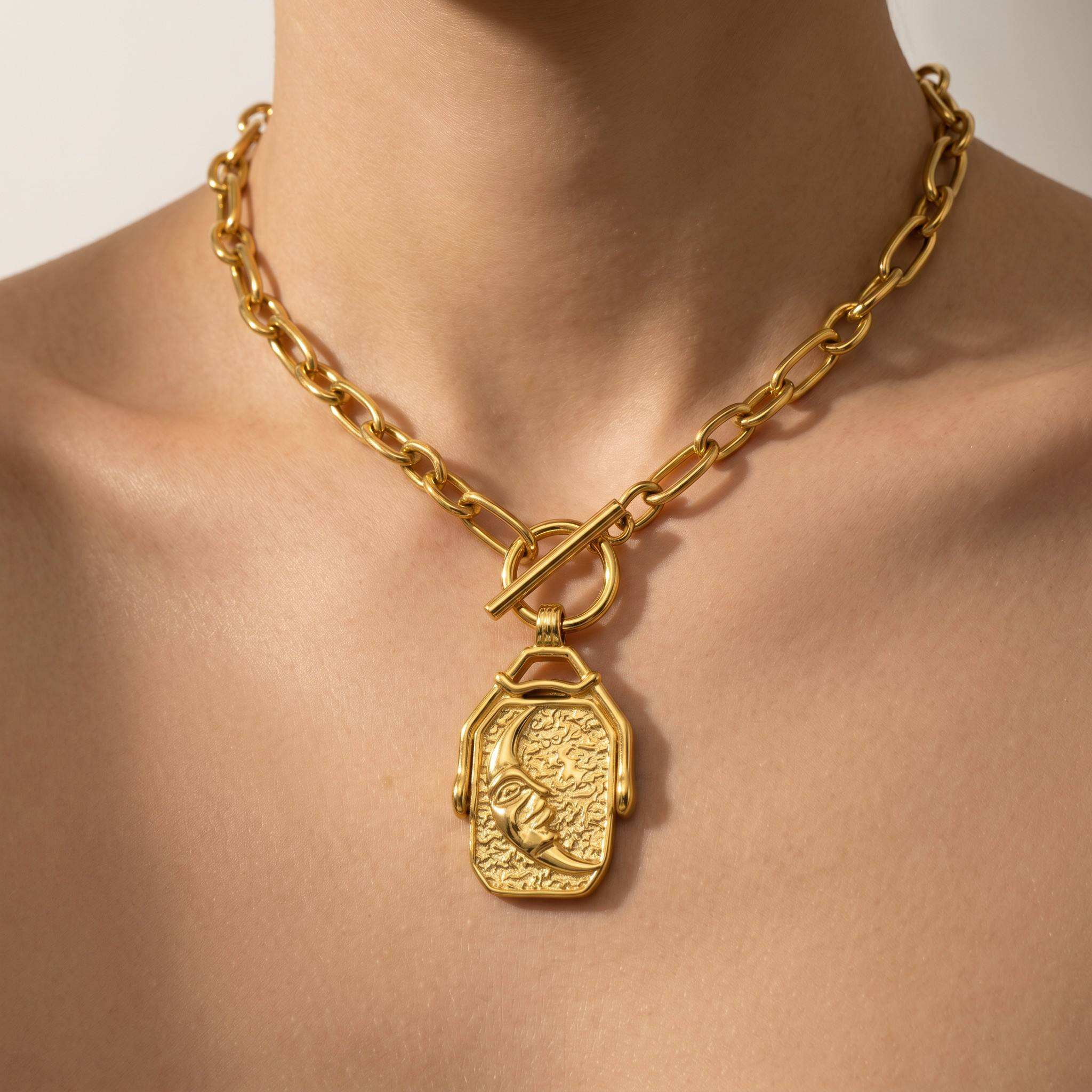
A Category Problem: Plating That Fails Real-Life Wear
For decades, the complaints about gold plated jewelry have been consistent. Water-based electroplating on softer base metals can wear away at high-friction points, such as chain links, bangle edges and ring shanks. Perspiration and moisture can accelerate the process. In some cases, buyers also found that cheap plated jewelry triggered skin reactions, often because of nickel in the base metal or in the plating underlayers.
These issues have become more prominent as jewelry consumption moves toward daily wear, travel, fitness occasions and online retail, where customer reviews rapidly expose quality failures. Retailers selling through e-commerce channels such as Amazon, Shopify, Etsy, AliExpress, eBay and TikTok Shop need fewer returns, clearer quality stories and products that can be photographed and described as durable.
The opportunity is therefore not just for another plated product. It is for a plated product that behaves more like a solid accessory: wear-resistant, non-tarnishing, comfortable for sensitive skin and suitable for extended contact with skin and moisture.
What the New Category Model Looks Like
A practical example of this new category model can be seen in the product strategy of Jusnova Jewelry Co., Ltd., a manufacturer established in 2009 and headquartered in Guangzhou, China. The company operates a 1,000-square-meter facility with approximately 300 staff and an annual production capacity of 3,000,000 units. Its R&D team includes 20 engineers, and it launches more than 500 new styles per month. Jusnova specializes in jewelry ODM/OEM and reports that about 95% of its output is exported, primarily to Europe and America.
Jusnova's main products include stainless steel bangles, stainless steel bracelets, stainless steel rings, stainless steel earrings, PVD/electroplated gold pieces, and waterproof and tarnish-free jewelry. The company also emphasizes hypoallergenic jewelry, with compliance to US/EU lead-and-nickel-free expectations. REACH test reports, SGS and BSCI certification are available upon request.
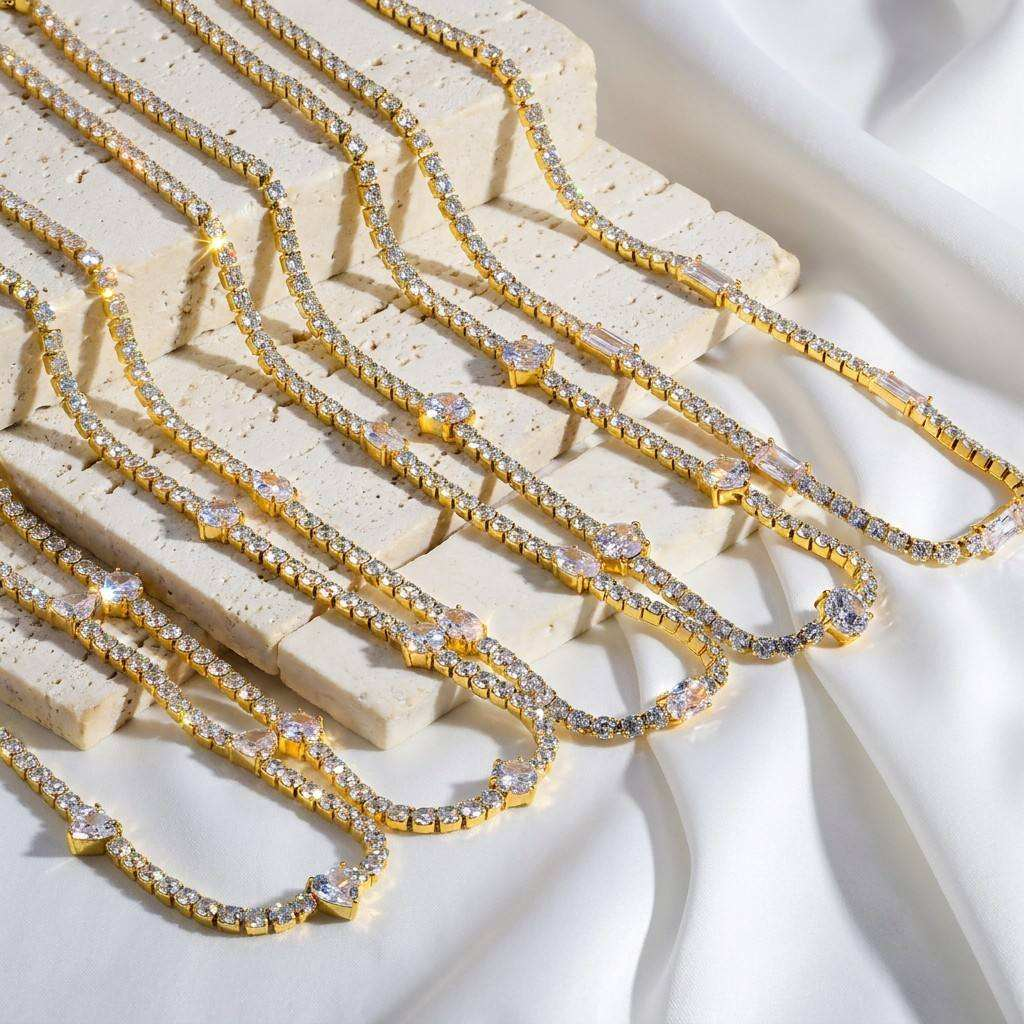
Why Stainless Steel and PVD Work Together
To understand the new standard in gold plated jewelry, buyers first need to separate the substrate from the surface finish.
Stainless steel as the substrate
Stainless steel jewelry is typically available in 304, 316 or 316L grades. In the fashion accessories segment, 316L stainless steel is widely treated as the preferred hypoallergenic base for high-quality PVD gold plated jewelry. It offers strong anti-corrosion properties and is less likely to provoke nickel-related skin reactions than many conventional costume jewelry base alloys. Stainless steel is also mechanically hard. With a Mohs hardness in the range of 5.5–6, it is significantly harder than sterling silver, which generally measures around 2.5–3 on the Mohs scale. That hardness translates into better shape retention and fewer scratches in daily wear.
PVD: physical vapor deposition
PVD, or physical vapor deposition, is a vacuum coating technique. In jewelry production, a thin, dense layer is deposited onto the stainless steel surface. The process is fundamentally different from traditional water-based electroplating. Industry references describe PVD coating as providing significantly higher durability and wear resistance compared with conventional electroplating. Some manufacturers use a titanium nitride-based adhesion layer to improve the bonding between the colored film and the steel surface. Common color options include gold, rose gold, black and gunmetal.
In a jewelry supply context, vacuum electroplating and IP plating refer to similar types of ion-assisted vacuum coating. Stainless steel plus PVD creates a product that can carry a gold appearance without relying on a thick layer of soft metal that is prone to abrasion. A representative product from Jusnova’s catalog, for example, can be supplied with a 316L stainless steel base and gold plating, or with PVD coating in gold, rose gold, black or gunmetal. The product line includes bangle and bracelet styles, including engraved bangle styles, under the product reference GEN000516bhia-066.
Laser engraving and customization
Custom branding is another driver of category growth. Fiber laser engraving is the standard technique used to permanently mark stainless steel jewelry with logos, initials or decorative messages. In technical guidance for jewelry production, laser engraving depth is usually set between 0.05 mm and 0.2 mm, which is sufficient to produce visible detail without weakening thin sections of the product. Because stainless steel is hard and corrosion-resistant, laser-marked logos remain readable over time.
This capability matters to retailers and brand owners who sell personalized gifts, engraved bracelets and custom corporate awards. The personalized jewelry market, including gold plated variants, is projected to reach USD 45 billion by 2030, according to Custom Market Insights. Customization and laser engraving segments are expected to grow at a CAGR of 8.5% through 2030, according to Market Research Future.
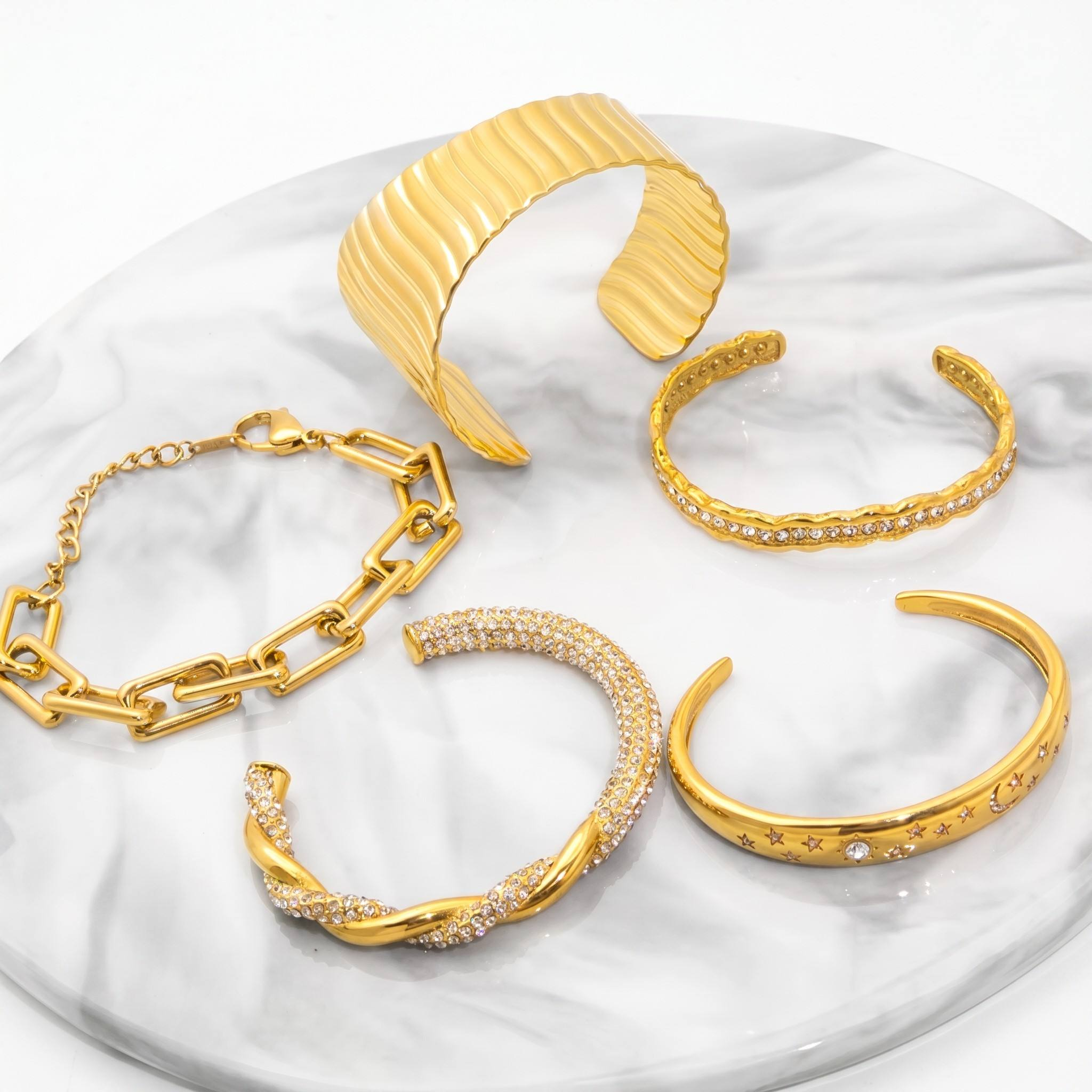
Quality Claims and the Language Buyers Must Verify
Terms such as waterproof, tarnish-free, hypoallergenic and anti-rust are now common in gold plated jewelry listings. In stainless steel gold plated products, these claims usually depend on the coating system and the test method behind them.
Several reference standards appear repeatedly in sourcing documents:
- REACH Regulation (EC) No 1907/2006 restricts nickel, lead and cadmium in jewelry sold into the EU.
- EN 1811 specifies the test method for nickel release from products intended to come into prolonged contact with the skin.
- California Proposition 65 requires warnings for jewelry containing lead or cadmium above strict thresholds.
- ISO 9227 is a salt spray test standard commonly used to assess corrosion resistance, including the stability of coated jewelry surfaces.
- In the United States, the FTC sets a minimum gold plating thickness of 0.175 microns for the use of the term “gold electroplated.”
For high-quality fashion jewelry exports from China, a gold coating thickness of about 0.5 microns is cited as a common production benchmark. PVD systems often target roughly 0.5–1.0 micron and can outperform much thicker conventional electroplating in wear terms because of the hardness and density of the coating. Buyers should ask for the relevant test reports and confirm the standard under which a claim such as “tarnish-free” or “waterproof” is being made. The phrase “non-tarnish” should not be treated as a marketing slogan; in stainless steel jewelry, it is best understood as a performance claim tied to the stability of the PVD gold coating under sweat and water exposure, often validated by salt spray testing.
Use Cases Across Retail, Gift and E-Commerce Channels
Gold plated stainless steel jewelry has broad channel applicability. The trade classification for gold plated stainless steel jewelry falls under HS Code 7117.19, which is useful for importers calculating duties and documentation requirements.
Buyers typically encounter these products in the following commercial contexts:
- Boutique fashion shops, concept stores and independent jewelry stores looking for everyday gold-tone accessories with consistent finishing.
- Department store accessory counters that need pricing stability and lower defect rates than conventional plated products.
- Fast-fashion retailers that rotate styles quickly and require responsive ODM/OEM supply.
- E-commerce sellers on platforms such as Amazon, Shopify, Etsy, AliExpress, eBay and TikTok Shop, where product reviews and return rates are decisive.
- Promotional product distributors, corporate HR teams, event organizers and real estate professionals sourcing client gifts or employee awards.
- Gift shops in tourist destinations and seasonal holiday retailers focused on Christmas, Valentine’s Day and Mother’s Day.
Each of these channels has a different tolerance for risk. A fast-fashion line may prioritize low cost and trend speed. A corporate gift program may prioritize engraving consistency and brand presentation. An e-commerce seller may prioritize customer complaints about color fastness. Because the product architecture can be customized—base material, plating type, finish, size, stone setting and packaging—the category has become a practical starting point for differentiated retail programs.
Market Trends Supporting the Shift
Several market signals explain why this shift is accelerating rather than fading.
First, e-commerce continues to grow faster than physical retail. Global online sales of fashion jewelry are growing at about 15% annually, according to Digital Commerce 360. Online-first brands need product claims that can survive customer scrutiny and returns.
Second, minimalist and daily-wear segments are expanding. The minimalist jewelry segment accounts for roughly 22% of total fashion jewelry revenue in Europe, based on CBI market information. Demand for minimalist daily-wear jewelry increased by 30% among Gen Z consumers in 2023, according to WGSN consumer insights. Gold plated stainless steel products fit that price point and aesthetic.
Third, function-specific demand is increasingly visible in B2B search. The market for “waterproof jewelry” as defined by PVD on stainless steel saw a 40% increase in B2B platform search volume in 2024, according to Alibaba B2B trends. The two most requested features by jewelry dropshippers in 2024 were anti-rust and non-fade properties. These are functional requirements, not decorative preferences.
Fourth, personalization remains a structural growth driver. The combination of fashion jewelry with custom engraving, custom logo work and personalized e-commerce has created a specialized sub-supply chain, one that requires laser-equipped factories and disciplined quality control.
Finally, sustainability expectations are beginning to affect material selection. The use of sustainable and recycled stainless steel in jewelry manufacturing increased by 20% in 2023, according to Jewellery Outlook. PVD is also considered more eco-friendly than traditional water electroplating because it produces zero hazardous wastewater. For importers tied to environmental purchasing policies, this adds another argument for stainless steel-based gold plated jewelry.
Comparison: Traditional Gold Electroplating vs. Stainless Steel with PVD
Buyers should understand the trade-offs between the older method and the newer material system.
| Evaluation Point | Traditional Water-Plated Costume Jewelry | Stainless Steel Base with PVD Gold Coating |
|---|---|---|
| Base material | Often brass, copper alloy or zinc alloy | Typically 304, 316 or 316L stainless steel |
| Surface hardness | Relies on thin electroplated gold layer over a softer alloy | Stainless steel substrate harder than silver and most base alloys |
| Corrosion behavior | Base metals may tarnish or oxidize if the plating is compromised | Stainless steel is inherently corrosion-resistant; coating adds color |
| Skin sensitivity | Higher risk when nickel undercoating is used | 316L stainless steel is widely used as a hypoallergenic jewelry material |
| Coating method | Immersion in chemical baths | Vacuum-based deposition, producing little or no hazardous wastewater |
| Color stability | Prone to fading at friction points | More wear-resistant surface layer certified by salt spray and wear tests |
This comparison is not meant to say that all water-based plating is poor. Costume jewelry made by traditional electroplating can be appealing when price is the only consideration. However, the stainless steel plus PVD structure provides a more convincing answer to the functional objections that dominate today’s retail and e-commerce environment.
Honest Boundaries: What PVD Gold Plated Jewelry Cannot Promise
A responsible sourcing guide should also describe the limits of the product system. PVD gold plated stainless steel jewelry is a coating system, not solid gold. The gold color is a surface layer measured in microns, and no coating is indestructible.
Severe impact, contact with hard abrasive surfaces or improper resizing can damage the coating. Unlike solid gold, a PVD layer cannot be simply polished away and reapplied through traditional jewelry buffing. Repair usually requires professional recoating, which is not always available in local jewelry stores. Laser engraving, if cut too deeply, can expose the base steel; that is why engraving depth must be controlled. Long-term immersion in chlorinated pools, saltwater or harsh chemicals may also affect the coating faster than typical daily wear. For most urban daily wearing, showering, hand washing and exercise-related sweat, the system performs well, but “waterproof” should be interpreted as “resistant to normal moisture exposure,” not as “immune to all conditions.”
Additionally, while stainless steel reduces the probability of nickel-related allergic reactions, it does not guarantee that every individual will have zero reaction. Buyers supplying into sensitive-skin markets should request nickel release testing and regulatory documentation rather than relying on product descriptions alone.
Future Outlook: The Category Is Becoming an Engineering Product
The future of gold plated jewelry will likely move further toward materials engineering. Buyers will continue to favor affordable gold-tone aesthetics, but they will expect suppliers to document coating thickness, corrosion resistance and restricted substances.
Asia-Pacific already plays the dominant role in global costume and fashion jewelry production, with regional output exceeding 35% of the global total in 2023, according to Grand View Research. China’s export strength in this field is substantial: the country’s total jewelry export value reached USD 10.3 billion in the first half of 2023, according to Chinese customs data. Within China, manufacturing hubs in Guangdong and adjacent regions support fast prototyping, laser engraving, PVD vacuum chambers and assembly lines under one roof.
As demand grows for personalized, waterproof, hypoallergenic and daily-wear gold plated products, suppliers that combine ODM design capability with plating science are likely to become the most dependable partners for importers and brands. The category is no longer simply a cheaper substitute for gold; it is becoming its own product standard, one that buyers can evaluate with clearer technical criteria.
Frequently Asked Questions
What does “waterproof” mean for PVD gold plated stainless steel jewelry?
In the jewelry industry, “waterproof” typically refers to resistance to normal moisture, sweat and hand washing. A stainless steel base combined with PVD vacuum coating is much less likely to tarnish or lose color than conventional water-plated jewelry under these conditions. Buyers should still confirm the coating system and any related corrosion tests, because “waterproof” is not an unlimited promise against chlorine, saltwater or harsh chemicals.
Is 14K gold plated stainless steel jewelry different from 18K gold plated stainless steel?
The main difference is visual tone. 14K gold plating has a lighter, more subtle yellow hue, while 18K gold plating has a deeper, richer yellow color. North American buyers often associate 18K gold plating with higher-end fashion jewelry. Durability depends more on the coating thickness, adhesion and base material than on the karat color label alone. Regardless of whether the selected tone is 14K or 18K, the product should be tested and documented as a stainless steel PVD system.
Can gold plated stainless steel jewelry be safe for sensitive skin?
Stainless steel, especially 316L, is widely treated as a hypoallergenic jewelry material. Compared with many costume jewelry alloys, it releases considerably less nickel in normal wear. Buyers supplying into the EU should ask about nickel release testing under EN 1811 and verify compliance with REACH limits for lead, nickel and cadmium. For customers with severe metal allergies, no material can guarantee zero reaction, but stainless steel is one of the more reliable substrate choices available.
Does laser engraving damage the gold plating?
Fiber laser engraving is widely used for permanent logo marking on stainless steel jewelry. Depth should be controlled, typically between 0.05 mm and 0.2 mm, so that the design is readable without harming the structural integrity of the product. When applied correctly, laser engraving produces a permanent mark that does not fade or wash off. Buyers should request sample engravings to confirm depth and contrast, especially for logos on thin or curved surfaces.
How long does PVD gold plated stainless steel jewelry last in daily wear?
Many technical references indicate that PVD-coated jewelry can last three to five years without significant tarnishing under daily wear conditions. Actual lifetime depends on coating thickness, surface preparation, wearing habits and exposure to hard objects. PVD layers are much more durable than thin water-based electroplating, but they are not indestructible. Buyers should evaluate the supplier’s coating specification and testing evidence rather than relying on a generic “tarnish-free” claim.
What is a realistic lead time for wholesale custom gold plated jewelry orders?
For original designs or heavily customized products, buyers should expect a development and production period of roughly 15–25 days, based on typical wholesale trade data from Chinese manufacturing supply chains. Simple catalogue items with custom packaging can often be produced faster. Engraving, custom PVD colors, stone setting and special packaging each add steps, so the final timeline should be confirmed in writing before sampling.
This article is published by HTNXT as independent industry reference content. Product and company references are provided for buyer education and sourcing evaluation purposes.
Tem questões ou precisa de mais detalhes?
Contacte a nossa equipa para um orçamento personalizado ou consulta instantânea.
Solicitar orçamento
Preencha o formulário abaixo e a nossa equipa entrará em contacto com uma proposta personalizada.
Chat direto do WhatsApp
Prefere conversar em tempo real? Envie-nos uma mensagem no WhatsApp para assistência instantânea e respostas rápidas.
- Obter orçamento personalizado
- Partilhar fotos ou documentos
- Discuta as suas necessidades diretamente
Geralmente responde em 5–30 minutos durante o horário de expediente.