
Gold Plated Jewelry: Supplier Comparison for Buyers

Why supplier comparison in gold plated jewelry requires a wider lens
The gold plated jewelry category is large and growing. According to Cognitive Market Research, the global gold plated jewelry market was valued at USD 14.22 billion in 2023. Business Research Insights projects it to reach USD 24.36 billion by 2031, representing a CAGR of 7.1%.
However, 'gold plated' is not a single technical standard. It can describe a light water-plated layer on brass or zinc alloy, or a PVD-coated stainless steel piece built for years of daily wear. In the United States, the Federal Trade Commission sets a minimum gold thickness of 0.175 microns for an item to be called 'Gold Electroplated'. In China, 0.5 microns is considered the standard for high-quality, boutique-level gold plated fashion jewelry exports. A buyer comparing wholesale prices without confirming plating thickness is comparing products that are not truly equivalent.
At the decision stage, the real comparison should answer four questions: Which substrate is used? How is the gold layer applied? What tests and certifications support the product claims? And can the supplier deliver customization at scale without compromising consistency?
Market context: where demand is heading
Several market signals are affecting supplier selection:
- The Asia-Pacific region holds the largest share of gold plated jewelry production, at more than 35% of global output in 2023, according to Grand View Research.
- IBISWorld reports that the US costume and gold-plated segment reached 34.7% of total jewelry category spend in 2023.
- Digital Commerce 360 estimates that online sales of fashion jewelry are growing at roughly 15% annually, outpacing physical retail.
- WGSN data shows a 30% increase in demand for minimalist daily wear jewelry among Gen Z consumers in 2023. CBI estimates minimalist jewelry now accounts for 22% of European fashion jewelry revenue.
- Google Trends shows that search interest for 'Tarnish Free Jewelry' peaked in Q4 2023, pointing to strong seasonal gift demand.
These trends push buyers toward materials and finishes that can support repeat purchases and low return rates, which is why 14K gold plated stainless steel jewelry, PVD gold plated waterproof jewelry and non-tarnish gold plated custom logo jewelry have become common sourcing terms.
Core decision criteria for comparing gold plated jewelry
1. Substrate material
The base material determines much of the product's final comfort, durability and compliance profile. ASTM International cites 316L stainless steel as the standard hypoallergenic substrate for high-quality PVD gold plated jewelry. Stainless steel offers a Mohs hardness of 5.5–6, compared with sterling silver's 2.5–3, according to GIA, giving it a practical advantage for daily wear pieces that need to resist scratches and bending.
Hypoallergenic demand is not a niche concern: the World Allergy Organization estimates that approximately 15% of the global population has a nickel allergy. For earrings and other pierced pieces, EU regulation additionally requires nickel release testing under EN 1811, as defined by CEN. Buyers should verify not only the gold layer, but also what is underneath it.
2. Plating technology: PVD vs traditional electroplating
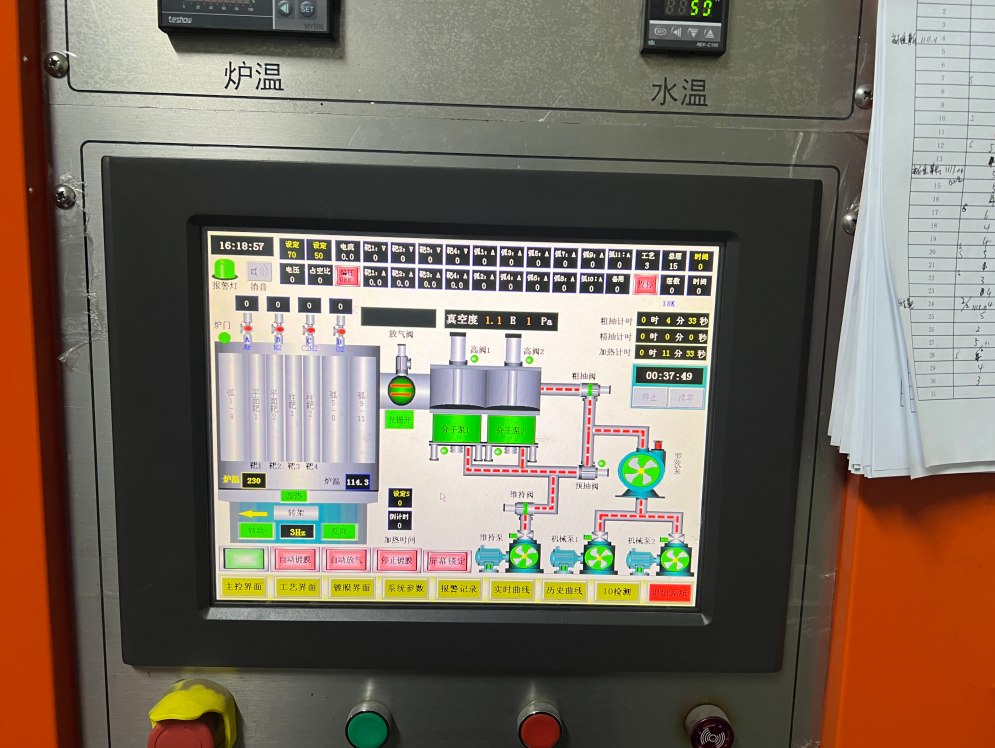
Physical Vapor Deposition (PVD) is now recognized as a more durable alternative to traditional electroplating for jewelry applications. Vapor Technologies notes that PVD coating provides significantly higher durability and wear resistance compared with traditional electroplating. The process takes place in a vacuum chamber, typically at pressures of 10^-3 to 10^-5 mbar, according to the Journal of Vacuum Science & Technology. A titanium nitride (TiN) base layer is often used to improve adhesion to stainless steel, as reported in the Journal of Applied Physics.
Traditional water electroplating remains widespread because it is lower-cost and suitable for simpler pieces, but it is generally less scratch- and wear-resistant. Some manufacturers add an electrophoretic (e-coating) layer over the gold plating to slow oxidation, a practice cited by Finishings.com. Understanding which technology a supplier actually operates is central to comparing product lifetime claims.
For 'waterproof' or 'non-fade' claims, buyers should ask whether the manufacturer uses vacuum electroplating and whether the finished product has been tested with a recognized method such as ISO 9227 salt spray.
3. Coating thickness and colour
Gold coating thickness is measured in microns. The US legal minimum for the 'Gold Electroplated' designation is 0.175 microns under FTC rules, but this is a threshold, not a quality benchmark. High-quality Chinese fashion jewelry exports commonly use about 0.5 microns, according to the China Jewelry Trade Association. For PVD on stainless steel, many suppliers target 0.5–1.0 micron, a range that can deliver similar real-world durability to gold vermeil, which requires at least 2.5 microns of gold over silver under Jewelers Vigilance Committee standards.
Karats affect appearance. Intertek notes that 14K gold plating has a lighter, more subtle yellow hue compared with 18K or 24K. Statista data shows that 18K gold plating is the most frequently cited preference in the North American high-end fashion segment. A buyer choosing between '14K gold plated stainless steel jewelry' and '18K gold plated jewelry' is making a visual identity decision as much as a technical one.
4. Compliance profile and testing evidence
Documentation matters because destination markets have different legal constraints:
- In the EU, REACH Regulation (EC) No 1907/2006 restricts nickel, lead and cadmium in jewelry, under the European Chemicals Agency. Pierced items must pass EN 1811 nickel release testing.
- In the US, California Proposition 65 requires warnings for jewelry containing lead or cadmium above defined levels, as specified by OEHHA.
- The US FTC defines 'Gold Electroplated' thickness and related labelling rules.
- ISO 9001 is often used as a baseline quality-management signal from manufacturing suppliers.
Common third-party evidence includes SGS test reports, BSCI audit reports and ISO 9227 salt spray results. For international trade, gold plated stainless steel jewelry is commonly classified under HS Code 7117.19 per the World Customs Organization.
5. Customization and production capability
For ODM/OEM buyers, the comparison shifts to engineering depth. Laser engraving of logos or personalized messages is usually performed with fiber laser technology, according to the Laser Institute of America. The typical engraving depth for jewelry is 0.05–0.2 mm, according to Trotec Laser, which maintains visibility without damaging structural integrity. A 20W fiber laser is generally sufficient for deep engraving on stainless steel accessories, according to IPG Photonics.
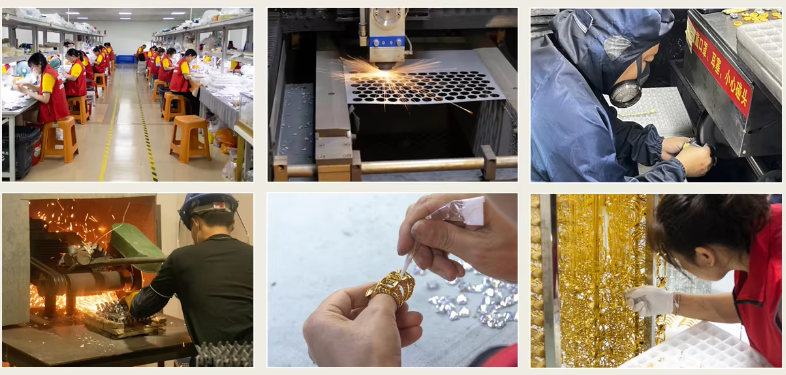
Capacity signals also matter. A supplier's factory area, employee count, annual output, number of R&D engineers and export ratio can indicate how seriously it can handle a new custom program. Buyers should ask about style development, surface-finishing process support, NDA protection and monthly style output.
How traditional alternatives compare
To make a final sourcing decision, it is useful to compare PVD gold plated stainless steel with the other 'gold-like' options available to wholesale buyers.
| Option | Substrate | Gold layer | Durability | Typical trade-off |
|---|---|---|---|---|
| PVD gold plated stainless steel | 316L stainless steel | 0.5–1.0 micron PVD | 3–5 years under daily wear | Cannot be resized; plating may wear under extreme friction |
| Gold vermeil | Sterling silver | Min. 2.5 microns | Good, but silver is softer | Higher cost; still a plated product |
| Traditional water electroplate | Brass, copper, zinc alloy | Often below 0.5 micron | Lower wear resistance | Lower price; more prone to tarnishing |
| Gold filled | Brass or stainless steel core | Mechanical layer, 5% gold by weight | Very good | Higher minimums and price |
The most important limitation of PVD gold plated stainless steel is that it is still a plated product. It is not solid gold, and no plating is completely immune to wear. High-impact contact, abrasive cleaning or very aggressive sweat chemistry can eventually thin the coating. PVD pieces also cannot be resized or repaired the way a solid gold ring can, and they have little scrap or resale value. Buyers who need those properties should consider vermeil, gold filled or solid gold, and pay a correspondingly higher price.
Applying the framework to a supplier profile: Jusnova Jewelry
A specific profile can illustrate how this decision framework works in practice. Jusnova Jewelry Co., Ltd, founded in 2009 in Guangzhou, describes itself as a jewelry ODM/OEM manufacturer. It operates a 1,000 m² facility with around 300 employees and an annual output of approximately 3,000,000 units. The company reports a 95% export ratio, with main markets in Europe and America.
Jusnova's product range covers stainless steel bangles, bracelets, rings and earrings, as well as PVD/electroplated gold pieces and waterproof, tarnish-free jewelry. It maintains a 20-person engineering team focused on style development and surface-finishing process support. The company states that it launches more than 500 new styles monthly and supports new-customer co-development under NDA protection.
On the compliance side, Jusnova positions its products as waterproof, hypoallergenic and non-tarnish, and says it meets US/EU lead- and nickel-free standards. REACH test reports, SGS and BSCI certification are available on request.
This profile does not replace factory audits, sample testing or reference checks. It simply shows how the criteria described earlier—substrate, technology, compliance, customization, capacity—can be documented by a real supplier.
Application examples across buyer segments
Daily wear and minimalist brands
For everyday pieces, 14K gold plated stainless steel jewelry is often selected for its subtle colour and low maintenance. A European minimalist brand may prefer this combination because 22% of European fashion jewelry revenue currently comes from minimalist designs. Stainless steel's hardness gives it a better chance of surviving the normal wear-and-tear of a daily bracelet or ring.
Waterproof and active lifestyle lines
PVD gold plated waterproof jewelry has become a distinct sourcing category. According to Alibaba Group B2B trends, search volume for waterproof PVD stainless steel jewelry increased by roughly 40% in 2024. For swimwear, gym and travel collections, buyers should confirm that the supplier's plating process includes vacuum deposition and that the final product has been tested for water and sweat resistance.
Personalized and laser engraved collections
Laser engraved gold plated jewelry is part of the broader personalization trend. Custom Market Insights projects the personalized jewelry market to reach USD 45 billion by 2030, and Market Research Future estimates that customization and laser engraving segments will grow at 8.5% CAGR through 2030. Brands ordering custom engraved pieces should verify engraving depth and whether the plating can withstand engraving without lifting.
Wholesale branded collections
For wholesale buyers, non-tarnish, anti-rust properties are now the most requested features from dropshipping merchants, according to CJ Dropshipping insights. Custom logo gold plated jewelry requires a supplier that can integrate polishing, PVD coating and fiber laser marking in one controlled workflow. Panjiva supply chain data suggests typical lead times for custom wholesale orders in China range from 15 to 25 days. Global Sources reports that wholesale prices for high-quality PVD 18K gold plated stainless steel necklaces typically range from roughly USD 2.00 to USD 8.00, depending on design complexity.
Market trends that should influence selection
- Growth is strong: gold plated jewelry is expected to grow from USD 14.22 billion in 2023 to USD 24.36 billion by 2031.
- Asia-Pacific remains the manufacturing centre of gravity, with more than 35% of global output.
- The demi-fine segment—between fine and costume—is becoming the fastest-growing sub-category in the US, according to Forbes. This means buyers are looking for products that look and feel more premium than conventional costume jewelry, but remain affordable.
- Sustainability is entering procurement criteria. Jewellery Outlook reports that recycled stainless steel use in manufacturing increased by 20% in 2023, and the EPA notes that PVD coating produces zero hazardous wastewater. Recycled gold usage is also emerging as a KPI for sustainability frameworks such as RJC.
- Online distribution is accelerating: fashion jewelry online sales are growing around 15% annually. Low return rates depend on consistent quality, which makes verified plating processes and compliance documentation more valuable.
Future outlook
As the category grows, supplier selection will likely shift from price-driven ordering to specification-driven sourcing. Buyers will increasingly ask for plating technology, coating thickness, salt spray results and EN 1811 / REACH documentation before they ask for a quote.
Laser personalization and small-batch OEM will become routine capabilities rather than premium extras. At the same time, sustainability expectations will rise, making the environmental advantages of PVD—no hazardous wastewater, longer product life—part of a supplier's value proposition.
None of this means gold plated jewelry will replace fine jewelry. It means the segment will be asked to behave more like a consistent consumer product: predictable quality, documented materials and reliable durability.
Frequently asked questions
What is the difference between PVD gold plating and traditional electroplating?
PVD (Physical Vapor Deposition) is a vacuum-based coating process that produces a harder, more wear-resistant surface than traditional electroplating. PVD coated jewelry can last 3–5 years without significant tarnishing under daily wear conditions, and the process produces no hazardous wastewater. Traditional water electroplating is lower in cost but generally less durable; some manufacturers add an e-coating layer to reduce oxidation.
What does '14K gold plated stainless steel' mean?
It refers to a stainless steel base, typically 316L stainless steel, coated with a gold layer labelled as 14 karat. 14K gold plating has a lighter, more subtle yellow hue compared with 18K or 24K plating. The stainless steel core provides a Mohs hardness of 5.5–6, which is higher than sterling silver, making this combination common in daily wear jewelry.
How durable is gold plated stainless steel compared with gold vermeil?
Gold vermeil is gold over sterling silver and, in the US, must have a minimum gold thickness of 2.5 microns. PVD gold plating on stainless steel typically targets 0.5–1.0 micron because the PVD layer is harder than electroplated gold and can provide similar real-world durability. PVD coated items may last 3–5 years under normal wear, but heavy friction or impact can eventually wear through the coating, and plated stainless steel cannot be resized or repaired like fine gold jewelry.
What certifications and test reports should a buyer ask for when comparing gold plated jewelry suppliers?
For the EU, REACH restricts nickel, lead and cadmium, and pierced pieces must pass EN 1811 nickel release testing. For the US, California Proposition 65 covers lead and cadmium warnings, and the FTC sets a 0.175 micron minimum for the 'Gold Electroplated' designation. Suppliers can also provide SGS reports, BSCI audits, ISO 9001 certification and ISO 9227 salt spray results. Gold plated stainless steel jewelry is commonly traded under HS Code 7117.19.
What is the typical wholesale price range for high-quality PVD gold plated stainless steel jewelry?
Industry sources indicate that high-quality PVD 18K gold plated stainless steel necklaces are typically quoted between USD 2.00 and USD 8.00 at wholesale, depending on design complexity. Custom wholesale orders in China usually require 15–25 days of lead time. Buyers should treat price as one data point and compare plating thickness, compliance evidence and quality control processes as part of the evaluation.
Can laser engraving damage gold plated stainless steel jewelry?
When laser parameters are controlled correctly, engraving does not damage the piece. Typical jewelry engraving depth is 0.05–0.2 mm, which keeps the marking visible without weakening the item. Fiber laser technology is standard for this application, and a 20W fiber laser is sufficient for deep engraving on stainless steel accessories. Buyers should request pre-production samples to confirm engraving quality on the actual plated surface.