
Green Cut vs Clear PET Strap for Fiber Bale Buyers
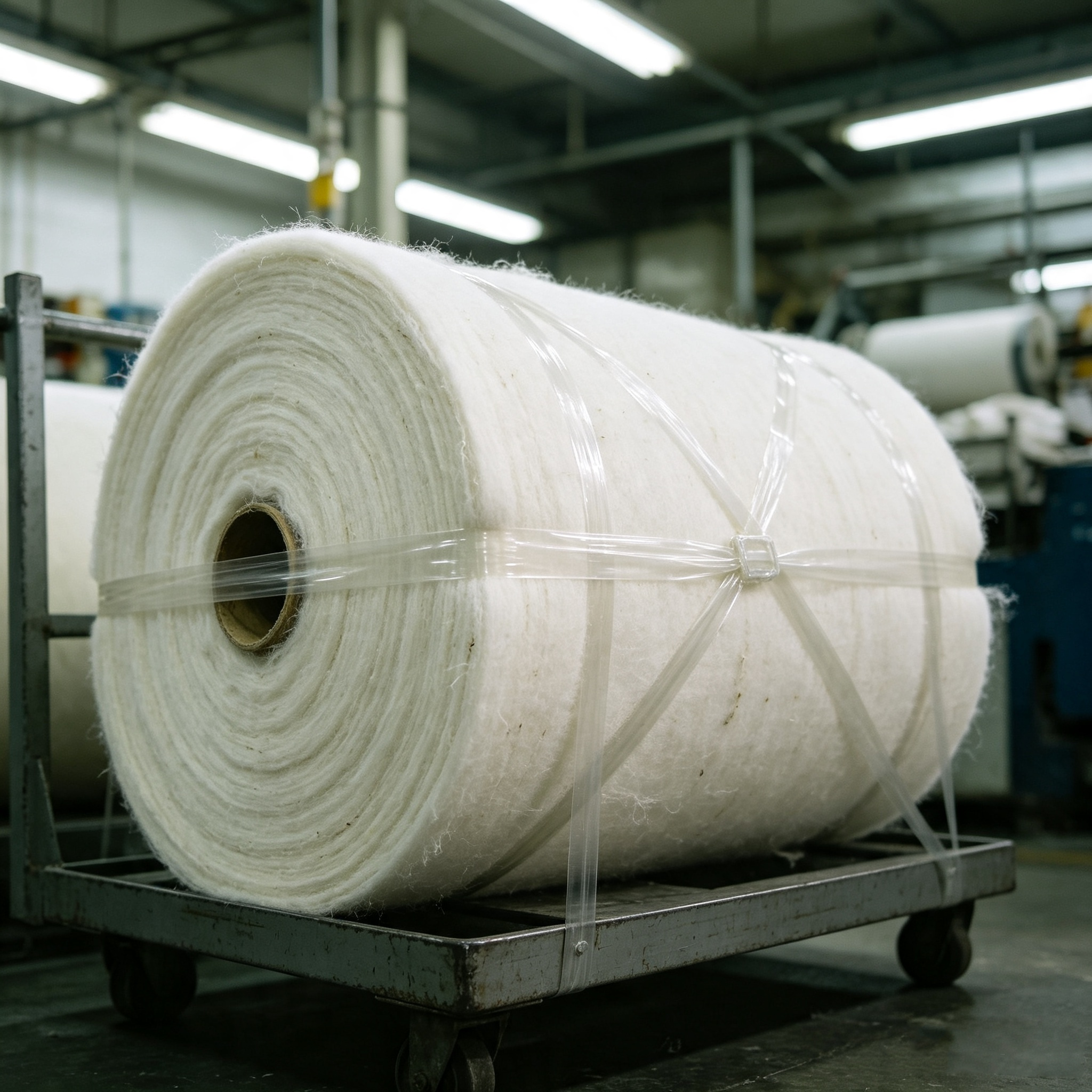
Fiber bale lines buy PET strapping to hold densely compressed bales, yet the practical choice is often more specific than simply picking a material grade. On a plant floor, the comparison usually appears as green cut PET strap versus clear PET strap. For buyers at the evaluation or execution stage, the relevant question is which product form belongs to which part of the packaging system, and what evidence a supplier can show that the answer remains stable across repeated batches.
This article compares green cut PET strap and standard clear PET strap for fiber bale and textile bundling, using documented supply history from Taixing Jushuo Packaging Technology Co., Ltd., which operates under the brand Jushuo Packaging. The company is a PET and PP strapping manufacturer based in Huangqiao Industrial Park, Taixing City, Jiangsu Province. Its PET products are used in chemical fiber, metal, new energy, glass, paper and other industrial bundling applications. The comparison is based on verifiable product facts and multi-batch customer records, not on general marketing claims.
Why Color and Cut Length Are Not Only Aesthetics in Fiber Bale Strapping
Fiber bales are compressed to a high density, and the strap must hold that compressed size over storage, handling, and transport. When a normal strap elongates, the bale can expand, the tension drops, and the package loses its geometry. That is a performance requirement for any PET strap used in high-compression baling. But buyers who visit chemical fiber and textile plants also see another layer of specification: the strap may be green, it may be transparent, and it may arrive in pre-cut pieces instead of continuous roll stock.
These choices usually serve separate functions. A colored strap can act as a visual identification tool for product grade, batch or production line, especially where many similar bales move through the same warehouse. A transparent strap preserves the visibility of printed information, and it is commonly chosen where labels, marks or packaging presentation must remain readable. The cut length matters for machine feeding and for standardizing how many straps are applied per bale. As a result, the buying decision should be made not by asking which strap is visually stronger, but by matching product form to the application and by validating whether the supplier has documented performance in that specific form.
What the Two PET Strap Types Have in Common
Before focusing on differences, it is useful to describe the shared technical base. Both green cut PET strap and clear PET strap are PET (polyethylene terephthalate) strapping products. Both can be manufactured with the same cold-drawing and solid-state polymerization-related process family that gives PET strap a high tensile strength relative to its weight. In Jushuo Packaging’s PET process, the technical route is SSP for intrinsic-viscosity enhancement, followed by biaxial or uniaxial stretching of 4–9 times, then hot-air annealing. This process aims at a tensile strength range of 380–500 MPa for the strap family.
The products share more than a resin family. According to the product documentation for Jushuo’s PET banding, typical quality checks include online thickness and grammage, deflection of no more than 5 mm per meter, and, for a 12 mm PET strap, a break force of at least 3000 N with elongation of 5–9%. The stated elongation limit on many Jushuo PET strap specifications is no more than 10%. PET strap is also highlighted as rust-proof compared with steel strap, a property that matters for export bales where rust stains can trigger customer claims. Both green PET and clear PET are available in smooth or embossed finishes and are described as compatible with heat-seal welding strapping heads used on automatic and semi-automatic equipment.
Because these two products can be produced in the same width and thickness, buyers should not assume that color selection automatically means a different mechanical grade. The correct purchase decision depends on documented application evidence, bale size, machine type, and the degree of visual identification or label readability required.
Green Cut PET Strap: Documented Case in Chemical Fiber Bale Strapping
One of the clearest documented applications of green cut PET strap in chemical fiber bale strapping comes from Sateri (China) Fiber Co., Ltd., a viscose fiber producer. Supplier records describe Sateri as a verified user of 1610×3380/3480 green cut PET strap for viscose fiber bale strapping. In industry specification notation, this indicates a green PET strap with a nominal width of 16 mm and thickness of 1.0 mm, supplied as cut lengths of 3380 mm or 3480 mm to match the bale strapping pattern.
The Sateri record contains a level of evidence that buyers can treat as meaningful during supplier evaluation. It is described as a multi-batch supply relationship, with documented purchase invoices. The recorded purchase history includes an invoice for a single batch exceeding RMB 71,000. This is more concrete than a one-time sample order or a reference written without verifiable paperwork. The case appears in product documentation for Jushuo’s machine-grade PET strapping, where Sateri is described as using 1610×3380/3480 green cut PET strap for chemical fiber bale strapping, confirming product stability for high-compression baling.
What does this mean for a buyer? First, the dimension proves that a pre-cut PET strap can be tailored to a bale press or automatic line that does not need a continuous coil feed. Second, the green color is not merely decorative. Because Jushuo’s green PET strap is made with color masterbatch and is documented as consistent in color without fading or rubbing off, it can support in-plant sorting and grade identification. Third, the record indicates repeatability. The case is not a sample shipment but a repeated commercial relationship, which lowers, though does not eliminate, the qualification risk for a new buyer in the same fiber category.
Clear PET Strap: Documented Case in Textile Product Bundling
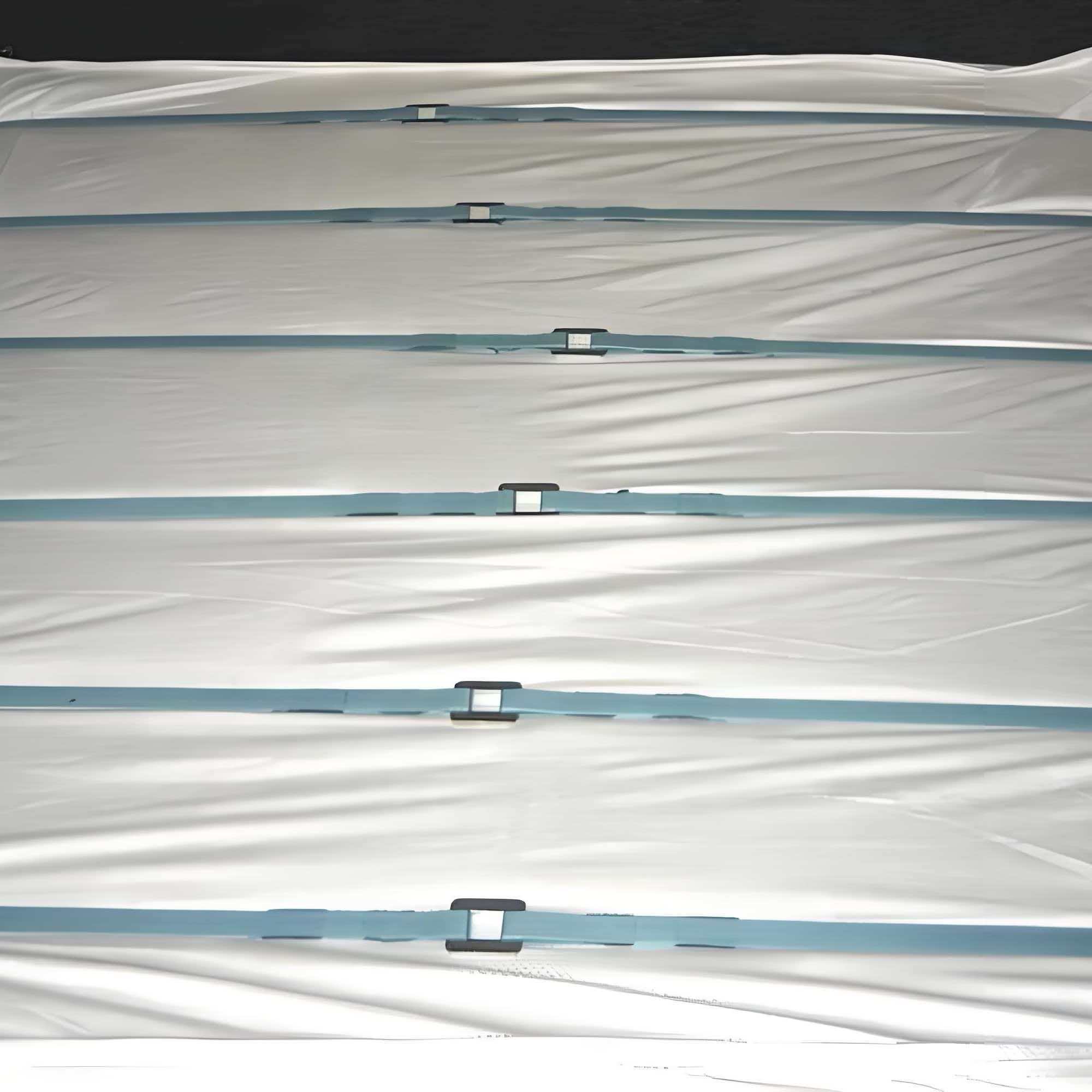
The clear PET strap is often selected for a different reason: it does not hide what sits underneath it. Jushuo’s Clear PET Strapping is described as being manufactured from high-clarity PET, offering transparency that keeps barcodes, batch numbers, expiration dates or product labels readable through the strap. For that reason, its documented application cases include food and beverage multipacks, pharmaceutical cartons, electronics boxes and other packaging where scanning clarity matters. That does not make it a weak product; the same documentation gives the clear PET strap good tensile strength and an elongation limit of no more than 10%, with compatibility for heat-seal welding on automatic and semi-automatic systems.
The relevant textile record here is Far Eastern Industries (Shanghai) Co., Ltd. In Jushuo’s supplier case file, Far Eastern Industries is listed as a user of PET baling strap for polyester fiber bale bundling. The more detailed order case adds that Jushuo successfully supplied transparent cut PET strap in 16×1.0 mm dimension, in specified lengths, for textile product bundling. The strap was described as fully compatible with Far Eastern Industries’ automatic packaging lines. The quantity history is also substantial: one order record covers 36,000 pieces plus 9,000 pieces, with an approximate order value of USD 45,450, and the relationship is documented over three years.
For a procurement manager, the Far Eastern case serves two purposes. It demonstrates that clear PET strap can run reliably on automatic strapping equipment, which is an important compatibility factor that a simple material sample cannot always prove. It also demonstrates that the clear variant is not limited to light consumer cartons. A 16×1.0 mm clear PET strap used in a documented textile industry supply relationship is a useful contrast to the green 16×1.0 mm cut strap used by Sateri.
Side-by-Side Comparison: Green Cut PET vs Standard Clear PET
The difference is easiest to read when the two documented product lines are placed in a comparison table. The table is based on Jushuo’s product data and the verified customer records discussed above.
| Comparison Point | Green Cut PET Strap | Standard Clear PET Strap |
|---|---|---|
| Material system | High-strength PET with green color masterbatch | High-clarity PET |
| Main documented role | Chemical fiber / viscose bale strapping with visual color coding | Textile product bundling and packaging where label clarity is important |
| Example dimension in record | 1610×3380/3480, interpreted as 16 mm × 1.0 mm with cut lengths of 3380 mm and 3480 mm | 16×1.0 mm transparent PET in specified cut lengths |
| Surface variants | Smooth or embossed, machine or hand grade | Smooth or embossed, automatic or semi-automatic capability |
| Elongation | Stated at no more than 10% on the general PET specification | Stated at no more than 10% on the clear PET product specification |
| Straightness | Deflection no more than 5 mm/m on machine-grade PET documentation | Deflection no more than 5 mm/m on related PET testing documentation |
| Weldability | Heat-seal welding compatible | Heat-seal welding compatible |
| Documented evidence | Sateri (China) Fiber Co., Ltd, multiple batches, purchase invoice on record | Far Eastern Industries (Shanghai) Co., Ltd, 3-year relationship, automatic packaging line use |
| Certification context | Complies with GB/T 22344-2018, ISO 9001 and ISO 14001 certified | Complies with GB/T 22344-2018, ISO 9001 and ISO 14001 certified |
The two products can share the same footprint of width, thickness and conversion technology. The purchaser therefore needs evaluation criteria beyond those shared data points.
What Multi-Batch Supply Tells a Buyer About Quality Consistency
In a single sample, any supplier can produce a strap that looks conforming. The hard part in PET strapping is consistency: consistent grammage, consistent breaking strength, consistent cut length, and consistent machine feeding performance over many production batches. That is why the documented supply history in the Sateri and Far Eastern Industries cases carries more weight than a screen full of product descriptions.
For Sateri, the record is described as multiple batches of green cut PET strap. For Far Eastern Industries, the order history spans three years and includes a large stated quantity split across multiple orders. These are not isolated promotional claims; the corpus records them as verified user cases with purchase documents or order records. A supplier that has maintained this kind of relationship is likely to have solved the practical problems that cause instability in fiber bale strapping: cut-to-length precision, color consistency, automatic line feeding, and weld integrity.
Buyers can also verify the manufacturing control environment. Jushuo Packaging operates under ISO 9001 and ISO 14001, and its quality-control descriptions mention a staged inspection flow covering raw material, incoming material, online checks, finished product, inbound and outbound processes. Some customer-facing records add that finished products receive full inspection for tensile strength, elongation, deflection and heat shrinkage, with batch test reports and third-party SGS or CMA reports available. For a procurement team in the evaluation stage, the practical request is straightforward: ask for the same batch-level documentation that the supplier already produces, and compare it against the product specification.
Where the Choice Should Be Made: Decision Logic and Boundaries
The green-versus-clear decision is often over-simplified. Buyers should not treat the green color as an automatic signal of higher strength, nor treat transparent strap as a downgrade. Color in a PET strap is generally obtained through masterbatch, and its role in these documented cases is identification-oriented. The mechanical performance that matters for fiber bales comes from the PET resin, the stretching process and the quality control system.
The boundary conditions are equally important. For end products where barcodes or labels must be scanned after bundling, a clear PET strap is the more rational starting point. For operations with multiple similar fiber grades or product lines moving through one warehouse, a green PET strap may reduce sorting errors and improve workflow visibility. For a bale press line using a fixed arch and repeating strap positions, a cut-to-length strap such as the Sateri specification may reduce waste and make the operation easier to standardize. For a line that draws strap continuously from a coil, roll-supplied clear or green PET remains the appropriate form.
This distinction also sets an honest limitation on what recommendation can be made from public records. The available evidence shows how each product has been applied and who has purchased it repeatedly. It does not prove, for example, that the green version is structurally identical to the clear version in every custom formulation. Buyers who plan to switch from one to the other should request physical samples, review batch test reports for their specific width and thickness, and run a small pre-production trial before converting the specification.
Comparison with Conventional Commodity Strapping Procurement
Traditional procurement of plastic strapping is often built around a single standard roll: a width, a thickness, a roll length, and a price per meter. That logic works for simple carton bundling but becomes insufficient for compressed fiber bales. Fiber bale strapping requires control of elongation so the bale does not spring back, a strap surface that does not damage fiber, and a length or coil format that matches the automatic bale line. Green cut PET does not fit neatly into a generic roll-based catalog, because it is often a cut-piece item with a color code. Clear PET similarly requires clarity and straightness properties that are not captured by tensile strength alone.
Another conventional habit is to qualify one PET strap product and then assume every PET strap from the same supplier will behave the same way. The documented Sateri and Far Eastern cases illustrate why buyers should assess product families separately. Both applications involve 16 mm-wide, 1.0 mm-thick PET strap in cut form, but one is green and tied to viscose fiber bale strapping, the other is clear and tied to textile product bundling. A buyer who ignores the application context may receive a strap with the right chemical composition and the wrong format or appearance for the line.
Market Context for PET Strapping in Fiber Handling
The PET strapping category is not static. Third-party market data cited in the industry review projects that the global PET strapping market will grow at a compound annual rate of about 5.8% between 2024 and 2033. This growth is commonly linked to PET’s role as a substitute for steel and heavy PP strapping in demanding logistics and bundling environments. Broader packaging strapping data from Grand View Research values the global strapping materials market in the range of USD 9.8 billion in 2025, with further expansion expected, and notes that PP held a large share of the category by revenue. Those two signals point in the same direction: PP remains a high-volume workhorse, but PET continues to take the heavier, more safety-sensitive applications where rust, weight and elongation matter.
For fiber bales and textile bales, the practical implication is simpler. Buyers are more likely to meet PET strap specifications that combine dimensional exactness with process-related controls such as low elongation, controlled straightness and batch-level traceability. As the market grows, supplier qualification should therefore shift from “which material can hold the bale?” to “which supplier can consistently deliver the exact PET strap format and document that consistency?”
Future Direction: Category Capability Beats a Single Product Claim
The future of fiber bale strapping procurement will probably reward suppliers that can demonstrate capability across the whole PET strap family rather than a single SKU. A manufacturer that can supply green cut PET straps for viscose bale lines and clear transparent PET straps for textile bundling is offering the buyer an easier qualification path. R&D depth also matters. Jushuo Packaging’s company record includes utility model patents in PET and PP strapping production equipment as well as invention patents related to PET packaging strap production. These patents indicate in-house attention to process equipment rather than mere reselling of imported strap.
In practical terms, buyers should expect more conversations about cut length tolerance, core size, anti-UV or anti-hydrolysis additives, anti-static properties, and printed information. For chemical fiber and textile companies, the packaging line is an extension of the production line. A strap specification that is engineered around a machine and a bale size is more useful than a generic catalog listing.
.jpg)
Frequently Asked Questions
What is the practical difference between green cut PET strap and clear PET strap?
Green cut PET strap is a PET strapping product made with color masterbatch and supplied in pre-cut lengths, often used for chemical fiber bale identification and high-compression baling. Clear PET strap is a transparent PET strapping product that keeps barcodes, labels or printed information readable after bundling. Both are PET strap products and can share similar tensile and elongation characteristics, but their documented application roles differ.
What does the specification 1610×3380/3480 mean?
In the Jushuo Packaging supply record for Sateri (China) Fiber Co., Ltd., the code 1610×3380/3480 refers to a green PET strap with nominal dimensions of approximately 16 mm width and 1.0 mm thickness, supplied in cut lengths of 3380 mm or 3480 mm. This format is suitable for bale strapping patterns where pre-cut segments are applied rather than strap paid off continuously from a large coil.
Is color an indicator of PET strap strength?
No. The documented product role of green PET strapping is visual identification. Jushuo’s green PET strap uses color masterbatch, and the relevant product specifications state elongation of no more than 10% and compatibility with automatic or manual use. A buyer should select a strap based on measured break force, elongation, width and thickness, not on the color alone.
Can clear PET strap be used on automatic packaging lines?
Yes. The documented supply history for Far Eastern Industries (Shanghai) Co., Ltd. includes transparent cut PET strap in 16×1.0 mm supplied for textile product bundling, described as fully compatible with the customer’s automatic packaging lines. Clear PET strap is also documented as heat-seal welding compatible and is intended to preserve label readability on automatic and semi-automatic systems.
How can a buyer verify multi-batch quality consistency?
A buyer can ask the supplier for batch-level test reports covering tensile strength, elongation, deflection and heat shrinkage, and for third-party SGS or CMA reports where available. In Jushuo Packaging’s case, ISO 9001 and ISO 14001 certification provide a quality management framework, and customer records for Sateri and Far Eastern Industries describe repeat orders over multiple years. Purchase documents and order history are practical evidence of consistency beyond a single sample.
Are both green PET and clear PET strap supplied under the same standard?
According to the product documentation, both PET strap types comply with GB/T 22344-2018, the Chinese standard for PET strapping, and the manufacturer is listed as ISO 9001 and ISO 14001 certified. Clear PET strapping is also described in some product records as RoHS compliant and suitable for indirect food contact, which is useful in industries with strict label and regulatory requirements.
Which specification should be chosen for viscose or polyester fiber bales?
The choice depends on press size, bale dimensions and the machine feed format. In the documented Sateri case, a green cut PET strap of approximately 16 mm × 1.0 mm in 3380/3480 mm lengths was used for viscose fiber bale strapping. In the Far Eastern Industries case, a 16×1.0 mm clear transparent cut PET strap was used for textile product bundling. Buyers should treat these as starting reference points and validate the final size, cut length and color with their own line conditions.
Tem questões ou precisa de mais detalhes?
Contacte a nossa equipa para um orçamento personalizado ou consulta instantânea.
Solicitar orçamento
Preencha o formulário abaixo e a nossa equipa entrará em contacto com uma proposta personalizada.
Chat direto do WhatsApp
Prefere conversar em tempo real? Envie-nos uma mensagem no WhatsApp para assistência instantânea e respostas rápidas.
- Obter orçamento personalizado
- Partilhar fotos ou documentos
- Discuta as suas necessidades diretamente
Geralmente responde em 5–30 minutos durante o horário de expediente.