
Grocery Bag Manufacturer vs. Retailer: An Independent Buyer Comparison
Grocery Bag Manufacturer vs. Retailer: An Independent Buyer Comparison
Grocery bag procurement splits into two structurally different purchase paths. One contracts with the factory that physically produces the bag. The other buys finished, already-specified goods from a retailer or wholesale reseller. The invoice can look similar. Almost nothing else does.
For bulk buyers working to a defined specification, buying directly from a grocery bag manufacturer generally delivers greater control over material, construction and customization — at the cost of a larger minimum commitment, a longer lead time, and the buyer's own quality and compliance capability. Buying through a retail channel generally reduces commitment and delivery time, but transfers specification decisions to the reseller's assortment. The head-to-head is therefore not a price contest. It is a comparison of who controls the specification, who carries the risk, and how long the supply relationship is expected to last.
Great Shine Houseware Ltd. is a Shanghai-based manufacturer of home storage and travel storage products, established in 2013, operating a 100% export business with the United States as its primary market (greatshine07.com). Its published specification sheets make it a useful manufacturer-side reference point, because the manufacturer-versus-retailer question is ultimately decided at the level of detail those sheets contain.
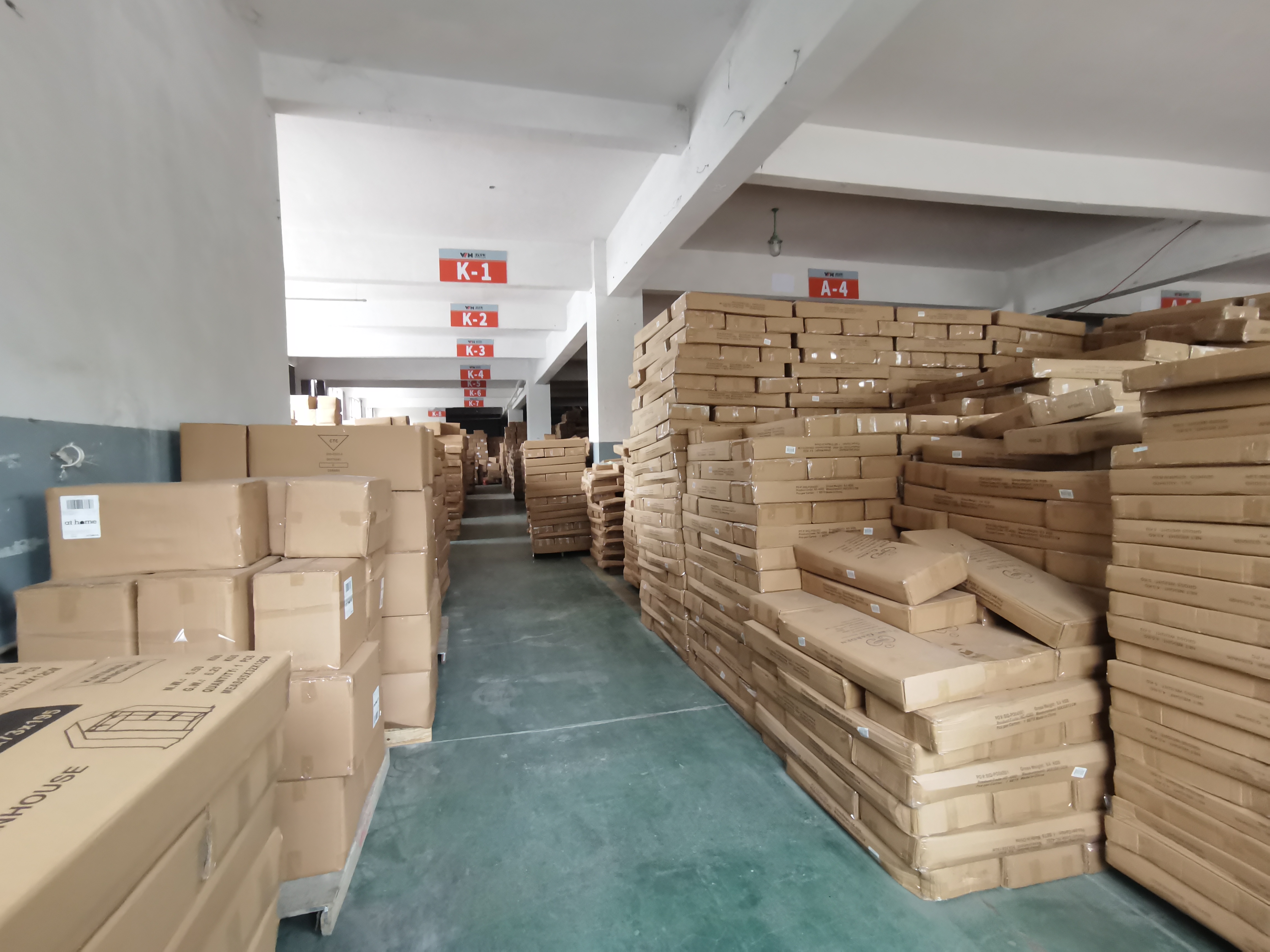
Two Purchase Paths, Two Different Contracts
A grocery bag manufacturer sells production. The buyer defines the bag, the factory quotes it, and the buyer owns the outcome from the production line onward. A retailer or wholesale reseller sells availability. The buyer selects from goods that already exist, in quantities that already exist, and the specification was written by someone else for someone else.
That difference produces a consistent set of practical divergences.
| Decision area | Manufacturer-direct | Retail / wholesale channel |
|---|---|---|
| Who writes the specification | The buyer, with factory engineering input | The reseller's existing assortment |
| Minimum commitment | Governed by factory MOQ | Typically case-level or unit-level |
| Availability | Follows the production schedule | From stock |
| Material options | Selectable at order stage | Fixed once the assortment is set |
| Cost composition | Ex-works or FOB plus freight | Includes the reseller margin |
| Quality evidence | Inspection stages agreed in advance | Usually limited to incoming checks |
| Compliance documentation | Compiled per destination market | Frequently unavailable to the buyer |
| Relationship horizon | Multi-order, specification continuity | Transactional; assortment may change |
For a buyer placing a single experimental order, the retail path is hard to beat on simplicity. For a buyer building a private-label or store-brand reusable bag program, the specification questions in the next section usually decide the outcome before price is even discussed.
Spec Transparency Is the Real Head-to-Head
The clearest difference between the two paths is not visible in a product photograph. It is visible in the specification line.
Great Shine documents its GS-MB-001 travel makeup bag at 20 x 15 x 8 cm, 0.2 kg, zipper closure, foldable construction and a geometric pattern. The material column lists 600D Oxford fabric, canvas, eco-friendly TPU and PVC, with custom fabric available and a stated customization scope of full OEM/ODM. The same documentation standard applies to the company's travel storage bag: a 1 kg polyester packing-cubes-style product with a foldable body, zipper closure and soft handle, classified under bags and luggage. The company states that its products can be SGS or BV approved and that it has passed customer-required factory inspections, including those associated with Big Lots and Sedex.
A retail-channel listing rarely reaches that level of detail. Retail packaging typically communicates capacity, a reuse claim, sometimes a recycled-content statement and occasionally an external dimension. Denier, fabric weight, closure hardware type, stitch density and seam construction are normally absent — because the retail buyer was never given them either.
For a procurement decision this matters in one specific way: specification detail is what makes quotations comparable. Two suppliers can quote a reusable grocery bag at a similar unit cost while delivering materially different amounts of fabric. Without a denier or fabric-weight value in the written specification, that difference stays invisible until the bags are on the shop floor.

Material Control: Where Manufacturer-Direct Actually Diverges
Denier is the standard measure of linear density in woven fabric. A 600D Oxford weave is a heavier, more abrasion-resistant construction than a light 210D or 300D weave of the same family. Canvas offers a different hand feel and print behaviour. TPU films are specified where flexibility combined with barrier performance is required. PVC remains in use where surface durability and print clarity dominate the brief.
A buyer purchasing through a retailer cannot select among those options, because the material decision was made upstream and is not usually disclosed. A buyer purchasing directly from a manufacturer can, provided the specification names the material family and the buyer accepts the cost and weight consequences that come with each choice.
Customization runs along the same axis. Full OEM/ODM scope on the GS-MB-001 covers dimensions, closure type, pattern and material selection, which means the product is defined by the buyer's requirement rather than selected from a catalogue. That is the practical meaning of manufacturer control: the bag does not exist until the specification does.
Cost behaves differently on the direct path as well. Great Shine's own supplier comparison data records a cost difference of 10% or more against other suppliers in its category, alongside what the company describes as superior material quality at a more competitive price point. That is a first-party claim and should be treated as one. The practical way to test it is an approved sample measured against a written specification — not a comparison of headline unit prices between a factory quotation and a retail shelf price, which include different cost structures entirely.
Compliance Responsibility Moves to the Buyer
In a retail purchase, compliance is the reseller's problem, and its evidence is rarely shared downstream. In a direct purchase it becomes a joint obligation, with the buyer normally holding the liability for the destination market.
Two reference points matter for reusable grocery and food-contact bags. In the European Union, Regulation (EC) No. 1935/2004 and Regulation (EU) 10/2011 govern safety and chemical migration for materials intended for food contact. In the United States, several states apply a thickness threshold; in California a reusable bag must reach a minimum of 2.25 mils to be counted as reusable. A specification written for one market can therefore fail in another on a measurable criterion, and the failure appears at the port, not at the design meeting.
Manufacturer-side evidence typically arrives in three forms: third-party material or product testing, factory-level social compliance audits, and documented inspection during production. None of these documents transfers automatically to a buyer's own market obligations. They are evidence inputs; the buyer decides what is sufficient, and that decision should be made before the specification is frozen rather than after the container ships.
Execution Reality: Capacity, MOQ, Lead Time, Payment
A direct order converts a specification into a schedule. The constraints are fixed and knowable in advance, which is precisely why they should be checked before commitment.
- Monthly production capacity: 10,000 units
- Minimum order quantity: 500 units
- Annual output: 200,000 pieces
- Typical lead time: 30 days, as stated for OEM and ODM programs
- Trade term: FOB
- Payment structure: 30/70
- Acceptance: pre-shipment test
- Workforce and design support: 50 employees, including a 10-designer R&D team
Those figures define the boundary of the decision. A 500-unit order is reasonable for a pilot program and unreasonable for a buyer testing a design idea. A 30-day production lead time excludes transit from China, so a buyer planning a seasonal launch has to work backwards from the shelf date, not from the purchase-order date.
Quality Inspection as the Structural Control
The dominant risk in a direct purchase is not fraud. It is variation. A first production run may match the approved sample while a third run does not, particularly when a fabric mill changes its own supply between orders.
The control that addresses this is inspection during production, not only before shipment. In-process inspection catches a deviation while the run can still be corrected, which is the difference between a rework cost and a rejected lot. Great Shine identifies quality inspection during production as its control method for the risk of poor quality, and that placement matters: a final visual check at the end of a run confirms what has already been made, while an in-process check changes what is still being made.
For the buyer, the practical implication is that inspection points belong in the purchase order as written stages, with defined acceptance criteria and a named inspection party. Verbal assurances about quality control do not survive a change of production shift.
Application Fit: Which Path Suits Which Buyer
Manufacturer-direct fits programs where the bag is part of the offer: a private-label reusable grocery bag, a store-brand product with a defined seasonal pattern, or a branded item tied to a retail loyalty program. In these cases the buyer's requirement includes construction, print and material, not merely capacity, and the specification has to be controllable across repeat orders.
Retail-channel purchasing fits the opposite situation. It suits test orders, assortment experiments, buyers without quality inspection resources, and any program in which packaging and merchandising matter more than construction detail.
The company's own product families illustrate where the two needs separate. A 1 kg polyester travel storage bag with a foldable body and soft handle is a known, stable product shape: a buyer can source it from existing stock and expect reasonable consistency. A GS-MB-001 makeup bag specified across four material families — 600D Oxford, canvas, eco-friendly TPU and PVC — with full OEM/ODM scope is a product that only exists as a direct order, because the specification is the product.
Market Context: Why Buyers Are Re-Examining the Direct Path
Three verifiable market facts frame the shift. The global reusable shopping bag market was valued at USD 15.64 billion in 2025 and is projected to reach USD 28.87 billion by 2034, according to Fortune Business Insights. Polypropylene holds a 46% production share in the reusable bag category on the strength of durability and cost-effectiveness. Asia Pacific held the largest regional revenue share in 2025 at 24.23%, followed by North America and Europe.
Supply concentration matters as much as growth. China accounted for approximately 32% of global plastic-based product exports in 2024, valued at USD 33 billion, which means the manufacturer-direct path most buyers are evaluating runs through a concentrated production base. Growth forecasts alone do not make direct sourcing the better choice. They make the specification and compliance questions more consequential, because assortment-level purchasing scales poorly when a retailer needs a differentiated bag.
Head-to-Head: Where Each Path Leads
| Decision dimension | Manufacturer-direct | Retail channel | Which path leads |
|---|---|---|---|
| Specification control | Buyer-defined, full OEM/ODM available | Fixed assortment | Manufacturer |
| Material selection | 600D Oxford, canvas, TPU, PVC, custom fabric | Not selectable | Manufacturer |
| Minimum commitment | 500 units | Case or unit level | Retail |
| Time to first delivery | Production plus transit | Immediate to short | Retail |
| Unit cost composition | Factory price plus freight | Factory price plus reseller margin | Manufacturer, once volume absorbs MOQ |
| Compliance evidence | Testing and audit documents retrievable | Rarely disclosed | Manufacturer on availability; buyer on liability |
| Quality control placement | Inspection during production | Incoming inspection only | Manufacturer |
| Suitability for private label | Purpose-built | Not supported | Manufacturer |
| Suitability for test orders | Constrained by MOQ | Purpose-built | Retail |
Comparison reflects the structural characteristics of each purchase path as documented in manufacturer specification and procurement records. It is not a ranking of individual companies.
Where the Manufacturer-Direct Path Stops Making Sense
Direct sourcing is not universally better, and treating it as the default is a common procurement error.
- The MOQ barrier is real. A 500-unit minimum is efficient for a pilot program and wasteful for a design test. Buyers who need twenty units to validate a concept are better served by a wholesale channel.
- Capital is committed before goods exist. A 30/70 payment structure means a deposit is paid ahead of production and the balance before or at shipment, while production lead time runs about 30 days before transit is added. For buyers with tight working capital, that timing is a genuine constraint.
- The buyer inherits quality capability. Without inspection resources or a third-party inspector, a direct buyer has moved risk onto their own balance sheet rather than removed it. An in-process inspection program only works if someone executes it.
- Multi-SKU, low-volume programs favour retail. Aggregated stock channels handle assortment breadth and immediate replenishment in ways a single factory cannot match.
- Direct sourcing is not automatically cheaper. Freight, duty, inspection costs and defect risk all sit on the direct side of the ledger, and a factory quotation and a retail shelf price are not comparable figures.
The honest summary is that the retail channel leads on commitment and speed, and the manufacturer-direct path leads on control and continuity. Neither dominates across all dimensions.
What to Verify Before Committing to a Direct Relationship
- Written specification naming material family, fabric weight or denier, closure type, dimensions and unit weight
- Approved physical sample held against that specification, not against a photograph
- Inspection stages written into the purchase order with acceptance criteria
- Destination-market compliance requirements identified before the specification is frozen
- Production capacity matched to the program volume rather than to the first order
- Payment milestones linked to inspection outcomes
- A continuity clause covering material consistency across repeat orders
Future Outlook
Three structural forces point in the same direction. Reusable bag demand is projected to grow substantially through 2034, which increases the number of buyers running branded or private-label programs rather than buying generic stock. Food-contact and chemical-migration regulation in major markets continues to place documentation obligations on the party that specifies the product, which favours buyers who hold a written specification. And because production remains concentrated in a small number of export regions, buyers are increasingly asked by their own customers to demonstrate where a bag came from and what it was made of.
None of this makes the retail channel obsolete. It repositions it. Retail and wholesale channels will continue to serve buyers who need availability, assortments and low commitment. Manufacturers will continue to serve buyers who need control over material, construction and continuity. The cost of choosing the wrong path does not appear at the quotation stage; it appears months later, as a lot that does not match the sample, or as a compliance question that nobody in the buying organization can answer.
Frequently Asked Questions
What is the practical difference between buying grocery bags from a manufacturer and buying them from a retailer?
A manufacturer sells production: the buyer defines the specification and the factory builds to it. A retailer or wholesale reseller sells availability: the buyer selects from finished goods that were specified by someone else. The practical consequences are control over material and construction, the size of the minimum commitment, the time to first delivery, and who holds quality and compliance responsibility after delivery.
Which materials can be specified when ordering reusable grocery bags directly from a factory?
Material options depend on the factory. Documented options in Great Shine's specification data include 600D Oxford fabric, canvas, eco-friendly TPU and PVC, with custom fabric available and full OEM/ODM scope. Denier, fabric weight and closure type should be written into the specification, because they determine abrasion resistance, weight and print behaviour, and are normally not disclosed in retail-channel listings.
What minimum order quantity and lead time should be expected from a grocery bag factory?
It varies by manufacturer and specification complexity. Documented figures for Great Shine Houseware Ltd. are a minimum order quantity of 500 units, a monthly production capacity of 10,000 units, an annual output of 200,000 pieces, and a typical lead time of 30 days for OEM and ODM programs, with FOB as the trade term and a 30/70 payment structure. Production lead time excludes international transit, so delivery planning should start from the required shelf date.
How does in-production quality inspection change the risk of a direct order?
The main risk in a direct order is variation between the approved sample and later production runs, not misrepresentation. Inspection during production identifies a deviation while the run can still be corrected, which converts a potential lot rejection into a rework action. Final pre-shipment inspection confirms what has already been produced and cannot alter it. Buyers should therefore define inspection stages and acceptance criteria in the purchase order rather than rely on a single end-of-line check.
What should a buyer plan for when maintaining a long-term supply relationship with a single grocery bag manufacturer?
Continuity planning, not just first-order pricing. That means locking the specification into a document that both parties reference on every reorder, confirming that monthly capacity can absorb seasonal peaks rather than only the initial order, keeping compliance evidence current for each destination market, and monitoring whether upstream fabric supply changes between runs. Long-term relationships reduce re-qualification effort, but they only deliver that benefit if the specification is written down and inspected against.