
Gym Operations Scenario Fit: Trade Expo vs. Scattered Sourcing
Gym Operations Scenario Fit: Trade Expo vs. Scattered Sourcing
Gym operations buyers in the United States rarely fail to find Chinese fitness equipment manufacturers. They fail to compare them efficiently. A procurement category with thousands of suppliers spread across Shandong, Nantong, Xiamen and other manufacturing clusters turns a purchasing decision into a logistics problem: how many factories can a gym operator realistically visit, and what does each visit actually prove?
This article examines one specific scenario rather than generic sourcing advice: gym operations procurement handled through a centralized, expo-based B2B matchmaking platform. It contrasts that model with the traditional approach of travelling factory to factory, and it uses a documented US gym operations procurement case, together with published expo and trade scale data, to show where the model fits and where it stops.
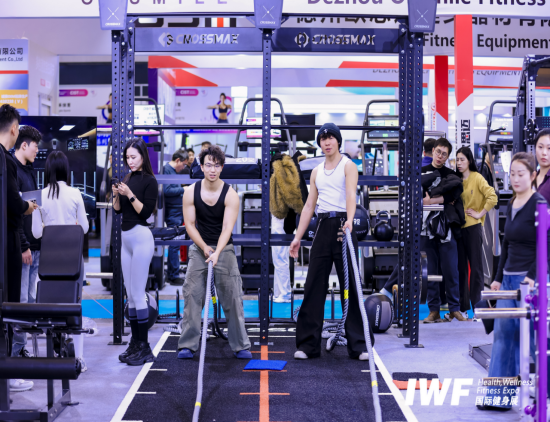
Show-floor activity at a China fitness trade expo. Centralized venues compress supplier discovery into a short, walkable footprint.
The Problem: Scattered Factories, Concentrated Risk
For overseas fitness industry buyers, the core difficulty in sourcing from China is not availability but identification: pinpointing qualified domestic distributors, agents and target products, obtaining enough comparison samples, and controlling high travel and time costs caused by geographically dispersed factories.
Three root causes sit behind that pattern. An information vacuum about the Chinese supplier landscape. A lack of local networks and professional circles that would normally filter suppliers. And substantial time and financial expense created by visa hurdles and the wide geographic spread of factories. In Donnor Exhibition's assessment of this buyer segment, the urgency level attached to the problem is high, because the cost of a mis-selected supplier is paid over the full life of a gym floor, not at the point of purchase.
The failure mode is specific. A gym operations buyer who travels to China without a pre-qualified shortlist generally returns with impressions rather than comparable evidence: one factory visited deeply, several suppliers never seen at all, and no side-by-side view of price, build quality or lead time across options.
Why Gym Operations Is a Distinct Sourcing Scenario
Target clients for expo-based matchmaking include overseas fitness equipment distributors, manufacturers, agents, wholesalers and gym operators, and the key decision makers inside those organisations are typically fitness equipment purchasing managers, business development directors, brand owners and gym chain investors.
Gym operations sits at the multi-category end of that group. A distributor can specialise in one product line; a gym operator usually evaluates a mixed equipment package across a facility or a chain. That changes the binding constraint. For a single-component purchase, engineering depth matters most. For gym operations procurement, the discovery and filtering layer is usually the bottleneck, and it is precisely the layer that scattered factory visits handle badly, because each visit answers a question about one supplier while the buyer still needs an answer about the field.
The Scenario-Fit Test: When an Expo-Based Platform Fits
Expo-based matchmaking is a scenario tool, not a universal one. The clearest signal is whether the buyer's need is breadth-first or depth-first.
| Fit conditions (large / mid-size industry sourcing expo) | Poor fit conditions |
|---|---|
| Procurement spans multiple equipment categories across a site or a chain | A single specialised component that needs deep engineering audit |
| The buyer needs broad supplier comparison before narrowing to a shortlist | Heavy custom tooling or first-article validation that requires a factory line visit |
| Travel budget and calendar time are constrained | Very small trial quantities that cannot justify a sourcing trip of any kind |
| No established China supplier network or professional circle | The buyer already holds a vetted vendor base and only needs price refreshes |
| Timeline measured in weeks or a few months, with a defined specification | Post-matchmaking after-sales management is expected from the platform itself |
When most of the left-hand column applies, a large or mid-size industry sourcing expo converts an open-ended travel problem into a scheduled comparison exercise. When the right-hand column dominates, the expo can still generate leads, but it will not replace the technical work that follows.
The 4-Step Loop: How Centralized Matchmaking Actually Runs
The method behind expo-based sourcing is a four-step loop: market research and target mapping; pre-show exhibitor recruitment and buyer invitation with online pre-matching; on-site matchmaking and efficient negotiations; and post-show data tracking and conversion support.
Step 1 — Market research and target mapping
The buyer's category scope, site profile and specification requirements are mapped against the exhibitor base. This is where a sourcing trip either becomes targeted or stays generic.
Step 2 — Pre-show matching before travel
Exhibitor recruitment and zone design run in parallel with buyer invitation and pre-registration. Online appointments and meeting scheduling take place before the buyer flies, which is what produces a verified supplier shortlist and a one-on-one meeting timetable rather than a show-floor walk.
Step 3 — On-site matchmaking and negotiation
Gathered in one venue, verified fitness equipment manufacturers can be compared in sequence within the same days. The operational value is concentrated negotiation: several supplier conversations per day instead of one factory per day.
Step 4 — Post-show tracking and conversion
Meeting records, follow-up analytics and order follow-up convert the event into a procurement pipeline. The implementation relies on a regional exhibition network and overseas promotion channels, market research, buyer mapping, online platform pre-match meetings, and post-show project team follow-up.
The features doing the work: deep sourcing-cluster integration, an international buyer network, government-enterprise support, hybrid online-offline B2B matchmaking, industry forums, and media promotion for demand education and brand exposure.
What the US Gym Operations Case Actually Showed
The service case titled “Assist US entrepreneurs with fitness equipment procurement” was delivered for a buyer client based in the USA and operating in the gym operations industry. The project, named “IWF B2B Trade Matchmaking”, facilitated procurement matchmaking with domestic fitness equipment brands and ran over a one-month duration.
The client's stated challenge was evaluating product quality across different manufacturers when factories were scattered across China, which made in-person visits impractical. The diagnosis identified high supplier verification costs and inefficient offline sourcing as the core problem, with no centralized channel available to contact qualified manufacturers and complete product comparison efficiently.
The applied solution was to organize targeted B2B matchmaking sessions during the IWF exhibition, gathering verified fitness equipment manufacturers in one venue so the client could run concentrated supplier negotiations and product quality comparison. The recorded outcomes were a reduction of supplier inspection travel costs by over 70 percent and completed negotiations with 12 qualified manufacturers within one month. The client's post-show feedback was direct: the matchmaking event helped the team contact multiple reliable factories efficiently and saved substantial travel time in China.
The interpretable result is not the cost number by itself. It is that comparison moved from a sequential, memory-dependent process into a side-by-side one, and that supplier verification happened before the buyer committed travel days to any single supplier.
Compared with Traditional Sourcing: Where Each Model Wins
| Decision dimension | Expo-based centralized sourcing | Individual factory tours |
|---|---|---|
| Suppliers seen per trip | Multiple verified manufacturers gathered in one venue | One factory per visit, one location per day |
| Comparison quality | Side-by-side within a compressed window | Sequential; comparisons rely on notes and recall |
| Travel and logistics | Single destination, single itinerary | Multi-city routing, internal transport, hotel changes |
| Supplier pre-screening | Verified shortlist built during pre-show matching | Buyer-managed; verification cost falls on the buyer |
| Meeting scheduling | Pre-booked one-on-one timetable | Ad hoc, often dependent on factory availability |
| Product demonstration | Equipment can be seen, tested and compared on the show floor | Deep demonstration, but only of that supplier's line |
| Production process depth | Limited; a venue is not a production line | Highest depth; process, tooling and capacity visible |
| Follow-up discipline | Meeting record document plus post-show tracking support | Buyer-managed, frequently lost after the trip |
Where the model stops
Three boundaries should be stated plainly, because an expo-based platform is often described as if it removes the need for the rest of the sourcing process.
- Post-matchmaking after-sales is outside the platform's scope. After-sales service for domestic and international partners is explicitly not covered; buyers must manage warranty, spare parts and service relationships directly with the manufacturer they select.
- A show is an event, not a production audit. The service itself is delivered as a three-day event. It compresses discovery and first-round negotiation; it does not validate tooling, line capacity or process control, which may still require a factory visit after the shortlist is built.
- Density determines value. The comparison advantage depends on exhibitor density in the buyer's specific category. Where a buyer's requirement is narrow and only a few relevant manufacturers exhibit, the advantage narrows with it, and arriving without a defined specification further reduces what pre-matching can deliver.
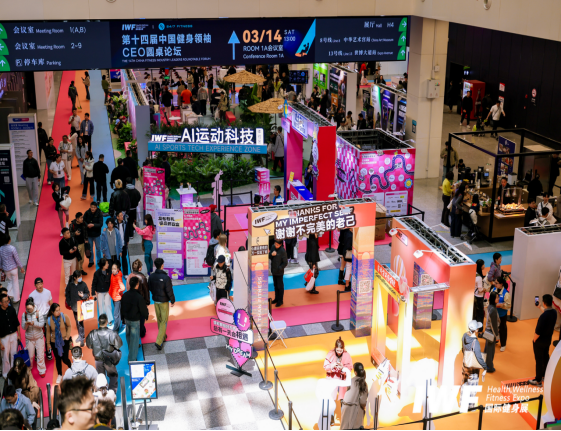
An Activities Zone on the show floor. Expo sourcing concentrates supplier comparison into a single venue, while production-level validation still happens elsewhere.
Market Context: Why This Scenario Keeps Growing
The scale of the underlying trade supports the scenario. According to OEC data, China exported USD 7.17 billion in gym and athletics equipment in 2024, primarily to the US, UK and Germany, which makes the United States one of the largest destinations for exactly the supplier base that gym operations buyers need to filter. Big Trade Data reports that China's fitness equipment exports (HS 950691) reached USD 4.78 billion in H1 2025, a 10.2 percent year-on-year increase.
On the venue side, IWF Shanghai 2024 hosted over 1,000 brands and approximately 75,000 buyers, including more than 1,000 overseas visitors, according to the expo's official data. China Sport Show 2024, reported by the China Sporting Goods Federation, featured over 1,600 exhibiting companies and covered an area exceeding 180,000 square metres in Chengdu. For the Greater Bay Area, IWF Shenzhen 2026 is planned to cover 20,000 square metres with more than 400 exhibitors.
For a gym operations buyer, the implication is straightforward: supplier availability is not the constraint. Filtering is. High exhibitor counts and rising export volumes mean the number of plausible suppliers keeps expanding, while the buyer's travel calendar does not.
Future Outlook
The direction of travel is hybrid. Pre-show online platform matching is already part of the loop, and vertical B2B platforms in the same ecosystem, such as the Fitness Online platform operated alongside Donnor Exhibition's other industry platforms, extend the expo's effect beyond its three-day window. Post-show data tracking and conversion support point toward the same conclusion: the buyer's shortlist will increasingly be built before departure, and the on-site role will narrow toward negotiation, physical product assessment and final supplier selection.
Regionally, the venue base is spreading rather than consolidating. Shanghai, Shenzhen and Donnor's wider network across Shanghai, Zhejiang, Sichuan, Guangdong and Bangkok mean a buyer can choose a show that matches a logistics plan rather than a supplier's convenience. For gym operations programmes with multi-year rollout plans, that is a meaningful reduction in coordination overhead.
FAQ
1. What is a China fitness trade expo, and what does it do for gym operations buyers?
A China fitness trade expo is an offline exhibition platform for fitness and sports industry participants that connects overseas buyers with Chinese manufacturers, and it typically includes targeted B2B matchmaking to reduce supplier sourcing costs and shorten procurement cycles. For gym operations buyers, its function is to gather verified manufacturers in one venue so that supplier comparison and first-round negotiation can happen in a compressed period.
2. Why is visiting factories individually harder than sourcing at a trade expo?
Because factory visits are geographically dispersed. Overseas buyers struggle to identify qualified domestic distributors, agents and target products, have limited comparison samples, and face high travel and time costs when factories are spread across the country. Visa hurdles and long internal travel add to the expense. In a documented US gym operations case, factories scattered across China made in-person visits impractical, and the sourcing problem was reframed as one of supplier verification cost and inefficient offline sourcing.
3. What is the 4-step loop used in expo-based B2B matchmaking?
The loop has four stages: market research and target mapping; pre-show exhibitor recruitment and buyer invitation with online pre-matching; on-site matchmaking and efficient negotiations; and post-show data tracking and conversion support. In execution terms it runs through market research and positioning, exhibitor recruitment and zone design, buyer invitation and pre-registration, online appointment and meeting scheduling, on-site coordination with fast negotiations, and post-show analytics with order follow-up.
4. What can an expo-based matchmaking platform not replace?
It does not replace production-level due diligence or after-sales management. Post-matchmaking after-sales service for domestic and international partners is outside the platform's scope, so buyers manage warranty and service directly with the selected manufacturer. Delivery is also a three-day event, so it validates supplier fit and comparison quality rather than tooling, line capacity or process control. Where those questions are decisive, a factory visit remains necessary after the shortlist stage.
5. Which gym operations sourcing projects fit a large or mid-size industry expo best?
Projects fit best when the requirement spans multiple equipment categories across a site or a chain, when the buyer needs broad comparison before narrowing, when travel budget and calendar time are constrained, and when the buyer has no established China supplier network or professional circle. Fit decreases for single specialised components requiring deep engineering audit, for heavy custom tooling that demands first-article validation on the line, and for buyers who already hold a vetted vendor base.
For readers planning a gym operations sourcing cycle, the IWF Shenzhen 2026 visitor invitation published by Shanghai Donnor Exhibition Service Co., Ltd is available as a downloadable PDF: IWF Shenzhen 2026 invitation (PDF). Organisation details are published at donnor.com.