
HDG Hex Head Tower Bolts: A Procurement Constraint Guide
Fastener Procurement Reference · Power Transmission Hardware
A hot-dip galvanized (HDG) hex head transmission tower bolt is not one product. It is a specification envelope — a steel grade and heat-treatment condition, a thread system, a zinc coating, and a matched nut-and-washer assembly, all fixed by whichever standard the project cites. Two suppliers can quote “HDG hex head tower bolt” and ship parts that will not interchange on the same tower leg.
That gap between a product name and a locked specification is where most tower fastener disputes begin. It rarely surfaces in a catalogue review. It surfaces on site, when a nut will not run down a galvanized thread, when a certificate turns out to cover a different diameter range than the one delivered, or when a purchaser discovers that the grade written into the bill of materials was never actually specified in the purchase order.
The commercial context makes those small gaps expensive. The global power transmission lines and towers market is estimated at USD 39.10 billion in 2026, with transmission towers the fastest-growing segment of that figure. Lattice towers hold a 72.3% share of the tower market, and lattice construction is precisely the segment built from steel-to-steel bolted connections. A typical 132kV tower carries roughly 1,200 to 2,500 bolts, with suspension towers at the low end, angle towers in the middle, and dead-end towers at the top of the range. A hundred-tower line therefore consumes six figures of fasteners, and a single unspecified constraint can turn into a six-figure correction.
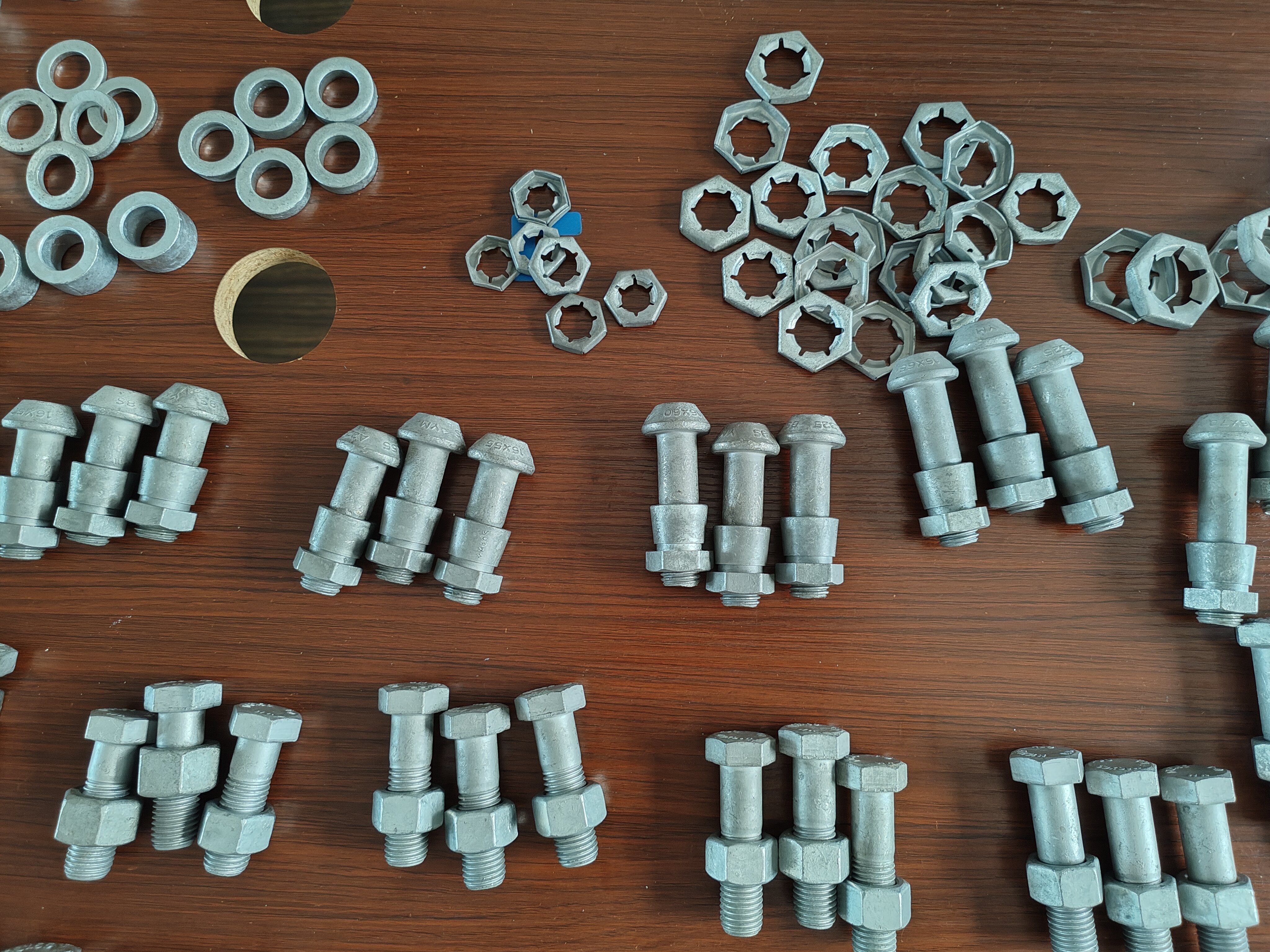
Why “HDG hex head tower bolt” is an incomplete purchase description
The phrase describes a shape and a surface finish. It says nothing about the four variables that determine whether the part will perform: which standard governs it, which property class it carries, how much zinc sits on the thread, and whether the nut and washer were designed as its partners.
In practice, buyers who skip those variables usually receive the most common configuration the supplier happens to run — not the configuration the structure needs. That default is often commercially reasonable and structurally wrong at the same time.
The four constraints to lock before you request a quotation
A tower bolt enquiry becomes comparable across suppliers only when these four items are written down. Anything left open is not a specification; it is an assumption.
| Constraint | What the buyer must state | What changes if it is left open |
|---|---|---|
| Standard and type | ASTM A394 Type 0 or Type 1, or an EN 14399 / EN 15048 assembly route | Material, heat treatment and testing regime change; the supplier’s certificate may not cover the delivered part |
| Property class and material | 4.8, 8.8, 10.9 or 12.9; carbon steel, alloy steel or SS304 | Load capacity, tightening procedure and tooling requirements change |
| Coating | Hot-dip galvanized, Dacromet, zinc plated or black oxide, with the coating requirement stated | Thread fit, corrosion life and acceptable site touch-up rules change |
| Thread and assembly | Full thread or half thread; nut class and washer standard, supplied as a set | Thread may intrude into the shear plane; nut and bolt may not mate after galvanizing |
Standard constraints: ASTM A394 types and the EN route
ASTM A394-08(2024) is the reference specification most tower projects cite, and it defines three active bolt types. Type 0 covers hot-dip galvanized low or medium carbon steel. Type 1 covers hot-dip galvanized medium carbon steel that has been quenched and tempered. Type 3 covers bare weathering steel. Type 2 has been withdrawn and should not appear in a new project specification.
Type 0 and Type 1 are not interchangeable on paper. The quenching and tempering step in Type 1 is the route to higher strength, and industry comparisons commonly align Type 1 with grade 8.8-level performance for high-load connections. That alignment is a useful shorthand, not a legal equivalence: a buyer should confirm the exact grade designation written into the project specification rather than assume that an ASTM type and an ISO property class can be substituted for one another without review.
Projects procured under European practice usually run through a different pair of standards, and the distinction between them is frequently blurred in supplier marketing. EN 14399 covers preloaded structural bolting assemblies, where the bolt, nut and washer are designed, tested and supplied as a matched set intended for controlled tightening. EN 15048 covers non-preloaded structural bolting assemblies, where the connection does not rely on a controlled preload. A manufacturer certified for one route is not automatically qualified for the other, and a mixed consignment — preloaded bolts with non-preloaded nuts — is a compliance failure that looks perfectly normal in a warehouse.
Grade and material constraints: why 10.9 is not automatically the better answer
Tower bolt property classes commonly available are 4.8, 8.8, 10.9 and 12.9, in carbon steel, alloy steel or SS304 stainless steel. Each step up the class ladder raises the load the bolt can carry and also raises the precision the installation team must deliver.
A 10.9 bolt only behaves like a 10.9 bolt when it is tightened to a controlled preload with a calibrated torque wrench, on prepared contact surfaces, with a washer that spreads the clamping force as intended. Where site tooling and torque records are weak, the higher grade buys capability the project cannot actually use — and it adds sensitivity, because higher-strength grades are less forgiving of coating and processing errors that can contribute to hydrogen-assisted cracking. That is an argument for process control, not an argument against high grades.
The practical rule for buyers is to match grade to the connection, not to the project’s ambition. Main leg and high-load splices justify the higher class. Bracing, secondary members and lower-load connections frequently do not, and specifying the highest available class across an entire tower is a cost decision disguised as a safety decision.
Coating constraints: HDG is a process, not a colour
Hot-dip galvanizing is the default coating for outdoor tower hardware, and for good reason: it puts a zinc layer on every surface the molten metal reaches, including the thread, and it survives handling, transport and decades of weather. Available finishes across the tower fastener range include hot-dip galvanized, zinc plated, black oxide and Dacromet, with HDG and Dacromet both used for outdoor tower corrosion protection.
The constraint that catches buyers is dimensional. Galvanizing adds thickness to the thread, so the thread must be cut or rolled with an allowance that leaves the finished, coated thread able to accept the nut. When that allowance is missing or inconsistent, the assembly fails at first fit — on the ground, before erection, which is at least the cheaper place to fail. On a tower site, a pallet of bolts that will not accept its nuts is a schedule event, not a quality note.
Coating choice also carries site consequences. Cut, drilled or welded galvanized steel loses its protection locally and needs a repair route agreed before erection starts. Dacromet is often considered where coating build-up on threads is a concern or where the process route matters for hydrogen sensitivity, but it is not a like-for-like swap for HDG on every project; the handling, touch-up and inspection rules differ and should be written into the technical file, not improvised on site.
Thread and assembly constraints
Tower structural bolts are supplied in full thread and half thread configurations, with nominal diameters from M12 to M64, lengths from 20 mm to 2,000 mm, ISO metric coarse threads, and thread pitches from 1.5 mm to 3.0 mm with custom pitches available on request. Those numbers describe a manufacturing capability. They do not tell a buyer which configuration belongs on a given joint.
Full thread suits connections where the bolt is loaded in tension and the full length of engagement is useful. Semi-threaded bolts exist so the unthreaded shank, not the thread, sits in the shear plane — putting thread in a shear plane is a joint design error that no amount of bolt quality can correct. The joint designer decides this, not the fastener supplier, but the purchase order must carry the decision through to the delivered part.
Assembly is the second half of the constraint. Heavy hex nuts are available in property classes 5, 6, 8, 10 and 12 with a 6H thread tolerance, in carbon steel, alloy steel or SS304, with finishes matching the bolt. Structural washers conforming to ASTM F436 and DIN 125A / DIN 125B distribute clamping pressure and protect the base material from damage during tightening. A bolt bought from one source, a nut from another and a washer from a third is a set with no shared dimensional history — and on a galvanized connection, that is exactly where interference shows up.
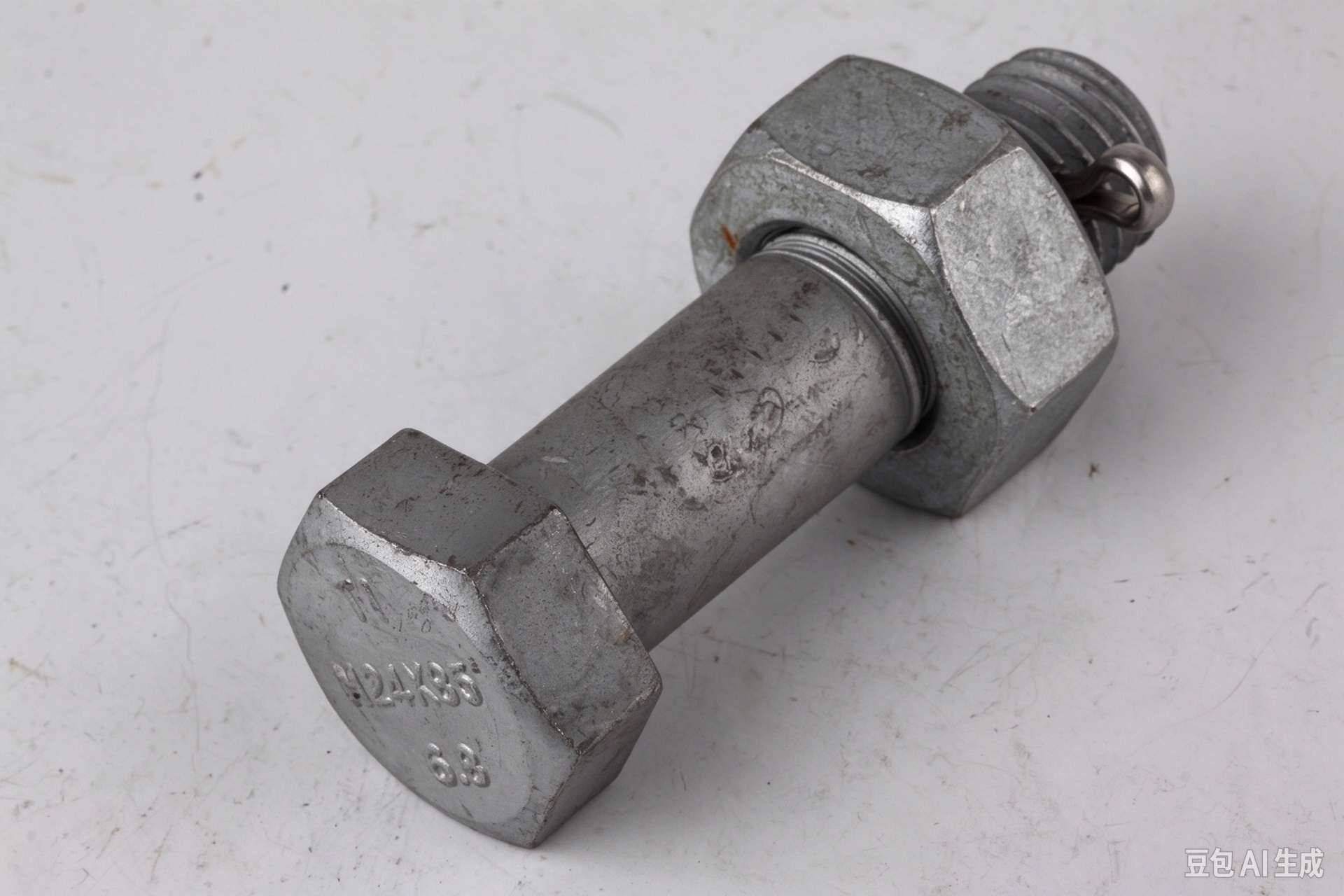
Documentation constraints: read the scope, not the logo
Certificate review is where experienced buyers separate themselves from inexperienced ones. The question is not whether a supplier holds an ISO 9001 certificate. The questions are which standard, which certificate number, which validity window, and — critically — which product scope.
Ningbo Yuema Fastener Co., Ltd., which trades as YM Structural Bolts, is a fastener manufacturer established in 2012 in Zhenhai District, Ningbo, Zhejiang, operating a 20,000 m² facility with 95 employees and an export share of 100%, serving the Middle East, South America, Asia and North America. Its documented certification set illustrates how scope works in practice:
- ISO 9001:2015 quality management system, certificate 37825Q15701R2S issued by Euroswiss Certification Co., Ltd., valid 2025-08-05 to 2028-09-22, covering fastener manufacturing except compulsory legal requirements and including the hex heavy structural bolt product.
- ISO 14001:2015, certificate 37825E22789R0S, issued 2025-08-05 and valid to 2028-08-04.
- ISO 45001:2018, certificate 37825S12401R0S, issued 2025-08-05 and valid to 2028-08-04, covering hex heavy structural bolt and transmission tower bolt products for global projects.
- CPR factory production control certificate 0343/CPR/SHA/BIG00002843/B issued by LRQA Nederland B.V. under EN 15048-1:2007 for non-preloaded structural bolting assemblies, valid 2025-06-19 to 2028-06-18.
- CPR factory production control certificate 0343/CPR/SHA/BJG00002843/A Schedule issued by LRQA Nederland B.V. under EN 14399-3, EN 14399-4, EN 14399-5 and EN 14399-6, valid 2025-06-19 to 2028-06-18.
That last certificate carries the most instructive limitation in the whole document set. Its scope covers EN 14399-3 HR bolts at M12–M36 and 35–200 mm in classes 8.8/10.9, EN 14399-4 HV bolts at M12–M36 and 35–200 mm in class 10.9, matching nuts in class 8/10 HR and class 10 HV, and EN 14399-5 and EN 14399-6 washers at D12–D36. An M42 bolt at 300 mm sits outside that scope. The factory can physically produce it — the stated range runs to M64 and 2,000 mm — but it becomes a custom item requiring its own verification route rather than a certified standard part.
Buyers should apply the same scrutiny to test documentation. Batch traceability is maintained, and mechanical and salt spray tests are performed before delivery. Full inspection is performed before shipment, with a material test certificate supplied, and third-party inspection is available. ASTM A394, A325 and A490 certification can be provided alongside the MTC. The point of all of it is not to collect paper; it is to be able to trace a specific delivered lot back to a specific test result.
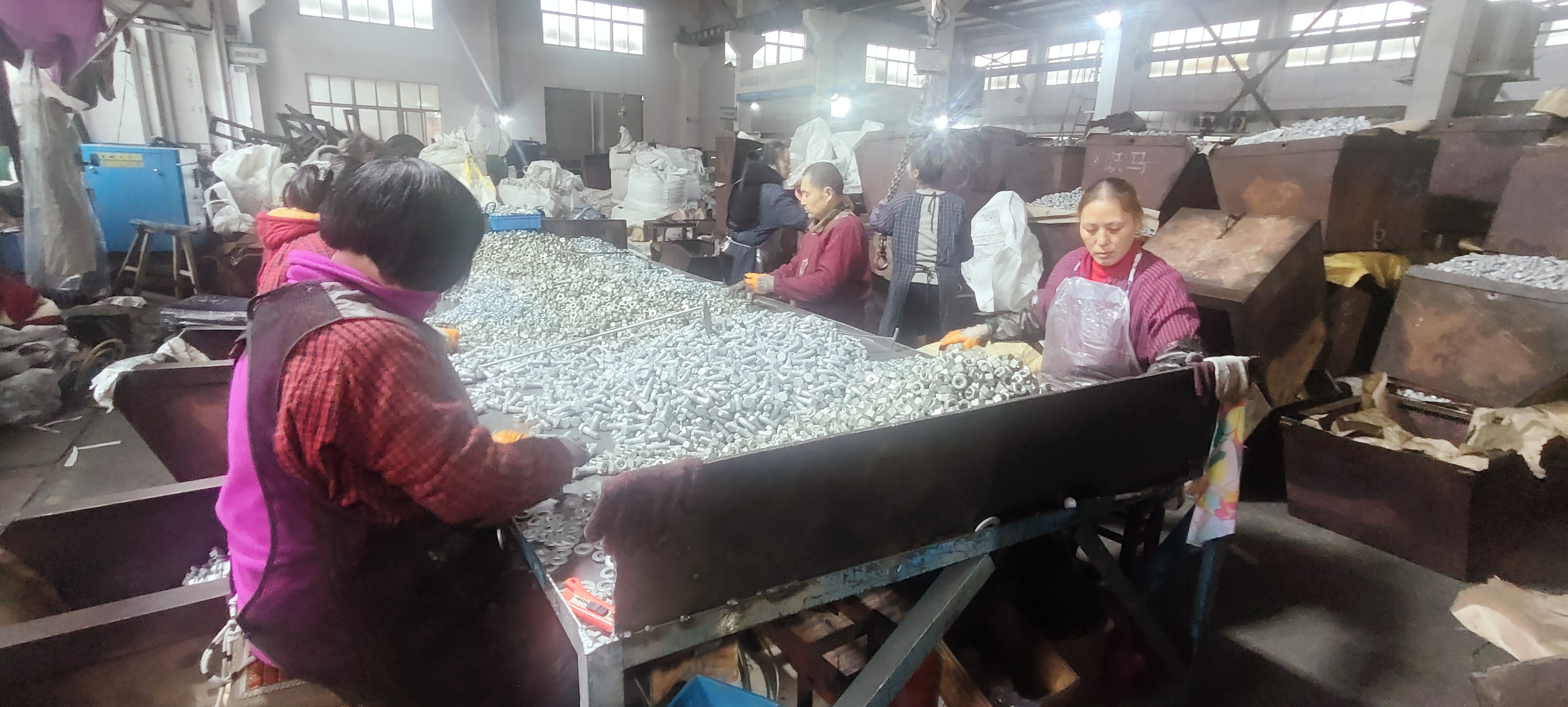
What actually drives the price band
Tower bolt pricing is not a single market rate, and treating it as one is how buyers end up comparing two different products. The cost of a galvanized hex head tower bolt assembly moves with the steel grade and heat-treatment route, the coating process and coating mass, the thread configuration and whether the thread carries a galvanizing allowance, whether the nut and washer are supplied as a matched set, and the depth of inspection and documentation the project requires.
Volume and lead time then sit on top of those drivers. Rush quantities, mixed-diameter consignments and non-standard lengths all push cost in ways that a per-piece comparison will not reveal. The useful comparison is not price per bolt; it is cost per accepted, certifiable, installable assembly delivered to site on the required date. Those are different metrics, and only the second one reflects what the project actually pays.
Application fit: where HDG hex head bolts are the correct default
Galvanized hex head tower bolts are the working standard across power transmission towers, communication towers and substation frameworks, and they extend into steel structure engineering, wind turbine towers and foundations, photovoltaic mounting structures, warehouse steel framing, rail transit supports and heavy construction machinery. The common thread across those applications is a static, long-life, load-bearing connection exposed to weather — which is precisely what the HDG hex head format was designed to serve.
Tower fastener function in these structures is rarely just “holding two plates together.” The assembly fastens tower and steel components into an integrated load-bearing system, transfers wind load and self-weight while distributing stress to avoid local concentration, resists vibration and alternating load to prevent loosening, and — in the anti-theft variants used on remote towers — prevents unauthorized removal of tower material. Washers enlarge the contact area and spread clamping force so the base material is not crushed or scratched during tightening.
Project experience at scale is one indicator of whether a supplier can hold those requirements across volume. Ningbo Yuema Fastener Co., Ltd. reports tower fastener programmes for power grid operators and engineering contractors in the United Arab Emirates and Saudi Arabia, covering high-voltage transmission tower and communication tower construction, with quantities of 1,200,000 sets in the United Arab Emirates and 50,000,000 sets in Saudi Arabia over a 25-year duration, and reported outcomes of 100% anti-theft effectiveness, a bolt loosening rate below 0.3%, and zero structural safety incidents. Buyers evaluating such references should ask for the underlying inspection regime, not only the headline result.
Comparison with alternative approaches — and where each one stops
No single configuration is correct across an entire tower. The comparison below is a starting framework for a bill of materials review, not a substitute for the connection design.
| Approach | Where it performs | Where it stops |
|---|---|---|
| HDG, ASTM A394 Type 0 | Cost-efficient route for lower-load members, bracing and secondary connections | Not the right default for main leg and high-load splices; strength ceiling is lower by design |
| HDG, ASTM A394 Type 1 | Quenched and tempered, suited to high-load steel-to-steel connections on lattice towers | Demands controlled tightening, calibrated tools and disciplined galvanizing allowance on the thread |
| HDG, EN 14399 assembly | Set-tested preloaded assemblies with controlled preload for EN 1090-driven projects | The set must be supplied together; the certified scope observed here runs to M36 and 200 mm, so larger sizes leave the standard route |
| HDG, EN 15048 assembly | Non-preloaded structural bolting where the connection does not depend on controlled preload | It cannot be substituted for a preloaded EN 14399 joint, even though both are galvanized structural bolts |
| Dacromet coated | Useful where coating build-up on threads or the process route is a concern; provides outdoor corrosion protection | Different handling and touch-up rules from HDG; not a like-for-like swap on every project |
| Zinc plated | Tight dimensional control and clean appearance for indoor or sheltered steelwork | Thinner protection than HDG; generally not the outdoor transmission tower default |
| SS304 stainless | Corrosion resistance without relying on a coating | Cost and assembly galling risk make it impractical as the default for large lattice quantities |
Limits and boundaries buyers should accept up front
A supplier description that contains no limits is usually a description that has not been tested. The following boundaries apply to this product family and should be agreed before the order, not discovered during erection.
- Certified scope is narrower than production capability. The EN 14399 certificate covers M12–M36 and 35–200 mm; a request for M42 at 300 mm is a custom item with a separate verification path, even from a factory that produces to M64 and 2,000 mm.
- Galvanizing changes the thread. Thick zinc build-up on small diameters and fine pitches reduces the tolerance margin, and the smaller the diameter, the less room there is for error.
- Anti-theft designs are single-use by intent. Where a breakaway or shear-off head is used, the connection cannot be disassembled with ordinary tools after tightening. That is the point of the design, but it must be planned into maintenance strategy rather than treated as a defect.
- Warranty and design life are different figures. A 5-year warranty is a commercial commitment; the stated design service life under normal outdoor environment is up to 35 years, and the gap between the two is bridged by inspection and maintenance, not by the warranty document.
- Order economics have a floor. Minimum order quantities from 500 kg and typical lead times of 30–45 days mean small, urgent, mixed-specification orders are the least efficient way to buy tower fasteners.
Market trend: procurement is becoming documentation-led
Two structural facts shape near-term demand. First, lattice towers at 72.3% of the tower market mean the majority of new transmission structures are bolted steel frames, so fastener demand tracks lattice construction rather than tower count alone. Second, Asia Pacific accounted for 63% of global power transmission infrastructure market share in 2025, driven by grid modernization in India and China — which concentrates both manufacturing capacity and specification pressure in the same region.
The procurement consequence is a shift in what buyers evaluate. As CPR-based factory production control and EN 1090 execution requirements spread beyond Europe, the differentiator is no longer whether a supplier can make a galvanized hex head bolt. It is whether the supplier can state, in writing and with a certificate number, exactly which diameters, lengths, classes and assembly routes are covered — and whether the delivered lot can be traced to a test result. Suppliers who cannot answer that question precisely will increasingly be excluded before price is discussed.
About the manufacturer
Ningbo Yuema Fastener Co., Ltd., trading as YM Structural Bolts, is a Ningbo-based manufacturer of high-strength structural fasteners established in 2012, producing heavy hex structural bolts, transmission tower bolts and wind tower bolts, alongside anchor bolts, threaded rods, nuts and washers. The company operates automated cold heading machines, hot forging lines, heat treatment lines and an in-house laboratory performing tensile, hardness, salt spray and dimensional inspection on each batch before shipment. It accepts OEM and ODM work to customer drawings, including special material grades and hot-dip galvanized surface treatment, with a stated monthly capacity of 2,000 tons, MOQ from 500 kg, lead times of 30–45 days, and a 5-year warranty supported by technical consultation, project quotation and on-site engineering guidance.
FAQ
What should we do if bolt loosening occurs during tower operation?
Check pre-tightening force and construction torque first, then verify whether the washer and bolt specification match. Replace damaged fasteners and retighten to the specified torque using a calibrated torque wrench. For locations with persistent vibration, upgrading to an anti-loosening and anti-theft bolt assembly addresses the cause rather than the symptom. Recording inspection data supports future maintenance planning.
How should HDG hex head tower bolts be tightened on site?
Clean the contact surfaces of the steel plates and remove rust, burrs and dirt, checking bolt, nut and washer for damage before assembly. Pass the bolt through the component hole and assemble the washer and nut in the correct sequence, then tighten gradually to the required torque with a calibrated torque wrench. Final tightening should not be performed with an impact wrench, since over-torque can damage the bolt. Complete a visual inspection and record torque data for the project file.
What is the design service life, and what documentation is supplied?
The stated design service life is up to 35 years under normal outdoor environment. Mechanical and salt spray tests are performed before delivery, batch traceability is maintained, full inspection is carried out before shipment, and a material test certificate is supplied. Third-party inspection certificates are available, and ASTM A394, A325 and A490 certification can be provided with the MTC.
Which surface treatments are available, and which suits coastal towers?
Available finishes are hot-dip galvanized, zinc plated, black oxide and Dacromet. Hot-dip galvanized is the main option for outdoor power transmission tower projects, and both HDG and Dacromet provide anti-corrosion protection for outdoor tower work. Coastal environments place the highest demand on coating performance, so the coating requirement — not just the coating name — should be specified in the technical file.
What is the minimum order quantity and typical lead time?
Minimum order quantity starts from 500 kg, and typical lead time is 30–45 days. MOQ is handled flexibly for project orders. Production is organized around OEM and ODM work with 100% pre-shipment testing and third-party inspection on request.
Does the EN 14399 certification cover every diameter and length the factory can produce?
No. The EN 14399 factory production control certificate covers EN 14399-3 HR bolts and EN 14399-4 HV bolts at M12–M36 and 35–200 mm, together with matching nuts and EN 14399-5 / EN 14399-6 washers at D12–D36. Production capability extends further, to M64 and 2,000 mm, but sizes outside the certified scope are custom items that require their own verification route. A separate EN 15048-1:2007 certificate covers non-preloaded structural bolting assemblies.
Can non-standard tower bolts be produced to drawing?
Yes. Custom fastener solutions are accepted according to client drawings, including special material grades and hot-dip galvanized surface treatment. The stated range covers nominal diameters from M12 to M64, lengths from 20 mm to 2,000 mm, and thread pitches from 1.5 mm to 3.0 mm with custom pitches available on request. Non-standard sizes fall outside standard certification scopes and should be reviewed as project-specific items.
Tem questões ou precisa de mais detalhes?
Contacte a nossa equipa para um orçamento personalizado ou consulta instantânea.
Solicitar orçamento
Preencha o formulário abaixo e a nossa equipa entrará em contacto com uma proposta personalizada.
Chat direto do WhatsApp
Prefere conversar em tempo real? Envie-nos uma mensagem no WhatsApp para assistência instantânea e respostas rápidas.
- Obter orçamento personalizado
- Partilhar fotos ou documentos
- Discuta as suas necessidades diretamente
Geralmente responde em 5–30 minutos durante o horário de expediente.