
HDPE Geomembrane Certifications and Technical Parameters: What Buyers Must Verify
HDPE Geomembrane Certifications and Technical Parameters: What Buyers Must Verify
Geomembranes are flexible polymeric sheets used as fluid barriers in mining, aquaculture, water conservancy, and environmental protection projects. For procurement teams, the critical task is not simply selecting a “geomembrane” but verifying that the material meets the required certifications, mechanical properties, and application constraints. This article reviews the compliance and specification considerations for HDPE geomembranes, with reference to a currently available product line from Haoyang Environment Co., Ltd.
The Procurement Problem: Compliance and Specification Are Equally Important
A geomembrane’s long-term performance depends on two things: whether it is manufactured to a recognized standard, and whether its technical parameters match the stresses of the intended site. In many projects, failure occurs not because the material is poor, but because the buyer has not verified these two dimensions.
Different markets operate under different regulatory frameworks. In the EU/EEA, geosynthetic products may require a Verification of Conformity based on harmonized EN standards. In the EAEU/Russia, products need GOST certificates issued by approved certification bodies. A supplier that serves both markets must maintain parallel certification sets, each with its own certificate number, standard, and scope.
There is also a growing market incentive to get this right. The global geomembrane market was valued at approximately USD 2.23 billion in 2025 and is projected to reach USD 3.59 billion by 2034, according to Fortune Business Insights. HDPE raw materials dominate the market, accounting for approximately 31.3% to 40% of global revenue depending on the reporting agency. Mining is the largest application segment, representing 39.6% of global revenue in 2023, driven by tailings containment. As buyers become more focused on environmental liability, certification and documented performance are becoming procurement prerequisites rather than optional extras.
What Certification Documents Actually Demonstrate
Certificates are not marketing artifacts; they are traceable evidence that a product has been assessed against a specific standard. For a geomembrane buyer, the following elements should be checked:
- The exact product name and model covered by the certificate.
- The standard to which conformity is declared.
- The market or region for which the certificate is valid.
- The issuing body and certificate number.
- The validity period of the certificate.
Haoyang Environment Co., Ltd., a Chinese manufacturer headquartered in Dezhou (Yucheng) National High-tech Industrial Development Zone, Shandong Province, holds several certifications that cover its geomembrane products. For the EU/EEA market, the geomembrane product holds Verification of Conformity (ICR) certification number ICR/VC/HE250525, issued by ICR, compliant with standard EN 13249:2016. For the EAEU/Russia market, the same product line holds a GOST Certificate of Conformity numbered POCC CN.32682.047C00.0C01.H00840, issued by ПрофСерт (ProfSert), compliant with GOST 56586-2015.
| Market | Standard | Certificate No. | Issuing Body |
|---|---|---|---|
| EU/EEA | EN 13249:2016 | ICR/VC/HE250525 | ICR |
| EAEU/Russia | GOST 56586-2015 | POCC CN.32682.047C00.0C01.H00840 | ПрофСерт (ProfSert) |
The company also maintains additional certifications for related geosynthetics: the drainage geonet holds GOST 70090-2022 certification, the 3D composite drainage geonet holds GOST 33068-2014 certification, and several products hold ICR verification for EN 13249:2016 or CPR (EU) 305/2011. For a procurement decision focused on geomembranes, the two certificates above are the primary references.
Technical Parameters: Reading the Specification Sheet
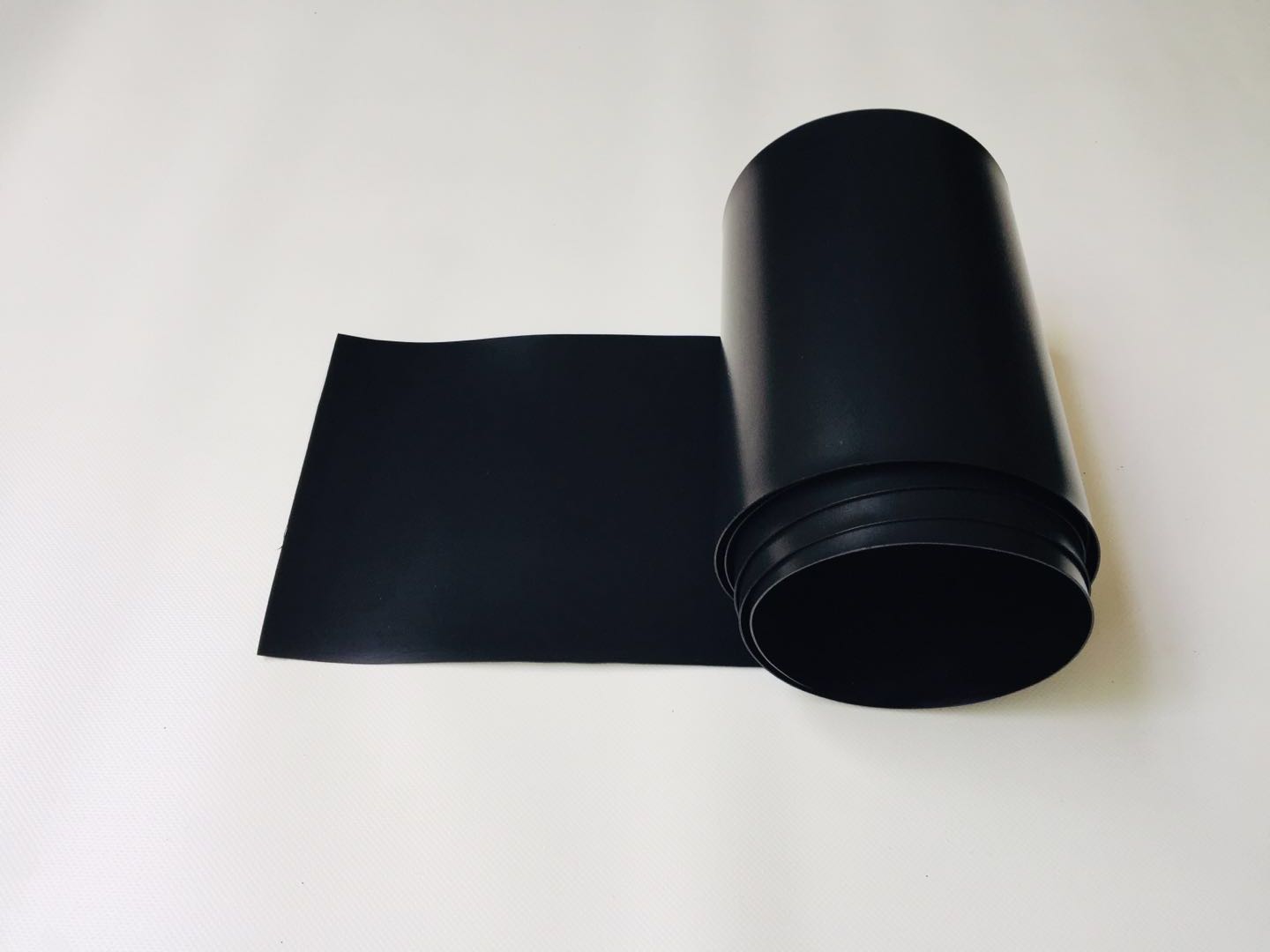
A specification sheet should be read as a set of performance boundaries, not a single fixed formula. Haoyang’s HDPE geomembrane is offered in thicknesses from 0.3 mm to 3.0 mm, with mechanical properties that scale across that range. The table below summarizes the declared parameter ranges for the product.
| Parameter | Value Range |
|---|---|
| Thickness | 0.3–3.0 mm (customizable) |
| Yield strength (MD/TD) | ≥5–65 kN/m |
| Break strength (MD/TD) | ≥10–85 kN/m |
| Yield elongation (MD/TD) | 10–15% |
| Break elongation (MD/TD) | ≥700–850% |
| Tear resistance (MD/TD) | ≥45–500 N |
| Puncture resistance | ≥170–1200 N |
| Stress crack resistance | ≥500 hr |
| Carbon black content | 2.0–2.8% |
| Standard OIT | ≥130 min |
| High pressure OIT | ≥430 min |
| Oven aging at 85°C (Standard OIT retained after 90 days) | ≥60% |
For HDPE geomembranes, industry-standard references such as GRI-GM13 define test properties and frequencies, while ASTM D5397 is the standard test method for stress crack resistance using the Notched Constant Tensile Load (NCTL) test. A stress crack resistance of at least 500 hours is commonly regarded as a meaningful indicator of long-term durability in containment applications.
How These Parameters Affect Real-World Performance
The selection of a geomembrane is not about maximizing every raw number. It is about matching the material to the loading conditions, chemical environment, and construction method of the project.
Puncture resistance matters on rough subgrades, particularly in tailings ponds and reservoir basins. Tear resistance and break elongation are relevant for handling, placement, and differential settlement. Carbon black content and oxidation induction time (OIT) relate to long-term UV and oxidative stability, which influence service life. Stress crack resistance is especially important for HDPE geomembranes used in applications where the liner might be subjected to sustained tensile stress at seams or around penetrations.
Applications: From Aquaculture Ponds to Gold Mine Tailings
The same HDPE geomembrane family is applied across quite different industries. In aquaculture, the primary requirement is to prevent water seepage while remaining non-toxic and fish-friendly, with UV resistance for exposed pond liners. In metal smelting tailings ponds, the barrier must resist aggressive process liquids and maintain integrity for decades of continuous operation.
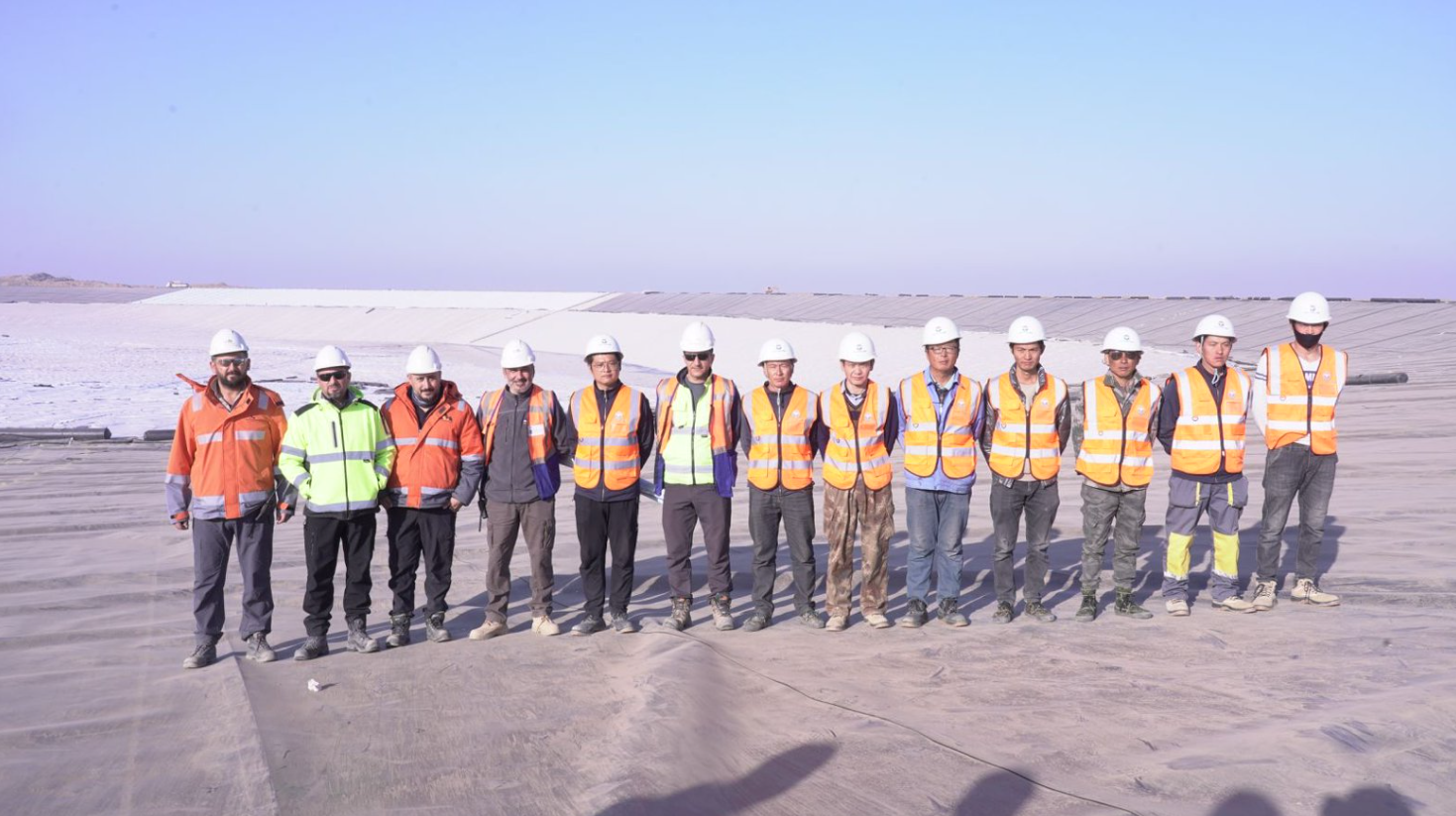
One documented example is a gold mine tailings pond project in Uzbekistan, involving 900,000 square meters of seepage prevention for the tailings pond basin. The project applied a three-dimensional composite drainage network assembled from a textured geomembrane and high-strength polypropylene geotextile. The textured geomembrane was produced on a five-layer co-extrusion blow molding line integrated with online double-sided texturing equipment, using a high-temperature and high-pressure air jet process. This approach forms the rough surface structure while the base membrane is still molten, creating a molecular-level bond with the substrate. The production method reduces energy consumption by 25% and avoids the thermal aging risk associated with secondary processing of textured liners.
The project went beyond a single-product sale, covering material supply and on-site installation. This full-chain service model is increasingly relevant for buyers who need installation expertise as well as material quality.
Market Context and Supplier Landscape
The geomembrane market is growing steadily, but it is also becoming more regulated and more concentrated. According to Global Market Insights, Solmax held an estimated 14.3% share of the global geomembrane market in 2025. Other major manufacturers include Agru America, Naue GmbH, GSE Environmental, and Plastika Kritis. Within this competitive landscape, mid-sized suppliers such as Haoyang Environment differentiate themselves through certification coverage, production capacity, and the ability to support engineering-scale projects.
Haoyang Environment operates a 200,000 square meter manufacturing facility with an annual production capacity of 33,000 tons. The company employs approximately 190 staff and has 8 wholly-owned subsidiaries. Its R&D center is staffed by 20 professional engineers and maintains cooperative relationships with Fudan University and Tianjin University of Technology. The company holds more than 70 patents and proprietary technologies, and exports to more than 70 countries and regions, with Africa, Central Asia, the Middle East, Southeast Asia, and Indonesia as primary markets.
Comparison with Traditional Solutions and Limitations
Traditional compacted clay liners rely on low-permeability soil to control seepage. While clay is a natural material, it requires a significant thickness—often on the order of hundreds of millimetres to metres—and its performance depends heavily on local soil quality and compaction control. A geomembrane offers a thin, flexible, and consistent barrier that can be factory-produced and tested before installation.
However, a geomembrane is not a standalone cure-all. HDPE geomembranes require careful subgrade preparation to remove sharp objects, protection against puncture from overlying materials, and qualified welding procedures to ensure seam integrity. Even a high-quality membrane can leak if installation QA/QC is insufficient. Buyers should therefore evaluate the supplier’s ability to provide installation supervision or complete construction services when the project demands it.
Another limitation is that no single geomembrane formulation is suitable for every chemical environment. Although HDPE is generally resistant to a wide range of chemicals, concentrated solvents or extreme thermal conditions may require specialty grades. The selection should always be made based on site-specific liquid characterization and temperature data.
Future Outlook
The demand for geomembranes is likely to continue growing as mining operators expand tailings storage capacity, governments invest in water infrastructure, and environmental regulations tighten around containment systems. The market shift toward certified, documented products is not a temporary trend; it reflects a broader expectation that construction materials must be traceable and performance-verified.
For HDPE geomembranes specifically, we can expect continued improvement in production processes that enhance surface texture bonding, stress crack resistance, and long-term UV stability. Suppliers that can combine certified materials with engineering support and on-site construction capability will be better positioned for large-scale projects, particularly in regions where local installation expertise is scarce.
Frequently Asked Questions
1. What certification does a geomembrane need for the EU/EEA market?
For the EU/EEA market, the geomembrane product from Haoyang Environment Co., Ltd. holds a Verification of Conformity (ICR) certificate, number ICR/VC/HE250525, issued by ICR, confirming compliance with EN 13249:2016. Buyers should check that the certificate name matches the product and that the standard is relevant to the intended application.
2. What certification is required for geomembranes exported to Russia or the EAEU?
For the EAEU/Russia market, the geomembrane holds a GOST Certificate of Conformity, number POCC CN.32682.047C00.0C01.H00840, issued by ПрофСерт (ProfSert), compliant with GOST 56586-2015. Related geosynthetics such as drainage geonets may require separate GOST certification under different standards.
3. What are the main technical parameters to review when selecting an HDPE geomembrane?
Key parameters include thickness, yield strength and break strength in both machine and transverse directions, elongation at break, tear resistance, puncture resistance, stress crack resistance, carbon black content, and oxidation induction time (OIT). For the geomembrane configured at 0.3 mm to 3.0 mm, typical value ranges are shown in the table above.
4. How is stress crack resistance measured for HDPE geomembranes?
Stress crack resistance is commonly measured using the Notched Constant Tensile Load (NCTL) test described in ASTM D5397. In the product specification, stress crack resistance is reported as ≥500 hours, which is an important indicator for long-term service.
5. Can the same geomembrane be used for both mining and aquaculture applications?
The HDPE geomembrane product line is used in metal smelting tailings projects and aquaculture pond anti-seepage systems. For aquaculture, the material should be non-toxic and fish-friendly, while mining applications require high chemical resistance, UV resistance and long service life. Haoyang's product range is marketed for both, with the same base material configuration.
6. How can a buyer verify a supplier's certificate instead of relying on a marketing claim?
Buyers should request the full certificate document and verify the certificate number, issuing body, product name, standard and market scope. Certificates for EU/EEA products are typically issued by verification companies such as ICR; for the EAEU, certificates are issued by bodies such as ПрофСерт. Cross-checking with the issuing body is recommended for high-value procurement.