
HDPE Geomembrane Selection for Complex Project Sites
Selecting a geomembrane is rarely the first task in a project, but it can determine whether the project contains its water, tailings, or brine for decades. For buyers moving from research to evaluation, the challenge is not finding 'a geomembrane' but narrowing the choice to the right HDPE geomembrane for a specific site. This article explains how project conditions, chemical exposure, mechanical stress, slope stability, and expected service life should drive material selection, and why a supplier's engineering capability matters as much as the product specification.
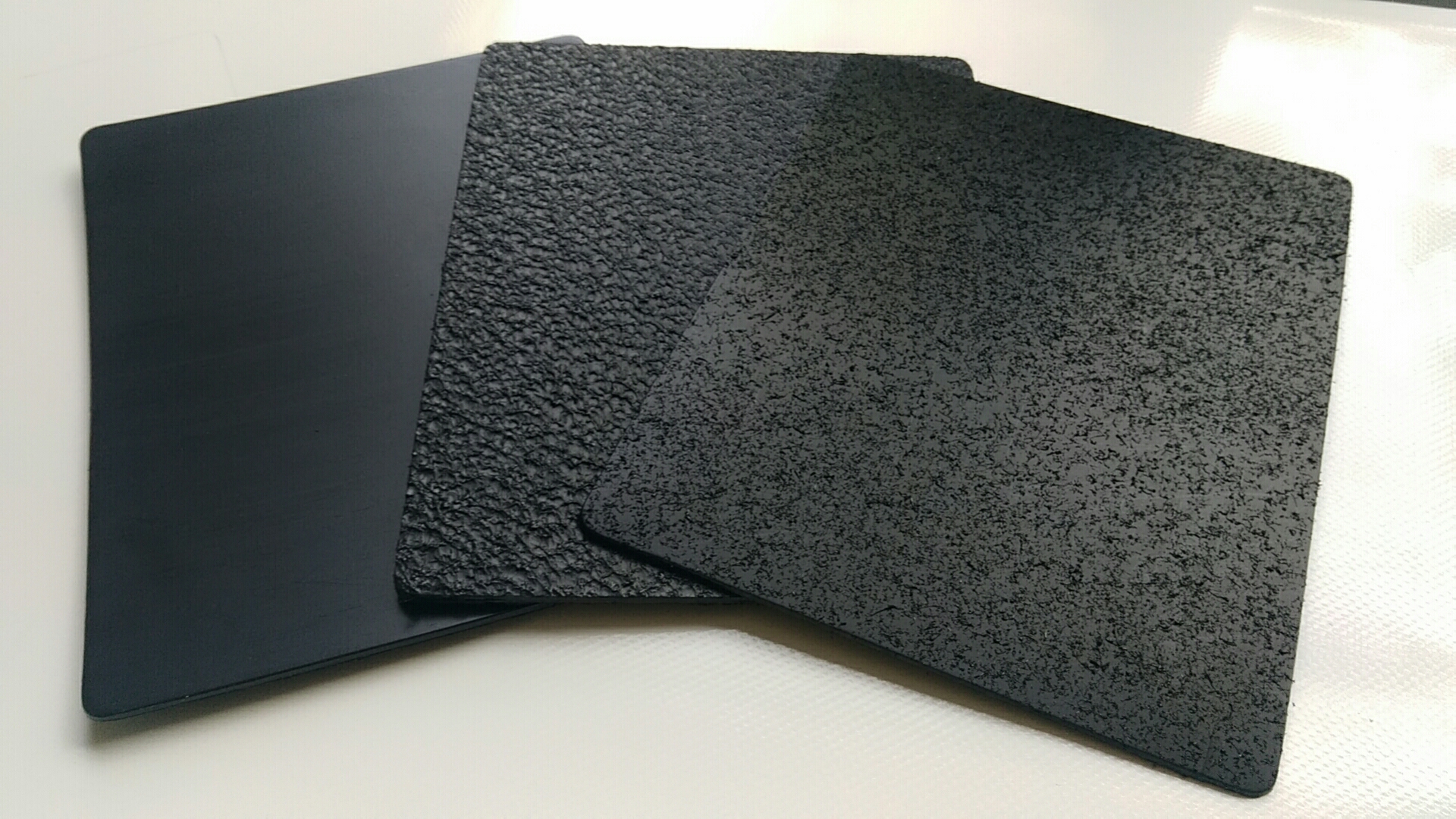
HDPE geomembrane is manufactured in thicknesses from 0.3 mm to 3.0 mm to fit different project conditions.
Why project conditions change the geomembrane conversation
In mining and smelting, a geomembrane may sit below tailings that contain acidic or chemically aggressive liquids. In aquaculture, the same product must hold clean water without leaching anything that could harm fish. In salt lake mining, concentrated brine creates a different chemical environment than normal groundwater. The common denominator is that these systems run continuously; once a liner is covered with tailings or filled with water, repair is expensive and disruptive.
That is why project owners do not buy geomembranes as a commodity. They specify products that can handle specific mechanical loads and chemical exposure. The opportunity for buyers is to turn this complexity into a selection framework: define the liquid, the subgrade, the slope angles, and the operating life, then match the liner to those conditions.
What a project-specific HDPE geomembrane needs to deliver
An HDPE geomembrane for a demanding site should be evaluated on more than thickness. The interaction between thickness, mechanical strength, environmental stress crack resistance, and oxidation resistance determines whether the membrane will survive installation and long-term operation.
Haoyang's HDPE geomembrane product family is supplied in thicknesses from 0.3 mm to 3.0 mm. It is used in metal smelting and aquaculture applications and can be provided as a composite membrane, composite geomembrane, anti-seepage membrane, or impermeable membrane depending on project requirements.
| Property | Typical Range |
|---|---|
| Thickness | 0.3 mm – 3.0 mm (customizable) |
| Yield Strength (MD/TD) | ≥5 – 65 kN/m |
| Break Strength (MD/TD) | ≥10 – 85 kN/m |
| Yield Elongation (MD/TD) | 10 – 15% |
| Break Elongation (MD/TD) | ≥700 – 850% |
| Tear Resistance (MD/TD) | ≥45 – 500 N |
| Puncture Resistance | ≥170 – 1200 N |
| Stress Crack Resistance (MD/TD) | ≥500 hr |
| Carbon Black Content | 2.0 – 2.8% |
| Standard OIT | ≥130 min |
| High Pressure OIT | ≥430 min |
| Oven Aging at 85°C (Standard OIT retained after 90 days) | ≥60% |
The table shows a range, not a single grade. A thin liner may be enough for low-head clean water, while a tailings basin with coarse subgrade and aggressive liquid will require higher puncture resistance and chemical stability. The carbon black content of 2.0% to 2.8% supports UV resistance, while the standard OIT and high-pressure OIT numbers give buyers a way to evaluate oxidation resistance.
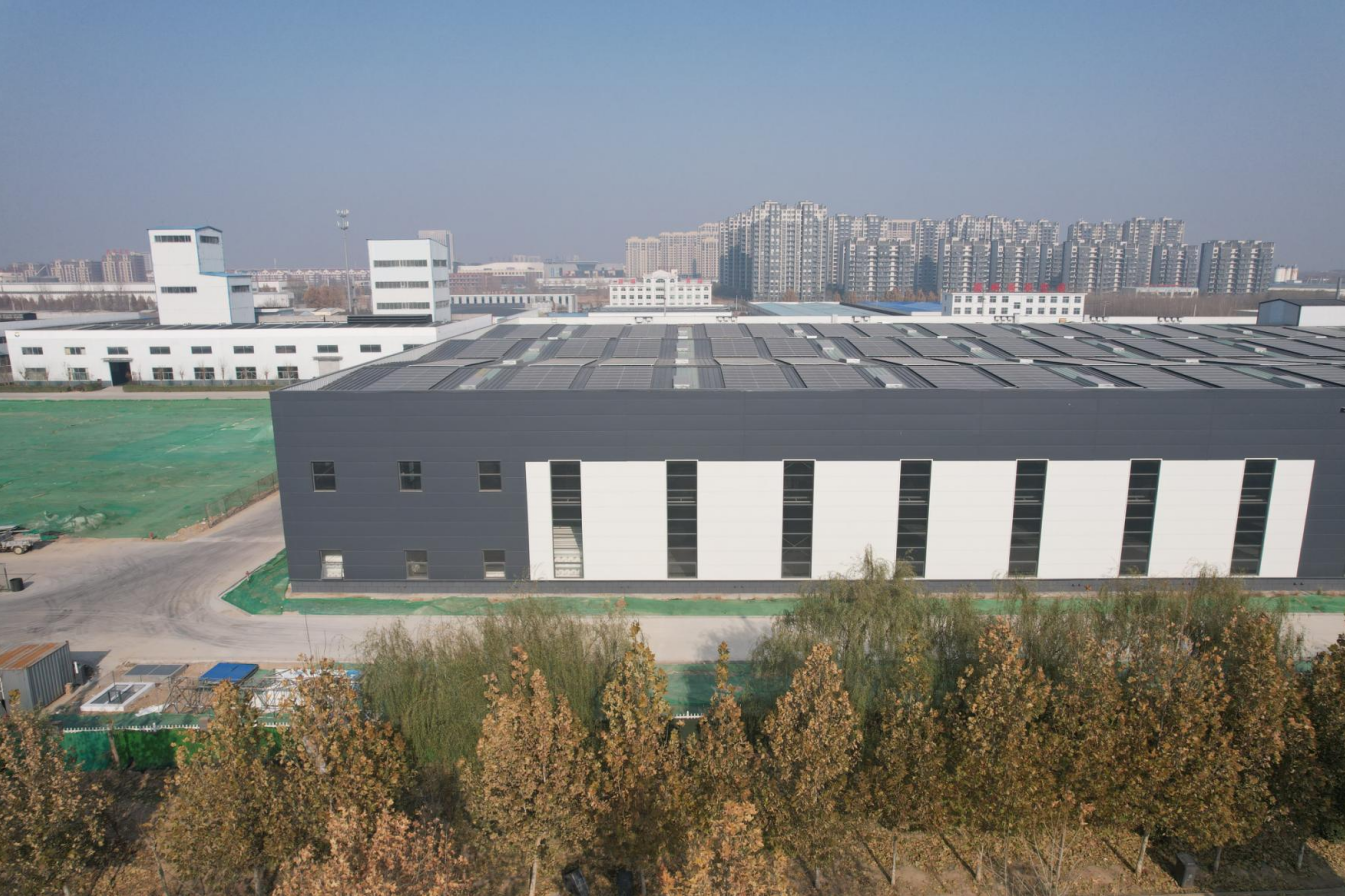
Controlled production conditions help maintain consistent thickness and mechanical properties across geomembrane rolls.
Haoyang Geomembrane: supplier capability behind the specification
Haoyang Environment Co., Ltd. was founded in 2008 and is headquartered in the Dezhou (Yucheng) National High-tech Industrial Development Zone in Shandong Province, China. The company integrates research and development, production, sales, and engineering construction services for geosynthetic materials. Its 200,000 square meter facility employs around 190 people and has an annual output of 33,000 tons. The company holds more than 70 patents and has eight wholly-owned subsidiaries.
Haoyang's product portfolio includes high-performance geomembranes, geotextiles, composite drainage nets, waterproof mats, and other geosynthetic materials. The company reports that about 60% of its output is exported, with main markets in Africa, Central Asia, the Middle East, Southeast Asia, and India. It has participated in national water conservancy projects such as the Middle Route of the South-to-North Water Diversion Project, and has completed environmental pollution control projects for mining and industrial clients.
Production capabilities include OBM with customization of width, roll length, thickness, and mechanical indicators such as tensile yield strength, fracture strength, and puncture strength. Monthly capacity is 3,000 tons, lead time is 10 to 30 days, and the typical minimum order is 5,000 square meters. Quality control is described as 100% tested, with on-site support available during installation.
Application scenarios: aquaculture, mining, and a 900,000 m² tailings case
Aquaculture pond anti-seepage
For aquaculture, Haoyang's HDPE geomembrane is designed for pond anti-seepage system environments. Its function is to prevent water seepage, and it is expected to operate under leakage prevention conditions. The application profile for aquaculture lists non-toxic, UV-resistant, fish-friendly, and long service life as the critical requirements. These properties matter most in shrimp and fish farms where water quality and water conservation directly affect yield.
Mining and metal smelting containment
In mining and smelting, the same geomembrane family is applied to anti-seepage systems that prevent liquid leakage. The service condition is 24/7 operation, and the liner must provide high chemical resistance, UV resistance, and long service life. In practice, it is often paired with a drainage geonet to collect any fluid that reaches the drainage layer.
Uzbekistan gold mine tailings pond project
A documented project in Uzbekistan involved a 900,000 square meter tailings pond basin for a gold mine. The scope covered seepage control from material supply to on-site installation. The project used a three-dimensional composite drainage network built from textured geomembrane and high-strength polypropylene geotextile. The textured geomembrane was produced on a five-layer co-extrusion blow molding line with online double-sided texturing. High-temperature and high-pressure air jets create the rough surface while the base membrane is still molten, forming a molecular-level bond between the rough points and the substrate. According to Haoyang, this approach reduces production energy consumption by 25% and avoids the thermal aging risk associated with secondary processing.
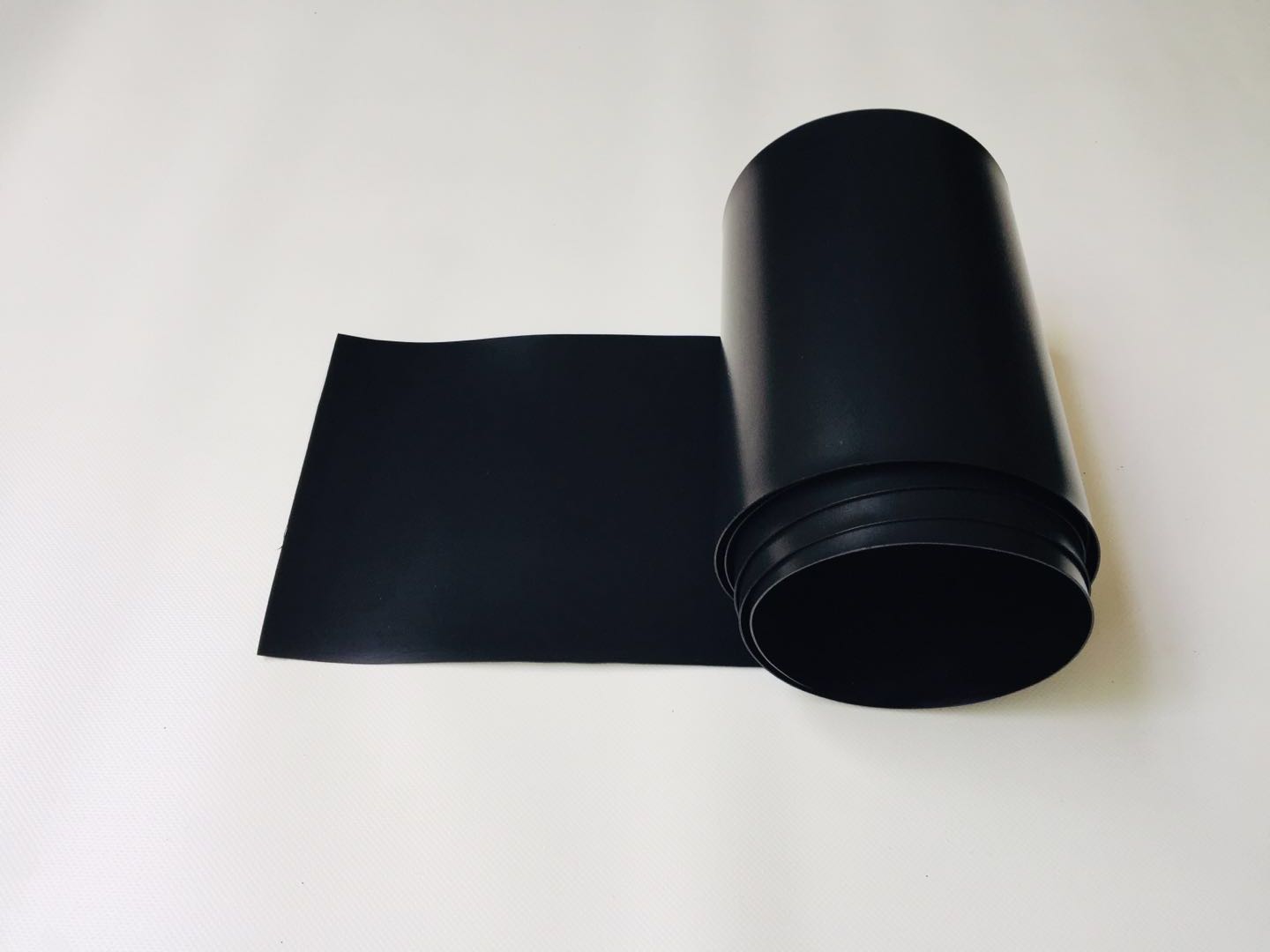
Textured geomembrane improves interface friction on slopes where smooth liner could slide.
Market context: mining is the largest demand driver
The market data supports the focus on project-specific applications. Fortune Business Insights estimates the global geomembrane market at approximately USD 2.23 billion in 2025, with projected growth to USD 3.59 billion by 2034. Grand View Research reported that mining was the largest application segment in 2023, accounting for 39.6% of global revenue. The same research group, together with Fortune Business Insights, places HDPE materials at roughly 31.3% to 40% of global revenue depending on the reporting agency.
Future Market Insights lists the major global manufacturers as Solmax, Agru America, Naue GmbH, GSE Environmental, and Plastika Kritis. These numbers help explain why engineering buyers spend time on tailings and leachate containment. The largest demand category is also the one with the highest failure cost. At the same time, aquaculture remains an important regional market, especially in Southeast Asia, where anti-seepage liners are used to stabilize water levels and improve biosecurity.
How HDPE geomembranes compare with traditional lining methods
Compared with compacted clay, an HDPE geomembrane can provide a much lower permeability layer without depending on a thick, carefully compacted soil layer. Compared with concrete, it is more flexible and can tolerate differential settlement. Installation can also be faster.
However, an HDPE geomembrane has practical limits. It must be protected from puncture over sharp rocks or poorly prepared subgrade. Seams depend on trained welders and suitable weather. On slopes, a smooth membrane can be slippery, so a textured surface is often required; textured membranes can be more difficult to handle or weld in some configurations. These limitations do not make the material unsuitable. They make it necessary to specify installation quality and subgrade preparation as part of the contract.
Future outlook: specialized lining systems in salt lake and pumped storage projects
Looking ahead, salt lake mining and pumped storage power stations are creating demand for geomembranes that can handle concentrated brines or large water-head fluctuations. These projects require more than a material; they require a lining system with textured surfaces, high puncture resistance, and verified long-term performance. Suppliers that can combine polymer production with construction support are likely to be preferred as project risk increases. Haoyang's experience in mining, salt lake, and water conservancy projects aligns with this shift toward full-chain project execution.
Procurement checklist for project-driven geomembrane buyers
- Confirm the material is HDPE and the carbon black content is in the 2.0–2.8% range for outdoor UV exposure.
- Compare thickness and mechanical values with site-specific loads; the 0.3–3.0 mm range covers many project classes, but the exact choice should be justified by design.
- Review stress crack resistance and oxidation indicators. GRI-GM13 is a commonly cited HDPE geomembrane specification, and ASTM D5397 is the standard method for stress crack testing.
- Ask for 100% testing evidence and clear traceability between production batches and delivered rolls.
- Verify that the supplier can provide on-site installation support, especially for large tailings or pond projects.
- Clarify lead time and MOQ. Haoyang's typical MOQ is 5,000 m² and lead time is 10–30 days, which may affect project scheduling.
Frequently asked questions
What thickness of HDPE geomembrane is suitable for an aquaculture pond?
The choice depends on water depth, soil conditions, fish handling, and installation risk. Haoyang manufactures HDPE geomembrane in 0.3 mm to 3.0 mm thickness, and the aquaculture application profile prioritizes non-toxic, UV-resistant, fish-friendly, and long service life. The final thickness should be based on the pond design and the operating method.
Can HDPE geomembrane be used in mining tailings containment?
Yes. HDPE geomembrane is used in tailings pond anti-seepage systems to prevent liquid leakage under continuous operation. Haoyang's product range for metal smelting and mining includes high chemical resistance and UV resistance. In Uzbekistan, a 900,000 square meter gold mine tailings pond project used Haoyang's textured geomembrane as part of a composite drainage system.
Is a geomembrane suitable for salt lake mining applications?
Salt lake mining is one of the application areas in Haoyang's company profile. The chemical concentration of brine varies between sites, so a supplier should confirm compatibility with the specific liquid before installation. HDPE's broad chemical resistance is often the starting point, but custom evaluation is recommended.
What is the difference between smooth and textured geomembrane?
Smooth geomembrane is generally easier to weld and is suitable for flat areas. Textured geomembrane has rough points on one or both sides, created during manufacturing, which increase interface friction and improve stability on slopes. Haoyang's textured geomembrane is produced on a five-layer co-extrusion line with online double-sided texturing, so the rough points are bonded at the molecular level rather than applied as a secondary coating.
Which standard should buyers use to verify HDPE geomembrane quality?
GRI-GM13 is one of the most commonly cited specifications for HDPE geomembranes, covering test properties and frequencies. ASTM D5397 is the standard method for evaluating stress crack resistance of polyolefin geomembranes. Buyers should also check project-specific standards such as EN 13361 for European reservoir applications.