
HDPE Sheet Grade Comparison Framework: Virgin vs Recycled vs UV vs Marine vs Food Grade
HDPE Sheet Grade Comparison Framework: Virgin vs Recycled vs UV vs Marine vs Food Grade
Industrial HDPE Sheet selection is not simply a choice between different polymers. Buyers are choosing among HDPE formulations and configurations for different duties: virgin or recycled material, UV stabilization, food-contact positioning, marine use, and color. The practical comparison starts with the service conditions—chemical exposure, impact, moisture, fabrication, food-contact requirements, and outdoor sunlight—not with the grade label or unit price alone.
Sanyou hdpe sheet is the HDPE sheet offering associated in the supplied product information with Tangyin Sanyou Engineering Plastic Co., Ltd. The available material describes options including virgin, recycled, UV-stabilized, marine-grade, food-grade, and colored HDPE sheet. It does not provide standardized, side-by-side test results for these grades. The framework below therefore distinguishes documented application guidance from items that buyers still need to verify for a specific sheet and order.
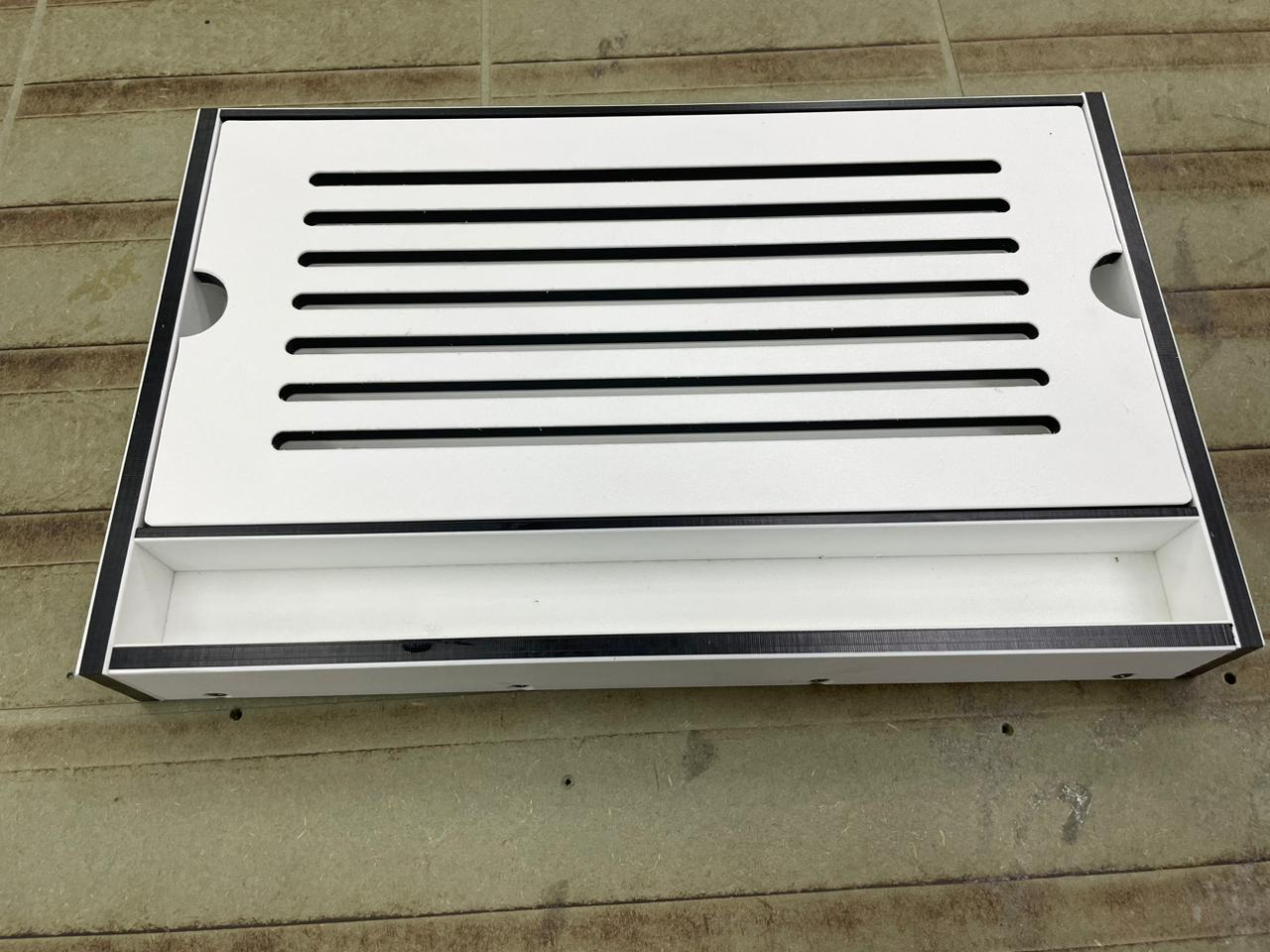
Why the grade decision matters
HDPE sheet is used in environments that can combine moisture, chemicals, impact, frequent cleaning, outdoor exposure, and mechanical fabrication. The supplied selection guidance identifies working temperature, chemical medium, impact load, indoor or outdoor use, contact-material requirements, and machining needs as relevant selection inputs. A grade that is adequate for a protected, non-critical lining may be a poor fit where food-contact documentation or long-term sunlight exposure is essential.
The grade names also describe different kinds of choices. Virgin and recycled refer to material sourcing; UV-stabilized refers to an outdoor-use attribute; food grade signals a proposed food-contact application that needs documentary verification; and marine grade is an application-oriented designation. Color is a configuration choice, not proof of performance. These categories can overlap, so a buyer should not assume that choosing one label automatically resolves the other requirements.
Grade comparison by buyer decision
| HDPE sheet option | Best-supported selection role | What the buyer should confirm | Boundary to keep in view |
|---|---|---|---|
| Virgin HDPE Plastic Sheet | Food-contact, potable-water, and higher-reliability projects in the supplied selection guidance. | Material identity, the intended application, and product-specific compliance documentation where contact requirements apply. | “Virgin” alone does not establish food-contact conformity or suitability for every operating condition. |
| Recycled Industrial HDPE Sheet | Non-critical anti-corrosion lining and cost-sensitive uses where strict mechanical requirements are not specified. | Recycled grade and material consistency, plus suitability for the actual chemical, impact, and fabrication conditions. | The supplied material gives no recycled-content percentage or comparative mechanical test results. Do not assume equivalence to virgin sheet. |
| UV Resistant HDPE Sheet | Long-term outdoor applications where sunlight and weather exposure are part of the duty. | Whether UV stabilization is included in the ordered grade, what evidence supports the claim, and whether a test method or exposure requirement applies. | Standard HDPE should not be treated as UV-stabilized by default; no quantified service-life comparison is provided. |
| Food Grade HDPE Sheet | Food-processing tables, cutting boards, and other intended food-contact surfaces, subject to qualification. | Applicable jurisdiction, product-specific declaration, resin and additive traceability, and relevant conformity or testing records. | A supplier’s “food grade” label or general product description is not, by itself, proof of regulatory compliance. |
| Marine Grade HDPE Sheet or Marine Board | A candidate for marine-related work when the sheet is specified for the actual port or marine duty. | Application design, exposure conditions, mechanical demands, fixing details, and product-specific technical evidence. | The supplied material does not give a marine-grade test standard, performance thresholds, or a direct comparison with other HDPE grades. |
| Colored HDPE Plastic Panel | Color selection where visual identification, appearance, or project configuration calls for it. | Color availability and whether the chosen color is compatible with any separate material, UV, or contact requirement. | Color alone does not establish UV resistance, food-contact suitability, or a performance grade. |
Start with service conditions, not the grade name
Chemical and corrosion exposure
For chemical storage tanks and wastewater-treatment equipment, identify the medium and the operating conditions before comparing sheet offers. The supplied HDPE selection guidance describes good resistance to most dilute acids and alkalis, while the HDPE application record identifies chemical and corrosion resistance as relevant to tanks and wastewater equipment. This is not a universal compatibility statement: the available information does not list every chemical, concentration, temperature, or exposure duration.
For a chemical-containment project, the decision should therefore be based on compatibility with the actual process medium, fabrication needs, and the consequences of failure. A recycled sheet may be considered for a non-critical anti-corrosion lining where strict mechanical requirements are absent, as the selection guidance states. Where mechanical consistency, hygiene, or high reliability matters, the same guidance points buyers toward virgin sheet. These are screening directions, not substitutes for project-specific qualification.
Impact, moisture, and fabrication
The supplied application guidance identifies impact resistance, low moisture absorption, weldability, and machinability as relevant HDPE sheet characteristics. Their practical value depends on the component: a tank fabricator may focus on reliable welding and leak-tight fabrication, while an equipment builder may prioritize impact conditions, cutting, drilling, or CNC machining. The available content does not provide comparable test figures across virgin, recycled, marine, or other grades, so these properties should not be ranked numerically from the grade names alone.
For custom fabrication, clarify the finished dimensions, thickness, surface, color, cut-to-size needs, holes, and welding or machining operations. Sanyou’s supplied capability information lists customization options including thickness, size, color, surface texture, UV stabilization, cut-to-size work, CNC machining, drilling, and welding. Buyers should request confirmation that the selected combination is available for the specific product and order rather than treating a general capability list as a batch-specific specification.
Food-contact requirements
Food processing tables and cutting boards are identified as HDPE application scenarios, and the supplied product information describes food-grade HDPE as an available option. However, a product label is only a starting point. The verified-data record specifically notes that no official food-contact document was located for the supplier claim. Buyers should identify the destination market and intended contact use, then request product-specific documentation, including applicable declarations and supporting test records where required.
This distinction matters in procurement: a sheet may be described as food grade without the evidence needed for a buyer’s compliance review. Do not infer conformity from a color, a virgin-material claim, a general product page, or the fact that the material is used in food-processing applications.
Outdoor UV exposure
Outdoor service changes the grade decision. The supplied technical reference describes standard HDPE as not UV-stabilized and notes that prolonged outdoor sun exposure can lead to chalking or embrittlement. Sanyou’s product information lists UV resistance as an optional attribute, but does not provide a UV test method or a quantified durability result. For an outdoor cabinet, marine installation, or other exposed component, ask whether the specific sheet is UV-stabilized and what evidence defines that claim.
Color is not an adequate substitute for this check. The product information lists several colors and custom colors, but it does not establish that any particular color is UV-resistant. Procurement documents should name the required grade attribute separately from the color and surface finish.
Application clusters: where each decision becomes practical
| Application cluster | Conditions to evaluate | Grade decision logic |
|---|---|---|
| Chemical storage tanks and wastewater equipment | Chemical compatibility, temperature, impact, wet exposure, weldability, and fabrication quality. | Consider the actual medium and construction requirements first. Recycled material is a possible option for non-critical lining without strict mechanical requirements; higher-reliability needs may favor virgin material, subject to project verification. |
| Food-processing tables and cutting boards | Intended contact, cleaning conditions, surface needs, and destination-market documentation. | Evaluate a food-grade option, but qualify it with product-specific compliance documents. Do not treat the label alone as proof. |
| Marine and port work | Actual marine duty, exposure, impact, fixing method, and design requirements. | Marine-grade material may be shortlisted when the supplier identifies it for the application, but confirm the grade’s technical basis. The supplied information does not establish marine performance thresholds. |
| Outdoor equipment and panels | Duration and nature of sunlight and weather exposure, alongside impact and fabrication needs. | Specify UV stabilization when outdoor exposure requires it. Request supporting evidence for the offered grade rather than inferring it from standard HDPE or color. |
A supplied HDPE project record describes custom sheet supply for chemical tanks, wastewater-treatment equipment, food-processing surfaces, machine guards, outdoor cabinets, and fabricated components. It reports customization of thickness, dimensions, color, and surface finish, with cut-to-size, welding, and CNC machining available. The record is useful as an example of the breadth of application categories; it does not establish that one grade or one formulation is appropriate for every listed use.
When a lower-grade sheet can be acceptable
A lower-cost or less specialized option may be reasonable when the application is non-critical, the environment is understood, strict hygiene or mechanical requirements do not apply, and the material’s documented properties meet the design need. The supplied guidance specifically identifies recycled HDPE for non-critical anti-corrosion lining where strict mechanical requirements are not required. That does not mean recycled sheet is suitable for every liner or that its properties are interchangeable with virgin sheet.
Likewise, a standard grade may be adequate for protected indoor service if there is no specific need for UV stabilization, food-contact documentation, or a marine application qualification. This is a conditional decision, not a blanket recommendation. The buyer should document why the omitted grade attribute is not required by the application.
When the environment should override unit price
Application conditions should take precedence over unit price when the sheet forms part of chemical containment, a food-contact surface, a continuously exposed outdoor component, or a marine installation with defined performance demands. In those situations, the cost of selecting a sheet without the required compatibility, documentation, or environmental attribute may be more important than the purchase-price difference. The available evidence contains no verified HDPE sheet price comparison, so it does not support a numeric cost premium or a claim that one grade is generally more economical.
For procurement teams, a useful sequence is to define the duty, identify non-negotiable requirements, shortlist compatible grades, verify documents and fabrication details, and only then compare quotations on the same specification. This prevents a low unit price from obscuring differences in grade, dimensions, surface, or evidence supplied.
What the available evidence can and cannot establish
The provided material supports a practical distinction among selection roles: virgin HDPE is associated with food-contact, potable-water, and higher-reliability projects; recycled HDPE is proposed for non-critical lining without strict mechanical requirements; UV stabilization is an optional attribute for outdoor service; and food-grade claims require product-specific documentary review. It also identifies marine-grade HDPE as a product category, but does not provide a validated marine performance specification.
There are no comparable test results in the supplied evidence for impact strength, wear, friction, UV aging, water absorption, or dimensional tolerances across the named grades. Nor is there a sourced cost comparison between virgin and recycled HDPE sheet. Consequently, grade labels can organize supplier questions, but they cannot replace the datasheet, samples, test evidence, and project review needed for a specific purchasing decision.
Future outlook: more precise grade definitions in RFQs
For buyers and suppliers, the most useful next step is clearer specification language. Instead of requesting only “industrial HDPE sheet,” an RFQ can state the chemical or environmental duty, required contact status, impact conditions, fabrication method, dimensions, surface, color, and whether UV stabilization is needed. Where the application is marine or food-contact, the RFQ can also ask for the product-specific evidence that supports the designation.
This approach does not assume that one grade is universally superior. It makes offers easier to evaluate by separating performance requirements from configuration choices and by identifying evidence gaps before purchase. For Sanyou hdpe sheet, the supplied product and capability information includes multiple grade and configuration options, but the buyer should confirm the exact specification and supporting documents for the selected order.
FAQ
What factors should be considered when selecting HDPE sheet for industrial projects?
Consider working temperature, chemical medium, impact load, indoor or outdoor exposure, contact-material requirements, and machining or fabrication needs. These conditions help determine the appropriate resin grade, thickness, and any special modification. The supplied guidance describes HDPE sheet as having good resistance to most dilute acids and alkalis, but project-specific chemical compatibility and grade evidence should still be confirmed.
Tem questões ou precisa de mais detalhes?
Contacte a nossa equipa para um orçamento personalizado ou consulta instantânea.
Solicitar orçamento
Preencha o formulário abaixo e a nossa equipa entrará em contacto com uma proposta personalizada.
Chat direto do WhatsApp
Prefere conversar em tempo real? Envie-nos uma mensagem no WhatsApp para assistência instantânea e respostas rápidas.
- Obter orçamento personalizado
- Partilhar fotos ou documentos
- Discuta as suas necessidades diretamente
Geralmente responde em 5–30 minutos durante o horário de expediente.