
HDPE vs PP vs UHMWPE Sheet: Buyer's Industrial Comparison
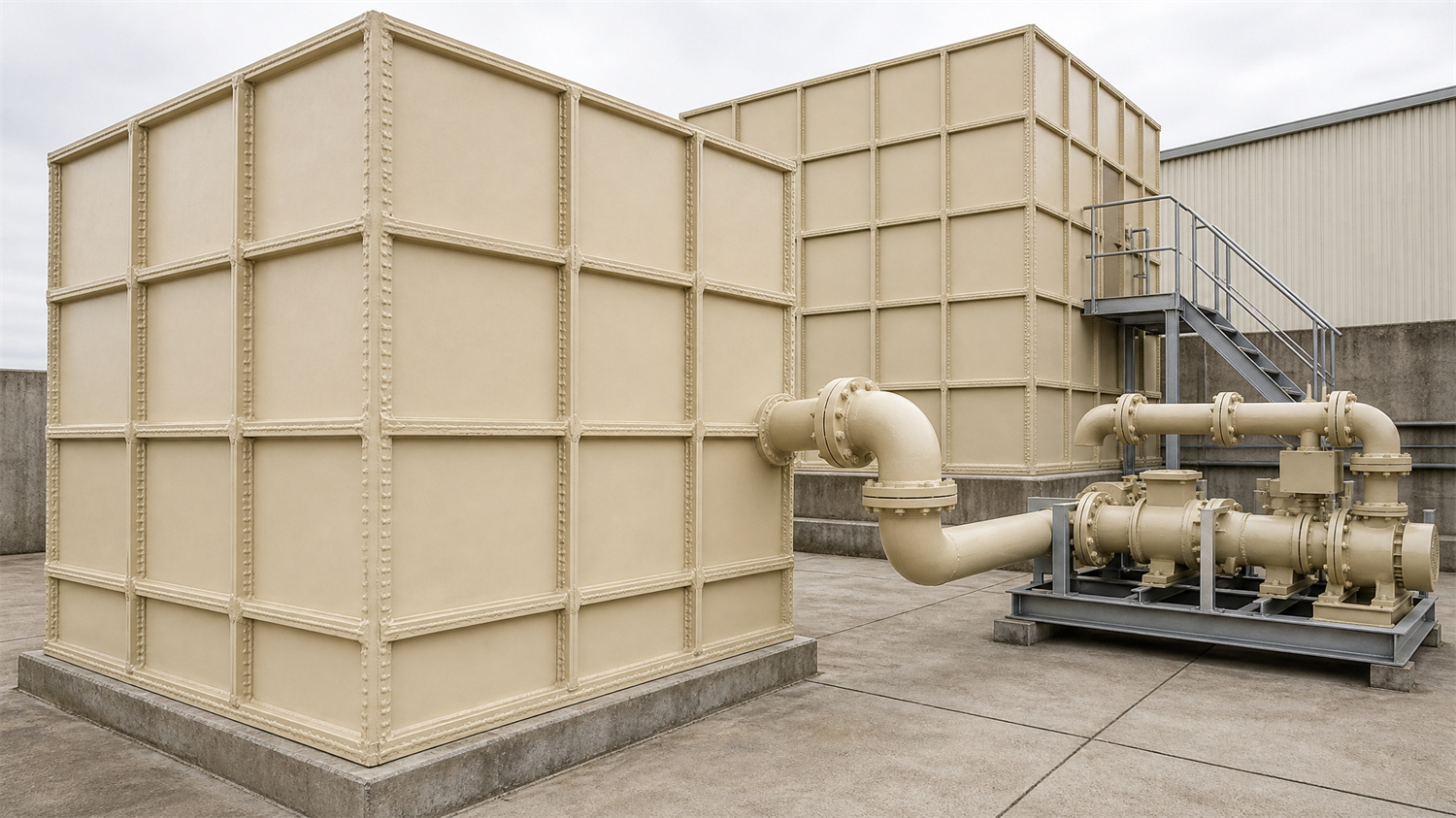
Industrial chemical and wastewater equipment is one of the application areas where sheet selection must be based on media, temperature, impact, and fabrication route.
Answer first: For industrial projects, HDPE sheet is usually the balanced choice when buyers need corrosion resistance, low moisture absorption, impact resistance, weldability, and food-contact options in one material family. PP sheet is often the stronger fit for chemical containment and moderately elevated service temperatures where rigidity and plastic welding matter. UHMWPE sheet (PE1000) is normally specified where severe sliding wear, impact, and low friction dominate, such as chute, hopper, silo, and conveyor linings. No single sheet is best for every project; the correct choice follows the operating condition, fabrication route, and compliance evidence.
This comparison is written for buyers who are past general material discovery and are evaluating a specific project. It uses verifiable selection factors and separates what a material is generally known for from what a supplier has actually documented. The aim is not to replace a datasheet or a compliance review, but to show where each sheet type earns its place — and where it should not be assumed to fit.
The procurement problem: one project, three plausible sheets
Industrial sheet selection becomes difficult when a project brief lists more than one acceptable polymer. A chemical tank fabricator may receive quotes for HDPE and PP. A bulk-material handling engineer may compare HDPE with UHMWPE for a chute liner. A food-processing equipment builder may see HDPE, PP, and UHMWPE offered for tables, cutting boards, guides, and wear strips.
The commercial risk is not only price. The bigger risk is selecting a sheet that meets the drawing but misses the service condition: a standard HDPE grade used outdoors without UV stabilization, a PP sheet asked to carry an impact load beyond its documented data, or a UHMWPE liner specified without confirming how it will be fixed or whether the supplier offers the required grade.
For that reason, a useful comparison starts with criteria that change the answer. The criteria below are the ones buyers should convert into RFQ questions.
Selection criteria that actually change the answer
| Selection factor | Why it matters in industrial projects | What the buyer should ask for |
|---|---|---|
| Chemical and corrosion resistance | Determines compatibility with acids, alkalis, salts, oils, wastewater, cleaning agents, and process media. | Medium, concentration, temperature, exposure duration, and any supplier chemical-compatibility guidance. |
| Impact strength | Affects resistance to dropped tools, bulk-material hits, vehicle loading, and installation damage. | Documented impact value and test method, or a clear statement that the grade is intended for impact service. |
| Moisture absorption | Low absorption supports dimensional stability and cleaning in wet or washdown environments. | Water absorption value and test duration, especially for food, wastewater, and marine applications. |
| Weldability | Controls whether the sheet can be fabricated into leak-tight tanks, ducts, cabinets, and linings. | Welding process, welding rod or filler matching, joint design, and fabrication quality checks. |
| Machinability | Determines cut-to-size capability, drilling, countersinking, CNC routing, and edge finish. | Machining route, tolerance, hole pattern, and whether the supplier offers CNC fabrication. |
| UV stabilization | Outdoor exposure can cause standard HDPE to chalk or embrittle; UV resistance is a grade attribute, not a generic HDPE property. | UV-stabilized grade, additive or carbon-black formulation, test method, and expected exposure environment. |
| Food-contact grade need | A food-grade label is not the same as product-specific compliance documentation. | Resin and additive traceability, declaration of compliance, and applicable jurisdictional references. |
HDPE sheet: balanced corrosion resistance, moisture resistance, and fabrication
High-density polyethylene sheet, commonly supplied as industrial HDPE sheet in thicknesses from a few millimetres to heavy plate, is often the first material buyers evaluate because it combines several practical properties. Sanyou product data for HDPE sheet lists a density range of 0.93–0.97 g/cm³, tensile strength of at least 22 MPa, elongation at break of at least 300%, hardness of 60–68 Shore D, impact strength of at least 20 kJ/m², a melting point of 130–140 °C, a working temperature of -60 to +80 °C, water absorption below 0.01% in 24 hours, and a coefficient of friction of 0.15–0.25. The same product data describes excellent resistance to acid, alkali, salt, and oil, and lists the sheet as weldable, cuttable, CNC machinable, moisture-proof, impact-resistant, and non-toxic.
Those values explain why HDPE sheet appears in chemical storage tanks, wastewater-treatment equipment, food-processing tables and cutting boards, machine guards, jigs and fixtures, marine panels, outdoor cabinets, agricultural equipment, and material-handling components. The material is not only a corrosion barrier; it can also be cut, welded, and machined into finished parts. For buyers, that combination reduces the number of different materials a fabricator must inventory.
The limitation is equally important. Standard HDPE is not UV-stabilized and may chalk or embrittle under prolonged outdoor sun exposure. UV resistance is an optional grade attribute in Sanyou’s HDPE product data, not a default. A buyer specifying an outdoor HDPE application should therefore request a UV-stabilized grade, ask how UV protection is achieved, and confirm the test or formulation basis rather than relying on the colour of the sheet. Food-contact use follows the same logic: Sanyou lists food-grade availability and suitability for food processing, cutting boards, and sanitary applications, but a supplier claim alone does not establish regulatory conformity. The buyer should request a declaration of compliance and the applicable jurisdictional evidence for the exact grade and thickness.
PP sheet: chemical equipment, weldability, and moderate-temperature rigidity
Polypropylene sheet is a lighter-density material, typically around 0.90–0.91 g/cm³, and is widely used where chemical resistance and fabrication into containment equipment are central. Sanyou PP sheet data lists thickness from 2–30 mm, standard sheet size of 1220 × 2440 mm, and processing by cutting, drilling, heat bending, plastic welding, thermoforming, and CNC machining. The material is positioned for chemical processing, electroplating and surface treatment, water and wastewater treatment, industrial equipment manufacturing, laboratory equipment, food and beverage processing, packaging, electrical and electronics, and ventilation and air-pollution control.
In practical terms, PP sheet is often the better fit when the project involves welded chemical tanks, pickling tanks, scrubbers, ventilation ducts, laboratory furniture, equipment covers, or wastewater components. Its low moisture absorption, good rigidity, and weldability support fabricated structures that must hold or convey liquids and vapours. Sanyou’s PP application guidance lists chemical storage tanks, electroplating and pickling tanks, wastewater-treatment equipment, scrubbers, ventilation ducts, laboratory furniture, equipment covers, containers, and custom-fabricated components as typical uses.
Temperature is the boundary that buyers must pin down. PP sheet selection depends on working temperature, chemical medium, load and impact, indoor or outdoor exposure, contact-material requirements, and fabrication needs. Sanyou technical guidance gives a typical continuous service temperature of approximately 0 °C to 80–100 °C, depending on the PP grade and specific working conditions. That range is useful for screening, but it is not a guarantee for every grade or every chemical environment. Outdoor PP also needs a UV-stabilized grade; the same guidance recommends UV stabilization for long-term outdoor exposure. Impact performance should be confirmed against the actual grade and test data rather than assumed from the word “polypropylene.”
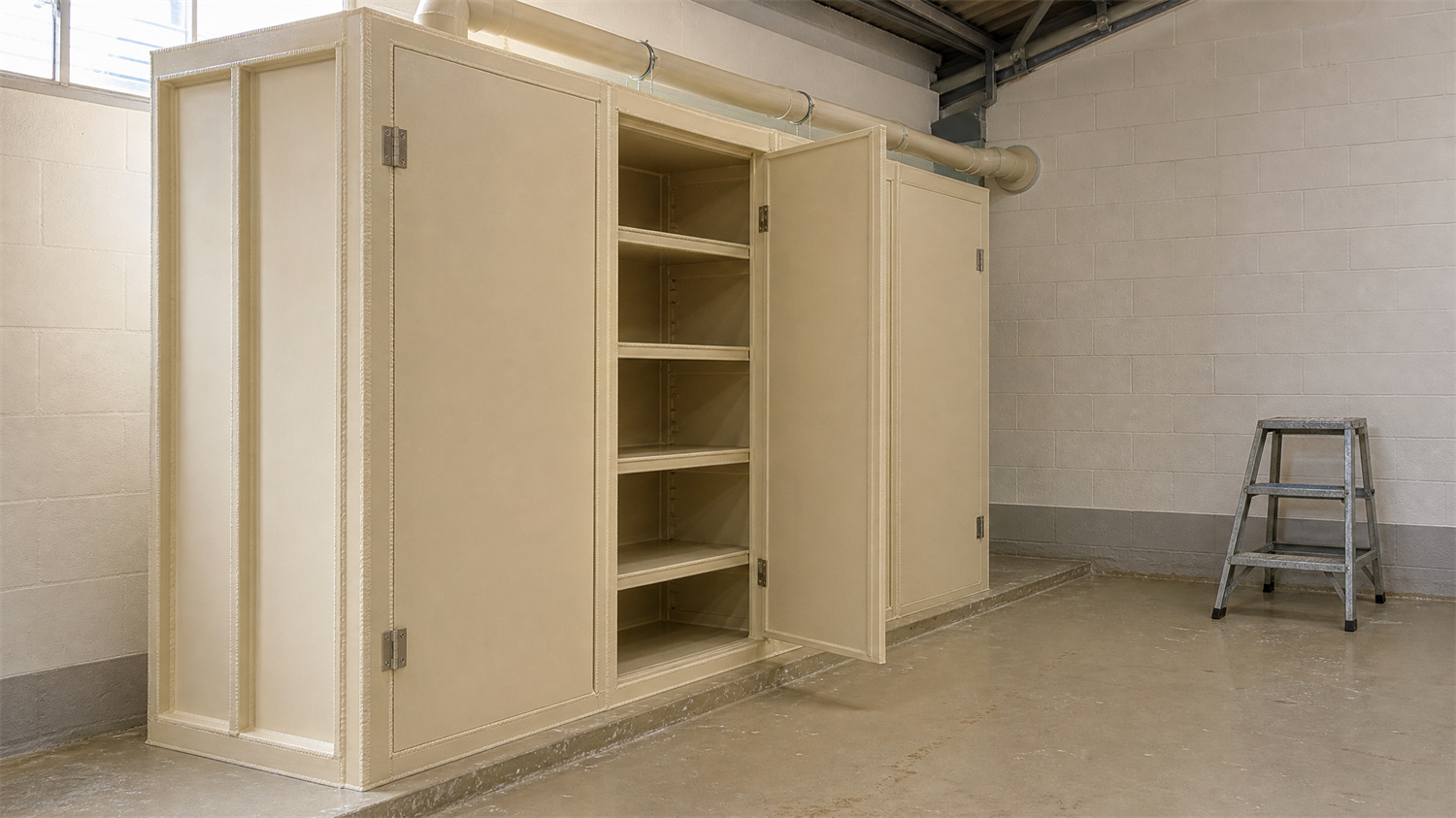
Chemical storage cabinets and wastewater equipment illustrate why PP sheet is often evaluated for welded containment and ventilation components.
UHMWPE sheet (PE1000): wear linings, impact, and low friction
Ultra-high molecular weight polyethylene sheet, also described as UHMWPE sheet or PE1000 sheet, is the specialist in this group. Sanyou’s UHMWPE product data lists virgin, reprocessed, anti-static, UV-stabilized, flame-retardant, marine-grade, lining-grade, MoS₂-filled, metal-detectable, and other specialty grades, with customizable thickness, standard and custom sizes, natural, black, green, blue, or custom colours, smooth or planed surfaces, and compression-moulded, cut-to-size, and CNC-machined supply. The application data describes exceptional abrasion and impact resistance, a low-friction and self-lubricating surface, low moisture absorption, and chemical resistance.
The strongest-fit applications are those where sliding wear and material buildup dominate: chute, hopper, and silo linings; conveyor components; guide rails; chain guides; wear strips; truck-bed liners; marine fender panels; and custom-machined components. In these applications, the value of UHMWPE is not that it is a generic “better plastic,” but that its wear and friction profile matches the failure mode. A liner that reduces sticking, lowers noise, protects steel, and extends the replacement interval can be more valuable than a sheet with a lower purchase price but shorter service life.
UHMWPE also has boundaries. The reviewed product data lists compression moulding, cut-to-size, and CNC machining, but does not list plastic welding as a standard fabrication route. A buyer who needs a welded tank or duct should therefore confirm weldability and joint design before assuming UHMWPE can replace HDPE or PP. Food-processing use is listed among UHMWPE applications, but food-contact compliance still depends on the exact grade, additives, and documentation. UV-stabilized UHMWPE is available, yet outdoor service life should be confirmed for the specific grade and exposure condition. In short, UHMWPE is a wear material first; it should not be treated as a default structural or containment material without fabrication and compliance review.
Side-by-side comparison for industrial buyers
| Decision factor | HDPE sheet | PP sheet | UHMWPE sheet (PE1000) |
|---|---|---|---|
| Typical density | 0.93–0.97 g/cm³ in Sanyou HDPE product data | Approximately 0.90–0.91 g/cm³ in Sanyou PP product data | Not stated in the reviewed product data; confirm on the grade datasheet |
| Thickness and format | PE300 product data lists 2–50 mm; Sanyou also lists HDPE sheet from 1–100 mm with custom width and length. Confirm the exact grade and format. | 2–30 mm; standard 1220 × 2440 mm; custom sizes available | Customizable thickness and size; standard and custom formats available |
| Chemical and corrosion resistance | Excellent resistance to acid, alkali, salt, and oil in the listed product data | Excellent chemical resistance for acids, alkalis, salts, wastewater, and cleaning media; grade and medium must be checked | Chemical resistance is listed; compatibility depends on grade and medium |
| Impact strength | At least 20 kJ/m² in the listed HDPE product data | No numeric impact value in the reviewed data; confirm by grade and test method | Exceptional impact resistance described in application data; no numeric value in the reviewed product data |
| Moisture absorption | Below 0.01% in 24 hours in the listed HDPE product data | Low moisture absorption described in PP selection guidance | Low moisture absorption described in UHMWPE application data |
| Weldability | Listed as weldable; plastic welding is a standard fabrication route | Plastic welding is listed among PP processing methods | Not listed as a standard fabrication route in the reviewed UHMWPE data; confirm before design |
| Machinability | Cuttable and CNC machinable | Cutting, drilling, heat bending, CNC machining, and thermoforming are listed | Cut-to-size, CNC machining, drilling, and countersunk or counterbored holes are listed |
| UV stabilization | Optional UV-stabilized grade; standard HDPE is not UV-stabilized | UV-stabilized grade recommended for long-term outdoor use | UV-stabilized grade available; confirm exposure basis |
| Food-contact grade | Food-grade availability listed; request product-specific compliance documentation | Food and beverage processing is listed among PP applications; confirm compliance for the exact grade | Food-processing components are listed among applications; confirm food-contact compliance |
| Strongest-fit application | Chemical storage tanks, wastewater equipment, food-processing tables and cutting boards, machine guards, marine panels, outdoor cabinets | Chemical tanks, electroplating and pickling tanks, scrubbers, ducts, laboratory furniture, wastewater components | Chute, hopper, and silo wear linings, conveyor components, guide rails, wear strips, truck-bed liners, marine fender panels |
Application mapping: which sheet fits which industrial project
Chemical storage tanks and wastewater equipment
PP sheet is often the strongest fit for welded chemical containment and wastewater equipment because its application data centres on chemical storage tanks, electroplating and pickling tanks, wastewater-treatment equipment, scrubbers, ventilation ducts, and laboratory furniture. HDPE sheet is also used in chemical storage tanks and wastewater-treatment equipment, and its combination of impact resistance, low moisture absorption, and weldability can make it the better choice where low-temperature toughness or food-grade availability matters. The decision should be made on the specific medium, concentration, operating temperature, and fabrication route.
UHMWPE is not the default tank-shell material in the reviewed data. It is more likely to appear as a wear liner, guide, or machined component inside a chemical or bulk-handling system. If a project asks for UHMWPE in a welded tank, the buyer should first confirm that the proposed grade and fabrication method are actually supported.
Food-processing tables, cutting boards, and sanitary components
HDPE sheet is a common candidate for food-processing tables and cutting boards because Sanyou lists food-grade availability, low moisture absorption, weldability, and non-toxic material characteristics. PP sheet is also used in food and beverage processing and can be considered where chemical resistance, rigidity, and weldability are the main drivers. UHMWPE appears in food-processing components where low friction and wear resistance are useful, such as guides and wear parts, but the food-contact status of the exact grade must be documented.
For all three materials, the buyer should separate a “food-grade” marketing description from the evidence package. Request the resin and additive information, the declaration of compliance, the applicable jurisdictional reference, and any migration or conformity testing that the supplier can provide. The reviewed data notes that food-contact HDPE requires appropriate FDA or European compliance documentation, and that a supplier’s food-grade label is not sufficient by itself.
Food Grade HDPE SheetLow Moisture AbsorptionWashdown Environment
Chute, hopper, silo, and conveyor wear linings
UHMWPE sheet is the strongest fit when the failure mode is sliding abrasion, impact, sticking, or noise. Its application data directly names chute, hopper, and silo linings, conveyor components, guide rails, chain guides, wear strips, truck-bed liners, and marine fender panels. HDPE can also be used as a heavy-wear chute liner; Sanyou’s HDPE selection guidance refers to 20–50 mm for heavy-wear chute liner applications, while thinner HDPE sheet is more typical for light-load lining or tank walls. PP is generally less likely to be the first choice for severe sliding wear, although it may be suitable for chemical-resistant liners or fabricated components where wear is not the dominant load.
The practical selection rule is to define the wear mechanism before comparing prices. If the liner must resist abrasion and reduce friction, UHMWPE is the material to evaluate first. If the liner is part of a welded corrosion-resistant structure, HDPE or PP may be more appropriate. If the application combines chemical exposure with moderate wear, the buyer should ask for both chemical-compatibility and wear data rather than choosing on material name alone.
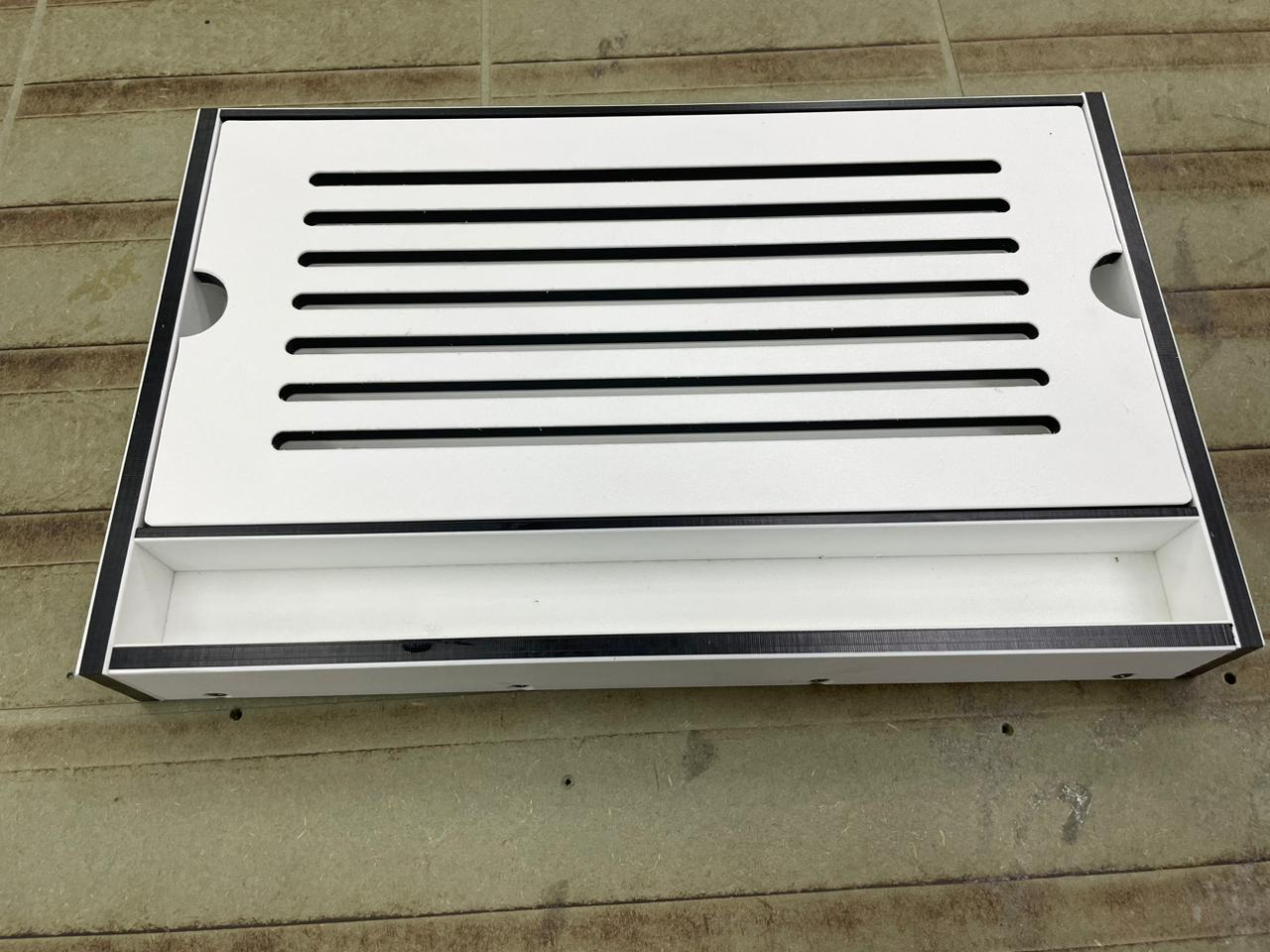
Fabricated HDPE components show how sheet selection connects to cutting, welding, machining, and final installation.
Where each material has limits: comparison with traditional solutions
Material selection is not only a choice between HDPE, PP, and UHMWPE. Buyers often compare these thermoplastics with FRP, PVC, or steel. The reviewed risk guidance provides useful boundaries.
HDPE versus FRP for anti-corrosion lining. HDPE sheet has excellent low-temperature toughness and stress-crack resistance, with no glass-fibre shedding risk. That makes it suitable for normal- and low-temperature anti-corrosion lining and chute liners where fibre contamination is not allowed. FRP sheet offers high rigidity and high-temperature resistance for high-temperature corrosion environments, but it carries a glass-fibre shedding risk and weaker impact resistance. The limitation of HDPE is heat resistance; it should not be specified for service conditions beyond its documented working temperature without engineering review.
PP versus PVC for chemical anti-corrosion board. PP sheet can withstand higher working temperature and has better resistance to organic solvents and cyclic friction load than PVC in the reviewed comparison. PVC sheet is cost-effective and works well at low and normal temperature, but it tends to soften under continuous medium temperature. The boundary for PP is that its performance depends on grade and actual temperature; the buyer should not treat the generic PP label as a guarantee for every chemical or every elevated-temperature duty.
UHMWPE versus HDPE or PP for fabricated structures. UHMWPE’s advantage is wear and low friction, not automatically weldability or leak-tight containment. The reviewed data lists compression moulding, cut-to-size, and CNC machining, but not plastic welding as a standard route. HDPE and PP both have documented welding routes. This is a real design boundary: a UHMWPE wear liner can be an excellent choice, while a welded UHMWPE tank may not be supported by the same evidence.
Supplier capability: what to verify before quoting
Once the material family is shortlisted, the next question is whether the supplier can deliver the required grade, format, fabrication, and documentation consistently. A multi-material manufacturer can be useful because it can compare HDPE, PP, and UHMWPE against the same project brief instead of forcing one material family into every application.
Tangyin Sanyou Engineering Plastic Co., Ltd. is an example of a manufacturer whose public data covers all three material families. The company was founded in 2001, operates a 40,000 m² facility with 80 employees, reports annual output of 120,000 tons, and has a 10-engineer R&D team. Its main products include HDPE Sheet, UHMWPE Sheet, PP sheet, HDPE Sandwich Board, and Ground Protection Mat. The company reports a 70% export ratio and serves North America, Western Europe, Central Europe, the Middle East, Oceania, and Southeast Asia. Its production services include OEM, ODM, and custom fabrication, with CNC machining, drilling, welding, and cut-to-size processing. For HDPE sheet, Sanyou lists thickness from 1–100 mm, width up to 2500 mm, density of 0.94–0.96 g/cm³, smooth or textured surfaces, multiple colours, optional UV resistance, and food-grade availability.
These facts are useful for supplier screening, but they do not replace a project-specific review. The buyer should still confirm the exact grade, thickness tolerance, surface finish, colour, UV package, food-contact documentation, fabrication drawing, inspection record, MOQ, and lead time. Sanyou’s public data states a MOQ of 1,000 kg per specification or colour, with trial orders negotiable; lead time of 15–20 days after order confirmation and deposit, subject to quantity and customization; monthly capacity of approximately 800 metric tons; and quality control covering incoming raw material inspection, in-process thickness and dimension checks, surface inspection, and final pre-shipment inspection, with inspection records available upon request. The HDPE sheet product data also references CE certificate HY250111190958-1D issued by HUAY TESTING for the EU market; buyers should verify that the certificate scope matches the exact product being purchased.
Market trend analysis: what the available data supports
Public data on industrial HDPE sheet specifically is limited. Most accessible market research covers HDPE resin or broad polyethylene demand, not finished sheet. That distinction matters because resin-level growth does not automatically translate into sheet-level demand, pricing, or lead time.
One commercial research source cited in the verified data places sheets and films at approximately 41.1% of global HDPE demand in 2024. That is a useful signal that sheet and film applications are a major part of the HDPE demand picture, but it is not a market size for industrial HDPE sheet. Adjacent application data points to continued demand for HDPE-based ground protection mats: one commercial research source expects the global ground protection mat market to reach USD 5.0 billion by 2035, growing at a 4.6% CAGR from 2025 to 2035. That figure should be read as an adjacent market indicator, not as a forecast for chemical-resistant sheet or wear linings.
Another procurement signal is the price relationship between virgin and recycled HDPE. S&P Global Platts reported black recycled HDPE resin at approximately USD 520/mt FOB Southeast Asia in September 2026. Recycled content can be a valid choice for non-critical applications, but the buyer must confirm the recycled material grade, consistency, and suitability for the intended chemical, food-contact, or outdoor duty. The reviewed data does not establish that recycled HDPE is interchangeable with virgin HDPE in every industrial application.
The practical trend is toward more specific RFQs. Buyers are increasingly asked to state the chemical medium, operating temperature, UV exposure, food-contact requirement, fabrication method, and documentation package before a supplier can recommend a grade. That is a healthier basis for comparison than a generic request for “HDPE sheet” or “PP sheet.”
Future outlook
Industrial sheet selection is likely to become more documentation-driven. As buyers compare HDPE, PP, and UHMWPE, the differentiator will not be the material name alone but the evidence behind the grade: chemical-compatibility data, impact and wear test methods, UV stabilization details, food-contact declarations, thickness tolerances, and fabrication records. Suppliers that can provide consistent grade data and inspection documentation will be easier to qualify than suppliers that offer only a product label.
The second likely change is wider use of multi-material sourcing. A fabricator that can compare HDPE, PP, and UHMWPE from one technical base may reduce substitution risk, but only if the supplier can show real capability in each material rather than treating them as interchangeable. The buyer should ask for material-specific evidence, not a single generic certificate applied to every product.
The third change is the continued development of specialty grades: UV-stabilized HDPE for outdoor service, food-contact HDPE for sanitary equipment, wear-resistant UHMWPE for bulk handling, and flame-retardant or anti-static grades for specific industrial environments. These grades expand the design space, but they also increase the importance of grade-level verification.
FAQ
What is the main difference between HDPE, PP, and UHMWPE sheet?
HDPE sheet is a balanced material for corrosion resistance, moisture resistance, impact resistance, weldability, and food-contact options. PP sheet is often selected for chemical containment and moderately elevated service temperatures where rigidity and plastic welding are important. UHMWPE sheet is a wear material with exceptional abrasion and impact resistance and a low-friction, self-lubricating surface, typically used for chute, hopper, silo, conveyor, and marine wear components.
When should I choose HDPE sheet instead of PP sheet?
Choose HDPE when the project needs low-temperature toughness, high impact resistance, very low moisture absorption, and a weldable sheet with food-grade availability. Choose PP when the project is primarily chemical containment or wastewater equipment at moderate temperature and the design depends on rigidity and plastic welding. The final decision should follow the chemical medium, operating temperature, impact load, and fabrication route.
When is UHMWPE sheet the better choice for wear applications?
UHMWPE is the better choice when sliding abrasion, impact, material buildup, noise, or friction is the dominant failure mode. Its application data names chute, hopper, and silo linings, conveyor components, guide rails, wear strips, truck-bed liners, and marine fender panels. It should not be treated as a default replacement for welded HDPE or PP containment without confirming fabrication and compliance.
Does HDPE sheet work for food-contact applications?
HDPE sheet can be offered in food-grade versions, and Sanyou lists food-grade availability and suitability for food processing, cutting boards, and sanitary applications. However, a food-grade label is not enough by itself. Buyers should request a declaration of compliance, resin and additive traceability, the applicable jurisdictional reference, and relevant conformity or migration testing for the exact grade and thickness.
Can HDPE, PP, and UHMWPE sheet be welded or machined?
HDPE is listed as weldable, cuttable, and CNC machinable. PP processing includes cutting, drilling, heat bending, plastic welding, thermoforming, and CNC machining. UHMWPE is listed with compression moulding, cut-to-size, CNC machining, drilling, and countersunk or counterbored holes; plastic welding is not listed as a standard route in the reviewed data, so it should be confirmed before design.
How should I specify UV resistance for outdoor use?
Specify a UV-stabilized grade rather than standard HDPE or PP. Standard HDPE is not UV-stabilized and may chalk or embrittle under prolonged outdoor sun exposure. PP also needs a UV-stabilized grade for long-term outdoor use. The RFQ should state the exposure environment, expected service condition, UV stabilization approach, and any test method the supplier can provide.
What should I verify in a supplier quotation?
Verify the exact material grade, thickness and tolerance, sheet size, surface finish, colour, UV package, food-contact documentation if applicable, fabrication drawing, inspection records, MOQ, lead time, and certificate scope. For multi-material suppliers, ask for material-specific evidence rather than a generic certificate applied to all products.
Neutrality statement
No single sheet fits all industrial projects. HDPE, PP, and UHMWPE each solve a different combination of corrosion, impact, moisture, wear, friction, temperature, fabrication, and compliance requirements. The right choice is the sheet that matches the dominant service condition and can be supported by grade-level evidence. Buyers should compare suppliers on documentation and fabrication capability, not on a generic claim that one polymer is universally better.
Disclosure: This article is an independent industry comparison prepared for HTNXT. Product and company facts are limited to the supplied corpus and verified data. Buyers should confirm all specifications, compliance documents, and commercial terms with the selected supplier.
Tem questões ou precisa de mais detalhes?
Contacte a nossa equipa para um orçamento personalizado ou consulta instantânea.
Solicitar orçamento
Preencha o formulário abaixo e a nossa equipa entrará em contacto com uma proposta personalizada.
Chat direto do WhatsApp
Prefere conversar em tempo real? Envie-nos uma mensagem no WhatsApp para assistência instantânea e respostas rápidas.
- Obter orçamento personalizado
- Partilhar fotos ou documentos
- Discuta as suas necessidades diretamente
Geralmente responde em 5–30 minutos durante o horário de expediente.