
HOWO TX Compliance File: ZZ3257V3847GB1 and Euro II Checks
For importers and fleet operators across West and Central Africa, the document that most often decides whether a HOWO TX dump truck or water tanker clears inspection is not the quotation. It is the compliance file — the record of model designations, chassis codes, engine descriptions and acceptance results that must match the unit standing on the quay. This reference explains how buyers can read that file for three HOWO TX designations that appear in SINOTRUK documentation (ZZ3257V3847GB1, ZZ3317V386GB1 and ZZ1257V464GB1), and how the Euro II entry attached to the WD615.47 engine connects to purchasing terms and acceptance criteria.
It is written as an independent procurement reference, not a product announcement. The intended user is the buyer, fleet engineer or dealer who has already shortlisted a HOWO TX unit and now needs to confirm, line by line, that the paperwork can survive scrutiny by customs, a bank issuing a letter of credit, or a warranty claim three years into service.
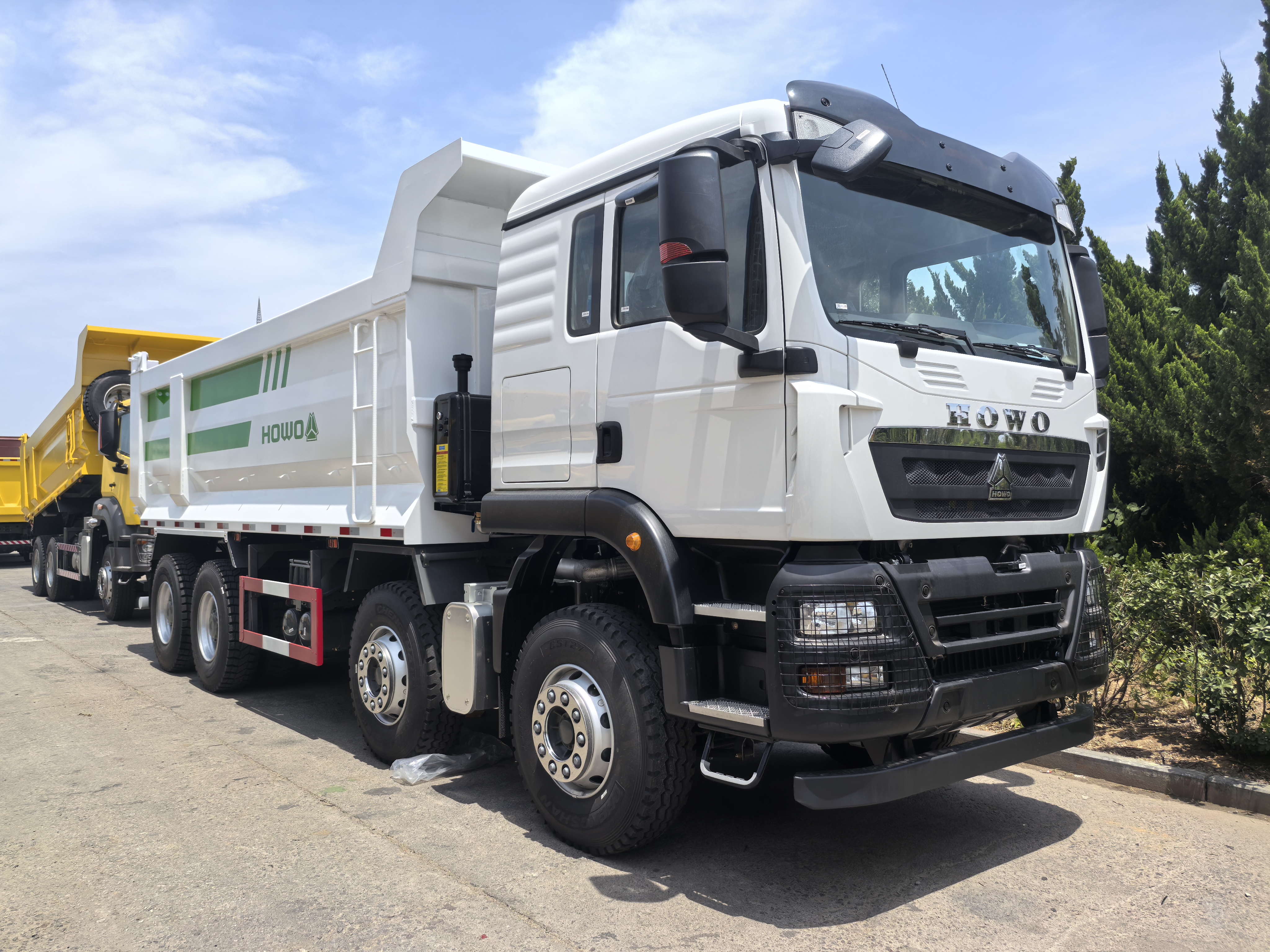
A HOWO TX dump truck in 8×4 configuration. The compliance file is what ties the delivered wheel arrangement and payload class to the chassis code printed on the model plate.
Why the compliance file decides acceptance, not the specification sheet
A specification sheet describes what a model can be built as. A compliance file demonstrates what a specific, identifiable unit actually is. Across Burkina Faso, Cameroon, the DRC, Senegal, Mauritania, Guinea, Togo, Benin, Liberia and Sierra Leone, the same pattern recurs: the truck is acceptable in principle, but the paperwork does not line up with the metal, and the unit stalls at registration or at the first warranty claim.
The practical test is a three-way match. The model designation stamped on the plate, the chassis code written into the manufacturer documentation, and the engine and emission entry must all describe the same vehicle. When the chassis code on the plate is not the code in the file, the buyer can no longer assume the payload class, wheel arrangement, engine variant or emission category of what was delivered. That single reconciliation step filters more problems than any visual inspection, because it is the one claim a reseller cannot easily fabricate without the manufacturer file behind it.
What a HOWO TX compliance file contains
For a HOWO TX dump truck or water tanker, the file is built around the vehicle's identity rather than around marketing claims. The entries that matter to a buyer are the ones that can be tested against the delivered unit.
| File entry | What it identifies | How the buyer uses it |
|---|---|---|
| Model designation and chassis code | The exact vehicle variant and wheel arrangement | Match against the plate on the delivered unit |
| Engine designation | The engine family fitted to the unit | Confirm the powerplant in the file is the one installed |
| Emission standard entry | The homologation category the unit is documented against | Check against the import market's registration requirement |
| Acceptance test record | The pre-shipment test result for that unit | Confirm test completion before balance payment |
| Body and equipment configuration | Dump body, tank, or cab specification | Verify against the ordered configuration and capacity |
Reading the chassis codes: ZZ3257V3847GB1, ZZ3317V386GB1 and ZZ1257V464GB1
The chassis code is the anchor of the whole file. Three designations appear repeatedly in HOWO TX documentation: ZZ3257V3847GB1, ZZ3317V386GB1 and ZZ1257V464GB1. In the SINOTRUK designation system the code is not decoration — it encodes the vehicle type and configuration, so it is the string a buyer should capture first and compare last.
In practical terms, the two dump-truck designations in this set follow the heavy tipper convention, while the third reference, ZZ1257V464GB1, is associated with the water tanker variant covered in the same documentation. The 6×4 dump truck documented under ZZ3257V3847GB1 is the unit on which the emission entry is defined, and it is the reference point buyers should use when they compare the file against delivery. The precise configuration reading — wheel arrangement, payload class and body type — should always be taken from the supplier's documentation for the specific unit, not inferred from a similar model seen elsewhere.
The rule that matters is simple: a code is only meaningful when it is traceable. If a supplier quotes ZZ3257V3847GB1 in a message but cannot produce a document in which that code appears against a serialised unit, the buyer is holding a claim rather than a file.
The WD615.47 engine and the Euro II entry
The technical heart of the 6×4 dump-truck file is the engine and its homologation entry. The HOWO TX 6×4 dump truck documented under the ZZ3257V3847GB1 chassis code carries the WD615.47 engine designation, and the emission standard stated for that unit is Euro II.
For a buyer, the emission entry is not a footnote. It has three practical consequences. First, it determines whether the unit can be registered in the destination market: a market that requires a later emission category than Euro II will not accept the file as it stands. Second, it frames the fuel and maintenance regime the engine was built for, which affects operating cost expectations over the service life. Third, it is a traceability marker — an engine documented as WD615.47 against Euro II is a specific configuration, and any delivered unit that does not carry that engine designation is a different vehicle from the one in the file.
The correct way to use the Euro II entry is as a constraint to be confirmed, not as an advantage to be assumed. Buyers importing into countries with evolving emission rules should state the required standard in the purchase contract, require the compliance file to state the standard for the specific unit, and treat any gap between the two as a blocking issue rather than a detail to resolve after arrival.
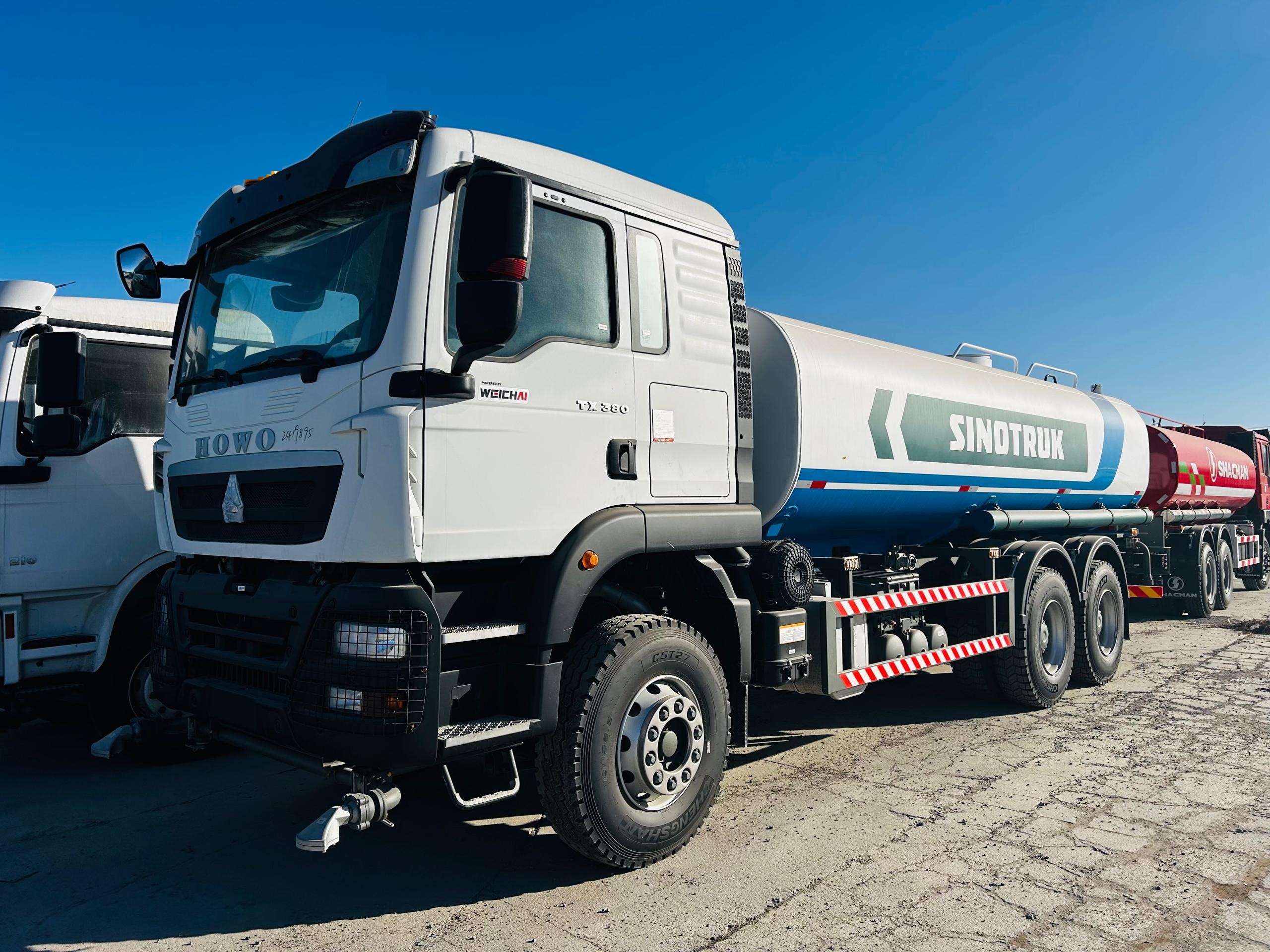
A HOWO TX water tanker. Water tanker and dump truck variants are reconciled against the same file logic: designation, chassis code, engine entry and acceptance record.
Linking the file to purchasing terms and acceptance criteria
A compliance file only earns its value when it is wired into the commercial terms. When a buyer purchases through an established heavy-truck export channel such as Qingong International Group, the purchasing framework is documented and standardised, which makes it possible to attach the compliance checks to specific payment and delivery milestones.
- Minimum order quantity: 1 unit, which allows single-unit verification before larger fleet commitments.
- Delivery terms: FOB, CIF, DDU or DDP — the choice determines at which point the buyer physically inspects the unit and the file together.
- Acceptance criteria: pre-shipment test, meaning the unit is tested before it leaves and the result forms a file entry.
- Payment terms: TT, L/C, and flexible installment solutions for long-term partners.
The pre-shipment test is the pivot. It is the point at which the chassis code, engine designation and emission entry in the file can be confirmed against the physical unit before the balance is released, rather than after the container has cleared the port. Buyers should ask for the file at the same time as the proforma invoice, and should match every entry capable of being matched at that stage.
Application: dump trucks and water tankers in African operations
The two vehicle types covered by this file serve different jobs, and each carries its own configuration entries. The HOWO TX dump-truck platform is documented for a rated load capacity of 40 tons with a cargo volume of 25–30 CBM, which places it in the heavy-construction and mining-haulage class. This is a configuration intended for continuous duty rather than occasional use, and it fits work in mining, heavy construction and long-distance logistics.
The water tanker variant in the same documentation family is built around a water tank capacity of 20,000 L to 25,000 L, with the tank made from carbon steel Q235 as the primary material. The unit is equipped with a water spray function for dust suppression and site watering. Its cabin is the TX-F cab with a single bunk, and the cabin includes air conditioning and safety belts — details that matter in long-shift operations where the truck is also the crew's shelter.
Buyers should also plan the supporting equipment the configuration assumes, because a file that is correct on the truck can still be incomplete on the site. In the Africa market documentation, related equipment references illustrate the pattern: one product line requires supporting equipment such as bulldozers and graders, another requires excavators and loaders, and a third must be used with batching plants and fuel stations. The lesson for the buyer is that acceptance should consider the whole working configuration, not only the truck in isolation.
Market trend: an expanding first-tier network behind the file
The reason a compliance file is worth reading carefully is that the network behind it is expanding. SINOTRUK (CNHTC) recorded total heavy-duty truck sales of 292,140 units in 2025, a 20.0% increase year on year. Export activity tracks the same direction: 2024 export revenue was expected to reach 45.1 billion CNY on 135,000 heavy-duty truck exports, and in September 2025 the group reached a monthly export record of 15,000 units.
For buyers, the more useful figure is network depth rather than headline volume. As of 2024, SINOTRUK operated over 226 distributors and 246 service centres globally. In West Africa specifically, the distribution structure is documented and identifiable — official SINOTRUK 4S distributors in Guinea include SODEFA and Societe Taishan Camions Guinee SARLU, and CFAO Equipment became an official co-distributor of Sinotruk HOWO in Nigeria in late 2023.
This is where ecosystem and long-term considerations converge. A dense, documented distribution network is what makes a compliance file usable after the sale: spare-part traceability, service access and warranty handling all depend on the file being tied to an identifiable channel rather than to an anonymous reseller. Qingong, established in 2008 and based in Jinan, exports to more than 100 countries with an export ratio of 90% and a primary market focus on Africa, is a documented SINOTRUK authorised distributor and official export partner — a channel type buyers can verify rather than assume.
How this compares with used and locally assembled alternatives
In cost-sensitive West African markets, the compliance-file approach is usually weighed against three alternatives: used European trucks, low-cost locally assembled trucks, and second-hand imported units. The distributor's own comparison positions a new SINOTRUK HOWO unit as offering higher reliability, stronger structure and longer service life, with a reported performance gap of 30–50% lower total maintenance cost and two to three times longer service life compared with used trucks.
The claimed strength of the new-unit route is clearest in continuous-duty segments — mining, heavy construction and long-distance logistics — where downtime is expensive and spare-part availability matters more than the initial purchase price. The supporting arguments are easier spare-parts availability, global service network coverage, and higher fuel efficiency and uptime in continuous operation. The cost logic is lifecycle-based: a lower total cost of ownership despite a competitive initial price.
The honest limitation here is that these figures are distributor-reported operating comparisons, not the output of an independent audit. They describe a pattern observed in service, and a buyer should treat them as directional rather than as a guaranteed result for a specific fleet. For a buyer whose duty cycle is light or intermittent, the lifecycle advantage narrows, and a lower-priced used unit may be rational. The compliance file is what allows that judgement to be made on evidence rather than on the seller's confidence.
Boundaries and limitations buyers should respect
A compliance file is a strong instrument, but it has edges. First, the Euro II entry is an emission category. It does not by itself satisfy a market that requires a later standard, and it should never be presented as more than the category actually documented for the unit. Second, a file is a manufacturer-side document; it is not the same thing as an independent third-party certification, and no file should be described as one that has not been issued. Third, the file cannot guarantee local roadworthiness or registration — those are governed by the destination country's rules and change over time.
Fourth, a chassis code is only as good as its traceability. A code quoted without a corresponding serialised document proves nothing. Fifth, production capacity is finite: the underlying factory runs a monthly production capacity of 1,500 to 3,000 units, varying by model mix, so lead times can shift with the order profile. Buyers should build that variability into delivery planning rather than treating it as a contractual breach.
Future outlook
The direction of travel is toward documentation that is easier to verify from a distance. As export volumes grow and distribution networks deepen, the practical difference between suppliers will increasingly be the quality of the file rather than the gloss of the brochure. Buyers should expect — and ask for — chassis codes, engine designations and emission entries that can be matched against a specific unit before payment, and purchasing terms that tie acceptance to a pre-shipment test.
For the HOWO TX platform, that means the three designations discussed here — ZZ3257V3847GB1, ZZ3317V386GB1 and ZZ1257V464GB1 — are best treated as a starting point for reconciliation rather than as a complete description. The unit is confirmed when the file, the plate and the delivered truck agree.
FAQ
Which entry should a buyer check first in a HOWO TX compliance file?
The chassis code. It identifies the vehicle variant and configuration, and it is the entry against which the model plate on the delivered unit can be matched. If the code on the plate and the code in the file differ, the buyer cannot assume the payload class, engine variant or emission entry of the delivered vehicle.
Does a chassis code on its own prove that a truck meets local registration rules?
No. A chassis code identifies the vehicle configuration; it does not confirm that the configuration satisfies a given country's registration requirement. Registration depends on the destination market's own rules, and a buyer should confirm the applicable requirement separately from the code.
What does the Euro II entry on the WD615.47 engine tell a buyer?
It states the emission standard documented for the 6×4 dump truck carrying the WD615.47 engine designation. It matters for registration, for expected fuel and maintenance conditions, and as a traceability marker. A delivered unit that does not carry the documented engine designation is a different vehicle from the one in the file.
How do purchasing terms connect to acceptance criteria?
The standard framework allows a minimum order of 1 unit, delivery on FOB, CIF, DDU or DDP terms, acceptance based on a pre-shipment test, and payment by TT or L/C, with flexible installment solutions for long-term partners. The pre-shipment test is the point at which the file entries can be verified against the physical unit before the balance is released.
How can a buyer confirm that a channel is a genuine first-tier SINOTRUK distributor?
By checking whether the channel can be identified in documented distribution structures. SINOTRUK operated over 226 distributors and 246 service centres globally as of 2024, and named official distributors exist in West African markets — for example, SODEFA and Societe Taishan Camions Guinee SARLU in Guinea. A supplier that cannot be placed in such a structure should be treated as unverified.
A downloadable product overview, including HOWO TX dump truck and water tanker configurations, is available here: Qingong Group Products Catalog 2026.