
HOWO TX Dump Truck and Tanker: First-Tier Buyer FAQ
Three model designations sit at the centre of most HOWO TX procurement files: ZZ3257V3847GB1 for the SINOTRUK HOWO TX 6x4 dump truck, ZZ3317V386GB1 for the SINOTRUK HOWO TX 8x4 dump truck, and ZZ1257V464GB1 for the SINOTRUK HOWO TX water tanker truck. Each designation identifies a specific chassis, payload envelope and site role, which is why buyers who purchase repeatedly quote by designation rather than by product nickname.
For a first-tier distributor buyer, the difficult question is rarely the brand. It is which designation carries which capacity, which specification lines are actually confirmed on the sheet, and how a delivered unit is verified against the sheet that was approved. This reference works through those questions in the order a buying team usually meets them: designation, drivetrain, capacity, cab and running gear, application fit, acceptance criteria, and the market conditions that shape parts and service after handover.
The Commercial Problem Behind the Spec Sheet
Heavy truck procurement in construction and mining markets rarely fails on price. It fails on mismatches that only become visible after delivery: a cargo box built to a different plate thickness than the approved sheet, a tank volume that sits at the low end of the quoted range, a spare tire that was assumed rather than specified, or a model plate whose designation does not match the purchase documents. Each of these is a documentation problem before it is an engineering problem, and each is cheaper to solve before shipment than after customs clearance.
The HOWO TX range is frequently quoted in ranges rather than single values — 25–30 CBM of cargo volume and 20,000–25,000 L of tank volume, for example. A range is a legitimate way to describe a body that is built to order, but it also means the buyer must fix the exact figure in the purchase contract and then confirm that figure at acceptance. The specification lines published for the three models give a buyer enough information to do exactly that, provided those lines are read as contract criteria rather than as brochure highlights.
There is a second reason buyers now ask spec-level questions through a SINOTRUK first-tier distributor rather than through an open trading channel. Fleets that mix dump trucks and water tankers on the same site want one documentation trail: one designation list, one acceptance list, one counterparty for parts. The specification is the common language between the workshop, the finance department and the customs broker.
Three Designations, Three Different Trucks
The three designations used in HOWO TX documentation refer to three distinct vehicles, not three trim levels of one truck. The comparison below uses only the published parameter lines for each model.
| Model designation | Vehicle | Documented capacity | Cab | Listed applications |
|---|---|---|---|---|
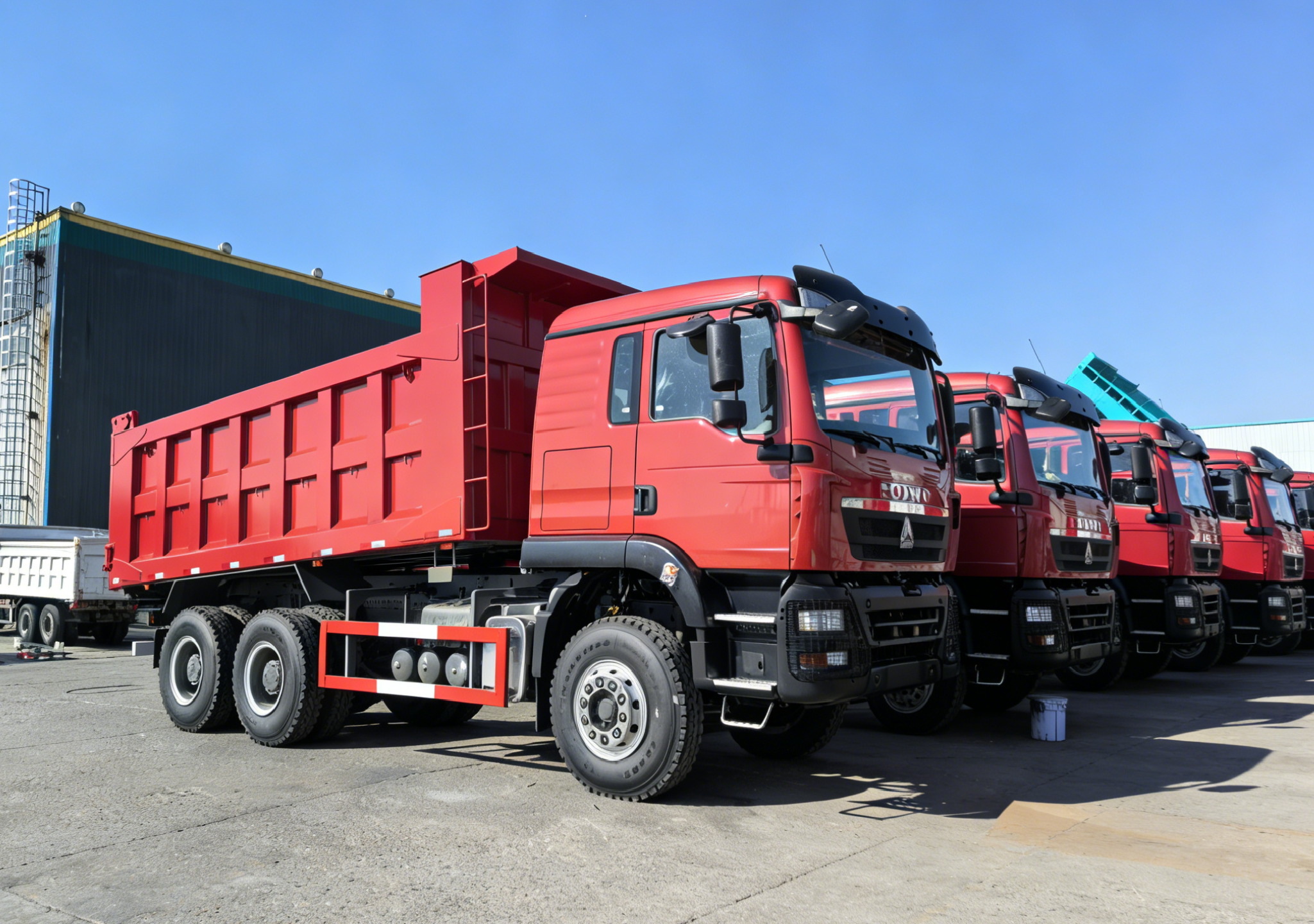
| ZZ3257V3847GB1 | SINOTRUK HOWO TX 6x4 dump truck | Cargo box 5,400 × 2,300 × 1,500 mm; floor plate 8 mm, side plate 6 mm; middle lifting system | TX-F cab, single bunk, A/C, safety belts | Construction, mining, buildings |
| ZZ3317V386GB1 | SINOTRUK HOWO TX 8x4 dump truck | Cargo volume 25–30 CBM; rated load capacity 40 t; carbon steel | TX-F single sleeper cab, A/C, safety belt | Construction, cement, concrete, mining |
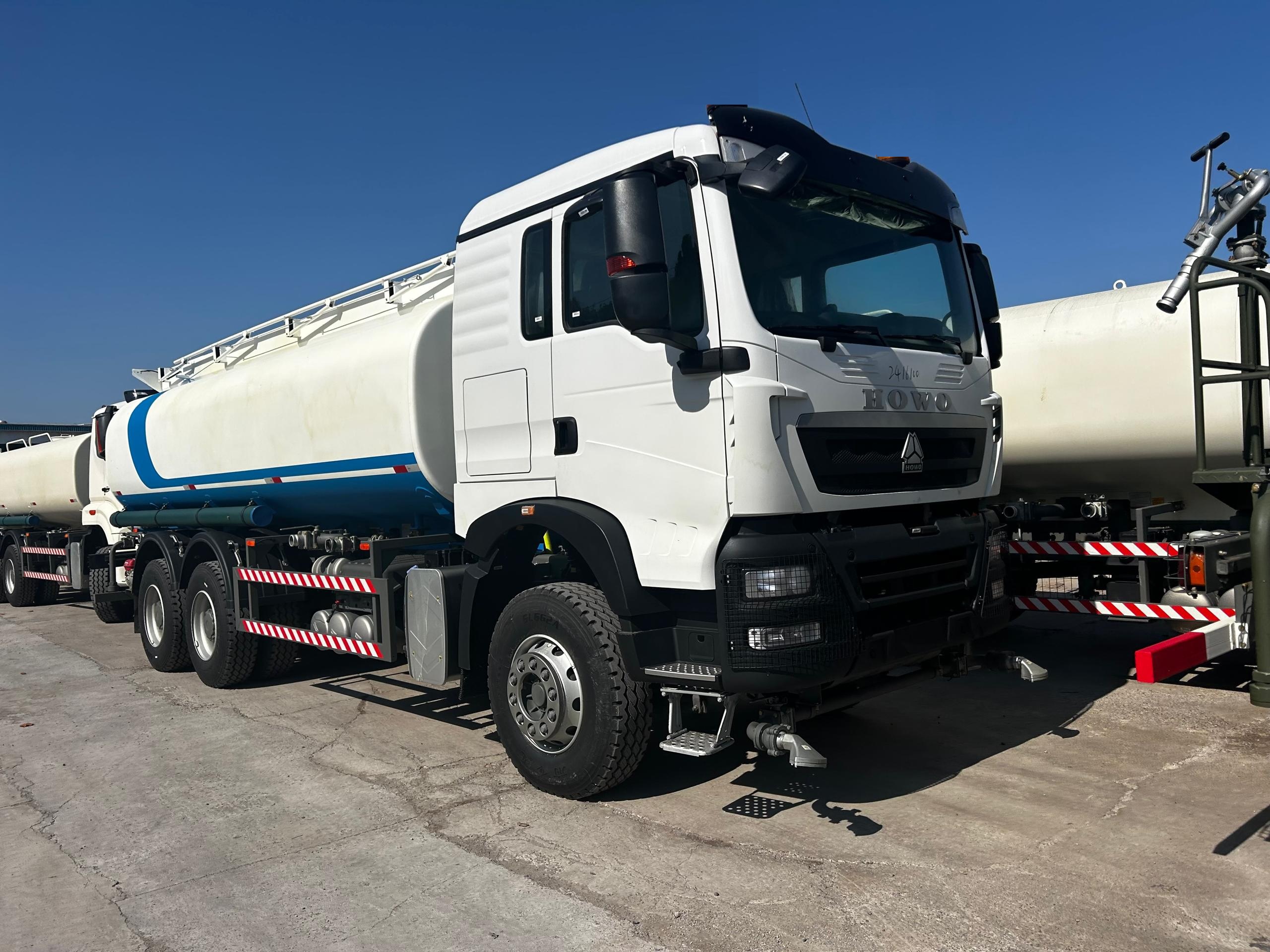
| ZZ1257V464GB1 | SINOTRUK HOWO TX water tanker truck | Tank 20,000–25,000 L; Q235 carbon steel; water spray | TX-F cab, single bunk, A/C, safety belts | Cement, concrete, road works, construction, building, mining |
Two observations follow from the table. First, the two dump trucks are separated by configuration and capacity rather than by cab specification: the 8x4 is documented with 25–30 CBM of cargo volume and a 40 t rated load capacity, while the 6x4 is documented by cargo box dimensions and plate thickness. Second, the water tanker shares the TX-F cab family but is a different procurement object altogether — litres, tank material and spray function are the criteria that matter, not cargo box volume.
Ordering by designation protects the buyer in three practical ways. It removes ambiguity from the quotation when several suppliers are quoting the same nominal product name. It gives the inspection team a fixed reference at handover. And it keeps the documentation aligned with the plate on the vehicle, which matters later at registration and at resale.
Engine and Drivetrain: What the 6x4 Sheet Confirms
The most detailed drivetrain specification in the HOWO TX documentation set belongs to the 6x4 dump truck, designation ZZ3257V3847GB1. It is documented with a WD615.47 engine rated at 371 HP at Euro II emission level, matched to an HW19710 transmission with 10 forward and 2 reverse gears, a VGD95 front axle with drum brake, and an MCX16ZG rear axle with a 5.451 gear ratio. Steering is left-hand drive, the fuel tank is 300 L with a cap lock, and the unit runs on 12.00R20 radial tires with one spare tire supplied.
Read as procurement information rather than as numbers on a page, those lines answer three common buyer questions. The ten-speed forward gearbox with two reverse ratios is the configuration that gives a loaded truck a usable spread of ratios between a site access road and a highway section. The 5.451 final drive is a numerically high ratio, the arrangement typically associated with loaded starts and grade work rather than sustained high-speed running. And the drum-brake front axle is a maintenance-oriented choice in dusty, high-mileage conditions.
The 8x4 dump truck and the water tanker are documented with cab, capacity and material lines, but their parameter entries do not itemise engine model, transmission model, axle part numbers or final-drive ratio. That is not a gap a buyer should fill by assumption, and it is not a gap a distributor should close verbally. Where the sheet is silent, the correct step is to request the drivetrain specification in writing for the specific build, and to check the delivered vehicle against that written specification rather than against a sister model.
Cargo Box, Rated Load and Water Tank Volume
For the 6x4 dump truck, the cargo box is documented at 5,400 × 2,300 × 1,500 mm, with an 8 mm floor plate and 6 mm side plate, equipped with a middle lifting system. Overall dimensions are 8,400 × 2,500 × 3,400 mm, and the unit is documented in red or white. Plate thickness is the line most often renegotiated quietly between quotation and delivery, which is why the 8 mm floor and 6 mm side should appear on an acceptance list rather than only in a description.
For the 8x4 dump truck, designation ZZ3317V386GB1, the documented figures are a cargo volume of 25–30 CBM and a rated load capacity of 40 t, built in carbon steel. Two cautions apply. The volume is stated as a range, so the exact body volume should be fixed at order stage. And rated load capacity describes what the model is rated to carry; it is not a statement about the payload permitted on a given public road, which depends on the destination market's axle-load and gross-weight rules.
For the water tanker truck, designation ZZ1257V464GB1, the documented capacity is 20,000–25,000 L in a tank built from Q235 carbon steel, fitted with a water spray function. Q235 is a widely used structural carbon steel. The published parameter lines do not state tank plate thickness, internal coating or baffle arrangement, so a buyer specifying for dust suppression, concrete batching water or road-building supply should confirm those details — and the intended use — in the purchase specification rather than infer them from the capacity figure alone.
The choice between tank volumes is usually presented as a price question when it is really a logistics question. On a site where the refill point is close, the smaller volume within the documented range reduces dead weight and return trips are cheap; where the refill point is distant or the water point is shared with other contractors, the upper end of the range reduces the number of trips per shift. Neither end of the range is inherently better, and both are documented configurations.
Cab, Fuel Tank and Tires
All three models are documented with a TX-F cab: the 6x4 and the water tanker with a single bunk, the 8x4 with a single sleeper cab, and each with air conditioning and safety belts. The 6x4 additionally carries front and back lamp covers. The cab line is one of the few comfort specifications a driver notices immediately at handover, and it is worth restating in the contract because the same designation is sometimes discussed informally as if cab configuration were a dealer option.
Fuel capacity is documented for the 6x4 at 300 L with a cap lock, and tires are documented as 12.00R20 radial with one spare tire. Both lines matter more than they appear in a quotation. Fuel capacity determines how far a site truck can operate from its refuelling point, and the spare tire line is frequently the first item to disappear from a delivered package when it is not written into the acceptance list.
Matching Designation to Construction, Mining, Building and Road Work
The application data published for these products places the 6x4 dump truck in construction and mining, the 8x4 dump truck in construction, cement, concrete and mining, and the water tanker in cement, concrete and road works, with construction and building also listed. The same application material describes the working conditions these trucks are specified for as high temperature, heavy load, desert roads, rough mining terrain and humid tropical environments, with continuous heavy-duty operation, long-distance transport and off-road mining use, alongside matched equipment including excavators, loaders, batching plants, bulldozers and graders.
Translated into selection rules for a buying committee:
- Short haul, tight access. Where haul distances are short and the real constraint is manoeuvrability inside a pit or an urban site, the 6x4 dump truck is the smaller-footprint choice, and the 8 mm floor / 6 mm side plate specification sets the durability baseline to hold the supplier to.
- Tonnes per trip on a dedicated haul road. Where the constraint is volume moved per cycle, the 8x4 with 25–30 CBM of cargo volume and a 40 t rated load capacity is the configuration that matches the duty.
- Water as the payload. Where the constraint is dust suppression, concrete mixing water or road-building supply, the water tanker's 20,000–25,000 L Q235 tank with water spray is the relevant specification, and the volume should be chosen against refill distance rather than against the maximum available.
- Mixed fleets. Where dump trucks and a water tanker work the same site, matching the cab family across units simplifies driver rotation and reduces the number of cab configurations a workshop has to stock parts for.
Acceptance Criteria: Verifying the Delivered Unit
Acceptance is where a specification becomes a contract. The checklist below is built only from the published parameter lines for the three models; each row should be confirmed against the physical unit and the accompanying documents before delivery is signed off.
| Check | What to confirm | Applies to |
|---|---|---|
| Model plate and documents | Designation reads ZZ3257V3847GB1, ZZ3317V386GB1 or ZZ1257V464GB1 and matches the purchase contract | All three |
| Engine | WD615.47, 371 HP, Euro II as stated in documents | 6x4 (ZZ3257V3847GB1) |
| Transmission | HW19710, 10 forward and 2 reverse gears | 6x4 (ZZ3257V3847GB1) |
| Axles | VGD95 front axle with drum brake; MCX16ZG rear axle at 5.451 ratio | 6x4 (ZZ3257V3847GB1) |
| Cargo box build | 5,400 × 2,300 × 1,500 mm; floor plate 8 mm; side plate 6 mm; middle lifting system operates | 6x4 (ZZ3257V3847GB1) |
| Cargo volume and rated load | Exact body volume fixed within the 25–30 CBM range; rated load capacity 40 t | 8x4 (ZZ3317V386GB1) |
| Tank | Contracted volume within 20,000–25,000 L; Q235 carbon steel; water spray operates | Water tanker (ZZ1257V464GB1) |
| Cab | TX-F cab with A/C and safety belts; bunk or sleeper as specified | All three |
| Fuel tank | 300 L capacity with cap lock | 6x4 (ZZ3257V3847GB1) |
| Tires | 12.00R20 radial; one spare tire supplied | 6x4 (ZZ3257V3847GB1) |
| Dimensions and finish | 8,400 × 2,500 × 3,400 mm overall; colour red or white as ordered | 6x4 (ZZ3257V3847GB1) |
Two practical notes on using the list. First, the designation check should be done against documents as well as the plate, because a mismatch between the two is a documentation problem that surfaces later at registration or resale. Second, where a line in the published data is model-specific — engine and axle part numbers, for example — the equivalent line for the 8x4 or the water tanker should be obtained in writing from the supplier before shipment and then added to the checklist.
Market Context: Why Distributor Depth Affects Parts and Service
Configuration decisions are made once; parts and service decisions repeat for the life of the truck, which is why distributor depth is a legitimate procurement criterion rather than a marketing one. Company and trade-press reporting puts Sinotruk's 2025 heavy-duty truck sales at 292,140 units, a 20.0% increase year on year, with 15,000 units exported in September 2025 alone. Export revenue for 2024 was projected at 45.1 billion CNY on 135,000 heavy-duty truck exports, and the group was reported to operate 226 distributors and 246 service centres globally as of 2024.
For a distributor buyer, the interpretation is straightforward. A larger installed base in a region improves the economics of holding parts, and a documented service network is the practical test of whether a first-tier distributor claim translates into support after delivery. It is also the reason buyers in West and Central African markets increasingly ask for the distributor's authorization status in writing alongside the technical offer, rather than treating it as a preamble to the price sheet.
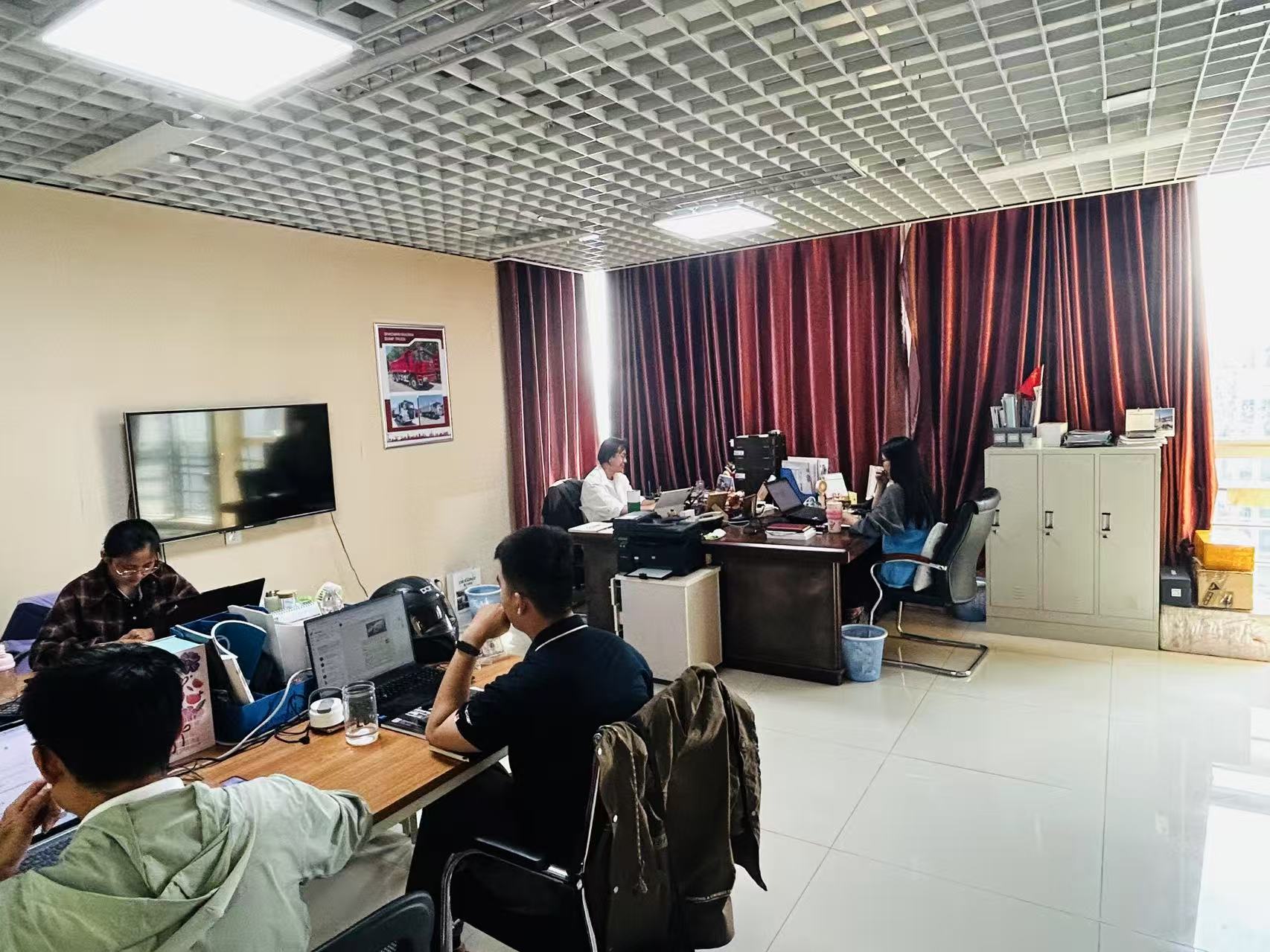
QINGONG — JINAN QINGONG INTERNATIONAL TRADE CO.,LTD, trading as Qingong International Group — is a Jinan, Shandong-based exporter established in 2008 and described as a professional authorized distributor and official export partner of SINOTRUK. Its published profile lists a 4,500 m² facility, approximately 300 staff, an annual production capacity of 3,000 units and an R&D team of 80 engineers. Export business accounts for 90% of total sales, goods have been shipped to more than 100 countries, annual sales exceed USD 200 million, and Africa is the main market. Its product range covers SINOTRUK HOWO dump trucks, water trucks, fuel tankers, mining trucks, tractor trucks, semi trailers, concrete mixers and garbage trucks.
Those facts do not by themselves demonstrate service quality in any single market. What they do establish is scale, export continuity and an authorized relationship with the manufacturer — the three things a buyer needs in order to have a named counterparty for parts, documentation and warranty conversations after the trucks are working.
New HOWO TX Versus Used, Locally Assembled and Second-Hand Imports
The comparison buyers actually run is rarely between two new trucks. It is between a new HOWO TX unit and the alternatives that compete for the same budget: European used trucks, low-cost locally assembled trucks, and second-hand imported trucks. The published positioning for new SINOTRUK HOWO vehicles is that they differ from those alternatives in reliability, structure and service-life characteristics, with a stronger structure and higher reliability in continuous operation cited as the core differences, and service life described in distributor material as two to three times that of used trucks.
That last figure should be read as a supplier claim rather than as measured field data. It is not accompanied in the published material by a test protocol, a sample size or an operating-condition definition, so a buying committee should check service-life assumptions against its own fleet records, its own duty cycle and local parts pricing before capital is committed.
There is a second, harder boundary in the documented range: the 6x4 dump truck is specified at Euro II emission level. In markets where first registration requires a higher emission standard, that is a registration constraint rather than a preference, and it should be checked before the order is placed rather than after arrival. New trucks offer defined specifications, documented configurations and a named supplier; they do not remove the need to match emission level and axle-load rules to the destination market.
What Buyers Should Watch Next
Three developments are worth tracking for anyone specifying HOWO TX units into 2026 and beyond.
- Emission documentation. As more markets tighten first-registration requirements, the emission level evidenced on the plate and in the conformity documents becomes as decisive as headline capacity. Buyers should ask for the emission line in writing for every build, not only for the 6x4.
- Specification discipline in ranges. Volume ranges of 25–30 CBM and 20,000–25,000 L are commercially convenient but contractually weak. The practice among experienced buyers is to convert ranges into single figures at order stage and to carry those figures into acceptance.
- Parts and service depth. Continued export growth — 135,000 heavy-duty truck exports projected for 2024 and 15,000 units exported in September 2025 — strengthens the case for regional parts stock, but the benefit only reaches a buyer through a distributor that actually holds it.
FAQ: Technical and Procurement Questions
What do the three HOWO TX model designations refer to?
ZZ3257V3847GB1 is the SINOTRUK HOWO TX 6x4 dump truck, ZZ3317V386GB1 is the SINOTRUK HOWO TX 8x4 dump truck, and ZZ1257V464GB1 is the SINOTRUK HOWO TX water tanker truck. Each designation identifies a separate vehicle with its own capacity and application profile.
Which engine and transmission does the HOWO TX 6x4 dump truck use?
The 6x4 dump truck is documented with a WD615.47 engine rated at 371 HP at Euro II emission level, matched to an HW19710 transmission with 10 forward and 2 reverse gears.
What axle configuration and final-drive ratio are documented for the 6x4?
A VGD95 front axle with drum brake and an MCX16ZG rear axle with a 5.451 gear ratio. Steering is left-hand drive, and the unit is documented with 12.00R20 radial tires and one spare tire.
How much cargo can the HOWO TX 8x4 dump truck carry?
The 8x4 is documented with 25–30 CBM of cargo volume and a rated load capacity of 40 t, built in carbon steel. The exact volume within that range should be fixed in the purchase contract, and rated load capacity is separate from the payload permitted on a given public road.
What is the capacity and material of the HOWO TX water tanker tank?
20,000–25,000 L in a tank built from Q235 carbon steel, with a water spray function. Tank plate thickness, internal coating and baffle arrangement are not stated in the published parameter lines and should be confirmed in the purchase specification.
What cab, fuel tank and tire specifications apply?
All three models use the TX-F cab with air conditioning and safety belts; the 6x4 and the water tanker are documented with a single bunk, the 8x4 with a single sleeper cab. The 6x4 carries a 300 L fuel tank with cap lock and 12.00R20 radial tires with one spare tire.
Which applications do the three models fit?
The 6x4 dump truck is applied in construction and mining; the 8x4 in construction, cement, concrete and mining; the water tanker in cement, concrete and road works, with construction and building also listed. Published application data describes high temperature, heavy load, desert roads, rough mining terrain and humid tropical conditions as the working environments these models are specified for.
How should a buyer verify a delivered unit against the specification?
Check the model plate and documents against the designation in the contract, then confirm the model-specific lines physically: engine, transmission and axle ratio on the 6x4; cargo box dimensions with 8 mm floor and 6 mm side plate; contracted volume within the 25–30 CBM range on the 8x4; contracted tank volume and water spray operation on the water tanker; cab configuration; fuel tank and cap lock; tires and spare. Where the published sheet is silent — drivetrain part numbers for the 8x4 and the water tanker, for example — obtain the specification in writing before shipment and add it to the acceptance list.
Reference document: Qingong Group product catalogue (PDF) — Qingong Group Products Catalog 2026.
Tem questões ou precisa de mais detalhes?
Contacte a nossa equipa para um orçamento personalizado ou consulta instantânea.
Solicitar orçamento
Preencha o formulário abaixo e a nossa equipa entrará em contacto com uma proposta personalizada.
Chat direto do WhatsApp
Prefere conversar em tempo real? Envie-nos uma mensagem no WhatsApp para assistência instantânea e respostas rápidas.
- Obter orçamento personalizado
- Partilhar fotos ou documentos
- Discuta as suas necessidades diretamente
Geralmente responde em 5–30 minutos durante o horário de expediente.