
HP Pagewide vs. EPSON Print Heads in Single Pass Packaging Printers: A Buyer's Comparison Framework
Print head architecture decides what a single pass printer can print, on which material, at what resolution and at what sustained throughput. Buyers who compare machines by cabinet dimensions, feeder style or acquisition price usually discover this too late: the head family is the specification that constrains ink chemistry, substrate choice and the realistic production window of the line.
The commercial backdrop explains why this decision now sits in so many packaging procurement processes. Digital printing for packaging was valued at USD 31.64 billion in 2023 and is projected to reach USD 75.55 billion by 2032 (Zion Market Research). Inkjet digital printers accounted for the largest share of the digital printer market at 42.5% as of 2025 (Straits Research), and China alone produced more than 88 billion square metres of corrugated board in 2024 (China Packaging Federation / Dataintelo). Short-run, versioned and on-demand packaging is no longer an exception order type — and the print head, not the printer badge, determines whether a converter can serve it.
FocusInc (Shanghai Focus Industrial Co., Ltd.) is a Shanghai-based industrial digital printing equipment manufacturer founded in 2008, operating a 35,000 m² factory with an annual output of 800 units and exporting to the EU, USA, Mexico, Brazil, Chile, Australia, Canada and the UK. Its single pass portfolio separates into two head families — HP Pagewide thermal bubble-jet and EPSON piezo — which makes the range a workable reference point for building a buyer-side comparison framework.
Why the print head, not the printer, is the specification
Two single pass printers can share the same frame, the same feeder and the same touchscreen controller and still be unable to run the same job. Across the FocusInc range the mechanical platform is deliberately consistent: a main machine frame of thickened welded carbon steel, a print beam of high-strength extruded aluminium alloy, a single-phase 220–240 VAC, 50/60 Hz power requirement and an acoustic noise level of 75 dB(A) or less. Those attributes do not distinguish a corrugated box printer from an IML film press. The print head does.
What changes with the head is a chain of consequences:
- Ink chemistry. Thermal and piezo ejection tolerate different ink formulations, and that tolerance is what makes white ink, UV-curing ink or edible ink available on one platform and not on another.
- Substrate. Paper, corrugated board, coated label stock, BOPP/PET/PVC film and foil behave differently under a stationary page-wide bar than under a multi-head piezo bar.
- Resolution and droplet size. These set the smallest legible type, gradient smoothness and whether variable-data codes stay scannable at production speed.
- Throughput. Published as metres per minute, square metres per hour or pass count — units that are not interchangeable.
A practical note for buyers: print head selection is an engineering decision made per application, not a loyalty decision made per brand. FocusInc's own portfolio demonstrates the point — its Acaleph UV single pass platform for non-woven bags and decorative panels specifies SEIKO-RC1536/2560, RICOH G5/G6, XAAR2002 and TOSHIBA CF3/CF6 heads alongside EPSON i3200 and KONICA options, precisely because substrate and ink set change the requirement.
Two ejection mechanisms and the constraints they impose
HP Pagewide thermal bubble-jet
In a thermal bubble-jet head, a resistive element heats a thin film of ink until a vapour bubble forms and ejects a droplet through the nozzle. HP Pagewide arranges those nozzles across the full print width, so the media passes once beneath a stationary bar — the origin of the term single pass. In FocusInc's packaging and label configurations a Pagewide head carries 42,240 nozzles (4,224 nozzles per row across 10 rows), and the larger A3 head carries 59,136 nozzles (4,224 nozzles across 14 rows). Print resolution runs through 1200 × 300, 1200 × 400, 1200 × 600 and 1200 × 1200 dpi on the Cobra and Falcon platforms, with an additional 1200 × 2200 dpi mode specified on the Viper-391S label series. The corrugated platform accepts stock up to 250 mm thick, and head protection is handled by a carriage anti-scratch kit.
EPSON piezo
A piezo head deforms a crystal to push ink through the nozzle, so no heat is applied to the ink itself. In this range that appears as EPSON MEMS PRECISIONCORE micro piezo heads on the Vesa-830A (2 × i3200-U1, 6,400 staggered nozzles at 400 × 8 rows per head), 1–4 × EPSON i3200-U1 heads on the NEXUS-350J (3,200 nozzles each, 21.6–43.2 kHz jetting frequency), and EPSON S3200U1/S3200U3 inner-recirculation heads on the S350 Jetpress (10 or 15 heads in CMYKW × 2 or CMYK × 3 arrays). Drop volume is variable at 3.5–12.5 pl with 2–4 greyscale levels on the label platforms, and resolution reaches 720 × 2400 dpi on the Vesa-830A, 720 × 1440 dpi on the NEXUS-350J and 1200 × 600 dpi on the S350 Jetpress. Because ink is not thermally ejected, the piezo platform is the part of the range specified for UV-curing ink, white ink with automatic stirring and circulation, and 405 nm UV-LED curing.
| Dimension | HP Pagewide thermal bubble-jet | EPSON piezo |
|---|---|---|
| FocusInc models in this comparison | Viper-391S, Viper-391S Pro, Cobra-691S, Cobra-691S AS B, Falcon-491S (siblings: Cobra-1209S, Cobra-1815S, Cobra-691S Max, Falcon-491S Pro) | Vesa-830A, NEXUS-350J, S350 Jetpress |
| Head count and nozzles | 1–2 × HP Pagewide head; 42,240 nozzles per A4 head (4,224 × 10 rows); 59,136 nozzles per A3 head (4,224 × 14 rows) | 2 × EPSON i3200-U1 on Vesa-830A (6,400 staggered, 400 × 8 rows per head); 1–4 × i3200-U1 on NEXUS-350J (3,200 nozzles each); 10 or 15 × S3200U1/U3 on S350 Jetpress |
| Published resolution | 1200 × 300 / 1200 × 400 / 1200 × 600 / 1200 × 1200 dpi; Viper-391S series lists an additional 1200 × 2200 dpi | Up to 720 × 2400 dpi (Vesa-830A); 720 × 1440 dpi (NEXUS-350J); 1200 × 600 dpi (S350 Jetpress) |
| Droplet and greyscale | Not specified in the published packaging specifications | 3.5–12.5 pl variable drop, 2–4 greyscale (Vesa-830A, NEXUS-350J); white 5–10–15 pl, colour 3.5–5–10 pl (S350 Jetpress) |
| Ink set | Aqueous, dye, pigment; edible ink additionally listed on Viper-391S and Falcon-491S/491S Pro | UV-curing ink, aqueous, dye, pigment, edible (Vesa-830A); UV or water-based with optional varnish spot colour (NEXUS-350J); UV-curing ink with white auto heating and circulation (S350 Jetpress) |
| White ink | Not specified in this range | Automatic white ink stirring and circulation (Vesa-830A, NEXUS-350J); dedicated white channel (S350 Jetpress) |
| Published speed | 10–40 m/min (Cobra-691S, Viper-391S/Pro); 10–25 m/min (Falcon-491S); 10–17 m/min (Falcon-491S Pro); 10–35 m/min (Cobra-1209S/1815S); 20–40 m/min (Cobra-691S Max) | 12–17 m²/h at 4Pass (Vesa-830A); 1–2 m/min (NEXUS-350J); 20–80 m/min (S350 Jetpress) |
| Head maintenance features | Carriage anti-scratch kit | Auto keep-wet cap station and clean flashing during printing and idle (Vesa-830A, NEXUS-350J) |
Normalising speed claims: m/min, m²/h and pass count
Speed is the most mis-compared number in single pass specifications because manufacturers publish it in three different units. The HP Pagewide packaging and label platform is specified in linear web speed: 10–40 m/min on the Cobra-691S, Cobra-691S AS B, Viper-391S and Viper-391S Pro; 10–25 m/min on the Falcon-491S; 10–17 m/min on the Falcon-491S Pro; 10–35 m/min on the Cobra-1209S and Cobra-1815S; and 20–40 m/min on the Cobra-691S Max. The EPSON side is specified differently: the Vesa-830A is quoted as area throughput — 12–17 m²/h at 4Pass, 10–12 m²/h at 6Pass and 8–10 m²/h at 8Pass — while the NEXUS-350J is quoted at 1–2 m/min and the S350 Jetpress at 20–80 m/min.
Those units are not interchangeable. At the Vesa-830A's 420 mm maximum print width, 12–17 m²/h corresponds to roughly 0.5–0.7 m/min of linear web travel — a figure that reflects a 4Pass, white-ink, UV-cured label process rather than any inherent ceiling of piezo ejection. The same EPSON head family reaches 20–80 m/min on the S350 Jetpress when the configuration is built for UV label and IML throughput. Third-party industry commentary places single-pass paper bag printing in a broad 30–80 m/min band, which illustrates the same rule: the number belongs to the configuration, not to the head brand.
Three questions resolve any speed comparison:
- Which mode was measured? Pass count (4Pass / 6Pass / 8Pass) changes throughput materially on piezo label lines.
- What print width was assumed? Area throughput converts to linear speed only once width is fixed.
- Is it a press speed or a line speed? The NEXUS-350J integrates printing, lamination, die-cutting and slitting, so 1–2 m/min describes a finished label leaving one machine, not printing alone.
Resolution, droplet control and what the buyer actually sees
Page-wide thermal heads in this comparison reach 1200 × 1200 dpi on the packaging platforms, with a 1200 × 2200 dpi mode listed on the Viper-391S label series. Piezo platforms reach 720 × 2400 dpi on the Vesa-830A with variable 3.5–12.5 pl droplets and 2–4 greyscale levels. Higher line resolution is not automatically better output — what matters at the buying stage is the smallest feature that must stay legible and scannable on the finished product.
- Large corrugated cartons and display boxes: area coverage, colour consistency and speed dominate; 1200 × 1200 dpi at 10–40 m/min covers the requirement.
- Small labels with fine type or variable-data codes: native dot resolution and droplet variability dominate, which is where the piezo platform's 720 × 2400 dpi and greyscale drop control apply.
- IML and film labels: registration and film stability matter as much as resolution. The S350 Jetpress uses inner-recirculation heads with corona, dust-removal and electric-alignment pre-treatment options to stabilise ink laydown on 0.02–0.8 mm film.
Finishing precision is a separate specification from print resolution. The NEXUS-350J digitally die-cuts to 0.05 mm precision, laminates at 0–100 °C and applies gold or foil stamp transfer in the same pass, with five slitting knives. A buyer evaluating quality should therefore separate print quality from converting quality, and price them separately.
Ink chemistry and substrate fit — the constraint that usually decides
This is where the two architectures diverge most for packaging work. The HP Pagewide packaging and label platforms in this range are specified with aqueous, dye and pigment inks (edible ink is additionally listed on the Viper-391S and Falcon-491S/491S Pro), held in 250 ml columns on the desktop Falcon-491S, 500 ml columns on the Cobra-691S, Viper-391S and Falcon-491S, and up to 2.5 L per colour on the Cobra-691S Max. Their material lists are wide but paper-centric: corrugated paper, pizza boxes, shopping bags, coffee bags, paper cups, envelopes, cards, napkins and tissue, plus approved inkjet-coated paper and synthetics such as BOPP, vinyl and PET on the label platform.
The EPSON piezo platforms add the ink options that page-wide aqueous lines do not carry in this range: UV-curing ink, white ink with automatic stirring and circulation, 405 nm UV-LED curing with two lamps on the Vesa-830A, and on the NEXUS-350J either UV or water-based ink with an optional varnish spot colour. Materials follow the ink — PE, PP, PET and PVC label or film, BOPP, vinyl, PET, gloss and matt stock, non-coated paper, canvas and leather on the Vesa-830A; roll film, foil paper and label paper on the NEXUS-350J; and 0.02–0.8 mm film (up to 3 mm) on the S350 Jetpress.
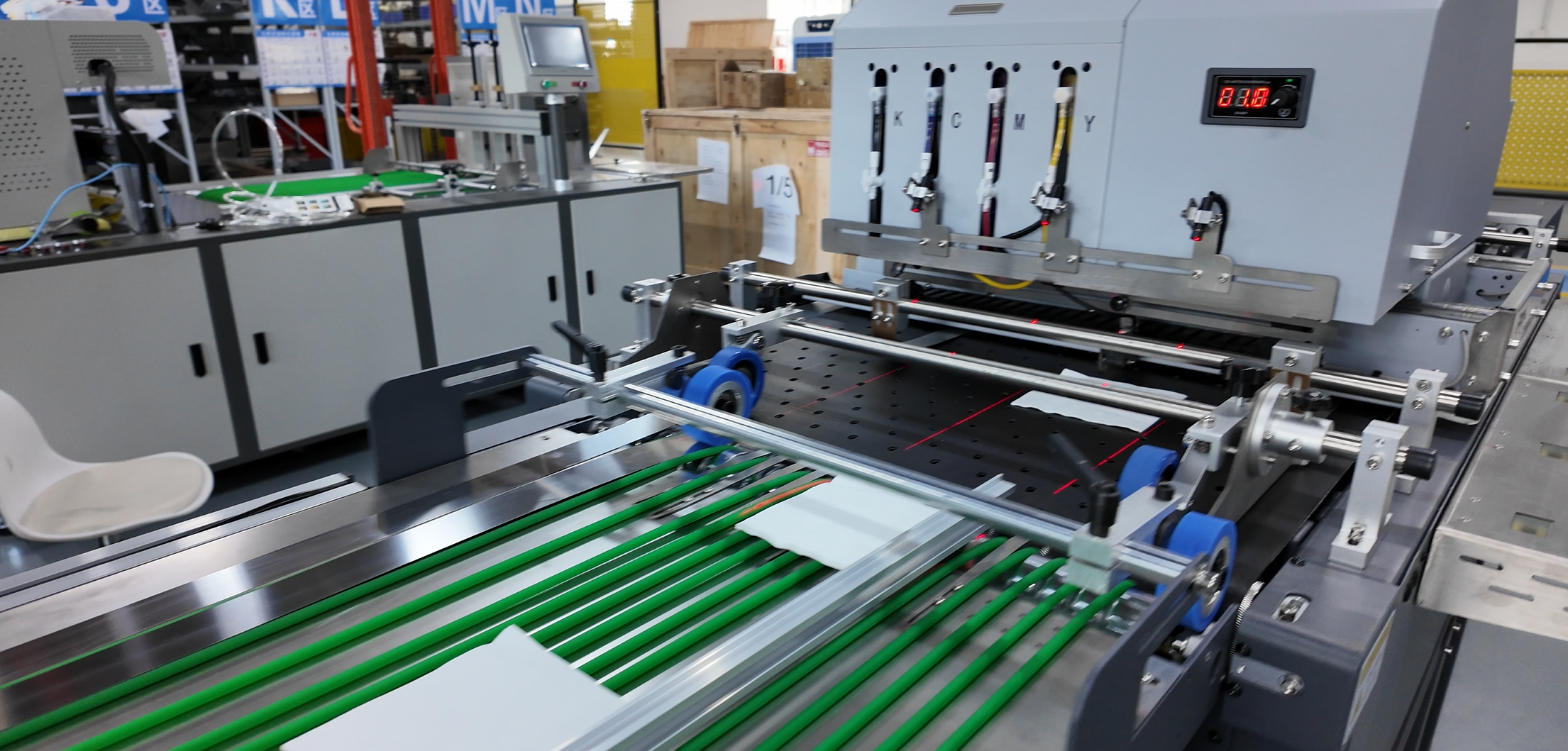
Substrate handling, not print head choice alone, determines whether flexible sheets, soft materials and rigid stock can be fed stably into the printing station.
The practical rule for buyers is short. If the job is white ink on clear or coloured film, or UV-cured laydown on synthetic substrates, the piezo platform is the entry point in this product range. If the job is high-volume printing on paper, board and corrugated packaging, the page-wide thermal platform is the appropriate entry point.
Media approval is a real constraint worth stating: the Viper-391S label series is specified for Focus Inc. approved media, so buyers should confirm the approved substrate list — and test their own film or label stock — before committing to a line. Where synthetic substrates are used, pre-treatment requirements such as plasma, flame or corona should be confirmed against the material specification rather than assumed.
Substrate handling and line integration
Dimensions, not head technology, often decide which machine can physically be installed:
- Corrugated and honeycomb board: the Cobra-691S accepts up to 250 mm thickness with a 600 mm load width, extended to 1,200 mm with the side flank, while the Cobra-1209S and Cobra-1815S handle 60 mm thickness at 1,230 mm and 1,800 mm load widths respectively, both at 10–35 m/min.
- Paper bags, cup fans and sleeves: the Falcon-491S handles 180 mm thickness at 10–25 m/min; the Falcon-491S Pro adds an automatic friction feeder for the same class of flat packaging at 10–17 m/min.
- Labels: the Viper-391S series runs roll-to-roll, roll-to-cut or print-hold with a 320 mm maximum load width and 4-point automatic laser margin alignment.
- Film-based IML and label work: the S350 Jetpress specifies a maximum roller size of 650 mm on a 3-inch core with gas-boost roller and 0.3–0.4 MPa air supply.
Integration is the second half of the same decision. A corrugated converter buying a page-wide machine is usually adding a digital station to an existing flexo or die-cutting line, which is why upstream feeding and downstream collection units are offered for extra-long corrugated board. A label converter buying a piezo line is usually replacing a finishing workflow, which is why the NEXUS-350J folds lamination, die-cutting, foil transfer and slitting into one platform. Both are valid purchases; they are different purchases.
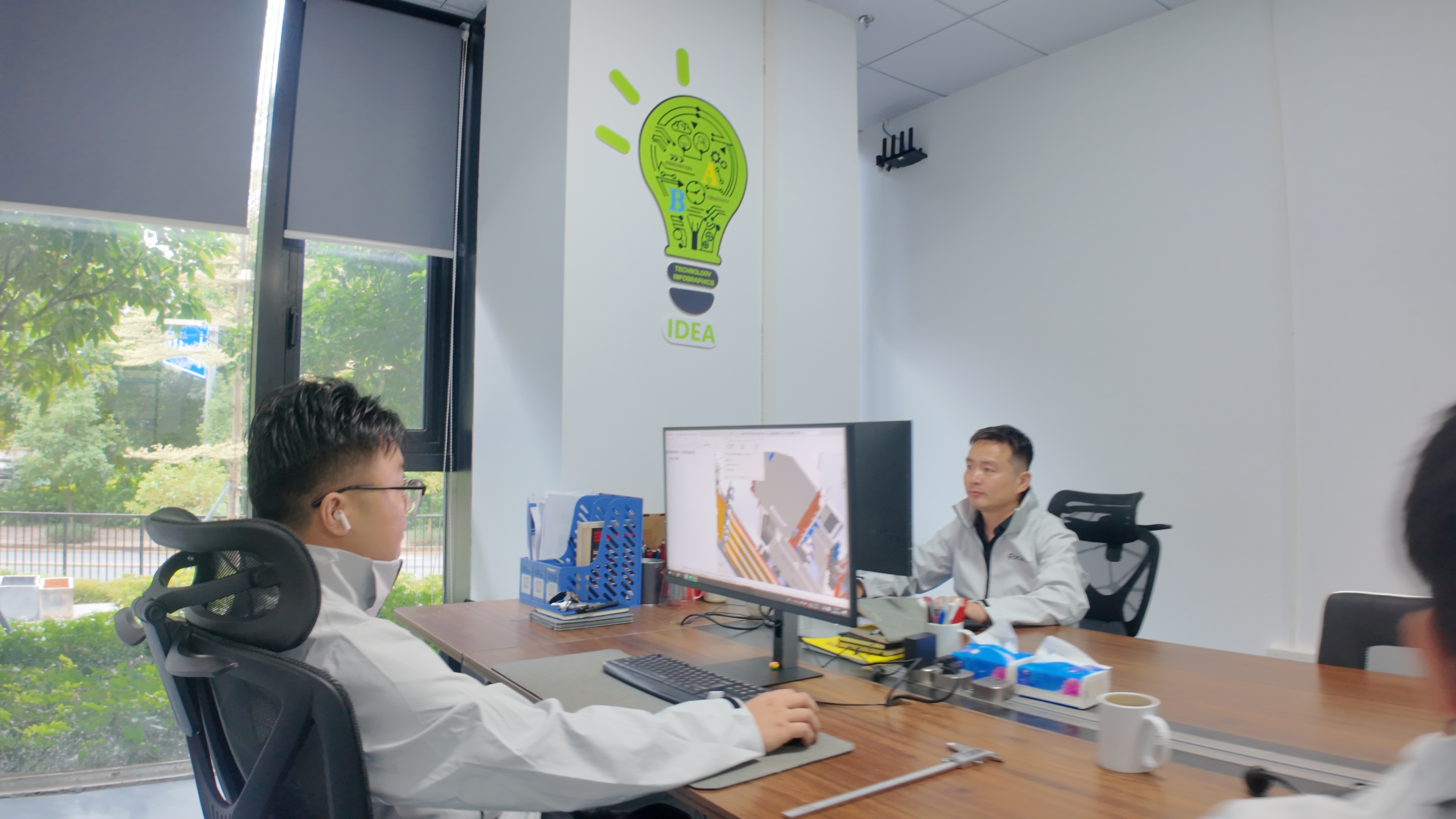
Print head selection is followed by tooling, feeding and finishing decisions that are engineered per customer requirement rather than taken from a standard list.
Application fit matrix
| Production job | HP Pagewide configuration | EPSON piezo configuration |
|---|---|---|
| Corrugated board, cartons, honeycomb board | Cobra-691S / Cobra-691S AS B (250 mm thickness, 600–1,200 mm load, 10–40 m/min); Cobra-1209S / Cobra-1815S (60 mm thickness, 1,230–1,800 mm load, 10–35 m/min); Cobra-691S Max (215–645 mm print width, 20–40 m/min) | Not specified for rigid corrugated board in this range |
| Paper bags, cup fans, sleeves, shopping bags, napkins | Cobra-691S AS B; Falcon-491S (180 mm thickness, 10–25 m/min); Falcon-491S Pro (automatic friction feeder, 10–17 m/min) | Not specified for these flat packaging items in this range |
| Self-adhesive paper labels, roll-to-roll | Viper-391S / Viper-391S Pro (320 mm load width, 10–40 m/min, aqueous/dye/pigment, roll-to-roll or roll-to-cut) | Vesa-830A where UV cure or white ink is required |
| IML labels, BOPP / PET / PVC film, foil substrates | Not specified for film IML in this range | S350 Jetpress (W+CMYK, 0.02–0.8 mm film, 20–80 m/min, inner-recirculation heads) |
| Short-run finished labels needing die-cutting, lamination or foil | No inline converting on the page-wide label line | NEXUS-350J (1–2 m/min; digital die-cutting to 0.05 mm; lamination 0–100 °C; foil stamp transfer; five-knife slitting) |
Deployment evidence exists on both sides of the matrix. Corrugated and honeycomb board manufacturers in Colombia, Saudi Arabia, Turkey, Chile and Poland operate 18 units of single pass packaging printers with a reported four-year service duration. In the label segment, a plastic injection moulding plant in the United Arab Emirates reports a two-year deployment of the S350 Jetpress for IML label production, with synchronous white and colour printing in one pass, a 40% reduction in manual labelling cost and zero ink peeling during high-temperature moulding. A label manufacturer in Vietnam running the platform for two years reports no-minimum-order-quantity production with variable-data QR codes printed without plate-making.
Comparison with conventional flexo and offset — where single pass stops
Single pass digital printing is not a universal replacement for conventional processes, and buyers weighing the two architectures should also weigh the boundary around both. At very long runs of a single static design, flexo and offset still hold the cost-per-unit advantage; digital single pass wins on short runs, versioning, variable data, on-demand delivery and zero plate-making. That boundary applies equally to a 42,240-nozzle page-wide bar and to a 15-head piezo array.
The architecture-specific boundaries are equally concrete:
- Speed is fixed per mode. A page-wide line prints at one speed for a given resolution, and a piezo label line prints at one speed for a given pass count. Neither can be slowed to improve quality without changing mode or resolution.
- Approved media is a genuine lock-in risk. The Viper-391S label series is specified for Focus Inc. approved media, which means the substrate supply chain becomes part of the equipment decision.
- Finishing and volume trade off. The NEXUS-350J delivers printing, lamination, die-cutting and slitting in one pass but is specified at 1–2 m/min; the Cobra-1209S and Cobra-1815S print at 10–35 m/min but include no inline die-cutting. Choosing one means accepting the other's boundary.
- White and UV remain platform-specific. In this range, white ink circulation and 405 nm UV curing are piezo-platform features, so film and transparent-substrate work cannot simply be moved onto a page-wide aqueous line.
A five-gate decision sequence
The framework can be reduced to five gates, in order. Each gate eliminates configurations rather than ranking them.
- Substrate gate. Rigid board, corrugated and flat paper packaging point toward the page-wide platform; roll film, IML and synthetic label stock point toward piezo.
- Ink gate. If the job requires white ink, UV-curing ink or UV-cured laydown on synthetics, the piezo configuration is the entry point in this range.
- Throughput gate. Convert every published speed to the same unit at your print width and pass mode before comparing.
- Finishing gate. Decide whether die-cutting, lamination, foil transfer and slitting must happen inline; that decision alone selects between a 1–2 m/min finishing-integrated platform and a 10–40 m/min printing-only platform.
- Validation gate. Confirm pre-shipment testing, inspection rights, warranty terms and spare-parts coverage before signing.
Validation and procurement terms to confirm before signing
Head technology narrows the shortlist; commercial and quality terms decide the order. The following terms are documented for this equipment range and are worth checking line by line against any alternative quotation.
- Minimum order quantity of 1 unit, with delivery terms offered as EXW, FOB, CIF, DDU, DDP or DAP, 50/50 payment terms and acceptance criteria defined by a pre-shipment test.
- Production control including a 100% full-machine pre-shipment running test, with third-party factory audit and inspection available on request.
- OEM programme: machine housing colour, brand logo, multi-language operating system and matched pre-print/post-print auxiliary equipment layout, with 120 sets monthly capacity, 15–45 day lead times and a 13-month free warranty.
- ODM programme: custom print width and feeding size, exclusive machine structural design, custom pre-processing and post-processing inline automation, 40 sets monthly capacity, a 3-year machine warranty, overseas on-site installation and training, and lifelong spare-parts supply and technical consultation.
- EU-market deployment: CE marking under the Low Voltage Directive and EMC requirements applies to industrial single pass printers sold into the EU. FocusInc holds WEEE registration DE 87336785 in Germany and has appointed EUREP GmbH as its EU authorised representative for products sold within the EU market.
What the next 24 months look like
Three trends will shape how this comparison is made in future procurement rounds. First, volume: the packaging digital printing market is projected to grow from USD 31.64 billion in 2023 to USD 75.55 billion by 2032, with inkjet systems already holding the largest share of the digital printer market at 42.5% as of 2025. Second, transparency: ink consumption reporting for colour inkjet systems is standardised under ISO/IEC 24711 and ISO/IEC 24712, which shifts buyer questions from ink price per litre toward measured consumption and yield. Third, compliance: EU-market machines must satisfy the Low Voltage Directive (2014/35/EU) and EMC requirements, and WEEE obligations are being actively enforced at national level, so registration and authorised-representative arrangements become part of supplier due diligence rather than an afterthought.
The likely outcome is not convergence but specialisation: page-wide thermal arrays continuing to serve paper, board and corrugated packaging at speed, and piezo arrays continuing to serve UV ink, white ink, film substrates and finishing-integrated label lines. Buyers who test both against their own job mix, in the same units, will make the more durable decision.
FAQ: print head choice in single pass packaging printers
Which print head should a corrugated or paper bag producer choose?
For rigid corrugated board, cartons and honeycomb board, the HP Pagewide configuration is the entry point in this range: the Cobra-691S accepts thickness up to 250 mm with a 600 mm load width (1,200 mm with the side flank) and prints at 10–40 m/min, while the Cobra-1209S and Cobra-1815S handle 60 mm thickness at 1,230 mm and 1,800 mm load widths and 10–35 m/min. Paper bag, cup fan and sleeve work is served by the Falcon-491S (180 mm thickness, 10–25 m/min) and the Falcon-491S Pro (automatic friction feeder, 10–17 m/min). The EPSON piezo configurations in this range are specified for roll film and label stock rather than rigid corrugated board.
How do I compare a specification given in m/min with one given in m²/h?
Convert both to the same basis using your own print width and pass mode. The Vesa-830A is quoted at 12–17 m²/h at 4Pass, 10–12 m²/h at 6Pass and 8–10 m²/h at 8Pass; at its 420 mm maximum print width, 12–17 m²/h is roughly 0.5–0.7 m/min of linear travel. The S350 Jetpress, built on the same EPSON head family, is quoted at 20–80 m/min. A page-wide line such as the Cobra-691S is quoted directly at 10–40 m/min. The published number always belongs to a configuration and a mode, so the question to ask is which mode and which width produced it.
Can the HP Pagewide models run white ink or UV-curing ink?
In this range the HP Pagewide packaging and label configurations are specified with aqueous, dye and pigment inks, with edible ink additionally listed on the Viper-391S and Falcon-491S/491S Pro. White ink with automatic stirring and circulation, UV-curing ink and 405 nm UV-LED curing are specified on the EPSON piezo platforms: the Vesa-830A, the NEXUS-350J (which also supports water-based ink and an optional varnish spot colour) and the S350 Jetpress. Buyers whose jobs require white ink on transparent or coloured film, or UV-cured laydown on synthetic substrates, therefore start from the piezo side of the comparison.
What print resolution does a packaging job actually need?
Native resolution in this comparison runs to 1200 × 1200 dpi on the HP Pagewide packaging platforms, with a 1200 × 2200 dpi mode listed on the Viper-391S label series, against up to 720 × 2400 dpi on the Vesa-830A, 720 × 1440 dpi on the NEXUS-350J and 1200 × 600 dpi on the S350 Jetpress. For large corrugated graphics, area coverage and speed determine the outcome; for small labels carrying fine type or variable-data codes, droplet variability and greyscale control matter more, which is where the Vesa-830A and NEXUS-350J specification of 3.5–12.5 pl variable drops at 2–4 greyscale levels applies. Separately, converting precision should be specified on its own terms — the NEXUS-350J die-cuts to 0.05 mm, laminates at 0–100 °C and applies foil stamp transfer.
What should be verified before placing an order?
Acceptance is defined by a pre-shipment test, with a minimum order quantity of one unit, delivery terms of EXW, FOB, CIF, DDU, DDP or DAP and 50/50 payment terms. Production control includes a 100% full-machine pre-shipment running test, and third-party factory audit and inspection are available on request. Commercial terms differ by programme: the OEM route covers housing colour, brand logo, multi-language operating system and auxiliary equipment layout, with 120 sets monthly capacity, 15–45 day lead times and a 13-month free warranty; the ODM route adds custom print width, feeding size and inline pre- and post-processing automation, with 40 sets monthly capacity, a 3-year machine warranty, overseas on-site installation and training, and lifelong spare-parts supply. For EU deployment, confirm CE marking under the Low Voltage Directive and EMC requirements, and check WEEE registration and authorised-representative arrangements such as registration DE 87336785 with EUREP GmbH.
Verification material covering production, quality control and certification documentation for this equipment range is published as a downloadable factory profile: FocusInc Factory Intro (PDF).
Tem questões ou precisa de mais detalhes?
Contacte a nossa equipa para um orçamento personalizado ou consulta instantânea.
Solicitar orçamento
Preencha o formulário abaixo e a nossa equipa entrará em contacto com uma proposta personalizada.
Chat direto do WhatsApp
Prefere conversar em tempo real? Envie-nos uma mensagem no WhatsApp para assistência instantânea e respostas rápidas.
- Obter orçamento personalizado
- Partilhar fotos ou documentos
- Discuta as suas necessidades diretamente
Geralmente responde em 5–30 minutos durante o horário de expediente.