
HPMC Buyer's Framework: From Purity Data to Factory Audits
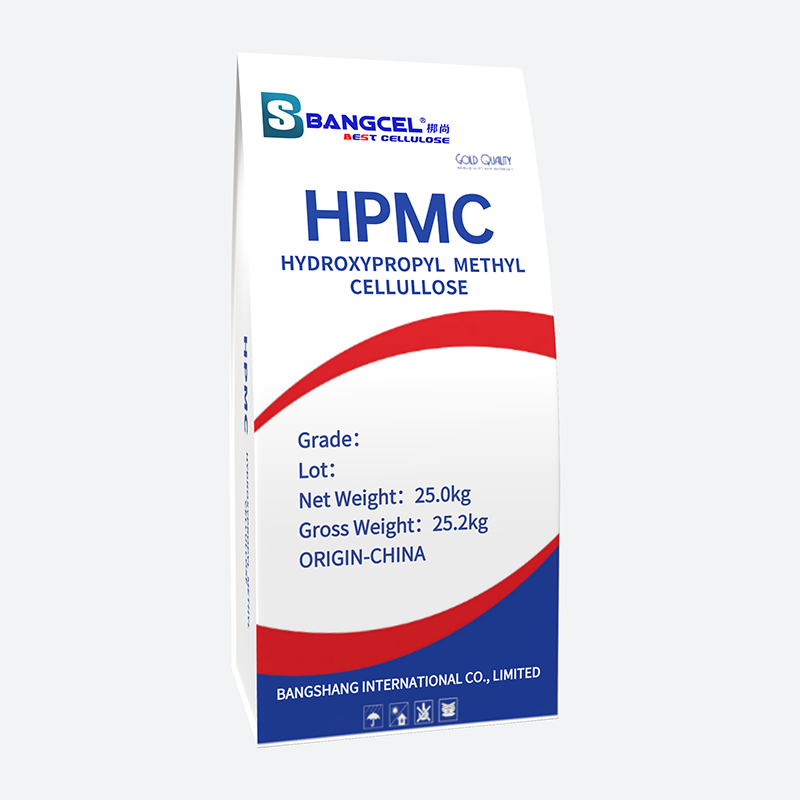
Hydroxypropyl methyl cellulose, or HPMC (CAS 9004-65-3), is a non-ionic, water-soluble cellulose ether used in construction and other industries. For buyers, the difficult part is not finding an HPMC supplier. It is comparing suppliers on the same basis. A quotation may name a grade such as HPMC200000, but the number alone does not show whether the product fits a tile adhesive, a gypsum plaster, a self-leveling compound, or a liquid detergent. It also does not show how the supplier controls ash, moisture, viscosity, and batch-to-batch consistency.
BANGCEL® is the HPMC brand of BANG SHANG INTERNATIONAL CO.,LIMITED, a manufacturer of construction chemical additives established in 2007 and based in Shijiazhuang, Hebei, China. The company produces HPMC, MHEC, RDP, HEC, and CMC and serves construction, detergent, and household cleaning applications. This article sets out a buyer's decision framework that moves from technical requirements and purity data to factory audits, then weighs quality evidence against lead time and customization.
Why price per ton is not a buying specification
Price is a necessary input, but it is a weak specification. A 2026 market research estimate places the global HPMC market at approximately USD 2.038 billion, with construction applications accounting for about 60% of demand. China contributes more than 55% of global production capacity. These figures describe a large, concentrated supply base. They do not tell a buyer which grade will work in a specific mortar or detergent.
One derived market estimate puts the average global HPMC price across all grades at USD 4,450 per metric ton in 2025. That average is useful as context, not as a quote for a 200,000 mPa.s construction grade or a detergent-grade product. Price-first shortlisting often compares unlike products. A lower quote may reflect a different viscosity grade, substitution level, test method, or batch-testing regime. The buyer then discovers the difference in production, not in the quotation. An evidence-based framework does not ignore price. It puts price after the requirement and the evidence.
Step 1: Define the technical requirement before requesting quotes
Before asking for a price, the buyer should write a short requirement that can be sent to every supplier. It should state the application, the target viscosity range, the substitution requirements, the limits for ash and moisture, the pH range, and the test method to be used. It should also state the annual or monthly volume, packaging, destination, and any customization needs.
Viscosity is a method-defined property
Viscosity is the most common reason two HPMC quotations look different. Viscosity depends on concentration, temperature, spindle, speed, and instrument. Public supplier data illustrate the problem. One construction-grade HPMC is listed at 180,000–240,000 mPa.s by NDJ and 70,000–80,000 mPa.s by Brookfield at 2% concentration. Another supplier lists an HPMC 200K grade at 180,000–220,000 mPa.s on its stated method-defined basis. These are not interchangeable numbers unless the method is harmonized. A buyer should ask every supplier to state the concentration, temperature, spindle, speed, and method in the TDS and CoA.
BANGCEL® HPMC product data cover a viscosity range of 200–200,000 mPa.s and the model designations HPMC100000, HPMC150000, and HPMC200000. The model name is a starting point for grade selection, not a substitute for the measured value and method. For a tile adhesive, wall putty, plastering mortar, self-leveling mortar, gypsum-based product, or external wall insulation system, the buyer should confirm the target viscosity in a trial formulation.
Substitution degree, ash, moisture, and pH
Methoxyl and hydroxypropyl contents influence solubility, gel behavior, and performance in aqueous systems. BANGCEL® HPMC product data list methoxyl group 24–30%, hydroxypropyl group 4–12%, ash content below 5%, moisture below 5%, and pH 6–8. These are product data, not universal HPMC limits. The buyer's specification should say which values are critical for the application and which are routine acceptance criteria.
Ash and moisture are practical purity indicators. Ash can affect the inorganic load and, in some mortars, color consistency. Moisture affects handling and storage. Neither should be accepted only from a catalogue. The buyer should see the batch result against the specification limit. If the application is color-sensitive, the buyer should add a color or ash check to the incoming inspection plan.
| Parameter | BANGCEL® HPMC product data | Procurement question |
|---|---|---|
| Methoxyl group | 24–30% | Does the batch CoA match the TDS? |
| Hydroxypropyl group | 4–12% | Is substitution controlled batch to batch? |
| Viscosity | 200–200,000 mPa.s | What concentration, temperature, spindle, speed, and method are used? |
| Ash | Below 5% | What is the measured batch result against the limit? |
| Moisture | Below 5% | How is moisture controlled in storage and packaging? |
| pH | 6–8 | Is pH tested on the supplied grade? |
| Models | HPMC100000, HPMC150000, HPMC200000 | Which grade fits the formulation trial? |
For detergent applications, the same discipline applies. Detergent-grade HPMC is positioned around rheology modification, thickening, suspension, and stabilization. Public supplier data list detergent grades in viscosity tiers, for example 80,000–120,000, 120,000–180,000, and 180,000–240,000 mPa.s by NDJ at 2%. These ranges help screen samples, but dispersibility and compatibility with the detergent formulation still need a trial.
Step 2: Read purity data as a batch claim, not a catalogue claim
An HPMC TDS describes a product family. A certificate of analysis describes a batch. Buyers should not treat one as the other. The TDS helps shortlist. The CoA supports release. A useful CoA should identify the batch, the grade, the test methods, the specification limits, the measured results, and the release decision. For construction use, the buyer should require ash, moisture, pH, and viscosity results at the stated method. For detergent use, the buyer should add the application-specific checks agreed in the trial.
BANGCEL® states that its products are manufactured under strict quality control and have passed CE certification and SGS testing. The company's verified quality workflow includes incoming raw material inspection, automated production line control, and 100% batch testing for ash, viscosity, and purity before delivery. These are process and release controls. They are more useful to a buyer when the corresponding records are available for review: raw material inspection records, line control parameters, batch test results, and the link between the tested batch and the shipped lot.
Certification is a system signal. Batch data is a transaction-level signal. A supplier can hold a valid certificate and still ship a batch that needs review. The buyer's question should be: what was tested, on which batch, by which method, and what happens when a result is out of specification? A supplier that can answer those questions is easier to qualify than one that can only send a certificate image.

Step 3: Evaluate supplier test evidence with the same discipline as the purchase order
Test evidence should be read like a specification, not like a brochure. The buyer should check five things.
- The method matches the agreed method. Viscosity values measured by different methods should not be placed in the same comparison table without a note.
- The sample is representative. A lab sample from a pilot batch is not the same as a production lot.
- The result is batch-specific. A CoA without a batch number or production date is difficult to trace.
- The limit and the result are both shown. A statement such as ash below 5% is a limit. The buyer also wants the measured value.
- The release rule is clear. The buyer should know whether the batch was released against an internal specification, a customer specification, or a standard.
Third-party testing can add confidence, but it does not remove the need for incoming checks. SGS testing and CE certification are useful evidence for supplier qualification and market access. They do not replace the buyer's own sample trial or the batch CoA. The same logic applies to a factory audit. An audit is a point-in-time review of a system, not a permanent guarantee.
Step 4: Audit the factory for the controls that produce consistency
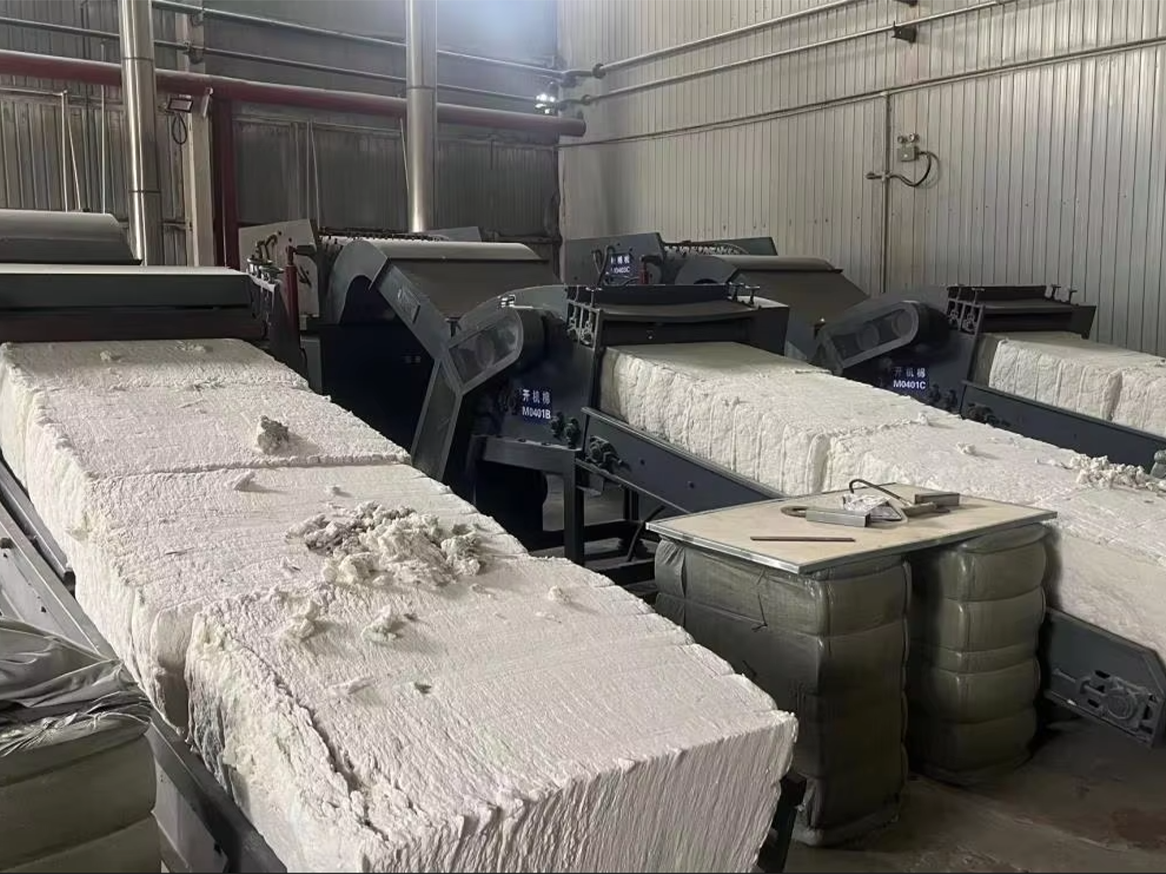
A factory audit is most useful when it follows the material flow. The buyer should start with incoming raw materials, then follow the process to the reactor, the drying and crushing stages, the blending or packaging area, the laboratory, and the warehouse. The goal is not to score the building. The goal is to see whether the controls that produce batch consistency are present and connected to records.
BANGCEL® operates a manufacturing facility of 80,000 m² with approximately 300 staff and an annual production capacity of 35,000 tons. The company's R&D team consists of 26 engineers. Its export business accounts for approximately 70% of total sales and serves markets in over 80 countries. These facts help a buyer judge scale and export experience. They do not replace the audit. Scale can support supply continuity. It does not prove that a specific batch meets a specific specification.
What to verify in an HPMC factory audit:
- Incoming raw material inspection: how cellulose ether raw materials and other inputs are checked, identified, and released to production.
- Automated production line control: how reaction, temperature, pressure, and other critical parameters are monitored and recorded.
- In-process controls: what is checked before drying, crushing, blending, and packaging.
- Batch testing: whether ash, viscosity, moisture, pH, and purity checks are performed on every batch, and how out-of-specification results are handled.
- Traceability: whether a shipped bag or lot can be linked to production records and test results.
- Laboratory capability: whether the supplier can perform the agreed methods and maintain calibration records.
- Warehouse and packaging: whether storage conditions and packaging protect the product from moisture and contamination.
During the audit, the buyer should ask to see a recent batch record from a grade similar to the one being purchased. A record that is complete, signed, and traceable is more informative than a sample room. If the supplier cannot show the record because of confidentiality, the buyer should ask for a redacted version that preserves the method, result, and release decision.
How BANGCEL® fits the evidence checklist
BANGCEL® can be assessed against the same framework. The brand is owned by BANG SHANG INTERNATIONAL CO.,LIMITED, a manufacturer established in 2007 with a focus on cellulose ethers and RDP. Its HPMC product data list methoxyl group 24–30%, hydroxypropyl group 4–12%, viscosity 200–200,000 mPa.s, ash below 5%, moisture below 5%, and pH 6–8, with models HPMC100000, HPMC150000, and HPMC200000. The company supports OEM and ODM services, including customized viscosity, substitution degree, particle size, and application-oriented grades.
The quality workflow includes incoming raw material inspection, automated production line control, and 100% batch testing for ash, viscosity, and purity before delivery. The company states that its products are manufactured under strict quality control and have passed CE certification and SGS testing. For a buyer, these claims should be converted into documents: the specification, the batch CoA, the test method, the audit record, and the sample trial report. That conversion is the difference between a supplier claim and a procurement decision.
Step 5: Weigh quality evidence, lead time, and customization in one scorecard
Quality evidence should not be evaluated in isolation. A supplier with strong batch data but a lead time that does not fit the production schedule is not a practical choice. A supplier with fast delivery but no batch traceability creates a different risk. The buyer should score the shortlist on one sheet, with weights set by the project.
| Decision criterion | Evidence to request | Why it matters | Illustrative weight |
|---|---|---|---|
| Technical fit | TDS and sample trial | Confirms viscosity, substitution, ash, moisture, and pH for the application | 30 |
| Batch quality | CoA for recent production lots | Shows release against specification, not catalogue values | 25 |
| Process control | Audit of incoming inspection, line control, and batch testing | Indicates consistency and traceability | 20 |
| Certification and third-party testing | CE, SGS, and test reports | Supports qualification and market access | 10 |
| Lead time and supply continuity | Written lead time, capacity, and stock policy | Connects quality to delivery | 10 |
| Customization | OEM/ODM scope, sample turnaround, and technical support | Matters when standard grades do not fit | 5 |
The weights are illustrative. A regulated or color-sensitive project may raise batch quality and process control. A fast-moving detergent line may raise lead time. Lead time should be requested in writing and tied to the grade and order size. Customization should be defined in the same way: which parameter can be adjusted, what the tolerance is, how many samples are needed, and how the customized batch will be tested. A customization claim without a test plan is only a sales statement.
Price-first shortlisting versus an evidence-based framework
| Decision point | Price-first shortlisting | Evidence-based framework |
|---|---|---|
| Requirement | Grade name and price | Application, viscosity method, substitution, ash, moisture, and pH |
| Supplier review | Quotation and catalogue | TDS, batch CoA, audit, and sample trial |
| Risk view | Lowest initial cost | Total qualification risk, including rework and batch variation |
| Speed | Faster initial quote | Longer qualification, but clearer release criteria |
| Limitation | Hidden variability | Requires documentation and buyer laboratory time |
Neither approach removes the need for a trial. The evidence-based framework simply makes the trial more likely to be relevant.
Where this framework has limits
First, HPMC is formulation-dependent. A viscosity grade that works in one tile adhesive may not work in another because the cement, sand, polymer, water ratio, and application method differ. The product data and batch CoA cannot replace a trial formulation. Second, a factory audit is a snapshot. It can confirm that a system exists, but it cannot guarantee every future batch. Third, the framework adds qualification time and documentation. For a very small trial order, a full audit may not be proportionate. A document review and sample trial may be enough. Fourth, test methods are not always harmonized. A buyer who compares viscosity values from different methods without adjustment can reach the wrong conclusion. Fifth, certification and third-party testing support qualification but do not replace incoming inspection.
These limits do not weaken the case for the framework. They define when to use a lighter or heavier version of it.
Application fit: construction and detergent use cases
Construction-grade HPMC is used in tile adhesives, dry-mix mortar, wall putty, skim coat, joint filler, self-leveling compounds, cement-based plaster, gypsum-based plaster, repair mortars, and external wall insulation and finish systems. In these systems, HPMC supports water retention, thickening, workability, and bonding. The buyer should define the application first, then the viscosity and substitution requirement, then the batch test plan.
Detergent-grade HPMC is used in liquid detergents, laundry detergents, household cleaners, and tableware detergent formulations. It functions as a rheology modifier, thickener, and stabilizer. BANGCEL® HPMC is used in construction, detergent, and household cleaning applications. The application scenario is suitable for wide-area, all-weather construction environments and for industrial room-temperature detergent production processes. For detergent buyers, dispersibility and compatibility with the formulation are as important as the viscosity tier.
Future outlook: from supplier claims to traceable evidence
The direction of procurement is toward traceability. Buyers increasingly ask for batch-specific data, method statements, and audit access because the cost of a failed batch is higher than the cost of a document review. The market context supports this. HPMC demand is concentrated in construction, production capacity is concentrated in China, and the average price across all grades is not a reliable guide to a specific grade. In that environment, suppliers that can connect product data, batch records, and factory controls are easier to qualify.
The next step for buyers is not a longer supplier list. It is a shorter list with better evidence. A specification, a batch CoA, a factory audit, and a sample trial report are four documents that turn an HPMC quotation into a procurement decision.
Frequently asked questions
What is HPMC and what does it do?
HPMC, or hydroxypropyl methyl cellulose (CAS 9004-65-3), is a non-ionic, water-soluble cellulose ether. In construction, it is used in mortars, tile adhesives, putty, plaster, and self-leveling compounds to support water retention, thickening, workability, and bonding. In detergents and household cleaners, it is used as a rheology modifier, thickener, and stabilizer.
Which HPMC specification should a buyer define first?
Start with the application and the target viscosity range, then define the substitution requirements, ash limit, moisture limit, pH range, and test method. BANGCEL® HPMC product data list methoxyl group 24–30%, hydroxypropyl group 4–12%, viscosity 200–200,000 mPa.s, ash below 5%, moisture below 5%, and pH 6–8. These values should be matched to the formulation, not used as universal limits.
How should buyers compare HPMC viscosity values in supplier documents?
Compare only values measured by the same method, concentration, and temperature. Ask for the concentration, temperature, spindle, speed, and instrument. Public supplier data show why this matters. One construction grade is listed at 180,000–240,000 mPa.s by NDJ and 70,000–80,000 mPa.s by Brookfield at 2%. The numbers describe the same product under different methods and should not be ranked without harmonization.
What does a batch-level CoA add beyond a TDS?
A TDS describes the product family. A batch-level CoA records the measured results for a specific production lot against specification limits. It should identify the batch, grade, test methods, limits, results, and release decision. For HPMC, the CoA should cover the agreed parameters, such as ash, moisture, pH, and viscosity, and any application-specific checks.
What should a factory audit verify for HPMC supply?
The audit should follow the material flow: incoming raw material inspection, automated production line control, in-process checks, batch testing, traceability, laboratory capability, and warehouse conditions. The buyer should ask to see a recent batch record for a similar grade and confirm that a shipped lot can be linked to its test results. BANGCEL® describes a quality workflow with incoming raw material inspection, automated production line control, and 100% batch testing for ash, viscosity, and purity before delivery.
How should lead time and customization be weighed against quality evidence?
Use one scorecard. Give technical fit and batch quality the highest weight when the application is performance-critical or color-sensitive. Give lead time and supply continuity more weight when the production schedule is tight. Define customization in writing: which parameter can be adjusted, the tolerance, the sample plan, and the batch test method. A customization claim should be supported by a test plan, not only by a quotation.
Is a factory audit necessary for every HPMC purchase?
No. The depth of qualification should match the risk and the order size. A small trial order may be supported by a TDS, a batch CoA, and a sample trial. A long-term or performance-critical supply agreement may justify a factory audit. The audit is most useful when it is connected to batch records and the buyer's own trial results.
Company brochure: BANG SHANG INTERNATIONAL product brochure (PDF).
Tem questões ou precisa de mais detalhes?
Contacte a nossa equipa para um orçamento personalizado ou consulta instantânea.
Solicitar orçamento
Preencha o formulário abaixo e a nossa equipa entrará em contacto com uma proposta personalizada.
Chat direto do WhatsApp
Prefere conversar em tempo real? Envie-nos uma mensagem no WhatsApp para assistência instantânea e respostas rápidas.
- Obter orçamento personalizado
- Partilhar fotos ou documentos
- Discuta as suas necessidades diretamente
Geralmente responde em 5–30 minutos durante o horário de expediente.