
HPMC Scenario Fit in Construction & Decoration: A BANGCEL® Ranking Lens
HPMC Scenario Fit in Construction & Decoration: A BANGCEL® Ranking Lens
Hydroxypropyl methyl cellulose is specified for outcomes, not for chemistry. A tile adhesive producer wants open time that survives a warm substrate. A putty formulator wants a film that does not sag on a vertical wall. A detergent manufacturer wants a clear liquid that remains uniform through storage. The same CAS number, 9004-65-3, sits behind all three requirements, yet the viscosity tier, substitution level and particle size that deliver each outcome differ. That makes scenario fit the first filter in HPMC procurement — ahead of price per ton and ahead of brand familiarity.
BANGCEL® is the HPMC brand of BANG SHANG INTERNATIONAL CO., LIMITED, a Chinese manufacturer and exporter of cellulose ethers and construction chemical additives. This article uses BANGCEL® as the reference case for a scenario-fit ranking lens. It sets out the criteria that determine whether any HPMC supplier fits a given construction or decoration scenario, examines BANGCEL®'s verified manufacturing profile against those criteria, and states plainly where a comparison with established global cellulose ether producers can be supported by available evidence and where it cannot.
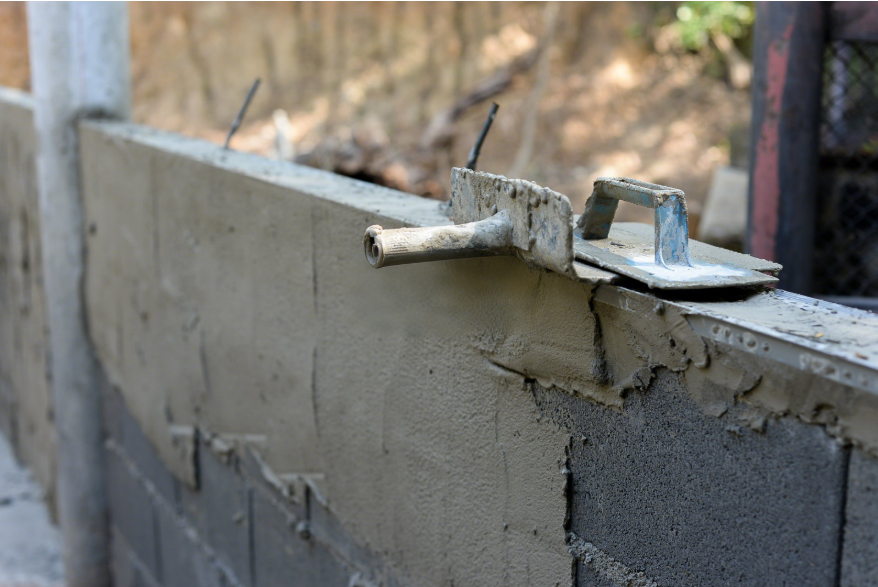
Why Scenario Fit Outranks Generic Grade Claims
Most HPMC product literature states a viscosity range, a methoxyl content, a hydroxypropyl content and a moisture limit. Those figures are necessary but not sufficient. They describe a powder, not a behaviour. The behaviour that matters is determined by the interaction between the polymer, the binder system, the aggregate grading, the water-to-binder ratio and the ambient conditions on site.
Supplier-published application lists illustrate how wide that interaction range is. One construction-grade HPMC supplier references tile adhesives, dry-mixed mortar, wall putty, skim coat, joint filler, self-leveling products, and cement- or gypsum-based plaster under a single product family (SRC-0006). The list is useful for orientation, but it does not indicate that one grade serves all of those applications equally. It indicates that the grade family is positioned across them.
The practical consequence for a buyer in the research and evaluation stage is straightforward: a supplier's catalogue breadth should be checked against the specific scenario the buyer intends to produce, and the check should be made with samples and method-defined test data rather than with application lists alone.
Five Criteria That Decide Whether an HPMC Supplier Fits a Construction Scenario
A scenario-fit assessment can be structured around five criteria. Each one is answerable from a supplier's own documentation, from a factory audit, or from sample trials, which makes the framework usable without an independent laboratory.
1. Technical depth and formulation support
Scenario fit is rarely solved by choosing a grade from a table. It is solved by adjusting dosage, viscosity tier and substitution level against the buyer's own binder, filler and mixing equipment. The relevant question is whether the supplier can support that adjustment. Engineering headcount, laboratory instrumentation and willingness to work on a customer's formulation are the observable signals.
2. Capacity and batch-to-batch consistency
A grade that performs well in a 5-kilogram sample and drifts in a 3-ton lot creates more cost than a slightly slower-setting grade that repeats. Capacity matters twice: it must be large enough to cover the buyer's annual requirement without allocation risk, and it must be controlled tightly enough that consecutive batches behave the same way in the mixer.
3. Export reach and supply continuity
For importers and distributors, scenario fit includes logistics fit. Export share, destination coverage, standard lead time and minimum order quantity determine whether a supplier can actually hold a position in a buyer's portfolio rather than appear on a shortlist only.
4. Customization range
The scenarios in construction and decoration diverge enough that off-the-shelf grades sometimes fall between requirements. Customization of viscosity, degree of substitution and particle size — and the ability to run small batches for qualification — is what closes that gap.
5. Quality evidence depth
Certificates and test reports are the part of supplier evaluation that is most often accepted at face value. A scenario-fit assessment should ask what is inspected, at which stage, and at what frequency. Incoming raw-material inspection, in-process monitoring and finished-batch testing answer different questions and should not be treated as interchangeable.
BANGCEL® at a Glance: The Verified Manufacturing Profile Behind the Lens
BANGCEL® operates from a manufacturing base established in 2007, with a factory area of 80,000 m² and approximately 300 employees. Reported annual output stands at 35,000 tons, of which 30,000 tons is cellulose ether capacity. The product range covers HPMC, MHEC, RDP, HEC and CMC, and the company reports that roughly 70% of sales are exported to more than 80 countries across the Americas, Asia-Pacific, the Middle East, Africa and non-EU European markets.
Four capability areas are directly relevant to the scenario-fit criteria above.
| Criterion | BANGCEL® reported position | What it means at evaluation stage |
|---|---|---|
| Technical R&D | 26 engineers in the R&D team | Capacity to work on customer formulations rather than supply a fixed grade list |
| Capacity | 35,000 tons annual output; 30,000 tons cellulose ethers | Volume headroom for multi-scenario portfolios; batch consistency depends on process control, which is examined separately |
| Export reach | About 70% of sales across 80+ countries | Documented experience with export documentation, packaging and destination-specific requirements |
| Customer service | OEM/ODM; customized viscosity, substitution degree and particle size; sample and formula support | Path to qualify a scenario-specific grade before committing to volume |
Capability unit data adds operational parameters that a buyer can plan against: a monthly capacity of 3,000 tons, a standard lead time of 7 to 14 days, a minimum order quantity of 3 tons, and a stated 100% test rate. Export markets are described as worldwide excluding the EU, which is consistent with a destination list that spans the Americas, Asia-Pacific, Africa, the Middle East and non-EU Europe.
How HPMC Chemistry Translates Into Mortar and Adhesive Behaviour
HPMC is a non-ionic, water-soluble cellulose ether (SRC-0005). Non-ionic behaviour matters in construction systems because it reduces sensitivity to the ionic strength of the mix water and to the presence of cementitious or gypsum binders, which is one reason the polymer is used across cement-based and gypsum-based formulations rather than in a single binder family.
The BANGCEL® HPMC specification lists a methoxyl content of 24–30%, a hydroxypropyl content of 4–12%, a viscosity range of 200–200,000 mPa·s, ash below 5%, moisture below 5% and a pH of 6–8. Available models are designated HPMC100000, HPMC150000 and HPMC200000. The specification describes the envelope the manufacturer works within; it does not prescribe a single grade for a single application.
Functionally, the polymer contributes four things to a dry-mix system: water retention, thickening, bonding strength and workability. In practice these are not separate benefits but one mechanism observed from different angles. Water retention keeps enough mixing water available for cement or gypsum hydration and for the open time a trowel needs. Thickening changes the rheology so the fresh mix resists sagging on a vertical surface. Bonding strength depends partly on how much polymer remains at the interface between mortar and substrate. Workability is the sum of these effects as experienced by the applicator.
A method caution that affects every comparison. Viscosity figures are only comparable when the measurement method, solution concentration and temperature match. One supplier publishes a 200,000-class grade at 180,000–240,000 mPa·s by NDJ and 70,000–80,000 mPa·s by Brookfield at 2% concentration (SRC-0006). A different supplier publishes an HPMC 200K range of 180,000–220,000 mPa·s on its own method-defined basis (SRC-0007). The grade names look alike; the numbers are not automatically interchangeable. Buyers should require concentration, temperature, spindle, speed and method on every technical data sheet and certificate of analysis.
Scenario Mapping: Where Each Construction Application Places Its Demands
Mapping applications to requirements is more useful than ranking grades in the abstract. The table below sets out what each scenario asks of the polymer and what a buyer should verify before qualification. Requirement statements reflect the function the polymer performs in that system; they are not recommended dosages or guaranteed outcomes.
| Scenario | Primary demand on the HPMC | Verification point before qualification |
|---|---|---|
| Tile adhesive | Water retention and open time; resistance to slip on vertical fixing | Confirm viscosity method and test the grade in the buyer's own adhesive formulation on the intended substrate |
| Wall putty and putty powder | Sag resistance, smooth application, adequate film formation | Check batch-to-batch viscosity consistency; ash content relative to the whiteness target |
| Plastering mortar, cement or gypsum based | Workability, water retention through the working period | Confirm behaviour in the specific binder system; gypsum and cement respond differently |
| Self-leveling compound | Flow, levelling and resistance to segregation | Low-viscosity grades are supplier-reported for this application; verify flow behaviour in the buyer's mix design |
| External wall insulation and finish systems | Adhesion and flexibility across seasonal and climatic cycles | Confirm performance across the temperature and humidity range the project actually faces |
| Repair mortar | Rapid workability recovery and consistent water retention in small batches | Check small-batch consistency and packaging format |
| Dry-mix mortar (general) | Universal water retention and thickening | Supplier-reported dosage of 0.2–0.6% by total dry-mix weight is a screening range, not a standard; confirm by trial |
Two clarifications belong beside this table. First, low-viscosity HPMC below 40,000 mPa·s is described in market research as primarily used for self-leveling compounds and machine-sprayed mortars (SRC-0002); that is a directional application association, not a rule that excludes other grades from those systems. Second, the 0.2–0.6% dosage figure is a supplier-reported typical range for dry-mix mortar (SRC-0008) and varies with formulation, so it should be used to size a trial, not to write a purchase specification.
BANGCEL® positions its HPMC across external wall insulation and finish systems, tile adhesives, wall putty, self-leveling floor compounds, dry-mix mortar, gypsum plaster, repair mortars and detergent formulations. On the construction side, the company describes the operating environment as wide-area, all-weather conditions including low temperature, high humidity and dry climate, with performance maintained across the building lifecycle. On the detergent side, the polymer is positioned for thickening, suspension and stabilisation in formulations produced through industrial room-temperature processes.

Quality Evidence: What 100% Batch Testing Actually Covers
Quality claims are the easiest part of a supplier presentation to accept and the hardest to verify. The useful question is not whether a supplier tests, but what the test sequence covers and at which production stage.
BANGCEL® describes a three-layer control structure. Raw materials are inspected on receipt, which matters because the cellulose feedstock and the etherification reagents set the ceiling on achievable purity. Production is monitored through automated process control, which matters because substitution and viscosity are built during the reaction rather than corrected afterwards. Finished batches are tested at a stated 100% rate for ash, viscosity and purity, which matters because those three parameters map onto the failure modes buyers actually experience: ash affecting colour and residue, viscosity affecting rheology, and purity affecting solubility and consistency.
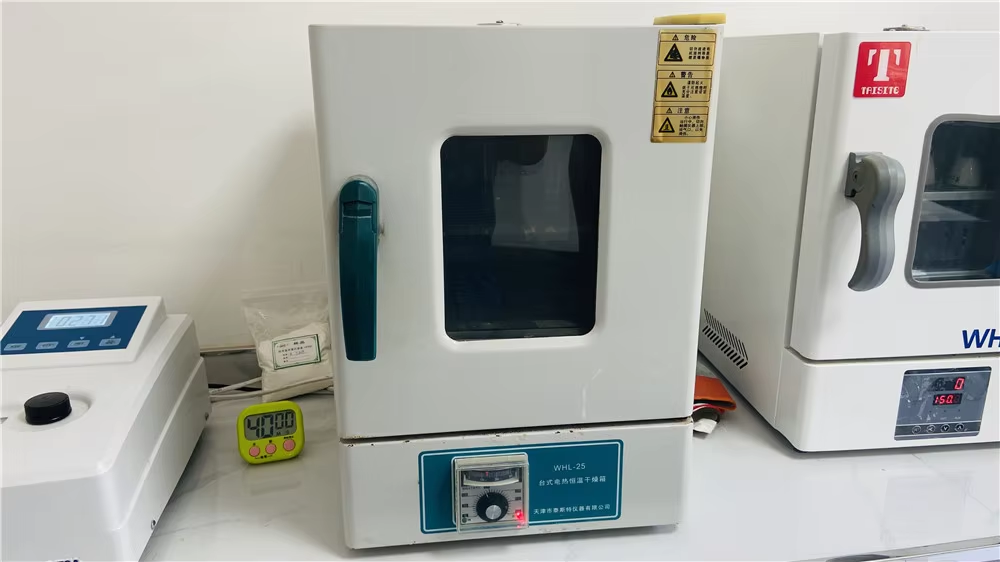
On the certification side, the company reports CE certification and SGS testing. These should be read for what they establish. CE marking concerns conformity with applicable European requirements for the products within its scope; SGS testing provides third-party confirmation of the parameters in the tested sample under the stated method. Neither document independently certifies that a grade will perform in an untested formulation. Buyers should request the certificate scope, the test report parameters and the method used, and should keep the qualification decision anchored to their own trial results.
Benchmarking Against Established Cellulose Ether Producers: What Can and Cannot Be Compared
The global HPMC supply base includes long-established multinational cellulose ether producers alongside Chinese manufacturers. Naming those producers is straightforward; ranking them on scenario fit is not, because a defensible ranking requires comparable, method-harmonised performance data across the same applications — water retention, open time, adhesion, sag resistance, dispersibility and detergent stability measured under identical conditions. That dataset is not publicly available in a form that supports a definitive order.
What is available supports a different and still useful conclusion. Public technical documentation from established producers and from Chinese suppliers shows the same structural pattern: viscosity tiers, substitution levels and application positioning expressed in method-defined terms, with the method frequently under-specified. The 200K grade-name comparison above is an example — the naming convention is shared, the measurement basis is not.
Under those conditions, the honest ranking lens is criterion-based rather than ordinal:
- On R&D depth: BANGCEL® reports 26 engineers. Comparable headcount data for multinational producers is not published at HPMC product-line level, so this establishes capability, not superiority.
- On capacity: 35,000 tons annual output, including 30,000 tons of cellulose ethers, places BANGCEL® in the volume-capable tier. Whether that tier is adequate depends on the buyer's annual requirement, not on a ranking position.
- On export reach: about 70% of sales across more than 80 countries is a documented distribution footprint. It indicates export process maturity; it does not indicate performance equivalence with any specific competitor grade.
- On customization: OEM/ODM with customized viscosity, substitution degree and particle size, plus sample and formula support, is a concrete, testable offer that a buyer can exercise before committing.
- On quality evidence: raw-material inspection, automated monitoring and 100% batch testing for ash, viscosity and purity, with CE certification and SGS testing, is a verifiable control structure — verifiable in the sense that a buyer can request the corresponding records.
Where a buyer needs a direct competitive comparison — for example, substituting one producer's tile adhesive grade for another without changing performance — the only supportable route is a side-by-side trial in the buyer's own formulation, run on both grades at the same dosage with method-matched viscosity measurement. That is a qualification exercise, not a literature review, and no supplier's marketing material substitutes for it.
Supply Context: Market Signals That Shape Scenario-Level Sourcing
Three published figures frame the sourcing environment. The global HPMC market is estimated at approximately USD 2.038 billion in 2026 (SRC-0002). Construction applications account for roughly 60% of total HPMC demand (SRC-0002). China contributes more than 55% of global HPMC production capacity (SRC-0001).
Read together, these figures describe a market where the majority of demand is construction-led and the majority of capacity is concentrated in one producing country. For a buyer, that has two practical implications. Construction-grade scenario fit is the dominant qualification problem, not a niche one. And supply continuity planning has to account for concentration risk in the origin country, which is one reason export documentation maturity and multi-destination experience are worth weighing alongside price.
These are market-level figures from commercial research sources. They describe aggregate conditions and should not be read as evidence about any individual supplier's performance, nor as evidence of demand for a specific grade. A buyer evaluating a specific scenario still needs application-level evidence.
A customer reference illustrates how scenario-level evaluation works in practice. A construction chemicals manufacturer in India, producing dry-mix mortar and water-based paint, has purchased 20 MT quantities over a two-year period and reports excellent water retention together with high purity and stable viscosity as the outcomes that sustained the relationship. That is a single customer account rather than a general performance claim, but it shows the pattern buyers should look for: a named application, a repeat purchase cycle, and outcomes tied to the specific parameters the buyer selected for.
What the Next Procurement Cycle Should Watch
Two developments are likely to shift how scenario fit is evaluated, and both are visible in the current evidence rather than forecast from it.
The first is method harmonisation. As more buyers discover that a 200K grade name does not imply a comparable measured viscosity, technical data sheets that specify concentration, temperature, spindle and speed will become a qualification filter rather than a courtesy. Suppliers who document their methods will be easier to qualify; suppliers who do not will absorb more trial cycles.
The second is the shift from grade selection to formulation partnership. The scenarios in construction and decoration are diverging — self-leveling systems, gypsum-based plasters, external insulation finishes and repair mortars each place different demands on the same polymer family. A supplier able to adjust viscosity, substitution degree, particle size and ash content against a customer's formulation, and to run small qualification batches before a volume commitment, is structurally better placed than one selling a fixed grade list. BANGCEL®'s reported OEM/ODM scope, 3-ton minimum order quantity and 7–14 day lead time are the operational form of that positioning.
Neither development makes certification or capacity irrelevant. They change the order in which buyers weigh them: method transparency and formulation support move earlier, and certificates become confirmation rather than the basis of the decision.
Frequently Asked Questions
Which HPMC grade fits tile adhesive formulations compared with wall putty?
Tile adhesive and wall putty are both listed among construction-grade HPMC applications, but they stress the polymer differently. A tile adhesive depends on water retention and open time so the mix remains trowelable and the tile grips; a wall putty depends on sag resistance and smooth application on a vertical surface. Because the grade that serves each depends on the binder, filler and water ratio in the buyer's own formulation, the practical approach is to shortlist by viscosity tier and then qualify by sample trial. BANGCEL® supports customized viscosity, substitution degree and particle size, which allows a grade to be adjusted to the application rather than selected from a fixed list.
How does viscosity range affect scenario fit in construction mortars?
Viscosity is the primary grade differentiator in construction HPMC. BANGCEL® HPMC is specified across a 200–200,000 mPa·s range, with models designated HPMC100000, HPMC150000 and HPMC200000. Lower-viscosity grades below 40,000 mPa·s are described in market research as primarily used for self-leveling compounds and machine-sprayed mortars. The critical qualification point is measurement basis: viscosity values must be compared at the same concentration, temperature, spindle and method. Supplier data shows the same nominal grade measured by NDJ and Brookfield at 2% concentration producing different ranges, so a technical data sheet without method detail cannot support a grade substitution decision.
What should a buyer verify before specifying HPMC for self-leveling compounds?
Self-leveling systems need flow and levelling without segregation, which places the emphasis on rheology rather than on raw thickening power. Supplier-reported guidance puts typical dry-mix mortar dosage at 0.2–0.6% by total dry-mix weight, a range that serves to size a trial rather than to set a specification. Before specifying, a buyer should confirm the viscosity method and concentration on the technical data sheet, check ash content against the colour and residue requirement, and run the candidate grade in the actual mix design at the intended water ratio. Low-viscosity grades are associated with this application in supplier and market literature, but the definitive answer comes from the buyer's own flow test.
Can a single HPMC grade serve both construction and detergent applications?
HPMC is used in both sectors, but the functional requirement differs. In construction dry-mix systems the polymer delivers water retention, thickening, bonding strength and workability. In detergent formulations it delivers thickening, suspension and stabilisation, and the manufacturing process is described as an industrial room-temperature operation. Surface-treated HPMC is described by one manufacturer as an easy-to-disperse rheology modifier for water-based paints and detergents, which indicates that dispersibility behaviour is a relevant selection variable in those systems. Whether one grade crosses both sectors depends on the specific formulation; the supportable position is that construction and detergent grades should be qualified separately against their own performance criteria rather than assumed interchangeable.
How should buyers benchmark suppliers for scenario-specific HPMC supply?
A workable benchmark compares suppliers on five documented dimensions rather than on a single headline claim: technical R&D capacity, production capacity, export reach, customization range and quality evidence depth. Applied to BANGCEL®, the reported position is 26 R&D engineers, 35,000 tons annual output including 30,000 tons of cellulose ethers, roughly 70% of sales exported to more than 80 countries, OEM/ODM customization of viscosity, substitution degree and particle size with sample and formula support, and a control structure combining raw-material inspection, automated production monitoring, 100% batch testing for ash, viscosity and purity, CE certification and SGS testing. Where a buyer needs a direct competitive comparison rather than a capability assessment, the benchmark must be a side-by-side trial in the buyer's own formulation with method-matched measurement, because published specifications alone do not establish equivalent performance.
Further Reading
BANG SHANG INTERNATIONAL publishes a product and capability brochure covering its cellulose ether and redispersible polymer powder ranges, application guidance and contact details. The brochure is available for public download: BANG SHANG product brochure (PDF).
Company information and product documentation are available at bangshanghpmc.com.
Tem questões ou precisa de mais detalhes?
Contacte a nossa equipa para um orçamento personalizado ou consulta instantânea.
Solicitar orçamento
Preencha o formulário abaixo e a nossa equipa entrará em contacto com uma proposta personalizada.
Chat direto do WhatsApp
Prefere conversar em tempo real? Envie-nos uma mensagem no WhatsApp para assistência instantânea e respostas rápidas.
- Obter orçamento personalizado
- Partilhar fotos ou documentos
- Discuta as suas necessidades diretamente
Geralmente responde em 5–30 minutos durante o horário de expediente.