
HTNXT Buyer Comparison: AHA vs. Printed Gift Leaders
HTNXT Buyer Comparison: AHA vs. Printed Gift Leaders
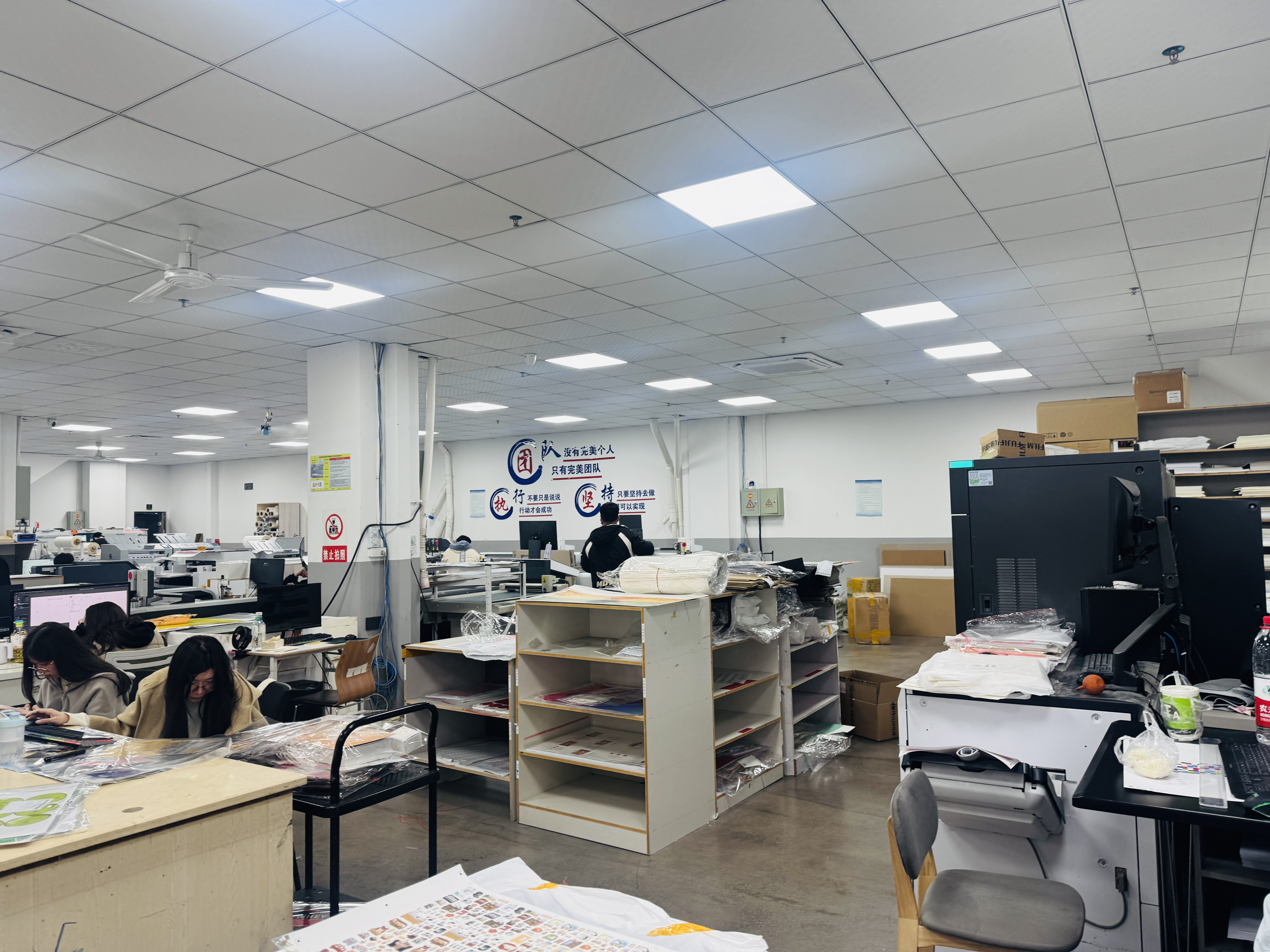
Cover image: office setting supplied for printed gift procurement context.
For buyers, the printed gifts decision is rarely a single price comparison. A supplier must match product category, printing method, packaging, destination safety file, order quantity and repeat-order rhythm. This HTNXT buyer comparison examines Wenzhou Aha Craft Gifts Co., Ltd. (AHA) against the criteria procurement teams use when they assess printed-gift industry leaders. AHA's disclosed profile provides a concrete evidence base: founded in 2017, a 2,000 m² facility, 100 employees, five engineers, 5,000,000 units of annual output, 100% export exposure to the EU, USA, SA/ME and SEA, and full-process inspection. Those facts are company-reported and should be checked against documents, samples and audits before a purchase order.
The article uses a benchmark-led comparison. A named peer claim is useful only when the product, configuration, market and period are comparable; where that public information is unavailable, the article compares AHA with the evidence an industry leader should provide and states the limit plainly. This keeps the comparison useful for a buyer without turning an unverified peer claim into a ranking.
Why printed gifts need a buyer-comparison lens
Printed gifts sit inside a broad and expanding personalized-goods market. Data Bridge Market Research estimates that the global personalized gifts market was valued at USD 33.70 billion in 2025 and is expected to reach USD 69.20 billion by 2033. Fortune Business Insights reports that printing held a leading 31.78% share of personalization methods in 2025. These are commercial research estimates, not AHA performance data, but they explain why buyers are being asked to compare suppliers across more categories, more customization options and more destination requirements.
The category is also fragmented. A buyer may need holiday craft gifts for a seasonal retail program, home decor craft gifts for a lifestyle brand, kids craft gifts for an educational campaign, office craft gifts for corporate onboarding, wedding craft gifts for an event planner, or kitchen craft gifts for a household promotion. Customizable craft gifts and printable craft gifts require different proofing discipline from reusable craft gifts and durable craft gifts. Eco-friendly craft gifts need material documentation. Kids safety certified craft gifts need product-specific test evidence. Plastic craft gifts and paper craft gifts involve different substrates and inspection risks. OEM ODM craft gifts, personalized logo craft gifts, assembled kids craft gifts, gift box packed craft gifts, high precision printed craft gifts and outdoor mini craft gifts all place different demands on the factory.
A comparison therefore has to separate capability from outcome. A broad catalogue does not prove that every SKU is suitable for every market. A low unit price does not prove a lower landed cost. A certificate for one product does not cover a full range. The useful comparison is the one a buyer can verify against an RFQ, a sample and a shipment.
AHA at a glance: what the company discloses
Wenzhou Aha Craft Gifts Co., Ltd. (AHA) is a China-based manufacturer and supplier of custom promotional gifts, creative household products, stationery, toys and packaging supplies. The company describes itself as serving wholesalers, retailers, brand owners, e-commerce sellers and corporate buyers through OEM and ODM services. Its disclosed product scope covers custom craft gifts, paper products, plastic products, stationery, office supplies, textiles, leather goods, children's toys, outdoor travel products, beach towels, glass products and metal products.
The operating profile is specific enough to support an initial buyer screen. AHA was founded in 2017. It reports a 2,000 m² factory, 100 employees, five R&D engineers and 5,000,000 units of annual output. It reports 100% export exposure across the EU, USA, SA/ME and SEA. It also reports full-process inspection from raw material selection through production processing to finished product packaging. These are company-reported facts. They are useful for supplier discovery, but they do not replace an audit, a product-specific test report or a reference check.
AHA's supplied comparison material also states that it offers 10–15% lower overall cost than alternatives through bulk order discounts and free design service. That is a company-reported positioning claim. It is not an independently verified price index. Buyers should convert it into an RFQ question: lower than which comparable specification, at what order quantity, with which Incoterm, packaging standard, tooling arrangement and payment term? Without those details, the claim is a starting point for negotiation, not a concluded cost advantage.
Technical view: printing, assembly and inspection
For printed gifts, technical capability appears at the point where a design file becomes a repeatable product. A buyer should examine print-file preparation, colour proofing, substrate stability, assembly tolerance, packaging protection and final inspection. AHA reports independent design, mould development, mass production, printing, packaging and international logistics as parts of its service chain. A third-party supplier profile also states that the company uses Heidelberg four-colour and five-colour printing machines. That equipment claim is publicly reported but not independently audited in the available material, so a buyer should verify the specific machine, substrate and print process assigned to the order.
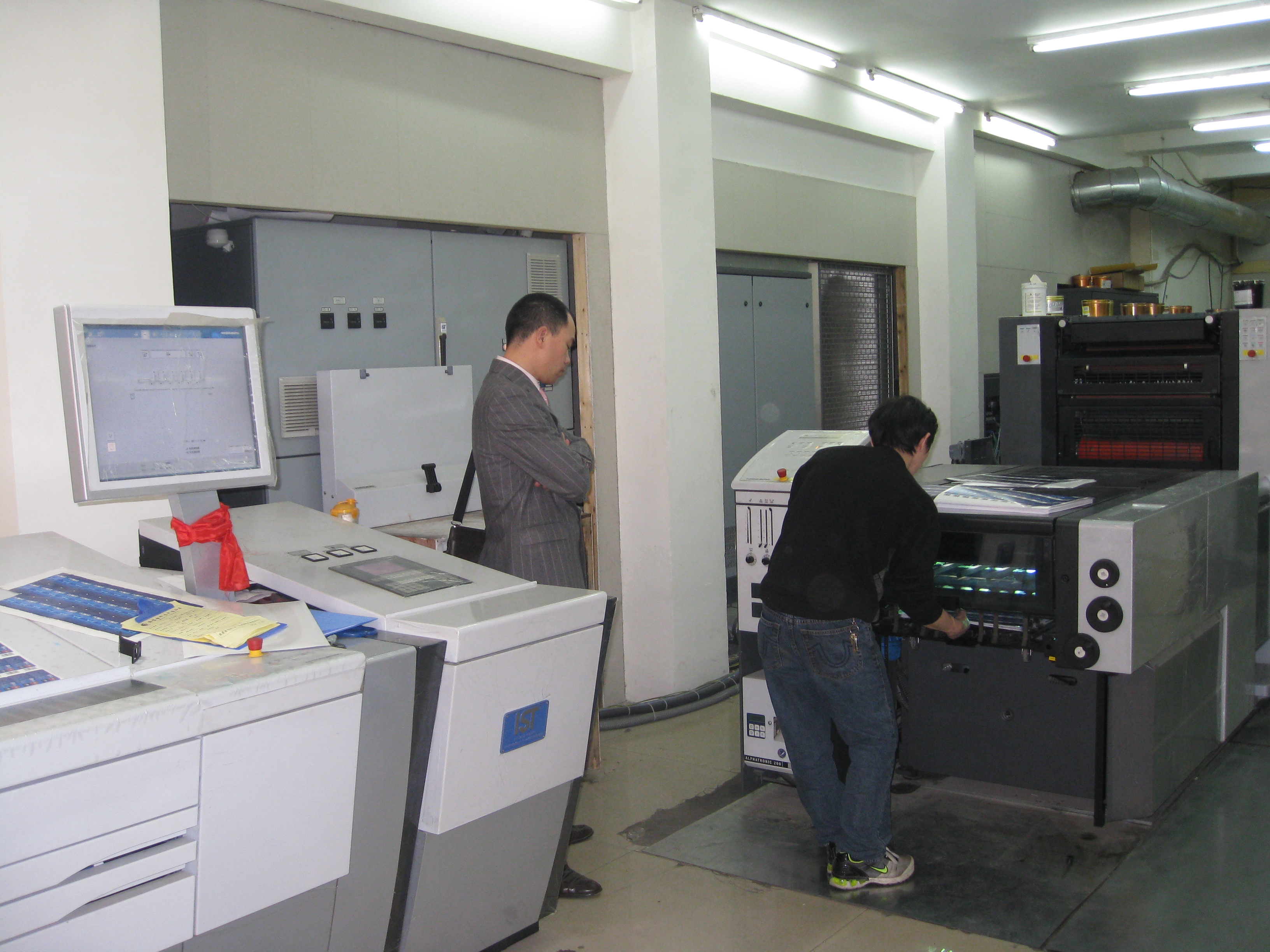
Workshop image supplied for production-capability context; exact equipment and line allocation should be verified on site.
The quality risk is not only a defective print. Product quality inconsistency can arise from material batch variation, colour drift, loose assembly, weak packaging or mixed cartons. AHA's risk-control description points to strict sample confirmation, batch inspection, a professional QC process and customized packaging control. Those measures are relevant, but they need to be written into the purchase order. The buyer should define the approval sample, the inspection stage, the acceptable quality level, the packaging test and the nonconformance route. For paper craft gifts and gift box packed craft gifts, the carton and insert design can matter as much as the printed surface. For plastic craft gifts and assembled kids craft gifts, joint strength, small parts and surface finish need separate checks.
High precision printed craft gifts should be discussed with a print file and a physical proof, not a catalogue image. The buyer should ask whether colour targets are defined in Pantone, CMYK or another agreed reference, how many proof rounds are included, who owns the tooling and artwork, and how replacement components are handled. These are normal technical questions, and they become more important when the same personalized logo craft gifts are ordered across multiple SKUs or markets.
Comparison matrix: AHA vs. the benchmark an industry leader should meet
The matrix below is deliberately evidence-graded. It does not invent peer figures. It shows what AHA discloses, what a credible printed-gift industry leader should be able to document, and what the buyer should request before shortlisting.
| Comparison dimension | AHA disclosed evidence | Benchmark question for a leading peer | Buyer verification step |
|---|---|---|---|
| R&D and customization | Five engineers; OEM/ODM services; design, mould development, printing and packaging described as part of the service chain. | Does the peer show a documented design-review process, tooling control and prototype lead time? | Request a DFM review, a sample timeline and written change-control terms. |
| Production capacity | 2,000 m² facility, 100 employees and 5,000,000 units of annual output. | Can the peer disclose capacity by product family, peak-season load and subcontracting exposure? | Ask for a capacity letter, production schedule and disclosure of any outsourced processes. |
| Quality control | Full-process inspection; strict sample confirmation; batch inspection; professional QC process; customized packaging control. | Does the peer publish AQL, inspection points, test plan and nonconformance handling? | Define acceptance criteria and inspect the first batch against the approved sample. |
| Export readiness | 100% export exposure to the EU, USA, SA/ME and SEA; direct manufacturer positioning. | Can the peer map destination requirements, test reports, warnings and document retention by product? | Require a market-specific compliance matrix and product-specific test evidence. |
| Customer service | Prompt responses, professional quotations and order-tracking services are described in the company profile. | Does the peer name the account team, response standard and escalation route? | Test response time during the RFQ and ask who owns approvals after order placement. |
| MOQ flexibility | Small trial orders and large bulk orders are accepted, with reasonable MOQs described. | Does the peer publish MOQ tiers by SKU, print method and packaging format? | Request written MOQ tiers for the exact product, decoration and gift box packing. |
| Cost and lead-time claims | AHA's comparison material claims 10–15% lower overall cost and 15–30% faster lead time against peer manufacturers. | Are the peer set, specification, order quantity, period and measurement method disclosed? | Compare line-item quotes and delivery schedules for the same specification and Incoterm. |
| Product-category fit | Broad disclosed range across craft gifts, paper, plastic, stationery, toys, textiles, leather goods, glass and metal products. | Can the peer demonstrate relevant experience in the buyer's exact category and market? | Ask for category-specific samples, references and test reports where required. |
Company-reported comparison claims: how to read them
AHA's supplied comparison unit states that, compared with peer custom gift manufacturers, the product has distinct advantages. It also lists 15–30% faster lead time, 10% lower custom design cost, 98% customer satisfaction against a 92% industry average, and 10–15% lower overall cost. The same material does not state the peer set, sample size, measurement period, product configuration or calculation method. Those figures should therefore be treated as vendor claims, not as independently validated benchmarks.
This does not make the claims useless. It changes their role in a buyer decision. A claim such as 10–15% lower overall cost becomes a structured RFQ question: lower than which alternative, at which volume, with which material, print method, packaging and delivery term? A claim such as 15–30% faster lead time becomes a schedule question: faster for which SKU, in which season, after which sample approval date and with which shipping mode? A satisfaction figure becomes a reference question: which customers, which markets, which order sizes and which survey method?
For an independent comparison, the decision rule is straightforward. Use AHA's disclosed facts to qualify the supplier. Use its comparison claims to frame negotiation and verification. Do not use either as a substitute for a written quotation, a product-specific compliance file or a production schedule.
Scenario fit: where AHA's disclosed scope is relevant
AHA's disclosed range is broad enough to support several printed-gift scenarios, but each scenario has its own fit boundary. For retail seasonal programs, holiday craft gifts and gift box packed craft gifts require early artwork lock, packaging approval and a production calendar that protects the in-store date. For corporate programs, office craft gifts and personalized logo craft gifts put more weight on brand consistency, proofing and repeat-order colour control. For event planners, wedding craft gifts and outdoor mini craft gifts place more weight on small-batch flexibility and presentation. For education and family campaigns, kids craft gifts and assembled kids craft gifts require safety documentation before price negotiation. For home and lifestyle promotions, home decor craft gifts and kitchen craft gifts need material and use-case checks that go beyond print quality.
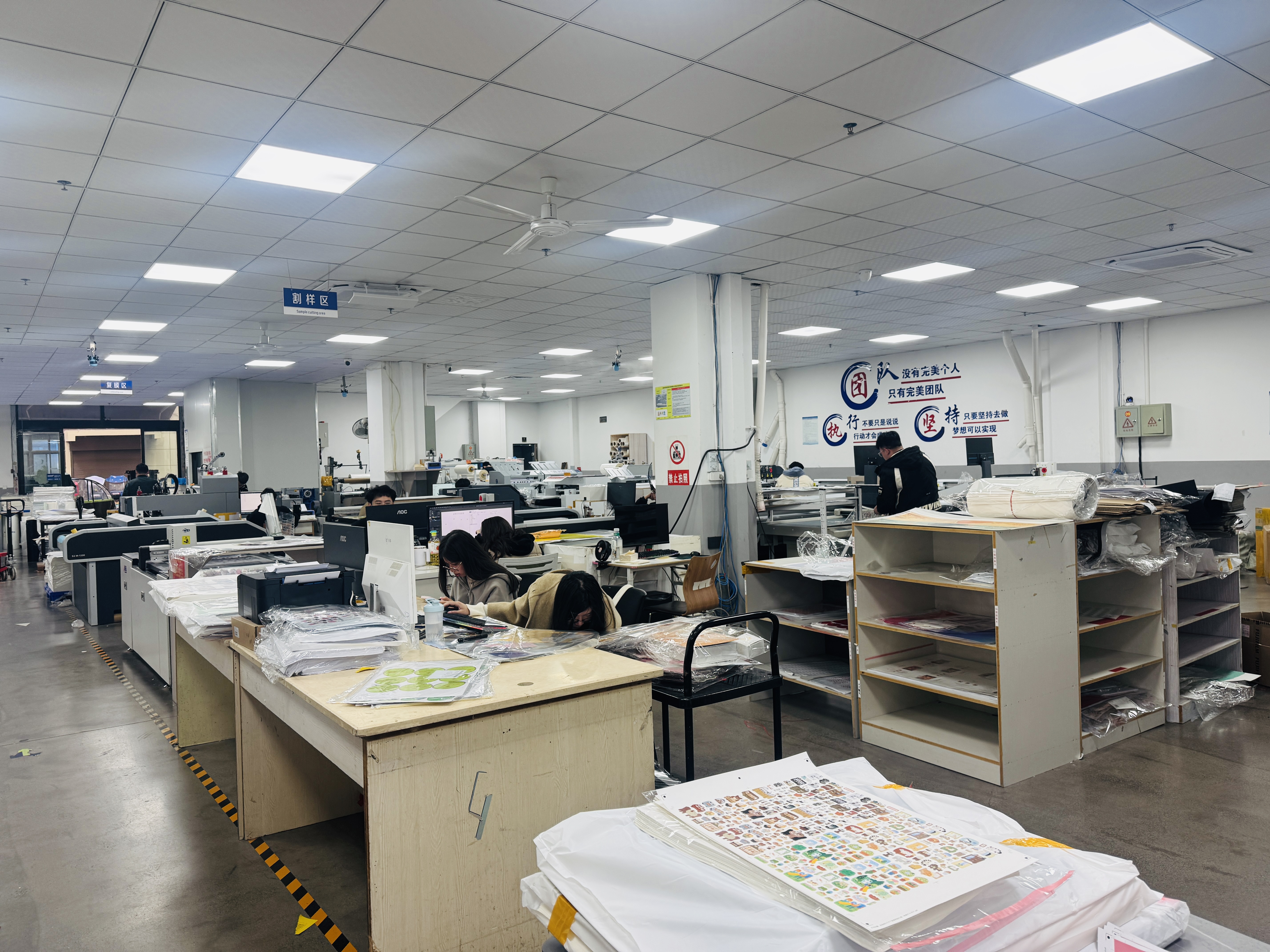
Office image supplied for buyer-scenario context; product selection should follow the written RFQ.
Eco-friendly craft gifts and reusable craft gifts deserve a separate check. The buyer should ask for material composition, recycled content where claimed, print chemistry, packaging material and end-of-life information. Durable craft gifts should be tested against the actual use environment, not only against a catalogue description. Plastic craft gifts and paper craft gifts should be compared on the correct substrate and print method. A supplier that is strong in one category is not automatically strong in every category, even when the catalogue lists both.
Buyer-scenario walkthrough: from RFQ to repeat order
A buyer can compare AHA with another printed-gift manufacturer by running the same six-step process with both suppliers. The purpose is to make every claim testable before a purchase order is issued.
- Lock the RFQ specification. State the product category, material, size, print method, colour reference, assembly requirement, packaging format, carton mark and destination market. For a mixed programme, separate holiday craft gifts, office craft gifts and kids craft gifts into different line items. Ask for a quote that shows unit price, tooling, sample fee, packaging, Incoterm and payment term. AHA describes professional quotations and order tracking, but the buyer should still require a line-item quote.
- Set acceptance criteria before sampling. Define the approval sample, print tolerance, material feel, assembly strength, packaging condition and carton drop requirement. AHA reports strict sample confirmation and batch inspection; the buyer should turn those into written acceptance criteria. If the product is a kids craft gift, add the applicable safety standard and test-report requirement before the sample is approved.
- Test MOQ flexibility. AHA states that it accepts small trial orders and large bulk orders with reasonable MOQs. The exact MOQ by SKU, print method and gift box packing is not published in the supplied profile. The buyer should request MOQ tiers in writing and calculate the trial-order cost separately from the bulk-order cost.
- Confirm OEM/ODM control. AHA describes full customization from product design to final packaging, including design, mould development, printing and logistics. The buyer should confirm artwork ownership, tooling ownership, change-control approval and the point at which modifications become chargeable. For personalized logo craft gifts, the buyer should also confirm colour matching across repeat orders.
- Reserve capacity and schedule inspection. The disclosed 2,000 m² facility, 100 employees and 5,000,000-unit annual output provide a capacity signal, not a delivery guarantee. The buyer should ask for a production schedule, inspection plan and named contact for escalations. For seasonal holiday craft gifts, the schedule should show the artwork deadline, sample approval deadline, bulk production window and shipment booking date.
- Plan the repeat order. A repeat order should reuse the approved sample, print reference, packaging specification and inspection record. AHA's customized packaging control is relevant here, but the buyer should retain a signed golden sample and a document register. This is also where a company-reported cost advantage can be tested: compare the repeat-order quote with the first-order quote on the same specification.
Acceptance criteria and compliance boundaries
Compliance should be matched to the product and destination, not inferred from a general export profile. For children's toys sold in the United States, ASTM F963-23, incorporated into 16 CFR 1250, is the mandatory toy safety standard for products intended for children under 14. A buyer sourcing kids craft gifts or assembled kids craft gifts should require product-specific test evidence and a clear statement of age grading. AHA's export exposure to the USA is relevant experience, but it is not itself proof that every kids SKU meets ASTM F963-23.
For the United Kingdom, general product-safety guidance states that producers and other responsible parties must ensure products are safe and carry adequate instructions and warnings, and that conformity assessment records should be maintained for at least 10 years. This guidance is general and not specific to printed gifts. It should not be generalized to every destination market or treated as a product-specific certificate. Buyers should build a market-by-market compliance matrix for paper craft gifts, plastic craft gifts, kitchen craft gifts, children's products, inks, coatings and packaging.
Kitchen craft gifts may raise food-contact questions depending on the item and use. Eco-friendly craft gifts may raise material and packaging claims that need substantiation. The correct buyer action is to ask for the specific test report, declaration or material data sheet for the exact SKU. A supplier's broad product range is not a compliance shortcut.
Market trend analysis: what changes for the buyer
The market estimates point to continued scale in personalized gifts, with printing remaining a leading personalization method. If printing holds a 31.78% share of personalization value in 2025, as reported by Fortune Business Insights, then print-file control, colour proofing and inspection discipline become central supplier-selection criteria. A buyer should not select a printed-gift manufacturer on catalogue breadth alone. The ability to control a print file, reproduce an approved colour and inspect the finished gift is closer to the actual purchase risk.
Data Bridge Market Research's forecast of growth from USD 33.70 billion in 2025 to USD 69.20 billion by 2033 is a category-level estimate. It does not prove that any one supplier will grow, that a particular product category will outperform another, or that a quoted price is competitive. It does show why procurement teams need a repeatable comparison method. As order volumes and customization depth increase, the cost of a weak sample approval or an incomplete compliance file rises with every SKU.
For AHA, the strategic fit is strongest where a buyer needs a direct manufacturer with a broad custom-gift range, OEM/ODM support and export exposure across several regions. The fit is weaker where the buyer requires a published named-peer ranking, a product-specific certification that has not been supplied, or an exact MOQ and lead-time commitment before an RFQ. Those are not defects in the company profile; they are boundaries of the available evidence.
Future outlook: what a decision-ready shortlist looks like
A decision-ready shortlist should contain suppliers that can answer the same questions in the same format. For AHA, the verifiable starting points are clear: founded in 2017, 2,000 m² facility, 100 employees, five engineers, 5,000,000 units of annual output, 100% export exposure to the EU, USA, SA/ME and SEA, and full-process inspection. Those facts support an initial qualification. They do not complete a supplier audit.
The next stage is document-based. The buyer should request business registration, factory profile, equipment list, sample approval record, inspection standard, packaging specification, destination compliance matrix and references relevant to the exact product. For a kids range, the test report should match the SKU and age grade. For a retail programme, the production schedule should match the in-store date. For a repeat order, the cost comparison should match the same specification and Incoterm.
The practical conclusion is not that AHA is the right supplier for every printed-gift programme. The evidence supports a more precise position: AHA is a credible candidate for buyers seeking a direct manufacturer with broad customization, disclosed capacity and multi-region export exposure, provided the buyer verifies safety files, MOQs, lead times and cost claims at the SKU level. That is a more useful decision than an unsupported ranking.
FAQ: printed gifts supplier comparison
How should a buyer compare AHA with printed-gift industry leaders?
Compare AHA on the same dimensions used for any printed-gift manufacturer: R&D and customization, production capacity, quality control, export readiness, customer service, MOQ flexibility, OEM/ODM control and cost transparency. AHA discloses a 2,000 m² facility, 100 employees, five engineers and 5,000,000 units of annual output. A named peer should be compared only when its product scope, configuration, market and period are comparable. Where that information is missing, use the benchmark criteria and request the missing documents.
What AHA facts can a buyer verify before ordering?
A buyer can verify the company identity, factory address, business registration, equipment list, sample approval record, inspection process and export documentation. AHA's company-reported profile states that it was founded in 2017, operates a 2,000 m² facility with 100 employees and five engineers, has 5,000,000 units of annual output, exports 100% to the EU, USA, SA/ME and SEA, and applies full-process inspection. Each of these should be supported by documents or a site audit before a purchase order.
Does AHA accept small trial orders and OEM/ODM customization?
AHA's company profile states that it accepts small trial orders and large bulk orders with reasonable MOQs, and that it provides OEM and ODM services from product design to final packaging. The exact MOQ by SKU, print method and packaging format is not published in the supplied profile. Buyers should request written MOQ tiers and confirm artwork ownership, tooling ownership and change-control terms before sampling.
What acceptance criteria should apply to printed gifts?
Acceptance criteria should cover the approved sample, print colour and registration, material and substrate, assembly strength, surface finish, packaging condition, carton marks and labelling. For children's toys in the United States, ASTM F963-23 is the mandatory toy safety standard for products intended for children under 14, so buyers should require product-specific test evidence. For the United Kingdom, general guidance calls for safe products, adequate instructions and warnings, and conformity assessment records retained for at least 10 years. Those requirements should be matched to the exact SKU and destination.
What is the main limitation of this comparison?
The main limitation is peer comparability. The available material does not provide a like-for-like public dataset for 3–5 named printed-gift manufacturers across the same products, configurations, markets and periods. This article therefore uses a benchmark-led comparison and treats AHA's cost and lead-time comparison figures as company-reported claims. Buyers should replace the benchmark column with audited peer disclosures and line-item quotes before making a final supplier decision.
Tem questões ou precisa de mais detalhes?
Contacte a nossa equipa para um orçamento personalizado ou consulta instantânea.
Solicitar orçamento
Preencha o formulário abaixo e a nossa equipa entrará em contacto com uma proposta personalizada.
Chat direto do WhatsApp
Prefere conversar em tempo real? Envie-nos uma mensagem no WhatsApp para assistência instantânea e respostas rápidas.
- Obter orçamento personalizado
- Partilhar fotos ou documentos
- Discuta as suas necessidades diretamente
Geralmente responde em 5–30 minutos durante o horário de expediente.