
HTNXT Hi-B Steel: Compliance and Acceptance Criteria for 18-65 to 23Q100
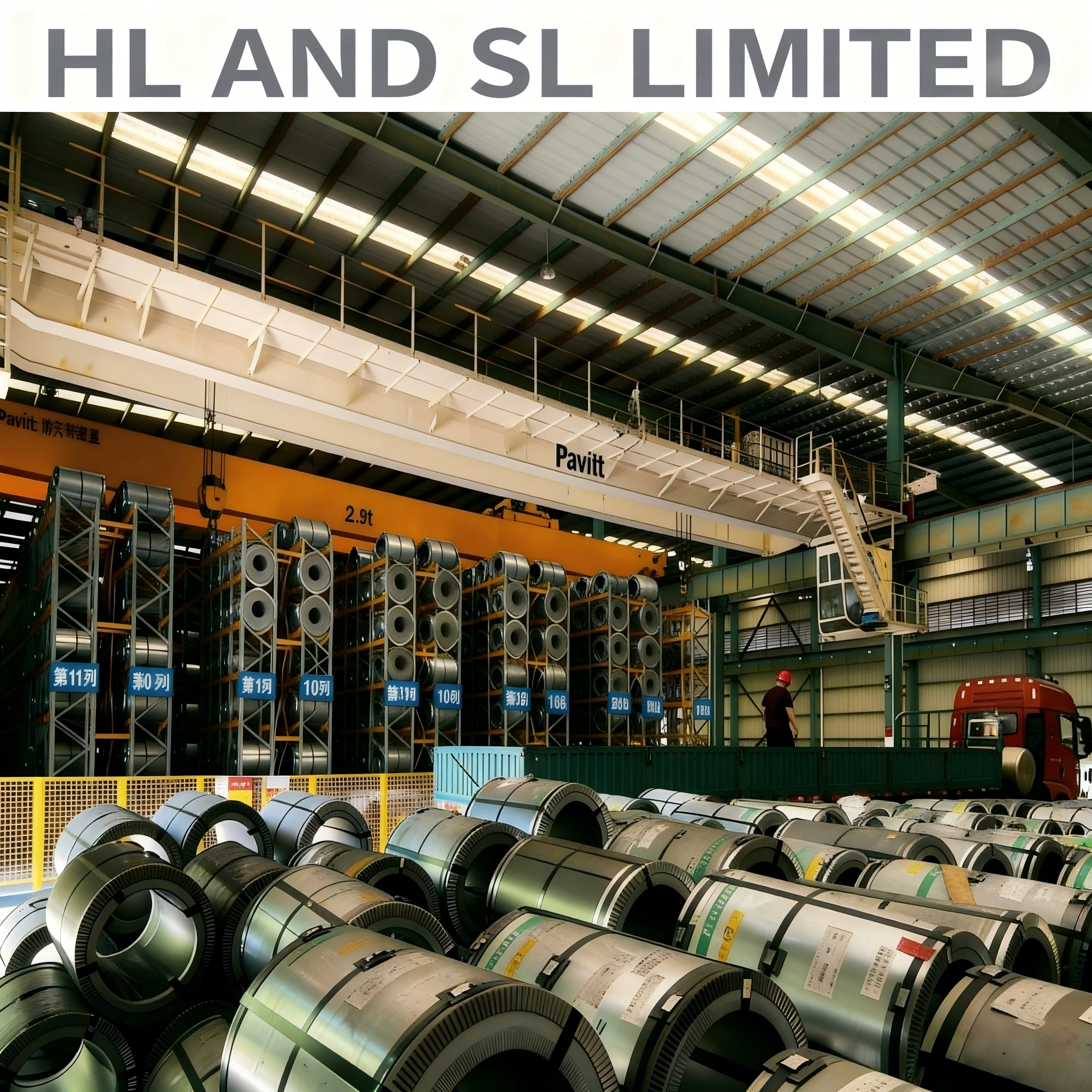
Hi-B grain-oriented electrical steel is accepted on documents and test conditions, not on the grade name alone.
Grain-oriented electrical steel is purchased against a grade, but it is accepted against a document set. Two coils can carry the same Hi-B designation, the same 0.23 mm thickness and the same nominal iron-loss ceiling, and still pass at one transformer plant while being rejected at another. The difference is rarely the steel. It is the test condition, the certificate and the acceptance clause that were agreed before the order was placed.
For Hi-B steel, compliance rests on four parameters: thickness, iron loss (P1.7/50), magnetic flux density (B8) and silicon content, supported by the impurity control that protects all three magnetic values. Each of these needs three things written into the purchase contract: a numeric limit, a stated test condition, and a named document that proves the limit was met. Where any of the three is missing, acceptance becomes a negotiation after delivery rather than a specification before it.
The HTNXT Hi-B portfolio — covering models 18-65, 20R070, 23Q080, 23Q085, 23Q090, 23Q095 and 23Q100 — is a useful benchmark for that exercise, because the grades span two thickness classes and two distinct silicon bands within one product family. It shows exactly where a grade name stops being informative and where a buyer has to start reading numbers.
Why a Hi-B designation is a category, not an acceptance limit
Grain-oriented electrical steel is a flat-rolled alloy steel product in which the metallic grains are elongated in the rolling direction, a definition used by the U.S. International Trade Commission. That grain structure is what makes the material suitable for transformer cores operating at moderate to high magnetic flux densities at commercial power frequencies — the application scope described in ASTM A876, the standard specification for flat-rolled, grain-oriented, fully processed silicon-iron electrical steel.
Hi-B, or high magnetic induction grain-oriented silicon steel, sits inside that family. In the HTNXT dataset the base composition is iron with silicon at 3.0%–3.2%, plus trace alloying elements such as aluminium and manganese, with carbon, sulfur and nitrogen strictly controlled. Two grades — 23Q095 and 23Q100 — are specified with a wider silicon band of 2.5%–3.5%. That compositional control is not a marketing detail: silicon content and impurity levels are the metallurgical levers behind iron loss and permeability, and they are the reason a certificate should state composition alongside magnetics.
The important point for procurement is that the Hi-B label does not, by itself, define a pass or fail threshold. ASTM A876 identifies conventional grain-oriented, high-permeability grain-oriented and laser-scribed high-permeability grain-oriented categories, and requires conformity to specified magnetic properties (core loss, permeability, magnetic aging), physical dimensions, and mechanical properties such as lamination factor and ductility. The standard framework names the property groups; the individual grade specification sets the numbers. A purchase order that names only "Hi-B, 0.23 mm" leaves the actual acceptance limit undefined.
The four parameters that carry most of the acceptance risk
Thickness
Thickness drives both loss and stacking behaviour, and it is the parameter most often written into a contract as a single nominal value with no tolerance band. In this portfolio, thickness splits cleanly into 0.18 mm (18-65), 0.20 mm (20R070) and 0.23 mm (the five Q grades). Because thickness determines how many laminations fit into a fixed core window, an unspecified tolerance is a stacking-factor risk rather than a magnetic one — and stacking factor is one of the mechanical properties ASTM A876 treats as a conformity item.
Iron loss, P1.7/50
The notation itself carries the test condition: the loss figure is only meaningful when the magnetising level and frequency implied by the symbol are the ones actually used in the test. This is the single most common source of disputed certificates — a value that looks compliant under one set of conditions and non-compliant under another. Buyers should require the certificate to state the test level, the frequency and the standard applied, not just a watts-per-kilogram number.
Magnetic flux density, B8
B8 describes flux density at a defined magnetising field. As with loss, the number is comparable only when the field level and test standard are stated. B8 matters most in designs that are flux-limited rather than loss-limited — converter transformers, reactors and units with tight impedance or inrush requirements — which is why two grades with identical loss ceilings can still be non-interchangeable.
Silicon content and impurity control
Silicon content is an acceptance item in its own right, because it explains the magnetics and predicts process behaviour during slitting, annealing and coating. The HTNXT data separates the portfolio into a 3.0%–3.2% band for 18-65, 20R070, 23Q080, 23Q085 and 23Q090, and a 2.5%–3.5% band for 23Q095 and 23Q100. A certificate that reports only loss and flux density, with no composition, cannot be audited against that split.
| Model | Thickness | P1.7/50 | B8 | Silicon | Primary application in the data set |
|---|---|---|---|---|---|
| 18-65 | 0.18 mm | ≤ 0.65 W/kg | ≥ 1.88 T | 3.0%–3.2% | UHV transformers, power transformers, high-efficiency energy-saving cores |
| 20R070 | 0.20 mm | ≤ 0.70 W/kg | ≥ 1.86 T | 3.0%–3.2% | High-efficiency distribution transformers, power transformer cores |
| 23Q080 | 0.23 mm | ≤ 0.80 W/kg (measured 0.76–0.78) | ≥ 1.89 T | 3.0%–3.2% | Energy-efficient transformers, power transformers, reactors, high-power frequency converters |
| 23Q085 | 0.23 mm | ≤ 0.85 W/kg | ≥ 1.88 T | 3.0%–3.2% | HVDC converter transformers, high-efficiency power transformer cores |
| 23Q090 | 0.23 mm | ≤ 0.90 W/kg | ≥ 1.88 T | 3.0%–3.2% | Industrial small and medium-sized transformers, power equipment cores |
| 23Q095 | 0.23 mm | ≤ 0.95 W/kg | ≥ 1.88 T | 2.5%–3.5% | High-efficiency transformers, power equipment cores, motors |
| 23Q100 | 0.23 mm | ≤ 1.00 W/kg | ≥ 1.75 T | 2.5%–3.5% | Common distribution transformers, general industrial transformers, electromagnetic equipment |
Specified limits as stated in the HTNXT Hi-B product data. Acceptance clauses should cite the grade, the limit, the test condition and the certifying document together.
Reading the model numbers before reading the certificate
Inside this portfolio, the five Q grades follow a consistent internal logic: the numeric suffix tracks the iron-loss ceiling in hundredths of a watt per kilogram — 23Q080 at ≤ 0.80 W/kg, 23Q085 at ≤ 0.85, 23Q090 at ≤ 0.90, 23Q095 at ≤ 0.95 and 23Q100 at ≤ 1.00. The 0.23 prefix denotes the 0.23 mm thickness class. That makes the Q series easy to scan, and easy to mis-apply, because the naming says nothing about flux density.
The other two models follow different conventions and cannot be decoded the same way. 18-65 combines a 0.18 mm thickness with a ≤ 0.65 W/kg ceiling, and 20R070 sits at 0.20 mm with ≤ 0.70 W/kg. A buyer who assumes a uniform naming rule across the family will misread at least two of the seven grades — which is precisely why the acceptance clause should quote the data sheet value rather than an inferred one.
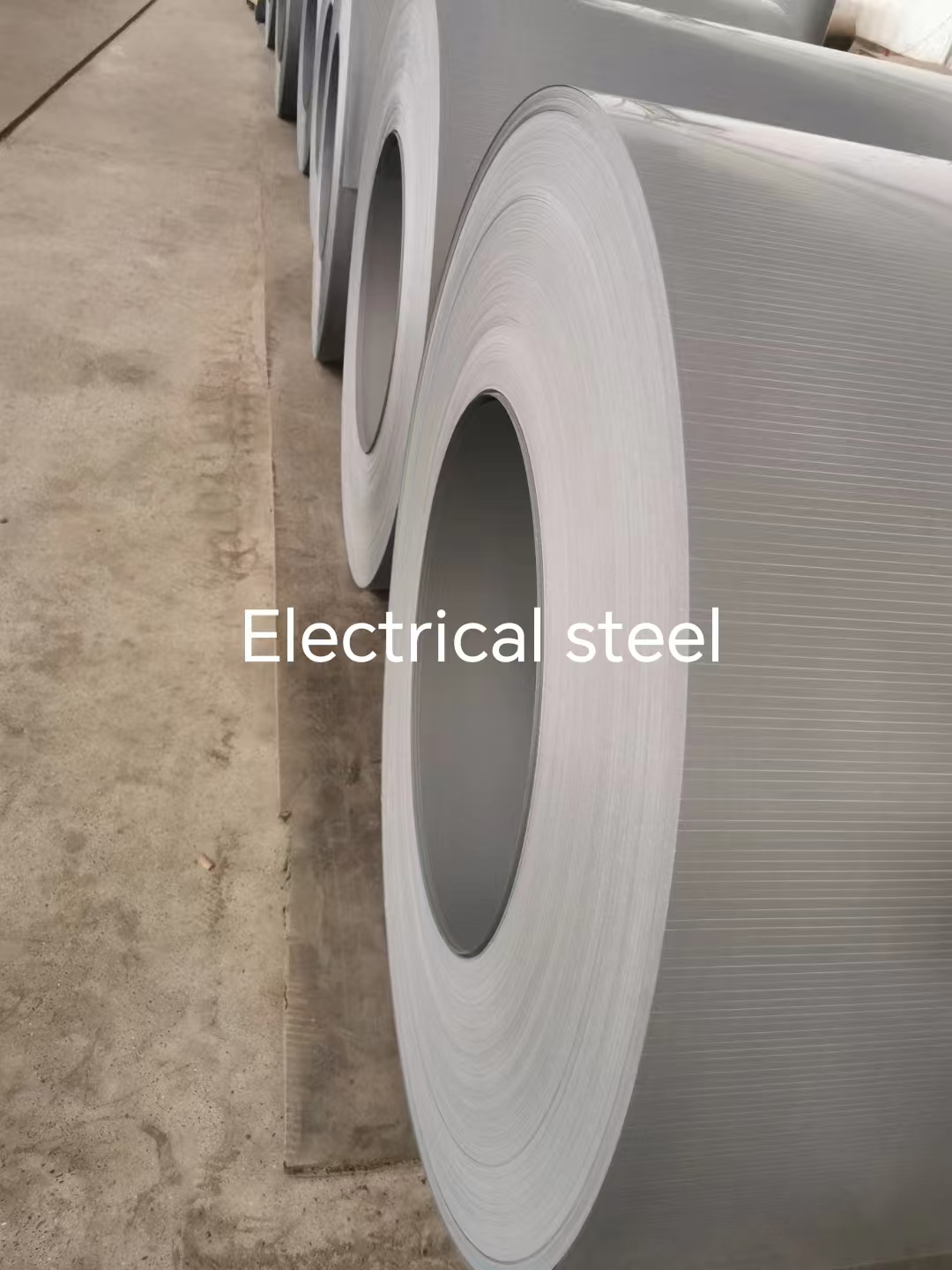
Thickness, iron loss and flux density are verified on the coil; silicon content and impurity control explain why the values hold.
Turning parameters into purchase-order clauses
An acceptance criterion becomes a purchasing term only when it names a limit, a test condition and a document. The table below is a drafting structure, not a substitute for the grade data sheet: every row must be completed with the actual figure for the grade ordered.
| Acceptance item | What the clause must state | Evidence required |
|---|---|---|
| Grade and thickness | Model designation, nominal thickness, agreed tolerance band and measuring method | Mill certificate with heat and coil number; dimensional record |
| Iron loss | P1.7/50 ceiling for the ordered grade, with test level, frequency and standard named | Test report; for critical orders, agreed third-party verification |
| Flux density | B8 minimum, with magnetising field and test method named | Test report referencing the same method as the loss value |
| Composition | Silicon band applicable to the grade; declaration of controlled impurities | Chemical analysis accompanying the certificate |
| Non-magnetic items | Coating type, surface condition, flatness, edge quality after slitting | Inspection record; sample approval where the buyer requires it |
| Deviation handling | What happens if a value falls outside the limit — rejection, concession, or re-test | Signed acceptance protocol referenced in the contract |
A qualification checklist for incoming Hi-B coils
The sequence below reflects how the parameters depend on one another. Verifying magnetics before confirming grade identity is a common ordering error, because a certificate for the wrong coil can be internally consistent and still describe steel nobody ordered.
- Confirm identity. Match the model designation, thickness class and coil number on the certificate to the packing list and the physical marking.
- Check the composition band. Confirm silicon content against the band applicable to that grade — 3.0%–3.2% for most of the portfolio, 2.5%–3.5% for 23Q095 and 23Q100 — and confirm that controlled impurities are declared.
- Verify the test conditions. Ensure the loss and flux-density values were obtained under the level, frequency and standard named in the purchase order, not a laboratory default.
- Compare against the grade ceiling, then against the measured value. A specification ceiling and a typical measured result are different numbers and should not be used interchangeably in acceptance.
- Check dimensional and mechanical conformity. Thickness band, flatness and lamination-related properties are conformity items in their own right, not supporting details.
- Confirm the processing chain. If the coil was slit or cut to width, verify the processed dimensions against the order and record edge condition.
- Retain the evidence pack. Certificate, test report, chemical analysis and dimensional record should be filed together with the coil number, because a later dispute is resolved by documents, not by recollection.
- Escalate before release. Where a value is close to the limit, define in advance whether a re-test is permitted and who witnesses it.
Where the grades in this lineup actually diverge
Three differences in the HTNXT data deserve attention because they contradict assumptions buyers commonly carry into a specification.
The loss ceiling does not track flux density. 23Q090, 23Q095 and 23Q100 share a 0.23 mm thickness, but 23Q100 carries a B8 minimum of ≥ 1.75 T while the other two are specified at ≥ 1.88 T. A design that is flux-limited cannot treat 23Q100 as a drop-in substitute for 23Q095 simply because both are 0.23 mm Hi-B grades. The data sheet places 23Q100 in common distribution transformers and general industrial transformers — an application profile consistent with a general-purpose rather than a flux-critical role.
Measured values sit below the ceiling — and that is a commercial decision, not a technical one. 23Q080 is specified at ≤ 0.80 W/kg with measured values of 0.76–0.78 W/kg. Whether acceptance is written at the ceiling or at the measured range changes the risk allocation between buyer and supplier more than it changes the steel. Buyers who want the tighter number should say so in the contract and require the test report to show it.
Thicker grades are not automatically inferior. Within the same broader portfolio, 0.27 mm grades such as 27Q095 and 27Q100 are specified at B8 ≥ 1.91 T with loss ceilings of ≤ 0.95 and ≤ 1.00 W/kg respectively. Set against 23Q095 at ≥ 1.88 T and ≤ 0.95 W/kg, the comparison shows a genuine trade-off: the thinner grade supports lower-loss core designs, while the thicker grade offers higher flux density at a comparable loss ceiling. Where a design is flux-limited rather than loss-limited, that difference can outweigh the thickness advantage.
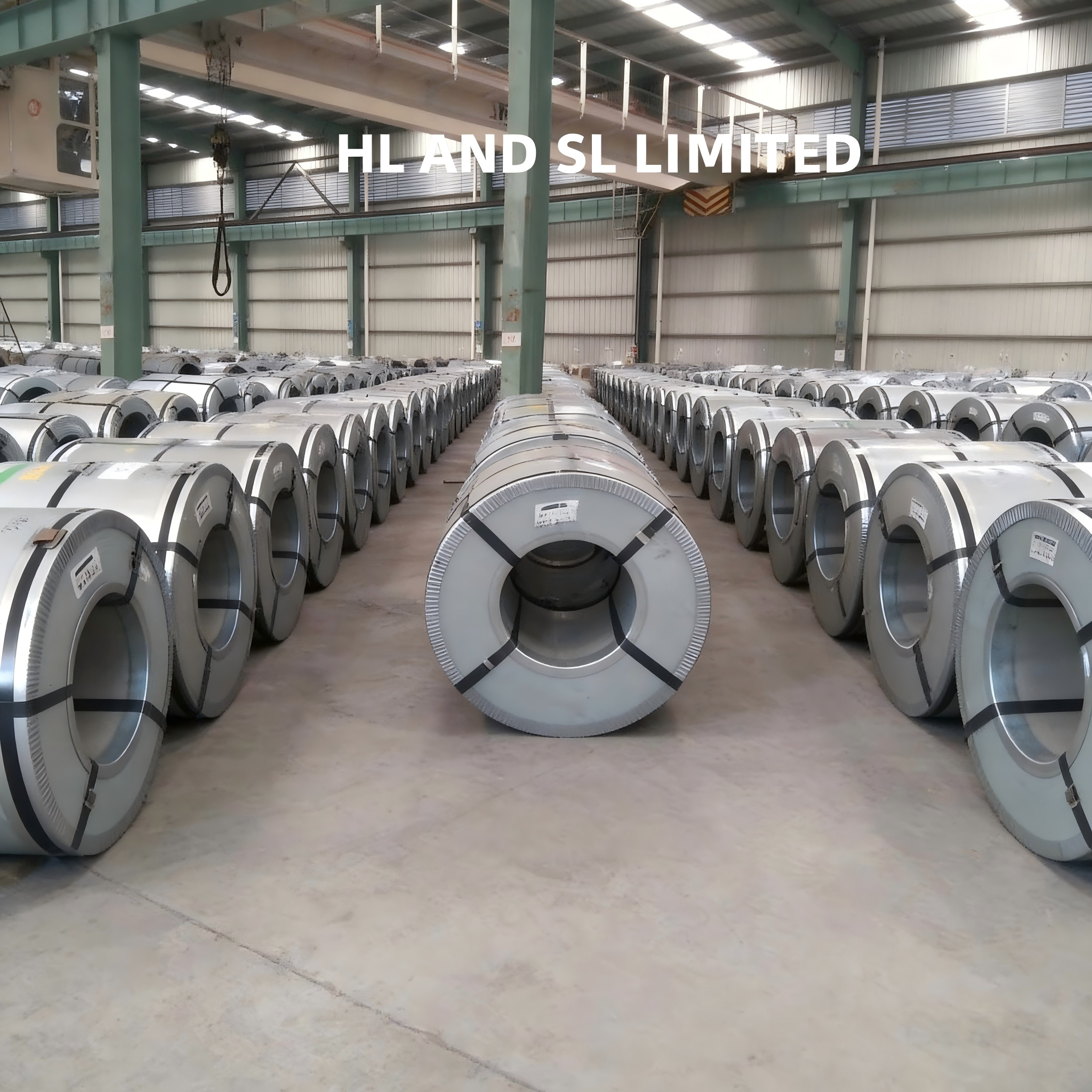
Grade selection is a design decision; acceptance criteria are a contract decision. The two should be documented separately.
Matching grade to grid duty: four reference cases
Ultra-high voltage and power transformers. 18-65 is positioned for ultra-high voltage transformers, power transformers and high-efficiency energy-saving cores, with a 0.18 mm thickness, iron loss ≤ 0.65 W/kg and B8 ≥ 1.88 T. In this application the acceptance emphasis tends to fall on loss consistency across the coil set rather than on a single sample result, because core loss is summed over the whole core.
European distribution upgrades. In a German distribution transformer upgrade programme aligned with EU ecodesign requirements, the stated project conditions include an iron-loss requirement of ≤ 0.60 W/kg, noise 2–3 dB below the standard requirement, and coating weather resistance suited to coastal salt-spray exposure. That loss target is tighter than any single catalogue ceiling in the 18–23 Hi-B list, which illustrates an important rule: project specifications can be stricter than grade data sheets, and the gap is closed through core design and grade selection, then verified at the transformer level.
Cold-climate distribution networks. Canadian grid upgrade work in the data set references B20HS070, a 0.27 mm grade with iron loss ≤ 1.20 W/kg, used for Class 1 energy-efficient rolled-core transformers, with a requirement that permeability retention at −40 °C stays at or above 95%. Note that this grade sits outside the 18–23 Hi-B list; it is included here because it shows how acceptance criteria extend beyond the four magnetic parameters into temperature-dependent behaviour.
HVDC converter transformers. The ±800 kV Belém Mountain Phase II project conditions require high flux density of ≥ 1.92 T and iron loss below 0.85 W/kg, under 30–40 °C and 80%–90% relative humidity, alongside INMETRO energy-efficiency certification for oriented silicon steel used in local transformer production. This is the clearest example of a project clause that cannot be inferred from a grade name: a requirement combination this specific has to be confirmed grade by grade with the supplying mill rather than assumed from the catalogue.
Boundaries buyers should not paper over
- The supplier role is trading plus processing, not steelmaking. HL AND SL LIMITED, established in 2012, is an export trading enterprise for electrical steel and an authorized agent of China Baowu Steel Group, operating a 30,000 m² facility with a material processing plant for secondary processing. Buyers who require a mill-of-origin certificate naming the melting and rolling works should state that requirement explicitly in the purchase order, because an export and processing role and a steelmaking role are not the same thing.
- Thin gauge demands process discipline. 0.18 mm material is generally more sensitive to handling, burr and cutting stress than thicker grades. Acceptance criteria that cover only the coil as received, with nothing on slitting, cutting or stress-relief annealing, leave the largest risk unaddressed.
- Laser-scribed high-permeability grades are a separate category. ASTM A876 recognises laser-scribed high-permeability grain-oriented steel as its own category. The parameter set published for this Hi-B lineup does not describe laser-scribed products, so a design that depends on that performance category needs a separate availability and specification check rather than an assumption of equivalence.
- Grade progression is not a quality ladder. Moving from 23Q080 to 23Q100 raises the permitted loss ceiling rather than lowering it. Treating the highest number as the best grade is a reading error that leads to over-specifying cost in one direction and under-specifying performance in the other.
Market context: why acceptance discipline is tightening
One commercial research estimate places the global grain-oriented electrical steel segment at roughly USD 7.51 billion in 2026, rising to about USD 9.95 billion by 2035. Published electrical steel market figures vary substantially in scope — total-market estimates and segment-level estimates do not reconcile with each other — so any single number should be treated as directional rather than as a planning constant.
The more reliable structural signal is on the demand side. Electrification is drawing non-oriented electrical steel into e-motor cores, where material properties directly affect motor efficiency; that segment held the larger share of the electrical steel market in 2025 according to commercial research. For oriented steel, the practical consequence is that transformer buyers are working under stricter efficiency expectations while grade categories multiply — conventional, high-permeability and laser-scribed among them. More categories means more opportunities for a purchase order to be technically ambiguous, which is why the acceptance clause rather than the grade name is becoming the decisive document.
What changes next
The direction of travel is toward evidence-based acceptance: measured values reported alongside specified ceilings, test conditions stated explicitly, and composition data shipped with every coil. Buyers who build that structure into their purchase orders now will find grade comparisons across suppliers far easier, because the comparison stops being about catalogue headlines and starts being about comparable test data. The return on that discipline is not lower prices — it is fewer disputes and a shorter path from incoming inspection to core assembly.
FAQ
What is Hi-B electrical steel?
Hi-B refers to high magnetic induction grain-oriented silicon steel: a flat-rolled alloy in which the grains are elongated in the rolling direction, made primarily of iron with silicon added and with carbon, sulfur and nitrogen impurities strictly controlled. In the HTNXT portfolio, most grades specify silicon at 3.0%–3.2%, while 23Q095 and 23Q100 specify 2.5%–3.5%.
Which parameters should an acceptance certificate cover?
At minimum: thickness, iron loss (P1.7/50), magnetic flux density (B8) and silicon content, together with declared impurity control. Each value should be accompanied by the test condition and the standard applied, since a magnetic value without its test condition is not verifiable.
Is a lower iron-loss grade always the better choice?
No. Lower loss ceilings generally support lower-loss core designs, but flux density can move independently. Within the 0.23 mm grades in this portfolio, B8 minima range from ≥ 1.75 T for 23Q100 to ≥ 1.89 T for 23Q080, so a loss-optimised choice may not be the right choice for a flux-limited design.
How should B8 and P1.7/50 be balanced in a specification?
By identifying which constraint binds the design. Where efficiency at operating flux is the dominant requirement, the loss ceiling carries more weight. Where impedance, inrush or converter duty dominate, the flux-density minimum becomes the harder constraint. Both should be written with their test conditions, and neither should be inferred from the grade name.
What documents should accompany an export shipment of Hi-B coils?
A mill certificate referencing the heat and coil number, a test report for loss and flux density stating the method and conditions, chemical analysis covering silicon and controlled impurities, and a dimensional record. Where secondary processing such as slitting has been carried out, the processed dimensions and inspection record should travel with the same coil number.
Can a project specification be stricter than the catalogue value?
Yes, and it frequently is. Requirements stated for specific grid projects — such as very low loss targets, elevated flux density for converter transformers, noise limits or cold-temperature permeability retention — can exceed the general grade data sheet. In those cases the requirement must be confirmed against the specific project and grade rather than assumed from the standard catalogue entry.
For buyers who want the full grade table and composition details in one place, the HTNXT electrical steel catalogue is available as a downloadable brochure, and further product documentation is published at www.hlslind.com.
Tem questões ou precisa de mais detalhes?
Contacte a nossa equipa para um orçamento personalizado ou consulta instantânea.
Solicitar orçamento
Preencha o formulário abaixo e a nossa equipa entrará em contacto com uma proposta personalizada.
Chat direto do WhatsApp
Prefere conversar em tempo real? Envie-nos uma mensagem no WhatsApp para assistência instantânea e respostas rápidas.
- Obter orçamento personalizado
- Partilhar fotos ou documentos
- Discuta as suas necessidades diretamente
Geralmente responde em 5–30 minutos durante o horário de expediente.