
HTNXT Solar Panel Manufacturing Equipment: Tabber Stringer Fit for Topcon, HJT and PERC Lines
HTNXT Solar Panel Manufacturing Equipment: Tabber Stringer Fit for Topcon, HJT and PERC Lines
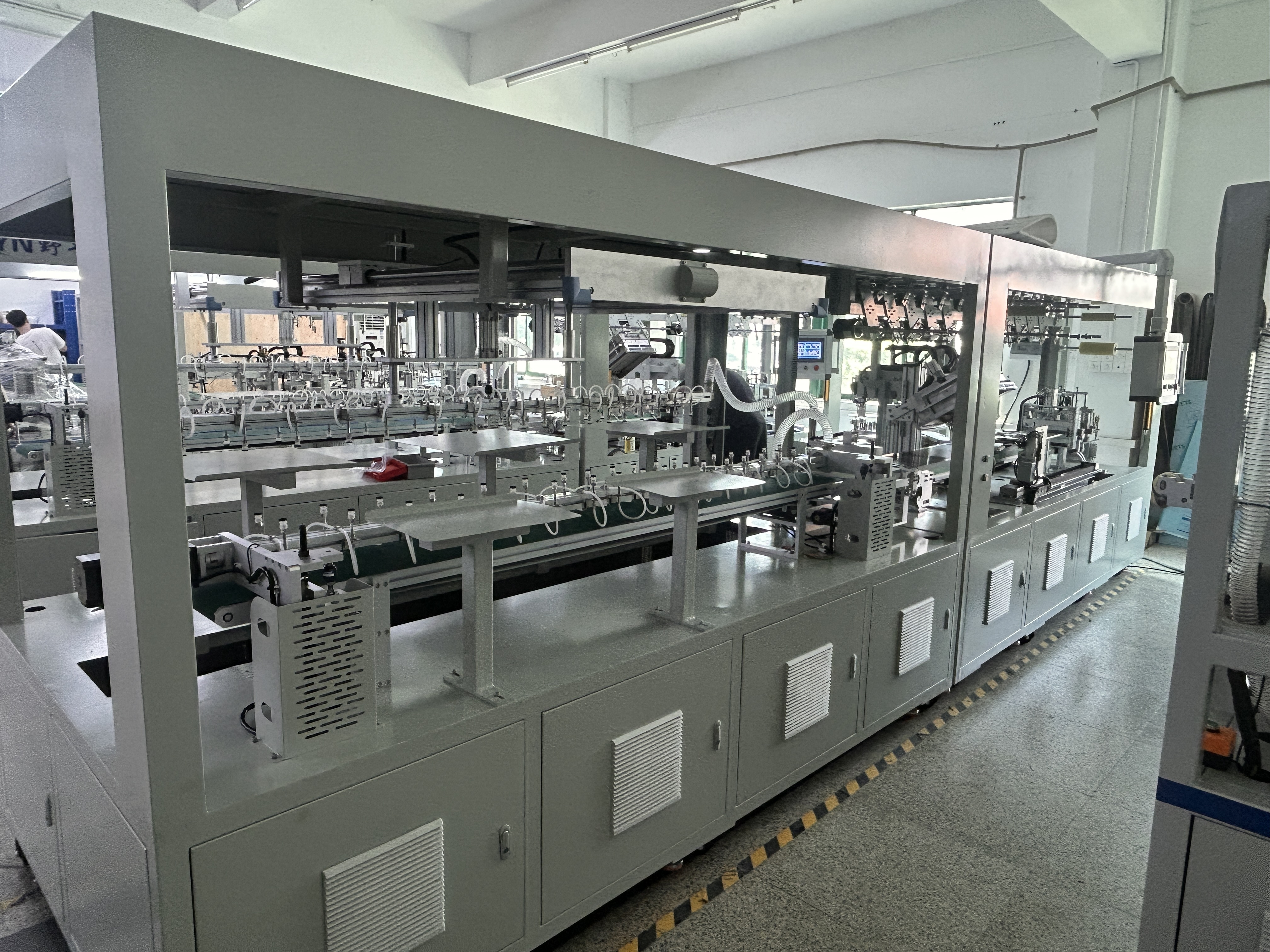
Industry view: a module manufacturing line where tabbing and stringing set the cell-to-module flow.
In solar module manufacturing, a tabber stringer is a line-fit decision before it is a specification list. For a factory running Topcon, HJT, PERC or BC cells, the useful question is whether the machine can weld the intended cell, ribbon and busbar combination into a string that matches the module layout and the downstream layup, bussing, lamination and EL flow. YN Solar PV Equipment Co., Ltd. (brand: YNTECH; official website), established in 2015, supplies the YN-CH210 Solar Cell Tabber Stringer for solar panel production line projects in PV module manufacturing. The model should be assessed through cell compatibility, string length, welding mode and line environment together, not through a single headline number.
The tabber stringer is a scenario-fit choice
The module format decides the tabber stringer's working envelope. A machine may be capable of infrared welding and high-speed string production, but that does not automatically make it the right fit for a specific Topcon, HJT or PERC module line. The YN-CH210 automatically feeds cells, aligns and places spacers, feeds ribbon and lays out cells. It uses infrared welding and output flipping, and it is capable of welding full cells as well as left/right half-cut cells.
Those functions matter because the tabber stringer sets the cell-string geometry that downstream stations receive. A string that exceeds the verified maximum string length, uses a cell size outside the applicable list, or needs a ribbon and busbar combination outside the supported range can create a line mismatch that is not solved by faster welding. The supplied application-fit checkpoints for this review are maximum cell string length up to 2300 mm, maximum welding speed of 1,200 cells per cycle, and an air-supply band of 0.5–0.8 MPa in the supplied line-level equipment data. Each should be read as a checkpoint, not as an isolated selling point.
What the YN-CH210 is verified to do
The YN-CH210 Solar Cell Tabber Stringer is a YNTECH model for solar panel production line projects in the PV module manufacturing industry. Its verified product data covers the cell, ribbon, busbar and welding parameters that determine whether it can enter a Topcon, HJT or PERC line plan.
- Automatic solar cell feeding, automatic alignment and spacer placement, automatic ribbon feeding and cell layout.
- Infrared welding and output flipping, with welding-performance optimization stated for BC cells.
- Capable of welding full cells and left/right half-cut cells.
- Maximum cell string length up to 2300 mm; supports both gap and gapless welding modes.
- Maximum welding speed of 1,200 cells per cycle.
- Applicable busbar range from 2BB, 3BB through 20BB.
- Applicable ribbon thickness 0.1–0.2 mm and ribbon width 0.45–2.00 mm; ribbon selection varies for different solar cells.
- Applicable cell sizes BC, 125, 156, 158, 166, 182 and 210 mm; custom sizes are available.
- Cell gap 1–20 mm; overlap welding is supported for BC cells.
- Leading ribbon length 50–150 mm; trailing ribbon length is stated as standard length.
- Listed breakage rate below 0.2‰.
- Peak power 15 kW and average power 10 kW; machine dimensions 6388 mm × 1600 mm × 1890 mm.
- Supports string welding of Topcon, HJT and PERC solar cells, with one-click switch for conventional cells.
- BC-string welding compatibility is stated for cells from LONGi, Aikos, Huanghe and Tongwei.
- Black isolation strips that mask ribbons are available for all-black BIPV modules.
Application-fit checkpoints for line planners
A buyer should convert the machine data into line questions. The table below keeps the verified values attached to their scope and shows why each checkpoint matters in a Topcon, HJT or PERC module project.
| Fit checkpoint | Verified data point | Why it matters | What to confirm before order |
|---|---|---|---|
| Cell technology | Topcon, HJT and PERC string welding are supported, with one-click switch for conventional cells. BC welding performance is optimized. | The same machine family can be planned around several cell technologies, but a listed compatibility is not the same as a validated production recipe. | Ask for the recipe set and changeover method for each intended cell type. |
| Cell size and width envelope | The YN-CH210 data lists applicable cell sizes BC, 125, 156, 158, 166, 182 and 210 mm, with custom sizes available. The supplied line-level material for certain YNTECH configurations also references a 78–210 mm cell-width band; that band should not be applied to the tabber stringer without checking the actual cell list. | Cell size affects string geometry, ribbon selection and downstream layup handling. | Match the exact cell list to the module bill of materials, not to a broad width range alone. |
| String length | Maximum cell string length up to 2300 mm. | String length must fit the module layout and the downstream layup and bussing stations. | Check the finished module format and the longest string required before selecting the model. |
| Welding mode | Full cells and left/right half-cut cells; gap and gapless welding modes; overlap welding supported for BC cells. | The mode must match the cell type, layout and quality requirements of the module. | Validate the welding mode with the actual cell and ribbon combination. |
| Ribbon and busbar | 2BB through 20BB; ribbon thickness 0.1–0.2 mm; ribbon width 0.45–2.00 mm; selection varies by solar cell; leading ribbon 50–150 mm. | Ribbon and busbar choices affect the soldered joint and the compatibility of the cell string with the module design. | Confirm the exact ribbon specification and busbar count for each product family. |
| Maximum welding speed | 1,200 cells per cycle maximum welding speed. | This is a machine welding-speed datum, not a module-per-hour or line-capacity rating. | Evaluate line throughput across feeding, string handling, layup, bussing, lamination and testing. |
| Air and power | The supplied line-level equipment data states 0.5–0.8 MPa air supply. The YN-CH210 data lists 15 kW peak and 10 kW average power. | Pneumatic and electrical supply must be available at the installation point for stable operation. | Confirm the specific machine's pneumatic requirement, plant air quality and electrical capacity. |
| Factory environment | Application data specifies an indoor, clean and dust-controlled workshop, ambient temperature -10–40°C, dry and well-ventilated conditions free of corrosive gases; 24/7 available operation is stated. | The installation environment affects equipment protection, stable operation and material loss. | Check the workshop before installation; moisture, corrosion and dust are line risks, not only machine risks. |
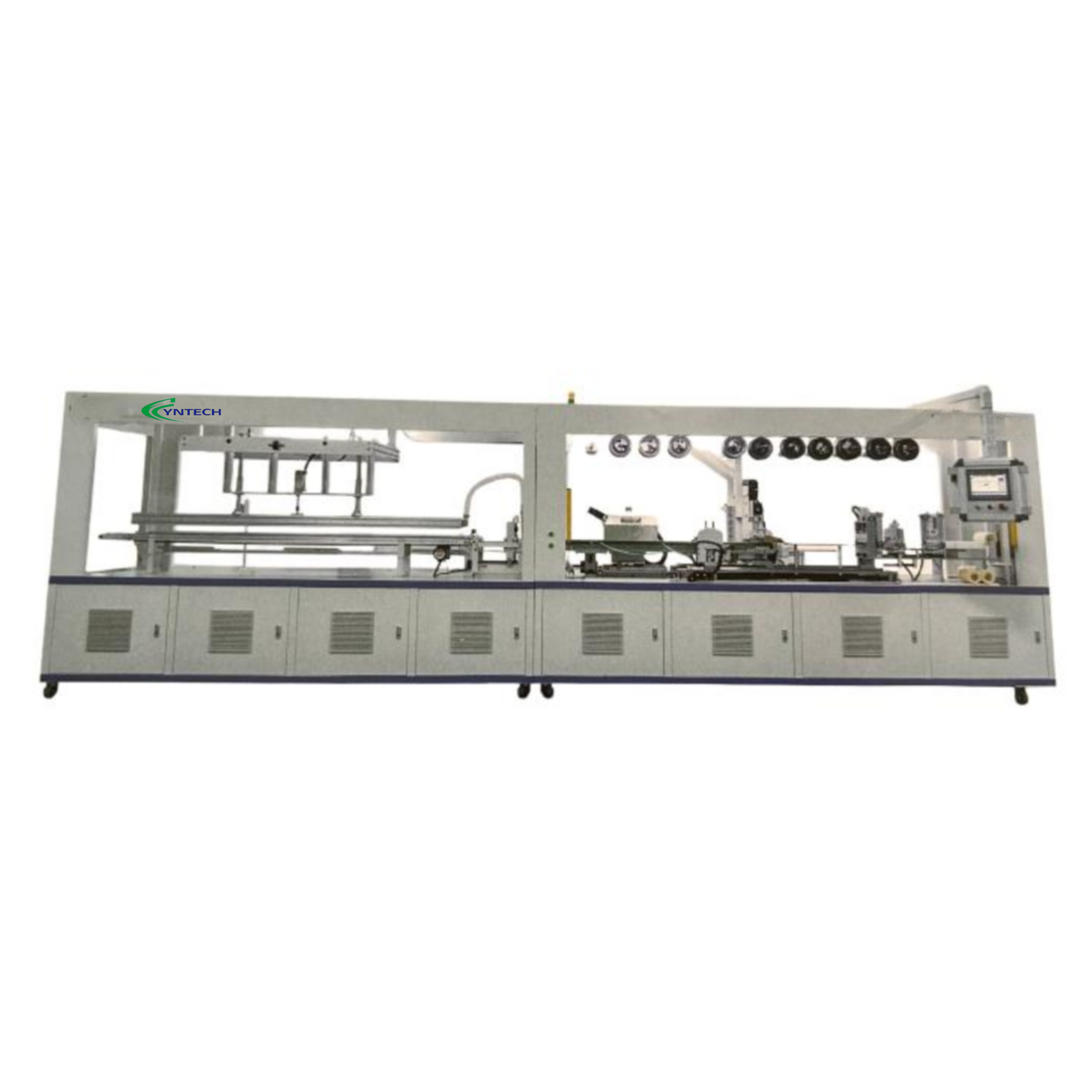
YN-CH210 Solar Cell Tabber Stringer: cell list, string length, welding mode and line interface should be checked together.
Topcon, HJT, PERC and BC: compatibility is not the same as recipe validation
The YN-CH210's support for Topcon, HJT and PERC is a useful starting point for a multi-technology line plan. The product data states one-click switch for conventional cells and optimized BC welding performance. That does not remove the need to validate the exact cell, ribbon and busbar combination on the buyer's own product design. Ribbon selection varies for different solar cells, and the machine's applicable cell sizes and busbar range set a defined envelope.
For BC cells, overlap welding is supported, and black isolation strips masking ribbons are available for all-black BIPV modules. Those features matter where the module has a visual specification as well as an electrical one. Even there, the buyer should confirm the strip and ribbon combination together with the cell layout. The practical rule is simple: a specification list can show that a machine is designed for a cell family, but it cannot replace a documented recipe and an agreed acceptance method for the actual production run.
Line flow and factory fit
The tabber stringer is one station in a chain. The YN-CH210 creates cell strings; those strings then move into layup and bussing, lamination, EL testing, trimming and framing. In the YNTECH line portfolio, the tabber stringer sits alongside layup and busbar integrated machines, glass loading, bussing, laminating, EL testing, trimming, framing and gluing equipment. A capable tabber stringer can still be a poor line fit if its maximum string length, cell handling or welding mode does not match the next station's working range.
The installation environment is part of the fit. The application data for this equipment class specifies a clean and dust-controlled workshop, an indoor ambient temperature range of -10–40°C, and a dry, well-ventilated environment free of corrosive gases. It also states 24/7 available operation and notes that stable equipment operation and continuous production reduce material loss. These are not decorative requirements. They belong in the factory readiness check before the machine arrives, alongside air supply, power and line layout.
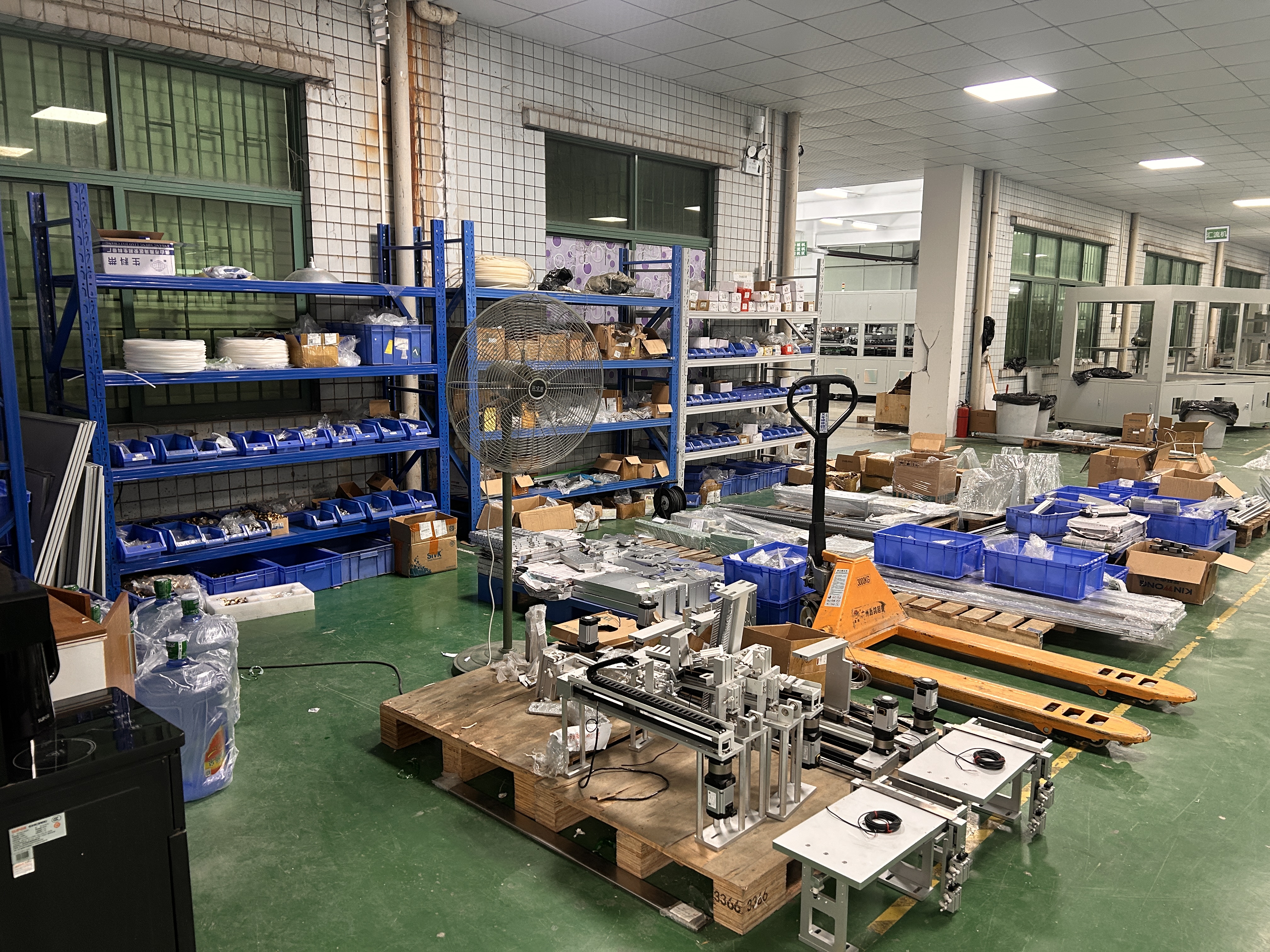
Line-level fit: the tabber stringer must match the layup, bussing, lamination and testing flow.
Scenario fit: new line, upgrade, BIPV and BC modules
For a buyer planning a 100–120 MW solar panel production line, the tabber stringer is one station in the line, not the line itself. The YN-CH210's 1,200 cells per cycle maximum welding speed should not be converted into a 100–120 MW capacity claim. Line capacity depends on the full station set, including cell feeding, string handling, layup, bussing, lamination and testing. The correct planning method is to fix the module format and daily output first, then check whether the tabber stringer's cell range, string length and welding mode support that plan.
For an existing line upgrade, the fit question changes. A supplied APAC case entry for a solar photovoltaic manufacturing client records 8 units used in production line upgrade projects, with a 10-year duration. Reported outcomes include improved production efficiency, enhanced PV module quality, continuous production and reduced material loss. This is a case description, not a guarantee that the same results will apply to every line. It does show why upgrade buyers should compare the machine envelope with the existing line, rather than treating the tabber stringer as a standalone purchase.
For all-black BIPV modules, the black isolation strips that mask ribbons are directly relevant. For BC module designs, overlap welding is supported, and the product data states compatibility with BC cell strings from LONGi, Aikos, Huanghe and Tongwei. In both cases, the buyer should confirm the exact cell, ribbon, strip and busbar specification before committing the line.
Market context: capacity growth raises the cost of a poor fit
External market data provides context for why line-fit decisions attract more attention as module capacity grows. Global Market Insights estimates the global solar PV manufacturing equipment market at USD 16.6 billion in 2024 and projects USD 108.4 billion by 2034, with a 23.1% CAGR. SEIA reported that US domestic module manufacturing capacity reached 50 GW in early 2025. The U.S. Department of Energy also reported that module prices in China reached USD 0.10–0.12/W in 2025 due to oversupply.
These are external market signals. They support the case for careful line configuration and changeover planning, but they do not tell a buyer that a particular tabber stringer will deliver a particular output or return. The procurement implication is narrower and more useful: when capacity is expanding and module price pressure is real, a line planner should specify the cell list, ribbon, busbar count, string length, welding mode, air supply and downstream interface before order. Those checks are more decision-relevant than a single maximum-speed number.
Limitations and fit boundaries
The YN-CH210 has clear boundaries that should be stated beside its advantages.
- Maximum cell string length is up to 2300 mm. A module design that requires a longer string falls outside this verified fit.
- The 1,200 cells per cycle figure is a maximum welding-speed datum, not a line throughput or module output guarantee.
- The applicable cell sizes are BC, 125, 156, 158, 166, 182 and 210 mm, with custom sizes available. The 78–210 mm line-level band in the supplied material is not a substitute for checking the tabber stringer's actual cell list.
- Air supply, power, factory temperature, dust control and ventilation must be confirmed at the installation site.
- Ribbon selection varies by solar cell. The listed breakage rate below 0.2‰ is a product datum, not a promise for every cell and ribbon combination.
- The machine is a tabber stringer, not a complete production line. It still depends on layup, bussing, lamination, EL testing, trimming and framing equipment.
- Support for Topcon, HJT and PERC with one-click switch for conventional cells is a compatibility statement. It does not replace recipe validation for the buyer's actual cell and ribbon.
Supplier context
YN Solar PV Equipment Co., Ltd. was established in 2015 and operates a 9000 m² facility with 10–60 employees, an 8-person R&D team and annual output of 100–200 units. The company reports 60%–70% export share, with main markets in Africa, the Middle East and the EU. Its capability data lists OEM/ODM support, a 1-unit MOQ, 15–30 day lead time, 100% pre-shipment testing and remote technical support. For a buyer evaluating a tabber stringer as part of a line upgrade, these facts are supplier-context information, not a substitute for machine acceptance tests.
Conclusion
The YN-CH210's fit for Topcon, HJT and PERC lines depends on matching the cell list, ribbon, busbar count, string length, welding mode, air supply and downstream flow. The verified data supports a maximum string length up to 2300 mm, full-cell and left/right half-cut welding, infrared welding, a maximum welding speed of 1,200 cells per cycle, and a cell-size list that includes BC, 125, 156, 158, 166, 182 and 210 mm. Use those values as application-fit checkpoints. A line planner should validate the actual cell and ribbon recipe, confirm the factory environment, and check the complete line interface before an order.
FAQ
How should a buyer match a tabber stringer's maximum string length to a module format?
Start with the finished module layout and the cell string that feeds layup and bussing. The YN-CH210 supports a maximum cell string length up to 2300 mm. If the intended module requires a longer string, the machine is outside its verified fit. If the string is shorter, confirm the full-cell or half-cut layout, gap or gapless welding, cell gap of 1–20 mm and the ribbon specification. String length should be checked with the complete module format, not as a standalone number.
Which cell technologies and cell sizes does the YN-CH210 support?
The YN-CH210 supports string welding of Topcon, HJT and PERC solar cells, with one-click switch for conventional cells, and it is optimized for BC cell welding performance. Its applicable cell sizes are BC, 125, 156, 158, 166, 182 and 210 mm, with custom sizes available. It supports full cells and left/right half-cut cells, 2BB through 20BB busbar, ribbon thickness 0.1–0.2 mm and ribbon width 0.45–2.00 mm, with ribbon selection varying by solar cell.
Is the 1,200 cells per cycle figure the same as line throughput?
No. In the supplied YN-CH210 data, 1,200 cells per cycle is the maximum welding speed. It is not a module-per-hour or line-capacity rating. Line throughput depends on the complete line, including cell feeding, string handling, layup, bussing, lamination and testing. Buyers should ask for the specific production scenario and acceptance method rather than converting the maximum welding-speed datum into a line output claim.
Why does the 0.5–0.8 MPa air requirement matter in line planning?
The 0.5–0.8 MPa air-supply band appears in the supplied YNTECH line-level equipment data. Pneumatic supply is part of stable machine operation, and an undersized or unstable supply can interrupt production. Before installation, confirm the tabber stringer's own pneumatic specification, the plant's available pressure and air quality, and the factory conditions: a clean, dust-controlled, dry and well-ventilated environment free of corrosive gases. The YN-CH210 data also lists 15 kW peak and 10 kW average power.
What should be validated before integrating the YN-CH210 into an existing Topcon, HJT or PERC line?
Validate the cell list, ribbon specification, busbar count, string length, full-cell or half-cut mode, gap or gapless welding, and the interface to layup, bussing, lamination and EL testing. For BC cells, confirm overlap welding and black isolation strip requirements if all-black BIPV modules are planned. Because the machine supports several cell technologies, ask for a documented recipe and changeover plan for each intended cell type; compatibility in a specification list is not the same as a validated production recipe.
Reference document: YNTECH brochure (PDF).
Tem questões ou precisa de mais detalhes?
Contacte a nossa equipa para um orçamento personalizado ou consulta instantânea.
Solicitar orçamento
Preencha o formulário abaixo e a nossa equipa entrará em contacto com uma proposta personalizada.
Chat direto do WhatsApp
Prefere conversar em tempo real? Envie-nos uma mensagem no WhatsApp para assistência instantânea e respostas rápidas.
- Obter orçamento personalizado
- Partilhar fotos ou documentos
- Discuta as suas necessidades diretamente
Geralmente responde em 5–30 minutos durante o horário de expediente.