
HTV Silicone Rubber Quotes: Terms, Acceptance and Documents
In HTV silicone rubber procurement, the quotation is not a price list. It is the first working draft of the supply agreement — the document that fixes the compound grade, the hardness tolerance, the curing system, the packaging format, the acceptance test plan, and the paperwork that must travel with every batch.
HTV silicone rubber is a high-temperature-vulcanizing solid silicone compound supplied as a compounded, ready-to-process material and used across electrical insulation, food-contact, automotive, and general industrial molding. Because it is quoted by weight but consumed by specification, two quotations that look comparable on price per kilogram can carry very different levels of delivery, testing, and documentation risk. The practical question for a buyer at the decision and execution stage is therefore not “who is cheapest,” but “whose quote contains enough defined terms to be enforceable.”
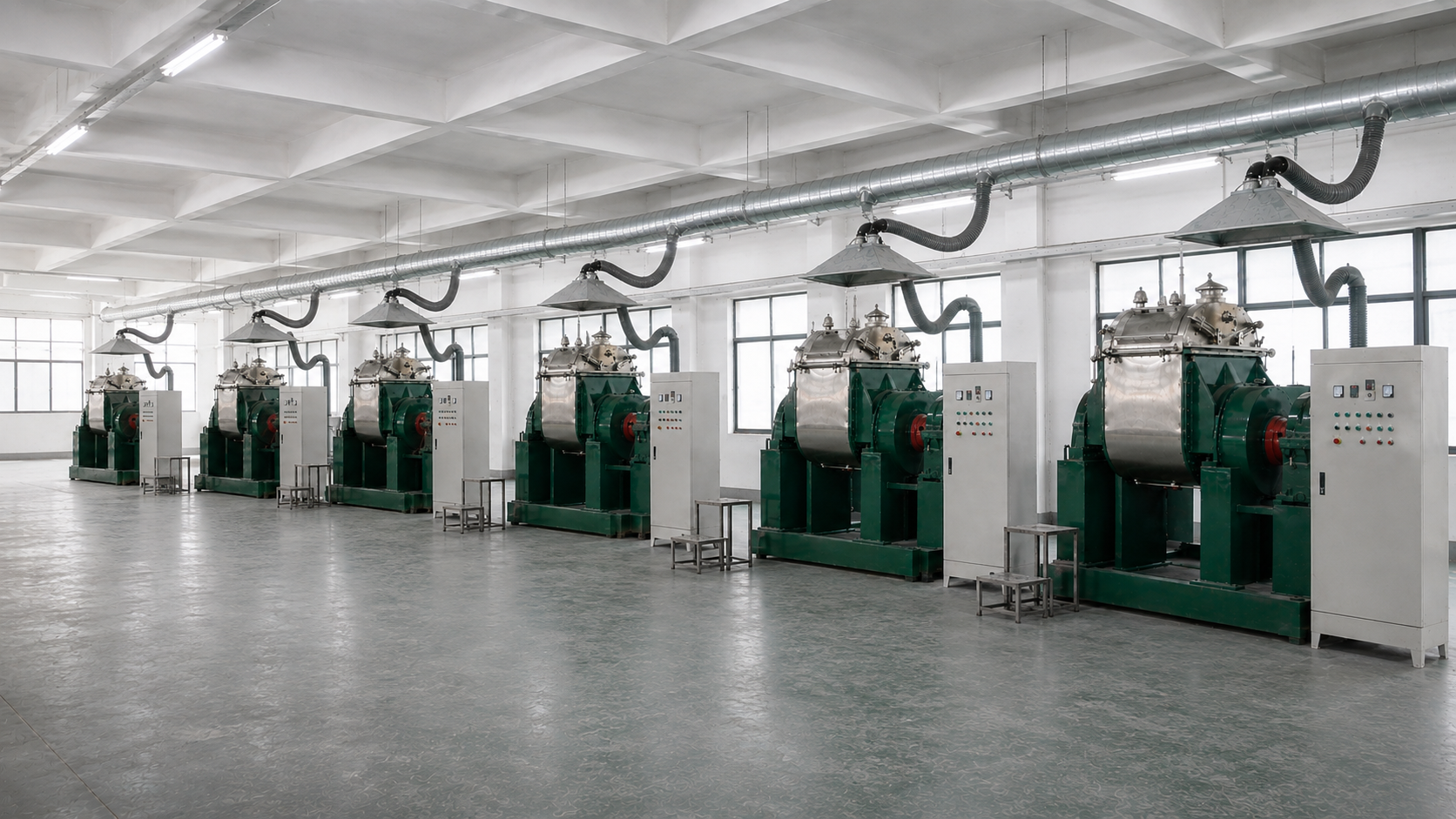
Compound that is quoted by weight is consumed by specification — the quote has to describe the material, not just the price.
Why the Quote, Not the Price per Kilogram, Sets the Risk Level
Purchasing teams naturally treat price as the objective comparison point, because it is the one number that is directly comparable across suppliers. Everything else — hardness band, curing route, packaging, lead time, acceptance testing, documents — is often left to be settled later. In practice, those deferred items are where cost and schedule risk accumulate: a compound that processes differently from the trial sample forces mixing adjustments, additional testing, and machine re-setting, and in the worst case produces rejected molded parts.
The same logic applies when a buyer moves from a standard grade to a customized formulation. A customized formulation may have a different unit price from a standard grade, but its stable processing performance can help reduce production adjustments, material waste, trial costs, and the risk of rejected products. That is a conditional statement, not a guarantee: actual savings depend on the customer’s formulation and production conditions. The quote is the right place to make those conditions explicit.
There is also a supply-side reason to treat the quotation as a technical document. In 2025, solid HTV silicone rubber accounted for 58.3% of the total HTV market segment, according to Dataintelo’s high-temperature-vulcanized silicone rubber market report. Where a solid gum system is the default, differentiation between suppliers rarely appears in the material category itself — it appears in how precisely each supplier defines grades, tolerances, and batch documentation.
What a Complete HTV Silicone Rubber Quote Should State
A workable HTV silicone rubber quote identifies five things in writing: the compound and its intended application, its numeric properties with tolerances, its processing assumptions, its logistics, and its documentation. If any of those five is missing, the gap will be filled by assumption rather than agreement.
| Quote item | What should be stated in writing | Why it matters downstream |
|---|---|---|
| Grade and application | Full grade designation and the intended use — for example electrical insulation-grade HTV silicone rubber such as YK-3160, food-grade HTV silicone rubber such as YKS-8850, extrusion-grade, flame-retardant, high-tear, or fumed silica-reinforced grades | Links the price to a defined material instead of the generic category “HTV silicone rubber” |
| Hardness | Nominal hardness with tolerance (YK-3160: 65 ± 5 Shore A) and confirmation of whether hardness is customizable | Drives mold design, demolding behavior, and the first incoming-inspection check |
| Density / specific gravity | Value with tolerance (YK-3160: 1.46 ± 0.03 g/cm³) | Used in shot-weight calculations and in weight-based cost verification |
| Curing system | Which curing route the quoted compound is supplied for, and whether the curing system can be customized (YK-3160 supports curing system customization) | Curing route affects cycle time, mold condition, and post-cure requirements |
| Color | Quoted color and whether color is customizable | Affects appearance consistency and batch-to-batch color control |
| Packaging | Unit weight per carton or box, inner packaging, and palletization | Affects handling, storage cleanliness, and container loading |
| MOQ | Standard MOQ: 2,000 kg per grade or specification; trial-order quantities subject to confirmation | Determines whether a trial order is commercially feasible |
| Lead time | Production and shipping lead time for the quoted quantity | Feeds directly into production scheduling and safety stock |
| Delivery term | FOB Shenzhen, China; EXW, CFR, or CIF terms can also be discussed according to the destination and order quantity | Required for a like-for-like landed-cost comparison between suppliers |
| Payment terms | 100% T/T before shipment for initial orders; alternative terms for repeat or large-volume orders subject to mutual agreement and credit approval | Affects working capital and the structure of a multi-year supply plan |
| Documents included | Grade-specific TDS, SDS, Typical COA, batch COA, and applicable third-party test reports | Supports incoming inspection and product approval without a second negotiation round |
Two of these items deserve extra attention. First, hardness and color are customizable variables for custom HTV/HCR compounds, so a quote should state which values are fixed by the formulation and which can be adjusted at the buyer’s request. Second, curing system is frequently omitted from quotations even though it determines how the compound behaves on the buyer’s existing equipment. Asking for it before the order costs nothing; discovering it during a trial run costs production time.
Acceptance Criteria: Fix the Test Plan Before the Purchase Order
Acceptance is not a post-delivery argument; it is a pre-order agreement. The workable structure is straightforward: pre-shipment inspection is carried out according to the mutually agreed product specification, each batch is inspected before release, and a batch COA can be provided. Third-party inspection may be arranged upon request, with the scope and cost agreed in advance. Because the acceptance basis is the agreed specification, the specification itself — not a generic datasheet — becomes the reference document for both parties.
For an electrical insulation grade, the acceptance plan should cover mechanical, electrical, and aging-related properties in one table. YK-3160 provides a useful reference set of values for that discussion.
| Acceptance parameter | Reference value | What it verifies |
|---|---|---|
| Hardness | 65 ± 5 Shore A | Process consistency and fit to the mold and tooling |
| Specific gravity | 1.46 ± 0.03 g/cm³ | Shot weight and the weight-based cost basis |
| Tensile strength | ≥5.0 MPa | Mechanical durability of the molded part |
| Elongation | ≥220% | Flexibility during demolding, assembly, and handling |
| Tear strength | ≥12 kN/m | Resistance to tearing at thin sections and edges |
| Dielectric strength | ≥22 kV/mm | Insulation capability of the compound |
| Dielectric constant | ≤5.0 | Dielectric behavior under alternating field |
| Dielectric loss tangent | ≤4.0 × 10⁻² | Dielectric energy loss |
| Volume resistivity | ≥2 × 10¹⁴ Ω·cm | Insulation resistance of the material |
| Hydrophobicity | HC2 | Surface water repellency in outdoor exposure |
| Tracking and erosion | TM1A4.5, ≤2.5 mm | Resistance to surface tracking and erosion under electrical and pollution stress |
| Flame retardancy | V-0 | Flame spread behavior of the compound |
| UV aging resistance | Confirmed property | Retention of properties under ultraviolet exposure |
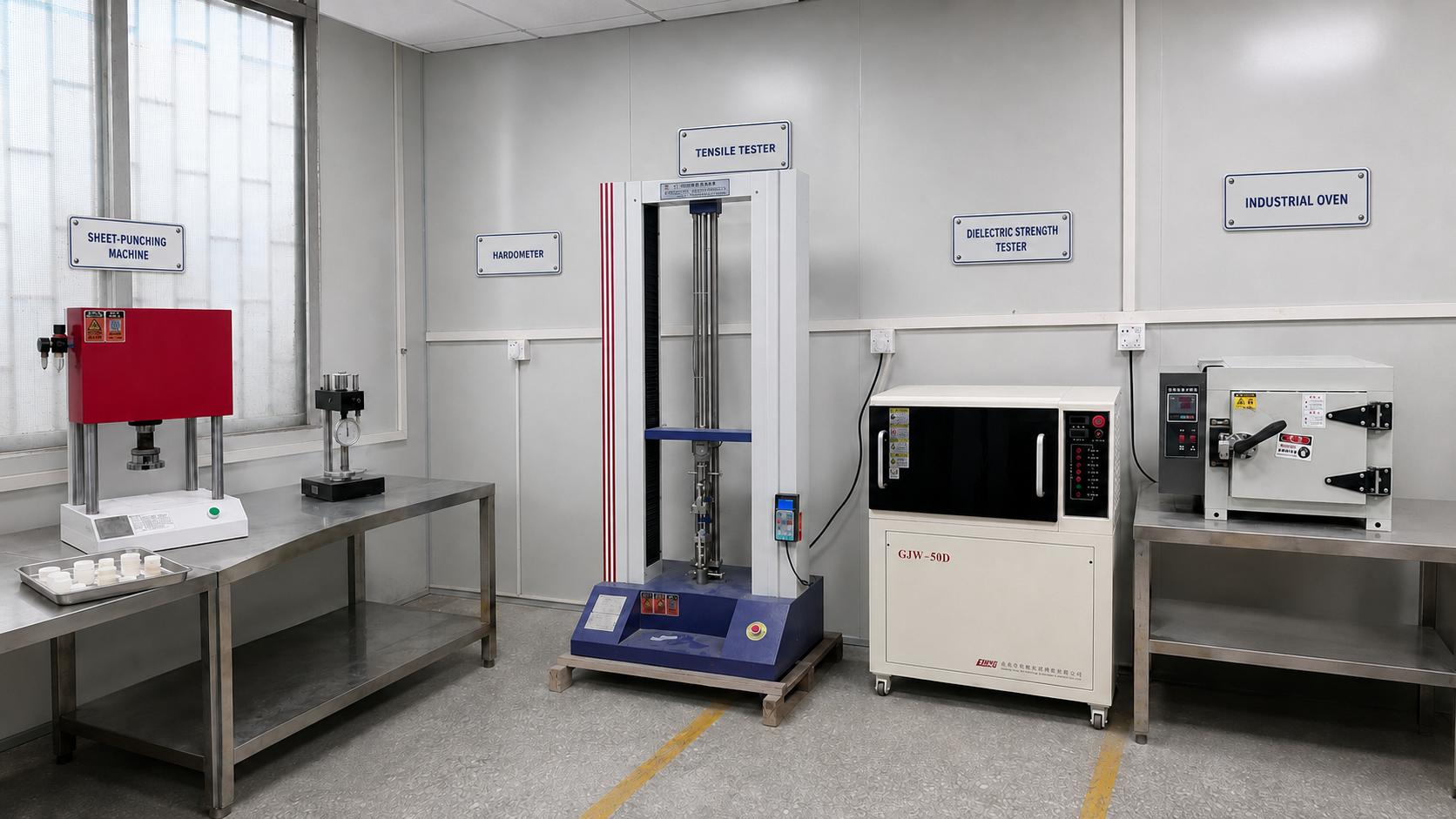
Acceptance testing works best when the parameter list and tolerances are fixed in the specification before the first purchase order.
Boundary to state openly. The values above describe the reference grade YK-3160. Because YK-3160 supports customizable hardness, color, curing system, and selected performance characteristics, the acceptance specification should be issued for the exact grade and hardness ordered, not copied from a general datasheet. A test plan negotiated after shipment is a commercial dispute; a test plan negotiated before the order is a quality control document.
Supplier Documents to Confirm Before Approving a Grade
Documents are the part of the purchase that keeps working after delivery. Before a grade is approved, the following items should be confirmed as available, grade-specific, and current:
- Technical Data Sheet (TDS) for the exact grade and hardness being purchased.
- Safety Data Sheet (SDS) for handling, storage, and transport requirements.
- Typical COA showing the properties the grade is normally supplied against.
- Batch COA for the specific batch shipped, traceable to the batch number.
- Relevant test reports covering hardness, density, tensile strength, elongation, tear strength, hydrophobicity, dielectric strength, volume resistivity, dielectric loss, tracking and erosion resistance, flame retardancy, and UV-aging resistance.
- Quality management certification — the supplier’s ISO 9001 certificate, as evidence of standardized manufacturing and continuous improvement.
- Application-specific compliance documentation — FDA food-contact compliance documentation, LFGB test reports, and REACH compliance documentation where the intended application requires them.
Compliance scope should be confirmed per grade rather than per company. For food-contact work, for example, third-party test documentation to US FDA 21 CFR 177.2600 is available upon request for YKS-8850, a food-grade HTV silicone rubber. That kind of document has a defined scope: it supports the approval of the material, not of the finished article produced from it.
A limitation worth writing into the specification. Compliance of a silicone rubber compound alone does not automatically establish compliance of the complete finished product. For composite insulators, final product certification and approval remain the responsibility of the composite insulator manufacturer, and material compliance is only one input into that process.
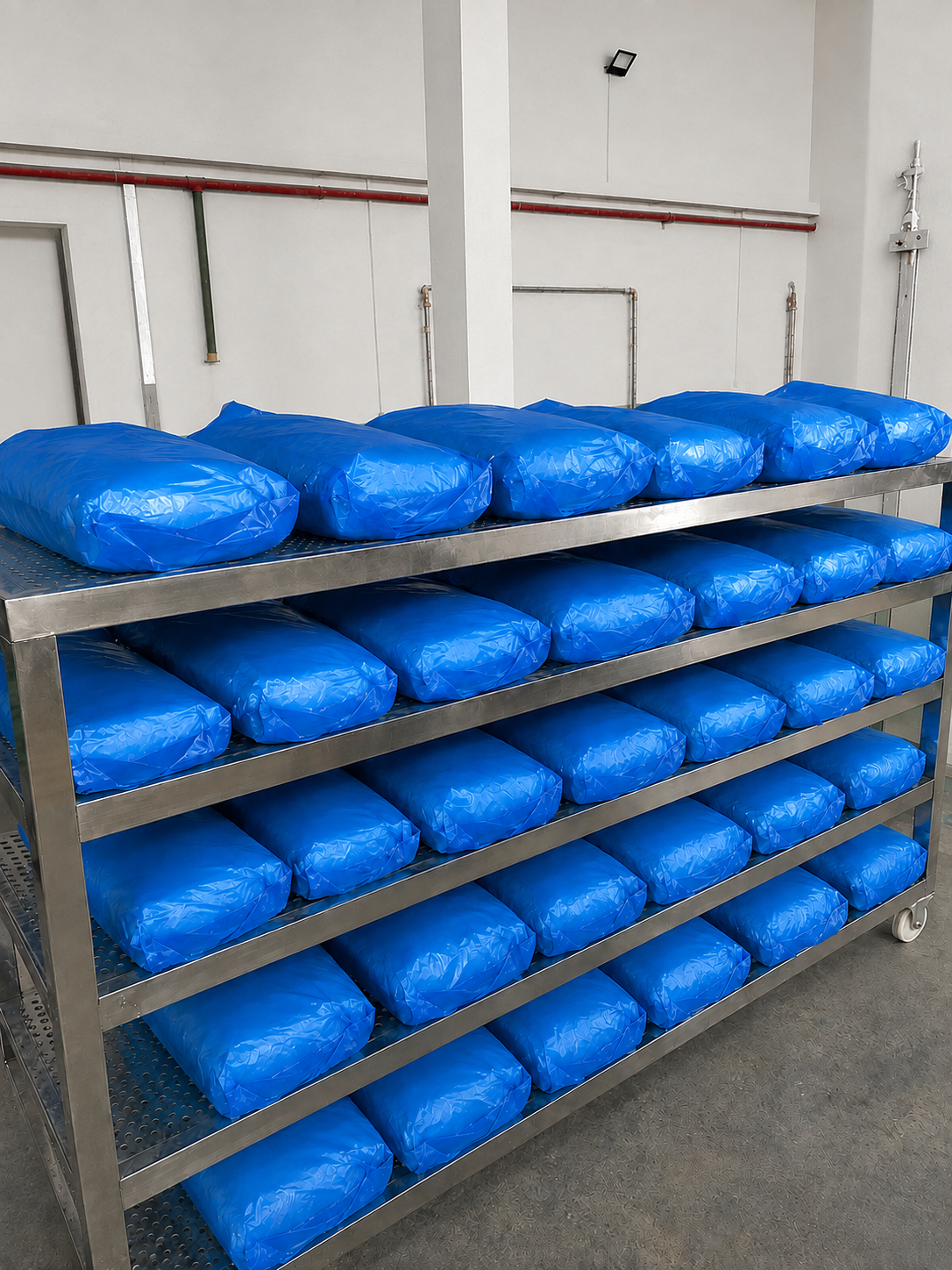
Batch identification and storage discipline are what make a batch COA traceable back to the delivered material.
Matching Purchase Terms to the Intended Application
The same commercial framework applies across applications, but the technical terms do not. A quote should be read against the end use, because the acceptance focus and the document set change with it.
| Application | Grade family to quote | What the quote must pin down | Documents to confirm |
|---|---|---|---|
| Composite insulator housings and sheds | Electrical insulation-grade HTV silicone rubber, for example YK-3160 | Dielectric strength, volume resistivity, hydrophobicity, tracking and erosion resistance, flame retardancy, hardness tolerance, curing system, and compatibility with the mold, primer, and FRP core | TDS, batch COA, and mechanical, electrical, hydrophobicity, tracking and erosion, flame-retardancy, and UV-aging test reports |
| Cable accessories | HTV silicone rubber for cable accessories | Hardness, elongation, tear strength, processing method, and packaging format | Grade TDS, batch COA, and applicable compliance documents |
| Automotive and industrial molded parts | Silicone rubber for automotive parts and components, gasket grades, heat-resistant and flame-retardant grades, high-tear grades | Hardness, tear strength, service temperature expectations, and dimensional stability in the mold | Grade TDS and batch COA |
| Extruded profiles and insulation components | Extrusion-grade HTV silicone rubber and fumed silica-reinforced grades | Extrusion consistency, dimensional control, and packaging suited to continuous feeding | Grade TDS and batch COA |
| Food-contact kitchenware and baking molds | Food-grade HTV silicone rubber, for example YKS-8850 | Hardness, color, curing system, and packaging hygiene | FDA food-contact compliance documentation, LFGB test reports, and third-party test documentation to US FDA 21 CFR 177.2600 upon request |
Liquid silicone rubber is a separate processing route rather than a substitute on the same terms. LSR captured 48.1% of the silicone elastomers market share in 2025, primarily used for precision medical and automotive parts, according to the Silicone Elastomers Market Report 2035. Where a buyer is evaluating LSR silicone rubber for composite insulators or LSR silicone rubber for cable accessories, the processing route, metering equipment, and acceptance plan all change, and the purchase terms should be rewritten rather than adapted.
Custom Compounds Compared with Standard General-Purpose Grades
Most HTV purchasing decisions come down to a choice between a standard general-purpose grade and an application-specific formulation. The difference is not only performance — it is who absorbs the process risk.
A customized HTV silicone rubber formulation is developed against the customer’s processing conditions and performance requirements. A standard general-purpose grade offers fixed specifications with limited customization, which means the customer adapts the production process to the material rather than the other way round. For straightforward molded parts without demanding electrical or outdoor requirements, that trade-off is often acceptable and simpler to manage.
The commercial implication is that a customized formulation may carry a different unit price from a standard grade. Its stable processing performance can help reduce production adjustments, material waste, trial costs, and the risk of rejected products — but actual savings depend on the customer’s formulation and production conditions. There is a further boundary that applies to both options: material selection does not by itself validate a finished part. A production trial using the actual mold, curing conditions, and bonding system, followed by finished-product validation, is the step that converts a material specification into a confirmed process.
Long-Term Purchase Terms: MOQ, Repeat Orders and Supply Continuity
For multi-year programs, the terms that matter most are the ones that govern the second, fifth, and twentieth order. The standard framework used for HTV silicone rubber supply sets a MOQ of 2,000 kg per grade or specification, with trial-order quantities subject to confirmation. Delivery is quoted FOB Shenzhen, China, with EXW, CFR, or CIF terms available for discussion according to destination and order quantity. Payment terms are 100% T/T before shipment for initial orders, while alternative terms for repeat or large-volume orders are subject to mutual agreement and credit approval.
Those last two points are what turn a first order into a supply relationship. Credit approval and repeat-order terms are not concessions granted automatically; they are the mechanism by which a supplier and buyer formalize an ongoing program, and they are usually reviewed together with order history and specification stability.
Continuity also depends on capacity and traceability rather than on pricing alone. Yakows Technology (Dongguan) Co., Ltd. is a manufacturer of high-performance HTV/HCR silicone rubber compounds and customized silicone material solutions, established in 2020 and operating a 5,000 m² manufacturing facility supported by a production, quality-control, engineering, and international sales team, with monthly production capacity of approximately 400,000 to 1,000,000 kg and annual output of 4,800,000 to 12,000,000 kg. Approximately 70% of products are supplied to overseas customers in Southeast Asia, the Middle East, Eastern Europe, Latin America, and North America. Support for recurring programs includes formulation adjustment, technical consultation, batch traceability, and ongoing after-sales support.
Market Signals That Are Changing HTV Purchasing Conversations
Several external signals explain why purchase terms are being specified more tightly than they were a few years ago. The global silicone rubber market was valued at USD 5.7 billion in 2025, with HTV silicone rubber holding a dominant 45.2% market share, according to a Vertex AI Search / Google Cloud market reference. Automotive applications accounted for 30.1% of the silicone rubber market share in 2025 by the same source, which means a large share of HTV demand now comes from buyers with formal supplier-approval processes.
Upstream capacity is expanding as well. China’s silicone monomer production capacity reached 6.89 million tons in 2024, a 21.09% year-on-year increase, according to Zhuochuang Information via IOTA. At the specialty end, Dow Inc. announced a USD 100 million investment to expand specialty silicone manufacturing in China, the United States, and Japan through 2027, per Dow corporate news. On the application side, the silicone rubber insulation coatings market is projected to reach USD 4.12 billion by 2035 at a CAGR of 5.73%, according to Market Research Future.
Standards pressure moves in the same direction. Composite polymer silicone rubber tension insulators must adhere to international standard IEC 61109 for safety and environmental performance, and silicone rubber for insulators has passed 5,000-hour accelerated aging tests under IEC 61109 and IEC 62217. Buyers working in regulated categories increasingly expect material documentation to be structured around that kind of framework rather than produced on request.
One caution is worth stating: market size estimates for silicone rubber vary significantly between research bodies depending on how primary forms, secondary forms, and elastomer categories are counted. Those figures are useful as directional signals about demand and capacity, not as exact measurements — and they should not be quoted in a purchase order.
Future Outlook
Expanding monomer capacity at the raw-material end and continued specialty investment at the top of the value chain point toward more grade options and more suppliers competing on specification rather than on category. For buyers, that is a mixed benefit: more choice, but also more variation in how completely suppliers document their materials.
The predictable direction of travel is toward pre-agreed acceptance plans, batch-level traceability, and document packages that are maintained rather than assembled on request. Programs that run for multiple years will increasingly treat document continuity — the ability to produce a current TDS, a batch COA for every shipment, and application-specific compliance records — as part of the commercial terms, not as an afterthought once a quality question arises. Buyers who build that expectation into the quotation stage will spend less time resolving specification disputes later.
Frequently Asked Questions
What are the purchasing terms and acceptance criteria for HTV silicone rubber?
Standard commercial terms for HTV silicone rubber supply are as follows. MOQ: 2,000 kg per grade or specification, with trial-order quantities subject to confirmation. Delivery terms: FOB Shenzhen, China, with EXW, CFR, or CIF terms also open for discussion according to destination and order quantity. Acceptance criteria: pre-shipment inspection according to the mutually agreed product specification, with each batch inspected before release and a batch COA available; third-party inspection may be arranged upon request, with scope and cost agreed in advance. Payment terms: 100% T/T before shipment for initial orders, with alternative terms for repeat or large-volume orders subject to mutual agreement and credit approval.
Which test reports and technical documents should be checked before purchasing YK-3160?
Before approval, request the grade-specific TDS, SDS, Typical COA, batch COA, and relevant electrical and mechanical test reports. The verification items that matter include hardness, density, tensile strength, elongation, tear strength, hydrophobicity, dielectric strength, volume resistivity, dielectric loss, tracking and erosion resistance, flame retardancy, and UV-aging resistance. Each document should correspond to the grade and hardness actually ordered, and the batch COA should be traceable to the shipped batch number.
What is HTV silicone rubber for composite insulators, and why is it used?
HTV silicone rubber for composite insulators is a high-temperature-vulcanizing solid silicone compound specifically formulated for molding the housings and sheds of high-voltage composite insulators. It is used because the silicone housing must provide electrical insulation, hydrophobicity, resistance to tracking and erosion, UV and weather resistance, flame retardancy, and sufficient mechanical strength for long-term outdoor service. These properties help protect the FRP core and maintain reliable insulation performance under rain, pollution, humidity, ultraviolet exposure, and electrical stress. Compared with general-purpose HTV silicone rubber, an electrical insulation grade normally contains a formulation optimized for dielectric properties, hydrophobicity, flame retardancy, and resistance to environmental aging. Final material selection should also consider the mold design, injection or compression-molding process, curing conditions, primer, FRP core, required voltage class, and applicable finished-insulator standards, with a production trial and finished-product validation before mass production.
How should HTV silicone rubber be selected for composite insulator manufacturing?
Selection should follow the insulator voltage class, outdoor environment, molding process, required hydrophobicity, tracking and erosion resistance, dielectric strength, mechanical properties, FRP-core bonding system, and applicable test standards. Hardness or price alone is not a sufficient selection basis, because neither verifies long-term outdoor electrical performance. A production trial using the actual mold, FRP core, primer, curing conditions, and manufacturing process should be completed, followed by finished-insulator testing, before mass production begins.
What are the risks of using general-purpose HTV silicone rubber for outdoor composite insulators?
Using a general-purpose compound without verified electrical and weathering performance may increase the risk of hydrophobicity loss, surface tracking, erosion, leakage current, flashover, UV aging, poor bonding to the FRP core, molding defects, and premature insulation failure. Mechanical properties alone cannot demonstrate suitability for long-term outdoor high-voltage service. These risks typically arise when material is chosen by hardness or price without verifying electrical and outdoor-aging performance, and they are aggravated by prolonged UV exposure, humidity, pollution, high electrical stress, unsuitable curing conditions, or unstable batch-to-batch quality. Mitigation relies on an electrical insulation grade with verified properties, documented compatibility with the primer and FRP core, and finished-insulator testing before mass production.
Should a buyer choose a standard general-purpose grade or an insulation-grade compound such as YK-3160?
Standard general-purpose HTV silicone rubber is mainly evaluated by hardness, tensile strength, elongation, and basic processing performance. An insulation-grade compound such as YK-3160 is additionally designed and tested for critical outdoor electrical properties, including ≥22 kV/mm dielectric strength, ≥2 × 10¹⁴ Ω·cm volume resistivity, HC2 hydrophobicity, V-0 flame retardancy, tracking and erosion resistance, and UV-aging resistance. Insulation-grade material is the appropriate choice for outdoor composite insulator housings, particularly at higher voltage classes. General-purpose grades remain suitable for ordinary molded parts that do not require verified outdoor electrical insulation performance, or where suitability has been confirmed through complete material and finished-product testing.
Buyers preparing a first specification can request HTV silicone rubber quotes, technical documents, and samples from Yakows Technology (Dongguan) Co., Ltd., a Dongguan-based manufacturer of HTV/HCR silicone rubber compounds, through its website at https://yaksil.com. The company brochure, covering product families and manufacturing capabilities, is available for download here: Yakows brochure (PDF).
Tem questões ou precisa de mais detalhes?
Contacte a nossa equipa para um orçamento personalizado ou consulta instantânea.
Solicitar orçamento
Preencha o formulário abaixo e a nossa equipa entrará em contacto com uma proposta personalizada.
Chat direto do WhatsApp
Prefere conversar em tempo real? Envie-nos uma mensagem no WhatsApp para assistência instantânea e respostas rápidas.
- Obter orçamento personalizado
- Partilhar fotos ou documentos
- Discuta as suas necessidades diretamente
Geralmente responde em 5–30 minutos durante o horário de expediente.