
HW91062 vs HW91060: Diffuser Fragrance Oil Buyer Guide
HW91062 vs HW91060: Diffuser Fragrance Oil Buyer Guide
For a home-fragrance buyer at decision stage, HW91062 and HW91060 are not competing for a single best label. Both are HERYNN diffuser fragrance oils described as DPG-based, low-evaporation materials for reed diffusers, scent machines and room sprays. The practical choice turns on scent direction, how each oil performs in the buyer's device and base, the trial route, and whether the model-specific IFRA, COA and SDS package supports the target market.
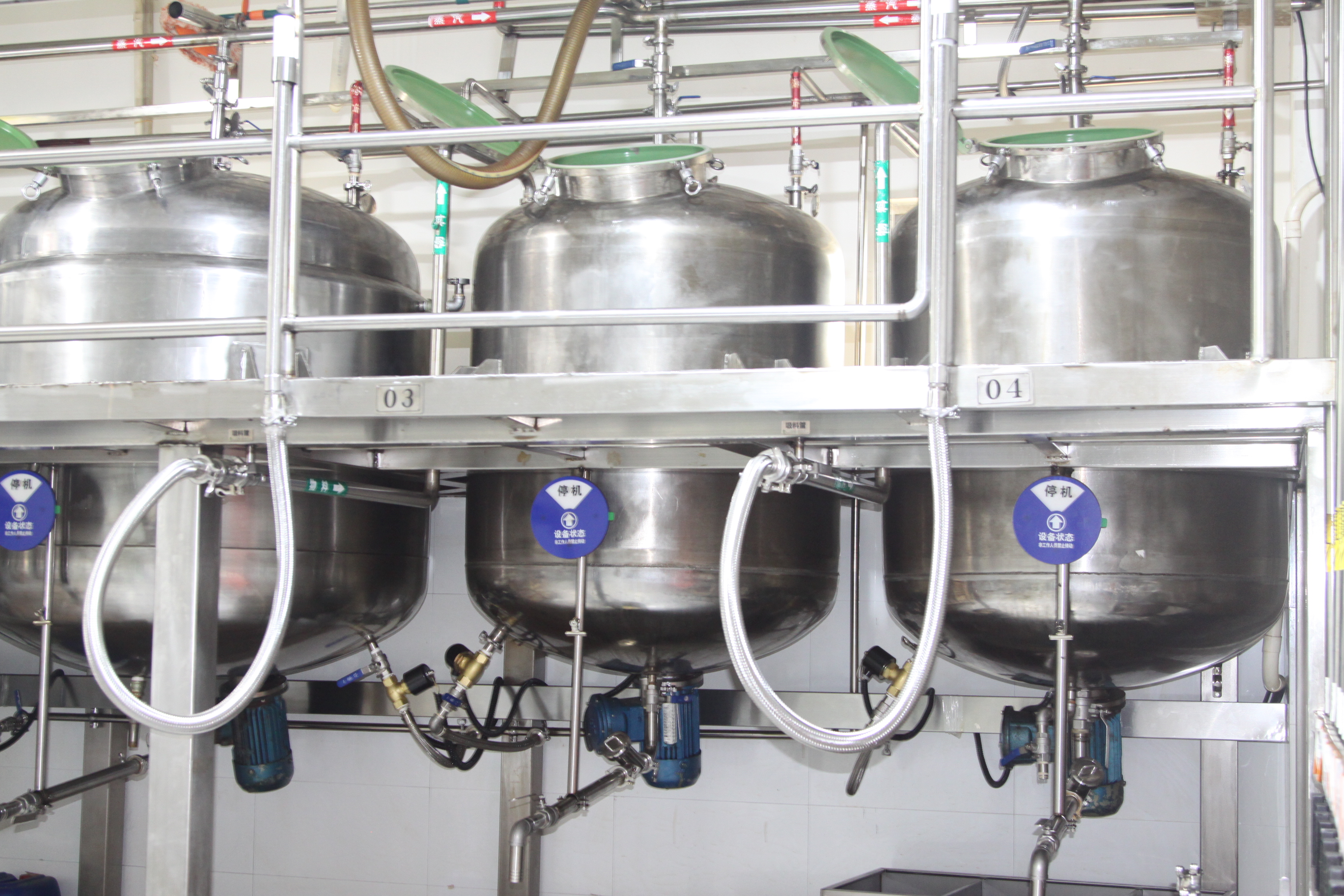
Industry context: fragrance manufacturing and batching capability matters when a buyer moves from a 1 kg trial to repeat diffuser-oil supply. Image source: HERYNN content unit, factory.JPG.
Quick answer: what separates HW91062 and HW91060
HW91062 is positioned as a sweet citrus-fruity diffuser fragrance oil. HW91060 is positioned as a green aquatic-floral diffuser fragrance oil. Both are described as using DPG as the carrier and both are described as low-evaporation oils intended for reed diffusers, scent machines and room sprays. The difference is therefore not a simple grade hierarchy. It is a difference in scent direction, buyer brief and validation path.
The commercial entry point also differs in presentation. HW91062 is positioned with a documented 1 kg trial or sample validation option. HW91060 is listed at a 1 kg MOQ. HERYNN's published general position is a 1 kg minimum order quantity for its fragrance oils, compared with 10–50 kg for international fragrance houses. For a buyer, those details matter less as marketing points and more as practical steps for olfactory approval, compatibility testing and documentation review before a larger order.
| Comparison point | HW91062 | HW91060 | What the buyer should verify |
|---|---|---|---|
| Scent direction | Sweet citrus-fruity | Green aquatic-floral | Blind olfactory panel in the target room and device; compare against the brand brief, not personal preference alone. |
| Carrier | DPG | DPG | Confirm the model-specific carrier declaration on the technical data sheet or SDS and test compatibility with the intended device and packaging. |
| Intended applications | Reed diffusers, scent machines, room sprays | Reed diffusers, scent machines, room sprays | Confirm performance in the actual device, wick, spray base or machine setting; do not assume interchangeability from the application list alone. |
| Evaporation positioning | Described as low-evaporation | Described as low-evaporation | Validate over the intended refill cycle and storage conditions; treat low-evaporation as a positioning term, not a measured guarantee. |
| MOQ and trial route | Positioned with a 1 kg trial/sample validation option | Listed at a 1 kg MOQ | Confirm sample size, sample price, courier cost, testing purpose and the point at which the 1 kg trial converts to a commercial order. |
| Documentation | IFRA, COA and SDS available on request; model-specific package to be confirmed | IFRA, COA and SDS available on request; model-specific package to be confirmed | Request the documents for the exact model, intended product category and use level; check batch and issue dates. |
| Environmental certification | ISO 14001:2015 scope noted for the model | ISO 14001:2015 listed as the applicable standard | Treat ISO 14001 as environmental-management evidence, not as a product-safety certificate or IFRA approval. |
| Likely brief fit | Bright, fruity, citrus-led home-fragrance concepts | Fresh, green-floral and aquatic home-fragrance concepts | Decide through a documented scent brief and application test; neither profile is universally superior. |
Why this comparison matters for home-fragrance buyers
Diffuser fragrance oils sit in a crowded category where suppliers often use similar language: long-lasting, low-evaporation, premium, suitable for reed diffusers, compatible with machines, and available with documentation. Those claims are not equivalent across products. A buyer comparing HW91062 and HW91060 should separate four questions: what the oil smells like, how it behaves in the intended delivery format, what commercial entry terms apply, and what evidence supports market access and safety review.
The broader category context is commercially significant. Commercial research cited in the available data values the global fragrance oil market at USD 8.50 billion in 2024 and projects USD 11.90 billion by 2032 at a 4.30% CAGR. A separate commercial estimate values the global home fragrance market at USD 26.00 billion in 2025. These are broad market-research estimates, not measures of demand for either HW91062 or HW91060, but they explain why buyers are adding more scent SKUs and asking for tighter documentation at the model level.
Scent structure: citrus-fruity versus green aquatic-floral
Scent direction is the most visible difference. HW91062 is described as sweet citrus-fruity. In broad perfumery terms, that type of profile usually opens with a brighter, juicier impression and can suit buyers who want a room fragrance to feel energetic, clean and immediately noticeable. HW91060 is described as green aquatic-floral. That direction usually reads fresher and softer, with a clean, spa-like or airy character that may suit buyers seeking a calmer, less sweet room presence.
Those are starting hypotheses for a buyer panel, not measured performance conclusions. A citrus-fruity oil can become sharper or weaker depending on the reed diffuser wick, room airflow, temperature and fill volume. A green aquatic-floral oil can read too soft or too soapy in the same conditions. The correct comparison is a blind or coded olfactory test using the same device, fill weight, room size and evaluation time for both oils. The panel should record intensity at opening, mid-cycle and late-cycle, plus any unwanted notes.
Buyers should also separate scent preference from brand fit. A hospitality buyer may want a fresh, low-sweetness signature for lobbies and meeting rooms. A retail buyer may want a brighter fruity top note for seasonal displays. A private-label buyer may need both profiles to cover different price tiers or customer segments. Neither HW91062 nor HW91060 should be selected merely because its scent family sounds more premium; the fit depends on the room, brand and repeat-purchase expectation.
Carrier material: both use DPG, but that does not make them interchangeable
Both oils are described as DPG-based. DPG, or dipropylene glycol, is a common carrier solvent in fragrance compounds. It can help carry and dilute the fragrance concentrate, and it is widely used in home-fragrance applications. But a shared carrier declaration does not prove identical behaviour in a reed diffuser, scent machine or room spray. It only means the carrier system is described in the same broad category.
Buyers should ask for the model-specific technical data sheet and SDS for HW91062 and HW91060. Check the carrier declaration, flash point, density, refractive index where supplied, recommended dosage or use level, storage conditions and any handling precautions. Then test each oil in the actual delivery format. For reed diffusers, the key checks are draw rate, colour stability, residue on reeds and consistency across the refill cycle. For scent machines, check viscosity, atomisation behaviour and any manufacturer guidance on oil compatibility. For room sprays, check solubility in the intended base and whether the oil is supplied as a concentrate rather than a ready-to-use spray.
This is also where a common buying error appears: a buyer may approve one DPG-based sample and assume a second DPG-based oil will behave the same. It may not. Fragrance concentrate composition, dosage and the interaction with the device can change the result. Both HW91062 and HW91060 should therefore be validated separately, even though their carrier description is the same.
Intended applications: reed diffusers, scent machines and room sprays
HW91062 and HW91060 are both described as diffuser fragrance oils for reed diffusers, scent machines and room sprays. That overlap is useful for buyers who want one supplier relationship across several home-fragrance formats. It does not mean the same oil is optimal for every format. Each application places different demands on the fragrance oil and on the buyer's validation process.
For reed diffusers, the buyer should evaluate evaporation rate, scent throw, wick or reed saturation, and consistency over the intended refill period. A low-evaporation positioning is relevant here, but it should be verified in the actual bottle, reed count and room condition. For scent machines, the buyer should confirm that the oil is compatible with the machine's recommended oil specification and that it does not cause clogging, residue or inconsistent output during a trial run. For room sprays, the buyer should confirm whether the oil is intended to be diluted into a spray base and whether the final formulation remains stable, clear and acceptable in odour.
The application list should also be read as a boundary. HW91062 and HW91060 are positioned as diffuser oils. They should not be assumed suitable for body wash, shampoo, hair products, body lotion, body mist, perfume or candles without a separate application-specific grade, IFRA category check and compatibility test. HERYNN's broader product scope covers fine fragrance, personal care, air care, candle fragrance and home care, but that broad scope does not convert a diffuser oil into a personal-care or candle oil. Buyers should match the model to the intended finished product, not to the supplier's widest capability list.
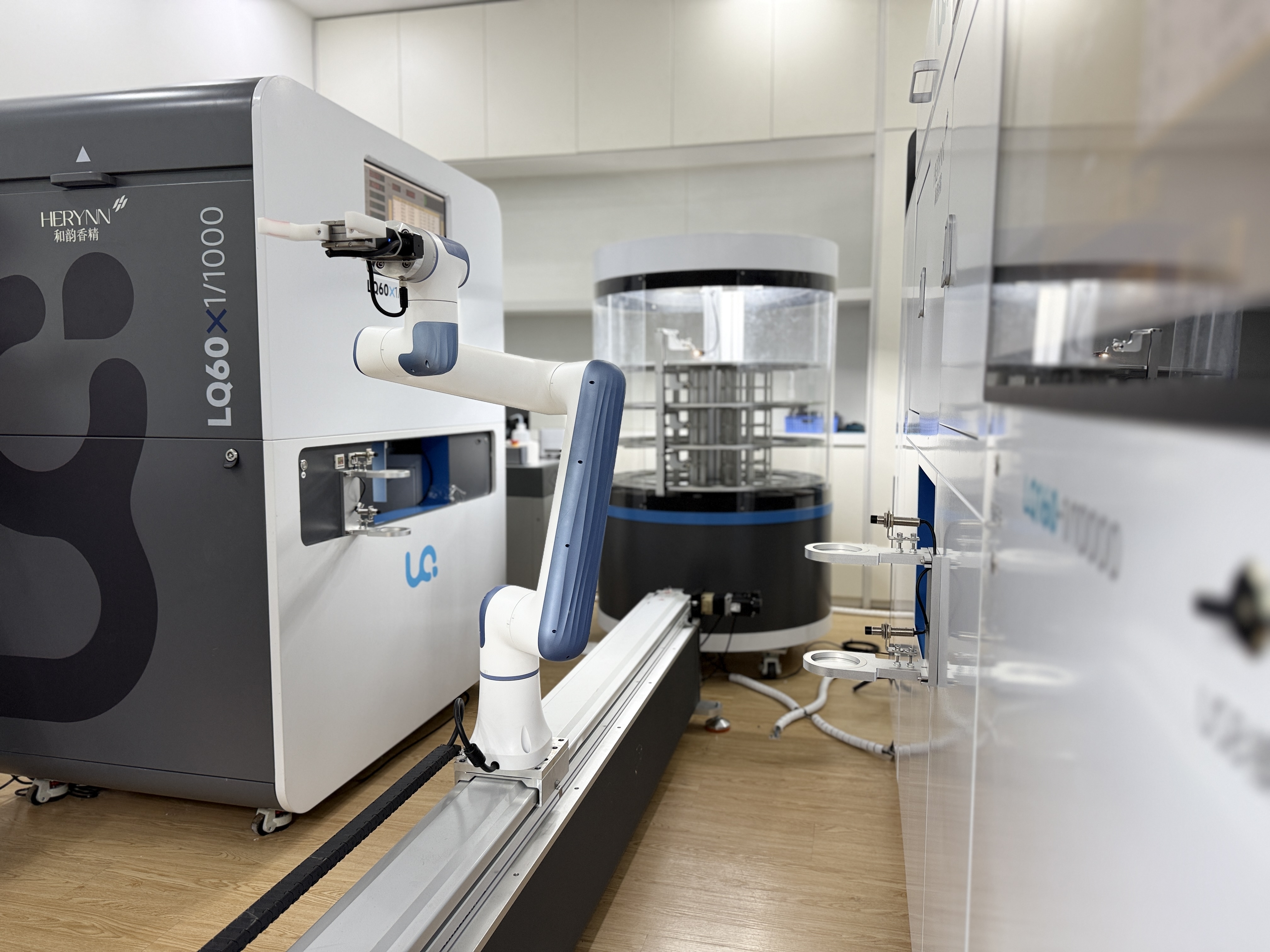
Large automatic batching lines support repeatability in larger fragrance-oil orders. The image is manufacturing context, not a model-specific performance claim for HW91062 or HW91060.
MOQ, sampling and the trial-to-order path
At decision stage, MOQ is not just a number. It determines how much risk a buyer can remove before committing to a larger order. HW91062 is positioned with a 1 kg trial or sample validation option. HW91060 is listed at a 1 kg MOQ. Both sit within HERYNN's published general 1 kg minimum order position, which the company compares with 10–50 kg for international fragrance houses.
A practical trial plan should define what the 1 kg is for. If the sample is used only for smelling, the buyer learns about scent preference but not about device performance. If the sample is used for a small-scale reed diffuser, scent machine and room spray test, the buyer gains more useful evidence: fill behaviour, odour intensity over time, colour change, residue and packaging compatibility. The buyer should confirm whether the 1 kg trial is a saleable sample, a free sample or a paid validation unit, and whether courier costs and documentation are included.
HERYNN's stated supply position also includes sample lead time of 7–15 days, custom development of 2–4 weeks and technical response of 24 hours or less. The company compares those figures with 4–8 weeks for samples, 8–16 weeks for custom development and 2–5 days for technical response at international fragrance houses. Those are supplier-stated comparisons; they are useful for planning, but they should be confirmed in the quotation and sample agreement for the specific model and destination.
IFRA, COA and SDS: what to request for each model
Documentation is where a diffuser-oil comparison becomes a procurement decision. HERYNN states that it can provide SPEC, COA, IFRA Certificate of Conformity, allergen declarations, VOC reports and California Proposition 65 documents on request, together with SDS in EU CLP, US GHS and China GHS formats. For HW91062 and HW91060, the buyer should request the model-specific versions rather than a generic company document set.
An IFRA Certificate of Conformity confirms that a fragrance compound complies with IFRA Standards for a stated product category and use level. It is category- and dosage-specific, so it must match the intended finished product and the actual use level. IFRA also states that a conformity certificate applies to fragrance mixtures intended to be directly included in a finished consumer product, while raw materials generally do not receive an IFRA certificate when a specific IFRA Standard applies. Buyers should therefore confirm that the document is issued for the correct model, application category and dosage, and should not treat it as a substitute for destination-market law.
A COA is batch-specific evidence. The buyer should check that the COA matches the delivered lot, the model code and the agreed specification. An SDS is the safety and handling document; it should match the model and the regulatory format required by the destination market. If the product is sold in the EU, for example, the buyer may need an EU CLP-format SDS and an allergen declaration; for the US, a US GHS-format SDS and, where relevant, California Proposition 65 documentation may be required. These are document checks, not automatic market-access approvals.
The certification record also associates both diffuser models with ISO 14001:2015. The scope statement for HW91062 covers design and production of liquid fragrance, liquid tobacco flavor, food liquid flavor and related management activities, while the applicable standard listed for HW91060 is ISO 14001:2015. ISO 14001 is an environmental-management certification. It is not a product-safety certificate, and it does not replace IFRA conformity, COA review or SDS assessment.
Manufacturing and supply context
HERYNN Fragrances & Flavors Co., Ltd. is a China-based fragrance manufacturer with in-house perfumery and compounding, two R&D centres and production sites in Shanghai and Guangzhou, and an R&D team that accounts for over 40% of staff, including 15 in-house perfumers. The company states that it serves over 800 customers in more than 50 countries and works from a formula library of more than 100,000 formulas and over 4,500 natural and essential-oil formula reserves.
For buyers, the relevant supply question is not only whether a supplier can make a pleasant scent. It is whether the supplier can repeat the same model, provide the right documents and support a scale-up without changing the commercial or technical basis. HERYNN describes two plants with large automatic batching lines, which it says support higher throughput and more consistent large-batch production than single-site, semi-automatic compounding often used by many domestic suppliers. That is a supplier statement, but it points to a useful buyer check: ask how the model will be batched, what batch size applies and how COA release will be handled as volume increases.
How HW91062 and HW91060 compare with international fragrance houses
HERYNN reports a 1 kg MOQ versus 10–50 kg for international fragrance houses, sample lead time of 7–15 days versus 4–8 weeks, custom development of 2–4 weeks versus 8–16 weeks, and technical response of 24 hours or less versus 2–5 days. These differences relate to small-volume order flexibility, sampling speed, custom development time and technical response time. International fragrance houses are described as offering deep creative libraries, global application networks and multi-region regulatory coverage, typically at a higher price level and with longer lead times for small volumes.
That comparison does not make one supply model universally better. A buyer with a small trial, a narrow seasonal launch or a need for fast technical feedback may value the lower MOQ and shorter sample path. A buyer with a very large global roll-out, multi-region regulatory filings and a need for a deep historical creative library may value the international house model. The decision should be based on the buyer's order size, target markets, internal formulation capability and documentation workload, not on a generic ranking.
Decision framework for buyers
- Define the scent brief and room context. Decide whether the project needs a sweet citrus-fruity direction such as HW91062 or a green aquatic-floral direction such as HW91060, and record the target intensity, room size and brand positioning.
- Confirm the carrier and device compatibility. Both are described as DPG-based, but the buyer should request model-specific technical data and test each oil in the actual reed diffuser, scent machine or room spray base.
- Request model-specific documentation. Ask for the IFRA Certificate of Conformity for the intended category and use level, the COA for the delivered batch, the SDS in the required regulatory format and any allergen, VOC or Proposition 65 documents needed for the target market.
- Run a coded olfactory and retention test. Evaluate opening, mid-cycle and late-cycle performance, colour change, residue and odour consistency under the intended storage and use conditions.
- Confirm commercial terms. Clarify the 1 kg trial or MOQ basis, sample cost, courier cost, lead time, packaging, batch size and the process for scaling from trial to repeat order.
- Recheck the evidence before scale-up. Confirm that the model code, batch, IFRA category and documentation package still match the final formulation and destination market.
Limitations and what not to infer
Same carrier does not mean same performance. Both oils are described as DPG-based, but their fragrance concentrates differ, and their behaviour in a reed diffuser, scent machine or room spray should be tested separately. Same application list does not mean interchangeable. A buyer may prefer one profile for a bedroom and the other for a lobby, or may find that one oil performs better in a specific device. Low-evaporation is a positioning term, not a measured retention guarantee. The buyer should validate it over the intended refill cycle.
IFRA conformity is a safety-management signal, not a legal market-access certificate. ISO 14001 is an environmental-management certification, not a product-safety approval. A 1 kg MOQ or trial option reduces entry risk, but it does not prove that the oil will perform in every device or that the documentation will satisfy every destination market. Those points should be resolved with model-specific evidence before a purchase order is placed.
Future outlook
As home-fragrance buyers expand their scent portfolios, the diffuser-oil decision is likely to move further toward model-level evidence: carrier declaration, device performance, batch COA, IFRA category and market-specific SDS. That is an analytical expectation based on the documentation requirements already visible in this category, not a forecast of sales or a claim that any one supplier will win share. For HW91062 and HW91060, the near-term buying question is straightforward: which scent direction fits the brief, and which model can be validated with the required documents and commercial terms at the lowest reasonable risk.
FAQ
What is the main difference between HW91062 and HW91060?
The main documented difference is scent direction. HW91062 is positioned as a sweet citrus-fruity diffuser oil, while HW91060 is positioned as a green aquatic-floral diffuser oil. Both are described as DPG-based, low-evaporation oils for reed diffusers, scent machines and room sprays. Buyers should compare them through a coded olfactory test and device trial rather than treating one as universally superior.
Do HW91062 and HW91060 use the same carrier?
Yes, both are described as DPG-based. DPG is a common carrier solvent in fragrance compounds. A shared carrier does not prove identical performance, because the fragrance concentrate and its interaction with the device, base and storage conditions also matter. Buyers should confirm the carrier declaration on the model-specific technical data sheet or SDS and test each oil in the intended application.
Which applications are HW91062 and HW91060 intended for?
Both are described as diffuser fragrance oils for reed diffusers, scent machines and room sprays. They should not be assumed suitable for body wash, shampoo, hair, body lotion, body mist, perfume or candles without a separate application-specific grade, IFRA category check and compatibility test. The application list is a boundary for qualification, not a guarantee of suitability in every format.
What is the MOQ and sample route for these two oils?
HW91062 is positioned with a 1 kg trial or sample validation option, while HW91060 is listed at a 1 kg MOQ. HERYNN's published general MOQ is 1 kg, compared with 10–50 kg for international fragrance houses. Buyers should confirm sample cost, courier cost, sample size, lead time and the point at which the trial converts to a commercial order.
Which documents should a buyer request before approving either oil?
A buyer should request the model-specific IFRA Certificate of Conformity for the intended product category and use level, a batch COA, an SDS in the required regulatory format, and any allergen declaration, VOC report or California Proposition 65 document needed for the target market. The IFRA certificate should match the exact model, application and dosage; the COA should match the delivered batch; and the SDS should match the model and destination-market format.
Can HW91062 or HW91060 be used in body wash, perfume or candles?
The available positioning is for diffuser applications, not for body wash, perfume or candles. HERYNN's broader range covers fine fragrance, personal care, air care, candle fragrance and home care, but a diffuser oil should not be assumed suitable for those other finished products without a separate grade, application-specific IFRA category review and compatibility testing. Buyers should match the model to the intended finished product rather than to the supplier's widest capability list.
Company brochure: HERYNN English brochure
Tem questões ou precisa de mais detalhes?
Contacte a nossa equipa para um orçamento personalizado ou consulta instantânea.
Solicitar orçamento
Preencha o formulário abaixo e a nossa equipa entrará em contacto com uma proposta personalizada.
Chat direto do WhatsApp
Prefere conversar em tempo real? Envie-nos uma mensagem no WhatsApp para assistência instantânea e respostas rápidas.
- Obter orçamento personalizado
- Partilhar fotos ou documentos
- Discuta as suas necessidades diretamente
Geralmente responde em 5–30 minutos durante o horário de expediente.