
Half-Bag vs Five-Bag Dough Mixers: The Batch-Size Decision
Half-Bag vs Five-Bag Dough Mixers: The Batch-Size Decision
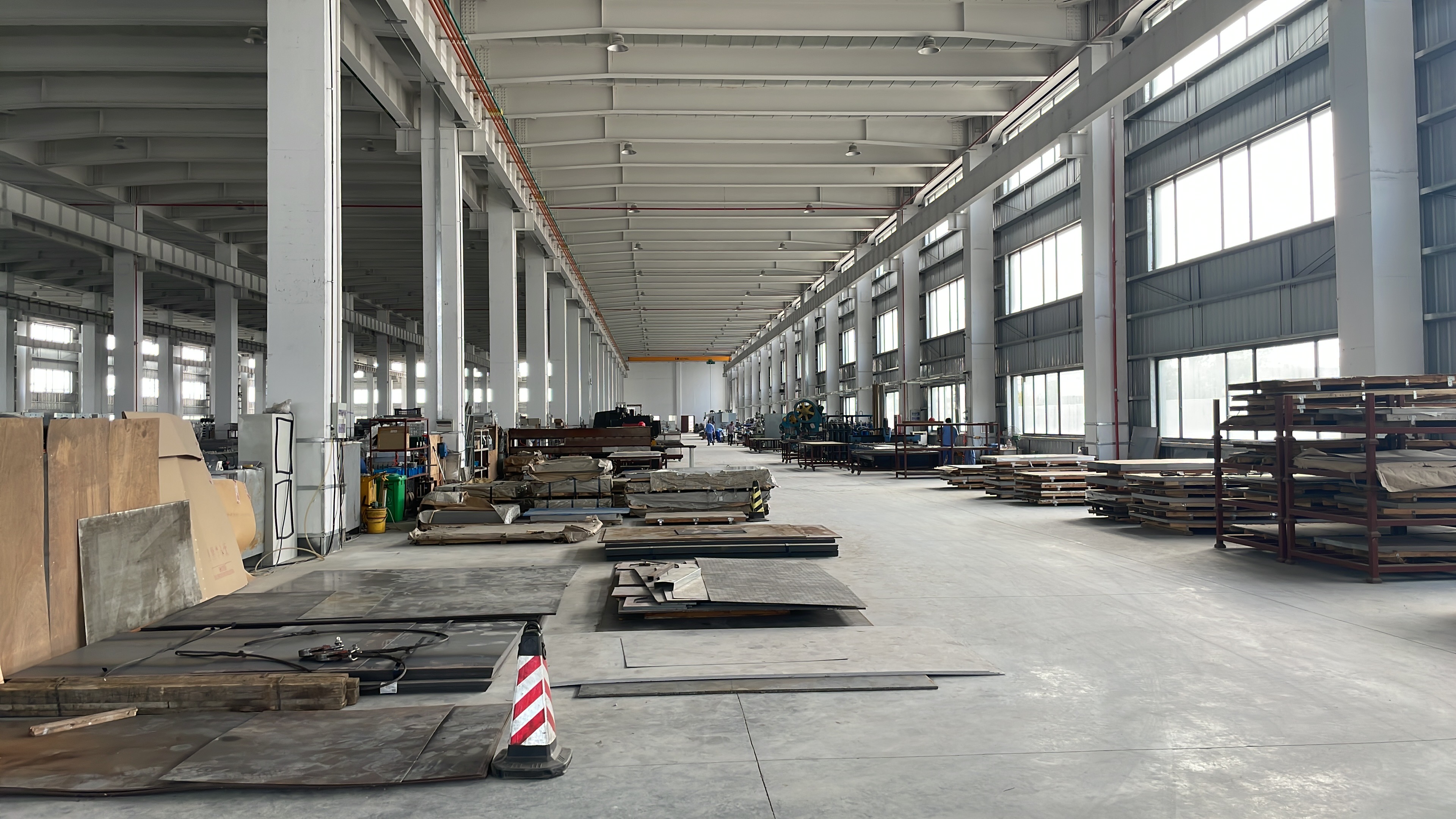
A bakery that mixes five bags of flour in a single batch and a bakery that mixes half a bag at a time are not making the same purchase, even when both are buying a dough mixer. The half-bag buyer is buying flexibility: many small mixes, frequent recipe changes and a machine that drops into an existing shop floor. The five-bag buyer is buying throughput and consistency at volume: fewer starts, longer cycles and a batch large enough to feed a production line for hours. SAMAG Bakery Equipment, the brand of Wuxi Shuangmai Bakery Equipment Co., Ltd, covers both ends of that span with six dough mixer models — SAM-25, SAM-50T, SAM-80, SAM-120, SAM-160 and SAM-240 — with motor power across the range published from 2.2 kW to 26 kW and machine weights from 170 kg to 2200 kg.
This comparison is organised around the decision a buyer actually faces at the evaluation stage: not “which machine is better”, but which batch rhythm the business runs today and expects to run in three years. It deliberately does not assign a power rating or a weight to any individual model in the range. Those figures belong in a quotation, where the exact configuration, supply voltage and options are fixed; inferring them from a model number is how buyers end up with an undersized breaker or an overloaded mezzanine.
Why batch size decides the mixer before any specification does
In a bakery, the mixer sets the tempo for everything downstream. Proofing schedules, oven loading, staffing rotas and cold-room space are all shaped by how much dough becomes available, how often, and how consistently. That is why batch class — half-bag or five-bag — is normally settled before motor power, bowl material or control type are discussed.
The arithmetic is simple and worth stating plainly. A five-bag batch replaces ten half-bag batches. Each of those ten small mixes carries its own weighing, its own start and stop, its own scraping of the bowl, and its own small variation in hydration or mixing time. Collapsing them into one mix removes nine handling events and most of the batch-to-batch drift that comes with them. What it does not remove is the cost of being wrong: a trial recipe that fails in a five-bag batch consumes ten times the flour that the same trial consumes in a half-bag batch, and a changeover in a large mixer interrupts far more downstream production than a changeover in a small one.
For a shop-front bakery running several products a day — steamed buns in the morning, sandwich bread through the afternoon — the half-bag pattern is usually the natural fit because the constraint is variety, not volume. For a food factory running one or two doughs on long shifts, the five-bag pattern is usually the natural fit because the constraint is labour and consistency per kilogram of dough, and splitting production into ten small mixes multiplies both.
What the two batch classes actually ask of a machine
A half-bag class mixer is judged on responsiveness. It starts and stops often, it is cleaned between recipes rather than between shifts, and its value comes from how quickly an operator can move from one dough to the next without waste. Buyers in this class care about footprint, about how close the machine can sit to the bench, about whether one person can load and unload it comfortably, and about whether the installed electrical supply in an existing shop can carry it without a service upgrade.
A five-bag class mixer is judged on sustained load. It runs longer cycles under heavier resistance, it is loaded with larger flour quantities and often with bulk liquid, and the mechanical and electrical demand sits at the opposite end of the same published range. Buyers in this class care about floor loading and point load rather than bench space, about supply capacity and starting current rather than a plug-in upgrade, and about how a two-hour production block is scheduled around a single mix rather than around ten.
Both classes share the same underlying requirement, which is repeatability. A dough that leaves the mixer at a different temperature or a different level of gluten development each time will produce inconsistent proofing times and inconsistent finished product, whatever the oven does afterwards. Mixing is where that variance is either controlled or introduced.
Buyer caution: model numbers in any manufacturer's range do not automatically correspond to flour capacity in bags. The SAMAG range publishes a motor span of 2.2 kW to 26 kW and machine weights of 170 kg to 2200 kg across six models; the rated flour capacity, bowl volume and mixing mode of each model should be confirmed in writing against the specific quotation rather than assumed from the designation.
SAMAG Bakery Equipment in the commercial bakery equipment market
SAMAG Bakery Equipment is the brand of Wuxi Shuangmai Bakery Equipment Co., Ltd, a manufacturer and distributor of bakery equipment founded in 2002. Its stated product scope covers egg beaters, mixers, dough moulders, dough sheeters, proofing cabinets, electric and gas ovens, and rotary ovens, supported by factory planning and design services and customised solutions for individual client requirements. The company reports a design and manufacturing team that includes five engineers, a product range exported to global, Southeast Asian and European markets, and a domestic service structure of 17 offices across China.
For a buyer comparing batch classes, the relevant point is not the breadth of that catalogue but its coherence. A mixer is only one station in a line that also includes sheeting, dividing, moulding, proofing and baking; a supplier that also builds proofers and ovens can be asked to reconcile mixer output with proofer capacity and oven loading, which is where mismatched batch sizes usually show up. SAMAG states that it performs safety testing and sample baking testing and seeks conformity with international standards such as CE and ISO 9001. That statement is company-reported: it does not by itself establish model-specific declarations of conformity, certificate scope, issuing body or validity, and buyers in regulated markets should request the documentation that applies to the exact model being quoted.
Technical comparison: power, mass and control
Motor power from 2.2 kW to 26 kW
Motor power is the specification most often read in isolation and most often misread. Across the SAMAG dough mixer range the published span runs from 2.2 kW to 26 kW — roughly a twelvefold difference between the smallest and largest unit. What that span buys is not simply speed: a larger batch presents more dough mass to the mixing arm, and holding the same mixing intensity against that mass requires proportionally more torque. A machine sized for a small batch, pushed to a large one, does not mix faster; it mixes longer, heats the dough more through friction, and stresses the drive train.
The practical consequence for the buyer is that motor power is a floor-planning figure as much as a mixing figure. Before signing, confirm the actual rating of the quoted model, the supply voltage and phase it requires, the starting current, and whether the existing distribution board and cabling can carry it. In many conversions from manual or small-batch mixing to five-bag production, the electrical work is the item that determines the installation date, not the machine delivery.
Equipment weight from 170 kg to 2200 kg
Machine weight across the range runs from 170 kg to 2200 kg, and it is the specification buyers most often discover too late. A 170 kg unit is a floor-standing machine that most commercial premises can carry without structural review. A unit at the upper end of that span is a different installation problem: point loading on the slab, clearance for bowl handling and cleaning access, and the route the machine must travel from the loading bay to its final position all need checking before delivery.
Weight also tracks with stability. Heavier machines absorb the reaction forces of a long, heavily loaded mix rather than transmitting them into the floor and frame, which matters when a mixer runs continuously through a shift. The trade-off is that heavier units are effectively fixed assets: once installed, relocating them is a project rather than a move.
Automatic and manual operating modes
The range is described as offering both automatic and manual modes, which lets an operator run a defined cycle unattended and still retain direct control when a dough needs adjustment. For five-bag production this is the difference between an operator who is present at the machine and an operator who is free to handle dividing or oven loading during the mixing cycle. For half-bag production, manual control is used more often, because small batches are where recipes are adjusted in real time.
Dual-timer digital control
Dual-timer digital controls allow two timed stages to be set within a mixing cycle instead of one. That matters because most doughs are not mixed at a single speed for a single duration; they are combined, rested and developed in stages. Buyers should confirm precisely what the two timers govern on the quoted model — forward and reverse rotation, low and high speed, or first and second mix stages — because the answer determines how much of a recipe can be reproduced without operator judgement. A dual-timer control that automates the stage a bakery actually needs is worth more than a larger feature list that does not.
Stainless steel mixing arm and cleaning
The mixing arm is stainless steel, which supports cleaning between batches: the surface resists corrosion under repeated wet cleaning and does not trap dough residue the way a damaged or painted surface can. Cleaning time is a real cost in the half-bag pattern, where changeovers happen several times a day, and it is a real cost in the five-bag pattern too, where a single poorly cleaned arm can contaminate an entire production block. Buyers should ask for the cleaning procedure for the specific model and confirm access to the bowl and arm without dismantling the drive.
Application fit: steamed buns, stuffed buns, sandwich bread and noodles
Batch class and dough type interact, and the interaction usually decides the purchase. The four applications most often raised by buyers of this range illustrate why.
Steamed buns. Bun dough is relatively soft and is normally mixed to a moderate level of development — enough for a smooth, pliable sheet, not so much that the dough fights the moulder. Small, frequent mixes suit this application because dough temperature and rest time are easy to control across a short cycle, and because a batch that is slightly off can be corrected in the next mix rather than in the next shift. A half-bag class machine matches that rhythm; a five-bag class machine makes sense once bun production runs as a continuous line with a fixed recipe.
Stuffed buns. The dough requirement is similar to steamed buns, but the production constraint shifts to filling preparation and wrapping throughput. Here the mixer's job is to deliver a consistent, repeatable dough on a schedule that keeps the wrapping station supplied. A five-bag batch creates a long window of uniform dough, which suits a staffed wrapping line; a half-bag batch suits a shop where wrapping and steaming are interleaved with other products.
Sandwich bread. Bread dough needs fuller gluten development and longer mixing than bun dough, and friction heat becomes a genuine constraint — a long mix in a large bowl warms the dough, and warm dough ferments faster and proofs less predictably. This is the application where the case for a larger machine is strongest on labour and weakest on temperature control, and where staged mixing with a dual-timer control and attention to dough temperature both matter. Buyers moving to five-bag bread production should plan chilled water or flour handling at the same time as the mixer, not afterwards.
Noodles. Noodle dough is stiff and low in hydration, which places a different demand on the drive: resistance is high from the first minute rather than building gradually. Small-batch noodle production is common in shops that also bake, and there the half-bag class keeps changeovers manageable. Where noodles run as a dedicated line, the machine must be specified against a stiff dough rather than against a bread dough of the same batch size, and that should be stated explicitly in the enquiry.
Side-by-side: how the two classes compare on the criteria buyers score
| Decision criterion | Half-bag class | Five-bag class |
|---|---|---|
| Batch rhythm | Several small mixes per shift; production paced by recipe sequence | One or two large mixes covering hours of downstream production |
| Recipe flexibility | High — a failed trial wastes a small quantity of flour | Low — a trial or changeover consumes a full large batch |
| Labour per kilogram of dough | Higher — more weighing, loading, scraping and cleaning events | Lower — handling events are consolidated into fewer cycles |
| Installed power | Confirm per model; the published range starts at 2.2 kW | Confirm per model; the published range extends to 26 kW |
| Machine weight and floor loading | Confirm per model; the published range starts at 170 kg | Confirm per model; the published range extends to 2200 kg |
| Controls | Manual mode used heavily for in-cycle adjustment | Automatic mode and dual-timer staging carry more of the recipe |
| Cleaning and changeover | Frequent, short cleaning cycles between recipes; stainless steel arm supports wet cleaning | Less frequent but larger cleaning events; access and procedure matter more |
| Typical fit | Shop-front bakeries, multi-product menus, test batches, small teams | Food factories, single or dual-SKU volume, long shifts, staffed lines |
| Main risk if mismatched | Batch splitting and labour cost creep as volume grows | Idle capacity, dough held too long, and inflexibility on new products |
Cost and maintenance claims: how to read them before you rely on them
Supplier comparisons of commercial bakery equipment commonly include headline advantages, and this range is no exception. The manufacturer reports a 15% to 20% price advantage compared with other commercial bakery equipment, 5% to 10% lower energy consumption, a total cost of ownership around 10% lower than alternatives, and lower maintenance requirements than similar products.
These are manufacturer-reported figures, and a buyer at the evaluation stage should treat them as a starting point for questioning rather than as an input to a spreadsheet. Three qualifications matter. First, the stated comparison base is “other commercial bakery equipment” broadly, not dough mixers of comparable batch size, so the reference set is wider than the purchase under consideration. Second, no independent test report, measurement method, operating condition or sample size accompanies the figures in the published material, which means the basis for the percentages is not visible to the buyer. Third, energy and maintenance outcomes depend heavily on duty cycle: a half-bag mixer run intermittently and a five-bag mixer run continuously will not realise the same percentage advantage even from identical equipment.
The practical response is to convert each claim into a question in the enquiry. Ask what the comparison was measured against, at what batch size and duty cycle, over what period, and whether the figure applies to the model being quoted. A supplier that can answer those questions gives the buyer something usable; a percentage without a basis does not.
Where each class stops fitting
The half-bag class fails when labour, not variety, becomes the binding constraint. Once a bakery is running the same dough ten times a day to keep a line supplied, the handling cost of small batches and the batch-to-batch variation between them outweigh the flexibility being purchased. The signal is usually visible before the purchase: multiple mixes running back to back with no recipe change between them.
The five-bag class fails when demand is variable or the menu is broad. A large batch that cannot be sold within its holding window becomes waste; a recipe trial in a large bowl becomes expensive; and a single mixer sized for peak volume runs below capacity for most of the week. It also fails where installation constraints are unresolved — floor loading, access routes and electrical capacity at the upper end of a 170 kg to 2200 kg range are not details that can be settled after delivery.
A third, less obvious boundary applies to both classes. Mixer capacity does not create proofer or oven capacity. Increasing batch size without matching proofing and baking throughput simply moves the bottleneck downstream and lengthens the time dough waits between stations, which is where temperature and fermentation control are lost.
Verification points for the RFQ
Because the published range spans six models without per-model figures, the enquiry document carries most of the risk control. A buyer comparing half-bag and five-bag options should require the following in writing:
- Rated flour capacity and bowl volume for the exact model quoted, stated in the same unit the buyer uses for production planning.
- Motor rating in kW, required supply voltage and phase, and starting current, checked against the site's available supply.
- Net weight and recommended floor loading, plus the machine's external dimensions with the bowl in the loading position.
- What each of the two digital timers controls, and whether the automatic cycle can reproduce the stages the buyer's recipe actually uses.
- Mixing mode suitability for the intended dough — a stiff noodle dough and a soft bun dough place different demands on the same drive.
- Cleaning procedure for the bowl and stainless steel arm, including access and target time between recipes.
- Documentation applicable to the quoted model, since company-level conformity statements do not establish model-level certification.
- The measured basis for any price, energy, total-cost or maintenance comparison offered during negotiation.
Outlook: what changes as bakeries add monitoring and automation
Mixing is one of the last stations in a bakery to be instrumented, and one of the most valuable. Industry reporting has described sensors and production-data collection as established elements of commercial baking equipment rather than a new concept, with individual machines collecting data for years. The direction of travel for buyers is not a fully autonomous mixer but a more evidenced one: mixing time, dough temperature and batch history recorded as a matter of course, so that a deviation is visible before it reaches the proofer.
That has a direct bearing on the half-bag versus five-bag decision. With ten small batches a day, variation is frequent but small and easy to correct; with one large batch, variation is rare but expensive, and the value of recorded cycle data rises accordingly. Buyers procuring at the upper end of the range should therefore ask explicitly about control logging, alarm history and data access, and should treat any capability in that area as something to verify for the quoted model rather than assume from a category description.
Conclusion
Half-bag and five-bag dough mixers solve different problems, and the SAMAG range covers both with six models, a published motor span of 2.2 kW to 26 kW and machine weights from 170 kg to 2200 kg. The half-bag choice buys flexibility, fast changeover and a modest installation footprint; the five-bag choice buys labour efficiency and batch consistency at volume, at the cost of flexibility and a more demanding installation. Neither is the better machine in the abstract. The correct decision follows from the batch rhythm the bakery actually runs, the dough types it actually mixes, and whether the floor, the electrical supply and the downstream line can absorb the batch size chosen. Confirming per-model capacity, power and weight in writing — rather than inferring them from a model number — is the step that keeps the decision sound.
The manufacturer's brand brochure, covering the wider bakery equipment range, is available for download: SAMAG brand brochure (PDF).
FAQ
Is a five-bag dough mixer always more efficient than a half-bag mixer?
No. A five-bag mixer reduces labour and handling per kilogram of dough by consolidating ten half-bag mixes into one, but it also removes flexibility: a recipe trial, a changeover or a demand shortfall consumes a full large batch instead of a small one. The efficiency gain depends on whether the bakery runs a stable, high-volume recipe or a varied menu. Where production is varied, the handling savings of a large mixer are offset by waste and inflexibility.
What should a bakery confirm about power supply before choosing a mixer class?
The buyer should obtain the motor rating in kW, the required voltage and phase, and the starting current for the exact model quoted, then check those figures against the site's distribution board and cabling. The SAMAG range publishes motor power from 2.2 kW to 26 kW across its models, so the difference between the smallest and largest unit is substantial and can determine whether an electrical upgrade is needed. Model numbers should not be used to infer the rating; the quotation should state it.
Does dough type change the mixer decision between half-bag and five-bag classes?
Yes. Soft doughs such as steamed bun and stuffed bun dough are usually mixed to moderate development and suit frequent small batches, where temperature and rest are easy to control. Sandwich bread requires fuller gluten development and longer mixing, which raises dough temperature through friction and makes temperature control more critical in a large batch. Noodle dough is stiff and low in hydration, so it presents high resistance from the start and should be specified explicitly. The same batch size can therefore suit one dough and be marginal for another.
How should cleaning and changeover be assessed between the two classes?
Assess total cleaning time per production day rather than per batch. A half-bag operation may clean the bowl and stainless steel mixing arm several times a day between recipes, so short, accessible cleaning matters most. A five-bag operation cleans less often but each event is larger and interrupts more downstream production, so access to the bowl and arm without dismantling the drive matters most. In both cases the buyer should request the manufacturer's stated cleaning procedure and the target time between recipes.
What do the published weight figures mean for installation planning?
Machine weight across the SAMAG dough mixer range runs from 170 kg to 2200 kg. A unit near the lower end is normally manageable on a standard commercial floor, while a unit near the upper end requires checking point loading on the slab, the delivery route to the final position, and clearance for loading and cleaning. Heavier machines also absorb the reaction forces of long, heavily loaded mixes more effectively, which matters in continuous production, but they are effectively fixed once installed.
Tem questões ou precisa de mais detalhes?
Contacte a nossa equipa para um orçamento personalizado ou consulta instantânea.
Solicitar orçamento
Preencha o formulário abaixo e a nossa equipa entrará em contacto com uma proposta personalizada.
Chat direto do WhatsApp
Prefere conversar em tempo real? Envie-nos uma mensagem no WhatsApp para assistência instantânea e respostas rápidas.
- Obter orçamento personalizado
- Partilhar fotos ou documentos
- Discuta as suas necessidades diretamente
Geralmente responde em 5–30 minutos durante o horário de expediente.