
Hanli Laser Chiller Projects: Global OEM Capability Evidence
Hanli Laser Chiller Projects: Global OEM Capability Evidence
Supplier capability is easy to claim and harder to evidence. For a laser equipment manufacturer, distributor or trading company evaluating a laser chiller supplier, the useful question is not whether a company says it can supply cooling, but whether its product record shows repeatable fit with laser machines, application types and export markets. The Hanli laser chiller project record is relevant because it connects a China-based chiller manufacturer, Wuhan Hanli Refrigeration Technology Co., Ltd, which markets Hanli industrial chiller systems, to named laser companies, multiple client types and deployments across several countries.
The project material reports matching with well-known domestic laser companies such as Senfeng, Bodor and HG. It also identifies client types including laser cutting equipment companies, laser welding equipment companies, industrial laser equipment users, laser machine manufacturers, laser spare parts trading companies and laser machine trading companies. Deployments are listed across markets including Germany, India, Turkey, Vietnam, Poland, France, Mexico, Brazil, Indonesia, South Korea, Sweden and Denmark. The reported outcomes for laser equipment are stable performance and operational stability, energy saving, and equipment-life support.
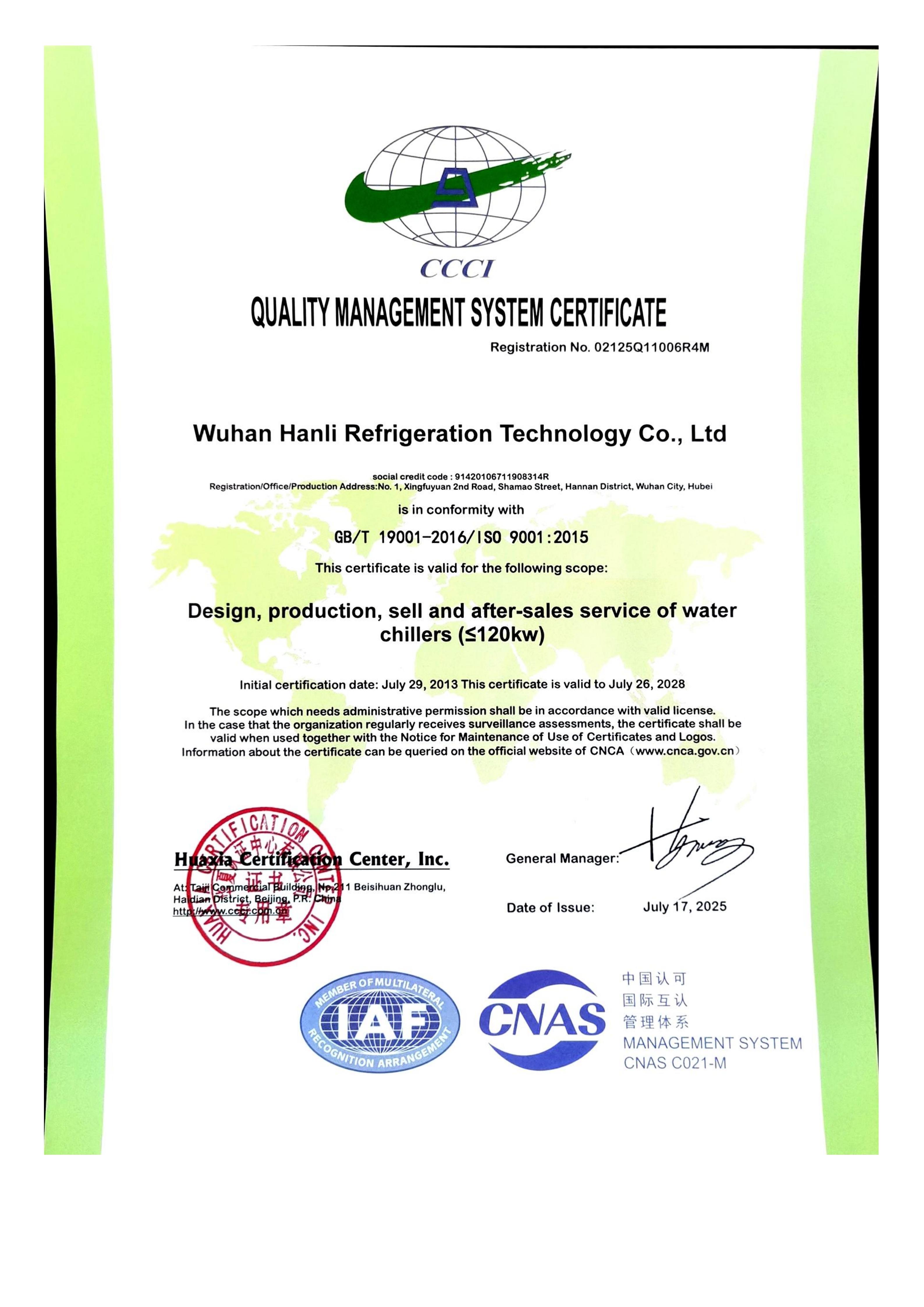
ISO 9001 certificate covering design, production, sale and after-sales service of water chillers up to 120 kW. Company-supplied image.
What the Hanli project record actually shows
Read as capability evidence, the record shows more than an export list. It shows that Hanli laser chillers have been used in laser cooling for cutting, welding and engraving equipment, and that the supplier has dealt with both equipment manufacturers and channel intermediaries. That distinction matters. A laser machine manufacturer typically evaluates a chiller as a component of its own machine design, while a laser spare parts or machine trading company evaluates availability, model fit and after-sales support for resale or project supply.
The project material also links the chiller to the laser equipment outcome. It reports stable performance and stability, energy saving, and equipment-life support rather than a generic product description. Those outcomes should be read as reported project results, not as a guarantee for every configuration. They do, however, give a buyer concrete topics to test during supplier qualification: whether the proposed chiller can hold a stable cooling condition under the actual laser duty, whether the configuration supports efficient operation, and whether the supplier can support the unit over its service life.
From project list to qualification evidence
A country list alone is weak evidence. The stronger signal is the combination of client type, equipment application and reported result. Hanli's record is more useful because it separates laser machine manufacturers from trading companies and spare-parts suppliers. Each buyer type checks a different risk. A machine builder needs a chiller that can be integrated into a new laser system and supported through the machine warranty. A trading company needs a model range that can be quoted across projects without creating service gaps. An end user needs the chiller to keep a production laser running without thermal interruptions.
For an OEM or trading company, the project record supports three qualification questions. First, has the supplier worked with the same class of laser equipment? Second, can it match cooling to laser power, application type and equipment configuration? Third, can it support the product after shipment through documentation, alarm guidance, troubleshooting and spare parts? Hanli's project material addresses the first two directly. Its capability and after-sales statements address the third through a professional after-sales team, online problem support, alarm troubleshooting videos and access to after-sales technicians.
Technical fit: why laser equipment needs controlled cooling
Laser equipment needs process cooling because the laser source and related equipment generate heat during operation. The chiller removes that heat, stabilizes the cooling temperature and supports processing performance and operational reliability. In a fiber laser cutting or welding system, the chiller is not a comfort-cooling device; it is part of the production equipment. Its duty is to carry heat away from the laser source and related components and return coolant at a controlled temperature.
Hanli's technical material describes a circulating water-cooling, closed-loop approach. Selected high-power products use an independent dual-temperature, dual-loop cooling design. Hanli's application guidance indicates an ambient range of 0°C to 45°C, subject to model confirmation. Those details matter at quotation stage because a chiller specified for a mild workshop may not be the right choice for a hot, dusty or voltage-variable site.
The refrigeration cycle itself follows the standard four-stage sequence: compression, condensation, throttling or expansion, and evaporation. The compressor raises refrigerant pressure and temperature; the condenser rejects heat; the expansion valve reduces pressure; the evaporator absorbs heat from the process water. The buyer does not need to design this cycle, but understanding it helps compare quotations. Differences between suppliers are more likely to appear in component grade, control precision, coolant-temperature capability, condenser type, filtration and service access than in the basic architecture.
Hanli's manufacturing and customization evidence
Manufacturing evidence supports the ability to deliver repeatable units, not just a sample. Hanli's company profile states that it was established in 1998 with registered capital of 12 million yuan. Its production facility covers 38,866.15 square meters and employs about 300 people. The profile lists annual output of 180,000 units. Hanli's capability information lists monthly capacity of 15,000 units, a lead time of 7-45 days, a minimum order quantity of 1 unit and 100% testing before delivery. These are first-party figures; they should be checked against the specific model, configuration and order schedule.
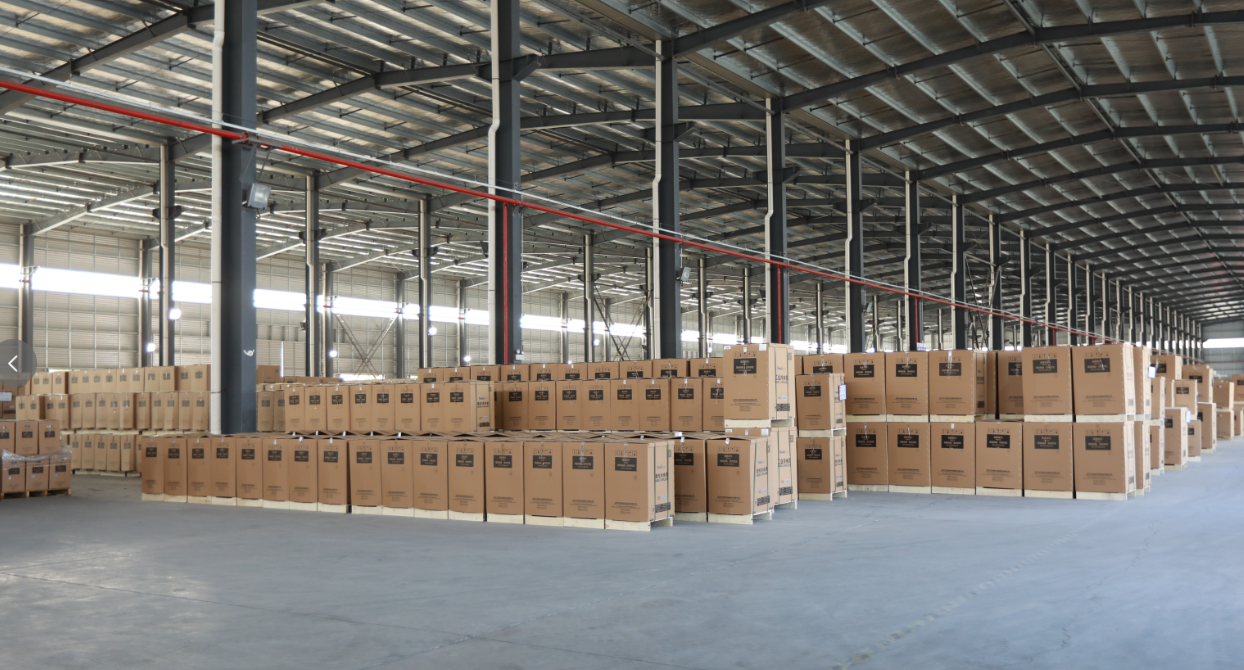
Hanli production facility interior. Company-supplied image.
The customization statement is specific but bounded. Hanli provides ODM production services. Cooling solutions can be matched to laser power, application type and equipment configuration. LOGO and color customization are listed, while the specific scope of OEM, mechanical, electrical and control customization requires confirmation. That boundary is important. A buyer should not read customization as unlimited engineering change; it means the supplier can discuss a matched cooling solution within a defined scope.
| Evidence area | Reported Hanli fact | Buyer check before selection |
|---|---|---|
| Company base | Founded 1998; registered capital 12 million yuan; about 300 employees | Confirm the legal entity, current registration and the team assigned to the account. |
| Manufacturing footprint | 38,866.15 square meters; annual output 180,000 units; monthly capacity 15,000 units | Check current capacity for the required model and configuration. |
| Order terms | MOQ 1 unit; lead time 7-45 days | Confirm schedule for custom or high-power units. |
| Quality control | 100% testing before delivery; ISO 9001 and CE certificates | Ask for the test record and check certificate scope for the exact model. |
| Customization | ODM; LOGO and color customization; cooling matched to laser power, application and equipment configuration | Confirm OEM, mechanical, electrical and control customization scope in writing. |
| Export experience | Markets listed in the EU, Middle East, Asia, Turkey, India, Germany, Poland, France, Russia and Vietnam | Ask for the service route, spare-parts plan and local support arrangement for the destination market. |
Certification and compliance evidence
Certification is a supplier-capability topic only when the certificate scope matches the product and market. Hanli's ISO 9001 certificate is numbered 02125Q11006R4M, issued by HuaXin Certification Center, Inc. The standard is GB/T 19001-2016/ISO 9001:2015, and the scope is design, production, sale and after-sales service of water chillers up to 120 kW. The certificate was issued on 2025-07-17 and expires on 2028-07-26.
The CE Certificate of Conformity is numbered AM 50662218 0001, issued by TÜV Rheinland LGA Products GmbH. It cites EC Council Directive 2006/42/EC and covers machinery described as laser cooling water chiller, with type designations listed in the certificate. The available certificate document does not show a clear issue date, so the buyer should request the current valid document and check that the exact model is within the listed type designations. A certificate for a product family is not automatic proof that every customized configuration has the same conformity status.
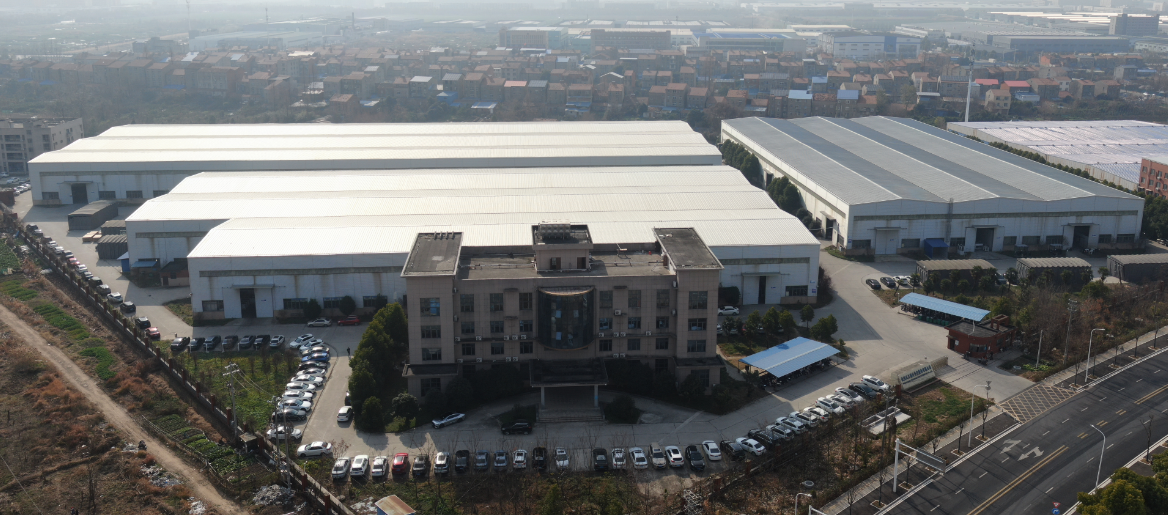
Aerial view of the Hanli manufacturing facility. Company-supplied image.
Application scenarios: cutting, welding, marking and mixed laser processing
The project record covers laser cooling for cutting, welding and engraving equipment. For a laser cutting chiller, the duty is often continuous and the heat load is relatively steady. For a laser welding chiller, the control loop may need to respond to sudden heat surges, especially in precision welding. Hanli's procurement guidance makes this distinction: cutting chillers focus on stable cooling with moderate precision, while welding chillers use faster control loops and tighter temperature tolerance to protect weld quality. The guidance cites a temperature stability of ±0.5°C as sufficient for most cutting tasks; this is application guidance, not a universal specification for every model.
Marking and engraving are also listed in Hanli's application scope, along with CO2 and UV laser equipment. A buyer using terms such as laser marking chiller or laser engraving chiller should still verify the actual laser power, duty cycle and ambient conditions. A small marking unit and a high-power laser cutting system do not place the same heat load on the chiller, even if both are described as laser processing. The label on the chiller is less important than the match between heat load and cooling capacity.
For mixed workshops, the practical approach is to build a short equipment list before requesting a laser water chiller quotation. The list should include laser type, nominal power, duty cycle, required coolant temperature, ambient temperature, voltage and frequency, and the available water or air-cooling utility. Hanli's matching statement is relevant here: the cooling solution can be matched to laser power, application type and equipment configuration rather than selected from a single headline capacity number.
Market context: a growing but scope-sensitive category
Market context helps frame supplier evidence but should not be confused with company performance. A 2026 Dataintelo report on laser cooling units estimates the global market at USD 317.2 million in 2025 and forecasts a 9.2% CAGR from 2025 to 2034. The same report estimates water-cooled units at 56.3% of 2025 segment share and industrial laser applications at 41.2% of the cooling market. These figures describe the laser cooling unit category; they are not Hanli's market share and should not be read as a ranking of suppliers.
The scope boundary matters. HVAC chillers and laser process chillers can share a generic definition, but they serve different duty profiles. A building-cooling chiller is not a substitute for a process chiller that must hold a stable coolant temperature at a laser head. Buyers reviewing market reports should check whether the numbers include HVAC equipment, process cooling only, or a broader industrial chiller category.
What the evidence does and does not establish
The Hanli project record is useful because it names client types, laser applications, matched companies and countries. It is not an independent field audit. The matching statements are company project material. Deployment in Germany, India or Brazil does not by itself prove local service depth, spare-parts stocking or response time in those markets. A named laser company match does not mean that company endorses every Hanli model or that the same configuration will suit another laser machine.
Before purchase, a buyer should ask for the model-level datasheet, the matching calculation for laser power and heat load, the ambient and utility conditions, the certificate scope for the exact model, and the after-sales route. The reported outcomes of stable performance, energy saving and equipment-life support should be converted into verification items. For stability, ask what temperature control and alarm protections apply. For energy saving, ask for the baseline and test condition; the project material does not provide a measured kWh figure. For equipment-life support, ask about maintenance intervals, water-quality requirements, filtration, antifreeze protection and drainage during low-temperature shutdown.
Future outlook
If the forecast for laser cooling units holds, demand will continue to be shaped by laser cutting and welding equipment, not by cooling as a standalone purchase. That favors suppliers that can document application fit, not just capacity. Hanli's stated position as a manufacturer with ODM capability, 100% testing, a broad export market list and certificates covering water chillers up to 120 kW gives buyers a practical starting point. The next step is model-level verification: confirm the chiller for the actual laser source, confirm the certificate for the exact model and confirm the service path for the destination market.
Frequently asked questions
What cooling capacity do I need for my laser machine?
The required cooling capacity depends primarily on the laser power and the actual heat generation. The laser wattage and working mode are the starting inputs for calculating the required cooling capacity and selecting the corresponding chiller model. Two machines with the same nominal laser power can have different duty cycles and ambient conditions, so the calculation should use the actual operating case rather than the label alone.
How do I choose the right industrial laser chiller for laser cutting or welding equipment?
Start by confirming the laser power, then check the required temperature precision, choose between air-cooled and water-cooled configurations for the site, confirm the local voltage and frequency, and review the working environment. Hanli's procurement guidance distinguishes cutting from welding: a laser cutting chiller is described as offering stable cooling with moderate precision for relatively steady heat loads, while a laser welding chiller uses a faster control loop for sudden heat surges and tighter temperature tolerance. The guidance cites ±0.5°C stability as sufficient for most cutting tasks; this is not a universal specification for every model.
How does an industrial chiller work?
An industrial chiller removes heat through a refrigeration cycle with four core stages: compression, condensation, throttling or expansion, and evaporation. The compressor raises the pressure and temperature of the refrigerant; the condenser rejects heat to the ambient air; the expansion valve reduces pressure; and the evaporator absorbs heat from the process water. The chilled water or water-glycol coolant then circulates to the laser equipment.
What certification is required for exporting industrial chillers to the EU?
CE marking is the basic requirement for the EU market. The applicable scope can include the Low Voltage Directive to address electric-shock hazards, the EMC Directive to limit electromagnetic interference, the Machinery Directive for mechanical safety, and the Pressure Equipment Directive if pressure vessels reach the threshold. Supporting documents typically include a risk assessment, a technical file, an EU Declaration of Conformity and a user manual in the required local language. Hanli's CE certificate cites EC Council Directive 2006/42/EC for laser cooling water chillers, and the exact model should be checked against the certificate's type designations.
What industries are Hanli chillers suitable for?
Hanli water chillers are described as suitable for fiber laser cutting, laser welding, laser marking, injection molding, extrusion, chemical processing, electroplating and other industrial temperature-control scenarios. For laser applications, the project record covers laser cooling for cutting, welding and engraving equipment. Suitability for a specific machine still depends on the laser power, heat load, flow, pressure, ambient conditions and model confirmation.
Conclusion
The strongest supplier evidence is not a slogan. It is a traceable fit between a chiller, a laser equipment class, a market and a service path. The Hanli project record provides that trace: named laser companies, multiple client types, deployments across global markets, and reported outcomes in stability, energy saving and equipment-life support. It also leaves clear verification work for the buyer, which is appropriate for an evaluation-stage decision. The record supports Hanli as a candidate for further qualification; it does not replace model-level confirmation.
For readers who need the broader product and company overview, Hanli's public brochure is available here: Hanli brochures (PDF).
Tem questões ou precisa de mais detalhes?
Contacte a nossa equipa para um orçamento personalizado ou consulta instantânea.
Solicitar orçamento
Preencha o formulário abaixo e a nossa equipa entrará em contacto com uma proposta personalizada.
Chat direto do WhatsApp
Prefere conversar em tempo real? Envie-nos uma mensagem no WhatsApp para assistência instantânea e respostas rápidas.
- Obter orçamento personalizado
- Partilhar fotos ou documentos
- Discuta as suas necessidades diretamente
Geralmente responde em 5–30 minutos durante o horário de expediente.