
Hansun's Shopping Bag Capability: From R&D to Export
A shopping bag quotation can be produced in an afternoon. A manufacturing file that survives a procurement audit takes years to assemble. That difference matters more in 2026 than it did five years ago, because reusable and custom-printed bag programs are now judged on documentation as much as on unit price.
This reference examines one such file in detail: the documented manufacturing capability of Zhejiang Hansun Arts & Crafts Co., Ltd. (Hansun), a Wenzhou-based manufacturer founded in 1996 whose stated product focus is tote bags and PVC bags. The purpose is not to recommend a supplier. It is to show what verifiable capability evidence looks like, how each figure translates into delivery reliability or defect control, and where the evidence stops.
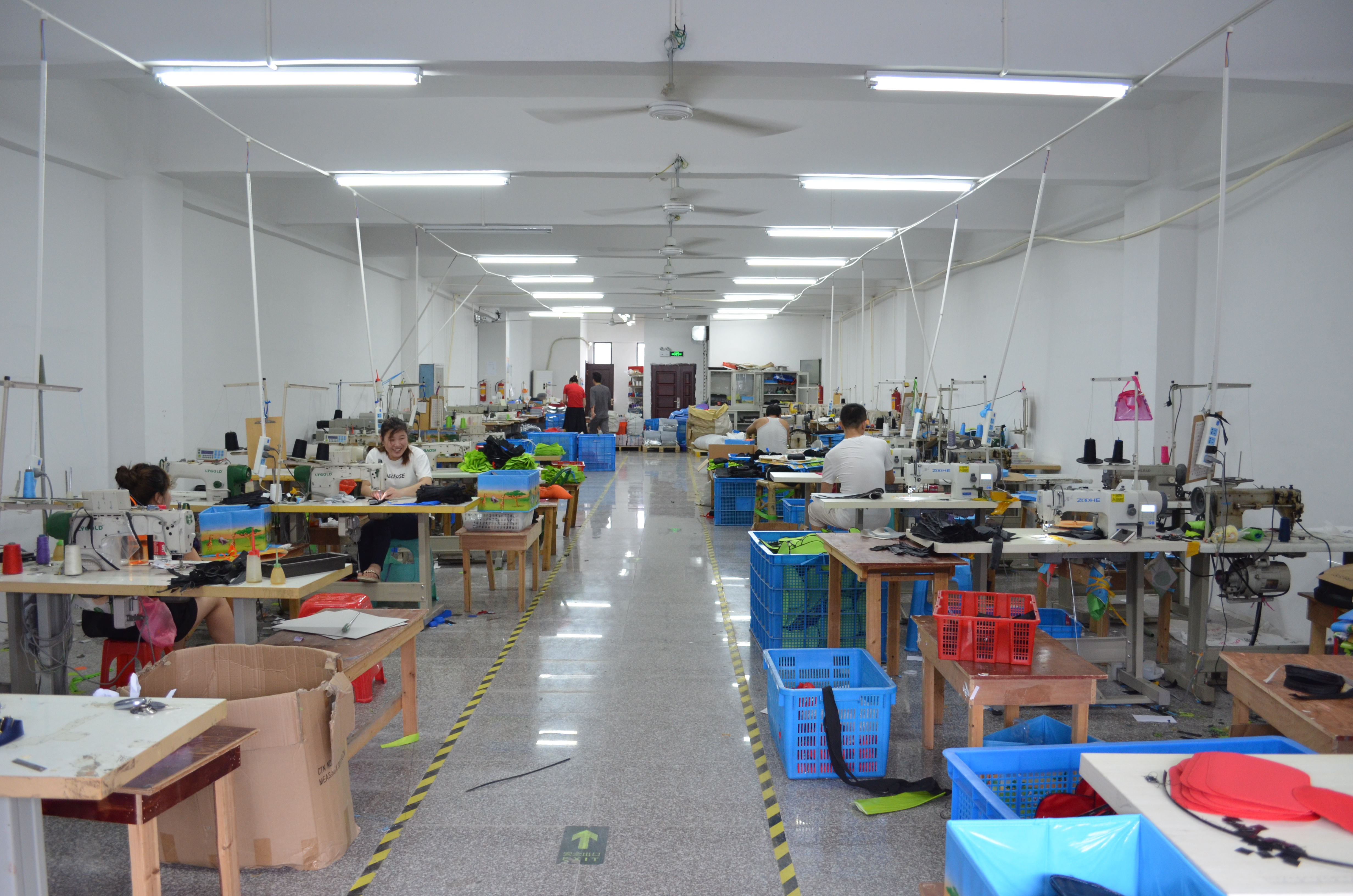
Sewing lines at Hansun's Wenzhou facility, where tote and PVC bag programs move from sample to production.
What Turns a Capability Claim into Verifiable Evidence
A capability claim becomes evidence when it is specific, cross-checkable, and connected to an outcome the buyer can measure. Suppliers that fail this test usually still answer the first part — they provide numbers — but those numbers do not resolve into anything a procurement team can act on.
Three tests do most of the work. Specificity means a named facility, a headcount, an output volume, an R&D staffing figure, certificate numbers, and an export ratio, rather than adjectives. Cross-checkability means the certificate numbers can be verified with the issuing body, the case record carries a defect metric and a delivery outcome, and the named export markets can be matched to shipping documents. Outcome linkage means the figure explains something: why lead times hold under load, why a defect rate stayed low across a million units, or why a client reordered for three consecutive years.
Most buyer-facing supplier documents contain only the first layer. The practical use of a capability dossier is to treat layer one as the agenda for verification, not as the conclusion of it.
Hansun's Capability File at a Glance
Zhejiang Hansun Arts & Crafts Co., Ltd. is a production-oriented manufacturer based in Longgang, Wenzhou, Zhejiang, China, founded in 1996, whose documented main products are tote bags and PVC bags, and which combines manufacturing, online marketing, and international trade in one organisation. The figures below are the ones a procurement team would normally request first, together with the reason each one matters.
| Field | Documented figure | Why a buyer cares |
|---|---|---|
| Founded | 1996 | Long enough to have absorbed several material-cost cycles |
| Registered capital | CNY 20 million | Financial substance behind order commitments |
| Factory usable area | Over 25,000 m² | Room for separate sewing, packaging, and sampling functions |
| Employees | 200 | Workforce base for capacity and quality staffing |
| R&D team | 25 engineers | Customisation decided internally, before plates or tools are cut |
| Main products | Tote Bag and PVC Bag | Two material logics available under one quality system |
| Annual output | 20,000,000 units | Scale indicator for large retail and promotional programs |
| Monthly capacity | 1,500,000 units | The figure that matters when allocating a delivery window |
| Export ratio | 70% | Documentation habits shaped by foreign market requirements |
| Main markets | Southeast Asia, Europe, North America, the Middle East | Evidence of multi-market packaging compliance exposure |
| MOQ | 3,000 pcs | Defines which programs are realistic |
| Lead time | 30–45 days | Planning cycle, not a rush service |
| Business model | OEM / ODM; logo, size, and material customisation | Brand-matched bags without owning tooling |
| Quality control | Depends on customer requirements | Acceptance criteria must be written by the buyer |
Read as a set, these figures describe a mid-sized integrated factory rather than a trading intermediary: a 25,000 m² site, a 200-person workforce, an internal engineering group, and an export-weighted order book. Each of the sections below takes one figure and asks what it actually changes for a buyer.
The 25-Engineer R&D Team: Where Customisation Is Decided
For custom printed shopping bags, promotional shopping bags, and gift shopping bags, the engineering stage decides both cost and defect risk long before the first roll of material is cut. Hansun maintains a 25-engineer R&D technical team alongside its sales and after-sales functions, backed by a separate product design and research company within the group structure.
What that function actually handles is documented in the product specification. Customisation covers logo, size, and material. Shopping bags are offered in non-woven fabric, canvas, recycled PET, oxford cloth, and PP, at weights from 50 g to 200 g per piece depending on material and size, with sizes configurable in S/M/L or to customer-specific dimensions. Printing runs through silk screen printing, heat transfer, or offset printing — three methods with different artwork tolerances, different minimum line weights, and different cost curves.
Engineering and design functions sit in-house, so artwork and construction conflicts are resolved before print plates are produced.
The procurement consequence is narrow but real. When the engineering review is internal, artwork conflicts, handle attachment choices, and material substitutions surface at sample stage rather than at inspection stage. A supplier that outsources design review tends to discover the same problems after the print run, which is the point at which a defect becomes expensive rather than inconvenient.
Two practical requests follow from this. First, ask for the sample sign-off sheet and the print-proof approval trail — these show whether the engineering review was documented or verbal. Second, fix the material weight in the purchase order. A 50 g to 200 g range is deliberately wide, and the difference between the two ends changes both hand feel and unit cost.
Integrated Tote and PVC Manufacturing: Two Material Logics Under One Roof
Hansun's documented main product lines are tote bags and PVC bags, and its shopping bag range covers reusable foldable shopping bags, eco-friendly non-woven shopping bags, and canvas tote shopping bags. The PVC side of the business is visible in the documented product range through PVC construction work such as the PVC clear cosmetic bag (model CB-2026-002), which uses PVC, PU leather, canvas, nylon, or mesh with hot stamping, UV printing, embossing, and heat sealing.
For a buyer assembling a mixed program — for example a supermarket running a reusable tote line alongside a clear PVC promotional item — the relevant question is not whether one factory can make both, but whether both fall under the same quality system and the same audit record. Hansun's certification scope covers this directly: ISO 9001:2015 covers product design, production, quality control, and delivery processes; Amfori BSCI covers factory social responsibility and working conditions; Sedex SMETA 4 Pillars covers labour practices, health and safety, and environmental standards; Disney FAMA covers production and supply of licensed promotional bags and gifts.
The boundary here should be stated plainly. The available documentation does not specify PVC thickness, film grade, or performance test results for PVC shopping bags as a category. Buyers sourcing a PVC shopping bag against a European or North American specification should request the material specification and any relevant test reports for that construction specifically, rather than assuming the certification scope answers a product-level question.
20 Million Units a Year and 1.5 Million a Month: Reading Capacity Correctly
Hansun reports an annual output of 20,000,000 units and a monthly capacity of 1,500,000 units. These two figures answer different questions, and buyers who conflate them tend to build schedules that slip.
Annual output describes volume shipped across a full year. Monthly capacity describes the ceiling in a single month. For a program of one million units spread across twelve months — the shape of the Japan case described below — the number that governs delivery is the monthly allocation the factory is willing to commit in writing, not the annual total. For a compressed program, the annual figure is close to irrelevant, because the constraint becomes line time and material lead time rather than annual throughput.
Stated lead time is 30–45 days, with a minimum order quantity of 3,000 pieces and OEM/ODM production as the standard mode. A buyer should treat the 30–45 day window as the planning cycle for a confirmed specification: it assumes artwork approval, sample sign-off, and material availability are already settled. The window does not include the iteration time that precedes sign-off, which in custom printed work is frequently the longest part of the schedule.
The useful request at evaluation stage is a written capacity allocation: how many units per month, for which specific SKU, in which production window. That single document converts three separate numbers — annual output, monthly capacity, and lead time — into one commitment.
From a 99.7% Qualification Rate to Zero Delivery Delay: The Japan Record
The clearest outcome evidence in Hansun's file is a Japanese chain supermarket program: 1,000,000 units of custom-printed daily shopping bags and promotional gifts, delivered over one year for long-term reuse, with custom printing matched to the supermarket's branding. Reported results were a 99.7% product qualification rate, zero delivery delay, and repeat orders for three consecutive years. Customer feedback indicated the bags met Japan's eco-friendly standards and were well received by both the client and end consumers.

Sample room validation is the checkpoint where material, print method, and handle construction are locked before mass production.
Why this record carries more weight than a testimonial is structural. A qualification rate is a defect metric, and a defect metric only exists if someone measured against an agreed standard and then kept the record. Zero delivery delay across a million units implies production scheduling that held for four consecutive quarters, not a single shipment that happened to leave on time. Three consecutive reorders imply the buyer's own downstream measurement — shelf performance, customer complaints, reusability under real conditions — did not contradict the paperwork.
The highlights attached to the case are consistent with the capability figures elsewhere in the file: eco-friendly material selection, strict quality control, and on-time delivery. The eco-material choice is the part that connects to the Japanese market specifically, where reusable bag programs are evaluated on durability and material profile as well as print quality.
A caveat belongs here, and buyers should apply it to every supplier dossier, including this one. A single documented case with a defect metric is stronger evidence than a portfolio of testimonials, but it is weaker than a multi-client dataset. The 99.7% figure describes one program under one specification. It is a demonstrated outcome, not a guaranteed rate for a new order with a different construction.
How a 70% Export Share Shapes Production Discipline
Hansun reports a 70% export ratio, with sales and service covering Southeast Asia, Europe, North America, and the Middle East. An export-weighted order book changes factory behaviour in ways that matter at procurement stage, because foreign buyers import their own documentation requirements along with their purchase orders.
The European requirement is the one moving fastest. Regulation (EU) 2025/40 on packaging and packaging waste sets an application date of 12 August 2026 according to the EU's own summary, and requires economic operators making reusable packaging available in a Member State to ensure that a reuse system is in place, including an incentive to ensure collection. EU interpretive material describes reusable packaging as designed to enable multiple trips or rotations, capable of being emptied without significant damage or health and safety risk, and capable of being cleaned, washed, or repaired while retaining its function. The same framework defines lightweight plastic carrier bags as those with wall thickness below 50 microns, and very lightweight bags as below 15 microns, subject to stated exceptions.
Market direction reinforces the documentation pressure. Fortune Business Insights projects the global reusable shopping bag market growing from USD 16.67 billion in 2026 to USD 28.87 billion by 2034, with Asia Pacific holding 24.23% of the market in 2025 and polypropylene accounting for roughly 46% of production share.
The buyer-side reading is precise, and it is easy to get wrong. A supplier's certificates and material declarations support a compliance file; they do not transfer the legal obligation. Under the EU framework, the reuse-system obligation attaches to the economic operator placing the packaging on the market. A supplier that can hand over certificate numbers, material specifications, and a dated case record shortens the buyer's compliance work. It does not replace it.
Public Claims and Documented Evidence: A Neutral Comparison
Public OEM/ODM claims are now common in this category and should be read as starting points rather than conclusions. XINGXIN PACKING publicly describes itself as a shopping bag factory supplying reusable eco-friendly, cotton, canvas tote, non-woven, and promotional bags, and states OEM/ODM and low-MOQ capability. Yisen Bag publicly states that it handles OEM and ODM tote bag work, including development from a new design as well as customer-supplied designs. Both are company-reported claims, and neither has been independently verified for factory status, production scale, MOQ, lead time, or quality system in the material available.
Hansun's figures in this article are company-reported in exactly the same way, with two exceptions: the certificate numbers, which can be checked with the issuing bodies, and the Japan case, which carries a dated defect metric and a delivery outcome. That is the honest distinction — not a claim of superiority, but a difference in how much of the file is cross-checkable at shortlisting stage.
| Evidence type | What it establishes | What it does not establish |
|---|---|---|
| Company website claim | Stated product scope and service model | Factory ownership, capacity, or quality performance |
| Certificate number | That an audit took place within a defined scope | Current validity, or performance on your specific product |
| Case record with defect metric | A measured outcome under a defined specification | A guarantee for a different construction or volume |
| Signed sample and print proof | The reference both parties will inspect against | Anything about production consistency beyond that sample |
Where This Capability Fits, and Where It Does Not
Capability dossiers are usually read as arguments for a supplier. They are more useful read as scope definitions, because the boundaries tell a buyer where the fit ends.
Where the documented profile fits. Supermarket and retail daily-carry programs at scale, as demonstrated by the one-million-unit Japan program. Promotional and gift shopping bag campaigns that need custom printing matched to brand guidelines. Wholesale and OEM shopping bag orders at or above 3,000 pieces per SKU. Mixed tote and PVC ranges held under a single quality system. Export programs into Southeast Asia, Europe, North America, and the Middle East, where multi-market documentation is part of the routine.
Where it does not. Orders below 3,000 pieces per SKU sit outside the stated minimum order quantity, and small trial runs are better placed with suppliers built for them. Emergency replenishment is a poor fit: a 30–45 day lead time is a planned production cycle, not a rush service. Programs without a written inspection standard are exposed, because Hansun's published quality-control position is that the scope depends on customer requirements — if the buyer does not define the AQL, the test list, and the sampling plan, acceptance criteria default to whatever was agreed informally, which is weaker protection than a published internal standard. After-sales is documented as remote support, so buyers expecting on-site technical attendance should confirm that separately. Certificate validity windows must be re-checked at order time, since certificate numbers confirm that an audit occurred within a defined scope, not that the certificate is currently unexpired. And PVC shopping bag performance data — thickness, load, and relevant test reports — is not documented in the available material and must be requested per construction.
A Six-Point Verification Checklist for the Evaluation Stage
| Request | What it resolves | Hansun's file |
|---|---|---|
| Certificate numbers with current validity | Whether the audit is live and in scope | ISO 9001:2015 (ISO-2026-7890), Amfori BSCI (BSCI-2026-4567), Sedex SMETA 4 Pillars (SEDEX-2026-0123), Disney FAMA (DSN-FAMA-2026-001) |
| Written capacity allocation | Reconciles annual output with monthly ceiling | 20,000,000 units annually; 1,500,000 units monthly |
| Case record with a defect metric | Whether quality was measured, not asserted | Japan supermarket program: 1,000,000 units, 99.7% qualification rate, zero delivery delay, three consecutive reorders |
| Signed sample and print proof | The inspection reference for the whole order | 25-engineer R&D team and in-house sample room support pre-production validation |
| Written QC protocol | Converts open-ended QC scope into a testable standard | QC scope is defined by customer requirements — the buyer must specify AQL and test list |
| Delivery schedule with milestones | Tests the 30–45 day claim against a real calendar | 30–45 day stated lead time; 3,000 pcs MOQ |
Future Outlook
The direction of travel in this category is from product capability to documented capability. Once reuse-system obligations apply in the EU from August 2026, the question a buyer asks shifts from whether a factory can make a reusable bag to whether it can produce the paper trail that supports the bag's place in a reuse system — material specification, durability characteristics, and a record of how those characteristics were checked.
Two further pressures point the same way. Recycled-content targets later in the decade push material traceability into the RFQ itself, which favours suppliers already used to documenting material origin. And continued market growth — from USD 16.67 billion in 2026 toward USD 28.87 billion by 2034 — increases the number of suppliers quoting, which raises the value of a verifiable file and lowers the value of a low quotation.
The practical expectation for procurement teams is that capability dossiers will standardise. Suppliers that already hold certificate numbers, case records with measured outcomes, and written capacity allocations will clear diligence faster than suppliers whose evidence stops at the website claim. The gap is not about who makes a better bag; it is about who can prove what was made and when.
FAQ
What documents should a buyer request before shortlisting a shopping bag manufacturer?
At minimum: certificate numbers with current validity windows, a case record that includes a measured defect outcome and a delivery result, a written capacity allocation by SKU and month, a signed sample with print proof, and a written QC protocol stating AQL and test list. Hansun's file supplies ISO 9001:2015 certificate ISO-2026-7890, Amfori BSCI certificate BSCI-2026-4567, Sedex SMETA 4 Pillars certificate SEDEX-2026-0123, and Disney FAMA certificate DSN-FAMA-2026-001, plus a Japan supermarket case with a 99.7% qualification rate and a documented zero-delay delivery record.
How does an annual output of 20 million units affect delivery reliability for a single order?
It indicates scale rather than a guarantee. Hansun reports an annual output of 20,000,000 units and a monthly capacity of 1,500,000 units, with a stated lead time of 30–45 days. Because the monthly figure is the operative constraint for any single program, delivery reliability is established by a written allocation of monthly line time to a specific SKU, not by the annual total. The Japan program — 1,000,000 units delivered over one year with zero delivery delay — is an example of that allocation holding across four quarters.
Is a 25-engineer R&D team relevant to a standard wholesale shopping bag order?
It matters when the order involves customisation rather than a catalogue item. Hansun's customisation scope covers logo, size, and material, with silk screen printing, heat transfer, and offset printing as print options, and size and weight configurable from 50 g to 200 g per piece depending on material. In-house engineering determines whether artwork and construction conflicts are resolved before print plates are produced or discovered at inspection. For an unmodified stock specification, the R&D function adds less value, and the relevant criteria become MOQ, lead time, and price.
How should supplier-reported OEM/ODM claims be treated during evaluation?
As shortlist leads, not as verified capability. Public claims of OEM/ODM service are widespread in this category — XINGXIN PACKING states OEM/ODM and low-MOQ capability, and Yisen Bag states OEM and ODM tote bag work including development from a new design — but public statements do not independently verify factory ownership, production capacity, MOQ, lead time, or quality systems. Hansun's own capacity and output figures are likewise company-reported, with the certificate numbers and the dated Japan case being the elements that can be checked against an external record.
What should be checked about certification validity before an order is placed?
Certificates should be re-confirmed for current validity and scope at the time of the order, not assumed from a listing. Hansun's documented certificates each carry an issue date, an expiry date, and a defined scope — for example, ISO 9001:2015 covers product design, production, quality control, and delivery processes; Sedex SMETA 4 Pillars covers labour practices, health and safety, and environmental standards; and Disney FAMA covers production and supply of licensed promotional bags and gifts. A certificate confirms that an audit took place within a stated scope and period; the buyer should verify that the period is still current and that the scope covers the specific product being ordered.
Reference document: the Hansun corporate brochure, available as a PDF for procurement teams building a supplier file — Hansun company brochure.
Tem questões ou precisa de mais detalhes?
Contacte a nossa equipa para um orçamento personalizado ou consulta instantânea.
Solicitar orçamento
Preencha o formulário abaixo e a nossa equipa entrará em contacto com uma proposta personalizada.
Chat direto do WhatsApp
Prefere conversar em tempo real? Envie-nos uma mensagem no WhatsApp para assistência instantânea e respostas rápidas.
- Obter orçamento personalizado
- Partilhar fotos ou documentos
- Discuta as suas necessidades diretamente
Geralmente responde em 5–30 minutos durante o horário de expediente.