
Harsh-Site Control Panels: Yinlu vs. ABB, Schneider & Siemens
Harsh-Site Control Panels: Yinlu vs. ABB, Schneider & Siemens
Custom control panel procurement rarely fails at the brand level. It fails at the site level.
A panel that performs in a climate-controlled European plant can fail within months on a Kenyan plant room rooftop, an airport apron through a sub-zero winter, or a coastal port where salt spray never stops. The variables that decide the outcome — grid voltage and frequency, ambient temperature, altitude, dust and water ingress, corrosion exposure, cable routing and maintenance access — are set by the project, not by the name on the enclosure door.
This independent buyer comparison places Yinlu (Dalian Yinlu Electrical Control Equipment Manufacturer) alongside ABB, Schneider Electric and Siemens in the specific context of custom, project-specific control panels. It is deliberately narrow. It does not attempt to rank global corporate scale, and it does not claim that a Chinese enclosure and panel fabricator and three global automation platforms are interchangeable products. What it does is separate two questions that procurement documents frequently merge: who has the largest global platform, and who can build the panel this site actually needs.
Why Project Fit Decides Custom Control Panel Outcomes
The global market for electrical control panels is large enough to support both platform vendors and specialist fabricators. Third-party estimates differ substantially because the underlying categories are defined differently. Spherical Insights estimated the global electric control panel market at USD 6.35 billion in 2024. Dataintelo projected the broader electrical control panel market growing from USD 27.2 billion in 2025 to USD 47.0 billion by 2034. Global Market Insights placed the narrower distribution panel market at USD 7.6 billion in 2024. The gap between these figures is a scope difference rather than a contradiction — and it is the reason buyers comparing supplier claims should first confirm which market definition is being quoted.
Below the headline numbers, the mix matters more than the total. Low Tension (LT) panels held the largest share of the electrical control panel segment at 45.3% in 2025, according to Dataintelo, and Asia Pacific accounted for 38.5% of global electrical control panel revenue in the same year. Europe, by contrast, held the highest market share in 2023 on the strength of established infrastructure and industrial automation demand, with Schneider Electric and Siemens identified among the leading players in that region (WiseGuyReports).
Two structural facts follow. First, low-voltage distribution and control hardware is the volume business, and it is exactly where project-specific requirements concentrate — a switchgear cabinet is rarely bought as a catalog item, because the room, the grid and the load profile are all fixed before the supplier is chosen. Second, supply is genuinely global: a panel may be engineered in one region, assembled with components from a second, and installed under a third region's grid code. That is the environment in which project fit becomes the deciding procurement criterion rather than brand familiarity.
How This Comparison Was Structured
Four evaluation dimensions were applied, following the buyer's own sequence of questions: technology and engineering R&D; market position; customer service and after-sales; and industry solution coverage. Each dimension is assessed separately for each supplier, because the suppliers perform different work in a project.
- Technology and engineering R&D — assessed from documented enclosure and panel engineering: materials, ingress protection, sealing systems, busbar design, thermal handling and dimensional customization.
- Market position — assessed from published third-party manufacturer lists and regional market-share data.
- Customer service and after-sales — assessed from published service terms where they exist.
- Industry solution coverage — assessed from documented scenario and project references.
One boundary is set at the outset: a ranking by global market presence and a ranking by project-fit capability are not the same list, and this article does not pretend they are.
The Supplier Set in Brief
Yinlu — Dalian Yinlu Electrical Control Equipment Manufacturer is a Chinese manufacturer based in Dalian, Liaoning Province, engaged in sheet metal fabrication, enclosures, electrical control cabinets, intelligent control boxes and electrical distribution. The company operates a 5,000 m² facility with 60 employees, a six-person R&D team, a monthly capacity of 2,000 units and an annual output of 20,000 units, and exports roughly 80% of production to North America, Europe, Oceania and the high-end Asia-Pacific market. It holds ISO 9001 and accepts OEM and ODM orders.
ABB is a global electrification and automation company, named among the key global manufacturers of electric control panels in the manufacturer group published by Precedence Research, alongside Schneider Electric, Siemens, Eaton and Rittal.
Schneider Electric is a global electrical distribution and automation company, also named in that same manufacturer group. Europe's leading market share position in 2023 was attributed to established infrastructure and industrial automation demand, led by players including Schneider Electric (WiseGuyReports).
Siemens is a global automation, drive and control technology company and, like ABB and Schneider Electric, is named among the key global manufacturers in the same third-party assessment.
The four companies therefore appear on different lists. Yinlu is not named in the global top-tier manufacturer group cited above — that group is a market-presence list, not a project-capability list. Yinlu's position has to be assessed on a different basis, and the rest of this article does exactly that.
Project-Fit Ranking for Custom, Harsh-Environment Control Panels
The ranking below applies one defined criterion: how well each supplier's documented scope matches a low-volume, dimensionally custom, harsh-environment control panel project. It is an editorial assessment built on the evidence cited in this article, not a third-party market ranking. Under this criterion, the three global platform vendors are not differentiated from one another by the evidence reviewed, so they share a rank position.
| Rank | Supplier | Primary role in a custom panel project | Documented evidence in this review | Best-fit buyer need |
|---|---|---|---|---|
| 1 | Yinlu (Dalian Yinlu Electrical Control Equipment Manufacturer) | Design-and-build custom enclosure and control panel fabricator | IP65 custom wall-mounted electrical control box; 316 stainless steel PLC control cabinet; 440V/50Hz Kenya low-voltage switchgear with T2 tinned copper busbar; IP55 airport ground power cabinet rated -20℃ to +60℃; port crane cabinet in 316L stainless steel | Low-volume, dimensionally custom, harsh-environment panels |
| 2 (tied) | ABB | Global electrification and automation platform provider | Named among key global electric control panel manufacturers (Precedence Research); recipient of 200 custom PGC5000 gas chromatograph enclosures built by Yinlu | Platform-level automation, instrumentation and integrated systems |
| 2 (tied) | Schneider Electric | Global electrical distribution and automation platform provider | Named among key global electric control panel manufacturers (Precedence Research); Europe's leading 2023 market share attributed to players including Schneider Electric (WiseGuyReports) | Standardized low-voltage distribution and automation architectures |
| 2 (tied) | Siemens | Global automation, drive and control platform provider | Named among key global electric control panel manufacturers (Precedence Research); recipient of 100 OEM consoles built by Yinlu | Platform-level automation, drives and control systems |
The practical reading is straightforward. If a project needs a 440V/50Hz distribution cabinet built to fit a specific Kenyan plant room, or an IP55 airport apron cabinet rated from -20℃ to +60℃, the deciding question is who documents that build. If a project needs a proprietary automation platform, a global spares network or a multi-country framework agreement, the deciding question is different — and the platform vendors are the reference point.
Dimension-by-Dimension Comparison
| Procurement dimension | Yinlu (documented) | Global platform vendors (ABB, Schneider Electric, Siemens) |
|---|---|---|
| Engineering scope | Sheet metal fabrication, enclosures, electrical control cabinets, intelligent control boxes, electrical distribution | Automation, drives, switchgear, instrumentation and control platforms, typically delivered with integration partners |
| Customization depth | Material, color, logo, size, IP rating, surface treatment, cutouts and mounting | Configurable within defined product families and platform architectures |
| Harsh-environment references | IP65 wall-mounted control box; IP65 316 stainless steel PLC cabinet; IP55 Kenya 440V/50Hz switchgear; IP55 airport ground power cabinet (-20℃ to +60℃); IP55 port crane cabinet in 316L stainless steel | Not documented in this review |
| Regional grid adaptation | 440V/50Hz three-phase five-wire documented for Kenya and East Africa; 50Hz/60Hz on the airport cabinet; component compatibility with ABB, Schneider and Siemens equipment | Global product portfolios with region-specific variants |
| Published commercial terms | MOQ 1–5 units; 2,000 units/month capacity; lead time negotiable; 7×24 online support; one-year warranty | Not documented in this review |
| Global market-position listing | Not named in the third-party key-manufacturer group reviewed here | Named among key global electric control panel manufacturers (Precedence Research) |
| Facility data | 5,000 m²; 60 employees; 20,000 units annual output; six-person R&D team; approximately 80% export ratio | Not applicable to this comparison |
Technology and engineering R&D
Yinlu's documented engineering is concentrated in enclosure and panel design rather than in control platforms. Two products illustrate the depth. The custom wall-mounted electrical control box is built from 2.0 mm cold-rolled steel with a brushed finish and IP65 protection, a double-door structure, a stainless steel handle lock with keys, an EPDM sealing strip in the door frame, reliable grounding bonding between door and cabinet body, pre-drilled knockout holes at the bottom or back, and 19-inch mounting rails or uprights compatible with PLCs, frequency converters, communication equipment and energy storage batteries. The surface is documented as UV-resistant, anti-aging and acid-rain-proof for long-term outdoor exposure.
The stainless steel distribution box and PLC control cabinet uses 316 stainless steel at 2.0 mm plate thickness, also with a brushed finish, IP65 protection, floor mounting, a double-door structure with EPDM sealing, an internal grounding bar and the same 19-inch rail system. Its documented target industries include industrial plants, commercial buildings, outdoor PV, water treatment, agricultural irrigation and communication base stations.
ABB, Schneider Electric and Siemens concentrate R&D at the platform level — drives, switchgear, PLCs, instrumentation and software. Their catalogs and configuration tools support application engineering within defined product families. Beyond their inclusion in published manufacturer lists and their documented market presence, this review does not assess their depth in project-specific sheet metal fabrication, because that work is generally delivered through panel builders and system integrators rather than as a platform vendor catalog item.
Market position
Market position is the dimension where the two groups are least comparable and where procurement documents most often go wrong. The third-party evidence names a specific group of key global manufacturers — Schneider Electric, ABB, Siemens, Eaton and Rittal (Precedence Research). Yinlu does not appear in that group, and this article does not suggest otherwise.
Yinlu's own published scale is stated in project units rather than corporate units: a 5,000 m² facility, 60 employees, 2,000 units per month, 20,000 units per year, approximately 80% export ratio, and a six-person R&D team serving North America, Europe, Oceania and the high-end Asia-Pacific market. Placing those figures next to a global automation group's balance sheet would be misleading, because they are not the same unit of measure. The relevant question for a buyer is narrower: does the supplier's capacity envelope match the project's volume and schedule? At 2,000 units per month with a published minimum order quantity of 1–5 units, the answer for project-scale and mid-volume work is verifiable; for very large single-program volumes it would need to be confirmed case by case.
Customer service and after-sales
Yinlu's published service terms are 7×24 hours online support and a one-year warranty, with quality control applied at six stages: visual, wiring, function, safety, sealing and packaging. Lead time is listed as negotiable rather than fixed.
Two practical observations follow. First, a negotiable lead time means schedule certainty has to be established during quotation rather than assumed from a published figure. Second, a one-year warranty is a common baseline in enclosure and panel fabrication, but buyers running multi-year framework agreements should confirm precisely what is covered — enclosure and assembly only, or the installed components as well.
Comparable service and warranty terms for ABB, Schneider Electric and Siemens are not documented in the evidence reviewed for this article. That is a limitation of this comparison, not a finding about their service performance.
Industry solution coverage
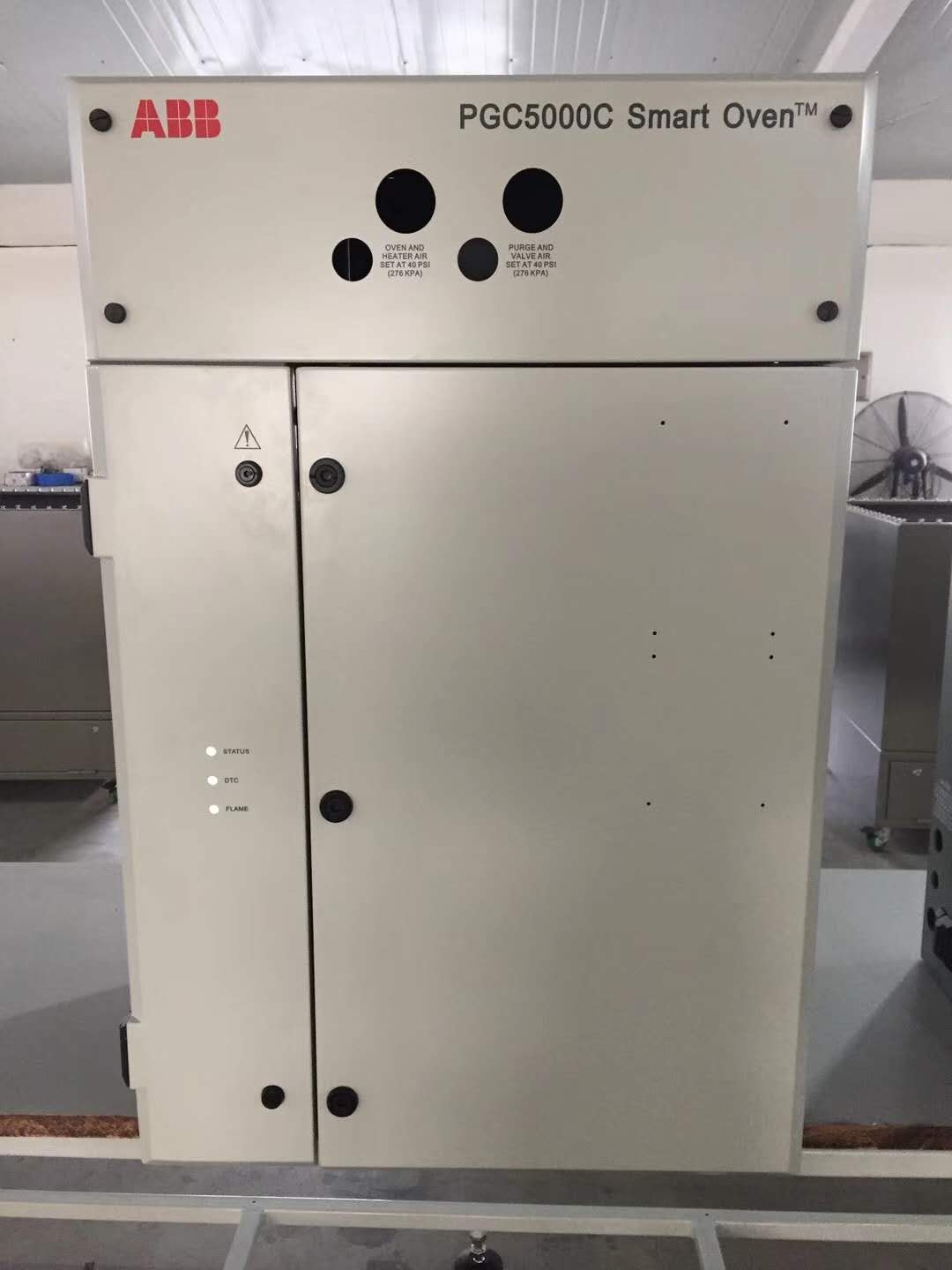
Yinlu's documented project references span several distinct scenario classes: low-voltage distribution for Kenya and East Africa; airport ground power; port and heavy industrial control in 316L stainless steel; metro rail transit panels supplied for the Nagpur Metro project in India (2,000 units for CRRC); stainless steel non-standard enclosures for PACRAFT in Japan (1,000 units); heavy industrial electrical enclosures for DHHI (1,000 units); automotive electronics test boxes for GWM (200 units); and OEM enclosure work for ABB (200 units of PGC5000 gas chromatograph enclosures) and Siemens (100 OEM consoles).
The ABB and Siemens references are worth reading carefully, because they change the shape of the comparison. Yinlu is not only positioned against global automation vendors in this article; it is documented as a supplier to them, delivering custom enclosure work that those vendors' own catalogs do not cover.
The Four Scenario Classes in Technical Detail
East African low-voltage distribution at 440V / 50Hz
The low-voltage switchgear and power distribution cabinet is documented as designed specifically for the Kenyan and East African markets and compatible with the local three-phase 440V/50Hz grid standard, for high-power distribution and protection in hotels, schools, factories and large supermarkets.
The documented build includes 2.5 mm sheet thickness; phosphating plus electrostatic powder coating; RAL7035 light gray; IP55 protection; foot-bolt fixing to a C20-standard concrete floor; double doors with heavy-duty hinges and MS lever locks; an EPDM rubber seal for tightness; back and side heat dissipation louvers with optional industrial axial fans and filter mesh to limit dust ingress; lifting eyes reserved on top for factory lifting and site handling; an operating temperature range of -5℃ to +55℃, with the documentation noting Kenya's high-temperature condition and a maximum of 45℃; relative humidity ≤95% with an anti-condensation design; altitude ≤2000 m, covering most areas of Kenya; a UV-resistant coating suitable for outdoor exposure; vibration compliance with GB/T 13384; rated voltage AC 400V / 415V / 440V in a three-phase five-wire system; 50Hz frequency; rated current of 630A / 800A / 1250A depending on configuration; breaking capacity of 50kA / 65kA; a T2 copper busbar with tin plating for anti-oxidation; overload, short-circuit and leakage protection with optional RCD/RCBO; and compliance with IEC 60439.
For a buyer, one detail in that list does more procurement work than the rest: the cabinet is documented as compatible with mainstream component brands used in Kenya, including ABB, Schneider and Siemens. That means the panel can be specified around the switchgear brand already held in the client's maintenance stock, instead of forcing a new spares catalog onto a site team. It is a project-fit decision, and it is the opposite of a brand-exclusivity argument.
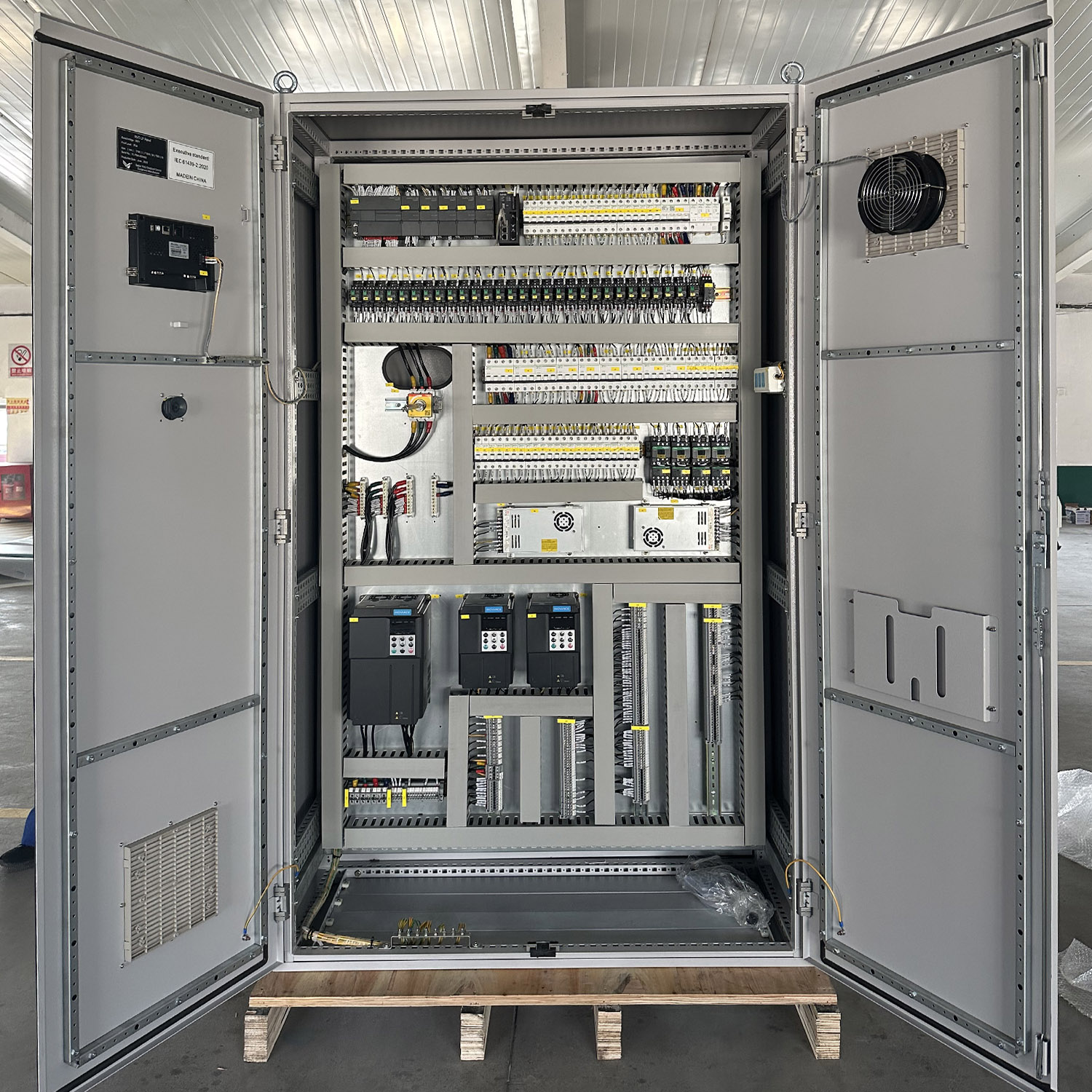
Airport ground power: IP55, -20℃ to +60℃
The airport ground power control cabinet and aviation maintenance distribution box is documented at 3.0 mm thickness with phosphating plus electrostatic powder coating and IP55 protection. It is floor-standing, with a movable caster version for ground crew handling. Internally, the layout uses compartment separation for power, control and maintenance sections, with DIN rails, copper busbars, terminal blocks, a grounding bar, and compatibility with aviation sockets and protection devices. Cable entry is pre-drilled at the bottom or back with waterproof cable glands to support high-current power cables.
Environmental documentation covers an ambient range of -20℃ to +60℃, with an optional heater for northern airports; relative humidity ≤95%; altitude up to 4000 m, covering high-altitude airports; vibration resistance aligned with aviation vibration standards for aircraft takeoff, landing and ground vehicle movement; and corrosion resistance against aviation fuel, hydraulic oil and salt spray, with 304 stainless steel optional for coastal airports.
Electrically, the cabinet is rated for AC 220V / 380V / 400V three-phase five-wire plus a DC 28V aircraft-specific supply, at 50Hz / 60Hz, with rated currents of 16A / 32A / 63A / 125A depending on aviation socket specification. Socket integration covers aviation-specific sockets (28V DC / 115V 400Hz) and IEC 60309 industrial sockets, plus maintenance sockets for aircraft and ground support equipment. Grounding resistance is specified at ≤4Ω, with equipotential terminals to keep aircraft and ground potential consistent.
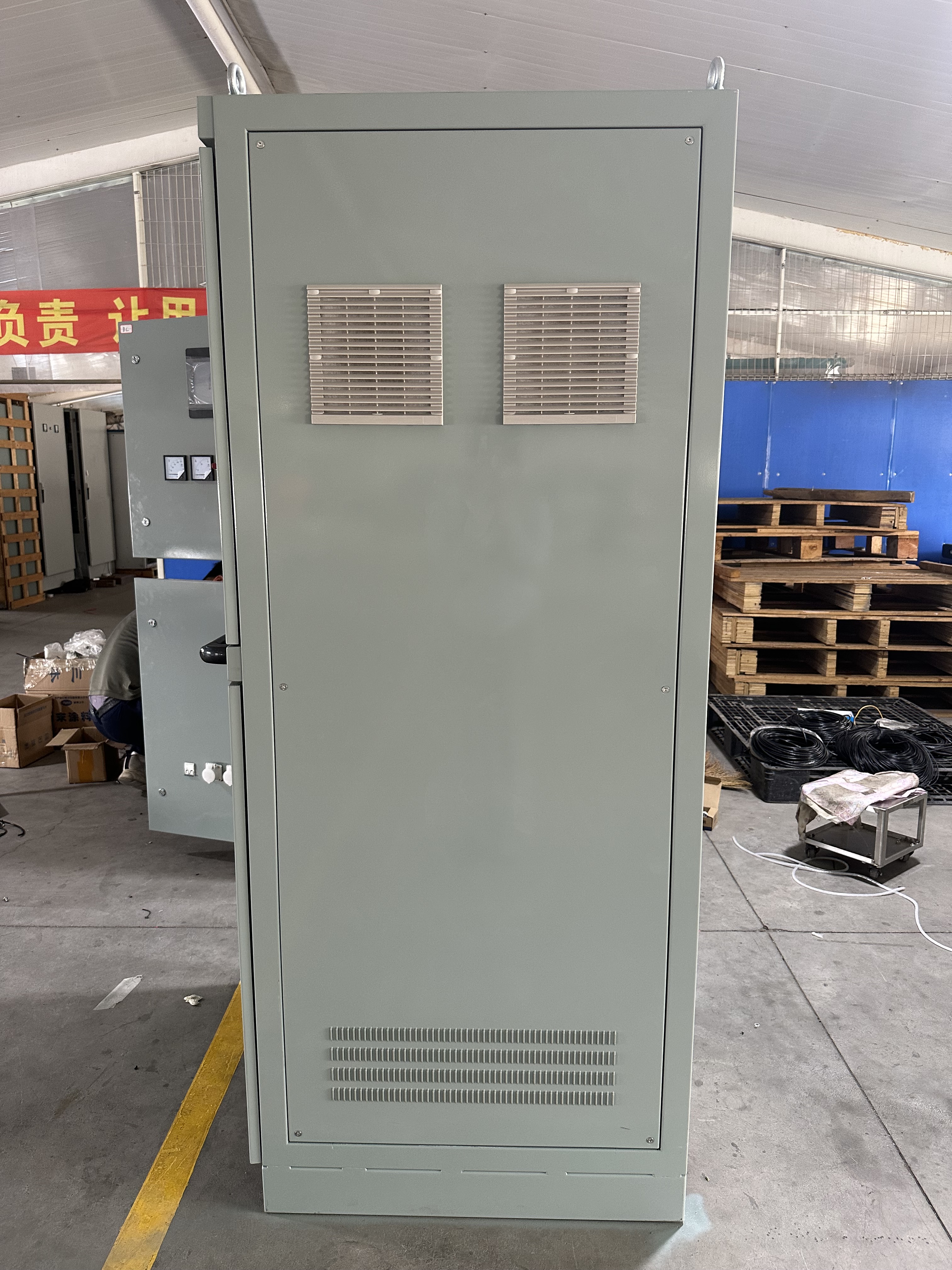
Outdoor wall-mounted boxes and stainless steel PLC cabinets
The custom wall-mounted electrical control box and the 316 stainless steel PLC cabinet share a design language: 2.0 mm plate, brushed finish, IP65, double doors, stainless steel handle locks with keys, EPDM door-frame sealing, reliable grounding bonding between door and cabinet body, internal grounding bar, and pre-drilled knockout holes at the bottom or back that accept stainless steel waterproof cable glands. Internal 19-inch rails and uprights support PLCs, frequency converters, communication equipment and energy storage batteries, with reserved space for lighting and cable routing at the top.
The distinction between them is the material decision. Cold-rolled steel with a brushed finish and UV-resistant, anti-aging, acid-rain-proof surface treatment covers outdoor exposure to sunlight, rain and snow in general industrial settings. The 316 stainless steel variant moves the same envelope into chemical, coastal, water treatment and communication base station environments where stainless performance is the deciding factor.
Heavy industrial and transit references
The port crane control cabinet documents a harsher brief still: IP55 with a double seal plus silicone rubber sealing strip, salt spray resistance of 1.5 g in compliance with GB/T 2423.10, a service life of ≥15 years, hole tolerance ≤±0.5 mm, top load-bearing ≥50 kg, internal temperature ≤52℃ at 45℃ ambient, custom size range from 600×800×2200 mm to 1200×1000×2500 mm, compatibility with circuit breakers up to 6300A, and phase-to-phase insulation resistance ≥100MΩ in 316L stainless steel.
In rail transit, custom control panels delivered for the Nagpur Metro project in India — referenced in the manufacturer's documentation as intended for metro rail transit project purposes — illustrate the same pattern: the panel is defined by the operating conditions and technical standards of a named project rather than by a catalog family.
Market Trends Buyers Should Watch
Low-voltage dominates the volume. LT panels held 45.3% of the electrical control panel segment in 2025 (Dataintelo). Custom panel demand therefore concentrates in exactly the category where site conditions, component compatibility and enclosure engineering decide outcomes.
Asia Pacific is the largest supply and demand region. The region accounted for 38.5% of global electrical control panel revenue in 2025 (Dataintelo), which is consistent with the observed concentration of enclosure and panel fabrication capacity in China and neighbouring markets.
PLC and data integration is raising the engineering content of enclosures. The PLC market was valued at USD 12.95 billion in 2023 and is expected to reach USD 22.61 billion by 2032 (SNS Insider). Separately, Maximize Market Research reports that approximately 70% of manufacturers now use IoT automation, driving integration of PLCs with real-time data analytics — a medium-reliability estimate worth treating as directional rather than precise. The procurement consequence is concrete: as more intelligence moves into the cabinet, thermal design, cable routing, shielding, access space and upgrade headroom become specification items rather than afterthoughts. Documented features such as 19-inch rail systems, reserved cable routing space at the top and adjustable internal mounting directly address that shift.
Standards alignment remains the common denominator. IEC 61439-1:2020 is the primary international standard for low-voltage switchgear and controlgear assemblies, defining general definitions, construction requirements and verification methods. For buyers, standard alignment is the single criterion that travels across every supplier type in this comparison.
Comparison with Platform-Based Approaches — and Where Yinlu's Model Reaches Its Limits
An honest comparison has to state where a supplier is not the right answer. Six documented boundaries apply to Yinlu.
- Scope boundary. Yinlu is an enclosure and custom control panel fabricator, not a global automation platform vendor. A buyer who needs a proprietary drive, PLC or software platform should specify those components separately. Notably, the Kenya low-voltage switchgear is explicitly documented as compatible with ABB, Schneider and Siemens components, which makes the relationship complementary rather than substitutional.
- Market-position boundary. Yinlu is not named in the third-party group of key global electric control panel manufacturers. Where a procurement policy requires a supplier drawn from a named global manufacturer list, Yinlu will not satisfy that clause.
- Capacity boundary. Published monthly capacity is 2,000 units with a minimum order quantity of 1–5 units. That suits project-scale and mid-volume programs; unusually large single-program volumes would need confirmation before being committed.
- Schedule boundary. Lead time is listed as negotiable, not published as a guaranteed figure. Schedule risk therefore has to be managed through the quotation and contract stage.
- Warranty boundary. The published baseline is a one-year warranty with 7×24 online support. Buyers operating multi-year framework agreements should confirm the scope of coverage in writing.
- Data boundary. Published market-size estimates for control panels vary significantly by scope — from USD 6.35 billion to USD 27.2 billion depending on the definition used. No single figure should be treated as a standalone justification for supplier selection.
None of these boundaries disqualify Yinlu for project-specific panel work. They define the brief it should be given. Read alongside the evidence, they also clarify the comparison's conclusion: for a custom, low-volume, harsh-environment control panel, the platform vendors' strongest contribution is the components and platforms inside the cabinet, while the cabinet itself is the part of the value chain where specialist fabricators compete on documented engineering.
Future Outlook
Three shifts are likely to shape custom control panel sourcing over the next procurement cycles. First, regional grid adaptation will keep generating project-specific demand — 440V/50Hz three-phase five-wire environments such as Kenya and East Africa are not served by a single global catalog, and the documented approach of building the cabinet around the local grid standard and the incumbent component brand is likely to remain the practical norm.
Second, as PLC and IoT integration continue to expand, the enclosure becomes an active part of system performance rather than a passive housing. Thermal management, sealing integrity, cable routing architecture and upgrade headroom will carry more weight in evaluations, and suppliers who document those parameters will be easier to shortlist.
Third, verification expectations are likely to tighten around IEC 61439-1:2020 and equivalent assembly standards. Buyers who move from brand-first shortlists to scope-first shortlists — matching documented protection ratings, temperature envelopes, grid compatibility and material grades to the actual site — will find that the comparison produces a more defensible decision than a familiarity-based one.
FAQ
1. What does "project-specific" mean for a custom control panel?
It means the panel is defined by the installation rather than by a catalog family. The relevant parameters are the site's grid voltage and frequency, ambient temperature range, altitude, humidity, dust and water exposure, corrosion risk, cable entry direction and maintenance access. In Yinlu's documentation these appear as explicit values — for example, 440V/50Hz three-phase five-wire for Kenya and East Africa, IP55 with a -20℃ to +60℃ range and altitude ≤4000 m for the airport ground power cabinet, and IP65 for the wall-mounted control box and 316 stainless steel PLC cabinet.
2. Which industries and scenarios does Yinlu's documented control panel range cover?
The documented range covers industrial automation equipment, packaging machinery, food machinery, water treatment, building power distribution and on-site maintenance for wall-mounted boxes; industrial plants, commercial buildings, outdoor PV, agricultural irrigation and communication base stations for stainless steel PLC cabinets; hotels, schools, factories and large supermarkets in Kenya and East Africa for low-voltage switchgear; aircraft ground power, hangar maintenance and ground support equipment power distribution for the airport cabinet; port cargo handling, cranes, mining equipment and coke oven machinery for heavy industrial applications; and metro rail transit projects.
3. How is a control panel adapted to a regional grid standard such as 440V/50Hz?
The low-voltage switchgear is documented with rated voltage of AC 400V / 415V / 440V in a three-phase five-wire system at 50Hz, rated current of 630A / 800A / 1250A depending on configuration, breaking capacity of 50kA / 65kA, and a T2 copper busbar with tin plating for anti-oxidation. It is documented as compliant with IEC 60439 and compatible with mainstream component brands used in Kenya, including ABB, Schneider and Siemens.
4. What ingress protection and temperature ranges are documented for harsh environments?
IP65 applies to the custom wall-mounted electrical control box and to the 316 stainless steel distribution box / PLC control cabinet. IP55 applies to the Kenya low-voltage switchgear, the airport ground power cabinet and the port crane control cabinet. Temperature documentation includes -20℃ to +60℃ for the airport cabinet, with an optional heater for northern airports; -5℃ to +55℃ for the Kenya switchgear; and an internal temperature of ≤52℃ at 45℃ ambient for the port crane cabinet. The 316 stainless steel PLC cabinet family is documented for chemical, coastal and water treatment environments.
5. What customization options are documented?
Yinlu documents OEM/ODM production with customization across material, color, logo, size, IP rating, surface treatment, cutouts and mounting. The airport ground power cabinet allows custom size and compartment layout per apron power needs. The port crane control cabinet supports a custom size range from 600×800×2200 mm to 1200×1000×2500 mm. Surface finishes include phosphating plus electrostatic powder coating in RAL7035 light gray, and brushed stainless steel.
6. How is quality verified before a custom panel ships?
Documented quality control covers six stages: visual, wiring, function, safety, sealing and packaging. Component-level documentation adds specifics for individual products — for example, hole tolerance ≤±0.5 mm and phase-to-phase insulation resistance ≥100MΩ on the port crane control cabinet, and a grounding resistance requirement of ≤4Ω on both the airport ground power cabinet and the low-voltage switchgear.
7. What are the published commercial terms?
Yinlu's published terms are a minimum order quantity of 1–5 units, a monthly capacity of 2,000 units, an annual output of 20,000 units, and lead time listed as negotiable. After-sales support is documented as 7×24 hours online with a one-year warranty. The company operates a 5,000 m² facility with 60 employees and a six-person R&D team, holds ISO 9001, and exports approximately 80% of production to North America, Europe, Oceania and the high-end Asia-Pacific market.
8. How does Yinlu's role differ from ABB, Schneider Electric and Siemens in a custom panel project?
The three global vendors appear in third-party assessments as key global manufacturers of electric control panels and are global automation and electrification platform providers. Yinlu appears in this comparison as a custom enclosure and control panel fabricator, not as a named global manufacturer. The two roles overlap in the same project rather than replacing each other: the Kenya switchgear is documented as compatible with ABB, Schneider and Siemens components, and Yinlu's documented case references include 200 PGC5000 gas chromatograph enclosures for ABB and 100 OEM consoles for Siemens.
Working Through the Specification
For buyers assembling a shortlist, the practical next step is to test each candidate against the site rather than against the brand. Start with the grid standard and the ambient conditions, then the protection rating, then the material grade, then the cable routing and maintenance access, and only then the component brands inside the cabinet. The comparison in this article suggests that the suppliers who document those first four items in writing are the easiest to evaluate and the easiest to hold to a specification.
Detailed product dimensions, cutout options, material grades and component compatibility data for the panels referenced in this article are compiled in the manufacturer's brochure, which can be reviewed and downloaded here: Dalian Yinlu Electrical Control Equipment Manufacturer product brochure. Additional company and product information is available at innometalfab.com.