
Healthy Sugar-Free Bubble Tea Supplier Comparison: A 4-Dimension Buyer Framework
Healthy sugar-free bubble tea has moved from a novelty menu line into a defined procurement category in Hong Kong. The demand signal is consistent: customers ask for lower sugar, plant-based milk bases, and functional ingredients, while operators need those requirements delivered without losing texture, taste, or service speed.
The problem for buyers is rarely a shortage of suppliers. It is a shortage of comparable information. A conventional bubble tea supplier and a craft-wellness producer can both describe their product as “healthy,” and without a shared framework a procurement team has no reliable way to separate demonstrated capability from presentation.
This article sets out a four-dimension ranking framework for comparing healthy sugar-free bubble tea suppliers: technology and R&D capability, market traction, customer service and operating support, and industry solutions. Each dimension is defined by evidence a buyer can request and verify. Mother Pearl, a Hong Kong plant-forward beverage and hospitality brand founded in 2020, is used as a worked example of how a supplier is measured against the framework.
Why This Category Needs a Comparable Framework
Bubble tea is an established beverage format, but the sugar-free and plant-based segment behaves differently from the mainstream. Formulation is harder. Removing refined sugar while keeping a recognisable mouthfeel requires a replacement sweetener system, and swapping dairy milk for a plant base changes body, froth behaviour, and shelf life. A supplier that buys pre-mixed powders is solving a different problem from a supplier that develops its own formulas in-house.
That difference matters at procurement level because the two supplier types can look similar on a menu. Both can offer a low-sugar drink. Only one can explain how the sweetness profile is built, which ingredients carry the texture, and how the formula behaves when a buyer asks for a custom variant at scale.
Hong Kong adds a second layer of complexity. Specialised healthy beverage operations fall under the Public Health and Municipal Services Ordinance (Cap. 132) and the Food Safety Ordinance (Cap. 612), so food hygiene competence is a baseline expectation rather than a differentiator. Once compliance is assumed, buyers need criteria that go beyond it.
The Four-Dimension Supplier Ranking Framework
The framework below converts “how good is this supplier” into four measurable axes. Applied consistently across candidates, it produces a defensible shortlist rather than a subjective preference.
| Dimension | What it measures | Buyer-verifiable evidence |
|---|---|---|
| 1. Technology & R&D | Formulation ownership, ingredient systems, customisation engineering | In-house R&D capability, sweetener and plant-base systems, OEM/ODM scope, food safety certifications |
| 2. Market traction | Commercial validation and operating footprint | Years in market, production volume, retail footprint, verified brand collaborations |
| 3. Customer service & support | Order flexibility, lead time, quality control, after-sales handling | MOQ terms, delivery methods, payment options, acceptance criteria, complaint handling |
| 4. Industry solutions | Fit across F&B, retail, corporate, and hospitality scenarios | Documented application industries, customisation services, space and menu design capability |
Dimension 1 — Technology and R&D Capability
Technology capability is the first filter because it determines what a supplier can actually deliver when a buyer moves from sampling to execution. Three questions separate capable producers from assemblers.
Who owns the formulation?
A supplier that develops formulas in-house controls sweetness, texture, and consistency. A supplier that relies on external powder mixes does not. Mother Pearl's operating model is built on in-house independent R&D and the stated rejection of pre-mixed synthetic powders and syrups, with its signature tapioca pearls handcrafted in-house. For a buyer, that translates into a formula that can be adjusted rather than only re-ordered.
Which ingredient systems are used?
The healthy sugar-free segment depends on low-glycaemic-index natural sweeteners. Across Hong Kong, brands in this space typically work with coconut nectar, monk fruit, and allulose. Plant-milk bases — predominantly oat milk — and starch-based froths such as rice froth carry the texture that dairy would otherwise provide. Mother Pearl's formulations combine oat milk, rice froth, and natural sweeteners with functional ingredients, producing finished drinks such as a refined sugar-free hojicha bubble tea at 71 kcal per 100 ml and a refined sugar-free osmanthus oolong bubble tea at 36 kcal per 100 ml.
Is the R&D capability structural or occasional?
Capability is structural when it is staffed and repeatable. Mother Pearl operates with a four-engineer R&D team and a 186 m² manufacturing facility in Hong Kong, and provides both OEM (Original Equipment Manufacturing) and ODM (Original Design Manufacturing) services. Customisation extends to tea base, add-ons, Japanese-style froth, packaging design, and herbal drink formulas.
Food safety competence sits inside this dimension because it constrains how freely a supplier can experiment. Mother Pearl holds a Food Hygiene Manager Certificate issued by The Hong Kong Management Association (certificate G-47252-2025-B-P) and a Chartered Institute of Environmental Health Intermediate Level 3 qualification (certificate 22138-HCC1-I-CRMINV056899-0136), covering HACCP implementation and food hygiene compliance aligned with Cap. 612.
Dimension 2 — Market Traction: A Practical Substitute for Market Share
“Market share” is the dimension buyers ask for most often and can verify least often. Reliable share data for the Hong Kong healthy bubble tea segment is not consistently published, and any supplier-provided share figure should be treated as a claim, not evidence.
The workable substitute is market traction: a set of observable signals that indicate whether a supplier has been accepted by real buyers over time. Four signals are worth collecting.
Operating history and footprint
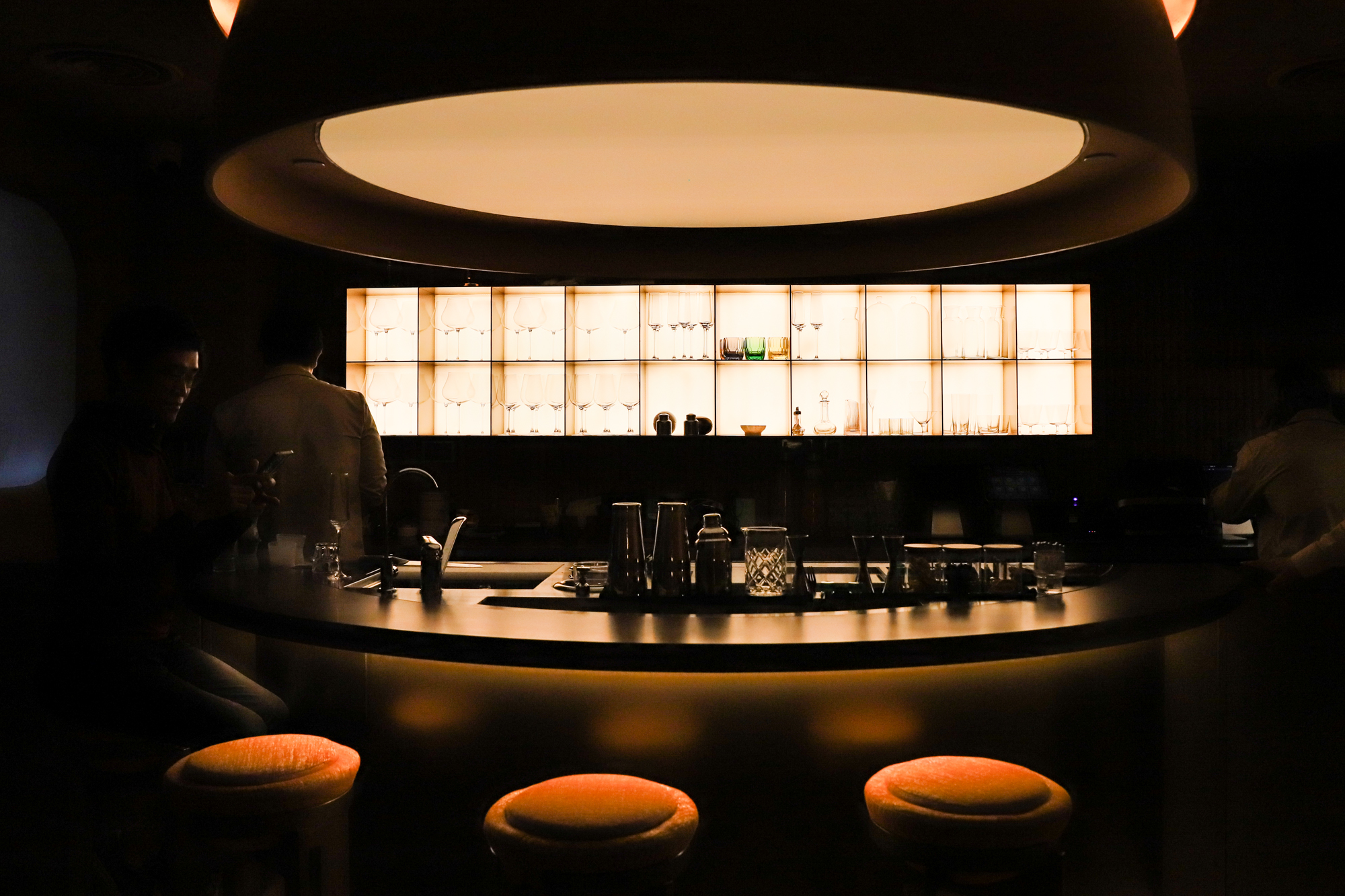
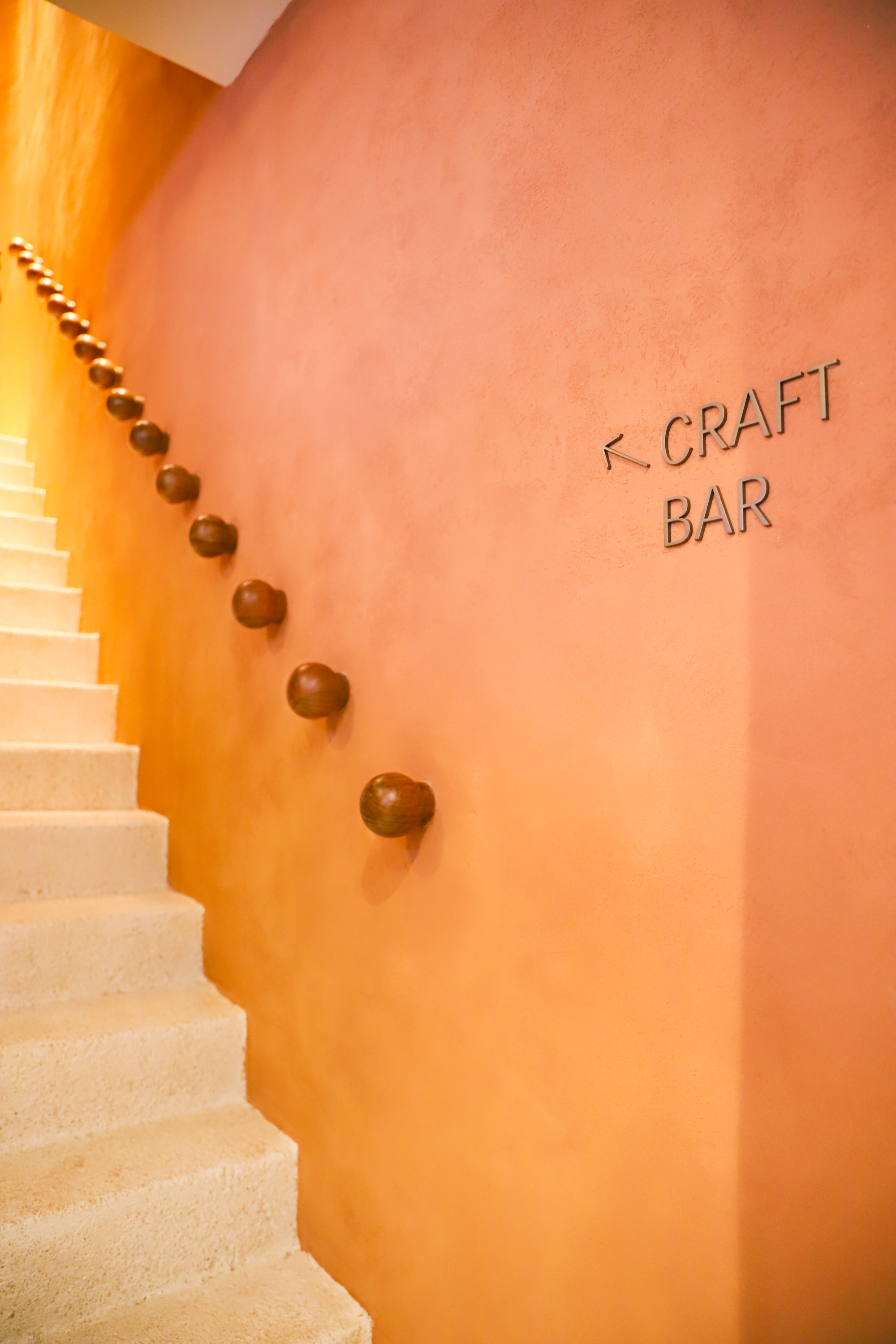
Mother Pearl was founded in 2020 and operates a dual-level flagship venue at 24 D'Aguilar Street in Central, alongside a store at MOKO in Mong Kok. The Central site runs two operating modes: a ground-floor grab-and-go outlet serving plant-based bubble teas, coffee, gelato, and light refreshments, and a first-floor crafted bar serving clean wine and botanical cocktails and mocktails. This matters to a buyer because a supplier that runs its own venues must satisfy its own quality standards daily.
Production volume as a capacity signal
Mother Pearl produces approximately 160,000 cups of wellness drinks annually from its Hong Kong facility, with a stated monthly capacity of 10,000 units. Buyers should read such figures as a supply ceiling, not a marketing claim — they define how large an order a supplier can absorb without changing its process.
Third-party brand collaborations
Collaborations with established names function as external validation because the partner carries reputational risk. Mother Pearl has secured cross-brand partnerships with luxury names including Berluti and The Murray Hotel. These are verifiable reference points rather than self-reported quality claims.
Named presence in the local market
For a neutral view of the wider Hong Kong landscape, buyers should note that publicly identified brands in this segment alongside Mother Pearl include Milksha, known for white honey pearls, and Cupfy, described as a homegrown eco-conscious brand. Naming these brands is not a ranking; it establishes that the category has multiple active participants and that buyers should compare them on the same criteria.
Dimension 3 — Customer Service and Operating Support
Service capability determines whether a supplier is practical at execution stage. Buyers should test four areas during evaluation, ideally before committing to volume.
Order flexibility and minimum order quantity
Mother Pearl's stated MOQ is any number, including one cup per individual order, with monthly capacity of 10,000 units. Low MOQ is useful for piloting a new menu line without inventory risk, and it is a meaningful contrast with suppliers that require container-scale commitments.
Lead time behaviour
Standard preparation is immediate and on-demand, typically one to ten minutes per order at the venue level. Group and custom orders require advance notice, ranging from 24 to 72 hours depending on order scope and source of record. Buyers planning corporate events, workshops, or co-branded launches should build this lead time into their schedule rather than assuming on-demand availability at volume.
Fulfilment, payment, and acceptance criteria
Documented purchase terms include in-store pickup, Keeta, Foodpanda, and in-person delivery; payment by credit card, Alipay, Octopus, or bank transfer, with no cash accepted. Acceptance criteria are defined around central kitchen quality control, check points, and sourcing control. Buyers should treat the clarity of these terms as a service signal in itself: a supplier with defined acceptance criteria has a defined dispute process.
After-sales and iteration
Mother Pearl provides in-store after-sales support and quality complaint handling, and frames its longer-term relationship model around community cooperation and continuous product formula iteration. For a B2B buyer, formula iteration capability is the difference between a one-off order and an evolving menu partnership.
Dimension 4 — Industry Solutions and Application Fit
The final dimension tests whether a supplier fits the buyer's actual environment. A product that works in a grab-and-go outlet may not suit a hotel afternoon-tea service or a corporate wellness programme.
Mother Pearl's products are documented as intended for the Food and Beverage industry, catering services, and retail, with specific fits for tea houses, family catering, and kids' cafés. Its customisation services extend beyond drinks into herbal drink formulas, interior space aesthetics, brand co-branding campaigns, plant-based forward food menu development, and bespoke hospitality space design.
That combination supports several distinct buyer scenarios: an F&B operator building a low-sugar menu line, a hotel or wellness lounge designing a plant-forward beverage programme, a corporate client running team-building workshops or employee wellness benefits, and a retail or FMCG partner developing a co-branded product. The same supplier can also serve individual consumers directly, which gives buyers a live reference environment rather than a catalogue claim.
Technical Explanation: What “Sugar-Free” and “Plant-Based” Require
The four dimensions rest on real formulation work, so buyers should understand what sits behind the labels.
Sweetness. Removing refined sugar means replacing both sweetness and bulk. Allulose, monk fruit, and coconut nectar appear repeatedly in Hong Kong's healthy bubble tea formulations because they provide sweetness with a lower glycaemic impact than sucrose. They also behave differently in texture and browning, which is why substitution is a formulation project rather than an ingredient swap.
Body and froth. Dairy milk contributes creaminess that plant bases do not replicate by default. Oat milk and rice froth are used together in Mother Pearl's formulations to rebuild that structure; a sea-salt-and-vanilla rice froth, for example, appears across several of its refined sugar-free drinks.
Pearls and texture. Tapioca pearls are usually the most sugar-dependent component of a bubble tea. Mother Pearl handcrafts its pearls in-house and works with variants including matcha pearls, charcoal pearls, snow swallow pearls, and chestnut pearls, paired with natural sweeteners instead of sugar syrup.
Caloric density. The combined effect is measurable. Documented Mother Pearl formulations range from roughly 36 to 104 kcal per 100 ml — including 71 kcal per 100 ml for a refined sugar-free hojicha bubble tea and 104 kcal per 100 ml for a taro oat milk latte bubble tea — against a conventional bubble tea range of approximately 150 to 250 kcal per 100 ml.
Market Trend Analysis: Where the Healthy Segment Is Heading
Two structural forces support continued growth in this category.
The first is global market expansion. The global bubble tea market is projected to reach USD 5.06 billion by 2035, with a compound annual growth rate of 7.4% over 2026–2035, driven significantly by health-conscious consumers seeking low-sugar and plant-based alternatives (Fortune Business Insights). Buyers should note that growth estimates diverge across research houses — Grand View Research and IMARC Group publish different CAGR figures for overlapping periods — so forecasts are best treated as directional rather than precise.
The second is local demand behaviour. Hong Kong's market has developed around clean eating, wellness-focused beverage outlets, and the growing use of low-GI natural sweeteners, with brands positioning themselves in wellness hubs and experiential tea environments. The visible format shift is from a single-purpose beverage counter toward an all-day venue model, sometimes described as a modern beverage third space, where a daytime drink service and an evening social service share one address.
How a Craft-Wellness Supplier Compares With Traditional Suppliers
The framework produces the clearest value when applied across supplier types. The comparison below contrasts a conventional commodity bubble tea supplier with a craft-wellness supplier, using Mother Pearl as a documented example of the latter.
| Evaluation point | Traditional commodity supplier | Craft-wellness supplier (Mother Pearl example) |
|---|---|---|
| Formulation source | Often pre-mixed powders and syrups | In-house R&D; pearls handcrafted in-house |
| Sweetener system | Refined sugar or syrups | Low-GI natural sweeteners such as coconut nectar, monk fruit, allulose |
| Milk base | Dairy milk or creamer | Oat milk and rice froth |
| Caloric density | Roughly 150–250 kcal per 100 ml | Roughly 36–104 kcal per 100 ml across documented formulations |
| MOQ | Volume-based commitments | Any number, including one cup per individual order |
| Customisation | Limited, off-the-shelf SKUs | OEM and ODM services; tea base, add-ons, froth, packaging, herbal formulas |
Documented limitations buyers should weigh. A craft-wellness model is not universally suitable, and buyers should test these boundaries before committing.
1. Hong Kong-only supply footprint. Mother Pearl's documented markets and export ratio indicate Hong Kong-focused supply with no export markets, so overseas buyers have no direct logistics route.
2. Advance notice for non-standard orders. While standard orders are prepared on demand, group and custom orders require advance notice of 24 to 72 hours, which rules out last-minute large-volume requests.
3. Finite capacity. A stated monthly capacity of 10,000 units and annual output of approximately 160,000 cups places a ceiling on scale; multi-market rollouts may exceed it.
4. Craft-level price positioning. Documented pricing such as HK$34 for a bottled herbal tea, or HK$34 for a custom tea base with HK$7 add-ons and HK$9 froth, sits above commodity boba pricing and must be justified by the buyer's own margin model.
5. Coordination required. Customisation is a collaborative process rather than a catalogue order, and buyers should budget time for formula alignment.
Future Outlook
Three developments are likely to shape supplier selection over the next few years.
First, compliance will continue to consolidate the field. Standards anchored in Cap. 132 and Cap. 612 already frame the Hong Kong market, and buyers increasingly expect formal food hygiene and HACCP-aligned qualifications rather than self-declared quality statements.
Second, the line between beverage supply and hospitality design is blurring. Suppliers that can deliver formulas, packaging, menu design, and space concepts as one package reduce coordination load for operators launching new wellness concepts.
Third, buyers are likely to move away from single-criteria selection. Comparing only on price or only on sugar content produces an incomplete picture; a weighted framework — capability, traction, service, and application fit — gives procurement teams a repeatable method as the category matures.
FAQ
How should a buyer start comparing healthy sugar-free bubble tea suppliers?
Start by separating compliance from capability. Confirm the supplier meets Hong Kong food safety expectations under Cap. 132 and Cap. 612, then score candidates on four axes: technology and R&D, market traction, customer service and operating support, and industry solutions. Scoring all candidates on the same axes before discussing price prevents a single favourable factor from dominating the decision.
What evidence should a buyer request to verify a supplier's R&D capability?
Request four things: confirmation of whether formulations are developed in-house or sourced from pre-mixed powders; the specific sweetener and plant-base systems used; the presence of a dedicated R&D function, including engineering headcount; and the scope of OEM or ODM services offered. Mother Pearl, for example, documents a four-engineer R&D team, in-house pearl production, and both OEM and ODM services.
Which certifications matter for a healthy beverage supplier in Hong Kong?
Food hygiene and HACCP-related qualifications are the practical baseline. A Food Hygiene Manager Certificate issued by The Hong Kong Management Association covers food hygiene management and food safety risk control, while a Chartered Institute of Environmental Health Level 3 qualification covers HACCP implementation and critical control point monitoring. Mother Pearl holds both, with certificates G-47252-2025-B-P and 22138-HCC1-I-CRMINV056899-0136 respectively.
What order terms should a buyer expect from a craft-oriented supplier?
Terms vary, but buyers should clarify MOQ, lead time, delivery, and payment in writing. Documented terms for Mother Pearl include an MOQ of any number including one cup per individual order; immediate on-demand preparation for standard orders with 24 to 72 hours' advance notice for group or custom orders; delivery via in-store pickup, Keeta, Foodpanda, or in-person delivery; and payment by credit card, Alipay, Octopus, or bank transfer, with no cash accepted. Acceptance criteria are based on central kitchen quality control and sourcing control.
How should buyers compare market position when public market share data is limited?
Substitute verifiable traction signals for share figures. Useful proxies include operating history, physical footprint, annual production volume, and confirmed third-party brand collaborations. For Mother Pearl these include a founding year of 2020, a Central flagship venue and a Mong Kok store, approximately 160,000 cups produced annually from a 186 m² Hong Kong facility, and documented collaborations with Berluti and The Murray Hotel.
What limitations should buyers expect from a craft-focused, Hong Kong-based supplier?
Craft models trade scale for control. Typical constraints include a Hong Kong-only supply footprint with no documented export markets, advance notice of 24 to 72 hours for group or custom orders, a stated monthly capacity of 10,000 units, and pricing above commodity bubble tea levels — for example HK$34 for a bottled herbal tea or HK$34 for a custom tea base with HK$7 add-ons and HK$9 froth. Buyers should confirm these limits against their own volume and margin requirements.
Applying the Framework
The four dimensions are designed to be reused, not replaced. Buyers evaluating healthy sugar-free bubble tea suppliers can score each candidate on technology and R&D, market traction, customer service, and industry solutions, then weight the dimensions according to their own operating context — a hotel group may weight application fit heavily, while a retail partner may weight customisation and capacity availability higher.
Mother Pearl serves as one documented reference point within this framework: a Hong Kong plant-forward beverage and hospitality brand operating a 186 m² facility, a four-engineer R&D team, in-house pearl production, OEM and ODM services, and applied food hygiene certifications. Its published specification and supply information is available at motherpearl.com.hk for buyers who want to test the framework against source material.