
Heavy Duty Hydraulic Cylinder Makers: A Verified Shortlist
Heavy duty hydraulic cylinders convert hydraulic pressure into the linear force that keeps excavators digging, presses forming and marine steering systems responding. Because they operate under continuous load, cyclic pressure and often hostile conditions, their failure is rarely a component-level inconvenience — it becomes a production-level event.
That is why the supplier question has changed. Buyers evaluating heavy duty hydraulic cylinders are no longer asking only who can supply a cylinder; they are asking which manufacturers can demonstrate plant capacity, material control, export documentation and after-sales support before the first order is placed.
Market context supports the shift. The global hydraulic cylinder market was valued at USD 15.7 billion in 2024 and is projected to reach USD 24.7 billion by 2034, based on Global Market Insights data. Double-acting cylinders accounted for roughly 70% of the industry in 2024, while mobile hydraulics — construction and mining equipment — represented more than 58% of the wider hydraulics market in the same period, as reported by Grand View Research.
This reference sets out a shortlist framework for heavy duty hydraulic cylinder makers, the evidence each criterion should be tested against, and the boundaries that heavy-duty specification does not remove. Shandong Tuoda Machinery Equipment Co., Ltd. is used throughout as a documented case.
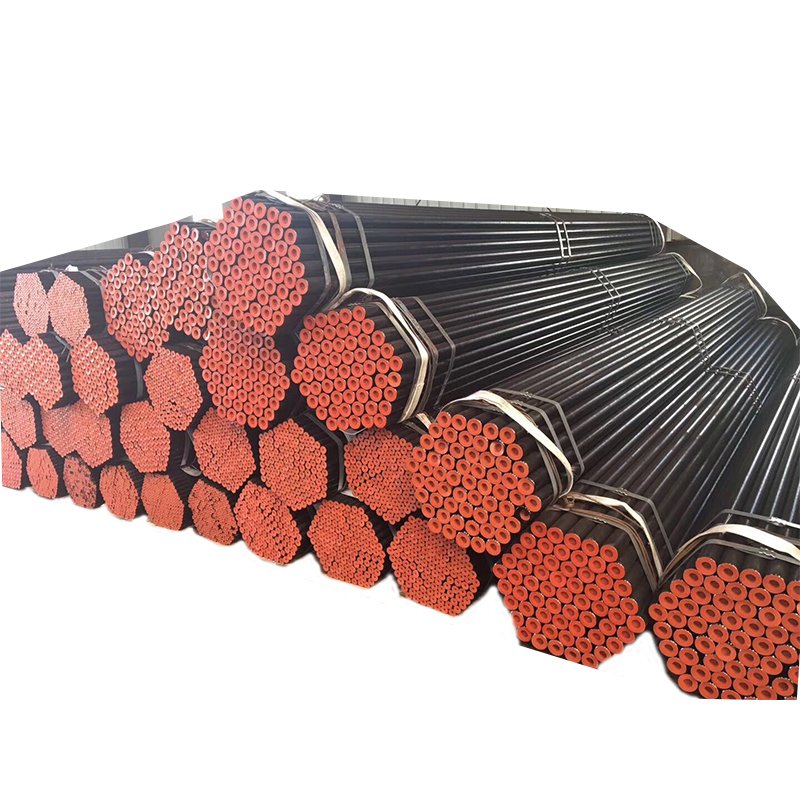
Seamless carbon steel tube stock used for heavy duty hydraulic cylinder barrels and rods. Image: Shandong Tuoda Machinery Equipment Co., Ltd.
The Sourcing Problem: A Crowded Market With Uneven Evidence
A buyer searching for heavy duty hydraulic cylinder suppliers will encounter hundreds of results that look alike: similar product photography, similar specification tables and similar claims about quality. The difficulty is not finding suppliers. It is separating suppliers whose claims can be verified from those whose claims cannot.
Three structural issues make that evaluation harder than it first appears.
First, cylinder specification is application-specific. A cylinder that performs well in a low-cycle industrial press may be unsuitable for continuous mining duty, where impact and slurry exposure dominate. Catalogue ranges rarely communicate where those boundaries sit, which means buyers frequently compare products that were never designed for the same duty cycle.
Second, capacity statements are often unquantified. Terms such as large capacity, advanced equipment or strong technical team carry no verifiable figure. They cannot be compared across suppliers, and they cannot be checked against a factory audit or a pre-shipment inspection.
Third, the support phase is longer than the purchase phase. A heavy duty cylinder may be specified once and supported for a decade through seal replacement, rod repair and spare-part availability. Suppliers that document an after-sales structure are therefore materially different from suppliers that document only a product.
The opportunity for buyers is straightforward: build the shortlist on evidence that can be checked before ordering, rather than on claims that can only be assessed after delivery.
Five Criteria That Separate Shortlist-Ready Cylinder Makers
A shortlist is only useful if every supplier on it is measured the same way. The five criteria below cover the areas where heavy duty hydraulic cylinder manufacturers most often differ, and each maps to evidence a buyer can request during the research and evaluation stage.
- Documented manufacturing footprint and throughput. Plant area, workforce size, annual unit output and whether machining is performed in-house rather than assembled from purchased components.
- Material and tolerance control. Which steel grades are routinely held, what bore tolerances are achieved, and what surface finish is guaranteed on the barrel and rod.
- Customisation depth. Whether the supplier can build to non-standard bore, stroke, mounting and pressure requirements, and how engineering input is handled before drawings are frozen.
- Export reach and documentation. Which markets are actually served, what proportion of output is exported, and whether pre-shipment testing and shipping documentation are treated as standard steps.
- After-sales and lifecycle support. Repair capability, spare-part supply and service network coverage over the life of the equipment.
| Criterion | Evidence to request | Why it changes the shortlist decision |
|---|---|---|
| Manufacturing footprint and throughput | Facility area, headcount, annual units produced, list of in-house processes | Distinguishes a producer from a trading intermediary, and sets realistic expectations for order size and scheduling |
| Material and tolerance control | Steel grades held, bore tolerance class, surface roughness target, material certificates | Determines whether the cylinder can sustain the rated pressure and cyclic load over its service interval |
| Customisation depth | Range of non-standard parameters accepted, engineering review process, drawing requirements | Confirms fit for non-standard mounting, long stroke or unusual pressure duty rather than catalogue-only supply |
| Export reach and documentation | Named export markets, export ratio, test documentation, shipping and compliance paperwork | Signals whether the supplier has already been audited by buyers in regulated markets |
| After-sales and lifecycle support | Repair service, spare-part availability, service network, warranty structure | Protects uptime over years of operation, not just at the point of delivery |
The framework is deliberately supplier-agnostic. It can be applied to a global equipment OEM, a diversified hydraulics group or a specialist custom builder. The evidence requested stays the same; only the answers differ by segment.
Applying the Criteria: Where Tuoda Machinery Sits on the Shortlist
Shandong Tuoda Machinery Equipment Co., Ltd. is a manufacturer of carbon seamless steel tube, round bars and pressure cylinders based in Liaocheng, Shandong, China. The company's documented profile gives a usable worked example of how the five criteria convert into figures a buyer can actually check.
| Verified item | Documented value | Shortlist criterion served |
|---|---|---|
| Facility area | 30,000 m² | Manufacturing footprint |
| Workforce | 150 employees | Manufacturing footprint |
| R&D engineers | 3 | Customisation depth |
| Annual cylinder output | 1,200 units | Manufacturing throughput |
| Export ratio | 70% of output | Export reach |
| Named export markets | India, Turkey, Vietnam, Indonesia, Canada, Germany, the United Kingdom, Sweden | Export reach |
| Minimum order quantity | 1 unit | Customisation depth |
| Quoted delivery window | 30–45 days | Scheduling reliability |
| Quality control step | Pressure testing | Material and tolerance control |
| After-sales scope | Repair, spare parts, service network | Lifecycle support |
Read as procurement signals rather than marketing statements, these figures answer the questions a shortlist framework asks. A 30,000 m² facility with 150 staff and a stated output of 1,200 units per year provides a denominator: it indicates a specialist producer scale rather than a global OEM scale, which is consistent with a minimum order quantity of 1 unit and a custom-build orientation.
The 70% export ratio and the named markets matter for a different reason. Supplying buyers in Germany, the United Kingdom and Sweden places documentation, dimensional consistency and inspection practice under the scrutiny of regulated-market customers. The remaining named destinations — India, Turkey, Vietnam, Indonesia and Canada — indicate distribution across Asian, European and North American channels rather than concentration in a single region.
Customisation is listed across application, size, bore, stroke, pressure, load, system solution, cylinder configuration and logo printing. In practice this positions the company as an OEM and custom manufacturer rather than a catalogue-only supplier, and it aligns with the four cylinder types it produces: piston, plunger, telescopic (multi-stage) and rotary (oscillating).
Materials listed for its custom heavy duty hydraulic cylinders include ST52, S355, E355, C45, SAE1045 and 42CrMo4. The downstream steel tube it produces for cylinder work is available in grades including A106 Gr.B, ST52, ST44, S355, E355, 42CrMo, 30CrMo, ST37, 10# and 20#, which means barrel stock and cylinder build sit inside the same production chain.
Reading the case correctly. The figures above describe a specialist custom manufacturer. They should not be read as a claim of superiority over global OEMs or diversified hydraulics groups, whose volumes, catalogue breadth and integrated equipment programs operate at a different scale. The shortlist value of the data lies in its specificity, not in a ranking.
Technical Explanation: What Heavy Duty Actually Requires
Heavy duty is not a marketing tier; it is a combination of pressure class, material grade, machining tolerance and construction method that together determine whether a cylinder survives cyclic load. The technical parameters below are the ones that most directly separate a heavy duty build from a standard industrial cylinder.
Pressure class
Tuoda Machinery documents two pressure bands: high-pressure hydraulic cylinders operating between 31.5 and 63 MPa, and ultra-high-pressure hydraulic cylinders rated above 63 MPa. The lower band covers heavy equipment such as hydraulic excavators, crushers, four-column hydraulic presses, marine steering gear and anchor winches. The upper band addresses specialised duty, including high-pressure water jet cutting machines, artillery recoil systems and material pressure-testing apparatus.
Dimensional range and tolerances
Cylinder outside diameters run from 20 mm to 800 mm, wall thicknesses from 3 mm to 50 mm, and lengths up to 12 m, with customisation available beyond the listed ranges. Bore machining is held to ISO hole diameter tolerances of H8/H9, and arithmetic roughness is specified at Ra ≤ 0.4 µm. Those two values determine seal life more than any other production variable: an out-of-tolerance bore or a rougher finish accelerates seal wear and shortens the service interval.
Materials
Material grade selection is driven by load, pressure and environment. ST52, S355, E355, C45, SAE1045 and 42CrMo4 are used across the cylinder range. Higher-alloy grades such as 42CrMo4 are commonly specified where higher strength and fatigue resistance are required, while carbon and low-alloy grades suit general structural and hydraulic duty.
Construction and sealing
The documented build technologies include metal-to-metal sealing, high-performance polyurethane seals, forged valve bodies, thick-walled seamless steel tube tubing and overpressure protection devices. Together these address the failure modes that dominate heavy duty service: seal extrusion under pressure spikes, deformation of low-integrity valve bodies, and barrel fatigue under cyclic loading.
Manufacturing requirements for batch consistency
For heavy duty applications, the requirements that matter most are internal bore dimensional stability across a batch, straightness, internal bore roughness, concentricity and stable lead times. Batch consistency is often the least visible and most consequential: a replacement cylinder that does not match the original bore and concentricity introduces alignment problems across the whole machine, not just the cylinder.
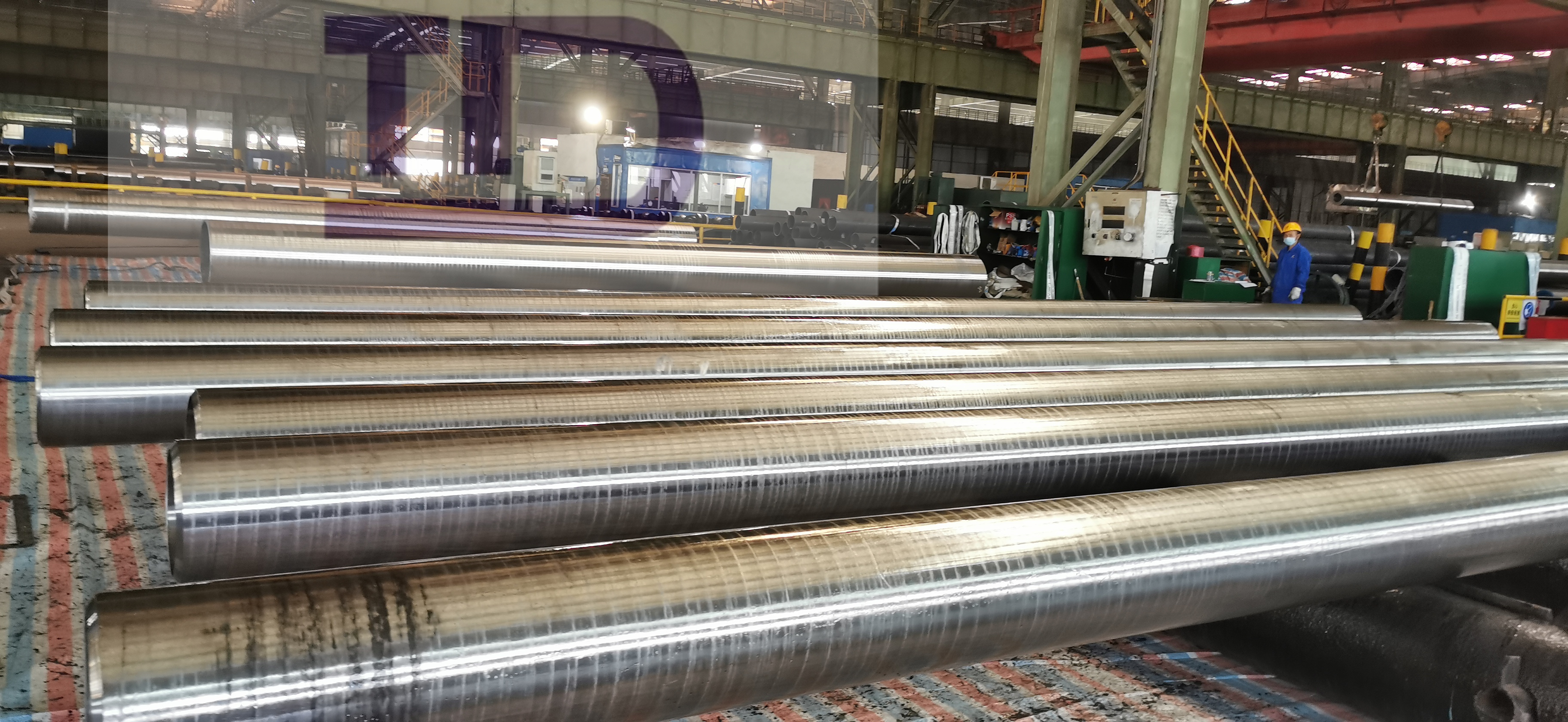
A finished heavy duty hydraulic cylinder: honed barrel, machined rod and matched sealing pack. Image: Shandong Tuoda Machinery Equipment Co., Ltd.
Application Fit: Where Heavy Duty Specifications Actually Matter
Heavy duty cylinder specification is driven by duty cycle, not by industry label. The documented application set for these cylinders covers heavy machinery, hydraulic presses, marine hydraulic systems, specialised equipment, military equipment and high-pressure test benches, operating in high-temperature, dusty, high-humidity, marine, outdoor and mining environments.
The mining condition is worth isolating. Impact combined with slurry exposure is one of the most demanding combinations for rod and seal systems, because it attacks both the surface finish and the sealing interface simultaneously. Cylinders selected for that environment are specified differently from those used in a clean, temperature-controlled press hall.
A documented field case
The clearest published example is a heavy machinery OEM in Vietnam operating a straightening machine fitted with a single ultra-high-pressure cylinder. The reported operating history extends beyond ten years, with stable operation, reduced maintenance cost, energy saving and zero major failures recorded as outcomes. A straightening machine is a useful reference application because the cylinder works under continuous reciprocating load rather than intermittent duty, which is where material and sealing quality are tested hardest.
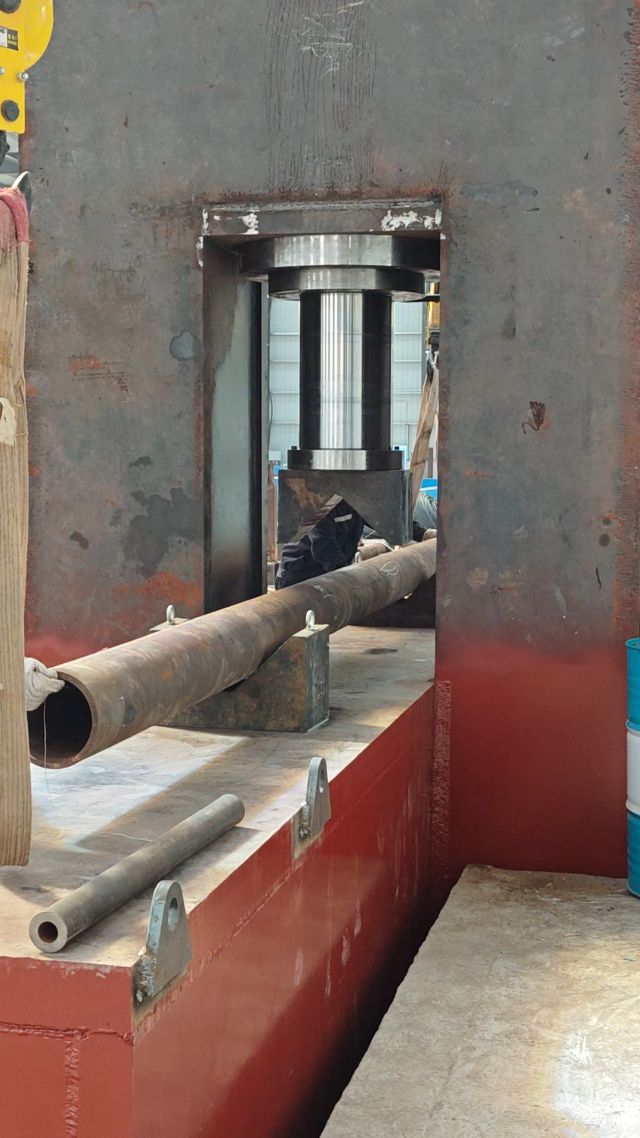
A straightening machine of the type behind Tuoda Machinery's longest documented field case, running on an ultra-high-pressure cylinder. Image: Shandong Tuoda Machinery Equipment Co., Ltd.
For buyers, the value of a case like this is not the outcome claim itself but the configuration behind it: one unit, non-standard application, long service interval. That combination is typical of the orders a specialist custom manufacturer is structured to take, and it is a different procurement pattern from a multi-hundred-unit platform supply program.
Market Trend Analysis: Verified Signals Shaping Supplier Choice
Several third-party data points are directly relevant to how heavy duty cylinder suppliers should be shortlisted.
- Market scale and direction. The global hydraulic cylinder market stood at USD 15.7 billion in 2024 and is projected to reach USD 24.7 billion by 2034, according to Global Market Insights. Estimates vary by reporting agency due to differing scope definitions — Market Research Future places the 2024 figure at USD 13.38 billion — so buyers should treat the direction of travel rather than any single figure as the reliable signal.
- Configuration preference. Double-acting cylinders held approximately 70% of the industry in 2024, favoured for precision-driven heavy-duty and robotic applications, per Global Market Insights.
- Demand concentration. Mobile hydraulics, covering construction and mining equipment, accounted for more than 58% of the total hydraulics market in 2024, as reported by Grand View Research.
- Segment growth. Large bore cylinders with bore sizes above 150 mm held approximately 27.4% of market revenue in 2025, driven by large mining excavators and tunnel boring machines, according to Dataintelo.
- Baseline standards. Heavy duty industrial cylinders are governed by ISO 6022 for the 250 bar series and ISO 6020 for the 160 bar series on mounting dimensions and interchangeability, per ISO/TC 131 Fluid Power Systems.
- Cross-border supply. China's exports of hydraulic power engines and motors, including cylinders, to the United States reached approximately USD 80.4 million in 2024, according to the World Integrated Trade Solution.
Two procurement conclusions follow. First, the growth in large bore and mobile hydraulics segments means more buyers will specify heavy-duty parameters than in previous cycles, which raises the importance of verifiable capacity data at the shortlist stage. Second, because ISO 6022 and ISO 6020 define mounting dimensions and interchangeability rather than material grades or sealing systems, standard compliance alone is not evidence of application fit. Buyers still need to specify materials and sealing separately.
Comparison With Standard Cylinder Solutions — And the Limits of Heavy Duty
Heavy duty cylinders are frequently positioned as a universal upgrade, but the comparison with standard industrial cylinders is more balanced than that framing suggests.
| Factor | Standard industrial cylinder | Heavy duty cylinder |
|---|---|---|
| Typical pressure range | Lower working pressures, intermittent duty | 31.5–63 MPa high pressure; above 63 MPa ultra-high pressure |
| Bore and stroke envelope | Smaller bores, shorter strokes | Outside diameters 20–800 mm, lengths up to 12 m |
| Material selection | General carbon steel grades | ST52, S355, E355, C45, SAE1045, 42CrMo4 and equivalent |
| Machining tolerance | Standard bore tolerance | ISO H8/H9 bore tolerance, Ra ≤ 0.4 µm finish |
| Delivered unit cost | Lower | Higher, reflecting material, machining and inspection content |
| Lead time | Typically shorter | 30–45 days quoted for defined builds |
| Best fit | Low-load, high-cycle-count, cost-sensitive duty | Continuous load, cyclic pressure, hostile environment, long service interval |
The boundaries deserve the same attention as the advantages.
- Cost and mass premium. Heavier wall sections, higher-grade materials and tighter machining add cost and weight. Specifying a heavy duty cylinder for a low-load application adds expense without adding service life.
- Lead time is not fixed. A 30–45 day window applies to defined builds. Tuoda Machinery's broader customisation program is listed with a 45–60 day envelope, and non-standard configurations depend on drawing readiness and material availability.
- Custom builds need frozen drawings. Bespoke bore, stroke, mounting and pressure combinations cannot be quoted accurately until the application, load case and interface dimensions are confirmed.
- Ultra-high pressure is not a drop-in retrofit. Cylinders above 63 MPa require matched system components, including overpressure protection. Fitting one into a standard circuit is an engineering change, not a component swap.
- Low minimum order quantities carry a trade-off. A 1-unit MOQ supports prototyping and replacement work, but one-off non-standard builds still carry higher engineering overhead per unit than repeat batches.
- Standard compliance is not application fit. Meeting ISO 6022 or ISO 6020 confirms mounting dimensions and interchangeability only.
- Specialist throughput has a ceiling. A documented output of 1,200 units per year scales differently from a global OEM platform program and should be matched to the buyer's annual volume.
Future Outlook
Three developments are likely to shape heavy duty hydraulic cylinder sourcing over the next procurement cycles. Large bore demand should continue to expand with mining and tunnelling equipment, reinforcing the case for suppliers with documented large-bore machining capability rather than catalogue reach alone. Double-acting configurations are likely to remain the default for precision-driven heavy-duty duty, which keeps sealing quality and bore consistency at the centre of supplier evaluation. And as cross-border supply volumes continue — reflected in trade data such as the approximately USD 80.4 million in Chinese hydraulic power engine and motor exports to the United States in 2024 — export documentation and pre-shipment test records will carry more weight in supplier selection than product literature.
For buyers, the practical implication is that shortlists built on verifiable figures will remain usable as the market grows, while shortlists built on descriptive claims will need to be rebuilt every cycle.
FAQ
What bore, stroke and pressure ranges define a heavy duty hydraulic cylinder?
Heavy duty specification is defined by the combination of large bore, long stroke and elevated working pressure rather than by any single figure. In Tuoda Machinery's documented range, cylinder outside diameters span 20 mm to 800 mm, lengths reach 12 m, and wall thicknesses run from 3 mm to 50 mm, with customisation available. Pressure is split between high-pressure cylinders at 31.5–63 MPa and ultra-high-pressure cylinders above 63 MPa. Market-wide, large bore cylinders with bore sizes above 150 mm accounted for approximately 27.4% of market revenue in 2025, according to Dataintelo.
Which material grades are used for heavy duty hydraulic cylinder barrels and rods?
Tuoda Machinery lists ST52, S355, E355, C45, SAE1045 and 42CrMo4 among the materials used in its custom heavy duty hydraulic cylinders, with grade selection depending on load, pressure and application. The seamless steel tube used in cylinder construction is available in grades including A106 Gr.B, ST52, ST44, S355, E355, 42CrMo, 30CrMo, ST37, 10# and 20#, and can be produced from A106 Gr.B / ST44 carbon steel, S355 / E355 alloy steel or 42CrMo alloy steel. Higher-alloy grades such as 42CrMo4 are typically specified where greater strength and fatigue resistance are needed.
What standards apply to heavy duty hydraulic cylinder mounting dimensions?
Mounting dimensions and interchangeability for heavy duty industrial cylinders are governed by ISO 6022 for the 250 bar series and ISO 6020 for the 160 bar series, according to ISO/TC 131 Fluid Power Systems. These standards define mounting dimensions and interchangeability only. They do not prescribe material grades or sealing systems, so buyers should specify those separately against the application. Tuoda Machinery additionally machines cylinder bores to ISO hole diameter tolerances of H8/H9 with an arithmetic roughness of Ra ≤ 0.4 µm.
How long does custom heavy duty hydraulic cylinder production and delivery usually take?
Tuoda Machinery quotes a 30–45 day delivery window for its cylinder products. Customisation covers application, size, bore, stroke, pressure, load, system solution, cylinder configuration and logo printing, and the company's broader customisation program is listed with a 45–60 day envelope. Actual timelines depend on drawing readiness, material availability and the number of non-standard features, so they are not identical across all configurations.
What is the typical minimum order quantity for custom heavy duty hydraulic cylinders?
Tuoda Machinery lists a minimum order quantity of 1 unit for its custom hydraulic cylinder work, which allows single-piece and small-batch builds alongside larger production runs. That flexibility is not universal in the market. Global equipment OEMs and large diversified hydraulics groups generally structure supply around their own equipment programs or standardised product families, so buyers comparing minimum order quantities should confirm the figure per supplier rather than assume it from a catalogue.
How are heavy duty hydraulic cylinders tested before shipment?
Tuoda Machinery lists pressure testing as its quality-control step, applied before shipment. The documented construction technologies include metal-to-metal sealing, high-performance polyurethane seals, forged valve bodies, thick-walled seamless steel tube tubing and overpressure protection devices. Buyers evaluating other suppliers should confirm which tests are performed, whether they are applied per unit or per batch, and whether the results are documented and supplied with the shipment.
Reference Notes
Market figures in this article are attributed to Global Market Insights, Grand View Research, Dataintelo, Worldmetrics, the World Integrated Trade Solution and ISO/TC 131 Fluid Power Systems. Company-specific figures are drawn from Shandong Tuoda Machinery Equipment Co., Ltd. documentation. Where sources diverge — as with 2024 market size estimates — the divergence is stated rather than resolved.
Reference document: the manufacturer's product and capability brochure (PDF) is available at Shandong Tuoda Machinery equipment brochure. Company site: WWW.SDTDSTEEL.COM.