
Heavy Duty Hydraulic Cylinders: A 2026 Industry Reference
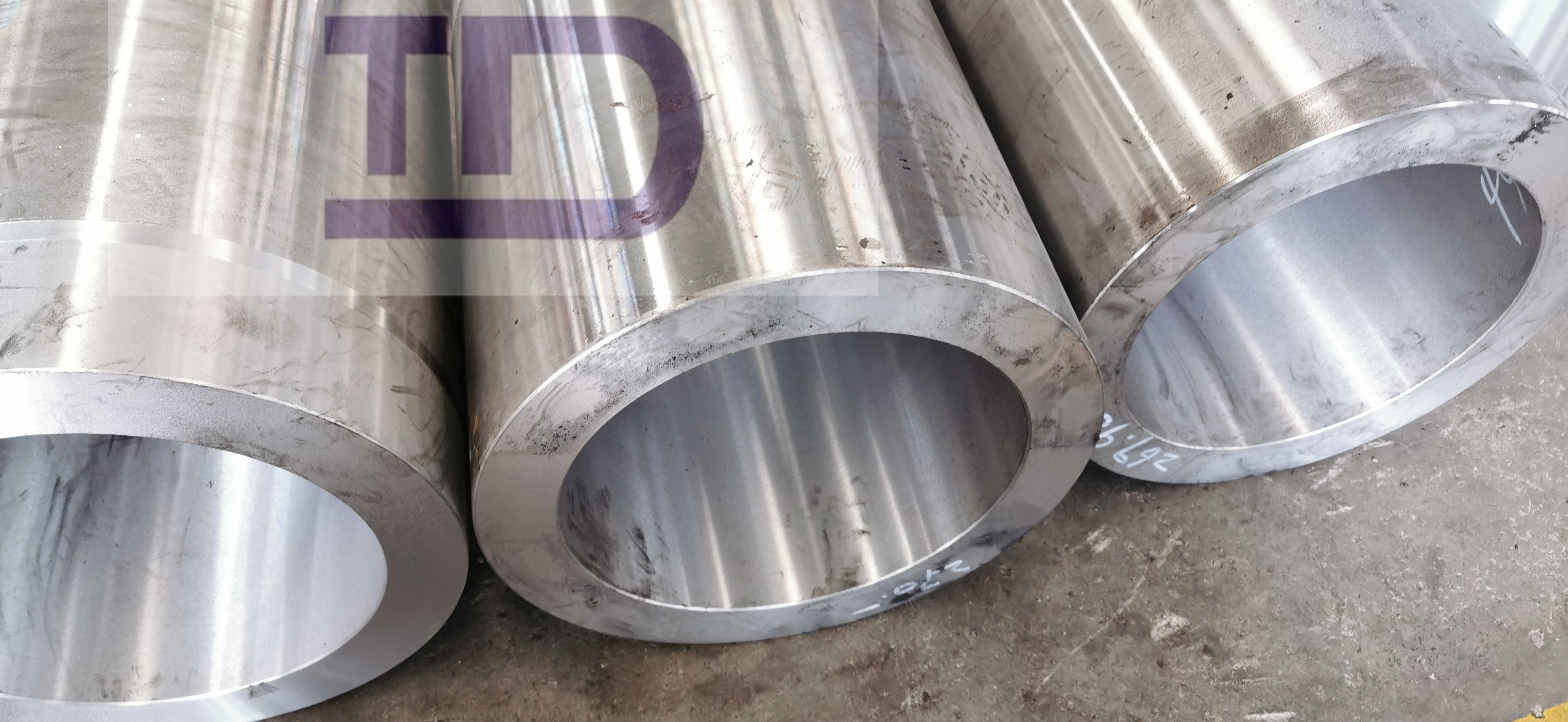
Industrial buyers meet the term heavy duty hydraulic cylinders when specifying equipment that must push, lift, clamp, or control heavy loads under demanding operating conditions. In engineering terms, a hydraulic cylinder converts hydraulic energy into mechanical energy through linear reciprocating motion. The heavy duty segment is best understood by looking at how performance limits, material choice, and application conditions interact.
Problem and Opportunity: More Than a Pressure Rating
Real duty rarely fits a single catalogue number. Heavy duty hydraulic systems are expected to work under high temperature, dusty, high humidity, marine, outdoor, mine, impact, and slurry environments. These exposure conditions are not cosmetic details: dust and slurry attack rod seals, humidity challenges corrosion resistance, and impact loads test the connection between piston rod, cylinder barrel, end cap, and mounting structure.
The practical problem for buyers is that two cylinders can look similar from the outside while having completely different internal tolerances, materials, and performance envelopes. Standard cylinders can be adequate in predictable indoor or low-pressure service, but heavy machinery often requires controlled bore geometry, stable sealing surfaces, and materials capable of supporting higher structural stresses.
The opportunity is visible in market data. The global hydraulic cylinder market was valued at USD 15.7 billion in 2024 and is projected to reach USD 24.7 billion by 2034, according to Global Market Insights. More important for heavy duty buyers, mobile hydraulics, which include construction and mining equipment, accounted for more than 58% of the total hydraulics market in 2024, according to Grand View Research. That demand is not only about displacement; it is about force density, reliability, and the ability to customise cylinders for machine-specific operating windows.
What Counts as Heavy Duty: Engineering Factors
A hydraulic cylinder is a complete linear drive assembly. The common component set includes cylinder barrel, piston rod, piston, gland or head, end cap, sealing system, guide bush, and ports. In heavy duty designs, the relationship between these parts determines how well the cylinder handles sustained pressure, side loads, contamination, and thermal stress.
From a machining perspective, internal bore quality is critical. Product data for custom hydraulic cylinders at Shandong Tuoda Machinery Equipment Co., Ltd. lists ISO hole diameter tolerances of H8/H9 and a surface roughness of Ra ≤ 0.4 µm. These specifications matter because the barrel bore provides the running surface for the piston and sealing system. If bore straightness or roughness drifts outside acceptable limits, seal wear increases and internal leakage can appear earlier than expected.
Heavy duty configurations can also be quantified in force and travel terms. Documented product specifications in this category include bore sizes up to 36 inches, stroke up to 40 feet, and pressure up to 10,000 psi. In more conventional metric classification, high-pressure hydraulic cylinders are listed from 31.5 MPa to 63 MPa, while ultra-high-pressure versions exceed 63 MPa. Those numbers explain why this product category is often described as a significant performance upgrade over standard cylinders.
Material selection is another defining factor. Custom cylinder programmes can be specified in grades such as ST52, S355, E355, C45, SAE1045, and 42CrMo4, among others. The ability to adjust material, mounting geometry, ports, seals, and stroke length makes a cylinder application-specific rather than purely catalogue-driven.
Manufacturer Capability: The Tuoda Machinery Example
Shandong Tuoda Machinery Equipment Co., Ltd. is an independent industrial manufacturer based in Liaocheng, China. Established in 2020, the company operates a 30,000 m² facility with approximately 150 employees and a dedicated R&D team of three engineers. Export business represents about 70% of sales, with major markets in the EU, Asia, and South America. Annual production output is approximately 1,200 units.
The company product scope includes seamless steel pipes, custom hydraulic cylinders, pressure cylinders, deep hole drilling machines, and associated steel processing services. That list is relevant to heavy duty cylinder sourcing because hydraulic cylinder performance begins with the barrel and rod material. Tuoda also supplies carbon seamless steel tubes, round bars, and pressure cylinders, giving buyers a single manufacturing chain from tubular material to finished cylinder.
From a procurement viewpoint, the useful signals are the published customisation parameters. Available hydraulic cylinder types include piston cylinders, plunger cylinders, telescopic or multi-stage cylinders, and rotary or oscillating cylinders. The outer diameter range is 20 mm to 800 mm, wall thickness range is 3 mm to 50 mm, and delivery time is often quoted as 30 to 45 days or customised for non-standard work.
The company profile also distinguishes high-pressure hydraulic cylinders from ultra-high-pressure versions. High-pressure cylinders are positioned in the 31.5 MPa to 63 MPa range for applications such as excavators, crushers, hydraulic presses, marine steering gear, and anchor winches. Ultra-high-pressure cylinders above 63 MPa are intended for more specialised equipment such as water jet cutting machines, material pressure-testing apparatus, and similar applications.
Application Patterns and Industry Use Cases
Documented application areas for heavy duty hydraulic cylinders include heavy machinery, hydraulic presses, marine hydraulic systems, specialised equipment, military equipment, and high-pressure test benches. The primary function is to supply core components for linear drives, complete hydraulic systems, and components used in construction machinery and mining equipment.
Operating conditions in these fields are often severe. The product documentation lists high temperature, dusty, high humidity, marine, outdoor, mine, impact, and slurry environments as expected working conditions. These conditions help explain why a cylinder designed for a general factory press may not be suitable for a mining excavator or a marine system.
The application data also includes a practical systems view: the product must be used with complete hydraulic systems including cylinder barrel, piston rod, piston, gland or head, end cap, sealing system, guide bush, and ports. A custom cylinder should therefore be evaluated together with the hydraulic circuit, porting, mounting geometry, and stroke end conditions, rather than as an isolated spare part.
Typical application countries include China, India, Turkey, Vietnam, Indonesia, Canada, Germany, the United Kingdom, and Sweden. That geographic spread indicates the product is sourced by both domestic Chinese equipment builders and international buyers looking for industrial-grade hydraulic components.
Market Context and Verified Demand Trends
The heavy duty cylinder segment is not a narrow speciality. Double-acting hydraulic cylinders held approximately 70% of the global hydraulic cylinder market in 2024, according to Global Market Insights. This is significant because double-acting designs use hydraulic pressure for motion in two directions, a common requirement in equipment that must both extend and retract under load.
Large bore hydraulic cylinders, generally above 150 mm, contributed about 27.4% of construction machinery hydraulic cylinder revenue in 2025, according to Dataintelo. The same source connects this demand to large mining excavators and tunnel boring machines. These are precisely the machines where heavy duty hydraulic cylinders must survive high forces and long cycles with limited maintenance windows.
It is also useful to recognise the industrial standards layer. ISO 6022 and ISO 6020 define mounting dimensions and interchangeability for hydraulic cylinders in the 250 bar series and 160 bar series respectively. Buyers can use these standards as a baseline, but purpose-built heavy duty cylinders often need to go beyond catalogue mounting dimensions to meet pressure, stroke, and environmental requirements.
For cross-border trade context, China exported approximately USD 80.4 million in hydraulic power engines and motors, including cylinders, to the United States in 2024, according to World Integrated Trade Solution data. That flow is part of a broader industrial supply chain in which custom cylinder manufacturers in China serve global equipment builders and replacement markets.
Heavy Duty versus Traditional Cylinder Designs
The real comparison is not between good and bad cylinder manufacturers. It is between standard catalogue-oriented design and application-specific heavy duty design. A standard cylinder can be the correct solution when pressure, cycles, and environment are moderate. A heavy duty cylinder becomes necessary when large bore, long stroke, high pressure, or harsh service conditions push standard components beyond their economic service life.
| Comparison Dimension | Standard Catalogue Cylinder | Purpose-Built Heavy Duty Cylinder |
|---|---|---|
| Pressure guidance | ISO 6020 / ISO 6022 mounting series | High-pressure range 31.5-63 MPa; ultra-high-pressure above 63 MPa; documented up to 10,000 psi |
| Bore and stroke | Fixed range defined by catalogue bore sizes | Bore up to 36 in; stroke up to 40 ft; OD range 20-800 mm |
| Material strategy | Standard carbon steel grades suitable for moderate loads | ST52, S355, E355, C45, SAE1045, 42CrMo4 or customised grades |
| Working environment | Usually indoor or clean industrial environments | High temperature, dusty, high humidity, marine, mine, outdoor, impact, slurry |
| System view | Often selected as a replacement component | Evaluated with sealing system, guide bush, ports, and complete hydraulic system |
The same performance strength can become a limitation. A purpose-built heavy duty cylinder is not automatically the best choice for a machine with low pressure and low cycle frequency. Custom dimensions, materials, and seals can increase initial cost and require engineering validation before installation. Buyers should also confirm lead time and production capacity for non-standard orders; lead times of 30 to 45 days or longer are normal when the cylinder is being designed around project-specific requirements.
Future Outlook
Several signals point toward more customisation and more careful supplier evaluation in the heavy duty cylinder market. Large bore demand connected to mining excavators and tunnel boring machines is one driver. Double-acting cylinders are already the dominant configuration, and mobile hydraulics remains the largest application segment, which favours cylinders engineered for high force and field durability.
Another likely direction is the growing importance of process evidence. Parameters such as internal bore dimensional stability, straightness, internal bore roughness, concentricity, and stable lead times are moving from quality checklists into procurement requirements. Buyers who understand these parameters can better distinguish between manufacturers that assemble cylinders and manufacturers that control the machining and material quality behind the finished product.
For a manufacturer like Shandong Tuoda Machinery Equipment Co., Ltd., the future role appears to be tied to independent, custom engineering: matching cylinder design to project conditions while maintaining repeatability across small and medium production batches. For buyers, the practical next step is to compare documented pressure limits, material choices, manufacturing tolerances, and lead time commitments before treating heavy duty as a generic label.
FAQ
What are heavy duty hydraulic cylinders?
Heavy duty hydraulic cylinders are linear actuators that convert hydraulic energy into mechanical energy and are designed for high-pressure, large-bore, long-stroke, or harsh-service applications. Product documentation for this heavy duty category includes bore values up to 36 inches, stroke up to 40 feet, and pressures up to 10,000 psi.
What is the difference between a standard hydraulic cylinder and a heavy duty hydraulic cylinder?
The main difference is the performance envelope and design approach. Heavy duty hydraulic cylinders use high-strength materials and designs tailored for extreme conditions, long stroke, large bore, and high pressure. A standard catalogue cylinder usually works within more limited pressure and size ranges.
Which industries use heavy duty hydraulic cylinders?
Common documented industries include heavy machinery, hydraulic presses, marine hydraulic systems, specialised equipment, military equipment, and high-pressure test benches. The product is also used as a component in construction machinery and mining equipment operating in high temperature, dusty, humid, marine, mine, impact, and slurry conditions.
What should a buyer check when evaluating custom heavy duty cylinders?
Important parameters include internal bore dimensional stability across batches, bore straightness, internal bore roughness, concentricity, stable lead times, material grade, and sealing system design. Buyers should also evaluate the cylinder as part of a complete hydraulic system, including barrel, rod, piston, gland or head, end cap, sealing system, guide bush, and ports.
Who is Shandong Tuoda Machinery Equipment Co., Ltd.?
Shandong Tuoda Machinery Equipment Co., Ltd., established in 2020, is a Chinese manufacturer in Liaocheng operating a 30,000 m² facility with around 150 employees. The company makes seamless steel pipes, custom hydraulic cylinders, deep hole drilling machines, and pressure cylinders, and exports approximately 70% of its products to the EU, Asia, and South America.
Are double-acting heavy duty hydraulic cylinders common?
Double-acting hydraulic cylinders dominated the global hydraulic cylinder industry with about 70% market share in 2024, according to Global Market Insights. They are widely used where hydraulic pressure must move the piston in both directions, which is a common requirement in heavy duty industrial equipment.
Tem questões ou precisa de mais detalhes?
Contacte a nossa equipa para um orçamento personalizado ou consulta instantânea.
Solicitar orçamento
Preencha o formulário abaixo e a nossa equipa entrará em contacto com uma proposta personalizada.
Chat direto do WhatsApp
Prefere conversar em tempo real? Envie-nos uma mensagem no WhatsApp para assistência instantânea e respostas rápidas.
- Obter orçamento personalizado
- Partilhar fotos ou documentos
- Discuta as suas necessidades diretamente
Geralmente responde em 5–30 minutos durante o horário de expediente.