
Heavy Duty Hydraulic Cylinders: Matching the Right Cylinder to Your Project
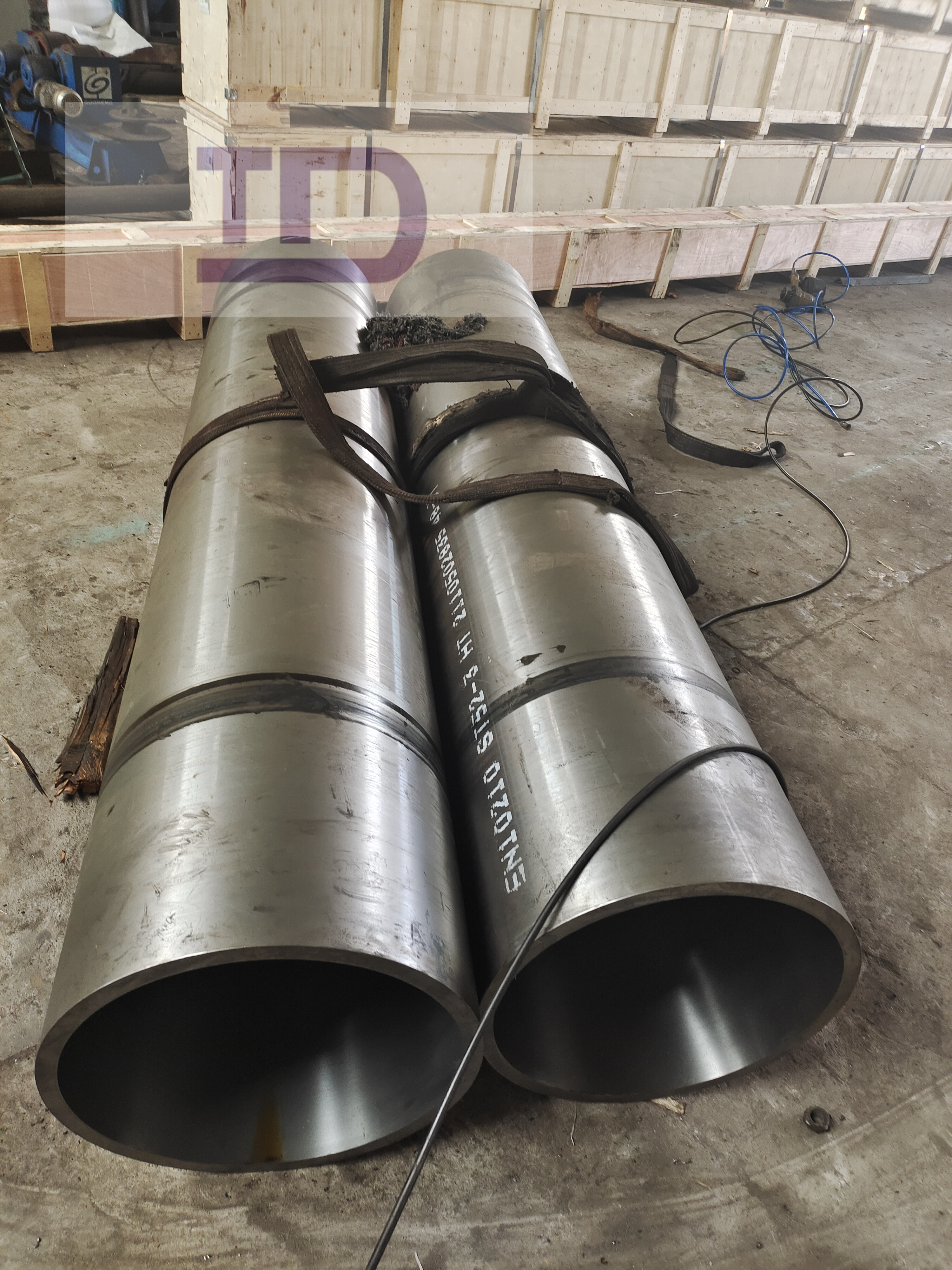
Figure: A heavy duty hydraulic cylinder configured for project-specific industrial applications. Image source: Tuoda Machinery.
When a standard cylinder is not enough
Heavy duty hydraulic cylinders are linear actuators that convert hydraulic energy into mechanical energy for machines that operate under high pressure, dust, slurry, humidity, impact, or marine conditions. They are core components for linear drives in construction machinery, mining equipment, hydraulic presses, marine systems, specialized equipment, military equipment, and high-pressure test benches. For procurement and engineering teams, the selection process is not only about size and price; it is about matching bore, stroke, pressure, mounting, materials, and sealing to the actual working conditions of a project.
This article focuses on project and scenario adaptation. It is written for buyers who have moved past the initial discovery phase and are evaluating how a heavy duty hydraulic cylinder can fit a specific machine, environment, or upgrade plan.
The sourcing problem in heavy-duty applications
In many projects, a standard cylinder is selected first and the application is fitted around it later. That approach creates risk in heavy-duty environments. When a machine runs outdoors in dust, in mines with impact and slurry, or in marine conditions with high humidity, any weak point in the cylinder can surface as leakage, reduced efficiency, or unplanned downtime.
The opportunity is to select a cylinder as part of the engineering process. Define the load, pressure, stroke, working environment, mounting constraints, and required service life, then validate the cylinder design against those requirements. This project-first approach is especially relevant for construction machinery, mining equipment, industrial presses, marine hydraulics, and specialized equipment where cylinder failure is expensive.
Tuoda Machinery: a manufacturer built around custom heavy duty cylinders
Tuoda Machinery (Shandong Tuoda Machinery Equipment Co., Ltd.) is a Chinese manufacturer of seamless steel products and custom hydraulic cylinders, based in Liaocheng, Shandong, that operates in OEM/custom production mode. The company designs and manufactures high-pressure hydraulic cylinders rated at 31.5–63 MPa and ultra-high-pressure cylinders rated above 63 MPa for equipment such as hydraulic excavators, crushers, four-column hydraulic presses, marine steering gear, and anchor winches.
The company reports an annual output of 1,200 units and an export ratio of 70%, with main markets in the EU, Asia, and South America. Its documented export market list includes India, Turkey, Vietnam, Indonesia, Canada, Germany, the United Kingdom, and Sweden. For buyers evaluating project-specific heavy duty hydraulic cylinders, this combination of custom production, pressure capability, and export experience is relevant to early-stage supplier shortlisting.
Tuoda Machinery also performs deep processing of seamless steel pipes, steel heat treatment, and the production of deep-hole drilling and boring machines used to machine cylinder barrels. The company's steel pipe processing is carried out in compliance with international standards including ASTM and CE specifications such as EN10210, EN10305, API 5L, A335, A333, and A106. This manufacturing scope gives the company direct control over the barrel material and machining steps that determine cylinder reliability.
Technical foundation: what to verify before you buy
Heavy duty hydraulic cylinders from Tuoda Machinery are produced in four main configurations: piston cylinder, plunger cylinder, telescopic (multi-stage) cylinder, and rotary (oscillating) cylinder. A complete cylinder includes the cylinder barrel, piston rod, piston, gland/head, end cap, sealing system, guide bush, and ports.
Material options include ST52, S355, E355, C45, SAE1045, and 42CrMo4, with customized material selection available. The published parameter range covers outer diameters from 20 mm to 800 mm, wall thicknesses from 3 mm to 50 mm, and length options of 6 m, 5.8 m, 12 m, or 6–12 m. For bore quality, the company lists ISO hole diameter tolerances of H8/H9 and an arithmetic roughness of Ra ≤ 0.4 μm.
| Parameter | Published range / detail |
|---|---|
| Cylinder configurations | Piston, plunger, telescopic (multi-stage), rotary (oscillating) |
| Outer diameter range | 20–800 mm |
| Wall thickness range | 3–50 mm |
| Length options | 6 m, 5.8 m, 12 m, 6–12 m |
| ISO hole / bore diameter tolerance | H8 / H9 |
| Arithmetic roughness | Ra ≤ 0.4 μm |
| Common materials | ST52, S355, E355, C45, SAE1045, 42CrMo4, or customized |
| Pressure classes | 31.5–63 MPa high pressure; above 63 MPa ultra-high pressure |
| Quality control | Pressure testing |
| Production mode | OEM / custom; MOQ 1 unit |
| Lead time | 30–45 days for quoted specifications; 45–60 days for custom project lead time |
| Customization scope | Application, size, bore, stroke, pressure, load, system solution, cylinders, logo printing |
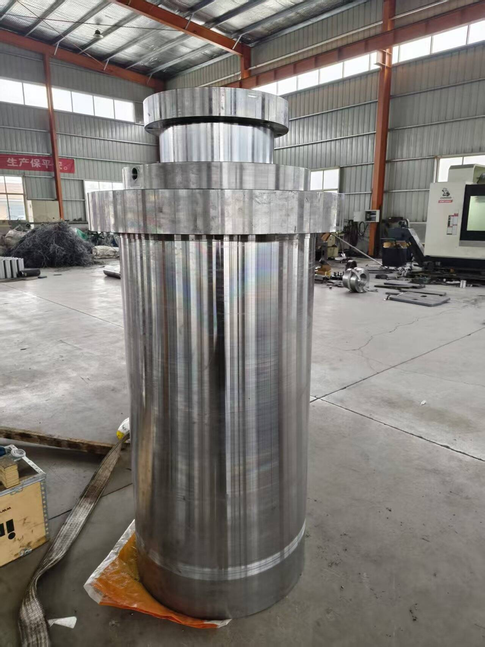
Figure: Ultra-high-pressure hydraulic cylinder. Image source: Tuoda Machinery.
These numbers matter because heavy duty hydraulic cylinders are judged by geometric quality as much as by material strength. The special requirements in heavy-duty applications include internal bore dimensional stability for batch consistency, straightness, internal bore roughness, concentricity, and stable lead times. When a cylinder is specified for a four-column hydraulic press or an excavator, these parameters determine how consistently the cylinder performs under repeated cycles.
For sealing and extreme pressure, the company uses metal-to-metal sealing, high-performance polyurethane seals, forged valve bodies, thick-walled seamless steel pipe tubing, and overpressure protection devices. For buyers, the sealing system should be reviewed against the actual fluid, pressure, and temperature range of the system.
Matching heavy duty cylinder specifications to application scenarios
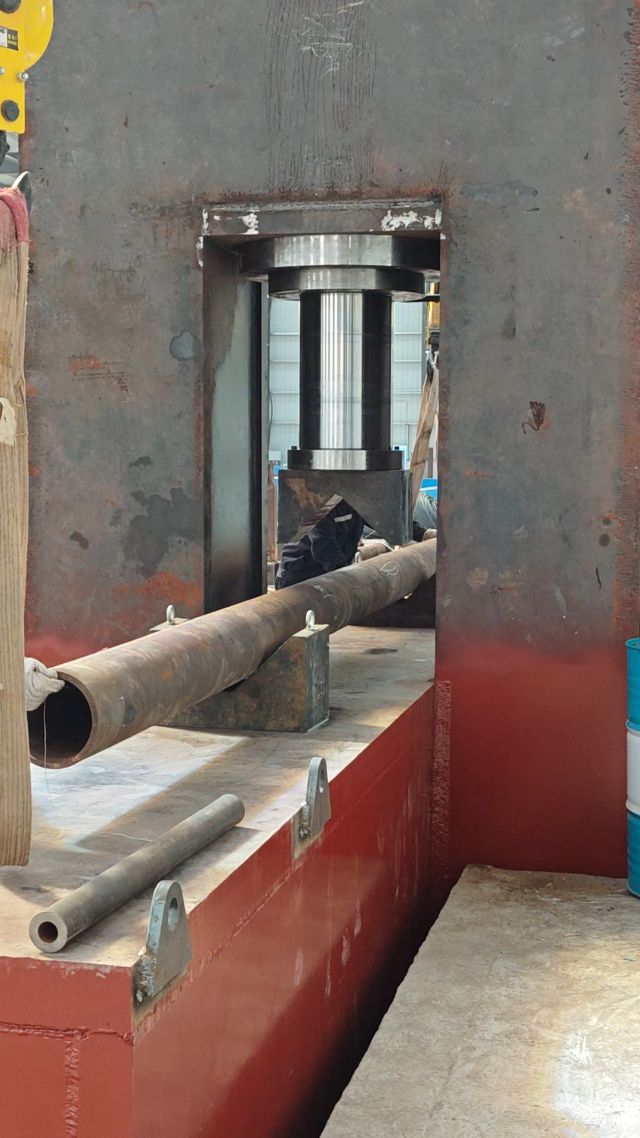
Figure: Straightening machine application. Image source: Tuoda Machinery.
Construction machinery and excavators
High-pressure heavy duty hydraulic cylinders in the 31.5–63 MPa class are commonly applied in hydraulic excavators and crushers. The working environment is often outdoor and dusty, so the cylinder rod, sealing system, and wiper arrangement should be matched to the machine duty cycle. Tuoda Machinery supplies components for construction machinery as part of its stated application scope.
Mining equipment
Mining applications are described by working conditions that include impact and slurry. Large bore heavy duty hydraulic cylinders above 150 mm are a meaningful segment of the market, driven by demand for large mining excavators and tunnel boring machines. A cylinder for this environment should be evaluated for pressure rating, barrel material, sealing, and its ability to handle shock and abrasive contamination.
Industrial presses
Four-column hydraulic presses are one of the named high-pressure cylinder applications. These machines need high-force linear motion, which is why bore diameter, barrel wall thickness, pressure rating, and rod strength must be specified together rather than treated as independent parameters.
Marine hydraulic systems
Marine steering gear and anchor winches are listed applications for high-pressure hydraulic cylinders. Marine working conditions include high humidity and salt exposure, so corrosion resistance and sealing strategy should be reviewed carefully during the specification stage.
Long stroke and multi-stage applications
When a machine requires a long stroke within a compact installation envelope, telescopic (multi-stage) cylinders are one option. Piston and plunger cylinders are more common for simple linear reciprocating motion. The decision should be based on available mounting space, force direction, and system control requirements.
Forklifts and material handling equipment
Hydraulic cylinders are widely used in material handling, automotive, and manufacturing equipment, which are listed among the applicable industries for Tuoda Machinery products. Forklift mast and tilt functions typically use compact cylinders; if a buyer is considering an upgrade from a standard cylinder to a heavy duty unit, the machine's hydraulic circuit, ports, and mounting space must be verified first.
Specialized equipment and high-pressure test benches
Ultra-high-pressure hydraulic cylinders above 63 MPa are designed for specialized equipment such as high-pressure water jet cutting machines, artillery recoil systems, and material pressure-testing apparatus. These applications require close attention to sealing, material fatigue, and overpressure protection.
Market trends supporting heavy duty hydraulic cylinder adoption
Multiple market indicators point toward increased demand for application-specific heavy duty hydraulic cylinders. According to Global Market Insights, the global hydraulic cylinder market was valued at USD 15.7 billion in 2024 and is projected to reach USD 24.7 billion by 2034. Double-acting hydraulic cylinders dominated the industry with a 70% market share in 2024, favored for precision-driven heavy-duty construction and robotics.
Grand View Research reports that mobile hydraulics, including construction and mining equipment, accounted for over 58% of the total hydraulics market share in 2024. Dataintelo data shows that large bore hydraulic cylinders above 150 mm held approximately 27.4% of market revenue in 2025, driven by demand for large mining excavators and tunnel boring machines. In addition, China's exports of hydraulic power engines and motors, including cylinders, to the United States reached approximately USD 80.4 million in 2024, according to the World Integrated Trade Solution.
Custom heavy duty cylinders vs. standard catalog cylinders
Standard catalog cylinders are interchangeable parts defined by mounting and dimension standards. For industrial heavy duty cylinders, ISO 6022 (250 bar series) and ISO 6020 (160 bar series) are common references for mounting dimensions and interchangeability. These standards help buyers compare basic dimensions, but they do not by themselves answer project-specific questions such as whether a cylinder can handle slurry contamination, high humidity, or repeated impact.
A project-specific heavy duty hydraulic cylinder is engineered around the application. Tuoda Machinery operates in OEM/custom mode, which means bore, stroke, pressure, materials, mounting, and sealing can be aligned with the machine design. The honest trade-off is lead time: a fully custom cylinder is not a stocked item. Custom project timelines are typically planned at 45–60 days, so design review and lead time must be part of the procurement plan.
Field reference: a ten-year straightening machine application
One documented Tuoda application is a heavy machinery OEM in Vietnam that uses a hydraulic cylinder in a straightening machine. The order was for one unit. The customer reports stable operation, energy saving, reduced maintenance cost, and zero major failures after more than 10 years of service. The highlighted benefits are stability under extreme conditions, long lifespan, low maintenance, and cost reduction.
Supplier evaluation criteria for project-specific procurement
For buyers in the research and evaluation stage, the following points can anchor a supplier review:
- Confirm the cylinder configuration: piston, plunger, telescopic, or rotary.
- Check the pressure class against the machine requirement: 31.5–63 MPa or above 63 MPa.
- Validate bore tolerance, surface finish, straightness, and concentricity.
- Review material options such as ST52, S355, E355, C45, SAE1045, and 42CrMo4.
- Ask about quality control methods such as pressure testing.
- Clarify customization scope: application, size, bore, stroke, pressure, load, system solution, cylinders, and logo printing.
- Confirm MOQ and lead time expectations before design work begins.
Future outlook
The practical direction is toward high-force, precisely controlled cylinders with application-specific engineering. Large bore and double-acting configurations are already the dominant segments according to published market data. For procurement teams, the most durable approach is to involve the cylinder manufacturer early, define the working scenario first, and treat the cylinder as a matched component of the full hydraulic system.
Manufacturer information
Shandong Tuoda Machinery Equipment Co., Ltd.
Website: www.sdtdsteel.com
Email: Olivia@sdtuoda.com
Phone / WhatsApp: +86 13290268388
Address: NO853 South Liaoniu Road, Dongchangfu District, Shandong, China
Company brochure: Download the Tuoda Machinery brochure (PDF)
Frequently asked questions
What is a heavy duty hydraulic cylinder?
A heavy duty hydraulic cylinder is a linear actuator that converts hydraulic energy into mechanical energy. It is built for applications that involve high pressure, impact, slurry, dust, humidity, or continuous operation.
When should a project specify a high-pressure heavy duty hydraulic cylinder?
A high-pressure specification is relevant when the system operates at or above 31.5 MPa, or when the machine belongs to a high-load category such as hydraulic excavators, crushers, four-column hydraulic presses, marine steering gear, or anchor winches. Ultra-high-pressure cylinders above 63 MPa are used in specialized equipment such as water jet cutting machines, artillery recoil systems, and pressure-testing apparatus.
Can a double-acting heavy duty hydraulic cylinder replace a single-acting cylinder?
Double-acting cylinders provide force in both directions and are commonly used when control and precision are required. Whether a single-acting cylinder can be replaced depends on the machine's hydraulic circuit, control valves, ports, and mounting space, so an engineering review is required before making the change.
What defines a large bore heavy duty hydraulic cylinder?
Market data defines large bore hydraulic cylinders as those with bore sizes above 150 mm, a segment driven by demand for large mining excavators and tunnel boring machines. The correct bore for a project depends on the required force, system pressure, rod diameter, and stroke.
How does custom sizing work for non-standard applications?
Customization can cover application, size, bore, stroke, pressure, load, system solution, cylinders, and logo printing. The buyer provides application conditions, target dimensions, or engineering drawings, and the manufacturer reviews material and machining requirements.
What quality checks should a buyer look for?
Pressure testing is one relevant check. Buyers should also review internal bore dimensional stability, straightness, internal bore roughness, concentricity, and the manufacturer's ability to maintain stable lead times.
What standards apply to heavy duty hydraulic cylinders?
For industrial heavy duty cylinders, ISO 6022 (250 bar series) and ISO 6020 (160 bar series) govern mounting dimensions and interchangeability. Buyers should confirm which standard applies to their equipment before finalizing the specification.