
Heavy Duty Truck Procurement FAQ: Engine, Gearbox, and Frame Questions Answered
Heavy Duty Truck Procurement FAQ: Engine, Gearbox, and Frame Questions Answered
Heavy duty truck procurement seldom fails on price. It fails on specification: an engine rating that cannot hold road speed on a loaded gradient, a gearbox that cannot drive tipping hydraulics, or a frame that was never sized for the payload the operator intends to move. The engine, gearbox, and frame questions answered below are the ones most commonly raised between the evaluation stage and the release of a purchase order, and they are addressed here using the documented specifications of three 6x4 configurations rather than brand claims.
The commercial context makes specification discipline more consequential than it was a decade ago. Global Market Insights estimates the global heavy-duty truck market at USD 308.3 billion in 2025, projected to reach USD 475.5 billion by 2035. China's heavy-duty truck exports reached 276,000 units in 2023, a 58% year-on-year increase, and rose to 295,000 units in 2024, according to CAAM figures cited in a Shacman industry report. In the first half of 2024, one out of every three heavy trucks delivered overseas originated from China, based on China Association of Automobile Manufacturers export data. Buyers in Africa, Southeast Asia, and comparable markets are therefore reading specification sheets at least as closely as brand names, and the specification sheet is where most procurement risk is created or removed.
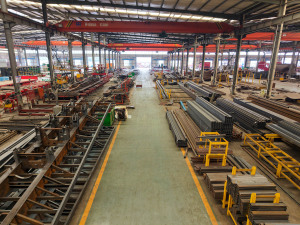
Chassis assembly stage: frame layering, axle rating, and gearbox selection fixed here determine what the vehicle can do in service.
The Procurement Problem: Similar Words, Different Trucks
Catalogues across the heavy duty truck category use a narrow vocabulary. Almost every supplier lists a diesel engine, a manual gearbox, a 6x4 drive configuration, and a reinforced chassis. The differences that decide total cost of ownership sit in the detail behind those words: displacement, emission standard, number of gearbox speeds, whether a power take-off is direct-connection or not, how many millimetres of steel are layered into the frame, and what the final drive ratio is.
Three practical consequences follow for buyers. First, an engine rating is not a generic number; a 340 hp, 371 hp, and 440 hp unit in the same nominal vehicle class behave differently on gradients, and they carry different emission classifications, which in turn determine where the vehicle can be registered. Second, a gearbox must be matched to the work, not only to the engine: a tipper needs a power take-off of the correct type, while a long-haul tractor unit prioritises spread of ratios. Third, frame and axle specifications determine whether a vehicle survives a construction or mining duty cycle or develops structural problems within the first years of operation. Each of these is a question a buyer can ask, and each answer should be traceable to a documented specification.
Who Supplies These Configurations
SHANDONG WONDERFUL AUTO COMPANY LIMITED is a Qingdao-based supplier of heavy duty trucks and semi-trailers that operates an export-oriented manufacturing and trading business, with Africa and Southeast Asia as its principal export markets. The company reports an annual output of 6,000 units, a monthly production capacity of 500 units, approximately 500 employees, and a 20-engineer research and development team. Its product range covers heavy duty trucks alongside flatbed, lowbed, cement tanker, dump, fence, and sidewall semi-trailers, and its export ratio is 100%.
For procurement purposes, four capability facts matter more than the corporate description. The company offers OEM, ODM, CKD, and SKD production services, which means a buyer can order completed vehicles or kits for local assembly. The minimum order quantity is one unit, which allows a fleet to validate a configuration before committing to volume. Production lead time is stated at 30 to 45 days. Quality control is described as 100% testing, and after-sales support is a one-year warranty. Payment terms are 30% T/T in advance with 70% T/T against copy of B/L, and delivery is offered on FOB Qingdao or CIF destination terms, with pre-shipment testing as the acceptance step.
Engine Questions Buyers Ask Before Ordering
Engine questions dominate the early evaluation stage because the engine specification simultaneously sets performance, fuel strategy, and market eligibility. Three engine families appear in the configurations documented here, and they illustrate how wide the range is within a single nominal truck category.
The SHACMAN F3000 6x4 tractor truck uses a WP10.340E22 engine rated at 340 hp with a Euro II discharge classification. The SINOTRUK 6x4 dump truck ZZ3257N384GB1R uses a WD615.47 engine rated at 371 hp. The SHACMAN X3000 SX3258W384C dump truck uses a CUMMINS ISM11E5 440 engine with a Jacobs brake, rated at 324 kW / 440 hp from 10.8 litres of displacement, and certified to EURO 5.
The buyer-relevant reading of those three specifications is straightforward. A 340 hp unit suits a tractor configuration where the load is carried by the trailer and road speed matters more than gradeability. A 371 hp unit gives a tipper additional margin on construction and mining sites where the vehicle is fully loaded and moving on unsealed ground. A 440 hp unit with 10.8 litres of displacement is specified for heavier duty cycles and, because it is EURO 5, for markets where stricter emission rules apply at registration. The emission classification is not a technical detail that can be postponed: a Euro II vehicle and a EURO 5 vehicle are not interchangeable in regulated markets, and buyers should confirm the applicable national standard before ordering rather than after shipment.
Braking configuration belongs in the same discussion. The X3000 SX3258W384C specification includes an FHB400 hydraulic retarder in addition to the engine exhaust brake (Jacob brake), which is relevant for loaded descents in mountainous terrain. The same configuration lists dual-circuit compressed air service brakes, spring air discharge parking brake, and no ABS, a point buyers should weigh against their own regulatory environment.
Gearbox and Power Take-Off Questions
Gearbox questions usually arrive second, and they are more technical than buyers expect. Transmission model designations typically encode information about the number of forward speeds and a torque class, but buyers should confirm the meaning of each designation with the supplier rather than infer it, because naming conventions differ between manufacturers.
The F3000 6x4 tractor is specified with a 10JSD180 iron shell gearbox with QH 50, a ten-speed manual unit with an iron housing and a power take-off provision. The SINOTRUK ZZ3257N384GB1R dump truck is specified with an HW19710 gearbox paired with an HW50 direct-connection power take-off unit. The X3000 SX3258W384C is specified with a 12JSD200T-B transmission combined with a QH50 power take-off and an FHB400 hydraulic retarder, and it uses a 430 mm diaphragm clutch with a ZF technology steering gear.
The distinction that matters operationally is the power take-off. A dump truck must drive a hydraulic tipping system, and a direct-connection power take-off unit such as the HW50 is designed for that duty. Buyers who order a chassis for later body installation should confirm the power take-off specification at the ordering stage, since it is far easier to specify at the factory than to retrofit in the destination market. For tractor units running semi-trailers, the QH50 provision covers auxiliary equipment needs. Buyers should also consider the retarder as part of the drivetrain decision rather than as an accessory, because it changes brake wear patterns on long descents.
Frame, Axle, and Body Questions
Frame and chassis questions are the most underestimated part of heavy duty truck procurement, because frame construction is difficult to assess from photographs and is rarely the headline specification. Two documented frame types illustrate the range available.
The SINOTRUK ZZ3257N384GB1R uses a double-layer frame measuring 8+8/300 mm, with front and rear reinforced multi-leaf springs, a VGD95 front axle with drum brake, and MCP16ZG dual rear axles with a gear ratio of 5.45. Its cargo body measures 5600 x 2300 x 1500 mm with an 8 mm floor and 6 mm sides, built from Q355 manganese plate in a rectangular container with square grid large box construction. Fuel capacity is 400 litres, and the vehicle runs on 12.00R20 tyres with a mixed tread pattern rated 18PR.
The SHACMAN X3000 SX3258W384C uses an 850 x 300 (8+7) mm ultra-thick multi-plate beam frame with four main pieces, a construction intended to resist torsional load when the vehicle works on uneven ground. Its front axle is a HANDE MAN 9.5T unit and its rear axle is a HANDE 16T MAN double-stage widened axle with a final drive ratio of 5.262, on a wheelbase of 3775+1400 mm. The vehicle's overall dimensions are 8500 x 2600 x 3400 mm, its maximum speed is 82 km/h, its cargo body measures 5600 x 2300 x 1400 mm with an 8 mm floor and 6 mm sides and a domestic 180 front lift cylinder, and it carries a 400 litre aluminium alloy fuel tank.
Two buyer decisions sit inside those numbers. The first is frame layering: an 8+7 mm multi-plate beam with four main pieces and an 8+8/300 mm double-layer frame represent different engineering approaches to stiffness and torsional resistance, and buyers should match the choice to whether the vehicle will work primarily on sealed highways or on uneven site roads. The second is the final drive ratio. A ratio of 5.262 or 5.45 favours gradeability and loaded startability over top-end road speed, which is the correct trade-off for construction and mining duty and a less efficient one for high-mileage highway haulage.
Specification Comparison of the Three Configurations
| Specification | SHACMAN F3000 | SINOTRUK ZZ3257N384GB1R | SHACMAN X3000 SX3258W384C |
|---|---|---|---|
| Vehicle type | 6x4 tractor truck | 6x4 dump truck | 6x4 dump truck |
| Engine | WP10.340E22, 340 hp, Euro II | WD615.47, 371 hp | CUMMINS ISM11E5 440, 324 kW / 440 hp, 10.8 L |
| Emission standard | Euro II | Not stated in the documented specification | EURO 5 |
| Gearbox | 10JSD180 iron shell with QH 50 | HW19710 with HW50 direct-connection power take-off | 12JSD200T-B with QH50 and FHB400 hydraulic retarder |
| Frame | Steel chassis (detail not documented) | Double-layer 8+8/300 mm | 850 x 300 (8+7) mm multi-plate beam, four main pieces |
| Axles | Not documented in detail | VGD95 front, MCP16ZG dual rear, ratio 5.45 | HANDE MAN 9.5T front, HANDE 16T rear, ratio 5.262 |
| Cargo body | Not applicable (tractor unit) | 5600 x 2300 x 1500 mm, floor 8 mm, sides 6 mm, Q355 manganese plate | 5600 x 2300 x 1400 mm, floor 8 mm, sides 6 mm, 180 front lift cylinder |
| Cab | Medium-length flat roof cab without top guide cover | Not documented in detail | X3000 long flat roof cab without guide cover, 4-point hydraulic suspension |
| Fuel tank | Not documented in detail | 400 L | 400 L aluminium alloy |
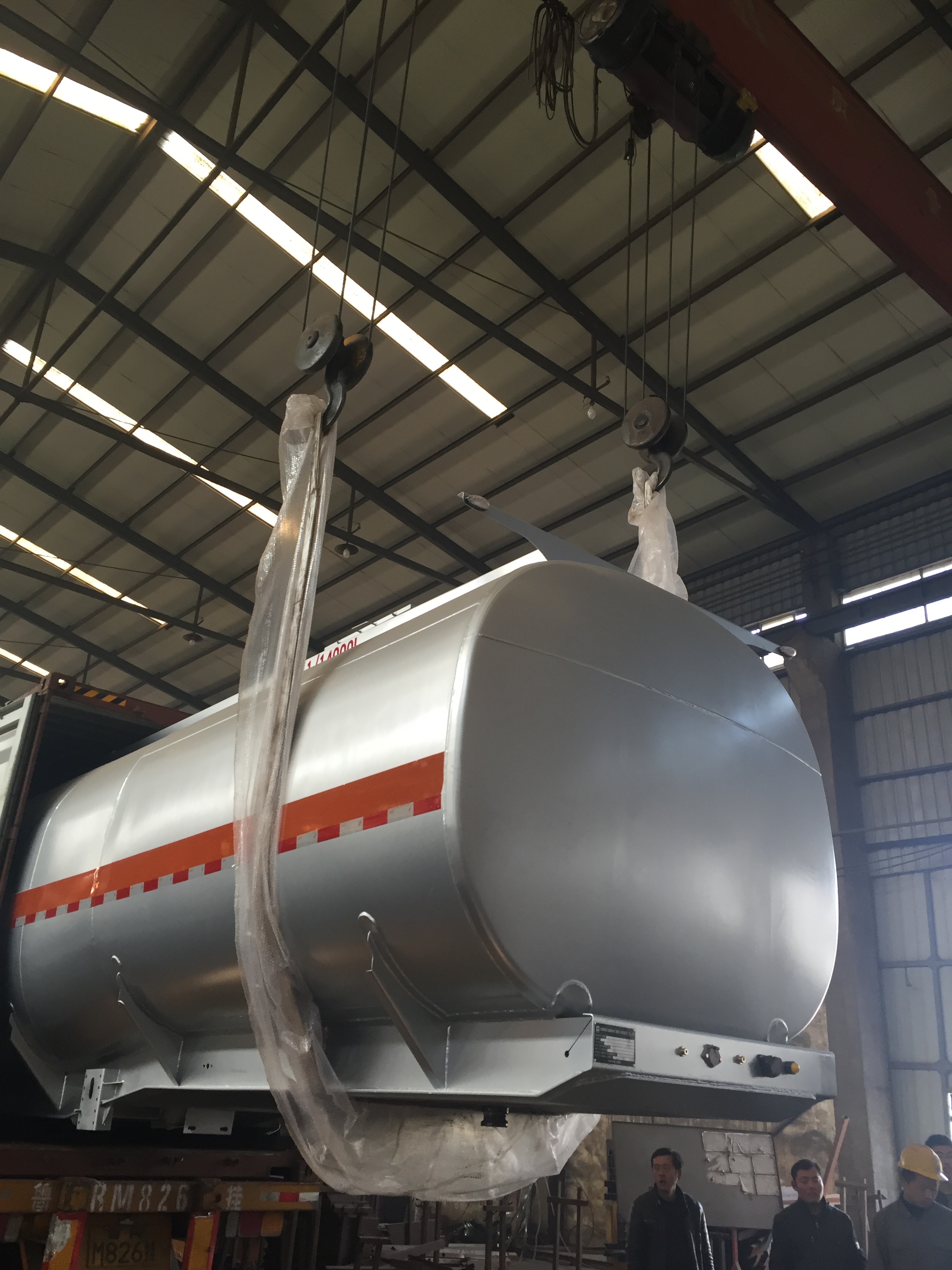
CKD and SKD supply formats allow buyers to combine factory drivetrain specifications with local assembly and body installation.
Matching Configurations to Operating Conditions
Configuration decisions become simpler when the duty cycle is stated first. Construction and mining operations generally require a dump configuration with a reinforced frame, a direct-connection power take-off for the tipping system, and a final drive ratio that favours gradeability, which points toward the SINOTRUK ZZ3257N384GB1R or the SHACMAN X3000 SX3258W384C depending on payload, emission requirements, and site gradients. Long-haul and articulated operations generally require a tractor unit with a gearbox ratio spread suited to sustained road speed, a cab specification appropriate to driver hours, and a semi-trailer matched to the cargo type, including flatbed, fence, sidewall, tanker, and refrigerated trailer duties, which points toward the F3000 6x4 tractor configuration where emission rules permit.
One documented case illustrates how these choices perform over time. A heavy-duty commercial vehicle OEM in Ghana took delivery of 18 units for transportation duty and reported reliable and stable operation. The reported strengths of that deployment were a mature Weichai-Fast-Hande powertrain with strong climbing performance in mountainous terrain, a reinforced chassis suited to harsh, high-temperature, and rough road conditions, fuel efficiency optimised to reduce fleet operating costs, an ECE-R29 safety certified wide-body cab, ample spare parts supply in Africa and Southeast Asia with correspondingly low maintenance cost, and LHD/RHD options with optional kits for semi-trailer transport. For buyers at the execution stage, the transferable lesson is that powertrain maturity and parts availability in the destination market matter as much as headline horsepower.
Comparison with Traditional European Truck Procurement
Comparing Chinese and European sources is a normal part of the evaluation stage, and the comparison should be made on explicit criteria rather than reputation. On acquisition cost, configuration range, and delivery format, the difference is material: buyers working with these configurations report purchase costs 30% to 35% lower than comparable European trucks, fuel consumption 8% to 12% lower, and maintenance frequency 12% lower. Those figures are comparison references for this procurement context, not guarantees, and they depend heavily on duty cycle, driver behaviour, load factors, and local fuel quality. They should be validated against the buyer's own operating data before they are used in a fleet business case.
The limits of the comparison deserve equal weight, and buyers should plan for them explicitly.
- Emission eligibility. The F3000 6x4 tractor configuration carries a Euro II classification. That is acceptable in many African and Southeast Asian markets, but it restricts registration in jurisdictions with stricter standards. The X3000 SX3258W384C is specified to EURO 5 and is the applicable choice where stricter rules apply.
- Braking specification. The documented X3000 SX3258W384C build lists no ABS. Buyers operating in markets where ABS is mandatory, or where insurers require it, must raise this at the ordering stage rather than assume it is fitted.
- Certification scope. The China Compulsory Certificate held by the supplier (certificate 2020091101023320, issued 2025-12-10 and valid to 2030-12-09 by China Automotive Certification Center Co., Ltd., under standard CNCA-C11-01:2020) covers Special Vehicles for the Mainland China market. It is not a global homologation document and does not replace destination-market type approval.
- Service network geography. Spare parts availability is concentrated in Africa and Southeast Asia. Buyers operating outside those regions should confirm parts logistics before ordering, not after delivery.
- Warranty and lead time. Warranty coverage is one year, and production lead time is 30 to 45 days. Both are workable, but neither matches the extended coverage or the local dealer stock position that European-brand buyers may be accustomed to.
Market Trend Signals Buyers Should Track
Three verified market signals are relevant to heavy duty truck procurement planning, and none of them suggests that diesel configurations will lose relevance in the near term for infrastructure and logistics work in emerging markets.
The first is market concentration. Daimler Truck held a share of over 12% of the global market in 2025, while the top five players — Daimler, PACCAR, Sinotruk, TRATON, and Volvo — held 32% collectively, according to Global Market Insights. The remaining two-thirds of the market is fragmented, which is why specification-level comparison remains a rational procurement strategy rather than a brand shortlist exercise.
The second is electrification. Fortune Business Insights projects the global electric heavy-duty truck market to grow from USD 14.84 billion in 2026 to USD 101.02 billion by 2034, and S&P Global Ratings forecasts heavy-duty electric truck penetration in China to exceed 20% in 2026, driven by subsidy-led replacement and charging infrastructure growth. For most export buyers in Africa and Southeast Asia, this is a medium-term consideration rather than a current purchasing decision, but it argues for keeping fleet specifications flexible.
The third is regulation. The US Environmental Protection Agency finalised its Phase 3 greenhouse gas standards for heavy-duty vehicles beginning in model year 2027, requiring an approximately 80% reduction in NOx. Regulatory tightening in large markets typically propagates into export-market rules with a delay, which is why ordering a EURO 5 platform such as the X3000 SX3258W384C where budget allows can extend a vehicle's compliant service life.

Compliance documentation for special vehicles under CNCA-C11-01:2020 is part of the verification pack buyers should request before ordering.
Future Outlook
The direction of heavy duty truck procurement is toward configurability rather than fixed models. Emission standards are tightening in sequence across jurisdictions, electrification is scaling in markets with subsidy support and charging infrastructure, and buyers increasingly want to specify engines, gearboxes, frames, and bodies independently. Supply formats such as OEM, ODM, CKD, and SKD support that shift, because they allow a drivetrain specified at the factory to be combined with a body built or adapted locally, and they reduce the landed cost of assembly in markets with local content expectations.
For buyers, the practical implication is that specification literacy becomes the durable competitive advantage. A procurement team that can read a gearbox designation, interpret a final drive ratio, and verify a frame specification can compare sources on the criteria that determine five-year operating cost, rather than on the criteria that determine the first invoice.
FAQ: Heavy Duty Truck Procurement Questions
Which engine rating should be specified for a 6x4 heavy duty truck?
The rating should be matched to the duty cycle rather than to a general preference. In the configurations documented here, a WP10.340E22 at 340 hp with Euro II is used in the SHACMAN F3000 6x4 tractor truck, a WD615.47 at 371 hp is used in the SINOTRUK ZZ3257N384GB1R dump truck, and a CUMMINS ISM11E5 440 at 324 kW / 440 hp from 10.8 litres with EURO 5 is used in the SHACMAN X3000 SX3258W384C. Higher output and higher displacement favour heavier duty cycles and gradients; the emission classification determines which markets permit registration, with Euro II and EURO 5 vehicles not being interchangeable in regulated jurisdictions.
What do gearbox designations such as 10JSD180, HW19710, and 12JSD200T-B indicate?
Transmission model designations conventionally carry information about the number of forward speeds and a torque class, and buyers should confirm the precise meaning with the supplier because naming conventions differ between manufacturers. In the documented configurations, the SHACMAN F3000 uses a 10JSD180 iron shell gearbox with QH 50, the SINOTRUK ZZ3257N384GB1R uses an HW19710 gearbox with an HW50 direct-connection power take-off unit, and the SHACMAN X3000 SX3258W384C uses a 12JSD200T-B transmission with a QH50 power take-off and an FHB400 hydraulic retarder. The power take-off specification is the element most often overlooked, and it is essential for tipper operation.
How is frame and chassis durability evaluated before ordering?
Durability assessment depends on documented frame, axle, and suspension specifications rather than on visual impression. The SINOTRUK ZZ3257N384GB1R uses a double-layer 8+8/300 mm frame with front and rear reinforced multi-leaf springs, a VGD95 front axle with drum brake, and MCP16ZG dual rear axles with a 5.45 ratio. The SHACMAN X3000 SX3258W384C uses an 850 x 300 (8+7) mm ultra-thick multi-plate beam frame with four main pieces, a HANDE MAN 9.5T front axle, and a HANDE 16T MAN double-stage widened rear axle with a 5.262 ratio. Buyers should match frame layering and final drive ratio to whether the vehicle will work primarily on sealed highways or on uneven site roads.
What are the typical procurement terms, minimum order quantity, and lead times?
For the supplier referenced in this article, the minimum order quantity is one unit, production lead time is 30 to 45 days, and monthly production capacity is 500 units against an annual output of 6,000 units. Payment terms are 30% T/T in advance with 70% T/T against copy of B/L, delivery is offered as FOB Qingdao or CIF destination, and pre-shipment testing serves as the acceptance step. Quality control is described as 100% testing and after-sales support as a one-year warranty. Buyers should confirm current terms in writing, since commercial conditions are set per order.
What limitations should buyers plan for when sourcing these configurations?
Several boundaries are documented and should be treated as planning constraints. The F3000 6x4 tractor carries a Euro II classification, which restricts registration in markets with stricter emission rules; the X3000 SX3258W384C specification lists no ABS, which matters where ABS is mandatory or insurer-required; the China Compulsory Certificate held by the supplier covers Special Vehicles for Mainland China under standard CNCA-C11-01:2020 and is not a substitute for destination-market type approval; spare parts availability is concentrated in Africa and Southeast Asia; and warranty coverage is one year with a 30 to 45 day lead time. Cost and fuel comparisons against European trucks are duty-cycle dependent and should be validated against the buyer's own operating data.
Reference Material
The full technical brochure covering these heavy duty truck and semi-trailer configurations, including the drivetrain and chassis specifications discussed above, is available for download: heavy duty truck and semi-trailer product brochure (PDF).