
Heavy Duty Truck Supplier Capability: 500 Staff, 6,000 Units
Heavy Duty Truck Supplier Capability: 500 Staff, 6,000 Units
What a heavy-duty truck supplier's operating profile can and cannot prove
A heavy-duty truck order is only as reliable as the operating profile behind it. Catalogues describe products; procurement decisions turn on headcount, engineering coverage, annual capacity, production modes, lead times and acceptance terms. This article examines one such profile figure by figure: SHANDONG WONDERFUL AUTO COMPANY LIMITED., a commercial vehicle and semi-trailer manufacturer established in 2024, with a workforce listed at 500, a 20-engineer R&D team and 6,000 units of annual production capacity.
The company's described manufacturing scope covers heavy duty trucks, flatbed, lowbed, cement tanker, dump, fence and sidewall semi-trailers, trailer parts, and both manual and automatic welding machinery. Its stated export ratio is 100%; Africa is the named main market, and Africa and Southeast Asia are listed as export markets. The purpose here is not to restate those claims but to separate numerical evidence from interpretation, and to identify what a buyer should still request in writing before agreeing purchasing terms and acceptance criteria.
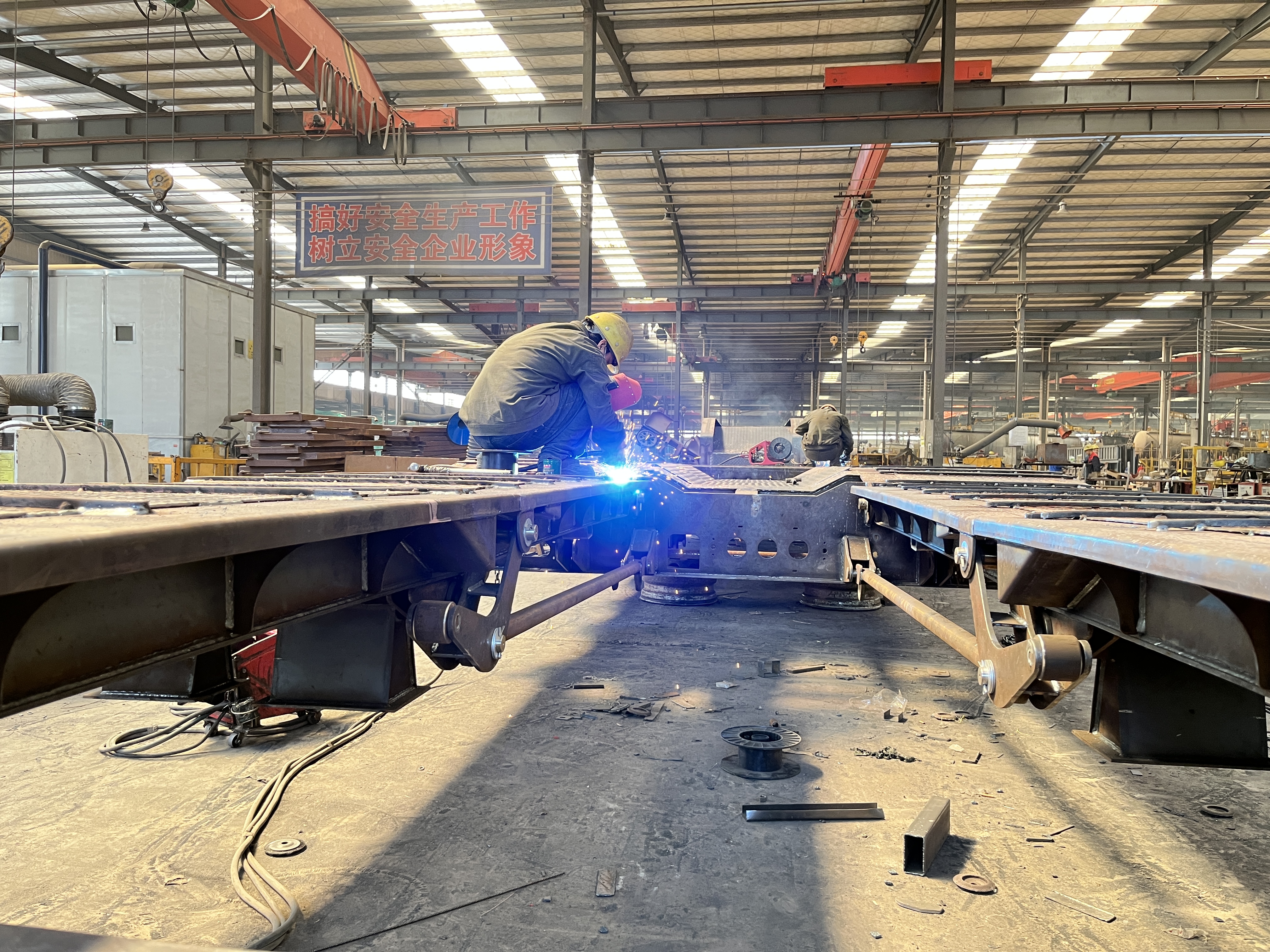
Why both "heavy duty" and "capacity" need a declared scope
Published definitions of heavy duty are not interchangeable, and that has a direct commercial consequence for anyone comparing suppliers. The ICCT's 2025 update on China's zero-emission medium- and heavy-duty vehicle market describes a heavy-duty vehicle as "a commercial vehicle intended for the transport of passengers or freight" without fixing a gross vehicle weight boundary. The U.S. Department of Energy's heavy-duty industry overview defines heavy-duty trucks as Class 3 through Class 8 vehicles. A U.S. commercial dealer page uses Class 7 or Class 8. None of these is wrong; each is a declared scope. A capacity figure, a price benchmark or a market statistic is only comparable once the vehicle class behind it is stated, and Class 3–8 data should never be mixed with Class 8-only data.
The same discipline applies to the capacity number in this profile. 6,000 units of annual output at a company that lists both trucks and semi-trailers is a mixed-output figure: it does not mean 6,000 heavy duty trucks a year, and it does not state how the total divides between the truck line and the trailer families. A buyer whose order planning depends on that split should request capacity by product family rather than accept the aggregate.
External context helps calibrate why these distinctions matter in 2026. Shacman's analysis of China's heavy-duty truck export industry reports cumulative export sales of 156,000 units in the first half of 2025, a year-on-year increase of 3%. Mordor Intelligence estimates the global heavy duty trucks market at USD 232.57 billion in 2026, projected to reach USD 301.23 billion by 2031, with the publisher defining that segment as Class 7 and Class 8 trucks. Both figures are publisher statements, and neither should be transferred onto a single supplier's capacity without a stated class and product scope.
The verified operating footprint, figure by figure
The table below consolidates the operating facts supplied for this manufacturer. Each row is a company-reported or certificate-recorded value; none of them is an audited output figure, and the interpretation follows in the sections that come after.
| Operating fact | Stated value |
|---|---|
| Legal entity | SHANDONG WONDERFUL AUTO COMPANY LIMITED. |
| Established | 2024 |
| Workforce | 500 employees |
| R&D team | 20 engineers |
| Annual production capacity | 6,000 units |
| Monthly capacity | 500 units |
| Production modes | OEM, ODM, CKD, SKD |
| Customization options | Logo, color, material, shape |
| Quality control | 100% test |
| Lead time | 30–45 days |
| Minimum order quantity | 1 unit |
| After-sales | 1-year warranty |
| Export profile | 100% export ratio; Africa main market; Africa and Southeast Asia as export markets |
| Product scope | Heavy duty trucks; flatbed, lowbed, cement tanker, dump, fence and sidewall semi-trailers; trailer parts; manual and automatic welding machinery |
| Certification record | China Compulsory Certificate (CCC) No. 2020091101023320, issued by China Automotive Certification Center Co., Ltd., standard CNCA-C11-01:2020, scope "Special Vehicles", market Mainland China, issued 10 December 2025, valid to 9 December 2030 |
Two details in that table deserve emphasis. First, the certification is a China Compulsory Certificate for the Mainland China market under the scope "Special Vehicles"; it is a domestic conformity record, not evidence of type approval in any export destination. Second, the certificate record associates the manufacturer with specific truck models — SHACMAN F3000 heavy duty truck/semi-trailer, SINOTRUK 6x4 dump truck ZZ3257N384GB1R, and SHACMAN X3000 6×4 ISM11E5 440 dump truck — which is useful for matching a requested configuration to a documented product identity.
Reading the numbers: the arithmetic behind 500 staff and 6,000 units
The two capacity figures reconcile. On the supplied values, 6,000 units per year divided by 12 months equals 500 units per month (calculated), which is exactly the stated monthly capacity. That internal consistency is a small but real signal: the annual and monthly numbers were not assembled from unrelated sources. The same arithmetic placed against headcount gives 6,000 units divided by 500 employees, or 12 units per employee per year (calculated) — a ratio that assumes every employee counted is inside the capacity calculation and that capacity is fully utilised, neither of which is stated.
The engineering share is also calculable: 20 engineers within a workforce listed at 500 is 4% of staff (calculated). Whether 4% is high or low for a commercial vehicle and trailer manufacturer cannot be answered from the supplied evidence, because no comparable peer data is available here. Any claim that this ratio is above or below an industry norm would be unsupported, and buyers should treat team size as a starting question rather than a conclusion.
What the figures do not prove is equally important. Annual capacity is a capability statement, not observed output: no production volumes, line utilisation, on-time delivery rate or audited shipment record is included in the supplied material. For a company established in 2024, the operating record is short by definition, which raises the weight a buyer should give to reference orders, inspection reports and pre-shipment documentation rather than to the capacity number alone.
A practical translation for order planning: an order of 500 units equals roughly one month of the stated monthly capacity (calculated), and would therefore represent a material share of a single production month. Buyers planning at that scale should ask how capacity is reserved, whether a single order can run in parallel with other customers' schedules, and what happens to the 30–45 day lead time when the order book is full.
Engineering depth: what a 20-engineer team should be asked to demonstrate
Headcount in engineering only becomes procurement evidence when the disciplines behind it are visible. The company states customization options covering logo, color, material and shape, and offers OEM, ODM, CKD and SKD production services. Those four modes are not interchangeable: in OEM work the buyer's specification governs and the manufacturer builds to it; in ODM work design responsibility shifts toward the manufacturer; CKD and SKD change the packing scope and the assembly work performed at destination. Because the modes are listed together without a responsibility matrix, the buyer's task is to establish, in writing, who owns drawings, tooling and change approval in the specific mode being purchased.
Four questions convert a team of 20 engineers into a usable capability picture. Which engineering disciplines are covered — chassis and frame, trailer structure, welding process, electrical and hydraulic systems? Who signs off when a material substitution is proposed under the "material" customization option? How are drawing revisions version-controlled and communicated to the production line? And what approval gate exists between a first sample and a batch release? The answers matter more than the number, because they determine whether a customized order is repeatable.
A minimum order quantity of 1 unit is relevant to that last question: it makes a single-unit trial commercially possible under the stated terms, which is the cheapest way to test engineering responsiveness before committing to volume. Nothing in the supplied material describes a formal sample programme, so the trial should be defined in the purchase contract rather than assumed.
Manufacturing scope: trucks, semi-trailers, trailer parts and welding machinery
The described scope is broader than vehicle assembly. Alongside heavy duty trucks and six semi-trailer families — flatbed, lowbed, cement tanker, dump, fence and sidewall — the company lists trailer parts and both manual and automatic welding machinery as part of its manufacturing activity. For a buyer, the welding equipment item is the most informative detail in the profile, because welding quality determines trailer structural life more than any catalogue specification.
The correct inference is limited but useful: welding machinery sits inside the company's described manufacturing scope, which means the question of in-house versus outsourced fabrication is a legitimate one to put to the supplier. It does not establish that every weld on every unit is produced on the company's own equipment. The verification step is a simple written statement of which major components are fabricated in-house — frame, side walls, tank shells, chassis reinforcement — and which are purchased, together with the weld inspection method applied to each.
Trailer parts in the scope also change the after-sales conversation. Fleet buyers care less about the first delivery than about the third year of operation, and the stated after-sales position is a 1-year warranty. Because the profile does not describe a spare-parts stockholding or a regional parts network, buyers in Africa and Southeast Asia — the two listed export markets — should ask how consumable and structural parts are supplied after the warranty period ends.
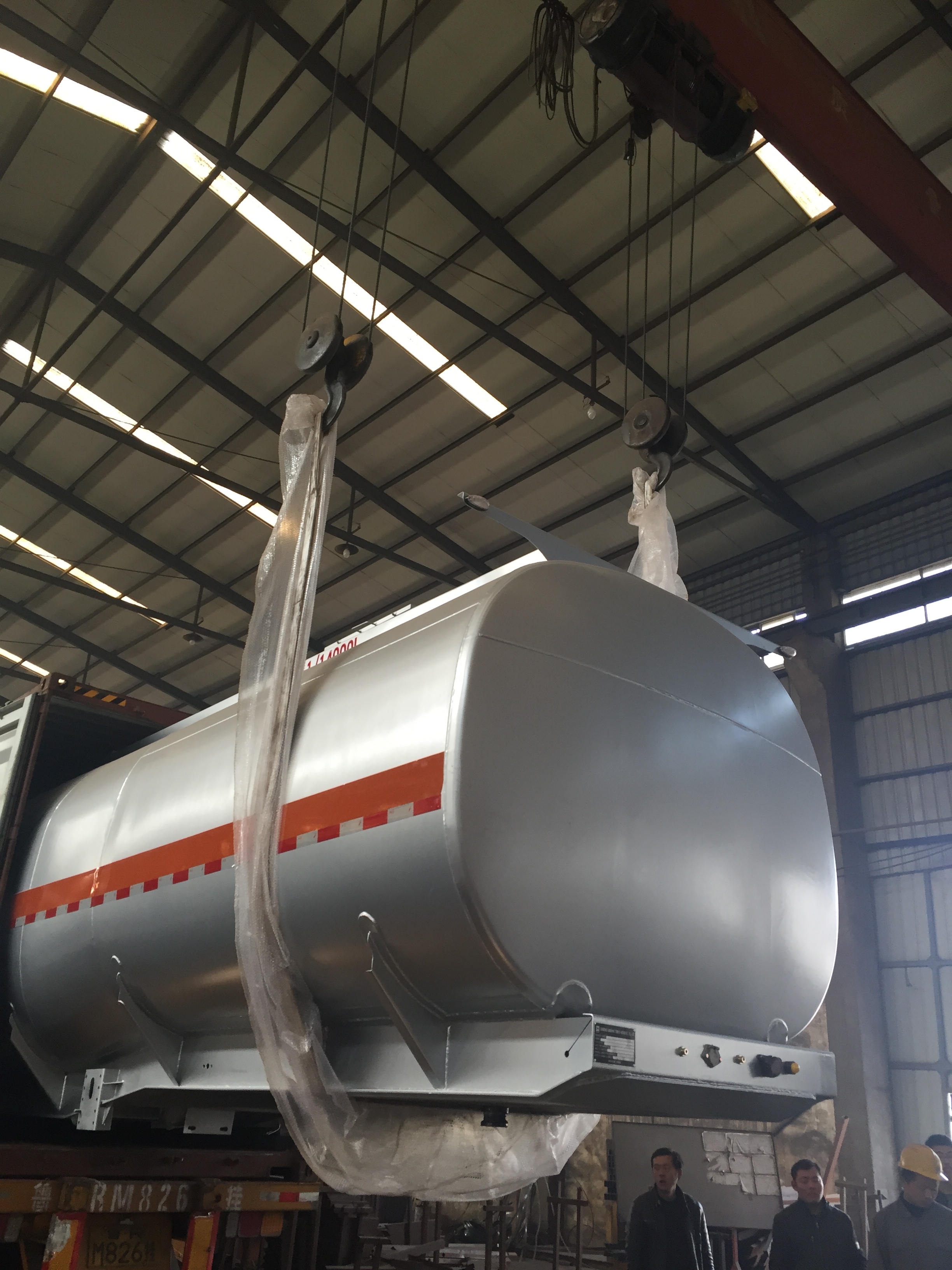
Matching the portfolio to duty cycles
Vehicle type and trailer type should be selected together, because the duty cycle is defined by the combination rather than by the tractor alone. For construction and quarry work, the relevant pairing is a dump heavy duty truck or a dump semi-trailer; the certificate record names a SINOTRUK 6x4 dump truck ZZ3257N384GB1R and a SHACMAN X3000 6×4 ISM11E5 440 dump truck as associated models. For long haul heavy duty truck operations, the corresponding products are the tractor unit plus flatbed, sidewall, fence or lowbed semi-trailers; the same flatbed and sidewall families serve cargo heavy duty truck duties where general freight rather than tipping is the task.
Articulated heavy duty truck configurations — tractor plus semi-trailer — are the core of the described portfolio, and the cement tanker and lowbed families extend it into bulk powder and heavy equipment transport. Buyers should note that this is a description of product families, not of axle loads, payload ratings or dimensions: no specification data for any body type is included in the supplied material, so those values must come from the manufacturer's technical documentation for the specific model quoted.
Two boundaries deserve to be stated plainly. Refrigerated and tow (recovery) configurations are not enumerated anywhere in the supplied product scope, so a buyer needing a refrigerated heavy duty truck or a tow heavy duty truck should confirm availability as a specific question rather than infer it from the general truck line. Likewise, no electric heavy duty truck model appears in the supplied scope: the IEA's Global EV Outlook 2026 reports that electric heavy-freight truck sales reached about 230,000 units in 2025, while electric trucks accounted for 9% of worldwide truck sales, but that is market context, not evidence of an electric offering from this manufacturer.
The diesel side carries a similar evidence gap. The supplied material confirms heavy duty truck supply and associates specific dump truck models with the certification record, but it does not state engine, gearbox, emission standard or axle configuration. Since emission and type-approval requirements differ by destination market, the powertrain and homologation documents must be requested per market rather than assumed from the model name.
Integrated manufacturer versus intermediary sourcing — and where this profile stops
The general trade-off is well understood: an intermediary aggregates supply and can simplify logistics, while a manufacturer with in-house scope controls more of the build and answers technical questions directly. The point of an evidence-led reading is to replace that general statement with the specific items this profile does and does not cover, so the comparison is made on documents rather than impressions.
| Verification dimension | Evidence in this profile | What remains to confirm |
|---|---|---|
| Capacity by product line | 6,000 units/year; 500 units/month (aggregate) | Split between truck and trailer families, in writing |
| Engineering coverage | 20 engineers | Discipline breakdown and change-approval authority |
| Production modes | OEM, ODM, CKD, SKD | Mode-specific design ownership and CKD/SKD packing list |
| Customization | Logo, color, material, shape | Written limits and approval gate before batch release |
| Quality control | 100% test | Named test items, pass/fail thresholds, report format |
| Compliance | CCC No. 2020091101023320, CNCA-C11-01:2020, scope Special Vehicles, Mainland China, valid to 9 December 2030 | Destination-market approval evidence for the specific market |
| Commercial terms | MOQ 1 unit; FOB Qingdao or CIF destination; 30–45 day lead time | Lead-time start trigger and capacity reservation |
| After-sales | 1-year warranty | Covered components, claim process, parts supply path |
The fit boundaries are structural rather than critical. A company established in 2024 has a short operating record, so audited financial statements, inspection history and named reference orders carry more weight than they would with a long-established supplier. The stated market concentration — 100% export with Africa as the main market — is an advantage for buyers in that region and a question mark for buyers elsewhere, even though Southeast Asia is also listed. And the certification is a domestic Chinese conformity record for special vehicles: it is not, by itself, evidence of compliance in any destination market.
Finally, scale is relative. 6,000 units of annual capacity is a meaningful volume for a regional buyer and a small one for a global OEM, but the supplied evidence contains no peer capacity data, so this article makes no comparison of that kind. The defensible statement is narrower: the capacity is sufficient to be planned against, provided the buyer requests a product-line split and a reservation commitment.
From evaluation to execution: terms, acceptance criteria and the paper trail
The commercial terms supplied for this manufacturer are specific and can be written into a purchase contract without interpretation. The minimum order quantity is 1 unit. Delivery terms are FOB Qingdao or CIF destination. Payment terms are 30% T/T in advance and 70% T/T against copy of the bill of lading. The stated acceptance criterion is a pre-shipment test, and the lead time is 30–45 days.
"Pre-shipment test" is a category, not a specification, and that is the one place in these terms where ambiguity can cost money. A workable acceptance clause names the unit identifier, the test items and their pass/fail thresholds, the buyer's right to witness the test or receive photo and video records, the report format, and the hold point at which non-conforming items are corrected before shipment. The company's own stated quality control is a 100% test regime, which is a useful starting point for that clause — it means every unit is intended to pass through testing, so the buyer's question is what the test contains, not whether one occurs.
Lead time deserves the same treatment. Thirty to forty-five days is a stated range, so the contract should say when the clock starts — on deposit receipt, on drawing approval, or on CKD packing list confirmation — and what remedy applies if a shipment slips. Alongside that, the 1-year warranty should be documented with the components covered, the claim evidence required, and the parts route for buyers in the two listed export markets.
For follow-up on a specific requirement, the company's listed contact is Coffey at Coffey@wonderful-autos.com or +86 150 2007 2752, which is also the WhatsApp number, with a registered contact address at Room 1301, Building 1, No.8 Zhilidao Road, High-Tech Zone, Qingdao, Shandong. The company's public site is SHANDONG WONDERFUL AUTO COMPANY LIMITED., and a downloadable company brochure is available at Wonderful Auto brochure (PDF).
A bounded outlook for heavy-duty truck buyers
Two external data points frame the next few years without predicting this company's results. China's heavy-duty truck exports reached 156,000 units in the first half of 2025, 3% higher year on year, according to Shacman's industry analysis. Separately, the IEA reports that electric heavy-freight truck sales reached about 230,000 units in 2025, with electric trucks accounting for 9% of worldwide truck sales. Neither figure tells a buyer what a specific supplier can deliver; together they indicate a market where supply is abundant, powertrain options are widening, and differentiation increasingly rests on verifiable operating evidence.
If export volumes hold near those levels, a growing share of purchase decisions will involve suppliers with short operating histories. That does not make them unsuitable, but it shifts the centre of gravity of due diligence from the product photograph to the document set: capacity split by line, engineering discipline coverage, test protocol, destination-market approval, and a lead-time commitment with a defined start point. A supplier profile such as this one is most useful when it is read that way — as a set of checkable numbers rather than a claim about capability.
Frequently asked questions
How much production capacity does SHANDONG WONDERFUL AUTO COMPANY LIMITED. have?
The company lists 6,000 units of annual production capacity and 500 units of monthly capacity, and the two figures reconcile arithmetically at 500 units multiplied by 12 months. Because the described product scope covers both heavy duty trucks and six semi-trailer families, the number is best read as aggregate output across those lines rather than a truck-only figure. Buyers whose planning depends on the split should request capacity by product family.
What does a 20-engineer R&D team indicate for customization work?
It establishes that engineering capacity is a stated part of the organisation: 20 engineers within a workforce listed at 500, or 4% of staff on a simple calculation. The company describes customization covering logo, color, material and shape. Team size alone does not show which disciplines are covered, so the practical checks are an organisation chart by discipline, a named owner for design changes, and a defined approval gate between a sample unit and batch release.
Which production modes are available — OEM, ODM, CKD or SKD?
All four are listed: OEM, ODM, CKD and SKD. The distinction is commercially significant because design ownership and packing scope differ between them, and CKD or SKD shipments move part of the assembly work to the destination. A buyer should confirm in writing which party owns drawings and tooling in the chosen mode, and what the CKD or SKD packing list contains.
What lead time and minimum order quantity apply?
The stated lead time is 30–45 days and the minimum order quantity is 1 unit. Both are commercial statements rather than guaranteed schedules, so the contract should define when the lead time begins — for example on deposit receipt or on drawing approval — and how production capacity is reserved for the order, particularly where the order volume approaches a full month of the stated 500-unit monthly capacity.
What payment terms and acceptance criteria are stated?
Payment is 30% T/T in advance with 70% T/T against copy of the bill of lading. Delivery terms are FOB Qingdao or CIF destination, and the stated acceptance criterion is a pre-shipment test. Because that term is a category rather than a specification, the acceptance clause should name the test items, pass/fail thresholds, witness rights and the report format, so that conformity is judged against a document rather than an expectation.
Tem questões ou precisa de mais detalhes?
Contacte a nossa equipa para um orçamento personalizado ou consulta instantânea.
Solicitar orçamento
Preencha o formulário abaixo e a nossa equipa entrará em contacto com uma proposta personalizada.
Chat direto do WhatsApp
Prefere conversar em tempo real? Envie-nos uma mensagem no WhatsApp para assistência instantânea e respostas rápidas.
- Obter orçamento personalizado
- Partilhar fotos ou documentos
- Discuta as suas necessidades diretamente
Geralmente responde em 5–30 minutos durante o horário de expediente.