
Heavy Metals and Chloride Limits in Magnesium Sulphate Fertilizer
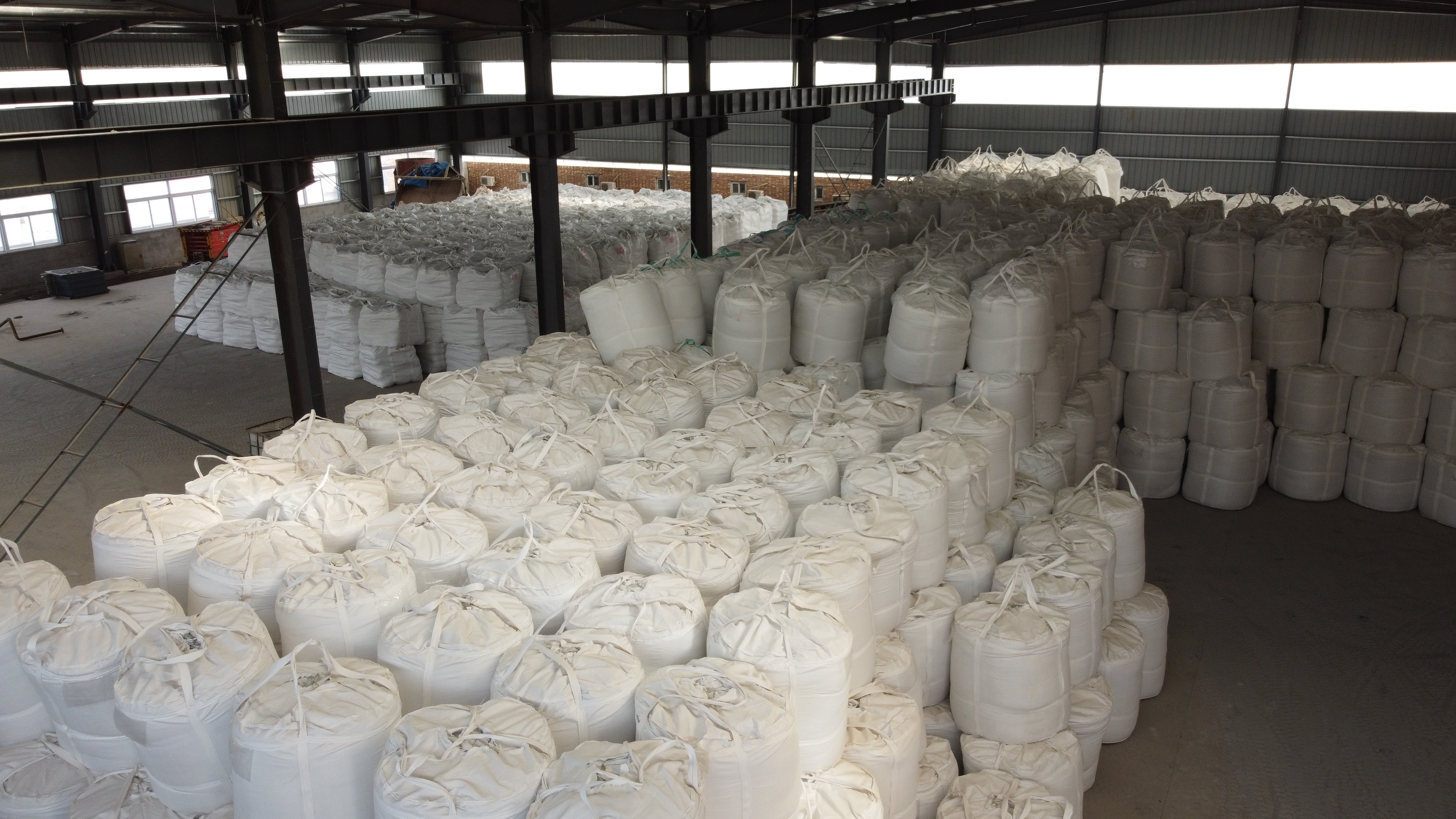
Magnesium sulphate fertilizer is traded on the strength of its documents as much as on its granules. Long before a container of magnesium sulphate heptahydrate, Kieserite (magnesium sulphate monohydrate) or magnesium sulphate anhydrous is loaded, the buyer has usually accepted a specification, a certificate of analysis format, a safety data sheet and a set of commercial terms. In that paperwork, two parameters resolve more compliance questions than any other: heavy metals and chloride.
This review explains how those documents should be read — batch COA, MSDS, internal test reports and third-party inspection acceptance — and, just as importantly, what a buyer can and cannot confirm from documents and samples alone. The operating principle throughout is narrow and deliberate: verify what is written, and never assume a certification or a limit that has not actually been stated.
Why Heavy Metals and Chloride Decide More Compliance Questions Than Assay Alone
Magnesium sulphate is a mature commodity, and most purchase specifications still lead with magnesium content. That is understandable, because magnesium is the nutrient or the active component the buyer is paying for. But assay alone rarely determines whether a shipment is accepted or rejected in practice.
The market context explains why. Agriculture and fertilizers accounted for approximately 41.6% of global magnesium sulfate market share as of 2025, and heptahydrate (Epsom salt) remains the dominant product type at 54% of global commercial production. China was the leading exporter of magnesium sulphate in 2024, accounting for USD 149 million in export value under HS code 283321. In other words, a very large share of global volume moves into agricultural channels where the end use, not the headline magnesium figure, determines the acceptable impurity profile.
The logic differs by application:
- Soil application and bulk blending — assay, granule uniformity and moisture govern how the material spreads and how it fits a formula.
- Fertigation and water-soluble fertilizer use — chloride and water-insoluble content matter more, because they affect dissolution behaviour inside irrigation lines.
- Foliar application — the material must dissolve cleanly and be low in insoluble residue.
- Feed and industrial chains — heavy metal limits, expressed as parts per million, become the binding constraint rather than a secondary note.
That is why a modern magnesium sulphate specification is normally expressed as a set of limits rather than a single number, and why the documents matter as much as the product.
The Four Documents Behind a Magnesium Sulphate Shipment
Buyers frequently receive four different document types and treat them as interchangeable proof of quality. They are not. Each one answers a different question.
1. Batch Certificate of Analysis (COA)
A COA is batch-specific. It records the measured results for one production batch and should carry a batch number and a date. This is the document that speaks to chloride, heavy metals, water-insoluble content and assay for the material actually shipped.
2. Material Safety Data Sheet (MSDS / SDS)
An MSDS is product-level, not batch-level. It identifies the substance, its hazards, safe handling, storage and transport classification. It is a safety and compliance document, not a quality certificate.
3. Internal Test Reports
Test reports are the manufacturer's own laboratory records. They can be broader than a COA and may cover methods, instrument readings and multiple parameters, but they originate from the same party that produced the goods.
4. Third-Party Inspection Acceptance
Third-party inspection is an independent verification step, normally commissioned and paid for by the buyer or arranged as a separate contractual requirement. It is not the same as the supplier's pre-shipment test.
How to Read a Batch Certificate of Analysis
A COA is only useful if it can be tied back to the physical shipment. Before reading any value, check four administrative items: the batch number, the production date, the product grade and the packing reference. If the batch number on the COA cannot be matched to the packing list or the bag marking, the document is not evidence for that consignment, regardless of how good the numbers look.
Once traceability is confirmed, read the analytical section in a fixed order:
- Assay / magnesium content — the primary commercial parameter, and the one most often quoted in a specification.
- Chloride — the parameter that determines suitability for chloride-sensitive and fertigation applications.
- Water-insoluble matter — an indicator of how cleanly the material dissolves and how much residue remains.
- Heavy metals, expressed as Pb — the parameter that governs acceptability in feed, food-adjacent and regulated industrial chains.
- Moisture, particle size and appearance — supporting parameters that determine handling and storage behaviour.
A quality-controlled magnesium sulphate specification is commonly written around values such as assay ≥99.5% with low batch fluctuation of about ±0.2%, chloride ≤0.05%, water-insoluble ≤0.05% and heavy metal (Pb) ≤10 ppm. Those figures illustrate the shape of a controlled-impurity specification; buyers should always compare them against their own regulatory and application requirements rather than treating any single number as universal.
Two distinctions matter when reading the results. First, a specification limit and a measured result are different things: the limit is the boundary the supplier commits to, while the result is what the laboratory recorded for that batch. Second, a COA should be read batch by batch. A strong result on one shipment says nothing about the next one unless the supplier's process controls are stable, which is precisely what low batch fluctuation is intended to demonstrate.
What an MSDS Proves — and What It Does Not
An MSDS is often the first document a buyer receives and the one most frequently over-interpreted. It typically covers substance identification, hazard classification, first-aid measures, handling and storage guidance, exposure controls and transport information.
What it does not contain is any batch-specific analytical data. There is no assay figure, no chloride value and no heavy metal result tied to a shipment. An MSDS is therefore not evidence of low impurities; it is evidence that the supplier has documented the safety profile of the material.
This matters in procurement because MSDS documents are frequently reused across grades and updated on long cycles. A buyer who accepts an MSDS as proof of chloride control has, in effect, accepted no proof at all. The correct pattern is to treat the MSDS as one required document and to look to the batch COA, and where necessary independent testing, for the impurity parameters.
Test Reports and Third-Party Inspection Acceptance
Test reports vary widely in scope. Some are simply the raw data behind a COA; others cover additional parameters such as particle size distribution or moisture. The key question is always the same: who performed the test, on which sample, and against which method.
For magnesium sulphate fertilizer, acceptance is based on pre-shipment test procedures. That means the supplier performs testing before dispatch and the shipment is accepted against those results. This is a normal and workable arrangement, but it is a supplier-side test, and buyers should understand that clearly.
Third-party inspection acceptance sits one step further along the chain of evidence. It introduces an independent inspector who draws and tests samples outside the supplier's control. Where a buyer operates in a market with strict impurity expectations, or where the material feeds into feed or food-adjacent production, third-party inspection is usually worth specifying as a separate contractual term rather than assuming it is included.
What a Sample Can and Cannot Confirm
Samples are a useful but limited tool. A physical sample lets a buyer assess granule uniformity, dust level, colour and appearance, and — through dissolution testing — how cleanly the material breaks down in water. Where the sample is laboratory-tested, it can also confirm assay, chloride, water-insoluble content and heavy metals for that specific sample.
What a sample cannot confirm is the behaviour of future batches. A sample is a snapshot. It cannot demonstrate long-term batch-to-batch consistency, anti-caking performance over months in a warehouse, or packaging durability in transit. Those qualities depend on process control and storage conditions, not on the sample itself.
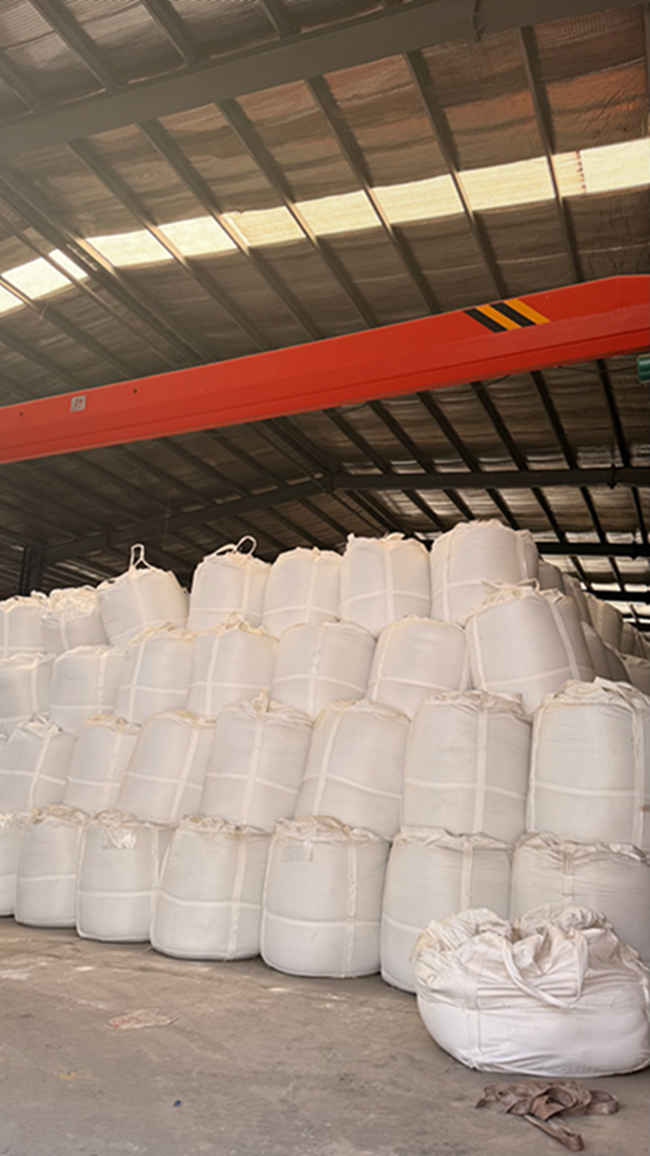
Storage behaviour is a good example of where expectations need to be calibrated. Magnesium sulphate absorbs moisture from the air and can form caking. Caking typically occurs under high-humidity storage, damaged packaging, or long-term open exposure to moist air. The prevention is straightforward: store in a dry and ventilated warehouse, keep bags sealed, and avoid rain and damp. Importantly, caked material can be crushed before application and remains usable without quality loss — caking is a handling issue, not evidence that the analytical specification has failed.
Chloride Control and Application Fit
Chloride receives less attention than magnesium in most purchase discussions, yet it is the parameter that most often determines whether a technically acceptable material is actually suitable for a given application.
Controlled-impurity magnesium sulphate is positioned across six broad application areas:
- Field crops — soybean, corn, sugarcane, rice and similar crops, applied as base fertilizer and top-dressing through soil broadcasting.
- Cash crops and orchards — palm, coffee, citrus, grape, apple and various fruits and vegetables, applied by broadcasting, fertigation and foliar spray to correct magnesium-deficient chlorosis.
- Water-fertilizer integrated systems — suitable for drip irrigation and sprinkler systems, dissolving completely without residues and avoiding blockage of pipes and drippers.
- Mechanical fertilization — uniform granules with low dust and good flowability, compatible with fertilizer spreaders.
- Feed industry — magnesium supplement for pig, cattle, sheep and poultry feed.
- Industrial fields — raw material for printing and dyeing, leather-making, water treatment, building materials and other industries.
The pattern is consistent: applications where the material stays in solution and circulates through equipment — fertigation, foliar spraying and water-fertilizer integration — are the most sensitive to chloride and insoluble residue. Applications where the material is broadcast onto soil or blended into a dry mix are less sensitive to chloride but more sensitive to granule quality and moisture. Heavy metal limits cut across all six areas, but they carry the greatest weight in the feed and industrial categories.
Stable Assay, Batch Consistency and NPK Blending
Stable assay is often discussed as a quality concept, but in blending operations it is an operational requirement. When magnesium sulphate is used in NPK blending, the formulator calculates the magnesium contribution from the declared assay. If the assay moves significantly between batches, every downstream calculation has to be adjusted, and the finished blend can drift outside its declared nutrient profile.
Low batch fluctuation — around ±0.2% in a controlled-impurity specification — is what keeps those calculations valid. It also supports the granule side of the equation: a specification targeting at least 90% qualified granules, with low dust and good flowability, is what allows the material to run through mechanical spreaders without segregation or dust loss.
For water-soluble magnesium sulphate fertilizer used in fertigation, the equivalent requirement is dissolution performance. Complete dissolution within about three minutes, without residues, is the practical measure of whether a grade is genuinely suitable for drip and sprinkler systems rather than simply labelled as water-soluble.
Controlled-Impurity vs Traditional Magnesium Sulphate: A Structured Comparison
The difference between a controlled-impurity grade and traditional magnesium sulphate fertilizer is best understood as a set of trade-offs rather than a simple quality ranking.
| Dimension | Controlled-impurity grade | Traditional magnesium sulphate fertilizer |
|---|---|---|
| Purity and assay stability | Stable high purity, low batch fluctuation around ±0.2% | Unstable purity, wider batch variation |
| Impurity profile | Chloride ≤0.05%, water-insoluble ≤0.05%, heavy metal (Pb) ≤10 ppm | Impurities reported at roughly 4–10 times higher levels |
| Granule quality | Uniform granules, at least 90% qualified, low dust | Poor granule uniformity, heavy dust |
| Dissolution | Full dissolution within about 3 minutes, no residues | Slow and incomplete dissolution, dissolution residues |
| Anti-caking and storage | Up to 6-month anti-caking storage performance | Easy caking, poor anti-caking performance |
| Nutrient utilisation | 85–92% | 70–78% |
| Fertilizing uniformity | ≥90% | Poor uniformity; higher dosage required for equal magnesium supply |
| Direct cost | Higher manufacturing cost (+12–18%), FOB +25–40 USD/MT | Lower direct production and FOB price |
| Hidden risk | Minimal export risk, low end-user application loss | Higher risk of inspection failure, claims and equipment damage |
| Suitable application | Mechanical spreading, fertigation, foliar, blending, feed and industrial use | Basic soil application |
Limits and boundaries buyers should acknowledge
A controlled-impurity grade is not automatically the correct choice for every purchase, and the following boundaries are real:
- It costs more. Manufacturing cost is typically 12–18% higher and FOB pricing around 25–40 USD/MT higher than traditional material. For applications where chloride and heavy metals are not constrained, that premium may not be justified.
- Documentation is only as strong as the laboratory behind it. A COA reflects the testing capability of the issuing laboratory. Buyers in regulated markets should confirm the scope of testing and, where the risk justifies it, commission independent inspection rather than relying solely on supplier-issued documents.
- Documentation does not replace storage discipline. Even well-documented material will cake if bags are left open in humid conditions. Caking is manageable — crushing restores usability without quality loss — but it is a genuine handling requirement.
- Standards are not universal. Chloride and heavy metal limits acceptable in one market or application may not satisfy another. Buyers should define their own limits and check them against the batch COA rather than assuming a single global threshold.
How Tianjin Xingyu Approaches Batch Documentation
Tianjin Xingyu Fertilizer Industry Co., Ltd. (XYF) is an original manufacturer founded in 1993 and located in Chenguantun Town Industrial Park, Jinghai District, Tianjin, China. The company specialises in the research, development, production and sale of magnesium sulphate series products, covering full ranges of anhydrous magnesium sulphate, monohydrate magnesium sulphate and heptahydrate magnesium sulphate, alongside magnesium oxide, sulfur magnesium fertilizer and various medium and trace element fertilizers, in both fertilizer grade and industrial grade.
For buyers assessing documentation quality, three structural facts are relevant. First, the company implements the ISO quality management system throughout production and operates an independent standardized testing laboratory, which is the source of its batch testing records. Second, it is equipped with automated production lines and supported by a stable raw material supply base, which is the process foundation for batch-to-batch consistency rather than a marketing claim. Third, it reports an annual output capacity of 100,000 metric tons for magnesium sulphate series products, giving it the capacity for stable supply of bulk orders with efficient delivery and reliable quality control.
On the commercial side, XYF holds independent import and export rights. Export business accounts for 70% of total sales, with products exported to more than 30 countries and regions across Southeast Asia, Europe and America. For magnesium sulphate fertilizer orders, the minimum order quantity is one container; standard trade terms are FOB, CIF or CFR; products are accepted through pre-shipment test procedures; and payment terms are 30% T/T in advance and 70% T/T against copy of B/L.
These are factual, checkable parameters rather than quality claims. They tell a buyer what document set to expect, what testing arrangement is standard, and where independent verification would need to be added as a separate requirement.
Market Trend: Documentation Expectations Are Rising
The global magnesium sulfate market reached USD 1.8 billion in 2025 and is projected to reach USD 1.9 billion in 2026. Growth of that scale rarely comes from new applications alone; it comes from volume expansion in existing agricultural channels, where buyers are becoming more specific about what they will accept.
Regulatory context reinforces the shift. Magnesium sulphate is registered in the ECHA REACH database with an annual tonnage band of 100,000 to 1,000,000 tonnes, indicating that the substance is handled at industrial scale under formal registration frameworks in the European Union. At that scale, documentation practice tends to consolidate around standard expectations: a batch-linked COA, a current MSDS, traceable test records and, for higher-risk destinations, independent inspection.
A second trend is grade-specific purchasing. Because heptahydrate accounts for 54% of global commercial production, competition in that grade is intense and largely price-driven. Differentiation increasingly moves to the parameters that are harder to copy — chloride control, heavy metal limits, batch stability and dissolution performance — all of which are verified through documents rather than through price lists.
Future Outlook
The direction of travel is toward parameter-specific procurement. Rather than specifying “magnesium sulphate fertilizer” and accepting whatever documentation arrives, buyers are increasingly defining chloride ceilings, heavy metal limits and batch fluctuation tolerances at the enquiry stage, then holding suppliers to those values through the COA.
For suppliers, that shift rewards process control and laboratory capability over trading flexibility. For buyers, it introduces a discipline that is easy to state and harder to execute: read the document that actually applies to the shipment, confirm what it covers, and separately decide whether independent verification is warranted. Long-term supply relationships tend to be built on exactly that kind of shared, verifiable expectation — not on a single figure on a specification sheet.
Frequently Asked Questions
What are the standard purchasing terms and acceptance criteria for magnesium sulphate fertilizer?
For magnesium sulphate fertilizer, the minimum order quantity is one container. Delivery terms are FOB, CIF or CFR, and delivery is arranged through FOB, CIF or CFR methods. Acceptance criteria are based on pre-shipment test procedures. Payment terms are 30% T/T in advance and 70% T/T against copy of B/L, which corresponds to accepted payment methods of a 30% T/T deposit and 70% T/T against copy of B/L. Buyers in stricter markets typically add third-party inspection as a separate contractual requirement, because pre-shipment testing and independent inspection are different verification steps.
Which grade should I choose, anhydrous magnesium sulphate or heptahydrate magnesium sulphate?
Anhydrous magnesium sulphate has higher magnesium content and low moisture, which suits industrial use and dry-formula applications. Heptahydrate magnesium sulphate (Epsom salt) contains crystal water, has lower magnesium content and a lower cost, which makes it suitable for agriculture and fertigation. Monohydrate magnesium sulphate sits between the two and can serve both agricultural and general industrial scenarios.
How should magnesium sulphate be stored to prevent caking, and does caking indicate a quality failure?
Magnesium sulphate absorbs moisture from the air and can form caking. Caking occurs under high-humidity storage, damaged packaging or long-term open exposure to moist air. Prevention is to store the material in a dry and ventilated warehouse, keep bags sealed, and avoid rain and damp. Caked material can be crushed before application and remains usable without quality loss, so caking is a handling and storage issue rather than an analytical failure.
Which parameters should be compared when selecting magnesium sulphate for fertigation or industrial production?
The comparison should cover magnesium content, moisture value, particle size, crystal form and heavy metal impurity index. For agriculture and fertigation, heptahydrate magnesium sulphate with a stable particle size is a common choice. For industrial dry formulations, anhydrous magnesium sulphate with low moisture and high magnesium content is preferred. Monohydrate magnesium sulphate works for both agricultural and general industrial scenarios.
Product catalogue (PDF) for reference: XYF-Catalogue.pdf