
Helical, Worm or NCJ: A Reducer Decision Matrix by Duty
Helical, Worm or NCJ: A Reducer Decision Matrix by Duty
A textile line running three shifts, a woodworking machine absorbing shock loads from inconsistent stock, and a food line hosed down at the end of every shift can all be driven by a geared motor of similar nominal power. What separates them is not the nameplate kilowatt rating but the duty cycle and the environment the reducer has to survive. That is why a comparison between helical, worm and NCJ gearmotors only becomes usable when it is arranged by duty and environment rather than by catalogue page.
This decision matrix does three things: it maps the R/F/K/S helical family, the RV worm gearbox line and the NCJ series to continuous, intermittent and variable-speed duty; it overlays the textile, woodworking and food and beverage conditions that most often force a change of selection; and it sets out the purchasing terms and acceptance checks that convert a shortlist into a purchase order. Guangdong Starshine Drive Co., Ltd. (STARSHINE DRIVE), a reducer and variator manufacturer founded in 1965 and based in Foshan, Guangdong, supplies all three families, which makes this an internal comparison of design choices rather than a contest between suppliers.
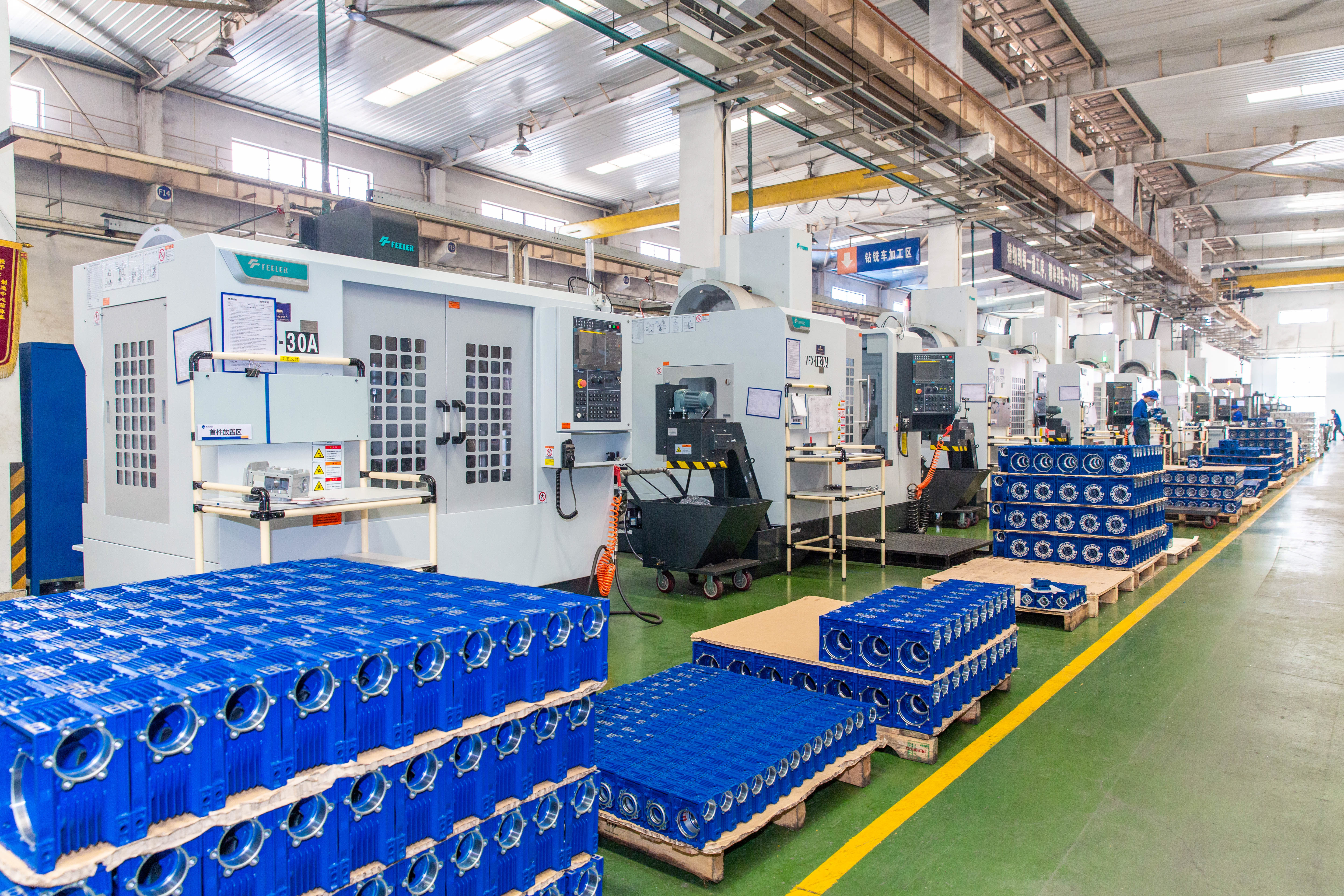
The same assembly floor builds several gear forms, so the decision is made by duty and environment rather than by what the plant can physically produce.
Duty profile decides more than the gear form
Duty is the first filter because it changes what the reducer is actually being asked to do. A continuous three-shift drive accumulates heat hour after hour, so thermal rating and lubricant working temperature matter more than the peak torque the unit can survive for a few seconds. An intermittent axis with frequent starts shifts the question to starting torque, acceleration and how many starts the gearing and any brake can accept. A variable-speed axis run from an inverter adds a third condition: at low output speed a self-cooled unit has less cooling available at exactly the moment losses are proportionally higher, so the minimum operating speed has to be checked rather than assumed.
Selection convention reflects this. Reducers are normally chosen with an application service factor above the nominal load so that shock, starting and daily running hours are absorbed by margin instead of by the gear teeth. Two suppliers can quote the same ratio and nominal torque and still offer different margins at the same size; that difference only becomes visible when the duty cycle is written down and circulated with the enquiry. Writing the duty down is therefore the first act of the comparison, not paperwork that follows it.
Three candidate families, three different jobs
The R/F/K/S high-precision gear reducer family is the broadest of the three. Its letter designations follow the common convention for coaxial helical, parallel-shaft, helical-bevel and helical-worm configurations, so one family can serve in-line axes, offset axes and right-angle axes without changing supplier. Within it, the S series helical-worm geared motor is documented in the Starshine Drive catalogue at 0.12–22 kW, ratios of 6.8–288 and output torque of 90–4000 N·m. Those are series-level catalogue values; the size finally quoted still has to be checked against the actual duty point, and the exact configuration behind each letter code should be confirmed for the model offered.
RV worm gear reducers are the right-angle option where the ratio has to be produced in a compact envelope. Worm gearing delivers high reduction in a single stage, which keeps it common on ancillary axes, low-power drives and machines where space behind the shaft is limited. The trade-off is efficiency: sliding contact between worm and wheel turns more input power into heat than a helical mesh does, and that difference matters as soon as the duty becomes continuous or the power rises.
NCJ series gear reducers form a separate line in the same portfolio. In a decision matrix, NCJ should be treated as a candidate that has to earn its place on current, size-specific data: ratio, output torque, thermal limits and mounting must be read from the NCJ tables for the model actually offered, because a family name does not carry a rating. Where that data clears the duty point, NCJ competes directly with the helical family. Where it has not been supplied, it should stay off the shortlist rather than be assumed equivalent.
What actually differs inside the gearbox
Helical gearing transmits load through teeth that roll into mesh at an angle, with more than one tooth pair sharing the load at any moment. The result is comparatively low sliding loss and less heat generated per unit of transmitted power, which is why helical units dominate continuous-duty drives. Coaxial and parallel-shaft versions place the output shaft in line with or parallel to the motor. Helical-bevel versions turn the drive through 90 degrees while keeping a helical first stage, the usual compromise when a right-angle layout is required but worm efficiency is not acceptable.
Worm gearing works by sliding contact between the worm and the wheel. That geometry produces a large reduction in one stage and a compact right-angle package, and at low lead angles it can hold a load without a brake because the drive is self-locking. The same sliding contact is the source of its limits: efficiency is lower than a helical mesh, heat generation is higher for the same transmitted power, and self-locking behaviour depends on the lead angle of the exact unit and must be confirmed rather than assumed. A helical-worm combination such as the S series sits between the two, using a helical stage for the bulk of the ratio and a worm stage for the final right-angle reduction.
For NCJ, the honest technical statement at decision stage is that gear form and rating must come from current NCJ documentation for the offered size. Comparing NCJ on the assumption that it behaves like the R/F/K/S family compares a name, not a gearbox.
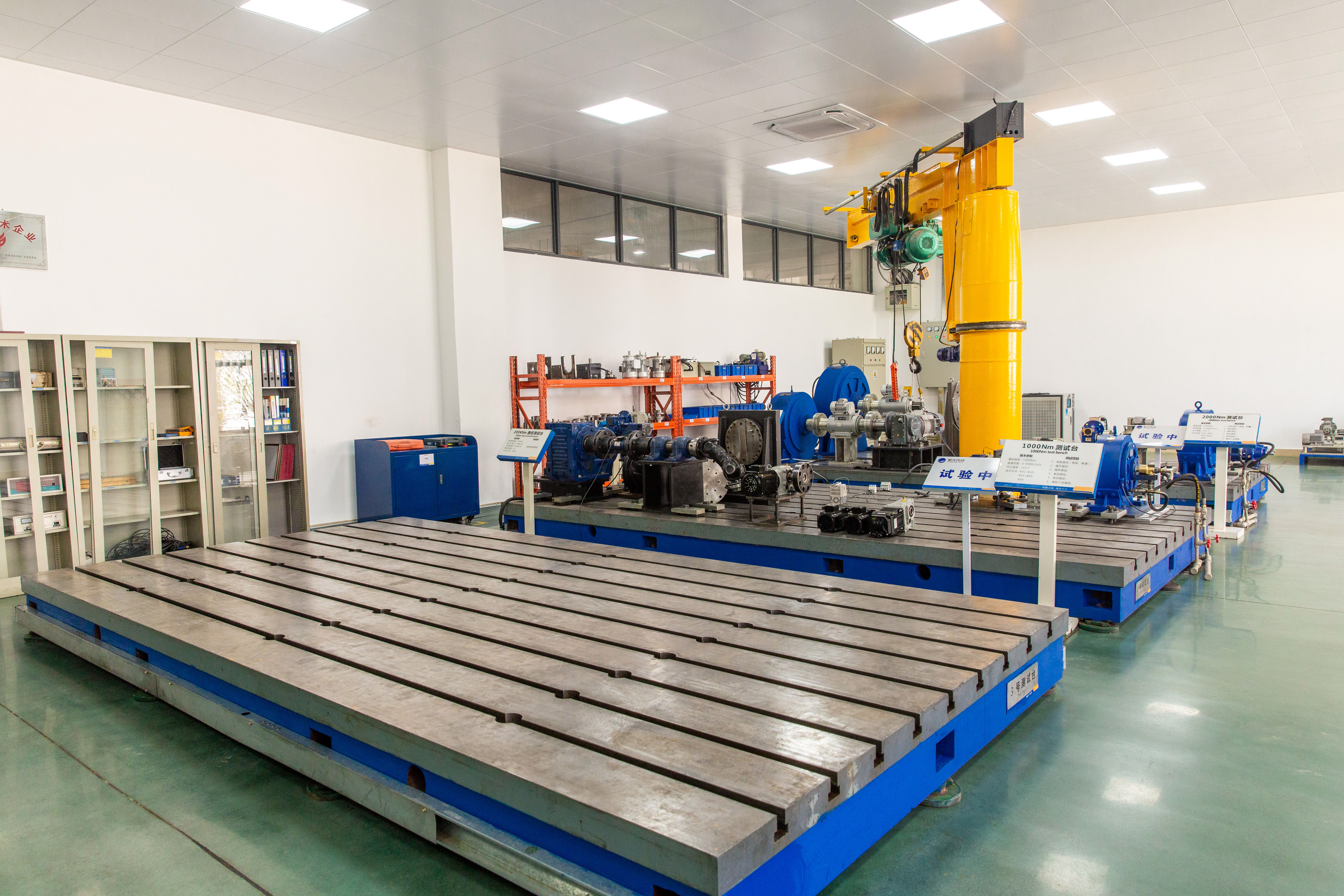
Selection work at decision stage is a data exercise: the same written duty is applied to every candidate before any of them reaches a quotation.
The decision matrix: duty mode against environment
The matrix below is the working form of the comparison. Read down the left column to find the operating condition that actually governs the machine, then read across for each candidate and for the evidence that has to be confirmed before it can be shortlisted.
| Operating condition | Helical R/F/K/S | RV worm | NCJ series | Confirm before shortlisting |
|---|---|---|---|---|
| Continuous 24/7, steady load | Primary candidate; lowest heat per unit of power; in-line and right-angle forms available | Possible at lower power; sliding contact adds losses, so check heat | Candidate only if the size-specific continuous rating clears the duty | Thermal rating at real ambient, service factor, lubricant life |
| Frequent start-stop or indexing | Check starting torque and brake duty; frequent starts add heat | Lower inertia helps acceleration; self-locking may remove a brake | Confirm permitted start frequency | Starts per hour, starting torque, brake rating |
| Variable speed from an inverter | Part-speed efficiency supports the choice | Losses rise at low speed; verify cooling | Verify low-speed thermal data | Minimum speed, forced cooling, inverter pairing |
| Textile: heat, humidity, acid-base mist | Continuous rating and corrosion protection decide | Feasible where duty is light and cooling adequate | Same checks as helical, applied to NCJ data | Enclosure class, coating system, lubricant, condensate management |
| Woodworking: abrasive dust, variable load | Sealing and overload margin decide | Compact right angle can suit feed axes | Confirm sealing for the mounting position | Sealing arrangement, breather position, shock margin |
| Food and beverage: washdown | Lower heat helps when the line runs continuously | Feasible on light ancillary axes; check ingress | Same checks, on verified data | Enclosure, cleaning-agent compatibility, whether a food-grade lubricant is available for the size |
| Low-temperature start | Configuration, not gear form, decides | Same | Same | Low-temperature build for the −40 °C to +40 °C band, low-temperature grease, factory start-up test |
Cell entries are decision guidance, not catalogue ratings. Every candidate must still be quoted with its own rating at the written duty point.
Textile lines: heat, humidity and acid-base exposure
Textile plants combine three conditions that are individually manageable and collectively difficult: sustained high ambient temperature around drying and heat-setting equipment, humidity that stays high across the shift, and airborne chemical mist from dyeing and finishing. Drives on these lines are usually continuous, so the reducer is asked to hold its thermal margin in an environment that already reduces the headroom available to it.
What changes in the selection: the continuous rating taken at the real ambient rather than at a standard reference; enclosure and surface protection confirmed in writing for the actual exposure; a lubricant and sealing arrangement that tolerates humidity without emulsifying or breathing in condensate; and motor insulation and terminal protection matched to the same conditions. Where the line stops and restarts with the batch cycle, start frequency also has to be declared, because it moves the limiting factor from steady-state heat to starting duty.
A boundary worth stating plainly: a supplier's general compliance statements do not answer these questions. ISO, CE and CCC compliance describes the product system. The enclosure class, coating system and lubricant specified for a particular model in a particular plant are separate, model-level facts and should be requested as such.
Woodworking: dust, variable load and shock
Woodworking and panel processing present the opposite profile: moderate ambient, heavy dust, and load that varies with stock density, knots and feed rate. Here the reducer is less likely to be limited by ambient heat and more likely to be limited by sealing, lubricant retention and tolerance of shock. Dust that reaches a seal is abrasive, and a sealing arrangement chosen for a clean machine room will not perform the same duty beside a planer or a sander.
What changes: sealing and lubricant retention confirmed for the mounting position; an overload margin that reflects the variability of the load rather than its average; a mounting arrangement that keeps the breather and shaft seals out of the dust path; and an inspection interval the maintenance team can actually execute. Because woodworking loads vary, variable-speed operation is common, and the low-speed end of the range becomes a thermal question as much as a torque question.
Food and beverage: washdown as a selection criterion
Food and beverage lines add a cleaning routine to the duty. Washdown exposes the reducer to water, detergent and temperature cycles, and the typical failure mode is ingress at seals, breathers and cable entries rather than gear failure. The selection question is therefore not whether a reducer suits food plants in general, but whether the specific model's enclosure, surface finish, fasteners and lubricant are compatible with the cleaning agents and the routine actually used on that line.
Ask for written confirmation of the enclosure class and the cleaning chemistry the unit tolerates, ask whether a food-grade lubricant is available for the size, and ask how the breather is handled during washdown. Where a line runs continuously and is cleaned daily, thermal margin and ingress protection must be satisfied at the same time, and that is where a helical unit's lower heat generation becomes a practical advantage rather than a catalogue number.
From matrix to shortlist to purchase order
The comparison becomes a purchase only when both sides agree on the terms. The purchasing package should carry the written duty cycle, the selected model and its rating at that duty point, the service factor applied, the mounting position, motor data and any inverter pairing, enclosure and surface protection, lubricant specification, and the documentation set.
Acceptance is where most of the remaining risk is removed. Starshine Drive's production line integrates 100% online air tightness testing, 100% online noise testing and 100% comprehensive motor testing, so leak, noise and motor records can be requested against the delivered units instead of being arranged as a special case. For machinery built within the EU framework, EN ISO 12100:2010 sets out the general principles and methodology for risk assessment and risk reduction in machine design, and the reducer's documentation should support that machine file rather than sit outside it.
- Model, ratio and rating stated at the written duty point, not at a generic power figure.
- Mounting position, enclosure class, surface protection and lubricant written into the order.
- Test evidence named: air tightness, noise, motor test, and any low-temperature start-up test if that configuration is ordered.
- Where the environment is unfamiliar, a pilot quantity on one line before a full rollout.
What the conventional-reducer comparison shows, and what it does not
Buyers often ask what a precision reducer delivers compared with a conventional standard unit. Starshine Drive's own comparison documentation states gear precision of Grade 6 against Grade 8, an efficiency gain of 2–5%, a service life increase of about 30% and a 15–25% lower total ownership cost for the higher-precision design. That should be read as a company-reported comparison against traditional standard reducers, not as an independent field trial.
What it establishes is the direction of the difference and the mechanism behind it: tighter gear precision reduces internal losses and dynamic loading, which supports the efficiency and life figures. What it does not establish is that the same percentages will appear on a specific textile line or washdown conveyor. Efficiency and life gains depend on duty, alignment, lubrication, maintenance and the base unit being compared. The way to convert the claim into a decision is to require both options to be quoted against the same duty cycle and to compare energy use and expected replacement interval over the same operating hours.
Market context at decision stage
Market data gives context, not a decision rule. Business Research Insights valued the global gear reducer market at about USD 1.96 billion in 2026, projecting USD 2.58 billion by 2035. Grand View Research reported that Asia Pacific held 40.8% of industrial gearbox revenue in 2025, and Indastra projected a 6.2% compound annual growth rate for planetary gearboxes through 2030, driven by robotics and wind energy. Note the definitional gap: gear reducer figures and industrial gearbox figures do not measure the same product scope, so they should not be combined into one number.
Two implications follow for a purchaser. Supply is concentrated in Asia Pacific, which shapes lead time and support expectations, and the fastest-growing segment is the one built around precision and torque density. Neither point selects a gearbox, but both explain why quotations for high-precision units vary more than quotations for commodity ones.
Where the decision reverses
Three situations move the answer away from the default. First, where a compact right angle and a large ratio outweigh efficiency, such as an ancillary axis running a few hours a day, a worm unit can be the better engineering choice and the helical family's efficiency advantage has little to work on. Second, where a load must be held without a brake on an inclined axis, self-locking worm behaviour is worth checking, provided the lead angle of the exact unit is confirmed. Third, where a low-temperature start is expected, the standard configuration is the wrong starting point: Starshine Drive supplies low-temperature configurations for gearbox and motor for service between −40 °C and +40 °C, specifies low-temperature grease and conducts low-temperature start-up tests in the factory. Those are configuration choices, not standard features, and must be ordered as such.
Two further boundaries belong beside the matrix. Helical efficiency does not cancel an undersized thermal rating in a hot plant, and washdown suitability is never inherited from a general compliance statement. NCJ, for its part, remains a candidate only on verified size-specific data. None of these boundaries makes the comparison weaker; they are what allow a shortlist to survive commissioning.
Outlook
Two structural shifts are visible without forecasting volumes. Drive packages are increasingly bought as systems — gearbox, motor, inverter and controller from one source — because matching motor and inverter to the reducer removes an interface the machine builder would otherwise have to manage alone. Starshine Drive's product strategy is organised around that combination, and its assembly plant in Vienna, Austria, handles localized assembly, warehousing and technical service for European customers, shortening delivery and placing support closer to the line.
In parallel, the duty-and-environment view is becoming more explicit in procurement documents, because a reducer specified only by power and ratio transfers risk to the plant. Buyers who issue a written duty cycle and an acceptance evidence list receive quotations that can be compared. Buyers who issue a kilowatt figure receive quotations that cannot.
Frequently asked questions
Is a helical gearmotor always more efficient than a worm gearmotor?
Not automatically on every axis, but the mechanism favours helical. A helical mesh works with rolling contact and shares load across several teeth, so less input power becomes heat, whereas worm gearing works by sliding and loses more efficiency as the reduction per stage rises. The fair comparison is at the same ratio, power and duty: a well-selected worm unit on a lightly loaded intermittent axis can be entirely adequate, while on a continuous high-power drive the efficiency difference accumulates into energy use and thermal margin.
Which series should be shortlisted for continuous 24-hour duty?
Start with the helical family, because lower heat generation per unit of transmitted power leaves more thermal headroom, then verify the actual size against the real ambient and the driven load. RV worm units remain possible at lower power or where a high ratio in a compact envelope dominates, provided the continuous rating and cooling are checked. NCJ should enter the shortlist only when its current size-specific rating at the same duty point has been confirmed in writing.
Can one reducer specification cover textile, woodworking and food lines?
Usually not without changes. The load may be similar, but the environment is not: textile lines stress thermal margin, humidity and chemical exposure, woodworking stresses sealing against abrasive dust and tolerance of shock, and food lines stress ingress protection and compatibility with cleaning agents. The gear form may stay the same across all three while the enclosure, surface protection, lubricant and sealing arrangement change with the plant, so the environment has to be specified model by model.
What should a reducer acceptance checklist contain?
At minimum: the model and its rating at the written duty point, mounting position, motor data and inverter pairing, enclosure and surface protection, lubricant specification, and the test evidence the supplier will provide. Starshine Drive's line carries 100% online air tightness, noise and comprehensive motor testing, so leak, noise and motor records can be requested against delivered units. For machinery built to the EU framework, documentation should support the risk assessment methodology described in EN ISO 12100:2010.
How does low-temperature service change the selection?
It becomes a configuration decision rather than a rating decision. Starshine Drive supplies low-temperature configurations for gearbox and motor for service between −40 °C and +40 °C, specifies low-temperature grease and runs low-temperature start-up tests in the factory. These choices should appear explicitly in the purchase specification, because a standard unit is not equivalent to a low-temperature build even when the torque rating is identical.
Conclusion
The matrix does not produce a single winner. It produces a defensible shortlist: helical R/F/K/S units for continuous, efficiency-sensitive duty and for right-angle axes where helical-bevel replaces worm; RV worm where a compact right angle and a high ratio dominate; NCJ where size-specific data clears the duty point; and low-temperature or washdown variants where the environment, not the load, decides. The purchaser's task is to make every candidate prove itself against the same written duty and the same acceptance evidence, and to write the environment into the order instead of leaving it to the plant to discover.
For the full series and configuration range, see the Starshine Drive product brochure (PDF).
Tem questões ou precisa de mais detalhes?
Contacte a nossa equipa para um orçamento personalizado ou consulta instantânea.
Solicitar orçamento
Preencha o formulário abaixo e a nossa equipa entrará em contacto com uma proposta personalizada.
Chat direto do WhatsApp
Prefere conversar em tempo real? Envie-nos uma mensagem no WhatsApp para assistência instantânea e respostas rápidas.
- Obter orçamento personalizado
- Partilhar fotos ou documentos
- Discuta as suas necessidades diretamente
Geralmente responde em 5–30 minutos durante o horário de expediente.