
Herbal Supplement Formats: A Real-User Decision Framework
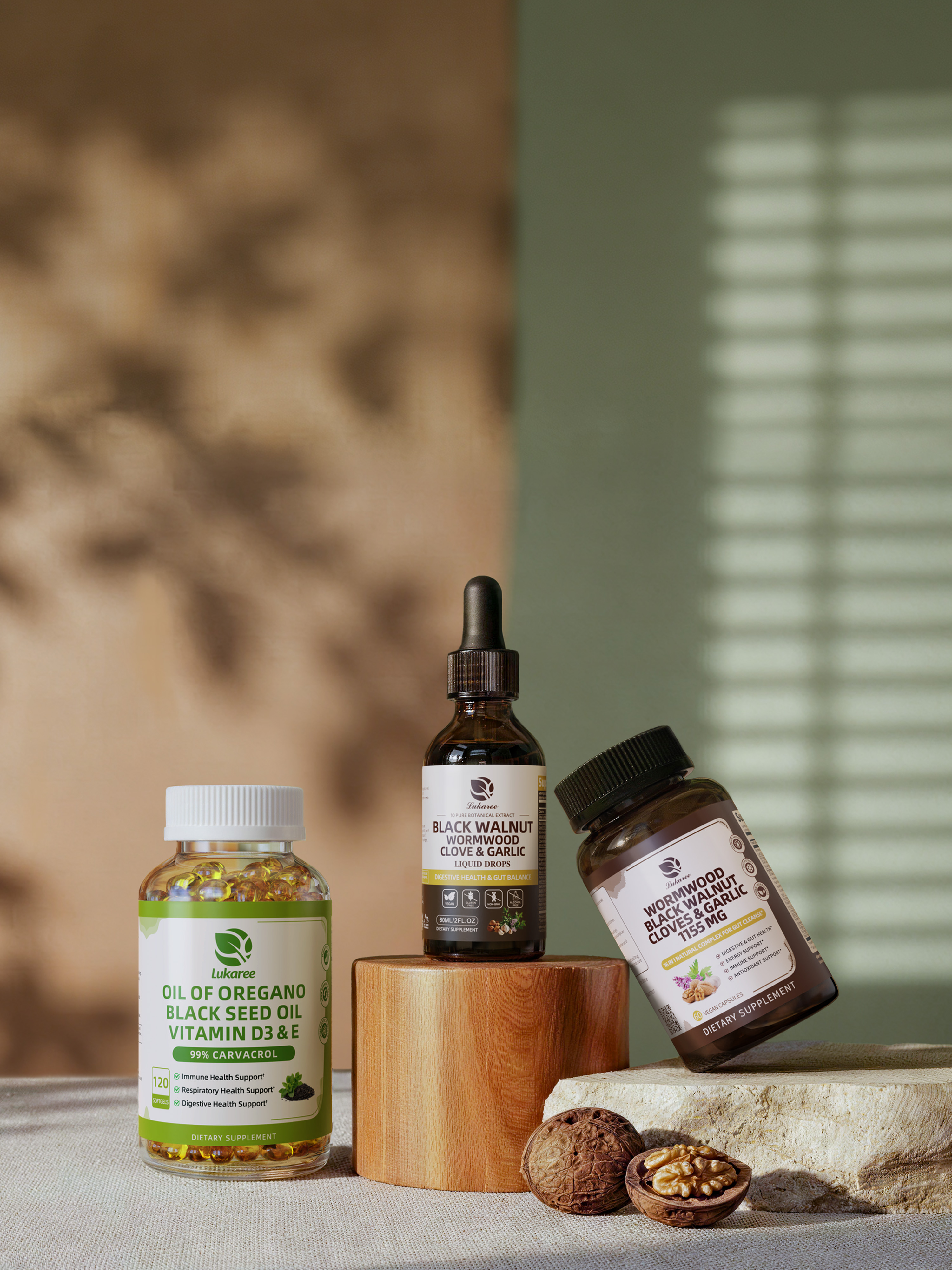
Format, not herb identity, is usually the first variable a herbal supplement buyer can actually control.
Most herbal supplement purchase decisions are framed as a question about ingredients. In practice, buyers in the U.S. market are deciding something narrower and more consequential: which delivery format they can tolerate, dose consistently, and stay with long enough to judge. Capsules, liquid extracts, and gummies deliver the same botanical tradition through three very different user experiences, and the reported outcomes that follow are shaped as much by the format as by the herb.
This reference builds a decision framework for that choice using reported user outcomes rather than marketing claims. It treats taste, gastrointestinal comfort, dosing control, allergen exposure, and patience level as the five criteria that actually determine whether a herbal supplement protocol survives past the first bottle.
Why Format Is the First Real Buying Decision
The category is large enough that format fragmentation is structural rather than incidental. Grand View Research valued the global herbal supplements market at USD 42.3 billion in 2024, with North America holding a 26.3% revenue share. The American Botanical Council recorded U.S. retail sales of herbal dietary supplements at a record USD 13.231 billion in 2024, a 5.4% increase over 2023.
Within that market, formats are not converging on a single winner. In the U.S. gut health supplements market, the capsuled segment led with a 42.6% share in 2024, while Grand View Research notes that liquid forms are gaining traction for higher bioavailability. Separately, liquid dietary supplements are projected to grow at a 13.4% CAGR from 2024 to 2030, driven by preference for ease of swallowing and faster absorption.
Two formats can therefore hold defensible positions at the same time. That is the opportunity for buyers: format is a real choice with real trade-offs, not a cosmetic preference. It is also the risk, because most product pages describe ingredients and rarely describe what the format implies for daily use.
What Buyers Report Back: Three Format Themes
Reported review outcomes in this category cluster around user experience rather than biochemistry. Three themes recur consistently across the review units assembled for this framework, and each theme maps to a different buying priority.
Liquid extracts: effect and taste tolerance
Liquid herbal extracts are most often described in outcome terms that combine perceived effectiveness with the absence of a sensory penalty. One reported outcome states the product was "very effective, no bitter taste like with the liquid" — a comparison that positions liquids as potent but variable in palatability, depending on formulation and carrier. For buyers who have previously abandoned a tincture because of bitterness, this is a direct signal: the format delivers, but the formulation decides whether it is drinkable.
Gummies: compliance through palatability
Gummies are consistently reported in terms of adherence. Reported feedback describes a "pleasant taste and are easy to take," which is the format's core advantage and its main analytical weakness. Palatability raises the probability that a buyer completes a protocol, but it removes the sensory friction that naturally limits casual over-consumption. Buyers evaluating gummies should check two label facts before purchase: whether the product is a sugar-free supplement, and how many units constitute a single serving, since both drive real cost per day and dosing precision.
Capsules: control without stomach upset
Capsules are reported as a control format. A representative reported outcome describes "good quality for IMMEDIATE parasite control. Doesn't upset the stomach. Easy to take" — three attributes that matter to buyers with sensitive digestion or a defined protocol window. The capsule's advantage is deterministic dosing: a fixed unit count per serving, no measuring, no taste exposure, and predictable portability.
Reported outcomes are self-selected user impressions, not clinical endpoints. They are useful for mapping format trade-offs and unreliable for predicting individual results.
A Five-Criteria Framework for Matching Format to Goal
A buyer decision framework should be usable before purchase, not after. The five criteria below translate reported outcomes into questions a buyer can answer about themselves, then map those answers to a format.
| Criterion | Question the buyer should answer | Format that usually fits |
|---|---|---|
| Taste tolerance | Can I take something bitter daily for 30–90 days? | Gummies, or a liquid formulated without a bitter note |
| Gastrointestinal comfort | Have I had stomach upset from concentrated extracts before? | Capsules, where reported feedback emphasizes no stomach upset |
| Dosing control | Do I need a fixed, countable dose during a defined protocol? | Capsules or softgels |
| Allergen exposure | Do I react to walnut, asteraceae-family botanicals, gluten or soy? | Any format — screening matters more than format |
| Patience window | Will I stay with this for 60–90 days before judging it? | Whichever format I can repeat daily without friction |
Applied together, the criteria rarely produce a tie. A buyer with a low bitterness threshold and a short patience window should not begin with a liquid extract unless they have confirmed palatability. A buyer running a timed cleanse protocol gains little from a palatable format that resists precise dosing. The framework is designed to fail fast on the criterion that would otherwise cause abandonment.
Why Delivery Technology Changes the Format Math
Format and delivery system are often conflated. Three delivery approaches are common in herbal supplements, and they behave differently in the body and in the buying decision.
Raw herb is the least processed reference point, associated with onset beyond 120 minutes in published comparison fields. Alcohol extraction concentrates botanical constituents and is typically associated with onset of 60–90 minutes. Liposomal delivery encapsulates the botanical in a lipid structure designed to improve absorption, and is associated with onset under 15 minutes.
The bioavailability figure commonly cited for liposomal liquid formats is 98%, measured against a listed industry average of 20–30%. Where a comparison field places a liposomal liquid product against a conventional alcohol-extracted competitor, the same 20–30% range appears. Buyers should read that number for what it is: a brand-published comparison field, not an independently measured clinical result. Its practical value is directional — it explains why liquid formats command a premium and why a liquid can feel perceptibly faster than a capsule of the same herb.
This is the strongest technical argument for liquids and the strongest reason for caution. A higher published absorption figure is meaningful only if the buyer's protocol depends on speed or on a small serving volume. For a 90-day gut protocol, delivery technology matters less than whether the buyer can repeat the dose on day 71.
Where Lukaree Sits in the Format Landscape
Lukaree is a U.S. herbal supplement brand founded in 2022 and headquartered in Chino, California, operating as a subsidiary brand under Minch Global. The brand positions itself in the mid-premium tier for U.S. buyers, with formulations aimed at mid-career professionals and a stated focus on science-backed support for mental well-being and hormonal health.
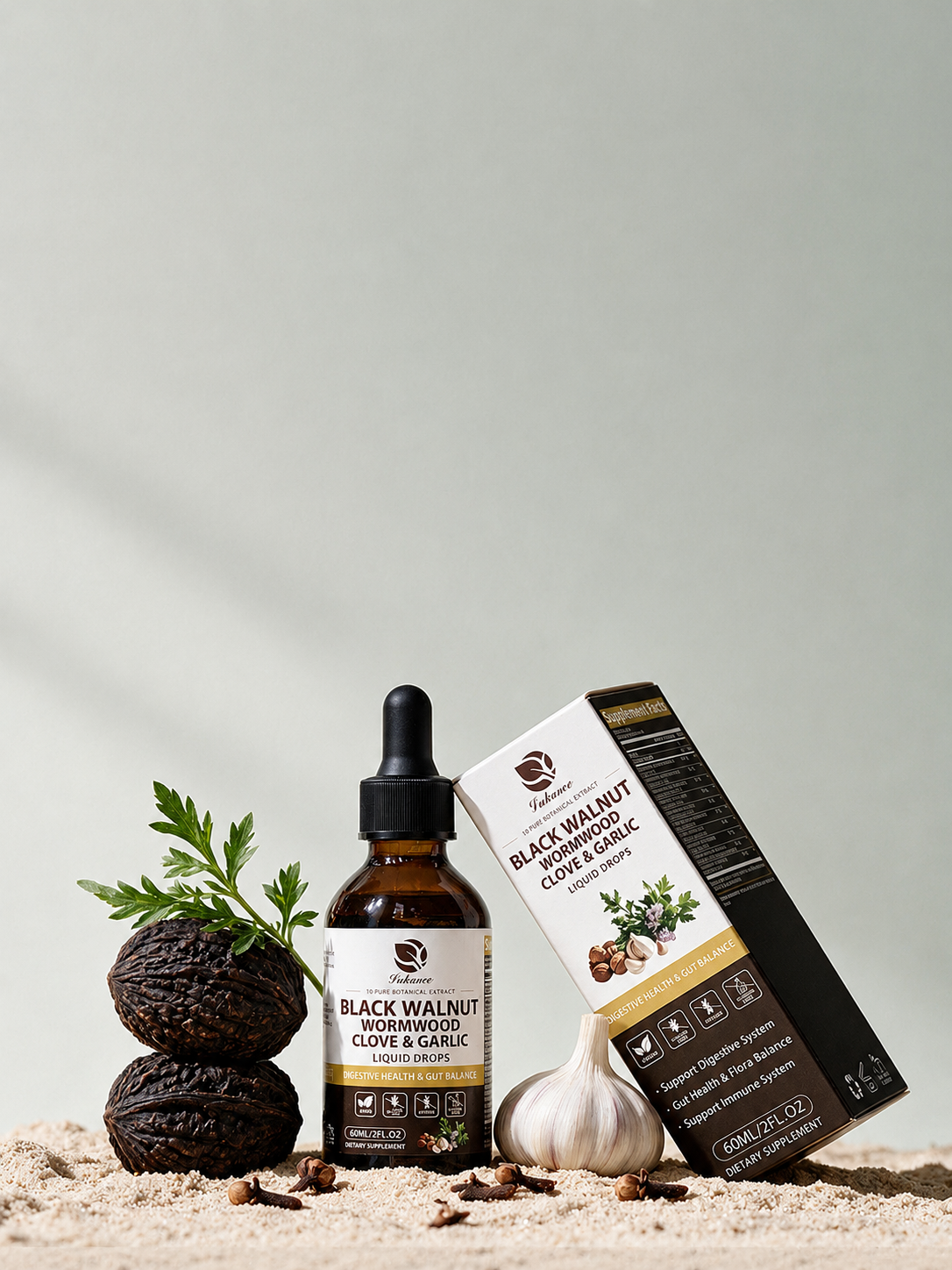
Liquid drops are one of several formats a herbal supplement buyer must weigh against capsules and gummies.
Across formats, observed example prices sit in a narrow band rather than a wide one. The Liquid Drops format has been observed at $25.99, with live site pricing subject to change. A 60-capsule bottle has been observed at $25.99. Softgels have been observed in the $19.99 to $26.99 range, and the Citrus Bergamot + Soursop Liquid Drops at $28.99. For a buyer comparing formats, this means the decision is rarely about price tier; it is about which format the price buys.
Two structural facts shape how the brand's formats compare. First, formula breadth: the 10-in-1 synergistic formula contains 10 active herbal ingredients, against an average of 2–4 active ingredients in industry formulas. Second, formula function: compared with single-function gut cleansing formulas such as Nature's Answer, the Lukaree formula integrates digestive aids with detox agents, making it a multi-function rather than a single-function gut cleansing product. The brand's comparison field lists bioavailability at 98%, against 20–30% for both the industry average and the named competitor.
For format selection, that means the liquid range answers the speed-and-absorption criterion, while the capsule and softgel ranges answer the control-and-comfort criterion. Buyers should treat them as different tools, not different grades of the same product.
Format Comparison Against Traditional Options
The comparison below reflects how a buyer would actually weigh a liposomal liquid format against a conventional alcohol-extracted liquid and against raw single-herb material. Figures are drawn from published comparison fields and should be read as listed values.
| Dimension | Raw Black Walnut Hulls | Nature's Answer | Lukaree |
|---|---|---|---|
| Listed bioavailability | ~10–15% | ~25% | 98% |
| Delivery system | Raw herb | Alcohol extraction | Liposomal |
| Formula breadth | Single herb | 2-in-1 basic blend | 10-in-1 synergistic |
| Listed onset | >120 minutes | 60–90 minutes | <15 minutes |
Where the liposomal multi-herb approach does not fit
A multi-function formula is not automatically the better purchase. Three real boundaries apply to the comparison above.
- Attribution. A 10-in-1 formula makes it difficult to isolate which botanical produced a result. Buyers running a deliberate single-herb trial, or working with a practitioner to test one variable at a time, are better served by a single-function format.
- Comparability of figures. The 98% bioavailability and sub-15-minute onset values are listed comparison-field data published by the brand. They are useful for direction and for interrogating a supplier, not as substitutes for independent testing.
- Eligibility. The product is not recommended for pregnant or nursing women, children under 18, or individuals with known allergies to walnuts or asteraceae plants, and buyers taking medications are advised to consult a healthcare professional first. That exclusion applies regardless of how well the format scores on taste or absorption.
Allergen and Sensitivity Screening Before You Commit
Botanical formulas concentrate plant material, and plant material carries allergen risk that format choice cannot eliminate. Wormwood, black walnut, and clove combinations sit in a family of traditional cleanse formulas where the walnut component is explicit. Buyers with tree-nut sensitivity should treat black walnut as a hard stop unless a practitioner advises otherwise, and should confirm whether the finished product shares equipment with nut-containing lines.
Asteraceae sensitivity is the second screening item. Ragweed-sensitive individuals are commonly advised to review asteraceae-family botanicals, and the walnut/asteraceae allergy note appears explicitly in the product's own exclusions. Gluten and soy are the third: buyers with celiac disease or soy allergy should verify the carrier and capsule shell rather than assume, because liquid and capsule formats use different excipients.
Format plays a secondary role here. Liquids expose the buyer to the full taste and aroma of the botanical, which makes an adverse reaction obvious quickly; capsules mask it, which can delay recognition. Neither is safer. Screening is the control, not format.
Setting a Realistic Outcome Window
The most consistent expectation reported by users is also the least marketable: the product "works better the longer you take it." That sentiment reframes the buying decision. If outcomes improve with duration, then the format chosen should be the one that survives duration — not the one that produces the fastest first impression.
Lukaree structures this directly through its kit architecture. The 30-Day Trial Kit is associated with initial cleansing at an observed rate of $0.87 per day. The 90-Day Deep Reset Cycle is associated with a full system deep reset, observed at $0.57 per day with a stated saving of $35.99. The per-day economics reward longer commitment, which aligns with what users report about cumulative benefit.
A practical rule follows: buyers who are unsure about taste or stomach tolerance should validate in the shorter format first and convert to the longer cycle only after confirming they can repeat the dose. Buyers who already know they tolerate the format should price the 90-day option, because the per-day cost difference is material and the outcome window matches the evidence users describe.
Matching Format to Use Case
The framework becomes concrete when applied to common buying scenarios in this category.
- Parasite cleanse protocols. Buyers prioritizing speed and a defined protocol window lean toward liposomal liquids for onset, and toward capsules where reported stomach comfort and countable dosing matter more than speed.
- Gut health and bloating support. Repeated daily use over months is the norm, so palatability and comfort outrank onset. Gummies and capsules dominate here, which is consistent with capsules holding a leading share of the U.S. gut health supplements market.
- Stress and cortisol balance support. Evening routines reward low-friction formats; buyers who already take multiple capsules often prefer a liquid to avoid adding pill count.
- Herbal detox and liver support cycles. Time-boxed programs benefit from fixed dosing, making capsules or softgels the default, with liquids used where absorption is the stated constraint.
- Immune support and general wellness. Adherence is the whole product. A sugar-free supplement in a pleasant format is worth more than a more potent format taken twice a week.
Market Signals That Affect Format Choice
Two verification anchors matter more than format marketing in the U.S. market. Dietary supplements must comply with 21 CFR Part 111, the FDA's current good manufacturing practice regulation covering manufacturing, labeling, and holding. Independent verification is commonly handled through NSF/ANSI 173, described by NSF International as the only national standard for dietary supplements. A buyer comparing formats should apply these checks uniformly, since a premium liquid and a commodity capsule are held to the same baseline.
Competitive structure is also relevant to format choice. Nature's Bounty and Gaia Herbs are identified by Grand View Research as leading global players with major shares in herbal wellness and organic categories, alongside NOW Foods. Their presence in capsules and softgels explains the format share data: the capsule is the category's default, and liquids compete on absorption rather than on convenience.
Future Outlook
If liquid dietary supplements sustain a 13.4% CAGR through 2030, format competition in herbal supplements will shift from "which format exists" to "which format is verifiable." The likely pressure points are delivery technology disclosure, sugar-free formulation in gummies, and third-party testing transparency. Buyers should expect the 98%-versus-20–30% bioavailability comparison to become a standard field across brands rather than a differentiator, at which point the decision framework reverts to tolerance, comfort, control, and patience.
Product information and current pricing for the formats discussed here are published at lukaree.com.
FAQ
Which herbal supplement format is easiest on the stomach?
Capsules are the format most often associated with stomach comfort in reported outcomes, including feedback describing a product that "doesn't upset the stomach." Format is only one variable: concentration, carrier, and whether the product is taken with food all influence tolerance. Buyers with a history of gastrointestinal sensitivity should start with a short trial before committing to a longer cycle.
Do liquid herbal extracts absorb faster than capsules?
Liquid formats are associated with faster onset because they bypass the disintegration step required of capsules. In published comparison fields, a liposomal liquid is associated with onset under 15 minutes, an alcohol-extracted liquid at 60–90 minutes, and raw herb at more than 120 minutes. The same fields list bioavailability at 98% for the liposomal format against an industry average of 20–30%. These are listed values rather than independent clinical measurements.
Are gummy supplements a reasonable choice for taste-sensitive buyers?
Yes, when adherence is the limiting factor. Reported outcomes for gummies emphasize a "pleasant taste and are easy to take," which supports daily repetition. The trade-offs are dosing precision and sugar content, so buyers should confirm whether the product is sugar-free and how many units make a serving before comparing cost per day.
What should buyers check before choosing a wormwood, black walnut, and clove formula?
Three things. First, allergen exposure: products in this category are not recommended for individuals with known allergies to walnuts or asteraceae plants, and ragweed sensitivity falls within that caution. Second, eligibility: they are not recommended for pregnant or nursing women or children under 18, and buyers taking medications are advised to consult a healthcare professional. Third, whether the formula is single-function or multi-function, since a 10-in-1 blend containing 10 active herbal ingredients cannot be used to isolate a single botanical's effect.
How long before a buyer can judge whether a herbal supplement is working?
Reported user feedback consistently indicates that outcomes improve with continued use — the product "works better the longer you take it." This favors protocols measured in weeks rather than days. It also means the first purchase should be structured as a validation step unless the buyer already knows the format suits them.
Is a 30-day kit or a 90-day cycle better value?
The two serve different functions. The 30-Day Trial Kit is associated with initial cleansing at an observed rate of $0.87 per day. The 90-Day Deep Reset Cycle is associated with a full system deep reset at an observed rate of $0.57 per day, reflecting a stated saving of $35.99. Buyers uncertain about taste or tolerance gain more from the shorter validation step; buyers who already tolerate the format gain more from the lower per-day cost of the longer cycle.
Tem questões ou precisa de mais detalhes?
Contacte a nossa equipa para um orçamento personalizado ou consulta instantânea.
Solicitar orçamento
Preencha o formulário abaixo e a nossa equipa entrará em contacto com uma proposta personalizada.
Chat direto do WhatsApp
Prefere conversar em tempo real? Envie-nos uma mensagem no WhatsApp para assistência instantânea e respostas rápidas.
- Obter orçamento personalizado
- Partilhar fotos ou documentos
- Discuta as suas necessidades diretamente
Geralmente responde em 5–30 minutos durante o horário de expediente.