
Herbal Supplement Qualification: Capsules, Drops, Gummies, Tinctures
Herbal Supplement Qualification: Capsules, Drops, Gummies, Tinctures
A herbal supplement brand cannot be qualified once and then applied to everything it sells. The delivery format — capsule, liquid drop, gummy or tincture — changes which constraints a buyer can actually verify: the serving unit that fixes the dose, the carrier and excipient list that sets allergen exposure, the packaging that determines handling and stability, and the documentation a manufacturer is able to produce for that particular item.
Lukaree, a brand founded in 2022 and headquartered in Chino, California, is a practical working example of the problem because its catalogue spans all four formats at once: a liposomal glutathione capsule complex, a soursop and sea moss liquid drop, a saffron gummy, and a black walnut and wormwood tincture. Reading those four products side by side shows that the same questions produce different answers depending on the format, and that the qualification work has to be repeated item by item.
Format-specific qualification means applying one consistent set of tests — label clarity, ingredient consistency, handling expectations and documentation scope — to each format on its own terms, rather than accepting a portfolio-level statement as proof for a single bottle. This article works through that method for buyers in the research and evaluation stages, using only the product facts supplied for the Lukaree range, and it deliberately does not assume certifications or claims that the product information does not state.
Why a format change resets the qualification checklist
The format is not a cosmetic preference; it is the mechanism that decides how a dose is created and how it can go wrong. In a capsule, the dose is fixed by fill weight and blend uniformity, so accuracy depends on how evenly the powder is distributed and what flow agents were used to make that distribution possible. In a liquid drop, the dose is set by volume — the label must tell you how many millilitres constitute one serving, because a dropper is only as accurate as the mark it is filled to. In a gummy, the dose arrives inside a sweetener and gelling matrix, which means the serving is usually two pieces and the label has to be read as a pair. In a tincture, the dose again comes from a dropper, but the concentration comes from an extraction ratio that should be printed next to the botanical name.
Each of those mechanisms generates its own failure mode. A capsule can be too large to swallow comfortably. A liquid can separate or degrade under heat. A gummy can carry more sugar than the buyer expected. A tincture can taste so concentrated that the user stops taking it before the bottle is finished. None of these is a defect in the abstract; they are format properties that a buyer either accepts knowingly or rejects during evaluation.
The second reason the checklist resets is documentation. Statements such as GMP-certified manufacturing, non-GMO positioning, or a vegan and gluten-free claim are usually made at brand or line level. They describe a production and formulation philosophy, and they are meaningful — but they do not, on their own, tell a buyer which specific item, batch or specification the supporting record covers. That distinction is where most qualification errors happen.
The four qualification axes that apply to every format
Before comparing formats, it helps to fix the tests that stay constant. Four axes cover most of the decision.
Label clarity. A usable label states the serving size in the format's own unit — capsules, millilitres, or pieces — and then states the quantity of each active per serving. For botanical ingredients, it should also carry the extract ratio, the plant part, and any standardisation figure. Without those three, a name such as wormwood or ashwagandha does not describe a dose; it describes an ingredient class.
Ingredient consistency. Buyers reasonably ask whether the same botanical appears at the same strength across a brand's formats. Often it does not, and that is legitimate — a tincture and a capsule are different products, not two packages of one thing. The qualification task is to notice the difference rather than to assume equivalence. Lukaree's digestive range demonstrates this clearly: the wormwood and black walnut theme appears as a 10:1 liquid tincture at 2 fl oz, as a 16-in-1 capsule complex at 60 capsules, and as a 20-in-1 softgel at 120 count. Three formats, three formula architectures, three different serving patterns.
Handling expectations. Liquids and gummies raise questions that capsules do not: storage temperature, light exposure, dropper hygiene, whether a gummy clumps in a warm cabinet. Capsules raise swallowability and bottle size. Tinctures raise dosing discipline, because the dropper is the measuring instrument and users frequently over- or under-fill it.
Documentation scope. Third-party testing is a routine qualification request, and it is only useful when it names the laboratory, the method, and the items or lots covered. A general statement that products are third-party tested is a starting point for a question, not the answer to it.
Capsules: fixed dose, and what two rating bases reveal
Capsules are the easiest format to dose and the hardest to adjust. The Liposomal Glutathione 500mg Complex from Lukaree is supplied as 60 capsules with two capsules per serving, which resolves to 30 servings — a 30-day supply by design. The formula pairs 500mg of liposomal glutathione with milk thistle, alpha-lipoic acid, astaxanthin, L-ergothioneine, ashwagandha and GABA, and is positioned as a nighttime recovery complex. The second capsule example in the range, Triple-Strength Urolithin A+ Complex, is supplied as 120 capsules at two per serving, which resolves to 60 servings and therefore a 60-day supply.
That arithmetic matters more than it appears. A buyer comparing a 30-day bottle against a 60-day bottle on price alone is comparing two different durations of use. Normalising to cost per serving, not cost per bottle, is the first qualification filter for any capsule purchase.
The Urolithin A+ product also shows why rating provenance belongs in the checklist. The same item carries a 4.99 out of 5 score from 68 reviews on the brand's own store and a 3.8 out of 5 score from 18 reviews on Amazon. Those are not contradictory measurements of one population; they are two small, differently recruited samples on two platforms with different prompting, verification and moderation practices. Neither number should be presented as the product's objective performance. What the Amazon sample does supply is operationally useful detail: reviewers described the capsules as slightly large, the bottle as tall for some cabinets, and the cotton ball as awkward to remove. For a capsule, those are real fit constraints, and they are the kind of remark that rarely surfaces in a short positive review.
Liquid drops: serving volume, dropper accuracy and pack math
Liquid formats move the dose from the capsule shell to the millilitre, and the label has to carry that responsibility. Lukaree's 6-In-1 Soursop & Sea Moss Extract Liquid Drops are sold as a 1 fl oz (2-pack) at 1mL per serving, described as a 60-day supply. The pack math is verifiable: two bottles of 30mL give 60mL, and at 1mL per serving that is 60 servings, matching the stated duration. A buyer can run the same check on any liquid product in under a minute, and a mismatch is a legitimate reason to ask the seller for clarification before ordering.
The ingredient panel on that drop illustrates what liquid labelling has to achieve. The soursop component is stated at 300mg as a 10:1 extract, split between 200mg leaf and 100mg fruit; Irish sea moss is stated at 50mg as a 10:1 extract of Chondrus crispus; the formula adds 90mg vitamin C as ascorbic acid and 1.74mg zinc as zinc glycinate. Those are the kind of specifics that let a buyer compare one drop against another on a like-for-like basis. Where a liquid product lists a botanical name without an extract ratio or plant part, the comparison collapses into marketing language.
Liquid formats also introduce constraints that capsules avoid. Taste is no longer irrelevant, because the liquid contacts the palate directly and is often held in the mouth. Carrier and sweetener components — juice bases, monk fruit, flavouring systems — enter the ingredient list and therefore the allergen and sugar review. Packaging matters too: an amber or opaque bottle protects light-sensitive constituents, and a dropper that is hard to fill to the mark undermines the dosing accuracy the label promises. Finally, review depth is uneven across a portfolio. A buyer should check the review count on the exact liquid item being considered rather than borrowing confidence from a better-reviewed product in the same range.
Gummies: the serving is two pieces, so read the pair
Gummies solve adherence and create a labelling trap. Lukaree's 10-in-1 Saffron Gummies are supplied as 60 gummies in a mixed berry flavour at two gummies per serving, which produces 30 servings and a 30-day supply. Every figure on the panel is therefore a two-piece figure: the mood clarity blend carrying saffron extract at 10:1, 300mg of L-theanine and GABA, 120mg of ashwagandha and turmeric, and a 12mg eye support blend of lutein ester, zeaxanthin and astaxanthin, with black pepper extract included for absorption.
Two consequences follow. First, unit-price comparisons must be normalised to servings, not pieces, or a 60-piece bottle will look more economical than it is. Second, sweetener content is a genuine format-specific question. A gummy matrix requires a sweetening and gelling system, so a sugar-free or low-sugar expectation has to be verified on the specific label rather than inferred from the format or from the brand. Buyers managing sugar intake, or reading on behalf of someone who is, should treat that line of the panel as a first-order constraint rather than a footnote.
Public review patterns for the gummy item show the same tension. The Amazon listing summary records 4.2 out of 5 from 79 ratings, with taste appearing on both sides of the ledger: praise for a pleasant, easy-to-take product alongside complaints that the taste was poor and that results for sleep did not appear. Return terms also surface in that summary as a point of friction. Neither observation proves a defect; together they show that for gummies the qualification questions cluster around taste tolerance and commercial terms rather than around dose accuracy. Buyers should confirm the return window on the seller's own page instead of assuming a policy from the format.
Tinctures: extract ratio, dropper discipline and concentrated taste
Tinctures concentrate the qualification problem into a small bottle. The Lukaree Black Walnut & Wormwood Tincture 10:1 Formula is a 2 fl oz (60ml) liquid at 2mL per serving, which resolves to 30 servings and matches the stated 30-day supply. The panel is unusually specific: 300mg of 10:1 black walnut leaf extract paired with 300mg of 10:1 wormwood leaf extract; 100mg of 10:1 clove bud extract with 60mg of 10:1 soursop fruit extract; 20mg each of 10:1 oregano leaf and plantain; 10mg each of 10:1 pumpkin seed, a 30:1 garlic clove extract, and a Berberis souluena root extract standardised to 10% berberine hydrochloride; and 10mg of 10:1 black pepper fruit extract as an absorption component.
That panel is what a qualified tincture label looks like: ratio, plant part and quantity for each botanical, plus an explicit standardisation figure where one exists. It also explains why tincture qualification differs from capsule qualification. The dose is delivered in 2mL of liquid, so the taste is concentrated by design, and the buyer's real question is not whether the product tastes strong but whether they will keep taking it for thirty days.
The review evidence on this item is the deepest in the range and worth reading carefully. The Amazon summary records 4.5 out of 5 from 1,029 ratings, last synchronised in October 2026. Within that base, effectiveness appears in 72 mentions with 49 positive and 23 negative, taste in 53 mentions with 48 positive and 5 negative, side effects in 40 mentions with 31 positive and 9 negative, and value for money in 25 mentions split 13 to 12. Read correctly, that pattern describes a concentrated botanical format that produces strong, sometimes uncomfortable digestive responses in a minority of users while the majority report a sweet taste and easy administration. It is not evidence of either uniform efficacy or uniform harm, and the sample size is large enough that the split itself is the useful signal.
Because a tincture of this type is a bold botanical blend, the sensible qualification step is a suitability check before purchase rather than after. Buyers who are pregnant, nursing, taking medication, or managing thyroid, autoimmune or psychiatric conditions should treat a herbal tincture as something to discuss with a clinician rather than as a self-directed experiment, and no supplement in this category substitutes for medical care.
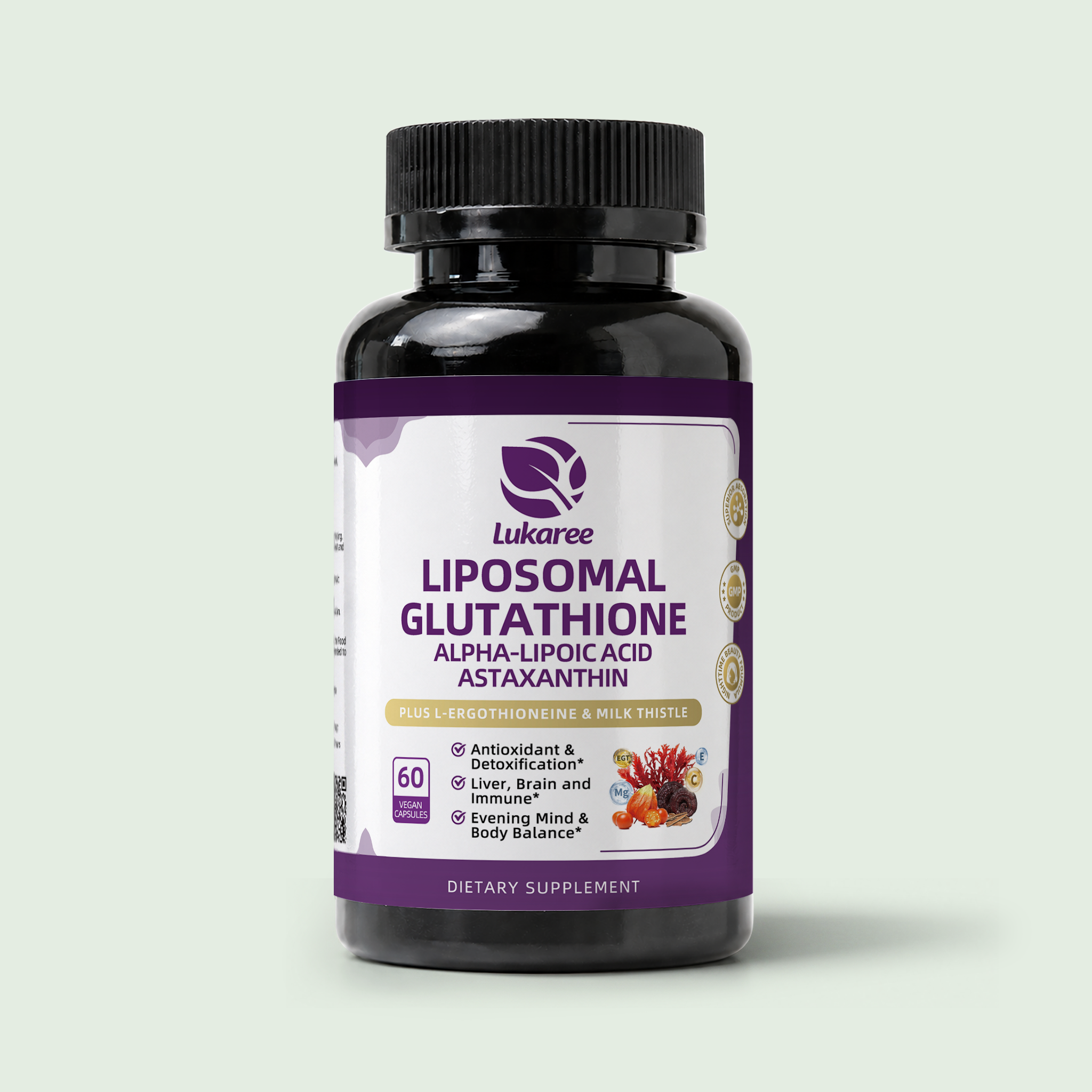
Capsule format: fixed dose per serving, with serving count determining days of use rather than bottle size alone.
A format-by-format qualification table
The four formats can be compared on the same four axes without pretending that the underlying mechanisms are interchangeable.
| Format | Serving unit and pack math | Format-specific label items | Primary qualification risk |
|---|---|---|---|
| Capsules | Pieces per serving; 60 caps ÷ 2 = 30 servings | Fill weight, excipients, capsule shell material, capsule dimensions | Swallowability and bottle dimensions; dose cannot be adjusted |
| Liquid drops | Millilitres per serving; 2 × 30mL ÷ 1mL = 60 servings | Extract ratio, plant part, carrier and sweetener base, dropper calibration | Dropper inaccuracy, separation, heat and light sensitivity |
| Gummies | Pieces per serving; 60 gummies ÷ 2 = 30 servings | Sweetener system, gelling agent, flavour, two-piece serving | Hidden sugar load and taste-driven discontinuation |
| Tinctures | Millilitres per serving; 60mL ÷ 2mL = 30 servings | Extraction ratio, standardisation figure, alcohol or glycerin base, dropper | Concentrated taste, strong botanical response, dosing discipline |
The table deliberately omits price bands, because no supplied product fact establishes them. What it does establish is that the same buyer question — what exactly am I getting per serving — has a different answer in each row.
Where brand-level claims stop and product-level evidence begins
Lukaree's technical material states GMP-certified manufacturing and a non-GMO, vegan and gluten-free positioning for its formulations, and the digestive product line is described as vegan, gluten-free, soy-free and non-GMO with no artificial colours. Those are meaningful statements about how the brand presents its production and formulation standards. They are also the point at which careful buyers should ask a narrower question: which item, and which lot, does the supporting record cover?
The liposomal bioavailability figure is a clear example of a claim that must not travel. Lukaree's technical description attributes a 98% bioavailability figure to its liposomal delivery system, which encapsulates actives to limit gastric degradation. That is a delivery-system claim, and it belongs to the liposomal products — here, the Liposomal Glutathione 500mg Complex. It cannot be extended to the soursop drops, the saffron gummies or the black walnut tincture, none of which is described in the supplied facts as a liposomal formulation. A buyer who reads an absorption number on a brand page and applies it to a tincture has made an inference the evidence does not support.
Allergen statements deserve the same discipline, and the Lukaree range offers an honest illustration of why. The brand's product-line material describes the digestive range as soy-free and gluten-free, while one public Amazon review of the tincture alleged that the product contained gluten and soy. Neither the brand statement nor a single review settles the question for a specific bottle. The label on the item in hand and lot-level documentation do, and a buyer with coeliac disease or a soy allergy should require that confirmation rather than resolving the conflict by preference.
The fourth boundary is formulation equivalence. A 10:1 tincture, a 16-in-1 capsule complex and a 20-in-1 softgel built around the same botanicals are three different products with three different dose architectures. Treating them as interchangeable because the ingredient names overlap is the single most common error in multi-format qualification.
Comparison with single-format sourcing, and where the fit ends
A brand that spans four formats offers a genuine operational advantage: one supplier relationship, one returns path, one documentation channel, and the ability to match format to a specific need instead of forcing every need into one delivery method. For a buyer assembling a small personal or household range, that consolidation is real.
The limitation is equally real. Four formats means four qualification tracks, and evidence depth will not be uniform. In the Lukaree range the tincture carries a four-figure review base, the gummies and the capsule complex carry bases in the tens, and at least one capsule item carries two platform scores that diverge widely. A single-format specialist, by contrast, gives a buyer a cleaner comparison inside one mechanism but a narrower choice overall.
The fit boundary is straightforward. If the requirement is one specific format with one specific documented attribute — a particular standardisation figure, a specific allergen guarantee, a named testing laboratory — then portfolio breadth is not automatically an advantage, and a narrower supplier that can answer that one question in writing may fit better. Breadth helps when the requirement is adaptability; it does not substitute for documentation on the item you actually intend to take.
Application fit: matching the format to the requirement
Format selection is a conditional decision, and the conditions come from the buyer's routine rather than from the product. The following are illustrative pairings, not recommendations or claims of outcome.
Digestive reset and gut-focused routines. A tincture suits a buyer who tolerates a concentrated botanical taste and wants a dropper-based 30-day course at 2mL per serving. A capsule or softgel in the same botanical family suits a buyer who wants no taste at all and a fixed dose, at the cost of a longer bottle count and a different formula architecture.
Stress and daily calm support. A gummy at two pieces per serving fits a buyer for whom adherence is the binding constraint and who has already checked the sweetener content. A capsule fits a buyer who wants the dose without the sweetener matrix. The format choice should follow the constraint the buyer actually has.
Antioxidant and cellular support. Capsules dominate here for a mechanical reason: liposomal delivery and multi-ingredient antioxidant complexes are formulated as solids in this range, and the two capsule items — the glutathione complex at 30 servings and the urolithin A+ complex at 60 servings — differ mainly in course length.
Seasonal and immune-oriented routines. A liquid drop fits buyers who prefer a measurable 1mL serving and who value a formula carrying vitamin C and zinc alongside botanicals, provided they accept the taste and storage requirements that liquids impose.
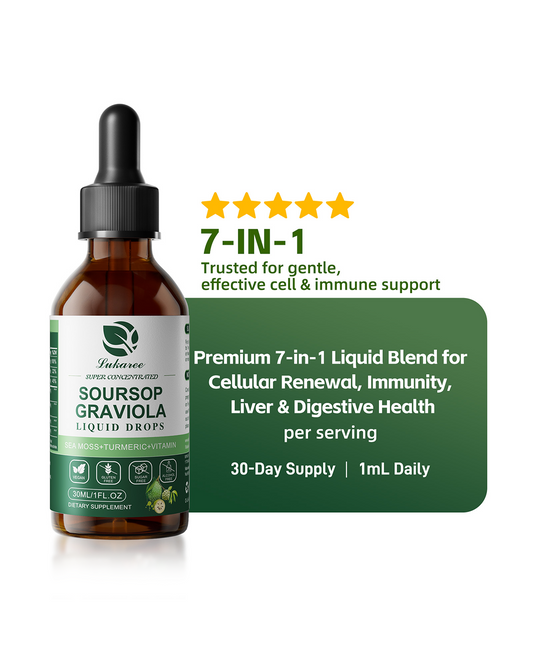
Liquid format: the label must define the serving in millilitres, because the dropper is the measuring instrument.
A documentation checklist to run before committing to a format
Nothing in this list requires specialist equipment, and each item maps to a question a seller can answer in writing.
- Confirm the serving size in the format's own unit, and convert the pack to servings and days of use before comparing price.
- Check that each botanical carries an extract ratio and plant part, and that any standardisation figure is printed on the panel.
- Read the full ingredient list, including carriers, sweeteners, capsule shells and gelling agents, not only the active blend.
- Locate the allergen statement on the specific item, and do not substitute a line-level or brand-level statement for it.
- Ask which items, batches or lots a GMP, non-GMO or vegan claim covers, and whether a certificate scope matches the item being bought.
- Ask for third-party testing information that names the laboratory, the method and the covered items, and treat a general testing claim as incomplete until then.
- Verify storage and handling instructions for liquids and gummies, including temperature and light exposure.
- Check dropper calibration for drops and tinctures, and capsule dimensions for capsules.
- Read the review base for the exact item, note the platform and the sample size, and discount conclusions drawn from very small samples in either direction.
- Confirm return terms and course length before ordering, particularly for a 30-day format where the return window and the supply period may coincide.
Outlook: what would make format-specific qualification routine
The constraint that limits format comparison today is not a shortage of products; it is a shortage of per-item documentation. A brand that published, for each item, the serving math, the extract ratios, the allergen statement and the scope of its manufacturing certificates would remove most of the guesswork this article has described. Nothing in the supplied product information indicates that such publication has become standard practice, and this analysis does not assume it will.
What can be said with confidence is conditional. Buyers who adopt the four-axis method — label clarity, ingredient consistency, handling expectations, documentation scope — will find that their comparisons hold up across formats, because the method does not depend on the format staying the same. Brands that answer those four questions per item, rather than per portfolio, will be easier to qualify. Whether that translates into a commercial advantage is a question for the market, not for this article.
Frequently asked questions
What does format-specific qualification mean for a herbal supplement?
It means evaluating each delivery format against its own constraints instead of applying one checklist to a whole brand. A capsule is dosed by fill weight and judged partly on swallowability; a liquid drop is dosed by millilitre and judged partly on dropper accuracy and stability; a gummy is dosed by piece and judged partly on sweetener content and taste tolerance; a tincture is dosed by dropper and judged partly on extraction ratio and concentrated taste. The same four tests apply in every case, but the evidence that satisfies them differs by format.
Which format is easiest to qualify — capsules, drops, gummies or tinctures?
Capsules are usually the simplest to verify, because the dose is fixed, the serving is a whole number of pieces, and pack math resolves cleanly: 60 capsules at two per serving gives 30 servings. Gummies are also easy to count but carry the extra sweetener question, liquids depend on dropper accuracy, and tinctures add extraction-ratio and standardisation checks to the same dosing question. Ease of verification is not the same as suitability, however; the right format is the one whose constraints the user will actually accept for the full course.
Can a GMP or vegan claim made for one Lukaree product be applied to the whole range?
No. Statements about GMP-certified manufacturing, non-GMO positioning, or vegan and gluten-free formulation are normally made at brand or product-line level, and they do not automatically identify which item, batch or specification the supporting record covers. The correct step is to ask for the scope of the certificate and then read the label of the specific bottle. A line-level statement can be true while still being the wrong evidence for the item in hand.
What should a buyer check on a tincture label that does not apply to capsules?
The extraction ratio and plant part for each botanical, any standardisation figure, the solvent or carrier base, and the serving volume in millilitres. On the Lukaree black walnut and wormwood tincture, for example, the panel states 10:1 extracts at specified milligram amounts, a 30:1 garlic extract, and a root extract standardised to 10% berberine hydrochloride, at a 2mL serving that produces 30 servings from a 60mL bottle. A capsule panel instead states fill weight and excipients, and those items are not substitutes for one another.
How should buyers compare ratings across capsules, gummies and tinctures?
Compare the exact item, on the platform where the rating was collected, and note the sample size. In this range the tincture carries 1,029 Amazon ratings, the gummies 79, and the urolithin capsule complex holds a 4.99 score from 68 reviews on the brand's own store alongside a 3.8 score from 18 reviews on Amazon. Those figures are not measuring one population, and a large split sample such as the tincture's effectiveness mentions is more informative than a small perfect score. Ratings indicate experience patterns; they do not establish efficacy.
Additional product and brand information is published at Lukaree.
Tem questões ou precisa de mais detalhes?
Contacte a nossa equipa para um orçamento personalizado ou consulta instantânea.
Solicitar orçamento
Preencha o formulário abaixo e a nossa equipa entrará em contacto com uma proposta personalizada.
Chat direto do WhatsApp
Prefere conversar em tempo real? Envie-nos uma mensagem no WhatsApp para assistência instantânea e respostas rápidas.
- Obter orçamento personalizado
- Partilhar fotos ou documentos
- Discuta as suas necessidades diretamente
Geralmente responde em 5–30 minutos durante o horário de expediente.