
Herbal Supplier Capability: What Repeat-Use Reviews Reveal
Herbal Supplier Capability: What Repeat-Use Reviews Reveal
In herbal supplements, supplier capability is usually assessed through labels, certifications, specifications and factory statements. Public buyer reviews add a different evidence layer: whether customers repurchase, how they describe quality, and whether they report tolerability problems. For procurement and research teams, the useful question is not whether reviews are flattering, but whether they contain repeatable signals that can be separated from one-off experiences.
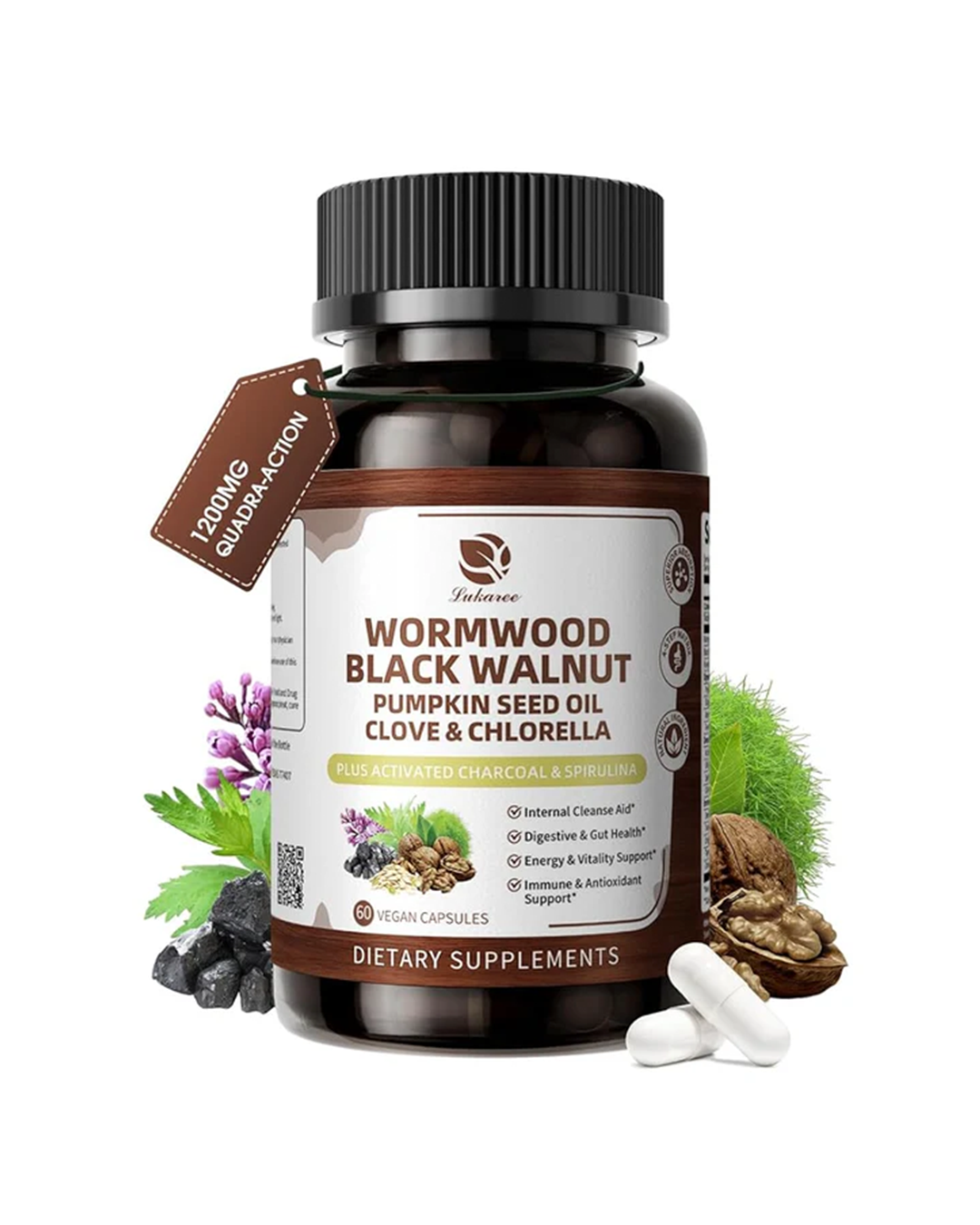
Capsule-format herbal cleanse products are one part of the review evidence assessed in this article. Image source: Lukaree product content unit.
Why Review Evidence Belongs in Supplier Capability Assessment
Supplier capability in herbal supplements is often treated as a documentation exercise: confirm the facility statement, check the label, compare ingredient disclosures, and review the certificate package. Those checks remain necessary. They do not reveal how buyers actually experience a product after the first bottle, whether they repurchase, or which tolerability complaints keep appearing.
Review evidence is useful because it captures post-purchase behavior. A review that says “This is my 4th bottle” is a repeat-use signal. A review that says “Excellent quality. Works very well” is a perceived quality signal. A review theme described as gentle digestive support that feels clean, not harsh is a tolerability signal. None of these statements proves clinical efficacy. Together, however, they can help a buyer decide whether a supplier merits deeper qualification.
The evidence must be read with discipline. Reviews are self-selected, unevenly distributed across products, and sometimes contain complaints unrelated to the product under review. The practical method is to separate repeat-use evidence, perceived-quality evidence, tolerability evidence and caution signals, then ask whether the pattern is strong enough to support a sourcing decision.
The Buyer Problem: Review Noise Is Not the Same as Review Evidence
Herbal supplement reviews often mix several different subjects in one sentence: taste, digestion, energy, sleep, value, packaging, allergy reactions and return policy. A high star rating alone does not tell a buyer which of those subjects is driving satisfaction. A low rating alone does not tell a buyer whether the issue is efficacy, format, allergen risk or commercial terms.
The Lukaree review corpus shows this mixed structure clearly. The Black Walnut & Wormwood Tincture 10:1 Formula • 2 fl oz (60ml) records 4.5 out of 5 from 1,029 Amazon ratings. Its frequent topics include effectiveness, taste, side effects, value for money, ingredients and parasite removal. Effectiveness receives 72 mentions, with 49 positive and 23 negative. Taste receives 53 mentions, with 48 positive and 5 negative. Side effects receive 40 mentions, with 31 positive and 9 negative. That is not a simple success story or a simple failure story. It is a product-level evidence set that has to be interpreted by category.
What the review base says at a glance:
- Repeat-use language appears in the corpus, including “This is my 4th bottle” on the Lukaree 20-in-1 Clove Wormwood Black Walnut Softgels • 120 Count review set.
- Perceived quality appears in capsule reviews, including “Excellent quality. Works very well.”
- Tolerability themes appear in both liquid and capsule formats, including gentle stomach effects, minimal side effects and no bitter taste.
- Caution signals also appear: a ragweed-allergy warning, a gluten and soy complaint, a no-return complaint, and mixed effectiveness comments.
Repeat-Use Signals: The Strongest Buyer-Side Capability Clue
Repeat purchase is one of the few review behaviors that cannot be fully explained by first-impression enthusiasm. A buyer who writes “This is my 4th bottle” has made a repeated commercial choice. That does not prove the product works for a clinical condition. It does suggest that the buyer found enough value, tolerance or routine fit to return to the same product.
For supplier assessment, repeat-use language should be read alongside review volume and product age. The 20-in-1 Clove Wormwood Black Walnut Softgels • 120 Count product carries 4.2 out of 5 from 47 Amazon ratings in the corpus. That is a smaller base than the liquid tincture, which records 1,029 ratings. The repeat-use comment is meaningful, but it should not be generalized to the entire portfolio without checking whether other SKUs show similar behavior.
The liquid tincture provides a broader sample. It records 1,029 ratings at 4.5 out of 5, with multiple reviews describing continued use. One review notes use over weeks and a plan to buy again. Another describes the product as part of a daily routine. These are not identical repeat-use claims, but they point in the same direction: a portion of buyers are not treating the product as a one-time trial.
What repeat-use evidence can and cannot support
Repeat-use evidence can support a supplier qualification decision by showing that a product has a retained user base and that some buyers find the format usable over time. It cannot establish clinical effectiveness, guarantee batch consistency, or replace a certificate of analysis. A buyer should therefore treat repeat-use language as a screening signal that justifies deeper diligence, not as a final verdict.
Perceived Quality: Reading “Excellent Quality” Without Overclaiming
The phrase “Excellent quality. Works very well.” appears in the Wormwood & Black Walnut 1155 mg Complex • 60 Capsules review set. The product records 4.4 out of 5 from 284 Amazon ratings. Quality is mentioned 15 times, with 14 positive and 1 negative. Effectiveness is mentioned 21 times, with 13 positive and 8 negative. Side effects are mentioned 13 times, with 9 positive and 4 negative.
This is a useful example of why review evidence needs structure. The quality signal is strong. The effectiveness signal is positive but more divided. The side-effect signal is mostly positive in the sense that many reviewers report tolerance, but a meaningful minority report stomach discomfort or other reactions. A procurement reader should not convert “Excellent quality” into a verified quality certificate. The phrase is a buyer perception. Its value lies in showing that the product is not generating uniform dissatisfaction.
Quality language often reflects format experience
In the same capsule review set, one buyer notes no bitter taste compared with a liquid format. Another says the product does not upset the stomach and is easy to take. These comments connect perceived quality to format fit. For buyers comparing liquids and capsules, that is relevant because tolerability is partly a delivery-format question, not only an ingredient question.
Gentle Digestive Support That Feels Clean, Not Harsh
A recurring theme in the corpus can be summarized as gentle digestive support that feels clean, not harsh. This is a review-derived theme, not a clinical claim. It appears across several review descriptions: gentle on the stomach, minimal side effects, no upset stomach, no bitter taste, and a steady rather than violent digestive effect.
The Black Walnut & Wormwood Tincture 10:1 Formula • 2 fl oz (60ml) review set includes 31 positive mentions of gentle stomach effects against 9 negative side-effect mentions. That ratio is not perfect, but it is informative. It suggests that the liquid format has a meaningful tolerability signal while still carrying a minority of negative experiences. The 13-in-1 Gut Cleanse & Detox Liquid Drops | 2 FL OZ (2-Pack) records 4.96 out of 5 from 23 Judge.me reviews, with buyers describing the drops as easy to take and gentle on the stomach. The review count is small, but the direction is consistent.
The capsule format also carries tolerability evidence. The Wormwood & Black Walnut 1155 mg Complex • 60 Capsules set includes reviews describing minimal side effects and no stomach upset. The Oregano Oil Softgels with Black Seed Oil • 120 Count records 4.48 out of 5 from 122 Judge.me reviews, with common feedback describing easy swallowing, no lingering flavor and digestive support.
Boundary: Tolerability language in reviews is not a safety evaluation. It reflects individual buyer experience. A product described as gentle by many reviewers can still trigger reactions in sensitive users. Buyers should combine review themes with label warnings, allergen statements and current batch documentation.
Caution Signals Buyers Should Not Ignore
A supplier capability assessment becomes more credible when it accounts for negative and ambiguous evidence. The Lukaree review corpus contains several caution signals that should be treated as diligence prompts, not as isolated footnotes.
Ragweed-allergy warning
One capsule review reports a heat flash, pounding headache and tightness in the chest after taking the product, with a warning that buyers allergic to ragweed should not take it. This is a user-reported experience. It does not establish causality, and it should not be converted into a medical conclusion. It does, however, show why allergy screening matters for herbal products that contain multiple botanicals. A buyer should check the current label, allergen statement and any clinician guidance before assuming tolerability.
Gluten and soy complaint
One review alleges that the product contains gluten and soy. This complaint conflicts with the brand-level technology records in the corpus, which list Non-GMO and Vegan & Gluten-Free positioning. The correct buyer response is not to assume that either the complaint or the positioning is universally true. The correct response is to request the current label, allergen statement and batch-specific documentation. A single review is not a laboratory result, but it is a signal that allergen disclosure should be verified rather than inferred.
No-return complaint
One review record includes the complaint that the vendor does not allow returns. Return terms can differ by SKU, sales channel and promotion. Buyers should verify the return policy on the actual listing before purchase, especially when evaluating a product for the first time. A no-return complaint does not prove that every Lukaree product is non-returnable. It does show that return terms belong in the procurement checklist.
Uneven review depth across the portfolio
The review base is not uniform. The liquid tincture has 1,029 ratings. The capsule complex has 284. The oregano softgels have 122. The 20-in-1 softgels have 47. The 13-in-1 liquid drops have 23. A buyer should not treat a strong signal on one SKU as proof of portfolio-wide consistency. Product-level review depth is part of the evidence.
Brand Solution: What Lukaree's Review Corpus Adds
Lukaree is a herbal supplement brand founded in 2022 and headquartered in Chino, California, USA. It is positioned for mid-career professionals in the U.S. market and is described in the corpus as a subsidiary brand under Minch Global. Its stated focus is science-backed formulation for mental well-being and hormonal health, with a broader herbal portfolio that includes gut cleanse, parasite-support, immune and stress-related products.
For this topic, the relevant contribution is not a general brand introduction. It is the presence of buyer-generated text across multiple herbal SKUs. The corpus contains review themes for liquid tinctures, capsules, softgels and liquid drops. It also contains negative themes. That combination makes Lukaree a useful case for showing how review evidence can be read as supplier capability evidence without turning the review page into a certification.
Lukaree's technology records describe a 10-in-1 synergistic formula and a liposomal delivery system associated with 98% bioavailability. The corpus also lists GMP Certified, Non-GMO and Vegan & Gluten-Free positioning in the technology unit. These are supplier-stated facts in the corpus. They are not independently verified by buyer reviews. The correct reading is to treat them as claims that should be checked against current documentation, while using reviews to assess repeat use and tolerability signals.
Technical Explanation: Why Format and Delivery Matter for Tolerability
Herbal supplement tolerability is shaped by format, dose, carrier, taste and digestive handling. A liquid tincture may be easier to adjust by drops, but it can also concentrate taste and sweetness. A capsule or softgel may be easier to swallow and carry no lingering flavor, but capsule size and aftertaste can still affect adherence.
The Lukaree review corpus reflects this format split. Liquid tincture reviews frequently mention taste. The Black Walnut & Wormwood Tincture 10:1 Formula • 2 fl oz (60ml) has 48 positive taste mentions and 5 negative taste mentions. One negative review calls the product too sweet, while another says the sweetness leaves little room for functional ingredients. Capsule reviews more often mention swallowing and aftertaste. The Wormwood & Black Walnut 1155 mg Complex • 60 Capsules set includes comments about no bitter taste compared with liquid and ease of use.
Delivery technology is also part of the supplier story. The corpus states that Lukaree uses a liposomal delivery system intended to bypass gastric acid degradation, with a stated 98% bioavailability and an absorption time under 15 minutes. These are technical claims from the supplier side. Buyers should treat them as formulation claims to verify through specification sheets, not as conclusions supported by review text.
Application / Use Cases: How Buyers Can Apply Review Evidence
1. Screening a supplier for a first shortlist
A category buyer can use repeat-use language, review volume and tolerability themes to decide which SKUs deserve a deeper document request. A product with 1,029 ratings and clear repeat-use comments is a different screening case from a product with 23 reviews. Neither is automatically qualified, but the evidence depth differs.
2. Comparing formats for sensitive users
A buyer serving sensitive-stomach customers may prioritize products with repeated gentle-stomach comments and fewer negative side-effect mentions. The 13-in-1 Gut Cleanse & Detox Liquid Drops | 2 FL OZ (2-Pack) and the Oregano Oil Softgels with Black Seed Oil • 120 Count both carry tolerability language in the corpus. The buyer should still check allergens and label warnings.
3. Building an allergen and return-policy checklist
The ragweed-allergy warning, gluten and soy complaint and no-return complaint show why review evidence should feed directly into a checklist. The checklist should ask for the current allergen statement, batch documentation, return terms and channel-specific policy. Reviews identify the questions. They do not answer them on their own.
4. Separating product-level signals from portfolio claims
A buyer should not assume that a strong review signal for one SKU applies to every SKU. The corpus shows different review volumes and different rating levels across the portfolio. Portfolio-level qualification requires SKU-level review mapping.
Market Trend Analysis: Review Text as a Procurement Input
Public review platforms have become part of the buyer research path for supplements. The corpus itself combines Amazon and Judge.me review sources, and it structures feedback into effectiveness, taste, side effects, value, ingredients and specific use themes. This reflects a broader pattern: buyers are not only reading star ratings, but scanning review language for repeat purchase, tolerability and allergen warnings.
For suppliers, this changes the evidence burden. A well-presented label is no longer the only public artifact. Review text becomes a public record of how buyers describe the product after use. A supplier that receives repeated gentle-stomach comments has a different evidence profile from one that receives repeated side-effect complaints. Neither profile replaces certification, but both affect buyer confidence.
The trend also raises the bar for review interpretation. Review data is not a controlled study. It is self-selected and often emotionally phrased. The procurement advantage goes to buyers who can convert review text into structured questions: How many ratings support the claim? Is the signal repeated across SKUs? Are negative themes about tolerability, effectiveness or commercial terms? Does the supplier provide documentation that addresses the specific concern?
Comparison with Traditional Solutions: Questionnaires, Labels and Review Evidence
Traditional supplier evaluation relies on questionnaires, labels and certificates. Those tools are strong for verifying identity, facility claims and specification alignment. They are weaker for showing real-world tolerability and repeat purchase. Review evidence fills part of that gap, but it introduces its own limits.
| Evidence type | What it is good for | What it cannot prove |
|---|---|---|
| Supplier questionnaire | Facility information, certifications, MOQ, lead time, documentation process | Whether buyers actually tolerate or repurchase the product |
| Label and specification review | Ingredient identity, dosage, allergen statements, format | Real-world adherence, taste experience, repeat-use behavior |
| Public buyer reviews | Repeat-use language, perceived quality, tolerability themes, caution signals | Clinical efficacy, batch consistency, causality, universal safety |
| Review evidence plus documentation | A more complete supplier capability view across claims and buyer experience | Absolute certainty; independent verification still required |
The main limitation is selection bias. Reviewers are not a random sample. People with strong positive or negative experiences are more likely to post. A product can have a high rating and still contain a meaningful minority of tolerability complaints. A product can have a low rating driven by taste rather than effectiveness. Buyers should therefore compare review themes with the actual product format, label and return terms.
A second limitation is attribution. Some review records contain comments that appear unrelated to the product under review. That weakens the reliability of single-review conclusions. The safer method is to rely on repeated themes and aggregate counts, not isolated statements.
Limitations and Caution Signals Buyers Should Keep in View
The most important limitation is that review evidence is experience evidence, not clinical evidence. A review that describes gentle digestion does not establish that a product is safe for all users. A review that describes a ragweed reaction does not establish that the product causes the reaction in everyone. Both are signals that should shape the buyer's questions.
The second limitation is portfolio unevenness. Lukaree's review counts range from 23 to 1,029 in the corpus. A buyer should not use the strongest SKU as a proxy for the entire portfolio. The third limitation is commercial-policy uncertainty. The no-return complaint shows that return terms should be checked at the listing level. The fourth limitation is allergen uncertainty. The gluten and soy complaint shows why allergen statements should be verified against current documentation rather than assumed from brand positioning.
Procurement rule: Use reviews to identify what to verify. Use labels, certificates, batch documents and policy pages to verify it. Do not use a review as a substitute for either.
Future Outlook: From Star Ratings to Structured Review Intelligence
The next stage of supplier evaluation is likely to involve more structured review intelligence. Buyers will want to know not only the average rating, but how many reviews mention repeat use, how many mention gentle digestion, how many mention side effects, and whether the complaints cluster around a specific format. The corpus already shows this structure: effectiveness mentions, taste mentions, side-effect mentions, value mentions and ingredient mentions can be counted and compared.
Suppliers that make allergen and return information easy to verify will be easier to shortlist. Suppliers that leave buyers to infer tolerability from unstructured comments will face more friction. This does not mean that review volume will replace certification. It means that review evidence will become a routine part of the qualification file, especially for categories where taste, digestion and repeat use are central to the buyer experience.
FAQ
What does a review like “This is my 4th bottle” prove about a herbal supplement supplier?
It proves that at least one verified buyer made a repeated purchase and chose to describe that behavior publicly. In the corpus, this review appears in the Lukaree 20-in-1 Clove Wormwood Black Walnut Softgels • 120 Count review set, which records 4.2 out of 5 from 47 Amazon ratings. It is a repeat-use signal, not proof of efficacy, safety or batch consistency.
How should buyers interpret “Excellent quality. Works very well” in a review?
It should be read as perceived quality and perceived effectiveness from one buyer. The related capsule product records 4.4 out of 5 from 284 Amazon ratings, with 15 quality mentions and 21 effectiveness mentions. The quality theme is mostly positive, while effectiveness comments are more mixed. Buyers should pair the phrase with aggregate review counts and label documentation.
What tolerability evidence appears in Lukaree reviews?
The corpus contains themes such as gentle on the stomach, minimal side effects, no upset stomach and no bitter taste. The Black Walnut & Wormwood Tincture 10:1 Formula • 2 fl oz (60ml) records 31 positive gentle-stomach mentions and 9 negative side-effect mentions. The 13-in-1 Gut Cleanse & Detox Liquid Drops | 2 FL OZ (2-Pack) records 4.96 out of 5 from 23 Judge.me reviews, with buyers describing the drops as easy to take and gentle on the stomach.
Which caution signals should a buyer check before shortlisting?
Three signals in the corpus deserve attention. One capsule review reports a ragweed-allergy warning with heat flash, headache and chest tightness. One review alleges gluten and soy content, which conflicts with the brand-level Vegan & Gluten-Free positioning in the technology unit. One review record includes a no-return complaint. These are user-reported signals and should be checked against current labels, allergen statements and return policies.
Can review scores and certifications alone qualify a herbal supplement supplier?
No. Review scores show buyer sentiment, but they are self-selected and do not prove clinical efficacy or batch consistency. The corpus lists GMP Certified, Non-GMO and Vegan & Gluten-Free positioning in the technology unit, but these are supplier-stated facts. A qualification file should combine review themes, current labels, allergen statements, batch documentation and commercial terms.
What This Means for Supplier Capability Assessment
Review evidence is most useful when it is treated as a structured screening layer. Repeat-use language such as “This is my 4th bottle” can identify retained demand. Perceived quality language such as “Excellent quality. Works very well” can identify buyer confidence. Tolerability themes such as gentle digestive support that feels clean, not harsh can identify format fit. Caution signals such as the ragweed-allergy warning, gluten and soy complaint and no-return complaint can identify the questions that still need documentation.
For Lukaree, the corpus provides a mixed but usable evidence base. It includes large review sets, smaller review sets, positive repeat-use comments and meaningful negative themes. That mix is more credible than a uniformly glowing review profile because it gives buyers something to test. The supplier capability question is not whether every review is positive. It is whether the review pattern, documentation and commercial terms are strong enough to support a qualified sourcing decision.
Tem questões ou precisa de mais detalhes?
Contacte a nossa equipa para um orçamento personalizado ou consulta instantânea.
Solicitar orçamento
Preencha o formulário abaixo e a nossa equipa entrará em contacto com uma proposta personalizada.
Chat direto do WhatsApp
Prefere conversar em tempo real? Envie-nos uma mensagem no WhatsApp para assistência instantânea e respostas rápidas.
- Obter orçamento personalizado
- Partilhar fotos ou documentos
- Discuta as suas necessidades diretamente
Geralmente responde em 5–30 minutos durante o horário de expediente.