
Hi-B Electrical Steel FAQ: 18-65 to 23Q100 for UHV, HVDC and Motors
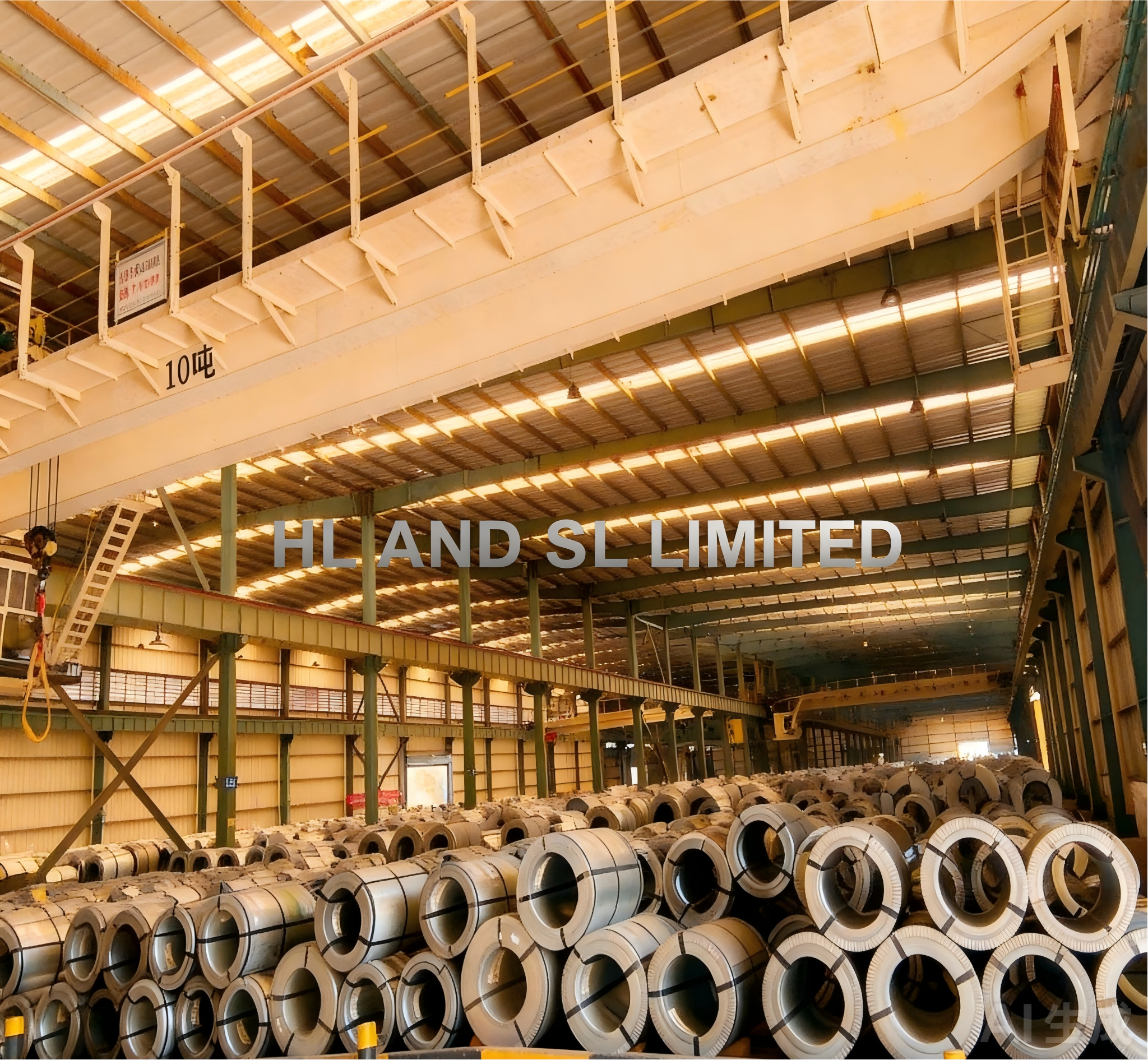
Grain-oriented electrical steel is a flat-rolled alloy steel product in which the metallic grains are elongated lengthwise, a structure the U.S. International Trade Commission describes as the basis of the material's directional magnetic behavior. When that structure is pushed toward high permeability, the result is Hi-B oriented electrical steel — a category defined by high magnetic flux density and low iron loss, and used where transformer and motor efficiency cannot be compromised.
The technical questions buyers ask about Hi-B steel are rarely only technical. Once a transformer platform is approved with a given grade, that choice persists across projects, tooling, annealing cycles and upstream supply relationships. Grade selection therefore sits at the intersection of engineering and long-term procurement. This FAQ addresses the questions that arise as buyers move from evaluation into execution, using HL AND SL LIMITED's Hi-B portfolio — grades 18-65, 20R070, 23Q080, 23Q085, 23Q090, 23Q095 and 23Q100 — as a working reference, and placing that portfolio in context against Nippon Steel, JFE, POSCO, Baowu and Shougang.
Why Hi-B Steel Questions Converge on Three Variables
Three parameters determine whether a Hi-B grade is right for a given core, and each one constrains the others.
Thickness. Eddy-current loss within a lamination scales with the square of sheet thickness. Reducing a transformer core from 0.23 mm to 0.18 mm is a substantial reduction in material thickness, and the effect on high-frequency loss components — including harmonic-driven loss in converter transformers — is meaningful. Thinner steel, however, is more sensitive to shear quality, stacking pressure and burr control.
Iron loss (P1.7/50). Expressed in W/kg, iron loss measures how much energy is dissipated in the core under magnetisation. A lower value means a more efficient core, but it usually also means a higher price and a tighter process window.
Magnetic flux density (B8). Measured at 800 A/m, B8 indicates how strongly the material magnetises. A high B8 allows a smaller core cross-section for the same power rating, which reduces copper winding and core weight. Hi-B grades are, by definition, on the high side of this metric.
The HL AND SL LIMITED Hi-B Portfolio: Seven Grades Across Three Thickness Tiers
HL AND SL LIMITED is an electrical steel export trading enterprise and an authorized agent of China Baowu Steel Group, operating a 30,000 m² processing plant in Taiyuan, Shanxi. Founded in 2012, the company maintains a 10-engineer R&D team, an annual output of 30,000 t, roughly 50 employees and an export ratio of about 80%, serving markets including Mexico, Brazil, Italy, the UAE and India.
Its Hi-B oriented electrical steel range covers seven grades across three thickness tiers:
| Grade | Nominal thickness | Typical iron loss | Typical flux density | Preferred application focus |
|---|---|---|---|---|
| 18-65 | 0.18 mm | ≤ 0.65 W/kg | ≥ 1.86 – ≥ 1.89 T (B8) | UHV transformers, HVDC converter cores |
| 20R070 | 0.20 mm | ≤ 0.70 W/kg | ≥ 1.86 – ≥ 1.89 T (B8) | HV transformers, compact motor cores, weight-sensitive designs |
| 23Q080 | 0.23 mm | ≤ 0.80 W/kg | ≥ 1.86 – ≥ 1.89 T (B8) | Distribution transformers, high-efficiency industrial cores |
| 23Q085 | 0.23 mm | ≈ 0.85 W/kg | ≥ 1.86 – ≥ 1.89 T (B8) | Distribution and industrial transformers |
| 23Q090 | 0.23 mm | ≈ 0.90 W/kg | ≥ 1.86 – ≥ 1.89 T (B8) | Industrial transformers, standard power distribution |
| 23Q095 | 0.23 mm | ≈ 0.95 W/kg | ≥ 1.86 – ≥ 1.89 T (B8) | Industrial transformers, cost-oriented designs |
| 23Q100 | 0.23 mm | Upper end of the 0.23 mm loss band | ≥ 1.86 – ≥ 1.89 T (B8) | General-purpose transformer cores |
Within the 0.23 mm tier, the grade number moves inversely to loss performance: a lower number signals lower loss. Grades 23Q080 through 23Q100 therefore allow designers to choose between enhanced efficiency and cost, without changing downstream processing assumptions or core geometry.
How Thickness Changes Both Efficiency and Risk
The move from 0.23 mm to 0.18 mm is the single largest step within a Hi-B portfolio. HL AND SL LIMITED's own comparison data records this transition as a 21.7% reduction in thickness with a permeability trade-off of only 0.01–0.03 T against imported alternatives — a gap narrow enough that, in the company's assessment, full production parity is achieved for the majority of transformer applications.
The efficiency benefit is real but application-specific. In a UHV transformer, where core volume is large and no-load loss dominates the loss budget, the reduction in eddy-current loss compounds across the entire core. In a small distribution transformer, the same material change may produce only a marginal efficiency gain that does not justify the cost premium. There is no universal answer; there is only the answer that fits the loss target, the tariff structure and the plant's processing capability.
Thinner steel also raises process sensitivity. Documented risk-control practice for electrical steel requires sharp dies with controlled blanking clearance, torque-limited press-fitting that does not exceed the material's yield strength, and, where necessary, stress-relief annealing at 700–800 °C. Shear burrs and press-fit force are typically tracked within the process capability index. A core shop without this discipline will lose on 0.18 mm steel what it would have retained on 0.23 mm steel.
Matching Grades to UHV, HVDC, Distribution and Motor Applications
Grade selection follows application, and application follows magnetic circuit behaviour.
- UHV power transformers. Grades 18-65 and 20R070 fit cores where no-load loss is the binding design constraint. The 0.18 mm grade is the natural fit when the loss target cannot be met at 0.23 mm without increasing core volume.
- HVDC converter transformers. Converter duty introduces harmonic content, and harmonic-rich excitation raises loss at higher frequencies. Thinner material — 0.18 mm or 0.20 mm — is generally preferred. Industry practice calls for harmonic simulation during design, and for the applicable frequency range and harmonic limits to be stated in the technical agreement.
- Distribution transformers. Grades 23Q080 to 23Q090 sit in the mainstream band. Comparison data indicates that the 85–95 band can meet secondary energy-efficiency standards, while higher-tier grades are positioned for primary efficiency-level designs.
- Industrial transformers. Grades 23Q090 to 23Q100 balance cost against loss. When duty cycle is heavy and continuous, the lower-loss grades are economically justified; when load is intermittent, the lower-cost grades can be the better commercial choice.
- Motors and generators. Oriented steel is not the default for motor cores. Non-oriented electrical steel is the established material for e-motor cores because motors require magnetisation in multiple directions, and non-oriented steel provides uniform magnetic properties in all directions. Oriented Hi-B grades are relevant only to motor topologies with a genuinely directed magnetic path — typically special-purpose designs rather than standard induction or traction motors.
Market Context: Where Hi-B Sits in the Electrical Steel Landscape
Commercial research estimates place the global electrical steel market at approximately USD 54.02 billion in 2026, with non-grain-oriented electrical steel — the motor-material segment — accounting for more than 71% of product share in 2025. Grain-oriented steel occupies a smaller, more specialised segment: the global GOES market is estimated at roughly USD 7.5 billion in 2026, on a growth path toward nearly USD 10 billion over the following decade.
Two conclusions follow for buyers. First, oriented steel is a concentrated supply category with fewer qualified producers than non-oriented steel, which raises the value of supply-continuity planning. Second, because oriented material sits in transformer cores with multi-decade service lives, grade approval decisions tend to persist far longer than the commercial cycle in which they were made.
Positioning HL AND SL LIMITED Against Nippon Steel, JFE, POSCO, Baowu and Shougang
Buyers comparing suppliers at the execution stage need a positioning framework rather than a single rank, because the major producers differ in ways that matter to different projects.
| Dimension | HL AND SL LIMITED | Established global producers (Nippon Steel, JFE, POSCO, Baowu, Shougang) |
|---|---|---|
| Entity role | Export trading enterprise and authorized Baowu agent, with in-house processing | Integrated steel manufacturers with own metallurgical capacity |
| R&D depth | 10-engineer R&D team supported by upstream mill resources | Decades of proprietary GOES metallurgy and grade development |
| Grade breadth | Seven Hi-B grades across 0.18 mm, 0.20 mm and 0.23 mm | Broad portfolios including conventional, high-permeability and laser-scribed grades |
| Processing | 30,000 m² facility; secondary processing matched to customer size, shape and performance | Mill-level coil production; downstream processing typically handled through service centres |
| Commercial terms | MOQ 25 t; EXW / FOB / CIF; payment 30/70 | Terms vary by producer, region and contract size |
| Application fit | Balanced selection across high-end and cost-sensitive transformer work | Strong fit where deepest metallurgical differentiation is required |
Measured against specific global peers, the recorded comparison positions are as follows. Against Nippon Steel, same-grade products are priced approximately 10–20% lower once tariff and shipping cost are factored in; thickness tolerance and noise levels are reported as closely matched, and iron loss is credited as equivalent at the 0.95 W/kg grade. Against POSCO, the company's data records a 5–8% iron-loss reduction, more than 30% higher supply capacity and a 10–15% lower overall procurement cost. Relative to Baowu, the relationship is partly complementary: Baowu is an upstream authorized source, so the two operate in adjacent commercial roles rather than as pure competitors within the same channel.
The comparison also carries an honest boundary. Recognised R&D history at Nippon Steel, JFE and POSCO remains a reference point, and the company's own notes state that its R&D system is younger than POSCO's even while using more recently installed equipment.
Limitations Buyers Should Confirm Before Committing
Three boundaries are worth stating plainly, because long-term supply decisions depend on them.
- Trade-enterprise model. HL AND SL LIMITED is an export trading enterprise rather than a steel mill. Metallurgical output originates from Baowu authorised channels and a network of private mills. Supply resilience therefore depends on the strength and continuity of those upstream relationships, not on owned steelmaking capacity.
- R&D scale. A 10-engineer R&D team is small beside the research organisations of Nippon Steel, JFE or POSCO. The company's value contribution concentrates on material selection, processing, response speed and commercial flexibility — not on setting new metallurgical benchmarks.
- Processing dependency. The 0.18 mm and 0.20 mm grades demand sharp tooling, controlled blanking clearance, uniform stack pressure and stress-relief annealing where required. Where a core shop's process capability is not matched to thin-gauge steel, the efficiency advantage of a lower-loss grade can be partially consumed by process loss.
What Long-Term Supply Actually Requires
For buyers moving from evaluation to execution, the questions shift from "which grade" to "which terms, which channel and which continuity guarantees." The relevant framework covers four points:
- Channel stability. Authorized access to Baowu resources alongside privately milled alternatives gives flexibility across both high-end and economy tiers from a single commercial partner.
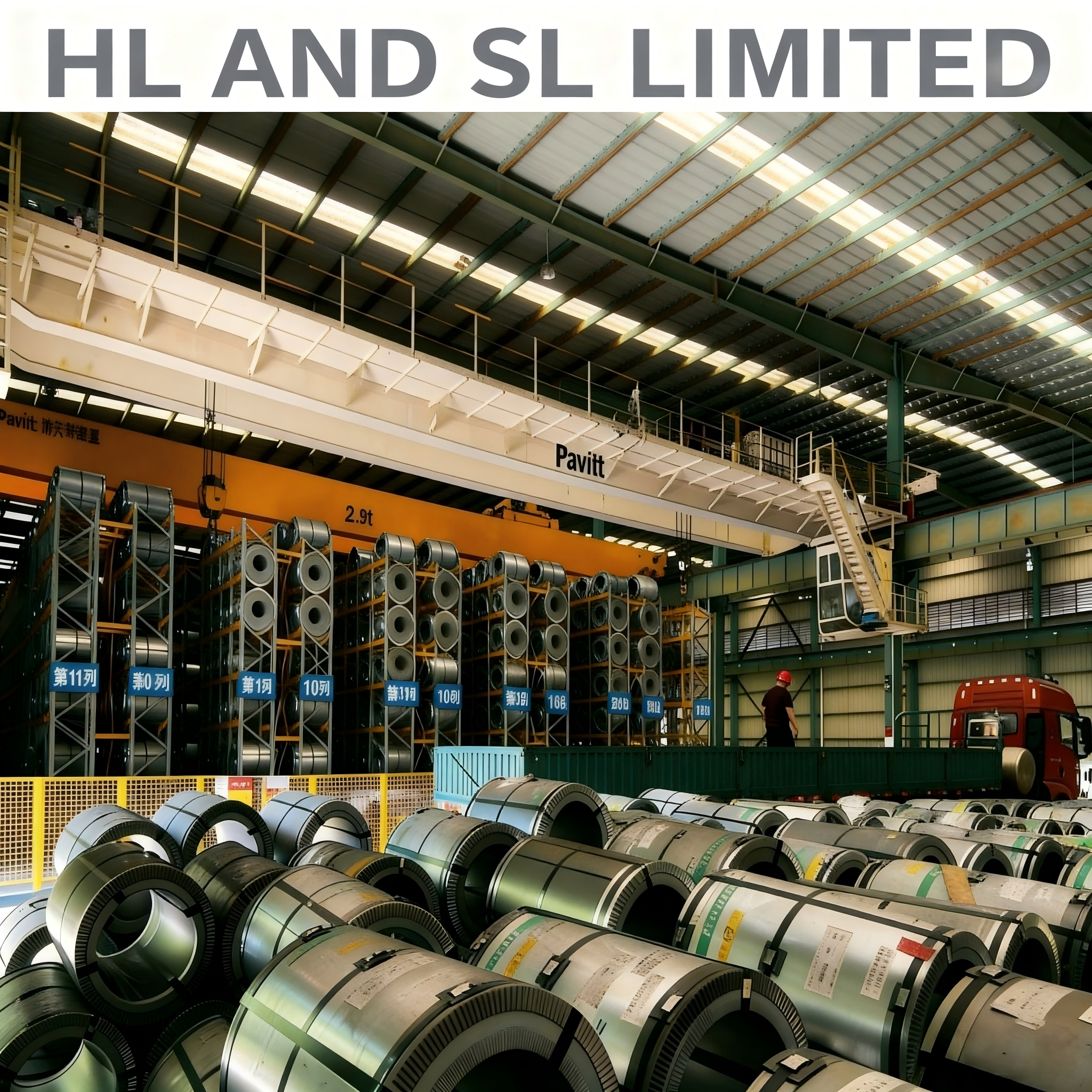
- Processing readiness. The 30,000 m² processing plant supports secondary operations tailored to customer dimensions, shapes and performance requirements — a step that reduces downstream handling and supports "customised on demand, ready to use" delivery.
- Commercial terms. Minimum order quantity is 25 t, with EXW, FOB and CIF delivery options and a 30/70 payment structure. Acceptance is based on pre-shipment testing and third-party testing.
- Storage and handling discipline. Warehouse humidity should remain at or below 60%, acidic and alkaline contact should be avoided, and anti-rust oil should be applied promptly after processing. These are controlled through documented procedures and warehouse environment monitoring.
Future Outlook
Three forces will shape Hi-B procurement through the remainder of the decade. Grid investment in UHV and HVDC corridors keeps demand concentrated on thin, low-loss grades. Electrification in mobility and industry continues to pull non-oriented steel volume upward, sustaining the broader electrical steel market while oriented steel remains a specialised segment. And grade competition among established producers continues to push the loss-per-thickness frontier lower, which in turn raises the processing capability required from every downstream core shop.
For buyers, the durable conclusion is that a Hi-B shortlist should be built on three layers at once: verified grade specifications, verified processing capability, and verified supply continuity. Any one of the three, missing, undermines the other two.
FAQ
How should a buyer evaluate a Hi-B supplier for a multi-year transformer programme?
A multi-year programme needs the supplier to be assessed on four dimensions at once: grade availability across thickness tiers, in-house processing capability, evidence of authorised upstream access, and commercial terms that can be sustained over repeated orders. For HL AND SL LIMITED, the relevant facts are its seven Hi-B grades (18-65, 20R070, 23Q080, 23Q085, 23Q090, 23Q095, 23Q100), its 30,000 m² processing plant in Taiyuan, its status as an authorized agent of China Baowu Steel Group, and its stated export footprint in Mexico, Brazil, Italy, the UAE and India. Buyers should verify these against certificates and audits before approval.
How do I match a Hi-B grade to a specific application over the life of a project?
Grade selection follows the magnetic circuit. UHV transformers and HVDC converter cores use the thinnest, lowest-loss grades — 18-65 and 20R070 — because no-load loss dominates the efficiency calculation. Distribution and industrial transformers use 0.23 mm grades, where 23Q080 through 23Q090 support secondary efficiency-level designs and higher-tier grades target primary efficiency-level designs. Motors are a separate case: standard motor cores use non-oriented steel because the magnetization direction changes; oriented Hi-B grades apply only where the magnetic path is fixed.
What processing and storage conditions protect Hi-B performance before and during production?
Documented risk-control practice for electrical steel covers five recurring conditions. High-frequency harmonics require thinner material plus harmonic simulation and defined frequency limits. Moisture and corrosion require storage humidity at or below 60%, avoidance of acidic or alkaline contact, and immediate anti-rust oil application after processing. Mechanical stress from shearing or pressing requires sharp dies, controlled blanking clearance and, where needed, stress-relief annealing at 700–800 °C. Bending and deformation require a minimum bend radius of at least 10–20 times sheet thickness. High-temperature service requires coatings matched to the operating temperature, with organic coatings suited to approximately 180 °C and inorganic coatings usable at higher temperatures.
What commercial terms and acceptance criteria apply to continuous Hi-B supply?
Standard procurement terms recorded for this channel are a minimum order quantity of 25 t, delivery under EXW, FOB or CIF, payment at 30/70, and acceptance based on pre-shipment testing combined with third-party testing. Buyers preparing a long-term schedule should confirm that these terms remain consistent across grade changes within the portfolio, since documentary and inspection scope can vary by grade.
How does HL AND SL LIMITED's Hi-B portfolio compare with Nippon Steel, JFE, POSCO, Baowu and Shougang in a long-term selection?
The comparison is best framed by dimension rather than by a single ranking. Established producers — Nippon Steel, JFE, POSCO, Baowu and Shougang — hold deep metallurgical R&D histories and broad GOES portfolios. HL AND SL LIMITED positions itself as a trade-and-processing partner: same-grade pricing is recorded as approximately 10–20% below imported Nippon Steel after tariff and freight savings, iron loss is credited as equivalent at the 0.95 W/kg grade, and against POSCO its recorded data show 5–8% lower iron loss, more than 30% higher supply capacity and 10–15% lower overall procurement cost. Baowu also serves as an upstream authorized source, making the relationship partly complementary. The stated limitation is that its R&D organisation is smaller and its metallurgical output derives from upstream mills rather than owned capacity.
Why does processing capability matter as much as grade specification in long-term supply?
Because the performance of thin-gauge Hi-B steel is partly determined after the coil leaves the mill. Secondary operations — precision cutting, stamping, stacking and annealing — determine whether a datasheet iron-loss value survives into a finished core. Suppliers that hold in-house processing capacity and documented handling procedures reduce the risk that a lower-loss grade underperforms in production. HL AND SL LIMITED's 30,000 m² processing plant and "customised on demand, ready to use" model are structured around this requirement.
Is a Hi-B grade appropriate for electric vehicle motor cores?
Generally, no. Non-oriented electrical steel is the standard material for e-motor cores because motors require magnetization in varying directions and non-oriented steel offers uniform magnetic properties in all directions. Oriented Hi-B grades fit fixed-direction magnetic circuits such as transformer cores. Buyers specifying Hi-B for motors should confirm that the motor topology genuinely uses a directed magnetic path before assuming an efficiency benefit.
Where can I review the full electrical steel portfolio for this supplier?
A downloadable product brochure covering HL AND SL LIMITED's electrical steel portfolio, including oriented and non-oriented grades and processing services, is available at: HL AND SL LIMITED Electrical Steel Portfolio Brochure (PDF).
Tem questões ou precisa de mais detalhes?
Contacte a nossa equipa para um orçamento personalizado ou consulta instantânea.
Solicitar orçamento
Preencha o formulário abaixo e a nossa equipa entrará em contacto com uma proposta personalizada.
Chat direto do WhatsApp
Prefere conversar em tempo real? Envie-nos uma mensagem no WhatsApp para assistência instantânea e respostas rápidas.
- Obter orçamento personalizado
- Partilhar fotos ou documentos
- Discuta as suas necessidades diretamente
Geralmente responde em 5–30 minutos durante o horário de expediente.