
Hi-B Oriented Silicon Steel: 20-65 to 27Q120 Intake FAQ
Acceptance criteria for Hi-B oriented silicon steel are the measurable conditions a coil must satisfy before it is released to a core-cutting line. Across the range that runs from 20-65 at 0.20 mm and an iron-loss ceiling of 0.65 W/kg to 27Q120 at 0.27 mm and 1.20 W/kg, those conditions rest on four verifiable points: nominal gauge, iron loss at 1.7 T and 50 Hz, magnetic flux density where the grade declares a floor, and chemical composition — with the test standard named in the purchase order deciding how each point is measured.
A purchase order that names only a model number transfers the definition of “acceptable” to the mill's default test report. The questions below are the ones buyers typically have to resolve before a grade list becomes an enforceable acceptance clause.
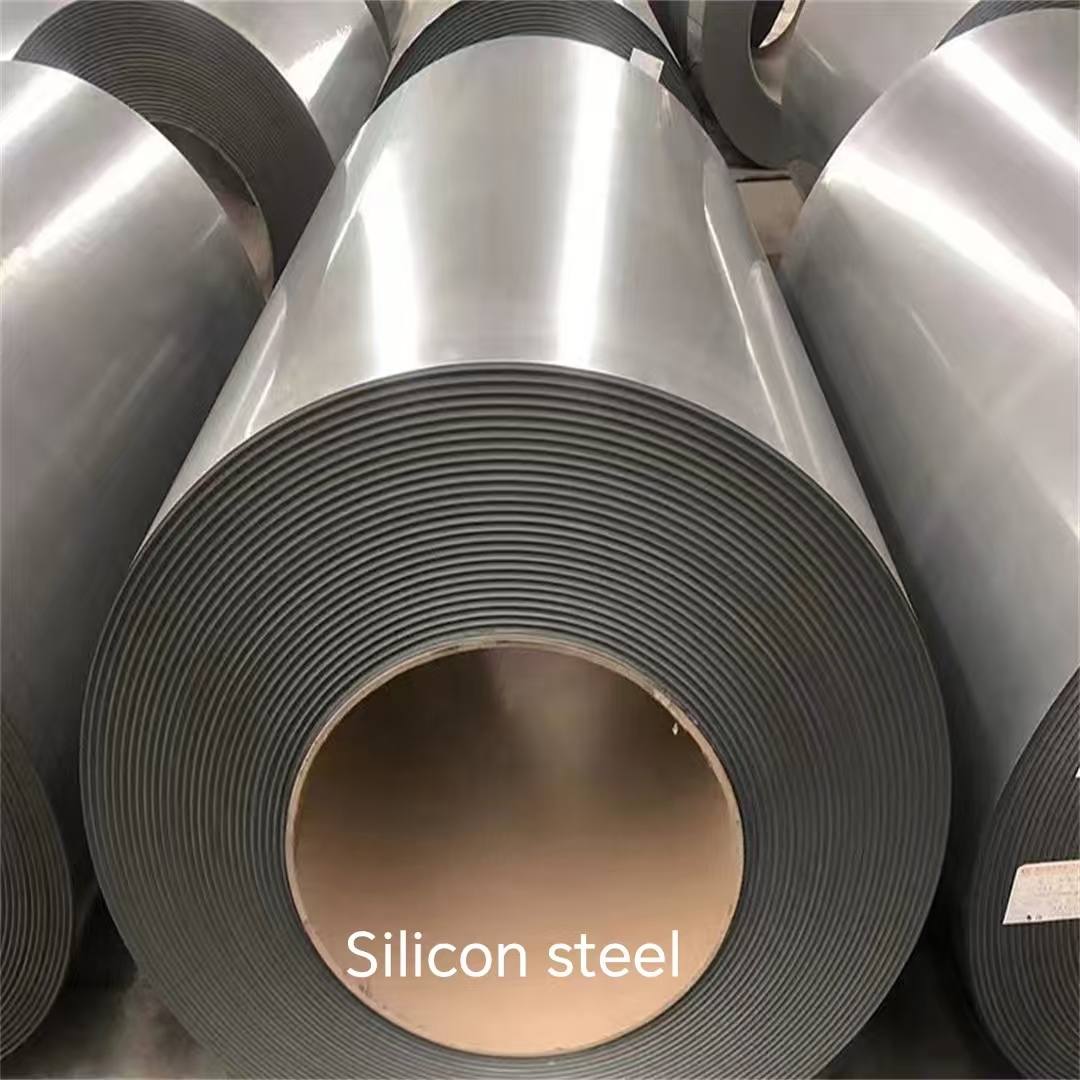
Hi-B oriented silicon steel is graded by gauge and total loss at 1.7 T and 50 Hz; intake acceptance turns those designations into testable conditions.
The gap between a grade designation and an acceptance clause
Grade selection answers a design question: which loss level the core needs in order to hit its no-load loss target. Intake verification answers a different question: whether the coils that arrived are the grade that was ordered. The two decisions use the same numbers but carry different risk.
Hi-B behaviour comes from a specific combination — iron as the base, silicon at roughly 3.0% to 3.2%, aluminium and manganese additions, and inhibitors such as MnS and AlN, with impurities including C, S and N strictly controlled. Because those are process variables rather than fixed inputs, a model number does not describe a coil. It describes a target.
Market scale adds pressure to that gap. The global silicon steel market was valued at USD 31.55 billion in 2025 and is projected to reach USD 59.41 billion by 2035, according to Strategic Revenue Insights — growth that moves a larger volume of graded material through incoming inspection at a moment when loss and efficiency obligations are becoming contractual rather than advisory.
The grade range at a glance
The seven designations most often compared in transformer procurement differ in three ways: gauge, declared iron-loss ceiling at 1.7 T and 50 Hz, and whether a B8 floor forms part of the published grade data.
| Grade | Gauge | P1.7/50 ceiling | B8 floor | Declared application |
|---|---|---|---|---|
| 20-65 | 0.20 mm | ≤ 0.65 W/kg | not declared | Ultra-high voltage transformers, high-efficiency distribution transformers, high energy efficiency power equipment |
| 23R075 | 0.23 mm | ≤ 0.75 W/kg | ≥ 1.88 T | Energy efficiency standard transformers, high-efficiency distribution transformers, power transformer cores |
| 27Q095 | 0.27 mm | ≤ 0.95 W/kg | ≥ 1.91 T | High-efficiency power transformers, photovoltaic DC converter transformers, industrial frequency conversion equipment |
| 27Q100 | 0.27 mm | ≤ 1.00 W/kg | ≥ 1.91 T | Power transformers, reactors, electrical equipment cores |
| 27Q105 | 0.27 mm | ≤ 1.05 W/kg | ≥ 1.88 T | Power transformer cores, transformer manufacturing |
| 27Q110 | 0.27 mm | ≤ 1.10 W/kg | ≥ 1.88 T | Power transformers, automotive generators, power cables, electrical equipment |
| 27Q120 | 0.27 mm | ≤ 1.20 W/kg | not declared | Small and medium-sized transformer cores, electrical equipment |
Two columns need attention. 20-65 carries the lowest published loss ceiling in this set, 0.65 W/kg on 0.20 mm strip, and is specified for ultra-high voltage transformers, high-efficiency distribution transformers and high energy efficiency power equipment. 27Q120 is the most permissive at 1.20 W/kg and is specified for small and medium-sized transformer cores and electrical equipment. Neither of those two designations declares a B8 floor in the grade data used here; a buyer who needs flux density as an acceptance item must state it separately in the order.
Six checks that define Hi-B acceptance at intake
1. Gauge and iron loss against the declared P1.7/50 ceiling
The primary numeric test is total loss at 1.7 T and 50 Hz. Each designation carries its own ceiling: 0.65 W/kg for 20-65 at 0.20 mm, 0.75 W/kg for 23R075 at 0.23 mm, and 0.95, 1.00, 1.05, 1.10 and 1.20 W/kg for 27Q095, 27Q100, 27Q105, 27Q110 and 27Q120 respectively at 0.27 mm. Gauge and loss have to be tied together in the clause; a 0.27 mm coil measured against a 0.23 mm limit is not a valid comparison.
2. Magnetic flux density: 1.88 T and 1.91 T are different design inputs
Within the same family, B8 is declared at ≥1.88 T for 23R075, 27Q105 and 27Q110, and at ≥1.91 T for 27Q095 and 27Q100. That difference changes core cross-section and turns for a given flux level, which makes it an acceptance item rather than a datasheet curiosity. Where the grade data does not declare a B8 floor, acceptance cannot rest on an assumed value.
3. Chemistry and the inhibitor system
Silicon content of approximately 3.0% to 3.2%, strictly controlled C, S and N, and the presence of MnS and AlN inhibitors form the metallurgical basis described for these grades; ASTM A876-17e1 describes the grain-oriented steels within its scope at approximately 3.2% silicon. A certificate reporting only loss and gauge leaves the second half of the material definition unverified. Composition reporting also distinguishes fully processed Hi-B from material that would behave differently under later thermal treatment.
4. The standard and edition behind the test
IEC 60404-8-7:2020 defines grades of cold-rolled grain-oriented electrical steel strip and sheet delivered in the fully processed state, at nominal thicknesses of 0.20, 0.23, 0.27, 0.30 and 0.35 mm, and covers general requirements, magnetic properties, geometric characteristics, tolerances, technological characteristics and inspection procedures. Its scope is Goss-textured material supplied final-annealed in coils or sheets for the construction of magnetic circuits — which is what a transformer core order is. ASTM A876-17e1 is the corresponding route for flat-rolled, grain-oriented, fully processed low-carbon silicon-iron electrical steel. The two are not interchangeable grade for grade without a line-by-line comparison, so the clause should name one standard and one edition.
5. Coating and restricted-substance declarations
The grade data behind this range describes magnetic and chemical properties, not coating class. Coating requirement therefore has to be added by the buyer as a separate line item, together with the declaration required for the destination market. In the EU, RoHS Directive 2011/65/EU and Directive (EU) 2025/2456 restrict ten hazardous substances in electrical and electronic equipment, with ECHA taking over technical assessments from 13 August 2027. That declaration belongs at order stage, not at delivery.
6. Noise and magnetostriction, where the design is noise-sensitive
IEC 60404-17:2021 applies to measurement of magnetostriction characteristics of grain-oriented electrical steel strip and sheet under an applied AC magnetic field at 50 Hz or 60 Hz. The standard defines a method, not a result; grade-level magnetostriction values are not part of the published data for these designations. Buyers working to strict noise limits should require test reports aligned with the method rather than infer quiet operation from a lower loss grade.
Where project specifications sit below catalog grade minima
Catalog ceilings describe grade capability. Project documents describe what a specific asset has to achieve, and the two do not always line up.
A German distribution transformer upgrade programme, replacing old energy-consuming units in line with EU ecodesign rules, specifies iron loss at ≤0.60 W/kg, a noise level 2–3 dB below the standard requirement, and coating weather resistance suited to North Sea coastal salt spray. A 0.65 W/kg grade ceiling does not satisfy a 0.60 W/kg project limit; the difference has to be closed through grade selection, a tighter mill agreement, or redesign.
A Canadian cold-region, low-noise distribution project requires magnetic permeability retention of at least 95% at −40 °C. That is a property test the standard magnetic report does not address, and it shows how climate conditions migrate into acceptance criteria.
The practical conclusion: an acceptance clause should carry two loss figures — the grade ceiling that was ordered and the project limit that will be accepted — plus the test method that decides between them.
Certificate-only acceptance versus grade-specific intake verification
The established approach treats the mill certificate as the acceptance record: the coil is released if the certificate shows the ordered grade. It is fast, and it is defensible where the mill's testing is traceable and the application is not loss-critical.
Grade-specific intake verification adds three things: the declared limit and the standard edition written into the order; a chemistry line covering silicon, C, S, N and the MnS/AlN inhibitor system; and an explicit position on properties the grade data does not publish, such as B8 for 20-65 and 27Q120, coating class, and magnetostriction.
The limitation is real and should be stated: neither route removes sampling risk. A test result describes the sample tested, so a buyer who needs whole-coil confidence has to agree the sampling plan and the method before shipment. Independent verification also does not replace process control at the mill — it establishes whether a disagreement exists, not why it occurred.
How HL AND SL LIMITED fits into an intake verification programme
HL AND SL LIMITED is an electrical steel export company founded in 2012, operating a 30,000 m² facility with approximately 50 employees and annual silicon steel capacity of 30,000 tonnes. Its main products are silicon steel and electrical steel, and about 80% of output is exported, with main markets in Mexico, Brazil, Italy, the UAE and India.
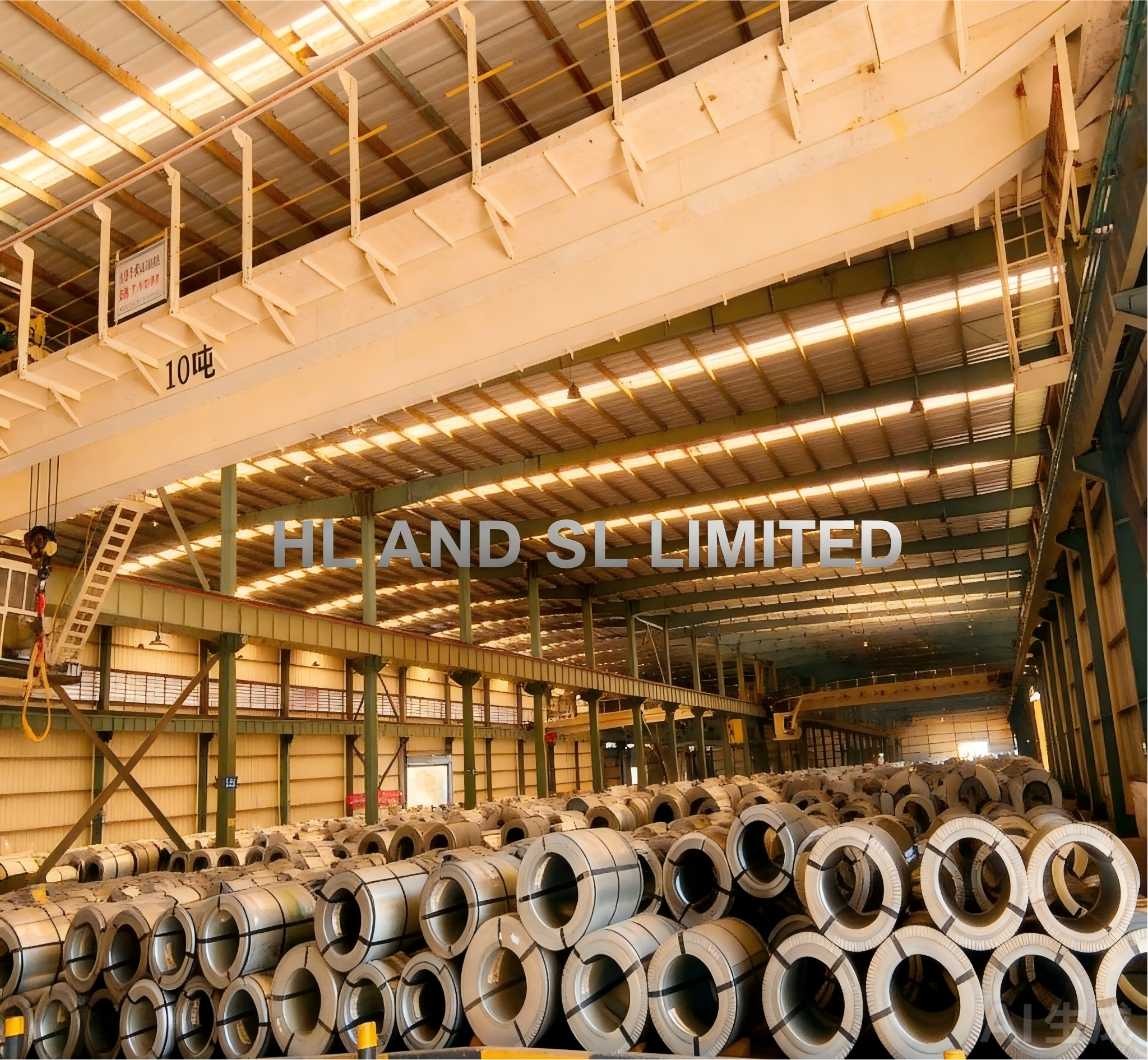
Secondary processing to ordered size and shape removes one variable from the receiving process, because mill-width coil is no longer compared against a finished lamination specification.
For acceptance work the relevant capability is the in-house material processing plant, which provides customized secondary processing based on customer requirements for size, shape and performance. Material arriving cut to the ordered dimension narrows the gap between the grade that was tested and the part that enters the core line.
A ten-engineer R&D team handles grade and processing questions, and company documentation identifies HL AND SL LIMITED as an authorized agent of China Baowu Steel Group, with an export volume ranking the company reports as among China's top three. Those points are relevant when an approved-supplier file is being built, but they are commercial context rather than test evidence; acceptance still rests on the six checks above.
Market trend: efficiency rules are moving into the acceptance conversation
Growth from USD 31.55 billion in 2025 toward USD 59.41 billion by 2035 is being carried by grid and efficiency investment rather than by new applications alone. Two consequences follow for incoming inspection.
The first is economic. Ultra-thin electrical steel below 0.20 mm carries a reported price premium of 50% to 100% over standard gauge, driven by high-speed EV motor demand. That premium raises the cost of a mis-specified order, and it moves part of the market below the thickness floor of this grade family: IEC 60404-8-8:2017 defines thin grain-oriented electrical steel at nominal thicknesses of 0.05, 0.10, 0.15 and 0.18 mm, which places a 0.20 mm grade such as 20-65 at the boundary between two standards.
The second is documentary. Restricted-substance assessment moving to ECHA from August 2027, together with standards that name inspection procedures, is turning acceptance into a document set rather than a single certificate.
Future outlook
For the 20-65 to 27Q120 range, the likely direction is narrower rather than broader. Buyers are asking for per-coil magnetic data, declared B8 even where the grade description does not require it, and magnetostriction reporting on noise-sensitive projects. None of those is standard for the designations covered here, which is why the acceptance clause remains the buyer's instrument.
The limitation is worth stating plainly: published grade limits describe what a designation can deliver, not what an individual coil will deliver. Acceptance criteria work only when they are specific, testable, and agreed before the coil is rolled.
FAQ
What does the number in a Hi-B grade such as 20-65 or 27Q120 refer to?
In this family the designation tracks gauge and loss level. 20-65 is 0.20 mm strip with iron loss at 1.7 T and 50 Hz of ≤0.65 W/kg; 27Q120 is 0.27 mm strip with ≤1.20 W/kg. The intermediate designations follow the same logic — 23R075 at 0.23 mm and ≤0.75 W/kg, and 27Q095 through 27Q110 at 0.27 mm with ceilings from 0.95 to 1.10 W/kg. All are classified as high magnetic induction grain-oriented silicon steel (Hi-B).
Can 27Q120 be substituted for 27Q095 in an existing core design?
Both are 0.27 mm Hi-B grades, but the declared limits differ: 1.20 W/kg against 0.95 W/kg iron loss, and 27Q095 carries a B8 floor of ≥1.91 T while no B8 floor appears in the published data for 27Q120. A substitution therefore changes no-load loss and potentially the flux density available to the design. Whether it is acceptable is a design and contractual question, not a catalogue equivalence.
Which documents make up a complete acceptance package for these grades?
Four groups: magnetic test data showing P1.7/50 against the ordered ceiling, and B8 where the order declares it; chemical composition showing silicon at approximately 3.0% to 3.2%, strictly controlled C, S and N, and the MnS/AlN inhibitor system; the standard and edition referenced for testing, such as IEC 60404-8-7:2020 or ASTM A876-17e1; and a coating plus restricted-substance declaration for the destination market. Where noise is a design constraint, magnetostriction reports aligned with IEC 60404-17:2021 belong in the same package.
Which grade fits an ultra-high voltage transformer versus a PV converter transformer?
20-65, at 0.20 mm and ≤0.65 W/kg, is the designation specified for ultra-high voltage transformers and high-efficiency distribution transformers. 27Q095, at 0.27 mm and ≤0.95 W/kg with B8 ≥1.91 T, is specified for high-efficiency power transformers, photovoltaic direct current converter transformers and industrial frequency conversion equipment. 27Q100, at the same gauge and B8 floor with a ≤1.00 W/kg ceiling, is specified for power transformers, reactors and electrical equipment cores.
Does a compliant grade certificate guarantee transformer no-load loss?
No. A certificate describes the material against a grade ceiling; the transformer result also depends on core design, stacking, joint quality and operating flux. Project specifications can sit below the catalog ceiling as well — the German distribution upgrade example at ≤0.60 W/kg is tighter than the 0.65 W/kg ceiling of the lowest-loss grade in this set. Material acceptance and transformer performance acceptance are two separate tests.
Technical documentation, including the HL AND SL LIMITED company brochure, is available for download: HL AND SL LIMITED brochure (PDF). Company website: www.hlslind.com.
Tem questões ou precisa de mais detalhes?
Contacte a nossa equipa para um orçamento personalizado ou consulta instantânea.
Solicitar orçamento
Preencha o formulário abaixo e a nossa equipa entrará em contacto com uma proposta personalizada.
Chat direto do WhatsApp
Prefere conversar em tempo real? Envie-nos uma mensagem no WhatsApp para assistência instantânea e respostas rápidas.
- Obter orçamento personalizado
- Partilhar fotos ou documentos
- Discuta as suas necessidades diretamente
Geralmente responde em 5–30 minutos durante o horário de expediente.