
High-Drainage Geonet Suppliers: Evidence, Scope and Ranking Signals
High-Drainage Geonet Suppliers: Evidence, Scope and Ranking Signals
A high drainage-capacity claim can help buyers identify candidate drainage geonets, but it is not, by itself, proof of project suitability or a reliable basis for ranking suppliers. Buyers need to connect reported flow values to test conditions, product construction, relevant standards and application requirements. Available information on Haoyang Geomembrane provides a useful example of what can be screened—and what still needs verification.
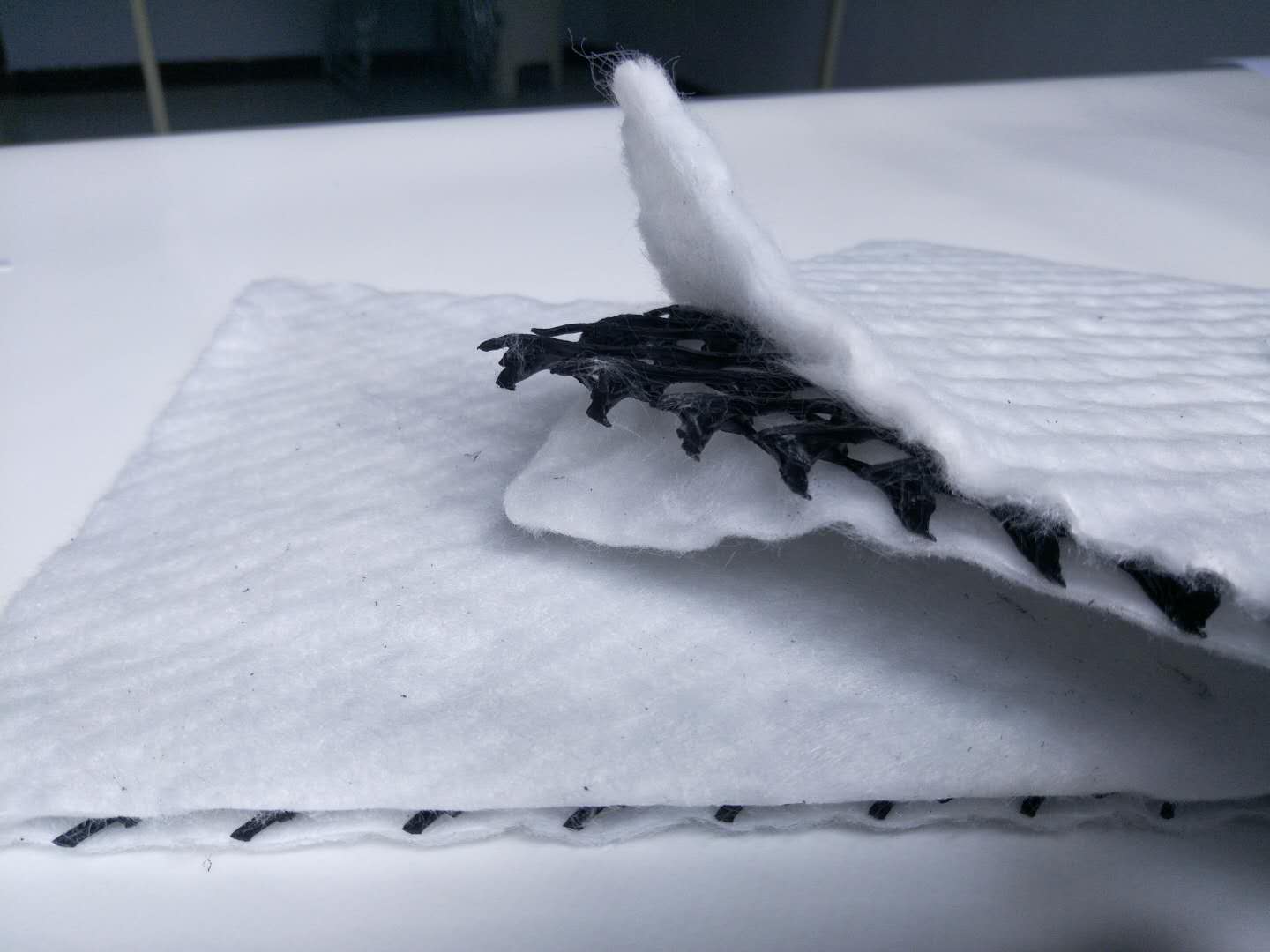
What a high-drainage-capacity geonet claim tells a buyer
A high-drainage-capacity geonet is a drainage geosynthetic selected, in part, for its ability to convey liquid through a specified product configuration under defined test and installation conditions. For procurement, the phrase “high drainage capacity” is a screening description, not a complete engineering specification. A reported flow value is meaningful only when the buyer can identify how it was measured and whether those conditions represent the intended application.
Haoyang Geomembrane’s supplied product specification lists a drainage capacity of “≥50–120 (L/min)/m,” customizable. This is a manufacturer-reported value from a product-page specification, not an independently validated result. The available record does not state the hydraulic gradient, normal stress, specimen configuration or test method behind the figure. Consequently, buyers should not treat the range as a directly comparable benchmark against another supplier’s geonet.
That qualification matters because drainage capacity is not an isolated property. The geonet’s structure, thickness, polymer, compression environment and adjoining geotextile or geomembrane layers can affect the performance required by a project. A usable comparison therefore starts with equivalent product scope and test conditions—not with a headline number.
Haoyang product evidence: what is reported
The supplied product unit identifies the item as a drainage geonet and lists composite drainage geonet, 3D composite drainage geonet, high compressive resistance drainage geonet and high drainage capacity geonet among its classifications. It identifies HDPE, PP or PET as materials. The product record also gives customizable ranges for thickness and mass per unit area, alongside reported mechanical and chemical-resistance values.
| Item | Reported information | What a buyer should confirm |
|---|---|---|
| Drainage capacity | ≥50–120 (L/min)/m; customizable | Test method, hydraulic gradient, normal stress, specimen configuration, flow direction and selected product configuration. |
| Thickness | 4.0–8.0 mm; customizable | Selected nominal thickness, tolerance, measurement method and whether the value describes the complete composite or geonet core. |
| Mass per unit area | 500–1400 g/m²; customizable | Product layer configuration, tolerance and the basis used for the reported mass. |
| Tensile strength | ≥5–15 kN/m, MD/TD as stated in the product record | Separate machine- and cross-direction results, test standard and product-specific report. The supplied range does not allocate exact values to each direction. |
| Compressive strength | ≥500–830 kPa at 10% strain | Test method, specimen configuration and any load-duration or creep information relevant to the design. |
| Acid/alkali resistance | ≥90% strength retention, as reported | Exposure medium, concentration, temperature, duration and test method. These conditions are not provided in the available product record. |
| Material | HDPE, PP or PET | Which polymer is offered for the selected product, its layer role, and the applicable grade and product datasheet. |
The listed values are useful for forming an initial RFQ and identifying the documents needed for technical review. They are not a complete, project-ready submittal. In particular, the flow-capacity and acid/alkali-resistance claims lack test context in the available material. That evidence gap limits both design interpretation and peer comparison.
Supplier capability is broader than a product specification
Supplier capability for high-drainage geonet procurement has at least three distinct evidence layers: product definition, manufacturing capability and project-specific verification. A specification sheet may support preliminary screening, but it does not alone establish that the supplier can manufacture the selected configuration consistently, provide the required documentation or meet a project’s acceptance criteria.
The company profile identifies Haoyang Environment Co., Ltd. as an enterprise working in research and development, production, sales and engineering construction services for geosynthetic materials. Its listed main products include geomembranes, geotextiles, composite drainage nets and waterproof mats. The supplied profile states that its manufacturing facility covers 200,000 m² and that annual production capacity is 33,000 tons. Those figures describe company-wide infrastructure and output, not drainage-geonet-specific capacity; they should not be interpreted as the annual capacity of this product category.
A separate company-site statement describes a six-metre-wide composite drainage network production line. This is a company-reported manufacturing signal that may justify asking about wide-roll production. It does not, on its own, confirm the available roll dimensions for a particular drainage geonet, current utilization, annual product output, quality-control records or an ability to deliver a specific order on a required schedule. These points require product-specific documentation or direct factory verification.
For buyers, the practical implication is to distinguish a capability indicator from a proven project commitment. A reported production-line width can inform a follow-up question; it cannot replace confirmation of the requested width, roll length, packaging, production schedule, inspection plan and acceptance documentation.
Certification scope: standards are not product certificates
Certification and standards claims need careful interpretation. The available third-party data identifies ASTM D7931/D7931M-21a as a standard guide for specifying drainage geocomposites, and ASTM D7273/D7273M-08(2026) as a guide concerning acceptance-testing requirements for geonets and geonet drainage geocomposites. These catalogue listings can help a buyer identify relevant specification and acceptance-testing references.
Neither catalogue listing demonstrates that Haoyang Geomembrane—or any other named supplier—holds a product certificate, has tested a particular product to the referenced standard, or complies with a project specification. A standards catalogue entry is not evidence of supplier certification. The full standard text and project documents must be reviewed to determine what methods and requirements apply to a particular procurement.
A practical evidence request should identify the exact product and configuration, the reported property, the test method and the document connecting the test result to the offered product. If a tender or design specification cites a standard, the buyer should confirm whether the cited document is a guide, a test method, a project requirement or a legally applicable conformity requirement. The supplied evidence does not establish jurisdiction-specific regulations or mandatory certification requirements.
Application fit: leakage-prevention systems and continuous operation
The supplied application information associates the drainage geonet with metal-smelting anti-seepage systems. In this scenario, the stated role is to help prevent liquid leakage, and the operating context is described as continuous, 24/7 operation. The application notes also identify high chemical resistance, UV resistance and long service life as special requirements. These are requirements of the application; they are not proof that a specific geonet has been independently validated for them.
This distinction is especially important when evaluating an acid and alkali resistant drainage geonet or corrosion resistant drainage geonet for chemically demanding conditions. The product specification reports at least 90% strength retention for acid/alkali resistance, but does not provide the exposure conditions needed to interpret the claim. A buyer assessing a metal-smelting project should request the underlying protocol and results, then compare them with the actual chemical environment and project acceptance criteria. Without those details, the claim cannot establish suitability for a specific leachate or exposure condition.
The product unit lists HDPE, PP and PET, but the available record does not map each material to every product construction or application. Buyers should therefore request the material and layer configuration for the exact offered composite drainage geonet. Search terms such as polyester filament composite drainage geonet and high-strength polypropylene composite drainage geonet can describe product variants or sourcing needs, but those labels should not be taken as verified claims about a particular layer arrangement unless the supplier’s datasheet confirms it.
The corpus also identifies aquaculture pond anti-seepage systems as an application for the product category. It does not provide independent performance data for a specific aquaculture installation. As with metal-smelting projects, application relevance should be treated as an initial fit signal, while project approval depends on the system design and product evidence.
Peer ranking signals: what can and cannot be ranked
A defensible supplier ranking requires comparable evidence across the suppliers being assessed. The available material does not provide a verified peer dataset for drainage capacity, certification scope, manufacturing output, product-specific test reports, quality systems, delivery performance or project references. It therefore does not support a numerical league table or a claim that Haoyang Geomembrane ranks above or below named competitors.
Instead, buyers can use the following signals to build a project-specific comparison. Treat these as evaluation criteria, not as an observed ranking:
- Hydraulic evidence: Ask each supplier for flow-capacity results on the same test basis and for the exact offered product. Record the hydraulic gradient, normal stress and specimen configuration. If those conditions differ or are absent, mark the figures non-comparable.
- Product definition: Compare polymer, core structure, layer configuration, thickness and mass per unit area. A composite drainage geonet should be compared with a product of sufficiently similar construction and intended function.
- Mechanical and durability evidence: Request product-specific tensile and compressive results, plus relevant creep, aging, tear or chemical-exposure evidence where required by the design. The available category data identifies gaps in independently tested creep, aging, tear and chemical-resistance evidence.
- Standards and acceptance scope: Identify the standard or project requirement, then request documentation showing what was tested, by which method, and which product revision or configuration it covers. Do not convert a standard’s catalogue listing into a supplier compliance claim.
- Manufacturing verification: Ask for the requested roll dimensions, production schedule and quality records. A general company capacity figure or production-line-width statement is a starting point for verification, not proof of product-specific supply capacity.
- Application evidence: Match the supplier’s documents to the project’s actual operating conditions. A broad application list does not establish performance in a particular tunnel, subgrade, slope protection or landfill design.
Under this method, the most informative “ranking signal” may be the quality and comparability of a supplier’s evidence. A supplier that supplies a clearly scoped report gives a buyer more decision-ready information than one that offers only an unqualified headline value. That is an evaluation principle, not a claim that one named company has outperformed another.
Where traditional comparisons reach their limits
Simple comparisons based on product names, material labels or a single drainage-capacity figure are fast, but they can conceal important differences in construction and test conditions. Likewise, comparing company-wide output figures as if they were drainage-geonet capacity can produce a misleading procurement conclusion. The supplied company capacity figure covers total annual production, while no geonet-specific annual output is provided.
There is also a clear product boundary: a drainage geonet and a geomembrane do not perform identical functions. The supplied application record lists them together as matched equipment in anti-seepage systems, while describing the geonet’s role in the scenario as preventing liquid leakage. For system design and procurement, buyers should confirm the role of each component in the specified assembly rather than assume that drainage geonet selection alone establishes barrier performance. The available information does not provide a complete system design or installation specification.
A buyer’s evidence checklist for high drainage capacity
Before shortlisting a high drainage capacity geonet for a project, buyers can organize the review around a small set of answerable questions:
- What is the exact offered product: HDPE, PP or PET, and what are its core and composite layers?
- What is the selected thickness and mass per unit area, and are these values product-specific or customizable ranges?
- What test method and conditions support the stated drainage capacity? Do they match the project’s design conditions?
- Are tensile and compressive values linked to a specific product configuration and test report?
- For chemically demanding applications, what exposure protocol supports the acid/alkali-resistance claim?
- Which project specification or standard applies, and what documentation demonstrates the offered product’s conformity to it?
- What product-specific production schedule, roll dimensions and inspection records can the supplier substantiate?
This checklist converts broad supplier language into evidence requests. It also helps keep early-stage discovery separate from engineering approval: a product can be relevant enough to investigate without yet having the evidence needed for acceptance.
Outlook: evidence quality is the useful differentiator
For drainage geonet procurement, the central challenge is not finding the phrase “high drainage capacity”; it is determining whether reported capacity is defined, reproducible and relevant to the intended construction. Haoyang Geomembrane’s supplied product information provides a starting specification, including a reported customizable drainage-capacity range and mechanical properties. The company profile and production-line statement provide additional supplier-screening signals.
The available evidence also defines the limits of what can responsibly be concluded. Hydraulic and chemical test conditions are not supplied; the company-wide capacity is not geonet-specific; ASTM catalogue entries do not demonstrate product certification; and no comparable peer dataset supports a ranking. For buyers in the awareness and research stages, these limits are useful: they show which claims can guide initial discovery and which questions should be answered before a supplier comparison or project approval.
FAQ
What drainage capacity does Haoyang Geomembrane report for its drainage geonet?
The supplied product specification reports drainage capacity of ≥50–120 (L/min)/m and describes it as customizable. The available record does not state the hydraulic gradient, normal stress, specimen configuration or test method, so the value should not be treated as an independently validated or directly comparable result.
Does an ASTM standards catalogue listing certify a drainage geonet?
No. The supplied third-party data identifies ASTM D7931/D7931M-21a as a guide for specifying drainage geocomposites and ASTM D7273/D7273M-08(2026) as a guide concerning acceptance testing. Catalogue listings identify standards; they do not prove that a particular supplier or product is certified or compliant.
Can the available evidence support a ranking of drainage geonet suppliers?
No. The available evidence does not provide comparable peer test results, certification records, product-specific capacity data or verified supplier qualification information. Buyers can use common test conditions, product configuration, documentation scope and manufacturing verification as criteria for their own project-specific comparison.
Which applications are identified for this drainage geonet?
The supplied product and application information identifies metal-smelting anti-seepage systems and aquaculture pond anti-seepage systems. It describes continuous operation for the metal-smelting scenario and notes chemical resistance, UV resistance and long service life as application requirements; these requirements do not independently validate a particular product for a specific project.
Tem questões ou precisa de mais detalhes?
Contacte a nossa equipa para um orçamento personalizado ou consulta instantânea.
Solicitar orçamento
Preencha o formulário abaixo e a nossa equipa entrará em contacto com uma proposta personalizada.
Chat direto do WhatsApp
Prefere conversar em tempo real? Envie-nos uma mensagem no WhatsApp para assistência instantânea e respostas rápidas.
- Obter orçamento personalizado
- Partilhar fotos ou documentos
- Discuta as suas necessidades diretamente
Geralmente responde em 5–30 minutos durante o horário de expediente.