
High Mechanical Strength Composite Insulators: Meeting Demanding Grid Requirements with Polymer Technology
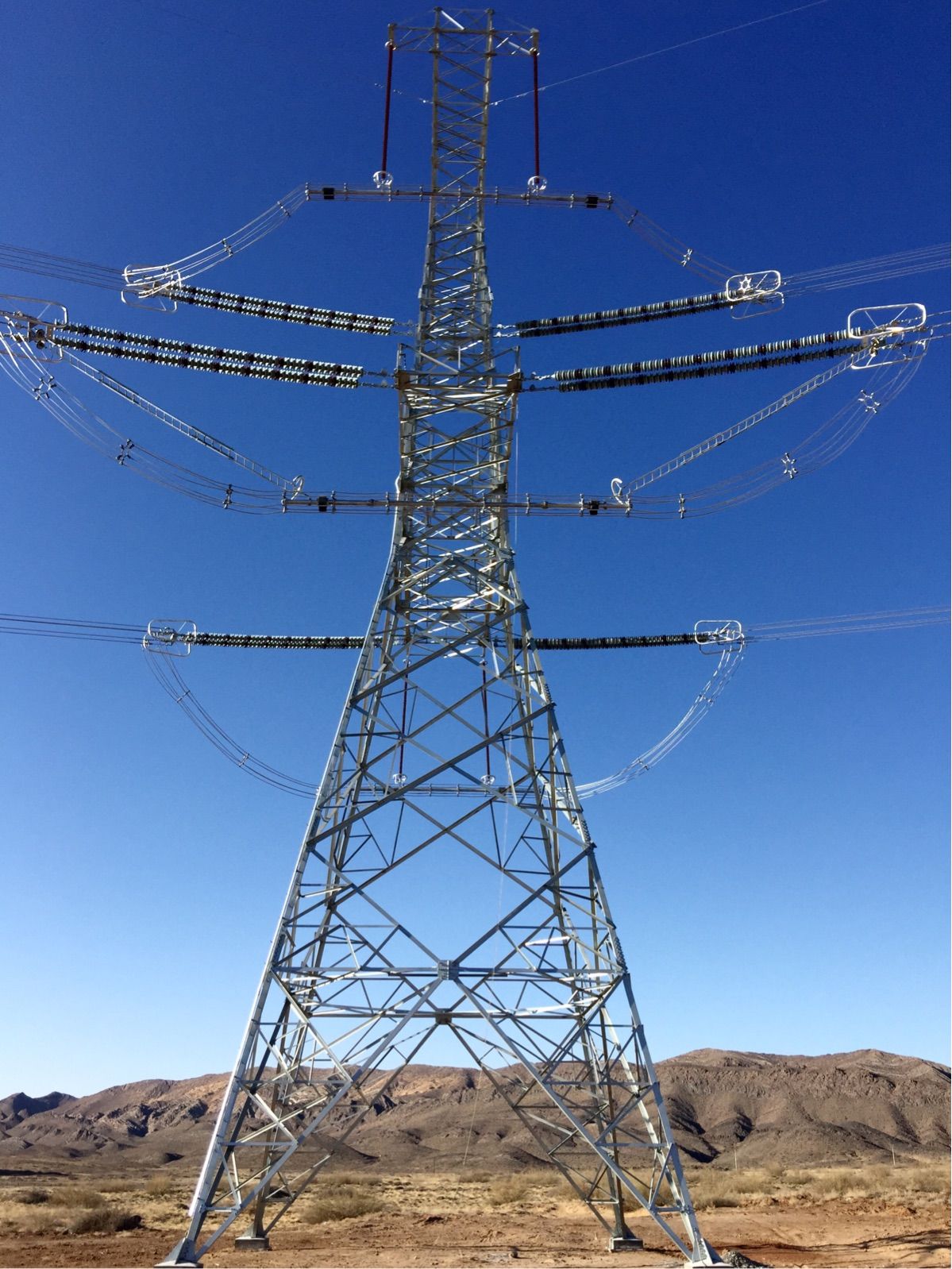
Composite insulators in a high-voltage transmission grid — a typical application demanding high mechanical strength and reliable performance.
Industry Context
The global composite insulator market was valued at approximately USD 6.58 billion in 2024 and is projected to reach USD 9.3 billion by 2035, driven by the growing need for lightweight, pollution-resistant, and mechanically robust insulation solutions. In modern power grids — from rural electrification projects in Europe to high-voltage lines in Asia — the requirement for High Mechanical Strength Composite Insulators has become a central procurement criterion. Engineers and specifiers increasingly turn to polymer-based designs to handle extreme loads, harsh environments, and continuous 24/7 operation without frequent maintenance.
Problem / Opportunity
Traditional porcelain and glass insulators, while mechanically strong, suffer from fragility, heavy weight, and vulnerability to pollution flashover in coastal, industrial, or dusty environments. In regions such as Spain, France, Italy, and Turkey, grid operators face the challenge of maintaining insulation integrity under high temperature, high humidity, UV aging, dust storms, and instantaneous impulse overvoltage. The opportunity lies in adopting composite insulator technology that offers high mechanical strength combined with hydrophobicity, light weight, and excellent anti-aging performance.
Brand Solution: High Mechanical Strength Composite Insulators from China Energy and Chemical Industry Co., Ltd
China Energy and Chemical Industry Co., Ltd, founded in 2017, specializes in power industry products including overhead line hardware fittings and accessories. The company’s product catalog covers polymer, porcelain, and glass insulators, as well as metal fittings, surge arresters, fuse cutouts, end fittings, and ERP rods. With a 30,000 m² manufacturing facility, an annual production capacity of 8,000,000 units, and a dedicated R&D team of 8 engineers, the company supplies high mechanical strength composite insulators suitable for demanding grid applications. Export business accounts for 95% of total sales, with major markets including Russia, Vietnam, France, Spain, Italy, Türkiye, Brazil, Poland, Indonesia, and Saudi Arabia.
The company’s polymer insulator model FXB-24-70-785mm (a suspension long rod design) exemplifies the high mechanical strength approach: it is rated for 35 kV, with a lightning impulse withstand voltage >230 kV, power frequency 1-minute wet withstand voltage >95 kV, minimum creepage distance >1050 mm, and a rated bending load of 5 kN. Made from silicone rubber, fiberglass, and carbon steel/C45, this insulator is designed for power transmission and distribution projects requiring robust mechanical performance.
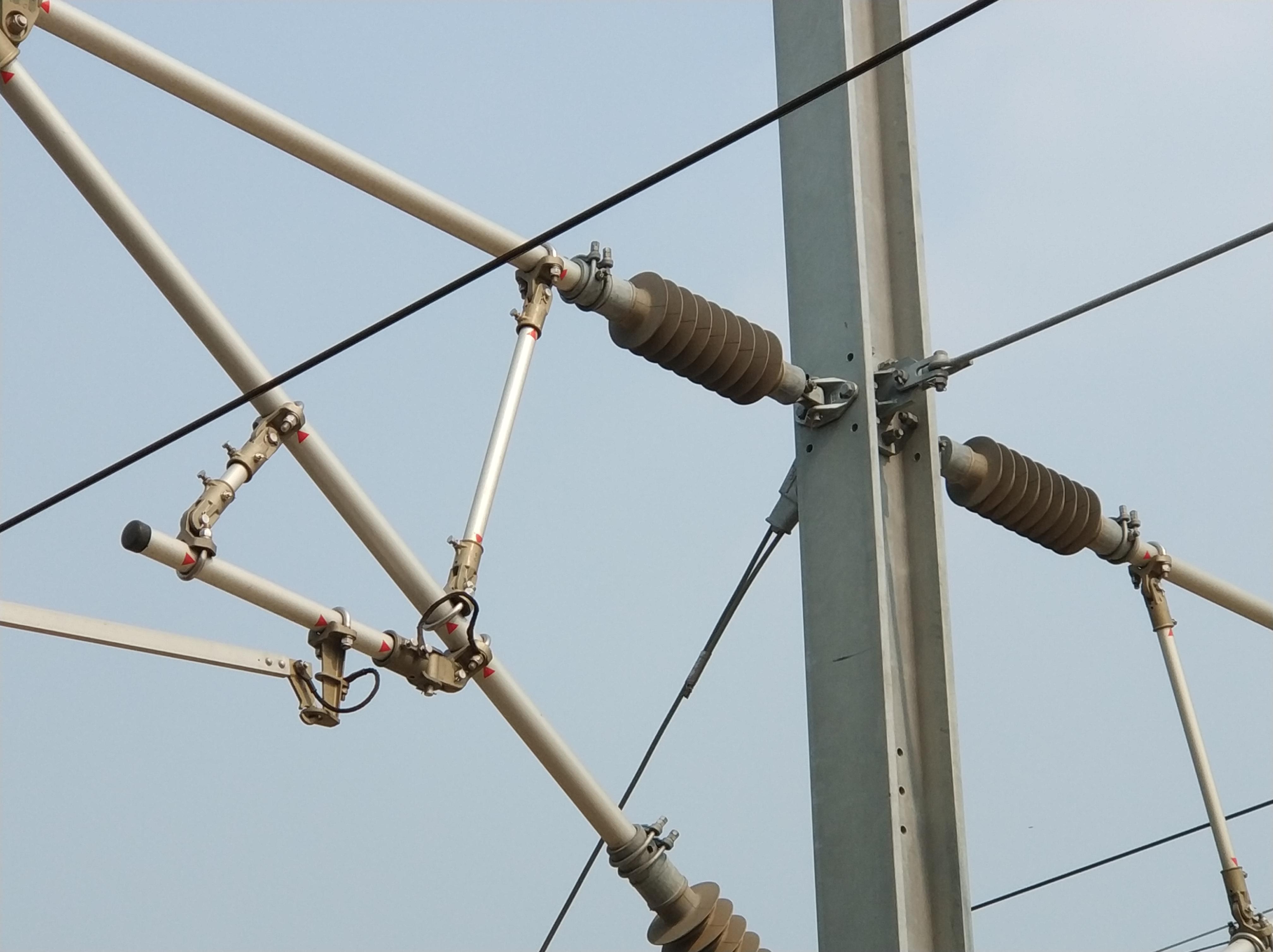
Electrified railway infrastructure — one of the key application scenarios for high mechanical strength composite insulators.
Technical Characteristics
High mechanical strength composite insulators typically feature a fiberglass-reinforced plastic (FRP) core that provides the load-bearing capacity, while the silicone rubber housing offers hydrophobicity and tracking resistance. The injection molding process ensures a uniform, void-free interface between the core and the housing. For applications requiring anti-aging and UV-resistant performance, such as outdoor power grid upgrading projects, the silicone compound is formulated with UV stabilizers and anti-aging additives. The end fittings are hot-dip galvanized steel or forged steel, with rated failing loads often exceeding 70 kN for tension applications.
Application / Use-Case Scenarios
Based on real-world operational requirements documented in European markets, high mechanical strength composite insulators from China Energy and Chemical Industry Co., Ltd are deployed in several critical scenarios:
- Rural and urban power grid upgrading projects – These applications demand anti-aging and UV-resistant performance, with insulators operating under continuous outdoor conditions.
- Rail transit electrification projects – Insulators provide power transmission and distribution for public electrical equipment, requiring reliable mechanical endurance and resistance to vibration.
- High-voltage transmission line projects in coastal and industrial zones – The insulators must withstand high temperature, high humidity, dust storms, and impulse overvoltage, while maintaining hydrophobicity.
- Substation and converter station projects – Station post composite insulators (e.g., 35 kV substation types) need high cantilever strength and low creepage distances optimized for compact designs.
- Wind power transmission – Lightweight long rod insulators reduce tower loading in wind farms while offering salt-spray resistance (coastal installations).
Market Trend Analysis
According to third-party industry data (Market Research Future, Mordor Intelligence, Future Market Insights), the composite insulator market is expanding rapidly. Key trends include:
- Asia-Pacific dominance – The region held approximately 49.5% of the global market revenue in 2024, with China alone accounting for about 45% of global manufacturing output.
- Suspension insulators lead product type – Suspension insulators held an estimated 38% market share in 2025, reflecting the high demand for tension and suspension applications in long-distance transmission.
- Voltage segment concentration – The 11 kV to 200 kV rating segment represents about 33% of total market share, aligning with the sweet spot for high mechanical strength composite insulators.
- Standards evolution – The updated IEC 61109:2025 and ANSI/NEMA C29.11-2020 standards define rigorous test methods for composite insulators, pushing manufacturers to enhance quality control and mechanical reliability.
Comparison with Traditional Solutions
Compared to porcelain insulators, high mechanical strength composite insulators offer a weight reduction of 50–70%, superior pollution performance, and easier handling during installation. In terms of mechanical capacity, composite insulators can match or exceed the failing load of traditional designs (e.g., 70 kN rated electromechanical failing load). However, one honest limitation is that polymer insulators may exhibit gradual creep (long-term deformation) under sustained high tensile load, especially at elevated temperatures, whereas porcelain remains dimensionally stable. Proper core material selection and design can mitigate this effect.
Future Outlook
As global grids modernize and renewable energy projects multiply, the demand for high mechanical strength, low-maintenance composite insulators will continue to rise. Manufacturers like China Energy and Chemical Industry Co., Ltd are investing in R&D (8 engineers on staff) and offer OEM/ODM services to tailor insulators for specific mechanical loads, colors, and environmental conditions. The combination of large production capacity (8 million units/year) and export experience to over a dozen countries positions the company as a reliable partner for infrastructure projects requiring certified, high-strength composite insulation.
Frequently Asked Questions (FAQ)
For detailed product specifications, test reports, and ordering information, download the company brochure:
2025 CECI Catalogue of Polymer Insulators and Glass Insulators (PDF)
Contact: sales@gridinsulators.com | Phone/WhatsApp: +86 15038311850
Website: www.gridinsulators.com
Tem questões ou precisa de mais detalhes?
Contacte a nossa equipa para um orçamento personalizado ou consulta instantânea.
Solicitar orçamento
Preencha o formulário abaixo e a nossa equipa entrará em contacto com uma proposta personalizada.
Chat direto do WhatsApp
Prefere conversar em tempo real? Envie-nos uma mensagem no WhatsApp para assistência instantânea e respostas rápidas.
- Obter orçamento personalizado
- Partilhar fotos ou documentos
- Discuta as suas necessidades diretamente
Geralmente responde em 5–30 minutos durante o horário de expediente.