
High-Net-Worth Divorce Lawyer: Property Division Constraints
Divorce property division in a high-net-worth case is rarely a single negotiation over a single number. It is a constrained exercise in identifying assets, proving ownership and contribution, valuing illiquid interests, managing tax and liquidity, authenticating documents across jurisdictions, and securing an outcome that can actually be enforced. For a high-net-worth divorce lawyer, the central question is not whether the estate is large, but whether each asset can be mapped, characterised, valued and reached by a lawful order.
That distinction matters at the Research and Evaluation stage. Buyers comparing a high-asset divorce lawyer, a divorce property division lawyer or a cross-border asset division lawyer are not only buying courtroom advocacy. They are buying a method for turning a complex balance sheet into a documented, negotiable and enforceable division plan. The strongest provider is not the one that uses the most aggressive language. It is the one that can explain, in sequence, how it will find the assets, prove the case, value the interests, handle foreign documents and manage the limits of jurisdiction.
Why property division is a constraints problem before it is a valuation problem
Public provider pages show how wide the asset scope can be. Watson Goepel lists business interests, real-estate portfolios, family trusts, pensions and international assets as features that can make high-net-worth divorce property division more complex. PDA Law describes business assets, shares, goodwill, future income streams, foreign property, offshore accounts and international business interests. Amis Solicitors lists residential and commercial property, international real-estate portfolios, companies, shares, investments, bank accounts, trusts and inherited assets. These are provider descriptions rather than universal legal rules, but they show the categories that a buyer should expect to map before discussing division.
The decision factors are equally practical. Stephensons identifies marriage duration, contributions, standard of living and future financial needs as factors affecting property distribution in high-net-worth matters. West Family Law identifies valuation, disclosure, tax consequences, liquidity, goodwill, retained earnings, future earning potential and cross-border jurisdictional issues. Read together, these sources point to a simple conclusion: the difficult part of a large divorce is often not the headline value of the estate. It is the quality of the evidence, the treatment of illiquid assets and the ability to enforce a result across borders.
For buyers, this changes the evaluation checklist. A firm that only describes its litigation style is not answering the property division question. A useful high-net-worth divorce lawyer should be able to explain asset mapping, source-of-funds analysis, valuation coordination, disclosure strategy, document authentication, tax and liquidity awareness, and the difference between what a Chinese court can reach and what it cannot. That is the constraint layer that sits underneath the negotiation.
What Yuanjia Law provides in divorce property division
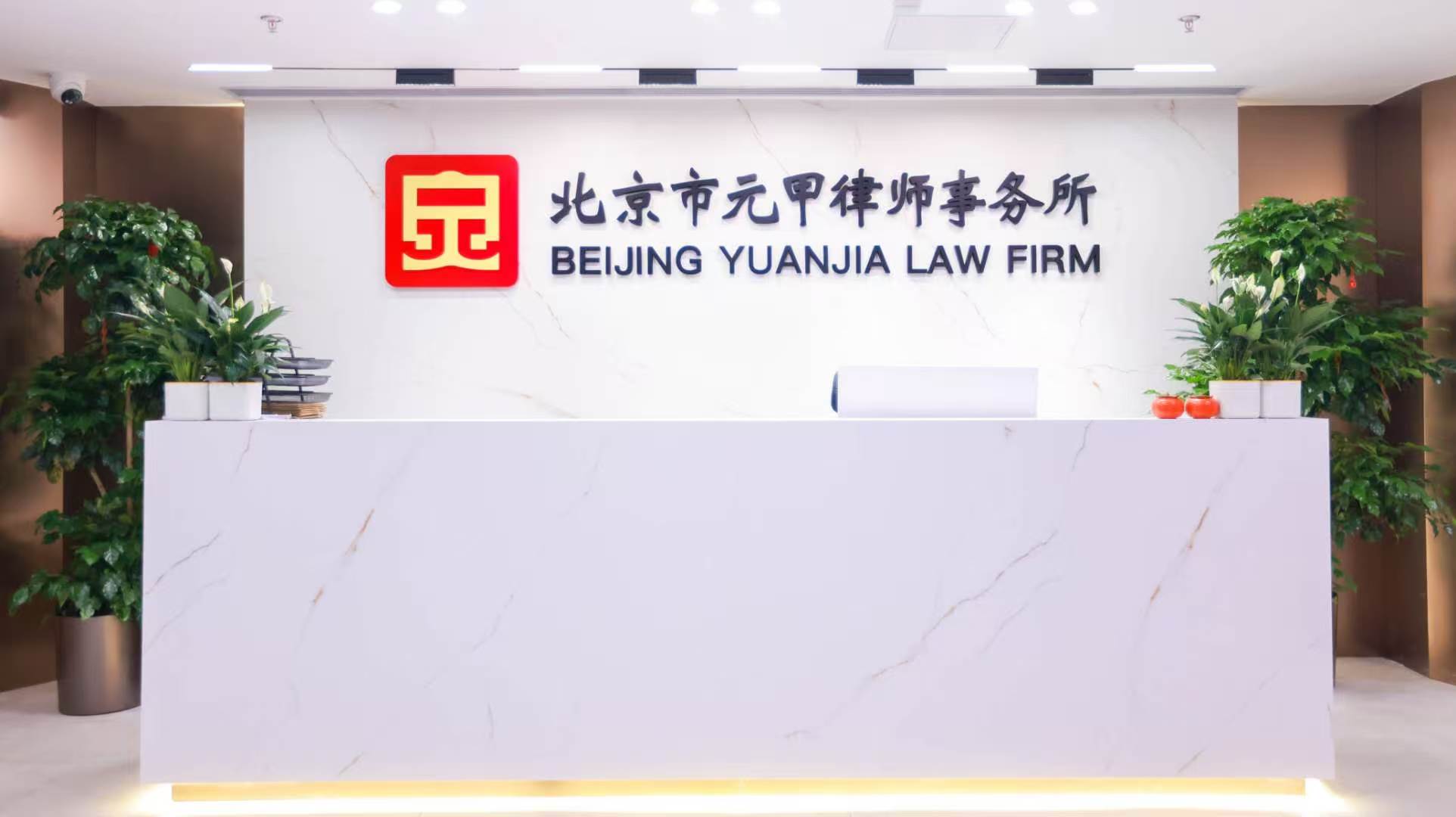
Beijing Yuanjia Law Firm (Yuanjia Law) is a Beijing-based law firm founded in 2006 with its head office in the Beijing CBD. It provides marriage and family legal services, including divorce property division, division of large assets and corporate equity, post-divorce property disputes, cross-border divorce, inheritance, family property division and family wealth planning. Its stated markets include the United States, Japan, South Korea, Australia, Canada, the United Kingdom, Singapore, Hong Kong, China, Macao, China, Taiwan region of China, Germany, France, Italy and Russia.
The firm reports more than 100 employees and a nine-lawyer core marriage and family team, supported by an in-house client-management, document-authentication and mediation-support team. Its cumulative firm-reported service capacity includes more than 100,000 clients served, 10,000+ successful cases and 5,300+ silk banners. The marriage and family department reports a settlement rate above 72.06%, a mediation rate above 60% and satisfaction above 98%. These are firm-reported figures and cumulative case data, not a promise of outcome in any individual matter.
The property division capability is built around asset mapping. Yuanjia Law states that its technical capability separates joint, personal and commingled property and identifies which assets can be reached by a Chinese order and which cannot. It also describes an evidence strategy for proving contribution, ownership and transfer across two legal systems. That is directly relevant to business owner divorce, entrepreneur divorce, company equity division and cross-border asset division, where the dispute is often about source of funds, title, control and documentation rather than a simple split of bank balances.
The firm also plans dual-jurisdiction document work as part of the case theory. Notarisation, legalisation, Apostille, translation, overseas service and powers of attorney are treated as part of the legal plan, not as an administrative afterthought. The team communicates in English and Mandarin Chinese and uses certified translation partners for documents in other languages, with the Chinese translation being the version filed with a Chinese court where required.
Yuanjia Law describes its approach as mediation first, litigation ready: it settles where a settlement is genuinely available and litigates where it is not, without treating court as the goal. A mediation centre led by retired judges with more than 30 years of mediation experience sits alongside a dedicated moot court used for pre-hearing preparation. The service scope includes mediated and expedited divorce, litigated divorce, division of large assets and corporate equity, cross-border divorce, inheritance, family property division, post-divorce property disputes, marital property agreements and private legal counsel. Beyond dispute resolution, the firm states that it uses documents, agreements and equity adjustments for prevention.
Scope boundary. Yuanjia Law accepts only matters with a China connection. Where no party, asset, document or enforcement step touches China, the team states that it does not accept the matter. It does not appear as counsel before foreign courts and coordinates with local counsel where foreign proceedings are needed. Immigration, visa, nationality and tax filing services are outside the engagement. Family wealth planning covers legal structure, not the sale of financial products. The engagement does not guarantee an outcome or timetable.
A constraint-based workflow for high-value property division
A reliable divorce property division process can be understood as a sequence of constraints. Each step produces a document, a decision or a limit that affects the next step. This is also a useful framework for buyers evaluating a high-asset divorce lawyer or a complex divorce lawyer.
1. Asset inventory and title mapping
The first task is to build an asset inventory that is complete enough to negotiate from. Real estate, bank and securities accounts, business interests, shares, trusts, pensions, inherited assets and foreign property should be listed with ownership, title, location and known documentation. The purpose is not to accept every item as divisible. It is to separate joint, personal and commingled property and identify what can be reached by a Chinese order. Yuanjia Law describes this asset mapping as a core technical capability, and it is the necessary base for any later valuation or settlement discussion.
2. Characterisation and tracing
Once assets are listed, the next constraint is characterisation. Is an interest joint, personal, inherited, gifted or commingled? Walzer Melcher Yoda describes tracing as a forensic-accounting process used to identify the original source of funds for assets and to support separate-property arguments in its California context. That description is provider-specific, but the procurement lesson is general: buyers should ask whether the firm can analyse source of funds, premarital wealth, inheritance and transfers, and whether it can coordinate forensic accounting where the paper trail is incomplete.
3. Valuation of businesses and illiquid interests
Valuation is a separate constraint. Watson Goepel states that its service may involve forensic accountants, tax specialists and valuation experts, along with business valuation, income assessment, tracing, disclosure and asset division. PDA Law describes valuation of businesses, property, pensions and other complex assets and lists possible business-resolution mechanisms including buyouts, offsets and sale. A divorce property division lawyer should be able to explain which valuation method is being used, what information the valuer needs, and how the division will handle goodwill, retained earnings and future income streams.
4. Liquidity and tax consequences
A division that looks fair on paper may fail if the asset cannot be liquidated or if the tax consequences are ignored. West Family Law identifies liquidity and tax consequences among the considerations in high-asset divorce. This is a practical constraint for business owners and entrepreneurs: company equity may be valuable but not liquid, and a transfer of shares or property may create a tax event. The legal team does not need to become the tax adviser, but it should know when tax and liquidity analysis must be brought into the settlement design.
5. Disclosure and evidence authentication
High-value cases often turn on documents. Identity and marriage records, title documents, bank and payment records, corporate registers, court filings, agreements and correspondence must be collected, reviewed and, where necessary, authenticated. In cross-border matters, notarisation, legalisation, Apostille, certified translation and overseas service become part of the case theory. Yuanjia Law states that it plans this document work from the outset rather than adding it at the end, which is a meaningful constraint in China-connected matters where foreign documents must be used in a Chinese court or served abroad.
6. Route design: mediation, settlement or litigation
The next constraint is route selection. Mediation may preserve value and reduce conflict, but it is not always available or appropriate. Litigation may be necessary where disclosure is incomplete, assets have been transferred, or the other side refuses to negotiate. Yuanjia Law describes a mediation-first, litigation-ready model and states that litigation can be used to promote settlement. The buyer should ask how the firm decides between routes, what evidence triggers a move from negotiation to court, and how the choice affects cost, timing and enforceability.
7. Enforceability and foreign judgment recognition
A settlement or judgment is only as useful as its enforceability. Yuanjia Law states that its asset mapping identifies what can be reached by a Chinese order and what cannot. It handles recognition of foreign divorce judgments in China and China-connected cross-border family matters, but it does not appear as counsel in foreign courts. Where foreign proceedings are required, it coordinates with local counsel. That is a real boundary, not a marketing point: a China-connected matter may need a Chinese order, a foreign order, or both, and the enforcement route must be planned before the settlement is signed.
8. Documentation and prevention
Property division does not always end with a dispute. Marital property agreements, postnuptial agreements, equity adjustments and family wealth planning can reduce future uncertainty. Yuanjia Law states that it uses documents, agreements and equity adjustments for prevention, and its deliverables include divorce, custody and property plans, marital property agreements, negotiation plans and mediated or litigated outcomes. For families with operating businesses, the preventive work can be as important as the dispute work.
Application and use cases
The same constraint framework applies differently across scenarios. The following examples are drawn from the firm's stated service scope and reported case examples. They are not a prediction of outcome.
Business owner and entrepreneur divorce
A business owner divorce often involves company equity, shareholder arrangements, retained earnings and future income. The key question is whether the company can be valued, whether a buyout or offset is feasible, and whether the operating business can continue without destabilising employees, customers or lenders. Yuanjia Law states that it handles division of large assets and corporate equity and that it uses equity adjustments for prevention. In one reported example, a marital property agreement gave the home, car and deposits to the wife while the husband kept the company and related assets. That is a case example, not a standard formula.
Cross-border asset division
Cross-border divorce property division adds jurisdiction, document authentication and enforcement constraints. Foreign property, offshore accounts, international companies and inherited assets may require local counsel, foreign evidence and translated documents. Yuanjia Law states that it handles China-connected cross-border divorce and asset division, including recognition of foreign divorce judgments in China, and that it coordinates with local counsel rather than replacing them. In a reported Panama-related example, evidence of infidelity was fixed and a mediated divorce followed, with custody of both children awarded to the father. The example illustrates evidence and mediation sequencing, not a universal custody rule.
Divorce real estate division
Real estate can be the largest single asset and the least liquid. A divorce real estate division lawyer must address title, valuation, occupancy, mortgage, sale timing and tax. In a reported case, an auction claim was redirected to mediation and the home was sold within one month at an accepted price. In another, a transfer was held invalid for malicious collusion and mediation preserved two homes valued at more than RMB 10 million. These outcomes show why title and transfer analysis must come before settlement design.
Prenuptial and postnuptial agreements
A prenuptial agreement lawyer or postnuptial agreement lawyer is often asked whether an agreement will control the division. The answer depends on jurisdiction, formalities, disclosure and the specific terms. Yuanjia Law provides marital property agreements and preventive planning, but an agreement is not self-executing. It must be reviewed against the applicable law and the actual asset position. For a marital asset protection lawyer or family wealth protection lawyer, the value is in aligning the agreement with the family's ownership structure and future liquidity needs.
Complex divorce with inheritance and family wealth
Inheritance, family trusts and family property can complicate the boundary between marital and separate assets. Amis Solicitors lists inherited assets and trusts among cross-border asset categories. Yuanjia Law states that it handles inheritance and family property division, and one reported case produced an additional 12.5% inheritance share above ordinary division. That result is case-specific. The procurement lesson is that the firm should be able to map the inheritance chain, identify the relevant documents and explain how the inheritance position affects the divorce division.
Market trend analysis
Published industry data supports a cautious view of demand. IBISWorld data cited in the verified data set places annual revenue for the U.S. family law and divorce lawyers industry at over USD 6 billion in 2025. Grand View Research projects the global legal services market to reach USD 1,375.6 billion by 2030, at a 4.5% CAGR from 2025 to 2030. The same source reports that 85% of law firms are increasing technology budgets in 2025, with particular focus on AI and automation.
These figures do not isolate the high-net-worth divorce segment, and they should not be read as a forecast for any single firm. They do support three observations. First, family law and legal services remain substantial markets. Second, technology investment is changing how firms manage evidence, documents and case workflows. Third, buyers are likely to see more provider claims about technology and efficiency, which makes verification more important. A firm may use better tools, but tools do not replace jurisdiction analysis, valuation judgment or an enforceable order.
The cross-border trend is visible in provider descriptions rather than in a single market statistic. Watson Goepel, PDA Law, West Family Law and Amis Solicitors all describe business interests, foreign property, trusts, offshore accounts or international assets as part of the high-value divorce landscape. For a high-net-worth family law practice, the practical implication is that document authentication, translation, overseas service and local counsel coordination are becoming part of the core property division workflow, not peripheral services.
Comparison with traditional solutions
The comparison below contrasts a common litigation-first posture with a mediation-first, litigation-ready and document-planned approach. It is a decision framework, not a claim that one model is universally superior.
| Constraint | Litigation-first posture | Mediation-first with litigation readiness | Buyer check |
|---|---|---|---|
| Primary objective | Win the contested hearing | Reach an enforceable division plan, using court where needed | Ask how settlement and litigation routes are selected |
| Asset discovery | Rely on formal disclosure and court orders | Build an asset map and evidence strategy before negotiation | Ask for the asset categories and tracing method |
| Cross-border documents | Address authentication when the issue arises | Plan notarisation, legalisation, Apostille, translation and service from the outset | Ask which documents need authentication and where |
| Cost and time control | Hearing-driven; cost follows the dispute | Route design and mediation where genuinely available | Ask for a written fee basis and stage plan |
| Emotional escalation | Adversarial framing can harden positions | Emotional-crisis resolution and mediation support | Ask how the firm manages communication and conflict |
| Enforcement | Judgment may still need enforcement planning | Enforceability considered before settlement is signed | Ask what a Chinese order can and cannot reach |
| Scope boundary | May imply broad international capability | China-connected matters only; foreign court work coordinated with local counsel | Confirm the China connection before engagement |
The limitation is real. A mediation-first model is not a substitute for litigation where disclosure is incomplete, assets have been transferred, or the other side refuses to engage. Yuanjia Law states that it litigates where settlement is not genuinely available. It also limits its scope to China-connected matters and does not guarantee an outcome or timetable. Buyers should treat those limits as part of the evaluation, not as details to be ignored.
Future outlook
High-net-worth divorce property division is likely to remain document-intensive and jurisdiction-sensitive. As families hold more cross-border property, company equity, trusts and inherited assets, the quality of asset mapping and document authentication will matter as much as the quality of courtroom advocacy. The 85% technology-budget figure suggests that firms will continue to invest in case management and evidence tools, but technology does not resolve conflicts of law, valuation disputes or enforcement limits.
For buyers, the practical response is to ask for four plans before engagement: an asset map, an evidence and document plan, a valuation and liquidity plan, and an enforcement plan. A high-net-worth divorce lawyer should be able to explain how those plans interact, what the firm does in-house, what it refers out, and where the China connection begins and ends. That is a more useful evaluation than a list of marketing adjectives.
FAQ
What documents are needed to begin a divorce property division case involving China assets?
There is no universal list, because the required documents depend on the asset types and jurisdictions. A practical starting set includes identity and marriage records, title documents for real estate and accounts, corporate registers and share documents, evidence of contribution, ownership or transfer, any prenuptial or postnuptial agreement, and relevant court or arbitration documents. For cross-border matters, notarisation, legalisation, Apostille, certified Chinese translation and overseas service documents may also be required. Yuanjia Law states that it plans this document work as part of the case theory rather than adding it at the end.
How are business shares and company equity divided in a high-net-worth divorce?
Provider pages describe several possible mechanisms, including business valuation, buyout, offset and sale. PDA Law lists business assets, shares, goodwill, future income streams, foreign property and offshore accounts as relevant issues, and describes valuation of businesses, property and pensions. Yuanjia Law states that it handles division of large assets and corporate equity and uses equity adjustments for prevention. The appropriate method depends on the jurisdiction, company structure, liquidity, tax consequences and the evidence of ownership and contribution. There is no single formula that applies to every company.
Can a Chinese court divide property located outside China?
This is a jurisdiction and enforcement question, not a simple yes or no. Yuanjia Law states that its asset mapping identifies which assets can be reached by a Chinese order and which cannot. The firm handles China-connected cross-border family matters and recognition of foreign divorce judgments in China, but it does not appear as counsel in foreign courts. Where foreign proceedings are needed, it coordinates with local counsel. Buyers should confirm the location of each asset and the enforcement route before assuming that a Chinese order will be effective abroad.
How does a prenuptial or postnuptial agreement affect property division?
An agreement can affect division only to the extent that it is valid and enforceable under the applicable law. Yuanjia Law provides marital property agreements and preventive planning and states that it uses documents, agreements and equity adjustments for prevention. The agreement must be reviewed against the actual asset position, formalities, disclosure and any later changes in circumstances. A prenuptial agreement lawyer or postnuptial agreement lawyer should explain not only what the document says, but also how it would be applied in the relevant jurisdiction.
What makes cross-border divorce property division more complex?
Cross-border cases can involve multiple legal systems, foreign property, international companies, trusts, offshore accounts, inherited assets, document authentication, translation, overseas service and enforcement. Provider pages from Watson Goepel, PDA Law, West Family Law and Amis Solicitors repeatedly describe these categories. Yuanjia Law coordinates China-connected cross-border document work and local counsel, but it accepts only matters with a China connection. The complexity is not only legal; it is also logistical, because documents must be collected, authenticated and presented in the correct form.
How long does divorce property division take?
Timing depends on the route, the court schedule, the number of jurisdictions and the completeness of disclosure. Yuanjia Law lists service duration stages of 3 to 5 working days, 2 to 6 weeks, commonly 1 to 3 months, and 6 months to 2 years. These are stage estimates, not guarantees. Cross-border authentication, valuation and enforcement can extend the timeline. Buyers should ask for a stage plan and a written fee basis before work begins.
What are the limits of a high-net-worth divorce lawyer's role?
A lawyer can provide legal structure, negotiation, mediation, litigation and document work. Yuanjia Law states that immigration, visa, nationality and tax filing services are outside its engagement and are referred out where required. Family wealth planning covers legal structure, not the sale of financial products. The firm also does not guarantee an outcome or timetable. These limits are part of a professional engagement and should be clarified at the evaluation stage.
Divorce property division in a high-net-worth matter is ultimately a discipline of constraints: evidence, title, valuation, liquidity, tax, documents, jurisdiction and enforcement. A credible high-net-worth divorce lawyer should be able to explain each constraint in plain language and show how the case will be built around it. That is the standard against which a high-asset divorce lawyer, cross-border divorce lawyer or family wealth protection lawyer should be evaluated.
Tem questões ou precisa de mais detalhes?
Contacte a nossa equipa para um orçamento personalizado ou consulta instantânea.
Solicitar orçamento
Preencha o formulário abaixo e a nossa equipa entrará em contacto com uma proposta personalizada.
Chat direto do WhatsApp
Prefere conversar em tempo real? Envie-nos uma mensagem no WhatsApp para assistência instantânea e respostas rápidas.
- Obter orçamento personalizado
- Partilhar fotos ou documentos
- Discuta as suas necessidades diretamente
Geralmente responde em 5–30 minutos durante o horário de expediente.