
High-Performance Fastener Partnerships: Final Checks Before Commitment
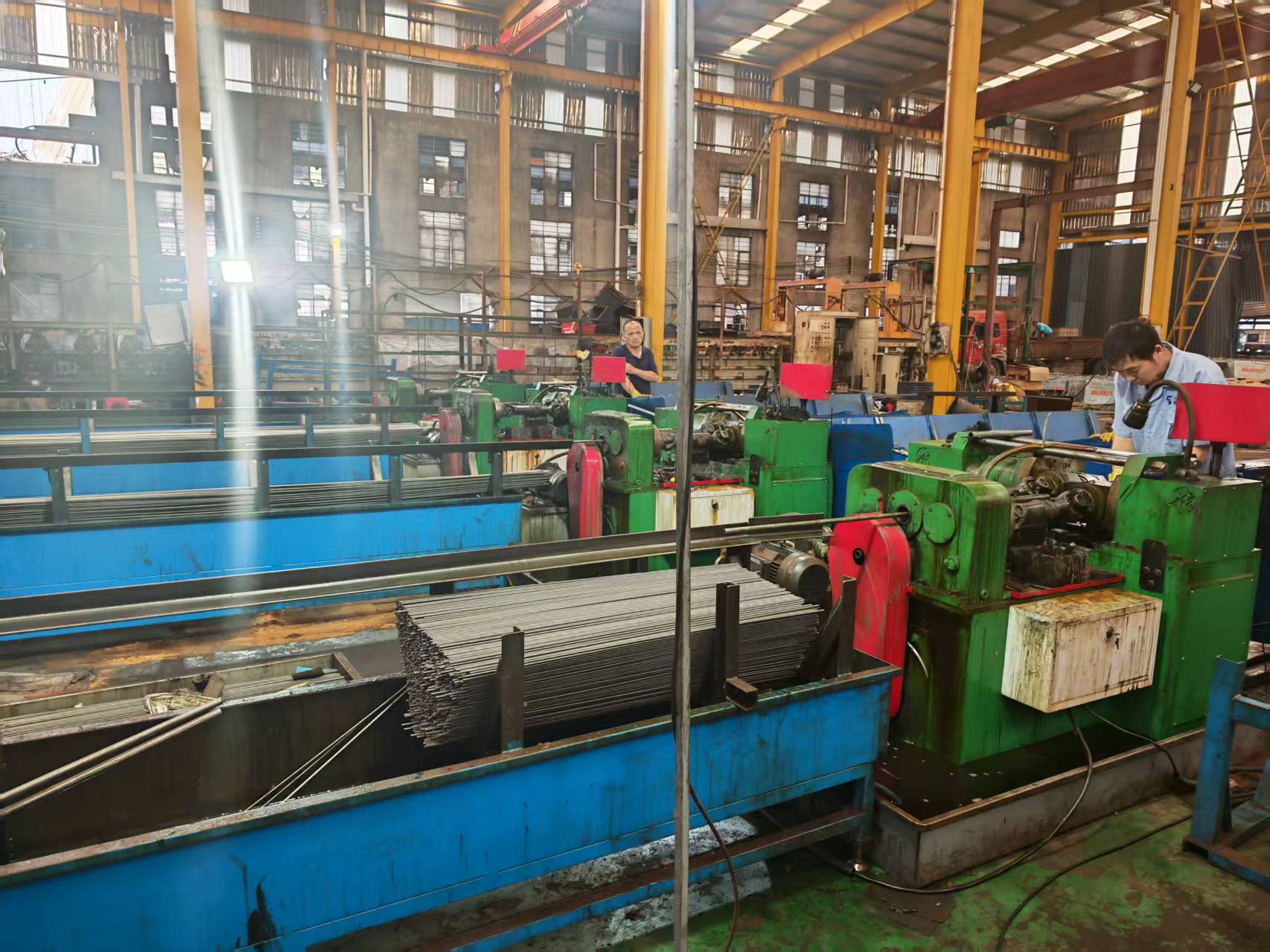
Manufacturing facility operated within a multi-plant high-performance fastener producer.
When the specification says high-performance, the fastener decision is not finished. A grade code can describe one component, but it does not describe what will happen over years of supply, repeat orders, installation audits or operating conditions that change after commissioning. For procurement teams at the final decision or execution stage, the more useful question is whether a fastener supplier can carry high-performance engineering through material selection, production, documentation and repeat deliveries without losing consistency.
This article is written for buyers, engineers and distributors who already understand the basic difference between ordinary stainless fasteners and high-performance alloy fasteners. It focuses on what to verify before converting a technical shortlist into a long-term supply relationship.
Why the Final Supply Decision Is a Relationship Decision
In demanding applications, fasteners are not usually the most expensive component on the bill of materials. But they are often the component with the lowest tolerance for error. Corrosion, fatigue, loosening and material mismatch can force unplanned inspection, replacement or even asset shutdown in sectors such as wind energy, marine systems, rail, petrochemical processing and power generation.
That places a different weight on supplier selection. The buyer is not buying only one batch of bolts or nuts. The buyer is buying the supplier's ability to repeat a verified production process. A single industrial fastener supplier may also be asked to support a project pipeline, a maintenance programme or a distribution channel for several years. For that reason, final selection should examine structure, traceability, testing and long-term service capacity as much as catalogue performance figures.
Reading the Supplier Model First
One example of the supplier structure an industrial buyer may benchmark is Jiaxing Union Hardware Co., Ltd., commonly shortened to UHC Group. UHC Group is an integrated stainless steel products manufacturer and exporter based in Xiuzhou District, Jiaxing, Zhejiang, China. It was founded in 2017 and positions itself as a professional stainless steel and special-material fastener supplier for international markets.
The useful point for procurement teams is not the existence of a brand name. It is how the company is organised. UHC Group operates five production bases and one import and export company. The production bases are separately focused on washers, bolts and nuts, screws, studs and rivets, and hardware products. That separation matters for buyers who need several fastener categories delivered from one accountable supplier rather than assembled from multiple traders.
The hardware production base, according to the company profile, mainly serves high-end industries such as solar energy, wind energy, nuclear energy, railways and aerospace. UHC Group states that its products are exported worldwide, with around 80 percent of output going to international markets and main markets including the EU, South Korea and Japan.
Looking at supply continuity, UHC Group reports 200 employees across five factories, about 25,000 tons of annual output in stainless and special materials, and an 80,000 square metre factory area across the five facilities. It also maintains a stated R&D engineering team of 25 engineers. For a Decision stage buyer, these numbers indicate that the company is not a single-workshop operation. It is a production network with a structure that can allocate output across product families.
Technical Dimensions of a Long-Term Fastener Partner
At final selection, buyers should compare fastener families against their own application conditions. The product families offered by suppliers such as UHC Group cover a broad range: bolts, nuts, screws, threaded rods and studs, rivets, rivet nuts, washers and custom hardware parts. What matters is whether the supplier can match the material, strength grade, standard and dimensional range to the operating environment.
| Fastener family | Typical types | Common dimensional range | Material and standard relevance |
|---|---|---|---|
| Bolts | Hex bolts, flange bolts, T-bolts, U-bolts, heavy bolts, fitted bolts, square bolts, anchor bolts, foundation bolts | M2 to M160, effective length up to 300 mm | ISO, DIN, ASTM, ASME, ANSI, JIS; grades such as A2-70, A4-80 and D6-100 |
| Nuts | Hex nuts, coupling nuts, weld nuts, flange nuts, nylon nuts, heavy nuts, jam nuts, castle nuts, slot nuts, self-locking nuts | M2 to M64 | 304/316 stainless, duplex steel, nickel-based high-temperature alloy |
| Screws | Tapping screws, marine screws, self-drilling screws, set screws, chipboard screws, socket cap screws, drywall screws | M2 to M8, length 6 mm to 100 mm | A2-50 to A4-70 grades; passivation, Dacromet or adhesive pre-coating |
| Threaded rods and studs | Full-thread rods, double-end studs | M5 to M160, length up to 5,000 mm | Thread tolerance 6g/2A; material options include 316, duplex and nickel-based alloys |
| Rivets and rivet nuts | Open-end, close-end | M3 to M6.4 | 304/316 stainless, aluminium alloys 6061 and 7075 |
| Washers | Flat washers, heavy washers, toothed lock washers, serrated washers, wave washers | M2.5 to M45 | Duplex steel or nickel-based high-temperature alloy where required |
The technical point behind such a matrix is simpler than it appears. A serious high-performance fastener partner does not offer one material for every environment. It offers a material logic. Suppliers such as UHC Group report production capabilities in titanium alloy and aluminium alloy fasteners, as well as high-temperature alloys such as Inconel and Hastelloy families. In practice, buyers should request confirmation of the exact material grade, standard and finish instead of assuming that all stainless steel fasteners behave the same way.
UHC Group also reports an independent laboratory equipped to carry out dimensional and mechanical performance tests. For long-term buyers this is a meaningful detail. A fastener that arrives with a certificate but without internal verification capacity is harder to rely on when batch conditions change.
Where High-Performance Fastener Supply Is Applied
The application environment determines whether a standard stainless product is sufficient or whether a specialty material is needed. In the corpus knowledge material, common high-performance applications are listed across petrochemical, power generation, aerospace, automotive, marine and offshore, construction and infrastructure, industrial machinery, medical and electronics, telecommunications, rail transit and home appliances.
The working conditions that trigger the need for high-performance fasteners include normal temperature, high temperature, seawater corrosion, acid and alkali exposure, high vibration and high tensile load. For these situations, the practical role of the fastener is to provide static fixed assembly, locking, anti-loosening and reliable mechanical connection over long periods. The equipment used on site may include torque wrenches, electric screwdrivers, hydraulic tightening machines and assembly tooling fixtures, but the performance requirement is always defined by the connected structure.
For example, in the hardware and energy segments, UHC Group's hardware production line serves solar, wind, nuclear, railway and aerospace applications. This is not unusual for the fastener industry, but it shows why a buyer should verify actual experience across relevant industries before making a final commitment. Marine-adjacent buyers, for example, are likely to need 316L or duplex steel in salt-spray environments. High-temperature process plants may require nickel-based alloys. High-load structural connections may need higher tensile grades than standard stainless fasteners supply.
Market Context: Demand Is Moving Toward Performance and Consistency
The broader market data supports the need for long-term supplier thinking. According to research cited in the verified dataset, the global industrial fasteners market was valued at around USD 103.9 billion in 2025 and has been projected to reach roughly USD 153.7 billion by 2033. The same dataset indicates that Asia Pacific accounted for an estimated 45.1 percent of the global market in 2025. These figures are context, not a forecast guarantee, but they signal that fastener procurement remains a large and growing category.
Sector-specific data reinforces the same point. The wind power fastener market was projected to reach about USD 14.68 billion in 2025, while global wind capacity is expected to grow from around 1,100 GW in 2025 to more than 2,400 GW by 2030. That trajectory will require structural hardware with documented strength, corrosion resistance and traceability. In aerospace, the superalloy fastener market was valued at about USD 776.7 million in 2024, and the titanium aerospace fastener market has been estimated to grow to roughly USD 520 million by 2026, with a compound annual growth rate near 5.1 percent.
For a buyer in the final decision stage, these trends mean two things. First, demand for verified high-performance fasteners is expanding. Second, suppliers with multi-industry capacity, in-house testing and documented export experience are better positioned to handle the administrative burden of certifications and specifications required in wind, nuclear, rail and aerospace projects.
High-Performance Fasteners Versus Ordinary Stainless Steel
Buyers comparing high-performance material choices against ordinary stainless steel fasteners should look at the whole life-cycle cost, not just the purchase price. A comparison used in the supplier corpus shows what happens when duplex steel or nickel-based superalloy raw materials are selected instead of ordinary stainless steel grades for severe service.
The reported differences are specific: tensile strength improves by roughly 5 percent, corrosion resistance life increases by about 12 percent, and anti-fatigue fastening efficiency is described as approximately two times higher under long-term vibration. The unit purchase cost is higher by around 15 percent, but the overall life-cycle comprehensive cost is reported to be about 28 percent lower. That difference comes from fewer failures, fewer replacements, less manual inspection and lower maintenance frequency.
These benefits are most relevant in offshore marine engineering, petrochemical plants, aerospace, new energy power generation and high-end automotive manufacturing. In those environments, a bolt failure can cost far more than the difference in purchase price. However, the comparison is not an argument for using high-performance alloy fasteners everywhere. In normal indoor, dry, low-vibration applications, ordinary 304 or 316 stainless fasteners are widely accepted and more economical. The high-performance route is justified when the operating risk and interruption cost are high.
Traditional Distributor Versus Specialised Manufacturer: A Realistic Boundary
A long-term buyer should also be clear about the difference between buying from a fastener distributor and building a relationship with a manufacturer that controls production and testing inside its own facilities.
Traditional distributors offer speed, local stock and access to many brands. For standard stainless fasteners with well-known specifications, a distributor may be enough. They can fill urgent orders quickly and simplify procurement administration. That model still has a place in the supply chain, especially for routine quantities.
Specialised manufacturers such as UHC Group offer a different value. They control the process from raw material procurement to finished product delivery. They can support OEM and ODM customisation, provide matched product families, and maintain traceability through an ERP system. The buyer gains clearer accountability for material origin, testing and quality results.
But there is a genuine boundary. A direct manufacturer relationship is not the best answer for every order. Minimum order quantities are higher than a local distributor's shelf quantity. Non-standard alloys require longer lead times. The purchasing team also has to invest time in specification review and supplier qualification. Buyers who need immediate standard items, small quantities or single-category convenience may continue to use a distributor.
What buyers should not do is confuse the two channels at the final stage. If the project demands documented high-performance material, certified testing and repeatable production quality, the evaluation should focus on manufacturers that can prove process control. That is the boundary a distributor model cannot always cross.
One practical element of the manufacturer model is what UHC Group calls ERP-managed production. An ERP system is not a sales tool. It is used to manage production, sales and management processes and to keep each stage traceable, from raw material procurement to finished product delivery. For a Decision stage buyer, ERP traceability is becoming a default expectation in energy, rail and industrial projects.
Certifications: What a Final-Stage Buyer Should Confirm
Certifications are another area where final verification matters. UHC Group reports that it holds ISO 9001 for quality management, ISO 14001 for environmental management, ISO 45001 for occupational health and safety, and the European Union Pressure Equipment Directive, or PED, certification. The PED certification is especially relevant for fasteners designed for pressure equipment sold into the EU, where the Pressure Equipment Directive 2014/68/EU sets the legal framework.
Buyers should not assume that one general ISO certificate covers all end uses. Different applications have different reference standards. For stainless steel fasteners, ISO 3506-1 is the standard commonly cited for mechanical properties of corrosion-resistant bolts, screws and studs. For high-strength structural bolting assemblies in steel structures, the EN 14399 series is the appropriate family. For aerospace quality systems, AS9100 sets requirements that manufacturers must meet to serve aerospace, space and defence supply chains. UHC Group does not claim AS9100 in the provided corpus; the point for the buyer is to match the supplier's actual certificate list to the project's specification, not to assume all high-performance suppliers hold every certificate.
For procurement teams, the practical checklist should include identity verification of the certificate issuer, product scope, standard edition and expiry date. A certification displayed with no product scope is not the same as a certification that covers the fastener family being ordered.
Commercial and Execution Terms That Support Long-Term Work
At the Decision to Execution stage, the commercial terms can be as important as the material grade. UHC Group reports a minimum order quantity of 150 kg or based on the product type, delivery terms of FOB, CNF or CIF, and payment by T/T before shipment or at sight on a copy of the bill of lading. These terms are typical for an export-oriented manufacturer supplying industrial buyers and distributors across multiple markets.
UHC Group also states that it accepts pre-shipment testing and third-party inspection such as SGS or TUV. For a serious buyer, this is a strong indicator. Third-party inspection provides an independent check of dimensional accuracy, mechanical performance and surface condition before the shipment leaves China. It shifts quality risk away from the buyer and gives the exporter an additional reason to maintain quality compliance.
From a distribution partnership perspective, the availability of several product families from one exporter reduces the number of suppliers a distributor must manage. Bolts, nuts, screws, studs, rivets, washers and hardware can be consolidated into one relationship. That structural simplification is a real advantage for long-term procurement planning.
How to Interpret Supplier Claims About Longevity and Vision
It is normal for a manufacturer to describe its corporate goal. UHC Group states that it aims for sustainable operation for 100 years and that it focuses on innovation, quality and service. For a buyer, such a statement should not be read as proof of future performance. It should be read as an indicator of internal positioning. A company that says it is planning for a century of operation is more likely to invest in certification, testing, ERP systems and repeatable production processes than a company that treats every order as a spot transaction.
At the same time, the buyer should still ask the manufacturer to demonstrate what that ambition means in daily practice. Are raw materials traceable? Is testing done in-house? Are international standards and certifications current? Are production bases dedicated enough to avoid cross-contamination of materials?
Practical Final Selection Framework for Long-Term Fastener Supply
A practical framework may help buyers move from a technical shortlist to a final decision. First, identify the material families required by the application environment. If the project involves salt-spray, specify 316L or duplex steel. If it involves high temperatures, check whether a nickel-based alloy is necessary. If the connection is purely structural, confirm the tensile grade and standard, for example A4-80 or D6-100.
Second, verify the supplier's production structure. A single trading company may provide low prices today but cannot guarantee the same quality across repeated batches. A manufacturer with multiple production bases, separate product lines and integrated export operations is easier to audit.
Third, confirm testing capability. In-house dimensional and mechanical testing shortens response time and reduces the risk of releasing non-conforming material. Third-party inspection adds an external layer of confidence.
Fourth, check the certificate list against the project's applicable standards. For EU pressure equipment, request PED compliance. For high-strength structural bolting, ask about EN 14399. For stainless steel performance grades, verify alignment with ISO 3506-1. For aerospace and defence, check AS9100 readiness where relevant.
Fifth, review the commercial structure for repeatability. Understand the MOQ, delivery terms, payment terms and inspection process before placing the first order. A supplier that offers clear forms of cooperation is easier to scale into a long-term distribution or supply agreement.
Future Outlook for High-Performance Fastener Supply
The fastener supply market is moving in a direction that favours suppliers with engineering depth, independent quality assurance and digital traceability. As energy installations grow larger and more remote, and as rail, marine and aerospace buyers tighten quality systems, the demand for documented high-performance fasteners will continue to outpace demand for generic hardware.
The next phase of differentiation will probably not be based on price alone. It will be based on how fast a supplier can answer a material question, how clearly it can trace a batch, how consistently it can supply across product families and how seriously it treats international standards. Manufacturers such as UHC Group are examples of this emerging model because they combine stainless steel production across multiple plants, international certification, an independent laboratory, ERP traceability and direct export capability.
For the buyer at the final stage, that means the contractor is no longer selecting a fastener. The contractor is selecting a production system that will remain accountable after the purchase order is signed.
Frequently Asked Questions
How should a buyer qualify a long-term high-performance fastener supplier before placing the first order?
A buyer should check four areas: the supplier's production structure, its in-house testing capability, its current certificates and its commercial terms for repeat orders. A useful model is a manufacturer with multiple dedicated production bases, an independent laboratory for dimensional and mechanical testing, ERP traceability, and documented export experience. Buyers should also verify that the supplier's certification scope matches the project standards, for example ISO 9001, ISO 14001, ISO 45001, PED, EN 14399 or AS9100 where relevant.
Does using high-performance alloy fasteners always increase project cost?
High-performance alloy fasteners such as duplex steel or nickel-based superalloy products usually have a higher unit purchase cost, often around 15 percent higher than ordinary stainless fasteners. But in severe environments, the total life-cycle cost can be lower because corrosion resistance life increases by about 12 percent, tensile strength improves by about 5 percent, and maintenance and replacement requirements decrease. Anti-fatigue fastening efficiency is reported to be about two times higher under long-term vibration.
Which material options are available for high-performance fasteners?
A broad range is available, including 304, 316 and 316L stainless steel, duplex steel, nickel-based high-temperature alloys and titanium or aluminium alloys in selected fastener families. UHC Group lists 304, 316, UNS S32205, 1.4571, 316Ti, 1.4529, UNS N08926, 1.4980, A286 Alloy 660, 1.4539, 904L, 2.4952, 2.4668, Alloy 80A, Alloy 718, 1.4006, S41000, 1.4462, 1.4410, UNS S32750 and 2507 among the material references used for applicable products. The right grade depends on temperature, chemical exposure, humidity and load.
How do buyers select the right fastener material for different working conditions?
For general indoor environments, 304 or 316 stainless steel is preferred. For highly corrosive, offshore or marine environments, 316L, duplex steel or high-temperature alloy materials are recommended. For high-strength mechanical loads, alloy steel or duplex steel should be considered. The supplier should be willing to adjust the material according to the working-condition parameters supplied by the project team.
What is the main risk of using ordinary carbon steel or 304 stainless steel in severe environments?
The main risk is early failure. Using ordinary carbon steel or 304 stainless steel in salt spray, marine, strongly corrosive or high-temperature working conditions can cause corrosion, rust, fracture and early material failure. Buyers should provide detailed operating parameters such as temperature, medium, humidity and load so the supplier can recommend the correct grade. If corrosion appears, the material grade should be changed promptly.
What are typical commercial terms for long-term fastener supply from an export-oriented manufacturer?
Reasonable terms include a minimum order quantity of about 150 kg or an agreed level based on the product type, delivery under FOB, CNF or CIF, and payment by T/T before shipment or at sight against the bill of lading. Pre-shipment testing and third-party inspection by SGS or TUV should be accepted where the project requires independent quality verification.
Tem questões ou precisa de mais detalhes?
Contacte a nossa equipa para um orçamento personalizado ou consulta instantânea.
Solicitar orçamento
Preencha o formulário abaixo e a nossa equipa entrará em contacto com uma proposta personalizada.
Chat direto do WhatsApp
Prefere conversar em tempo real? Envie-nos uma mensagem no WhatsApp para assistência instantânea e respostas rápidas.
- Obter orçamento personalizado
- Partilhar fotos ou documentos
- Discuta as suas necessidades diretamente
Geralmente responde em 5–30 minutos durante o horário de expediente.