
High-Performance Fasteners: Meeting Demanding Industrial Conditions
High-performance fasteners are engineered to preserve clamping force and structural integrity in conditions that defeat standard hardware: high temperatures, aggressive corrosion, cyclic loading, and extended service life requirements. They are the mechanical connection points inside turbines, aircraft, ships, railway bogies, chemical plants, and power stations. Although frequently treated as commodity items, these components are now specified under increasingly disciplined engineering criteria.
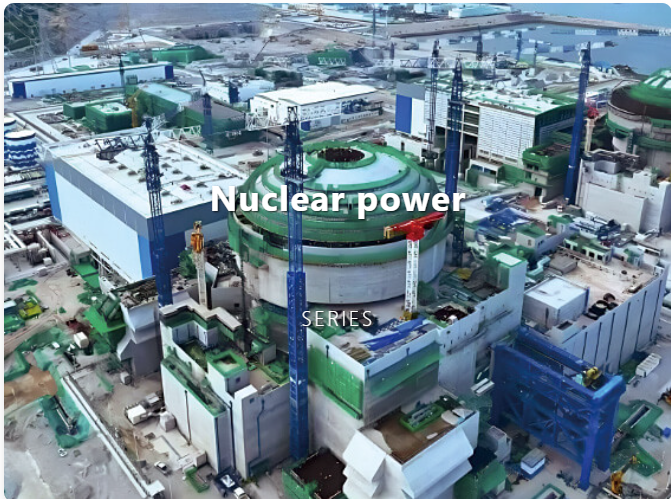
Power generation is one of the most demanding application areas for engineered fasteners.
The Scale of the Industrial Fastener Market
Market data frames the scale of the category. Grand View Research estimates the global industrial fasteners market at USD 103.9 billion in 2025, expanding to USD 153.7 billion by 2033. Metal fasteners captured 91.0% of that revenue, and externally threaded bolts and screws contributed 48.1%. The same research places Asia Pacific at 45.1% of the global market, reflecting the region's concentrated manufacturing base.
Specialized niches are growing faster than the market average. The aerospace superalloy fastener market was valued at USD 776.7 million in 2024, according to Fortune Business Insights. Fact.MR projects titanium aerospace fasteners to reach USD 520 million in 2026, representing a CAGR of 5.1%. The wind power fastener market is estimated at USD 14.68 billion in 2025 by The Insight Partners. These segments reflect a broader shift toward materials and manufacturing systems that support longer service intervals, higher safety margins, and tighter regulatory compliance.
Where Standard Fasteners Hit Their Limits
Commodity fasteners, typically carbon steel or low-alloy steel with protective coatings, perform adequately in dry indoor applications. Their limits become visible when any of several variables appear: seawater or chloride exposure, chemical media, elevated operating temperatures, vibration, and tensile loads approaching yield strength.
Material selection errors are a common root cause of premature fastener failure. Using ordinary carbon steel in a marine environment leads to pitting corrosion. Even 304 stainless steel can suffer from chloride stress corrosion cracking in coastal or offshore service. Nickel-based alloys, duplex stainless steels, and properly selected titanium grades are required in those environments. The consequences of mis-selection are not cosmetic: corrosion, rust, fracture, and early failure of the connection.
This creates a two-sided market dynamic. On the demand side, engineers specify higher-grade materials to reduce lifecycle costs and avoid unplanned downtime. On the supply side, fastener manufacturers must invest in metallurgical knowledge, precision machining, and test equipment to serve those requirements consistently.
UHC Group: A Production Model for High-Performance Fasteners
A useful reference for how high-performance fastener supply is organized comes from Jiaxing Union Hardware Co., Ltd. (UHC Group), established in 2017 and headquartered in Jiaxing, Zhejiang Province, China. The company is a professional stainless steel products supplier with five production bases totaling 80,000 square meters, approximately 200 employees, and an R&D team of 25 engineers.
UHC's five factories specialize in washers; bolts and nuts; screws; studs and rivets; and hardware products. The hardware base serves high-end industries including solar energy, wind energy, nuclear energy, railways, and aerospace. Annual output is 25,000 tons of stainless and special materials, with 80% exported to the European Union, Korea, and Japan. Those markets are relevant because EU and East Asian buyers typically require documented quality systems and full material traceability.
Quality infrastructure includes an independent laboratory that performs dimensional and mechanical performance tests on finished products, plus an ERP system that manages production, sales, and management processes with traceability from raw material procurement to finished product delivery. The company holds ISO 9001, ISO 14001, ISO 45001, and EU Pressure Equipment Directive (PED) certifications, credentials that are increasingly expected in regulated industries such as energy, rail, and pressure equipment manufacturing.
For a buyer evaluating sources, these capabilities matter because they convert material specifications into verified product claims. A certificate of conformance is more credible when the manufacturer also operates in-house testing and documented process traceability.
Material Families and What They Mean for Buyers
Selecting a fastener material is a risk-management decision, not just a cost decision. The following material families cover the majority of demanding applications.
Stainless Steels (Austenitic)
304 and 316 are the baseline corrosion-resistant grades, suitable for general industry, food processing, architectural, and mild chemical environments. A2-70 and A4-80 are common mechanical property classes for stainless bolts and nuts. 316Ti (1.4571) adds titanium stabilization for improved behavior at elevated temperatures.
Duplex and Super-Duplex Steels
Grades such as UNS S32205 (1.4462) and UNS S32750 (1.4410 / 2507) combine higher yield strength with strong resistance to chloride stress corrosion cracking. These are typical choices for marine, offshore, desalination, and chemical processing applications.
Nickel-Based Alloys
The Inconel and Hastelloy families, including Alloy 718 (2.4668), Alloy 80A (2.4952), and A286 (1.4980 / Alloy 660), maintain mechanical strength at high temperatures. They are standard in aero-engines, gas turbines, exhaust systems, and high-temperature processing equipment.
Corrosion-Resistant Special Alloys
904L (1.4539), 1.4529 (UNS N08926), and 1.4006 (S41000) serve applications requiring resistance to sulfuric acid, seawater, or other aggressive media.
Titanium and Aluminum Alloys
Titanium fasteners deliver a high strength-to-weight ratio and excellent corrosion resistance, making them a primary choice in aerospace. Aluminum alloys such as 6061 and 7075 are selected when weight reduction is a priority.
UHC's product portfolio covers these material families. The company supplies stainless steel fasteners in grades 304, 316, A2-70, and A4-80, plus high-temperature alloy fasteners, titanium alloy fasteners, and custom industrial hardware parts with OEM and ODM services.
Product Range and Dimensional Coverage
High-performance fastener projects often require matched sets of bolts, nuts, washers, and studs from a single supplier to maintain consistency in chemistry, strength grade, and surface treatment. UHC's catalog spans bolts from M2 to M160 and lengths from 6 to 300 mm; nuts from M2 to M64; screws from M2 to M8; threaded rods and studs from M5 to M160 with lengths up to 5,000 mm; washers from M2.5 to M45; and rivets and rivet nuts from M3 to M6.4.
| Product Type | Size Range | Mechanical Strength Grades | Standards |
|---|---|---|---|
| Bolts | M2–M160; 6–300 mm | A2-70, A2-80, A4-70, A4-80, D6-80, D6-100 | ISO, DIN, ASTM, ASME, ANSI, JIS |
| Nuts | M2–M64 | A2-70, A2-80, A4-70, A4-80, D6-80, D6-100 | ISO, DIN, ASTM, ASME, ANSI, JIS |
| Screws | M2–M8; 6–100 mm | A2-70, A2-50, A4-70, A4-50 | ISO, DIN, ASTM, ASME, ANSI, JIS |
| Threaded rods & studs | M5–M160; up to 5,000 mm | A2-50, A2-70, A4-50, A4-70, D6-80, D6-70 | ISO, DIN, ASTM, ASME, ANSI, JIS |
| Washers | M2.5–M45 | — | ISO, DIN, ASTM, ASME, ANSI, JIS |
| Rivets & rivet nuts | M3–M6.4 | — | ISO, DIN, ASME, ANSI, JIS |
Thread tolerance classes are specified at 6g/2A for bolts and studs, and 6H/2B/3B for nuts, supporting precise fits in structural assemblies. Surface treatment options, including natural finish, passivation, Dacromet coating, and adhesive pre-coating, give procurement teams additional tools for corrosion protection and loosening resistance.
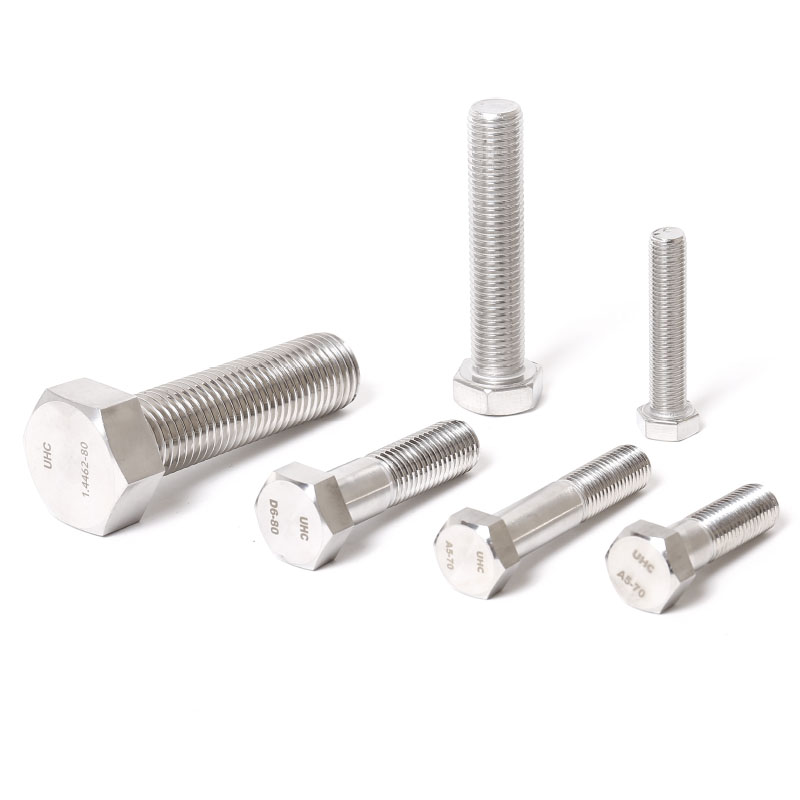
Precision thread tolerances and multiple surface treatments distinguish engineered fasteners from commodity hardware.
Sector Applications: Where Material Choice Is Decisive
Energy and Power Generation
Wind turbines, nuclear plants, thermal power stations, and solar fields have different corrosion and temperature profiles, but they share a common requirement: fasteners must survive long service intervals without maintenance access. Global wind capacity is forecast to grow from 1,100 GW in 2025 to over 2,400 GW by 2030, according to the Global Wind Energy Council, supporting demand for high-strength structural hardware.
Aerospace
Weight constraints and high thermal loads favor titanium and nickel-based alloys. AS9100 is the recognized quality management framework for aerospace, space, and defense organizations. The growth of the superalloy and titanium fastener segments indicates that buyers are willing to pay for material performance and full traceability.
Marine and Offshore
Seawater is one of the most aggressive environments for fasteners. China's new shipbuilding orders rose 59.0% year-on-year in Q1 2024, according to the China Association of the National Shipbuilding Industry, pointing to rising demand for marine-grade fasteners. Super-duplex and 316L stainless steels are common specifications for hull and topside connections.
Rail Transit
Railway assemblies contend with vibration, dynamic loads, and long asset life. Fatigue-resistant bolt and nut combinations with precise thread tolerances are important for bogie, track, and catenary connections.
Petrochemical and Industrial Machinery
Chemical exposure and high process temperatures require high-grade alloys and careful material documentation. In the EU, fasteners used in pressure equipment must comply with the Pressure Equipment Directive (PED) 2014/68/EU. ISO 3506-1 specifies the mechanical properties for corrosion-resistant stainless steel bolts, screws, and studs, while EN 14399 governs high-strength structural bolting assemblies for preloading in steel structures.
Market Trends Shaping Fastener Procurement
A few trends are observable across the market data and standards cited in this article.
First, standardization remains the foundation of specification. ISO 3506-1, EN 14399, ISO/IEC 17025, and PED 2014/68/EU define the mechanical, testing, and regulatory requirements that buyers and suppliers use to align expectations. Suppliers that operate with these standards embedded in their process have a structural advantage.
Second, traceability is becoming a purchasing requirement rather than a value-add. ERP-managed production records and in-house laboratory testing are emerging as baseline expectations for energy, rail, and infrastructure buyers.
Third, regional manufacturing capacity in Asia Pacific correlates with market share. The region's 45.1% revenue share is supported by an integrated supply chain for raw materials, processing, and export logistics, which allows manufacturers to serve EU and East Asian customers at scale.
Fourth, material upgrading is visible across segments. As operators extend asset life and push equipment into harsher conditions, the substitution from carbon steel to stainless, and from stainless to duplex or nickel alloy, is persistent.
Conventional vs. High-Performance Fasteners: A Realistic View
Choosing between conventional and high-performance fasteners involves a trade-off between unit cost and total cost of ownership.
Conventional carbon steel fasteners are inexpensive and widely available. Their coating systems provide moderate protection, but once the coating is damaged, corrosion can begin. In benign indoor environments, they are entirely rational choices.
High-performance fasteners made of stainless, duplex, nickel alloy, or titanium cost more per piece. The logic for specifying them is different: they reduce the risk of in-service failure, extend inspection intervals, eliminate replacement labor, and reduce downtime losses. For critical machinery and infrastructure, the lifetime economics often favor the higher-grade product.
A genuine limitation should be acknowledged. High-performance fasteners are not an automatic upgrade for every joint. In low-corrosion, low-temperature, indoor applications, standard stainless or even zinc-plated carbon steel is sufficient. Specifying Inconel or titanium where 304 would perform correctly adds cost and lead time without proportional benefit. The selection should follow the working environment, not a preference for premium materials.
Procurement teams should provide accurate service parameters, including temperature, medium, humidity, and load, when requesting quotes. This allows suppliers to recommend realistic material grades rather than offering conservative over-specification, which raises cost, or under-specification, which raises operational risk.
Future Outlook
Several directions are likely to shape high-performance fasteners in the coming years.
Demand will continue to shift toward materials with long-life properties in renewable energy and aerospace applications. Digital traceability will become more deeply integrated into procurement contracts and acceptance testing. The role of specialized manufacturers with in-house testing and multi-standard compliance will become more pronounced as buyers consolidate supplier lists to reduce risk exposure.
The practical takeaway for buyers is that high-performance fastener procurement is moving from part numbers to performance evidence. Suppliers that can document material chemistry, strength grades, thread accuracy, and factory test results will be better positioned to serve industries where failure is not an option.
Frequently Asked Questions
Q: What material options are available for high-performance fasteners?
A: Available materials include 304 and 316 stainless steel, duplex steel such as UNS S32205 and 2507, nickel-based high-temperature alloys such as Alloy 718 and Alloy 80A, corrosion-resistant grades including 904L and 1.4529, and lightweight options such as titanium and aluminum alloys.
Q: How to select the right fastener material for different working conditions?
A: For general indoor environments, 304/316 stainless steel is preferred. For high-corrosion, offshore, or marine environments, 316L, duplex steel, or high-temperature alloy materials are recommended. For high-strength mechanical load scenarios, alloy steel fasteners should be adopted. Suppliers can support customized material selection based on project working conditions.
Q: Which material fits marine salt-spray environments?
A: 316L stainless steel or duplex steel is strongly suggested for marine and coastal salt-spray working conditions, given their resistance to chloride-induced corrosion and pitting.
Q: What risks are associated with incorrect fastener material selection?
A: Incorrect selection can cause corrosion, rust, fracture, and early failure of fasteners. A typical trigger is using ordinary carbon steel or 304 stainless steel in salt spray, marine, strong corrosive, or high-temperature environments. Providing detailed working-condition parameters before ordering helps suppliers recommend the correct material grade and helps avoid premature failures.
Company brochure: Download UHC Group company profile (PDF)