
High-Precision GNSS Solutions for Long-Term Industrial Partnerships

High-precision GNSS solutions are becoming a structural layer in industrial automation—from UAV navigation and precision agriculture to autonomous vehicles and fleet management. Jumpstar, a Shenzhen-based source manufacturer founded in 2013, designs and produces RTK modules, GNSS receivers, high-precision antennas, and multi-band GNSS compass modules that deliver centimeter-level accuracy for global integrators, OEMs, and distributors.
Why High-Precision GNSS Procurement Is Shifting Toward Long-Term Supply Relationships
For buyers moving from project evaluation to execution, the procurement question is no longer “which module has the best spec sheet?” It is increasingly “which manufacturer can sustain quality, availability, customization, and support across multiple product generations?” This shift is driven by the deployment reality of high-precision GNSS: hardware choices affect calibration, antenna integration, protocol compatibility, and after-sales maintenance for years.
Jumpstar positions itself for this stage of procurement. The company operates a 5,000 ㎡ factory with 200 employees, an annual output of 100,000 units, and a dedicated R&D team of 20 engineers. Export markets include the EU, the USA, and the Middle East, with approximately 70% of output shipped internationally. For integrators and distributors, these figures indicate not just manufacturing capacity but the ability to support ongoing OEM and ODM programs.
Jumpstar as a Source Manufacturer: Product Portfolio and Industrial-Grade GNSS Offerings
Jumpstar is a dedicated source manufacturer bridging high-precision positioning technology and industrial applications. Its main products include RTK GNSS modules, GPS antennas, GNSS receivers, anti-jamming GPS antennas, UAV GPS modules, choke ring antennas, helical GNSS antennas, timing modules, and multi-band GNSS compass modules. The product range is designed for applications including UAVs, precision agriculture, autonomous vehicles, robotics, surveying and mapping, marine navigation, and fleet management.
One representative product is the JS-ANK45-2, an RTK GNSS module of high precision type designed for UAVs, precision agriculture, automotive, smart ports, logistics, and surveying. It measures 45.0 × 45.0 × 12.7 mm ±0.3 mm, weighs less than 40 g, and integrates 1408 super channels. Cold start time is under 30 seconds, RTK initialization is under 5 seconds, and positioning accuracy is 1.5 cm + 1 ppm horizontal and 2.0 cm + 1 ppm vertical in RTK mode. It supports NMEA 0183, Unicore, and RTCM3.X protocols, operates from –40°C to +85°C, and is RoHS compliant.
For compact UAV and automotive integration, the JS-RK26-U is an RTK GNSS module with IMU, supporting dual-band (L1+L5) GNSS+INS integration, 200 tracking channels, and RTK horizontal positioning accuracy of 1.0 cm + 1 ppm. It has a cold start time of 28 seconds, speed accuracy of 0.1 m/s CEP, dimensions of 16.2 × 12.2 × 2.3 mm, and a net weight below 1.1 g. The module supports NMEA 0183 and RTCM3.X protocols with a maximum update rate of 20 Hz, and it is RoHS compliant for EU-market use.
The JS-ARK28-3 is another high precision RTK GNSS module with 200 tracking channels and dual-band multi-constellation reception covering GPS L1/L5, BDS, Galileo, GLONASS, QZSS, IRNSS, and SBAS. Its RTK positioning accuracy is 1.0 cm + 1 ppm horizontal and 1.5 cm + 1 ppm vertical (50% CEP, open sky).
For antenna selection, Jumpstar offers products such as the JS-HAC18A-F, a high-precision helical GNSS antenna for UAVs supporting GPS L1/L2/L5, BDS B1/B2, GLONASS G1/G3, Galileo E1/E5a/E5b, and QZSS L1/L2/L5, with an LNA gain of 33 ± 2 dB, weight of 10.8 g, and IP65 waterproof rating. The JS-HAC100B is a three-system seven-frequency measurement antenna covering BDS B1I/B1C/B2I/B2A/B3I, GPS L1/L2, and GLONASS L1/L2, with a phase center error of ±2 mm and IP67 protection.
At the receiver level, the X43H-AH is a multi-constellation multi-frequency RTK receiver with dual-antenna heading. It delivers RTK horizontal accuracy of 0.6 cm + 0.5 ppm, heading accuracy of 0.15° at a 1 m baseline and 0.03° at a 5 m baseline, and supports AIM+ anti-jamming, OSNMA anti-spoofing, and TF data logging. The P-Box-X10 is a multi-constellation triple-frequency GNSS receiver with 544 channels, dual-antenna heading, RTK horizontal accuracy of 0.6 cm + 0.5 ppm, and additional functions including IONO+ mitigation and APME+ multipath suppression.
Technical Foundation: Multi-Band, Multi-Constellation RTK and PPP-RTK Readiness
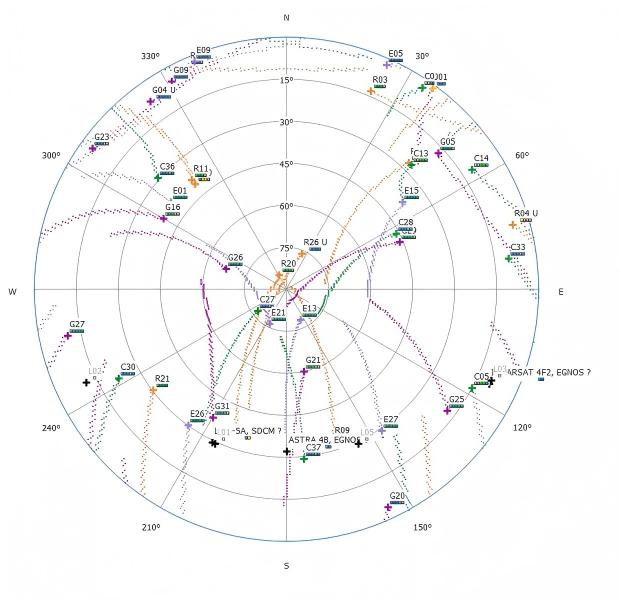
High-precision GNSS accuracy depends on two layers: signal reception and correction delivery. Jumpstar modules receive GPS, BDS, GLONASS, Galileo, QZSS, NavIC, and SBAS signals across multiple frequency bands. Multi-constellation reception increases satellite availability in urban canyons, tree-lined agricultural fields, and port environments where single-constellation receivers lose lock.
The JS-ANK45-2 uses 1408 super channels, which enables simultaneous tracking of multiple constellations and frequency bands. The JS-SK40 module adds dual-antenna capability, with a tracking sensitivity of –150 dBm (20 dB-Hz) and acquisition sensitivity of –140 dBm (30 dB-Hz). The P-Box-X10 supports 544 hardware channels and triple-frequency signals, reducing convergence time in challenging RF environments.
For correction delivery, Jumpstar modules support RTCM 2.x/3.x, NMEA 0183, and proprietary binary protocols. This allows integration with existing RTK base stations, network RTK services such as VRS, and PPP-RTK infrastructure. The X43H-AH and P-Box-X10 also support SBF and RINEX formats, which matter for surveying and post-processing workflows.
Application Scenarios: Where High-Precision GNSS Solutions Are Deployed
High-Precision GNSS Solutions for UAVs
The JS-RK26-U and JS-ARK37-3 modules are designed for UAV flight control, aerial surveying, and autonomous flight. The JS-RK26-U provides RTK horizontal accuracy of 1.0 cm + 1 ppm with IMU dead reckoning, which maintains positioning during short GNSS outages in urban canyons or under tree canopy. The JS-ARK37-3 operates from 3.5 V to 12.0 V, weighs under 21 g, and supports CAN interface options for drone flight controller integration.
High-Precision GNSS Solutions for Precision Agriculture
Mature GNSS modules from Jumpstar such as the JS-ANK45-2 are applied in auto-steering tractors and precision agricultural machinery. RTK horizontal accuracy of 1.5 cm + 1 ppm supports consistent row spacing, reduced overlap, and 24-hour operation. Agriculture is the dominant application segment for high-precision GNSS globally, and the precision farming market continues to expand, reinforcing the role of RTK modules in long-term agricultural equipment programs.
High-Precision GNSS Solutions for Autonomous Vehicles and Robotics
The JS-TP26-U GNSS module with IMU is designed for intelligent driving and vehicle control, with single-point horizontal accuracy of 1.0 m (L1+L5) and GNSS+INS accuracy below 1.5 m CEP. For autonomous robots and AGVs, the JS-ARK28-3 offers dual-band multi-constellation reception and RTK positioning at 1.0 cm + 1 ppm, combined with a 12 g weight class suitable for mobile robot platforms.
High-Precision GNSS Solutions for Fleet Management and Marine Navigation
Fleet management applications use modules such as the JS-RP26-U and JS-ATP36-M for vehicle tracking, logistics dispatch, and asset monitoring. The X43H-AH receiver adds dual-antenna heading, which also supports vessel heading output for maritime navigation. The JS-HAC148A vehicle and fleet antenna supports BDS, GPS, GLONASS, Galileo, and QZSS, with IPX6 protection and vibration tolerance for mobile installations.
Risk Control for Industrial Deployment: RF Interference, Spoofing, and Environmental Durability
A buyer executing a long-term GNSS program must evaluate risk control as much as specification sheet performance. Four risks are especially relevant for vehicle, marine, and robotics integration.
RF electromagnetic interference is a primary cause of RTK floating solutions and positioning drift in vehicles and industrial sites. Jumpstar modules such as the X43H-AH and P-Box-X10 use AIM+ full-spectrum interference suppression, including automatic wideband noise reduction, triple-channel adaptive narrowband notch filters, and APME multipath mitigation technology.
Satellite signal spoofing is mitigated through native support for Galileo OSNMA navigation message authentication and built-in RAIM receiver autonomous integrity monitoring, which identifies and rejects forged satellite signals.
Environmental failure risks are addressed through industrial-grade components, an operating temperature range of –40°C to +85°C, PCB reinforcement, and sustained vibration testing. The P-Box-X10 operates from –40°C to +85°C and stores from –55°C to +85°C, with humidity tolerance of 5%–95% non-condensing.
Data security risks are controlled through TF-card storage of raw observation data in SBF format, which preserves traceability for post-analysis and legal review.
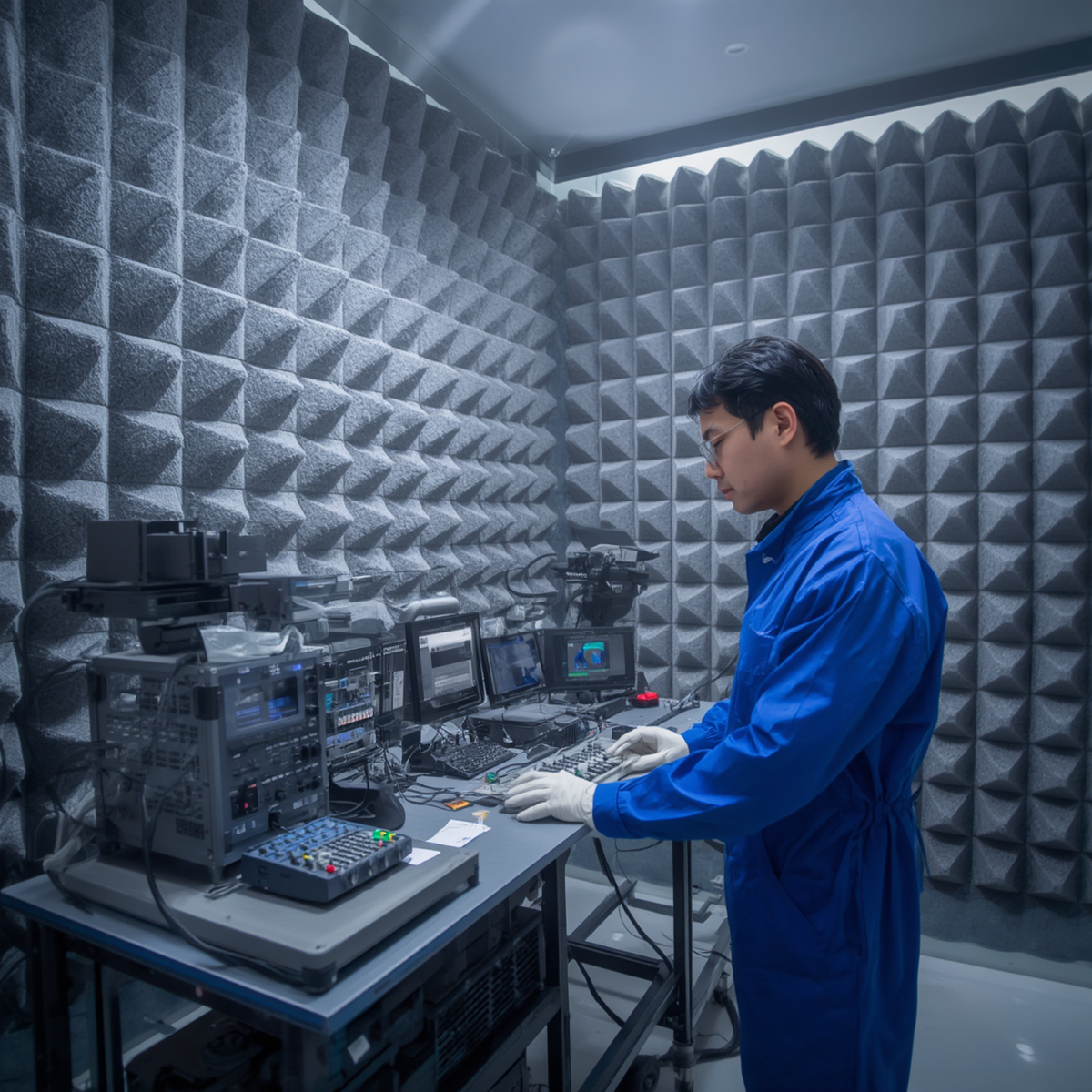
Jumpstar validates these measures before mass production in a dedicated RF interference anechoic chamber, temperature cycling chamber, and vibration test bench. Each module undergoes 24-hour power-on burn-in testing, and every unit is tested with RxTools software to verify satellite acquisition, OSNMA enabling/disabling, and anti-interference functionality before shipping.
Comparison with Traditional GNSS Solutions: Turnkey Receiver vs. Bare Core Component
Traditional high-precision GNSS procurement often involves sourcing bare receiver boards or chips and building surrounding RF, power, antenna, and enclosure designs internally. This approach gives maximum flexibility but extends development time and requires RF engineering expertise throughout the product lifecycle.
Jumpstar offers an alternative: turnkey integrated receivers and modules that combine antenna integration, protocol processing, interference suppression, and environmental hardening. In a comparative evaluation against Beitian core boards such as the UM982, Jumpstar reports an 80% shorter deployment time and a 40% lower total project R&D cost for applications such as port logistics, precision agriculture, and heavy-duty vehicle retrofitting. Power consumption is comparable at under 3 W, with better anti-interference stability reported in harsh RF environments.
Maintenance also differs. The turnkey approach supports plug-and-play maintenance with remote OTA updates, which reduces the need for an on-site RF engineer. A limitation worth noting: integrators with deep RF engineering capability and a desire to control every board-level detail may prefer a bare core component approach. Turnkey solutions are optimized for faster deployment and lower project risk, not for maximum hardware-level customization.
OEM/ODM Customization and Supply Chain Capability for Recurring Programs
Jumpstar addresses OEM and ODM GNSS customization across the product portfolio. Buyers can work with the R&D team of 20 engineers to adapt modules, antennas, receivers, and smart antennas to specific mechanical, electrical, and protocol requirements.
Manufacturing capability supports recurring programs: a 5,000 ㎡ factory, fully automated SMT assembly line, annual output capacity of 100,000 units, and monthly production capacity of 50,000 units with a typical lead time of 30 days. Minimum order quantity is 1 unit for standard products, allowing evaluation before volume commitment.
Market Trend Analysis: Precision Agriculture, Autonomous Systems, and the GNSS Downstream Market
Global market data indicates sustained expansion of high-precision GNSS. The global High-Precision GNSS market was valued at USD 7.8 billion in 2024 and is projected to reach USD 20.6 billion by 2033. The High Precision GNSS Module market was estimated at USD 1.5 billion in 2024 and is forecast to reach USD 4.5 billion by 2035.
Agriculture holds the dominant application share, accounting for 36.8% of high-precision GNSS demand in 2025. The global precision farming market is projected to grow from USD 11.38 billion in 2025 to USD 21.45 billion by 2032. These trends strengthen the case for procurement teams to select GNSS partners capable of supporting multi-year agriculture, automation, and vehicle programs.
Future Outlook: From Module Supply to Long-Term Partnership
The trajectory of high-precision GNSS procurement points toward tighter collaboration between equipment manufacturers and positioning suppliers. As autonomy levels increase in agriculture, logistics, and transportation, the GNSS module becomes a safety-critical component, not a commodity input.
Jumpstar supports this trajectory with a product portfolio that spans RTK modules, receivers, antennas, anti-jamming antennas, and dual-antenna heading modules. For buyers evaluating execution-stage procurement, the practical question is whether the supplier can maintain engineering support, production consistency, and compliance across the product lifecycle. Jumpstar’s source-manufacturer structure, EU/USA/Middle East export focus, and documented quality control procedures provide a basis for that evaluation.
FAQ
What is Jumpstar’s manufacturing capacity for recurring GNSS orders?
Jumpstar operates a 5,000 ㎡ factory with 200 employees and an annual output of 100,000 units. The monthly production capacity is 50,000 units, with a typical lead time of 30 days. The minimum order quantity for standard products is 1 unit, which enables initial validation before volume procurement.
Which export regions does Jumpstar serve?
Jumpstar exports to the European Union, the United States, and the Middle East. Approximately 70% of its output is exported, and the company maintains after-sales remote support for international customers.
Does Jumpstar provide OEM and ODM GNSS customization services?
Yes. Jumpstar’s R&D team of 20 engineers supports OEM/ODM customization across modules, antennas, receivers, and smart antennas. Customization can address form factor, electrical interface, protocol support, and application-specific performance requirements.
How does Jumpstar ensure quality before shipping?
Each module undergoes 24-hour power-on burn-in testing. Factory quality inspection uses RxTools software to verify satellite acquisition, OSNMA enabling/disabling, and anti-interference functionality. A factory test report is issued for every device, and all units are tested before shipping.
What is the comparison between Jumpstar turnkey receivers and bare RTK boards such as Beitian UM982?
Jumpstar positions its turnkey integrated receivers against bare core components. Reported differences include 80% shorter deployment time, 40% lower total project R&D cost, comparable power consumption under 3 W, and better anti-interference stability in harsh RF environments. The trade-off is that bare boards provide more board-level control for integrators with deep RF engineering capabilities.