
High Precision Gears: Application Fit and Sourcing Evidence
High precision gears in heavy industry are rarely off-the-shelf components. They are engineered into projects: a wind turbine gearbox needs planet gears that survive high-cycle fatigue; a mining drive requires gears that absorb impact and vibration; a machine tool spindle demands low backlash and stable positioning. Application conditions, not marketing descriptions, define what precision means for a given order. For buyers moving from research into evaluation, the practical task is to translate operating conditions into verifiable gear specifications and to check whether a supplier's process capabilities and quality evidence match those specifications.
Why Project Fit Determines the Real Specification
In gear purchasing conversations, “high precision” is often treated as a single attribute. In engineering terms, it is not. A DIN 5 cylindrical gear, a matched spiral bevel gear set, and a large-diameter ring gear each require different process chains even when they share the same accuracy class. The operating conditions of the final equipment determine which accuracy class, material, heat treatment, and inspection routine are actually needed.
Three questions are central to project adaptation:
- What is the load regime? Continuous heavy torque, impact loading, high-speed cycling, or a combination? The answer affects case depth, tooth-root strength, core toughness, and material selection.
- What is the operating environment? Dust, humidity, salt spray, high temperature, or clean workshop conditions? The answer drives corrosion protection, material selection, and non-destructive testing requirements.
- What is the required proof of quality? Some projects require full material documentation, NDT records, and gear-accuracy reports; others accept standard inspection certificates. The answer determines the documentation workload and the qualification depth of the supplier.
A practical sourcing approach is to map each application condition to a specific verification method, not just to a gear type. For example, impact resistance in mining gears is not confirmed by a single hardness number; it relies on material composition records, heat-treatment validation, gear geometry accuracy, surface-integrity inspection, and non-destructive testing. Buyers who structure supplier evaluation around these verification points reduce the risk of selecting a manufacturer whose capability statement is broad but whose project evidence is thin.
Application Conditions and the Resulting Gear Requirements
Different industrial sectors place different demands on gear geometry, material, and process control. The table below summarizes common operating conditions and the gear types typically involved in each project environment.
| Application | Operating Condition | Critical Requirements | Typical Gear Types |
|---|---|---|---|
| Wind power | High-cycle fatigue, variable torque, continuous heavy duty | Case hardness (58 HRC+ after heat treatment where specified), fatigue resistance, gear accuracy | Planet gears, ring gears, gear shafts |
| Mining equipment | Heavy loads, impact loads, strong vibration, dust exposure | Shock resistance, wear resistance, fatigue strength, vibration resistance | Vibrating-screen exciter gears, heavy-duty mining gearbox gears |
| Metallurgical equipment | High temperature, impact loads, variable loads, continuous or intermittent cycles | Load capacity, impact resistance, dimensional stability, heat resistance | Ring gears, furnace-top reducer gears, large cylindrical gears |
| Machine tools | High speed, high precision, variable load | Low backlash, low vibration, low noise, stable positioning accuracy, controlled surface integrity | Spur gears, helical gears, spiral bevel gears, pinion shafts |
| Marine and offshore | Humidity, salt-spray exposure, vibration, variable loads | Corrosion protection, fatigue resistance, classification-society-compliant materials where required | Marine propulsion gears, thrusters, deck machinery gears, bevel gears |
| Canning machinery | High-speed continuous cycles, frequent starts and stops | Low backlash, stable gear accuracy, low vibration, low noise | Custom gearbox gears, cylindrical gears |
| Feed and biofuel machinery | Dust exposure, continuous heavy-duty operation, long operating cycles | Wear resistance, fatigue resistance, stable accuracy, load capacity | Industrial gearbox gears, transmission components |
Precision-grade context
Industry references commonly position high precision gears for automotive transmissions around ISO Grade 5–7, equivalent to AGMA Class 11–12. Ultra-precision gears in ISO Grade 1–3 are reserved for aerospace, metrology, and optics. For heavy industrial gearboxes, typical publicly listed accuracy levels are DIN 3962 Class 6–7 and AGMA Class 9–10. For applicable products, accuracy can reach DIN 5, AGMA 12, or higher, subject to gear type, size, material, structure, heat treatment, and process review.
Material and heat-treatment choices are project-specific
Case-hardening steels such as 20MnCr5, 18CrNiMo7-6, 17CrNiMo6, and 18Cr2Ni4WA are commonly used for carburized and quenched gears where surface hardness, wear resistance, and core toughness are required. Through-hardening and induction-hardening steels such as 42CrMo, 35CrMo, and 40Cr appear in large-diameter gears, ring gears, and shaft components. Structural grades such as Q345D and ductile iron QT400-15 may be specified directly by customer drawings and technical agreements.
Size and process limits matter in project evaluation
A gear grinding diameter of approximately 2,500 mm and a maximum module of approximately 45 mm expand the range of large ring gears, internal gears, and heavy-duty cylindrical gears that can be produced on a single process chain. Bevel gear machining, by contrast, has a different envelope: approximately 1,300 mm maximum machining dimension for the bevel gear products covered in this reference. Buyers should confirm that the supplier's size limits match the specific gear types in their project, not just the maximum diameter of its largest machine.
Build-to-Print Manufacturing as a Project-Fit Model
For equipment manufacturers without a dedicated gear production line, build-to-print (manufacturing to customer drawings) is a common sourcing model. The manufacturer receives the customer's drawing, technical specification, and quality requirements, then executes material procurement, rough machining, gear cutting, heat treatment, precision finishing, grinding, inspection, and documentation.
Jiangsu New Yinye Transmission Electromechanical Co., Ltd. (New Yinye Transmission) is a long-term practitioner of this model. The brand heritage dates back to 1993, and the current legal entity was incorporated on April 25, 2003. Located in Wuxi, Jiangsu, China, the company operates an approximately 25,000 m² manufacturing facility with 125 employees, including 28 engineers. Products are mainly large, high-precision, complex, and non-standard industrial gears and transmission components, with roughly 15% of output exported to Europe, North America, Japan, Australia, and other global industrial markets.
For project evaluation, the relevant capability is not the brand story but the concrete process and inspection chain:
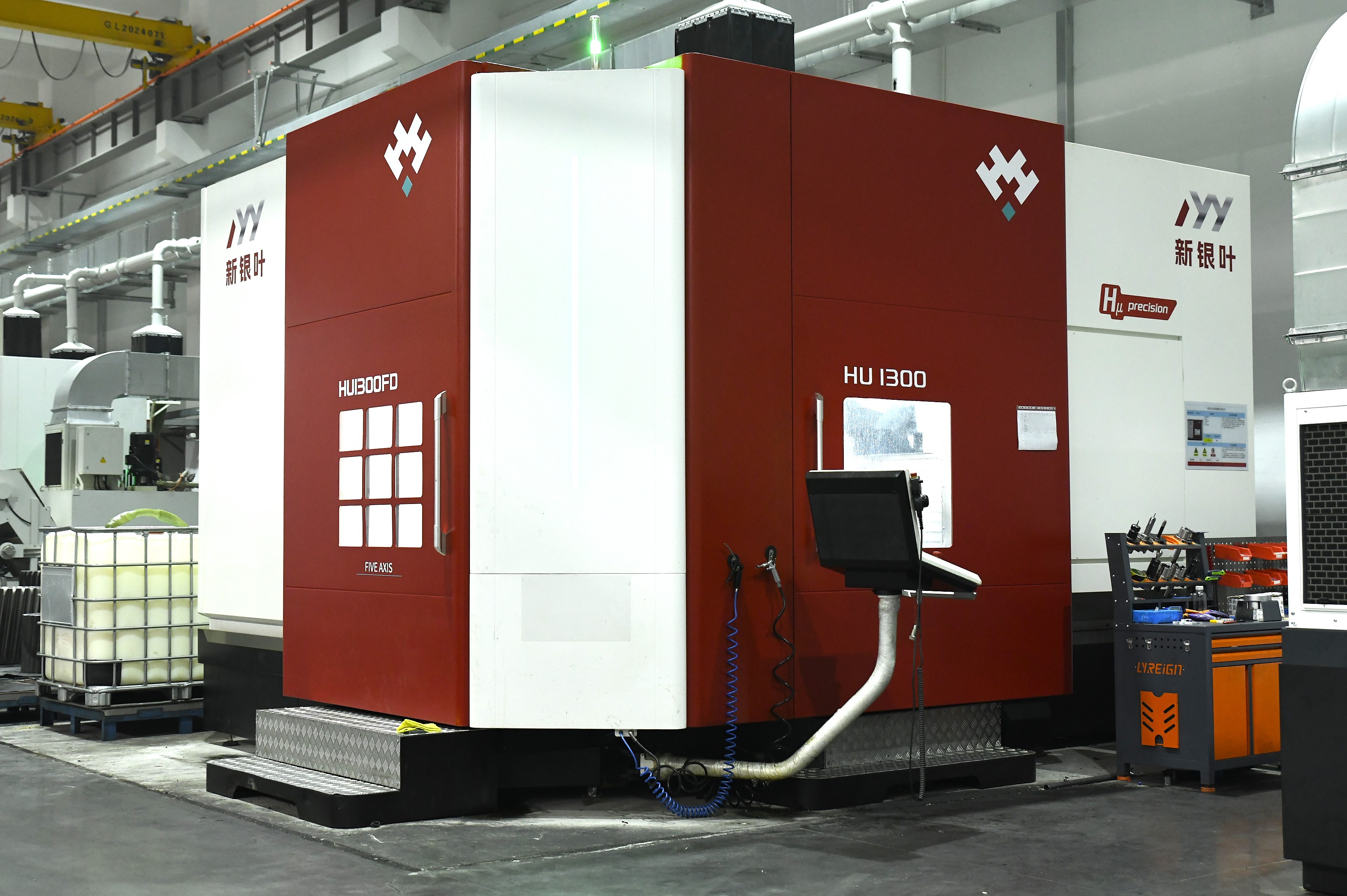
- Process chain: large CNC gear cutting, gear shaping, precision gear grinding, five-axis machining, turn-mill machining, and precision finishing.
- Accuracy range: typical publicly listed accuracy of DIN 3962 Class 6–7 and AGMA Class 9–10; for applicable products, DIN 5, AGMA 12, or higher, subject to product and process review.
- Material range: 20MnCr5, 18CrNiMo7-6, 17CrNiMo6, 18Cr2Ni4WA, 42CrMo, 35CrMo, 40Cr, Q345D, QT400-15, alloy steel, forged steel, or other customer-specified materials.
- Heat-treatment options: carburizing and quenching, nitriding, induction hardening, or through hardening, according to customer drawings and technical requirements.
Inspection depth is often the most underestimated part of build-to-print project evaluation. The supplier's inspection capabilities cover tooth profile, lead, pitch, radial runout, surface roughness, dimensional inspection, material composition, hardness, and mechanical properties, as well as ultrasonic testing, phased-array ultrasonic testing, grinding-burn inspection, micro-magnetic testing, large-component dimensional inspection, dynamic balancing, and bevel-gear rolling contact inspection. Material certificates, dimensional inspection records, gear accuracy reports, hardness records, non-destructive testing documents, special-process records, and final inspection reports can be provided according to customer drawings, technical agreements, and project requirements.
For a buyer, this inspection chain is what converts a stated accuracy grade into traceable project evidence.
Evidence From Long-Term Project Supply
Application fit is best demonstrated by repeated delivery in the same operating environment over a sustained period. Two long-running supply relationships illustrate this point.
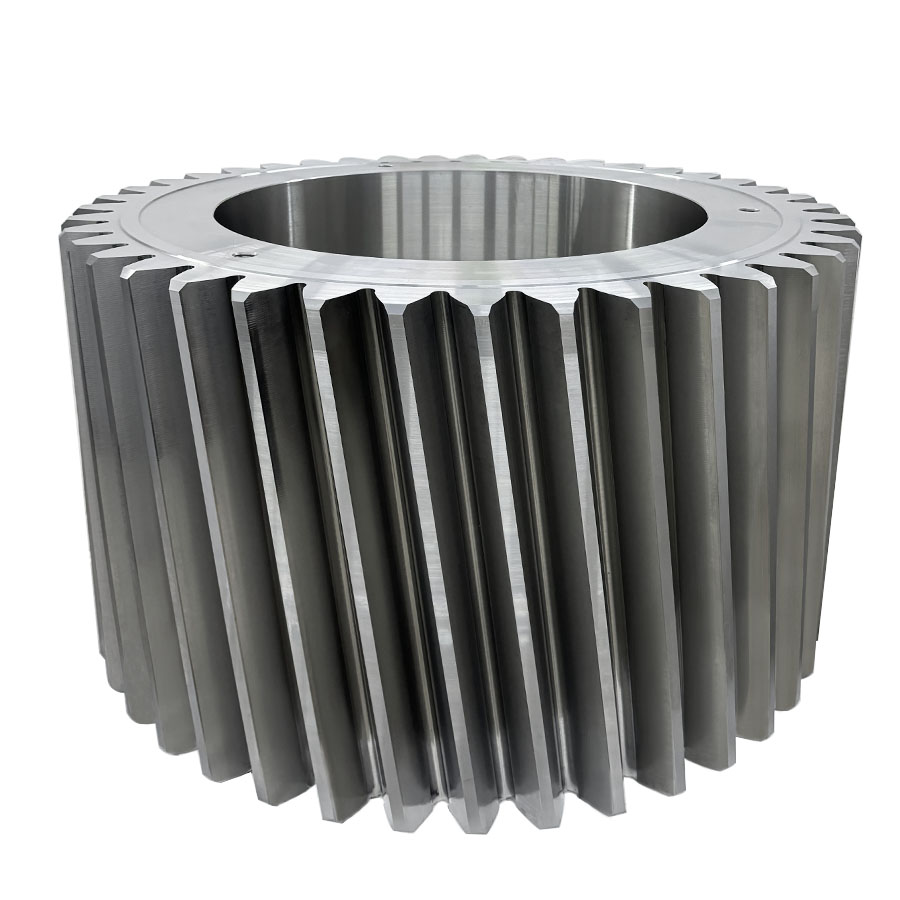
For metallurgical equipment, a Luxembourg-based manufacturer of metallurgical equipment and industrial gearboxes has sourced approximately 2,000 custom gearbox gears from New Yinye Transmission for furnace-top reducer gearboxes used in steelmaking. The supply relationship has exceeded 10 years, and no major quality complaints were reported during the confirmed service period. The supplier also received customer recognition for product quality, delivery performance, and continued cooperation.
In wind power, a Chinese wind-power gearbox and equipment manufacturer has received more than 10,000 wind power gears from New Yinye Transmission over more than 5 years of continuous supply. No major quality complaints were reported during the confirmed cooperation period, and the customer recognized the supplier for quality performance and supply support.
These cases provide more than a reference list. They show that the supplier can maintain batch consistency and documentation continuity over multi-year programs, which is often more relevant for long-term supply or second-source evaluation than a single large order delivered once.
Sourcing Model Comparison and Limitation Awareness
Project buyers typically choose among several sourcing models, each with a different fit for high precision gear requirements.
| Sourcing Model | Strengths | Typical Boundary |
|---|---|---|
| Standard catalog gears | Short lead time, predictable price | Requires matching standard specifications; limited for non-standard or large-diameter projects |
| In-house manufacturing | Full control over process and intellectual property | High fixed investment; requires specialized gear-cutting skills and inspection infrastructure |
| Build-to-print outsourcing | Uses an established process chain; flexible batch size | Requires detailed drawings, clear technical agreements, and process-review lead time |
| Long-term supply / capacity outsourcing | Quality consistency; adds supply redundancy | Requires supplier capacity stability and long-term documentation discipline |
Several boundaries should be understood when evaluating a build-to-print supplier:
- Build-to-print requires a clear engineering input. If the project is still at the concept stage without drawings or a technical specification, this model cannot replace design services.
- Precision capability is conditional. DIN 5 / AGMA 12 applies to specific products and depends on gear type, size, material, structure, heat treatment, and process review. Not every order reaches the highest class.
- The bevel gear machining limit of approximately 1,300 mm is smaller than the cylindrical gear grinding diameter limit of approximately 2,500 mm. The applicable size envelope differs by product family.
- Classification-society compliance, outsourced heat-treatment procedures, and other special processes must be confirmed on a project-by-project basis.
- Emerging application areas such as centrifugal compressors, large industrial robots, and aerospace equipment are subject to project qualification, certification, and customer approval requirements.
Market Trends That Strengthen the Case for Project-Based Sourcing
Market data points in different directions but converge on the same conclusion: precision gear procurement is becoming more specification-driven and more project-oriented.
- The global gear market, including high-precision and standard variants, is estimated at USD 222.12 billion in 2025 (Mordor Intelligence).
- The global precision gearbox market is valued at USD 3.5 billion in 2025, with a projected CAGR of 10.7% (Grand View Research).
- Planetary gearboxes accounted for 65.3% of the precision gearbox market share in 2025 (Grand View Research).
- Europe held the largest revenue share in the precision gearbox market at 34.1% in 2025 (Grand View Research).
- Asia-Pacific dominated the wind turbine gearbox market with a 51% share in 2024, largely driven by installations in China (Data Insights Reports).
- The railway traction motor market, which involves high-precision traction gears, was valued at USD 6.467 billion in 2024 (Market Research Future).
The projected double-digit growth of the precision gearbox market means planet gears, ring gears, and gear shafts will remain structurally important components. Europe's largest revenue share points to strict documentation and traceability expectations among European buyers. The concentration of wind turbine gearbox production in Asia-Pacific explains why Chinese suppliers have invested heavily in large gear grinding, case-hardening metallurgy, and non-destructive testing capability.
Future Outlook
High precision gear project procurement is moving in several directions:
- Larger dimensions and higher power density. As wind turbines and industrial gearboxes grow in size, the ability to grind gears beyond 2-meter diameters and handle large modules will become a standard evaluation criterion.
- Surface-integrity inspection is becoming standard. Grinding-burn inspection, phased-array ultrasonic testing, and micro-magnetic testing are shifting from optional requirements to project specifications.
- Digital documentation and traceability. Material certificates, NDT records, and gear accuracy reports must be complete, transferable, and auditable for long-term supply programs.
- Multi-source supply and capacity outsourcing. Equipment manufacturers are using second-source programs and capacity outsourcing to strengthen supply-chain resilience, while maintaining quality consistency across production lines.
- New applications require longer qualification cycles. Centrifugal compressors, large industrial robots, and aerospace components have stricter certification, specification, and sample-validation requirements.
FAQ
What do DIN 5 and AGMA 12 mean for high precision gears in a project?
DIN 5 and AGMA 12 are accuracy classifications that describe geometric deviations such as tooth profile, lead, pitch, and radial runout. In industrial gear projects, DIN 5 / AGMA 12 generally represents a high precision level suitable for applications with strict load-distribution, noise, and vibration requirements. For applicable products, New Yinye Transmission can reach DIN 5, AGMA 12, or higher, subject to gear type, size, material, structure, heat treatment, and process review. Buyers should treat the accuracy class as part of the project specification and confirm it with the supplier for each specific gear type.
How do operating conditions change high precision gear requirements?
Operating conditions determine material, heat treatment, accuracy, and inspection priorities. Mining equipment gears operate under heavy loads, impact loads, and strong vibration, requiring high load capacity, shock resistance, and wear resistance. Machine tool gears require low backlash, low vibration, and stable positioning accuracy. Marine gears are exposed to humidity and salt spray, so corrosion protection, fatigue resistance, and classification-society-compliant materials are often required. Canning machinery gears run in high-speed continuous cycles with frequent starts and stops, requiring low backlash and low noise. The project specification must reflect the actual operating environment of the equipment.
What inspection capabilities should a project buyer verify in a gear manufacturer?
A project buyer should verify that the manufacturer can inspect gear geometry (tooth profile, lead, pitch, radial runout), dimensions, surface roughness, material composition, hardness, and mechanical properties. For higher-risk applications, the buyer should also confirm non-destructive testing capabilities such as ultrasonic testing, phased-array ultrasonic testing, grinding-burn inspection, and micro-magnetic testing. For large rotating components, dynamic balancing and large-component dimensional inspection are relevant. For bevel gears, rolling contact inspection and contact-pattern verification help confirm matching quality. New Yinye Transmission's inspection chain covers these methods, and buyers can request the corresponding records according to project requirements.
Which gear types are typically needed for wind, mining, and marine projects?
Wind power gearbox projects typically involve planet gears, ring gears, and gear shafts. Planet gears are often manufactured from 18CrNiMo7-6 alloy steel with carburizing and quenching, with accuracy reaching DIN 5 for applicable products. Mining equipment projects commonly require gears for vibrating-screen exciters and heavy-duty gearboxes, where shock resistance and vibration resistance are critical. Marine projects use gears and bevel gears for propulsion gearboxes, thrusters, and deck machinery, with attention to corrosion protection and classification-society-compliant materials where specified. Each project should map the required gear types to the supplier's proven application experience.
What quality documents should a buyer expect for a build-to-print gear order?
For build-to-print gear orders, suppliers can typically provide material certificates, dimensional inspection records, gear accuracy reports, hardness records, non-destructive testing documents, special-process records, and final inspection reports. For bevel gear sets, rolling inspection records and contact-pattern verification results are also relevant. New Yinye Transmission provides these documents according to customer drawings, technical agreements, and project requirements. Buyers should define the exact document list and acceptance criteria during the inquiry phase so that the final quality package matches the project's traceability needs.
What is the difference between standard catalog gears and build-to-print gears?
Standard catalog gears are produced in fixed specifications and are suitable for applications where a catalog size matches the design requirement. They offer shorter lead times and predictable pricing but cannot easily accommodate non-standard dimensions, special materials, or project-specific inspection requirements. Build-to-print gears are manufactured from customer drawings and technical specifications, allowing the gear geometry, material, heat treatment, accuracy grade, and inspection plan to match the exact application. This model requires detailed engineering input, a qualified process chain, and typically a longer technical review period before production.